
Review · BERLIN TOURS
Berlin Cold War & World War II Third Reich Walking Tour
Berlin’s past is written into its streets. A scarred wall, a flak tower, a former border crossing, and the buildings tied to Nazi rule all help turn history from a textbook subject into something you can see under your feet. This tour connects those pieces in one long day, from the Reichstag to the Berlin Wall and East Side Gallery.
I like two things here: the wide sweep from World War II to the Cold War, and the chance to ask questions as you go. Guides including Miguel and Arthur are praised for clear explanations, humor, patience, and useful tips about restaurants, bars, and books. The main drawback is the scale. Six hours is a long time outside, and the route may feel broad rather than highly detailed at every stop.
Key points to know before you book
- A full Berlin history lesson: Follow the city from the Third Reich and the Battle of Berlin through division, communism, border controls, and reunification.
- Ten important stops: See the Reichstag, Berlin-Karlshorst, Humboldthain Flak Tower, the Berlin Story Bunker, the Palace of Tears, Berlin Wall Memorial, Teufelsberg, East Side Gallery, and a DDR watchtower.
- Guides make the difference: Miguel and Arthur are named in strong feedback, with praise for their historical knowledge, humor, patience, and willingness to answer follow-up questions.
- Expect an outdoor day: The tour operates in all weather, so bring comfortable shoes and clothing suited to Berlin’s changing conditions. Snacks and drinks are not included.
- Good value at $35.64: For a six-hour guided overview, the price is modest, especially if you want help making sense of scattered historical sites.
- Check the timing carefully: The advertised duration is about six hours, while some recorded experiences have lasted closer to 2.5 or 3.5 hours. Confirm the schedule when booking.
Why this tour works for Berlin’s difficult history
Berlin can be hard to read on your own. One square may relate to the Nazi government, a nearby street may show traces of the 1945 battle, and a few train stops later you are looking at the machinery of East German border control. The important sites are spread across the city, and the connections between them are not always obvious.
This tour gives you a basic map of those connections. It does not focus only on Hitler, or only on the Berlin Wall. Instead, it links the end of World War II with the division of Germany and shows how the political choices of one era shaped the next.
That broad approach suits you if Berlin is your first serious look at the subject. It also works well if you have limited time and want an organized introduction before visiting museums on your own.
The guide is central to the experience. Miguel is praised for passion, clear explanations, and practical recommendations. Arthur is also singled out for his historical knowledge and sense of humor. You should not assume that either guide will lead every departure, but the feedback makes clear what to look for: a guide who can explain the facts, handle questions, and add stories about real events and urban legends without turning the subject into a dry lecture.
The group can include up to 100 people. That is a large possible maximum, and it matters. A big group can make questions and street-side listening less personal, especially at busy sites. On the other hand, the tour’s strong comments suggest that some guides make space for questions and can go further when the group wants more detail.
More WWII History Tours in Berlin
- Berlin: Third Reich and Cold War 2 Hour Walking Tour
★ 4.9 · 6,830 reviews - Berlin: Sachsenhausen Concentration Camp Tour in English
★ 5.0 · 5,711 reviews - Berlin’s Best: 2 Hour Walking Tour Third Reich and the Cold War
★ 5.0 · 5,486 reviews
Starting at the Reichstag and reading modern Berlin
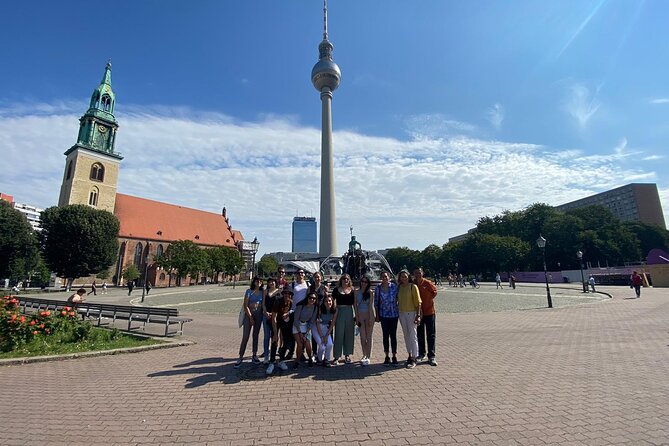
The meeting point is Generator Berlin Alexanderplatz, at Otto-Braun-Straße 65. The tour starts at noon and returns to that same meeting point. The central location makes the start fairly easy to reach, and one recorded experience specifically notes that getting there was simple.
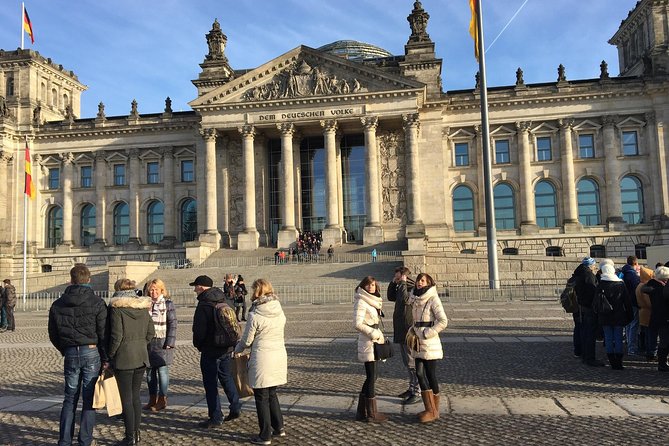
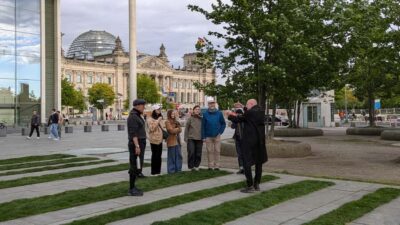
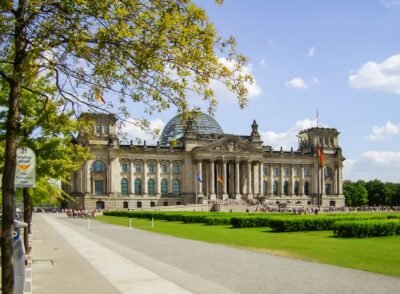
The Reichstag is the first listed stop, with about 30 minutes here. The building is a useful opening because it connects Berlin’s political past with its present government. Your guide will place the site within the wider story of famous events, architecture, and the people who shaped the capital.
Do not expect a long indoor visit at this point. Admission is listed as free, but the experience includes a local guide rather than a guaranteed museum or interior entry. The value comes from the explanation around the building and the way the guide sets up the rest of the day.
This first stop may feel familiar if you have already walked central Berlin. That is not a major problem. The tour’s purpose is to add context to places you might otherwise photograph and pass.
Berlin-Karlshorst and the end of World War II
The Berlin-Karlshorst stop lasts about 30 minutes and shifts attention to the final phase of World War II. This is one of the more focused moments of the day because the site is tied to the end of the conflict and the German surrender.
A guide can help you understand why the surrender location still matters and how difficult it can be to match a major historic event with the modern city around it. One of the more thoughtful comments about the experience points to this exact challenge: the event is famous, but identifying the physical location and its meaning takes explanation.
The itinerary lists admission as free. Still, only a local guide is included in the booking details, so you should not read that as a promise of entry into every building or exhibition. The tour may use the site as a place for an outdoor explanation.
This stop is particularly useful for you if World War II is your main interest. It is also a reminder that Berlin’s history is not limited to the most photographed central monuments.
Humboldthain Flak Tower and the Battle of Berlin

At Humboldthain Flak Tower, the guide points out military remains and details that are easy to miss when you walk through the city without background. The planned stop is about 30 minutes.
The flak tower helps make the Battle of Berlin more tangible. Rather than hearing only about troop movements and dates, you get a physical reminder of the city’s wartime defenses and destruction. The tour’s larger promise is to show the scars left behind by war, and this is one of the clearest examples.
The pace is meant to be manageable, with time for drink breaks along the way. That sounds helpful during a six-hour outing, but drinks are not included, so carry water and money for a stop. The tour is also outdoors in all weather. Berlin can be gray and wet, so a compact umbrella or waterproof layer is sensible.
More wartime history tours in Berlin:
- Berlin: Sachsenhausen Concentration Camp Memorial Tour
★ 4.7 · 3,716 reviews - Third Reich Berlin: Hitler and WWII Walking Tour
★ 5.0 · 3,301 reviews - Sachsenhausen Concentration Camp Bus Tour in English from Berlin
★ 5.0 · 1,962 reviews - Berlin: Sachsenhausen Concentration Camp Tour in English
★ 4.8 · 1,889 reviews
Prenzlauer Berg and visible scars of 1945
Prenzlauer Berg is presented as a place to examine traces of the Battle of Berlin. The stop lasts about 30 minutes and adds an urban neighborhood to the military and political sites.
This part may appeal to you if you enjoy history that is mixed into ordinary city life. The point is not simply to visit a memorial. It is to look at streets and structures while the guide explains what happened in the final fighting.
The drawback is that physical traces can be subtle. If you want a large museum display or a dense collection of original objects, this stop may feel light. The guide’s storytelling matters here, and one strong aspect of this tour is the use of specific stories about real incidents to make locations easier to picture.
The Berlin Story Bunker and Hitler’s underground headquarters
The Berlin Story Bunker stop lasts around 30 minutes and takes you to the area associated with Hitler’s notorious underground lair. This is a sensitive part of the tour, and a good guide should keep the focus on dictatorship, war, and the consequences of the regime rather than treating the site as a curiosity.
The bunker itself is not a conventional sightseeing attraction. Much of its importance comes from what happened there and from the political collapse it represents. Your guide will add stories and legends, but you should expect a spoken explanation rather than a guaranteed paid museum visit. The booking details list admission as free and include only the local guide.
For you, this stop is most useful when paired with the later Cold War sites. The bunker marks one kind of political extremism and military defeat. The Wall marks the new division that followed. Seeing both in one day helps explain that 1945 did not end Berlin’s political troubles.
The Palace of Tears and the mechanics of a divided city
The Palace of Tears is a shorter stop, listed at about 20 minutes. The tour then heads east to explain border crossings, escape points, and major East Berlin landmarks.
The name refers to the emotional departures that took place at a former crossing point. The value of this stop is its human scale. Instead of treating the Cold War as a contest between abstract systems, the guide can explain what border controls meant for families, friends, and people trying to leave East Germany.
This is also where the day moves from wartime destruction to everyday life under communism. You will hear about restrictions, escapes, and the practical reality of a city divided by politics.
Twenty minutes is enough for a clear introduction, but not enough for every detail. If Cold War Berlin is your main reason for booking, save room for a museum visit on another day.
Berlin Wall Memorial and the border that split a city
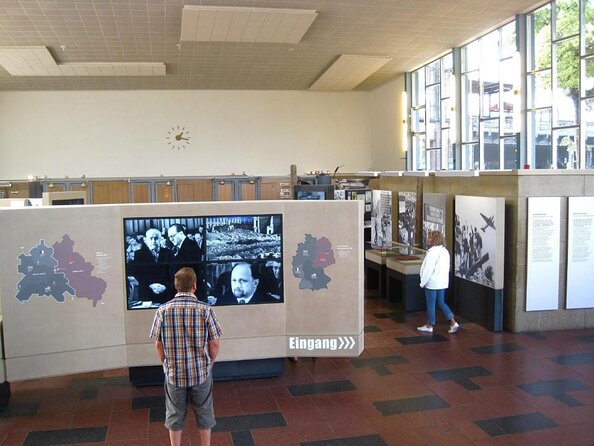
The Berlin Wall Memorial receives about 30 minutes. It is one of the most useful stops for understanding how the Wall worked, not just what it looked like.
The Wall was not a single simple barrier. It involved border structures, controlled crossings, escape attempts, and spaces designed to prevent movement. The guide explains these elements through stories of horror and triumph, including escapes and forced conscription.
You should expect visible reminders of the Wall rather than a completely preserved barrier stretching across the city. The memorial helps you read what remains and understand the political disaster behind it.
This section is likely to be one of the strongest parts of the tour for first-time visitors. The guide can answer questions as they arise, and several comments praise that freedom to ask as many questions as needed. If you have a child or student studying the Cold War, the site-based explanation can be especially useful.
Teufelsberg and Berlin’s offbeat Cold War remains
Teufelsberg is listed as another 30-minute stop. The tour description connects it with major Wall landmarks, guard towers, the East Side Gallery, and less familiar Cold War sights.
The stop broadens the story beyond the classic photographs of Checkpoint Charlie or the painted Wall. You get a sense of how the city kept physical reminders of the conflict in many different forms.
Because the itinerary covers a large area and includes ten stops, the exact balance between walking, public transport, and time at each location is not fully explained. Ask for clarification before booking if the movement between sites is important to you. The route is described as a walking tour, but the listed places are spread across Berlin, so you should not assume every section is covered on foot without transfers.
Teufelsberg is a good example of the tour’s strength and weakness. It points you toward less obvious history, but half an hour is enough for an overview, not a full exploration.
East Side Gallery and the Wall as public art
The East Side Gallery stop lasts about 20 minutes. Here, the former Wall becomes a long public canvas, with murals turning a symbol of division into a place for political and artistic expression.
The guide will explain how the conflict between East and West culminated in the Wall and what life was like on the East Berlin side. The art is visually striking, but the historical explanation keeps the stop from becoming just a photo break.
Twenty minutes is short. You can see the main idea and hear the background, but you may want to return later if you care about the artwork itself. The tour is designed to connect the gallery to the wider Cold War story, not to provide a detailed art walk.
DDR watchtower and the final reminders of control
The DDR watchtower stop lasts about 20 minutes and focuses on places where the Wall once stood. The guide explains escape attempts, forced conscription, and the effects of the border system.
This is a useful final piece because it gives you a physical object linked to surveillance and control. After hearing about crossings and escape points, a watchtower helps show how the border was enforced.
The stop is brief, so listen closely and ask questions while you can. The tour returns to Generator Berlin Alexanderplatz at the end, giving you a chance to continue exploring the city afterward.
How much history can fit into six hours?
The stated duration is about six hours, which makes this a serious half-day commitment. Yet some recorded experiences have lasted roughly 2.5 to 3.5 hours, and one account describes about 2.5 hours with a high-level overview. That difference is important when planning your day.
If your booking confirms six hours, wear proper walking shoes and plan for changing weather. If the departure is expected to be shorter, you will get a brisk introduction rather than a full day of site time.
The best way to think about the tour is as a connected overview. It covers a great deal, but it cannot provide museum-level detail at ten locations. One less positive assessment found the explanation broad rather than detailed. That is a fair expectation to set.
I would book this early in a Berlin visit, then use the guide’s suggestions to choose which museums and memorials deserve more time. The practical tips about restaurants, bars, and books are an added benefit if you are still finding your way around the city.
Is $35.64 a fair price?
At $35.64 per person, the tour offers solid value if you want a guide to organize Berlin’s difficult history for you. You are paying for a local guide, an extended route, and help linking places that would otherwise feel disconnected.
The price is especially fair for a first visit or a short stay. You can cover several major historical themes in one booking instead of arranging separate visits and researching the connections yourself.
The value drops if you prefer slow museum visits or detailed discussion at one site. Admission to museums, drinks, and snacks are not included, and the listed stops are generally short. Bring water and a snack, and budget separately for any museums you visit before or after the tour.
The maximum group size is 100. That is worth considering if you prefer a quiet, personal tour. You may get a better experience when the guide is able to hear questions and keep the group together.
Who should book this Berlin history tour?
You should consider it if you:
- Want one organized introduction to Nazi Berlin, World War II, East Berlin, and the Wall
- Have only a short time in Berlin
- Learn best through stories tied to real places
- Like asking questions rather than listening to a fixed script
- Can manage a long day of walking and standing
- Want local suggestions for food, books, and later sightseeing
You may want another format if you need detailed museum interpretation, guaranteed indoor visits, or a very small group. Families and students can find the subject useful, but the amount of walking and the serious material may not suit everyone.
Dress for rain or sun. The tour runs in all weather, and the experience does not include refreshments. Free cancellation is available up to 24 hours before the start time, which gives you some flexibility if your schedule changes.
Should you book it?
Book this tour if you want the big picture and prefer history explained in the streets where it happened. The combination of the Reichstag, wartime sites, bunker history, border crossings, Wall remains, and East Side Gallery gives you a strong first framework for Berlin.
I would not book it expecting six hours of detailed study at every stop. The route is ambitious, and the duration has varied. Still, at $35.64, with guides such as Miguel and Arthur praised for humor, patience, and clear answers, it is a sensible choice for a first-time visitor who wants Berlin’s twentieth century explained without spending the day inside a classroom.
FAQ
Where does the tour start?
It starts at Generator Berlin Alexanderplatz, Otto-Braun-Straße 65, 10178 Berlin, Germany.
What time does the tour begin?
The stated start time is 12:00 pm.
Where does the tour end?
The activity ends back at the meeting point at Generator Berlin Alexanderplatz.
How long does the tour last?
The advertised duration is approximately six hours. Some recorded experiences have lasted about 2.5 to 3.5 hours, so confirm the expected timing when booking.
What attractions are included?
The route includes the Reichstag Building, Museum Berlin-Karlshorst, Humboldthain Flak Tower, Prenzlauer Berg, Berlin Story Bunker, Palace of Tears, Berlin Wall Memorial, Teufelsberg, East Side Gallery, and a DDR watchtower.
Is admission included?
A local guide is included. The stops are listed with free admission, but beverages and snacks are not included.
What should I bring?
Wear comfortable shoes and dress for the weather. The tour operates in all weather conditions, and you should bring your own drinks and snacks.
How large can the group be?
The activity may have a maximum of 100 travelers.
Can I cancel for a full refund?
Yes. You can cancel at least 24 hours before the experience start time for a full refund. Cancellations or changes made less than 24 hours before the start time are not accepted for a refund.
More Walking Tours in Berlin
- Discover Berlin Half-Day Walking Tour
★ 5.0 · 9,624 reviews - Berlin: Discover Berlin Walking Tour
★ 4.9 · 5,998 reviews - Berlin: Hidden Backyards Guided Walking Tour
★ 4.8 · 5,360 reviews - Berlin: Alternative Berlin Walking Tour
★ 4.6 · 1,204 reviews
More Cold War Tours
- Berlin: DDR Museum Tickets
★ 4.3 · 3,443 reviews - Skip-the-Line: Berlin Wall Museum at Checkpoint Charlie
★ 4.1 · 2,041 reviews - Cold War, Berlin Wall, Spies and the East Side Gallery
★ 5.0 · 1,024 reviews - Berlin: Guided Bike Tour of the Berlin Wall and Third Reich
★ 4.7 · 499 reviews
Just added around Berlin
- eSIM for Germany and 34 European Countries★ 4.5 · 16 reviews
- Your ticket to The Wall Museum Berlin★ 3.0 · 60 reviews
- Walking on the Wall: 3-Hour Tour in Berlin★ 4.5 · 34 reviews
- Rickshaw Tours Berlin – Groups of up to 16 people with several rickshaws★ 4.0 · 97 reviews
- Warnemuende Shore Excursion: Private Berlin Tour★ 4.5 · 27 reviews
- Love and War in Berlin: Self-Guided Story Puzzle Walk★ 5.0 · 7 reviews
- Warnemuende Shore Excursion: Berlin Private Sightseeing Tour from Rostock★ 5.0 · 4 reviews
- Cold War Berlin – Private Live Virtual Experience★ 5.0 · 4 reviews
Berlin Tours, compared.
Reichstag, Dome and Government District Guided Tour
Read our review →
1-Hour City Tour by Boat with Guaranteed Seating
Read our review →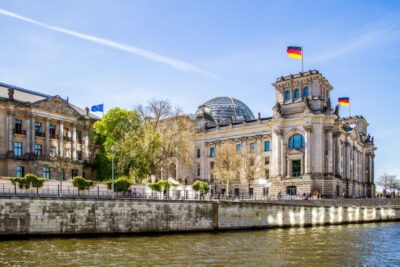
Reichstag, Plenary Chamber, Cupola & Government Tour
Read our review →
Browse the lists this tour appears in