
Review · BERLIN TOURS
Cold War Berlin – Private Live Virtual Experience
Berlin’s Cold War story becomes surprisingly personal when a live guide leads you from the bullet-scarred Gropius Bau to Checkpoint Charlie, the old border crossing where American and Soviet tanks faced off in 1961. This is not a prerecorded video. You connect by Zoom, see the sites with your group, and can ask questions as the hour unfolds.
I like the private format, since only your group takes part. I also like the mix of heavy history and odd, human details, especially the East German Trabant, the famously flimsy-looking car known as a cardboard car. Guides Taylor and Sam have been singled out for clear, engaging presentations.
The main drawback is simple: you are seeing Berlin through a screen. If you are already in the city, walking the Wall and visiting the museums in person will give you more atmosphere. You also need Zoom on a suitable device before the tour begins.
Key points at a glance
- Live, private Zoom format: Ask your own questions instead of watching a fixed recording.
- A compact Cold War route: The hour covers Gropius Bau, the Topography of Terror, the Trabi Museum, Checkpoint Charlie, and the Black Box exhibition.
- Guides Taylor and Sam: The experience is led by a local professional guide, with Taylor and Sam among the named guides associated with the tour.
- Strong choice for a Sunday at home: It gives a household a shared activity with real historical content.
- Useful before a future Berlin trip: You may finish with a clearer list of places you want to see in person.
- $23 value: The price is reasonable for a private live session, especially when shared by a household or small group.
Berlin’s Cold War story, brought to your screen
This experience works best as a guided conversation rather than a virtual museum visit. You join by Zoom, meet your professional local guide, and move through a short sequence of Berlin sites tied to war, dictatorship, division, and reunification.
The subject is not limited to the Cold War alone. The route begins with a building damaged in the Second World War, passes the former headquarters of the SS and Gestapo, and then follows the Berlin Wall to the two best-known symbols of the divided city: Checkpoint Charlie and the Trabant car.
That wider frame matters. Berlin’s Cold War was not an isolated chapter that began in 1945 and ended when the Wall fell. The tour places division against the earlier crimes and destruction of Nazi Germany, helping you understand why Berlin became such a tense point in the struggle between East and West.
You should expect a real-time presentation, not a polished film with no room for interruption. If you are curious about a particular building, border crossing, or part of German history, you can ask your guide while the tour is in progress. That interaction is the main reason to choose this format over a standard online video.
More Wall and Cold War walks:
- Berlin: Third Reich and Cold War 2 Hour Walking Tour
★ 4.9 · 6,830 reviews - Berlin’s Best: 2 Hour Walking Tour Third Reich and the Cold War
★ 5.0 · 5,486 reviews - Berlin: DDR Museum Tickets
★ 4.3 · 3,443 reviews
Gropius Bau and the scars of war
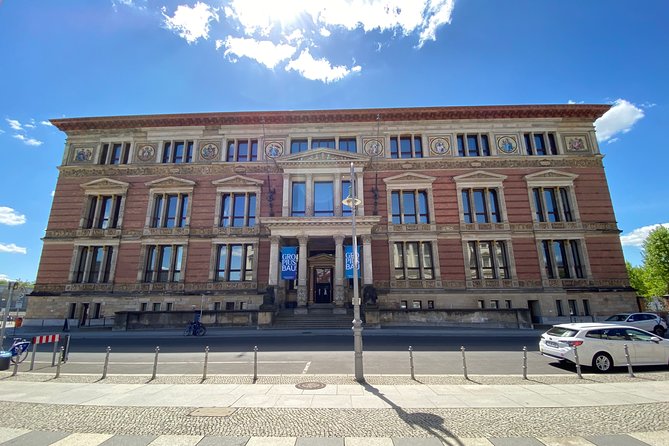
The opening stop is Gropius Bau, one of Berlin’s best-known art galleries. The building is presented not only as a cultural site but also as a physical record of the war. Its walls still carry bullet scars from the Second World War.
That detail gives the tour a strong opening. You begin with a building that looks impressive yet still shows the damage left by conflict. It reminds you that Berlin’s later division grew out of a city already marked by violence and political collapse.
The scheduled look at Gropius Bau lasts about five minutes. That is enough for an introduction and a few useful points, but not enough for a full discussion of the gallery’s art exhibitions or architecture. Admission is not included, though that has little effect on this virtual experience since you are not entering the building as part of the online session.
I like this stop because it avoids treating the Cold War as a collection of dates and military terms. You first see a place where history remains visible on the walls. For younger viewers or anyone new to Berlin’s past, that visual starting point can make the rest of the hour easier to follow.
The Topography of Terror and the Berlin Wall
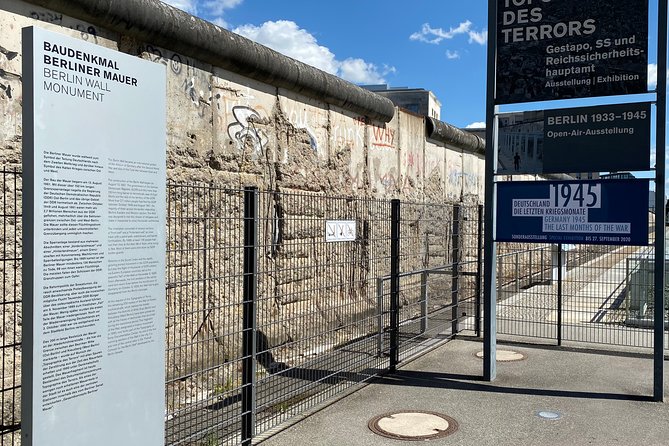
The tour then moves to the Topography of Terror, located at the former headquarters of the SS and Gestapo. The site connects Berlin’s Nazi past with the later division of the city, and the presentation continues along the Berlin Wall, described as one of the most brutal symbols of the Cold War.
This is the longest stop, at about 15 minutes. It gives your guide time to explain why the area matters and how the Wall affected Berlin’s streets, families, and daily life. The experience does not simply show a famous barrier. It places that barrier beside the institutions that helped run Nazi Germany.
The Topography of Terror is an especially serious part of the route. You should expect difficult subject matter, since the site deals with political terror and the SS and Gestapo. That weight is appropriate, but it may not be the best choice for very young children or anyone seeking a light Sunday activity.
Admission is listed as free, and the tour does not ask you to pay a separate entry fee for this part. Still, you are seeing the place through your guide’s presentation rather than spending time inside the physical exhibition on your own. The benefit is focus. In a short session, your guide can point out why the location matters before moving on.
The Trabant, East Germany’s cardboard car
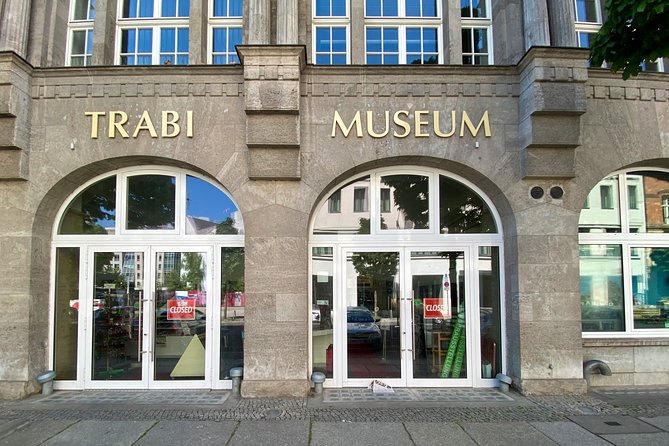
After the Wall and the Nazi-era site, the mood shifts at the Trabi Museum. Here you see a fleet of Trabants, the mass-produced car associated with East Germany. Its nickname, cardboard car, gives you an immediate sense of how differently the vehicle is viewed from the polished automobiles many people associate with Germany.
The stop lasts about five minutes, so expect a quick look rather than a long automotive history. The Trabant is valuable here because it turns an abstract political system into something ordinary. Cars tell you about supply, technology, status, and daily life. A border crossing can feel remote. A family car feels close to home.
I consider this one of the most useful stops for a general audience. The tour is not aimed only at Cold War specialists. The Trabant offers a simple way to discuss life behind the Iron Curtain without filling the whole session with political vocabulary.
Admission to the museum is not included. For the online tour, the practical point is that the museum appears as part of the guide’s route, not as a separate in-person visit. If the Trabant catches your interest, you can add the museum to a future Berlin plan, but this experience itself is designed to give you a brief introduction.
A few more Berlin half-days to weigh up
- Berlin: Reichstag, Dome and Government District Guided Tour
★ 4.7 · 18,288 reviews - Berlin: 1-Hour City Tour by Boat with Guaranteed Seating
★ 4.3 · 16,993 reviews - Berlin: Boat Tour Along the River Spree
★ 4.4 · 11,252 reviews - Discover Berlin Half-Day Walking Tour
★ 5.0 · 9,624 reviews
Checkpoint Charlie and the 1961 tank standoff
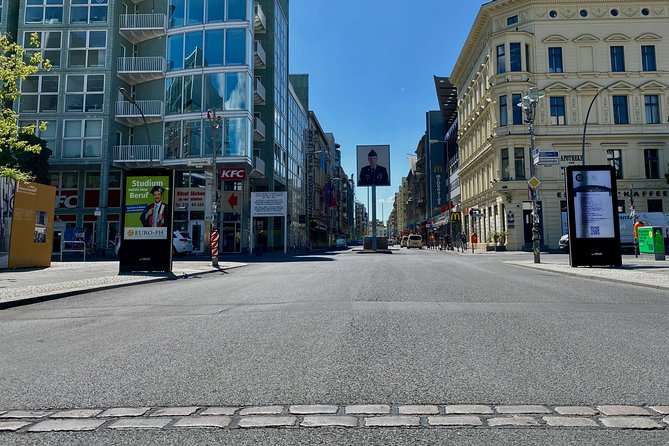
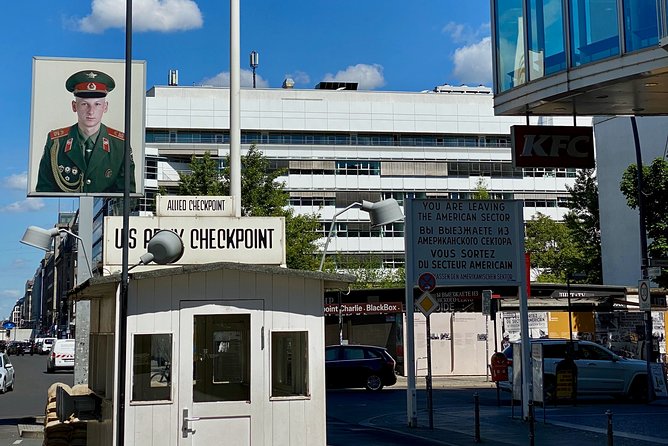
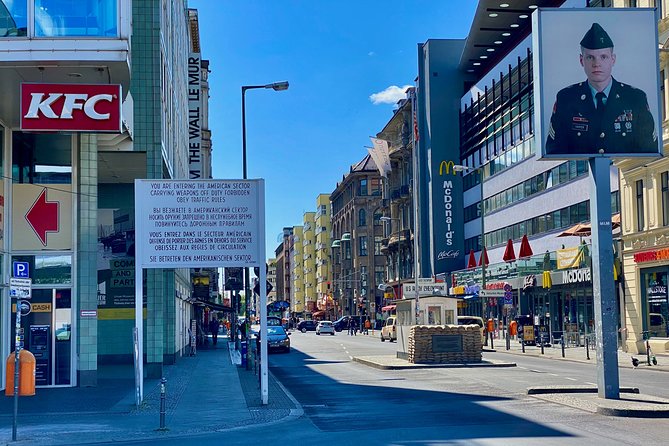
The final major stop is Checkpoint Charlie, the most famous border crossing along the Berlin Wall. The name carries plenty of weight, but the important part of this visit is the 1961 confrontation, when American and Soviet tanks faced one another and Berlin became a dangerous point in the nuclear standoff.
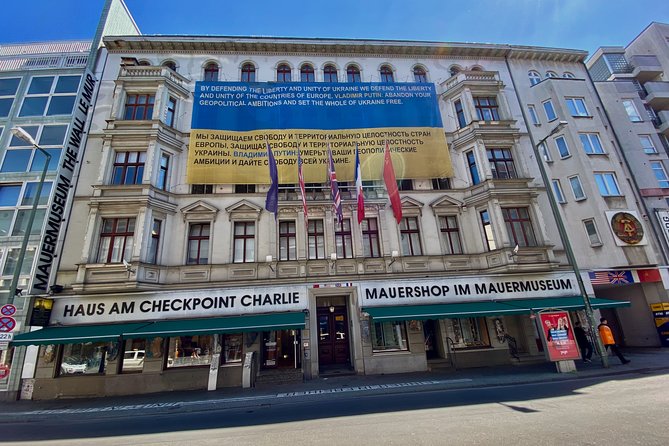
The presentation at Checkpoint Charlie lasts about 15 minutes. That gives the guide room to explain why the crossing mattered and why the tank confrontation caused such alarm far beyond Berlin. You finish at the Black Box exhibition, which is also listed as free to enter.
Checkpoint Charlie is one of those places where a guide adds real value. On your own, you might see a famous sign and a busy city intersection. A live explanation can connect the location to the wider political crisis and help you understand why this border point became so well known.
There is a practical limitation. This tour cannot reproduce the feeling of standing at the former border or looking down an actual Berlin street. The online version gives you context and access from home, but not the physical scale of the Wall or the sensation of crossing a divided city.
Why the live guide matters
The strongest feature here is not the list of sites. It is the chance to speak with a guide while the route is being presented. A fixed documentary can explain the same events, but it cannot respond when you ask why a particular place mattered or how the sites relate to one another.
Taylor has been praised for guiding the route with strong knowledge of Berlin and a pleasant manner. Sam has also been described as engaging and well prepared. Since guide assignments can vary, you should not assume that one specific person will lead your session, but these names give you a useful sense of the human side of the experience.
The private setup is another plus. You are not sharing the session with a large public audience. That makes this a good choice for a household, a family group, or friends who want to ask questions without worrying about taking time from strangers.
The hour-long schedule also helps. Berlin’s history can become overwhelming, especially when Nazi Germany, the Wall, the Soviet Union, and the nuclear standoff are all involved. This route keeps the subject moving and gives each site a clear role.
Is $23 good value for an online Berlin tour?

At $23, the price is fair if you want a live cultural activity rather than a free video. You are paying for a professional local guide, a private session, and the ability to interact in real time. For a household sharing one screen, the cost can feel especially reasonable.
The value depends on what you want from Berlin. If you need a full museum visit, detailed architecture commentary, or a long walking tour, this is not enough. The listed stops receive roughly five to 15 minutes each, and the full experience lasts about an hour.
If you are at home, planning a future visit, or unable to travel easily, the calculation looks better. You get a structured route through several important sites without transport costs, admission charges for the free locations, or the time needed to cross Berlin.
Group discounts are available, which may improve the price for a larger private gathering. I would think of this as a guided introduction and shared evening activity, not a replacement for visiting Berlin.
Who will enjoy this experience most?
I would recommend it to people who want a focused introduction to Berlin’s Cold War story. It suits first-time visitors planning a future trip, families looking for an educational activity, and couples or friends who want something more purposeful than another evening of television.
It is also a good fit if you have a particular interest in the Berlin Wall, Checkpoint Charlie, East Germany, or the connection between Nazi Germany and postwar Berlin. The route gives you several entry points into the subject, so you do not need specialist knowledge before joining.
The experience may be less satisfying if you want a slow, detailed tour of each museum. You also need to be comfortable learning through a screen. The online setting is convenient, but it cannot give you the sounds, scale, and street-level feel of Berlin.
The tone appears suitable for most people, and the booking information says most participants can take part. Still, the Topography of Terror deals with grim events, so parents should decide if that subject fits their household.
Practical details before you book
You need Zoom downloaded on a device before the session. Because the tour is live, it is worth checking your software and internet setup ahead of time rather than waiting until the start.
The meeting point is listed as Berlin, Germany, though this is a virtual activity. The session ends back at the meeting point, which in practical terms means you finish the Zoom experience where you began.
Confirmation is sent within 48 hours of booking, subject to availability. The activity is private, so only your group participates. A mobile ticket is available, and group discounts may apply.
The cancellation policy is straightforward. You can receive a full refund if you cancel at least 24 hours before the local start time. Cancellations or changes inside that 24-hour window are not refunded or accepted. The policy also says the experience requires good weather, and a weather cancellation brings an alternative date or a full refund.
Should you book Cold War Berlin?
Book this tour if you want a live, private history lesson with a human guide, especially when you are spending an evening at home. The mix of the Berlin Wall, Checkpoint Charlie, the Trabi Museum, Gropius Bau, and the Topography of Terror gives you more range than a tour focused on one landmark.
I would be most likely to book it before a Berlin trip. The hour can help you decide which places deserve more time in person, and the question-and-answer format lets you clear up points that a guidebook may leave vague.
Skip it if you are already in Berlin and can easily visit these sites yourself. In that case, walking the former border and entering the museums will give you a fuller experience. At $23, though, this is a sensible choice for a private household activity, a first look at Berlin’s Cold War past, or a way to make a future Germany trip feel more real.
FAQ
How long does the Cold War Berlin virtual tour last?
The experience lasts approximately one hour.
How does the tour take place?
The tour takes place live through Zoom. You connect with your group and professional local guide online.
Is the tour private?
Yes. Only your group participates in this private activity.
Which places are included?
The route includes Gropius Bau, the Topography of Terror, the Trabi Museum, Checkpoint Charlie, and the Black Box exhibition.
Can I ask the guide questions?
Yes. The live format allows you to interact with the guide and ask questions during the experience.
Which guides may lead the tour?
The named guides associated with the experience include Taylor and Sam. Guide assignment can vary.
Do I need Zoom before joining?
Yes. You need to download Zoom on a device to participate.
Are admission tickets included?
Admission is listed as free for the Topography of Terror and the Black Box exhibition. Tickets are not included for Gropius Bau or the Trabi Museum.
Can I cancel for a full refund?
Yes, if you cancel at least 24 hours before the experience start time. Cancellations made less than 24 hours before the start are not refunded.
Just added around Berlin
- eSIM for Germany and 34 European Countries★ 4.5 · 16 reviews
- Your ticket to The Wall Museum Berlin★ 3.0 · 60 reviews
- Walking on the Wall: 3-Hour Tour in Berlin★ 4.5 · 34 reviews
- Rickshaw Tours Berlin – Groups of up to 16 people with several rickshaws★ 4.0 · 97 reviews
- Warnemuende Shore Excursion: Private Berlin Tour★ 4.5 · 27 reviews
- Love and War in Berlin: Self-Guided Story Puzzle Walk★ 5.0 · 7 reviews
- Warnemuende Shore Excursion: Berlin Private Sightseeing Tour from Rostock★ 5.0 · 4 reviews
- Berlin’s Gay, Lesbian, and Queer Scene Small-Group Walking Tour★ 4.5 · 66 reviews
Berlin Tours, compared.

Reichstag, Dome and Government District Guided Tour
Read our review →
1-Hour City Tour by Boat with Guaranteed Seating
Read our review →




Reichstag, Plenary Chamber, Cupola & Government Tour
Read our review →
Browse the lists this tour appears in