
Review · BERLIN TOURS
Berlin: Sachsenhausen Concentration Camp Tour in English
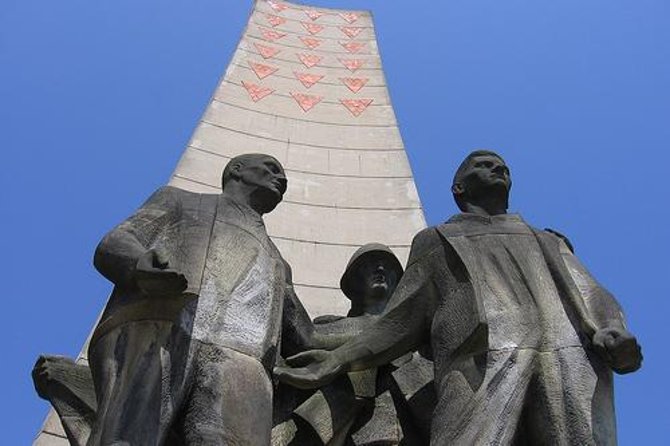
Sachsenhausen is not a sightseeing stop in the usual sense. It is a place of remembrance, evidence, and difficult questions. The camp’s broad grounds, surviving buildings, empty spaces, and stark memorials help you understand how Nazi persecution worked on a daily scale, from administration and forced labor to mass murder.
I like two things right away. A licensed guide stays with you from Berlin to Oranienburg and back, so you do not have to manage the train, route, and memorial site alone. I also like the way the tour connects the camp’s Nazi period with its later use by the Soviets, rather than treating 1945 as the end of the story.
The main drawback is the amount of walking and standing outdoors. The visit lasts about five and a half to six hours, with a train ride, a 20-minute walk from Oranienburg station, and roughly three hours at the memorial. Cold, rain, or limited mobility can make this a demanding day.
Key points at a glance
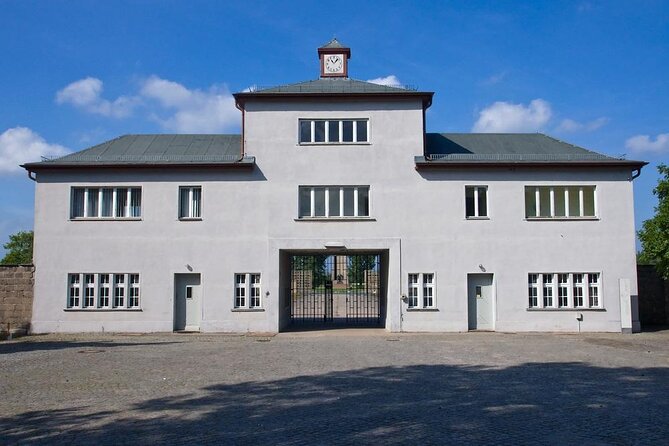
- Sachsenhausen is about 35 minutes from Berlin by train, followed by a 20-minute walk to the memorial.
- Station Z, the gas chamber area, gallows, and punishment cells bring the camp’s killing system into sharp focus.
- The Camp Administration Center explains how Sachsenhausen fit into the wider Nazi camp network.
- Stories of resistance include a Jewish prisoner revolt, British POW defiance, and sabotage by Soviet and Polish prisoners.
- Special Camp 1/7 shows how the Soviet authorities reused part of the site after the war.
- Guides such as Daniel, Irish Paul, Xavier, Georgia, and Gregor have been praised for clear explanations and careful handling of painful material.
Starting beside the Palace of Tears
Your day begins outside Friedrichstraße train station, on the square beside the Traenenpalast, or Palace of Tears. Look for the guides with yellow umbrellas. This is a useful meeting point in central Berlin, but give yourself enough time to find the square rather than rushing out of the station at the last minute.
The guide checks the group and helps explain the public transport arrangement. An ABC ticket is required for the trip to Sachsenhausen and the return to Berlin. That ticket is not included in the tour price, but staff can help you buy it at the meeting point.
The public transport setup has a practical benefit. You travel as people in Berlin actually travel, rather than sitting in a private coach with no sense of the distance between the capital and Oranienburg. It also means you should be ready for normal train delays, crowded platforms, and the need to stay with the group.
The ride to Oranienburg takes about 25 to 35 minutes, depending on the exact service and timing. Some descriptions list the return journey as about 45 minutes, and the full transport time can feel close to an hour each way once transfers and walking are counted.
More WWII History Tours in Berlin
- Berlin: Third Reich and Cold War 2 Hour Walking Tour
★ 4.9 · 6,830 reviews - Berlin: Sachsenhausen Concentration Camp Tour in English
★ 5.0 · 5,711 reviews - Berlin’s Best: 2 Hour Walking Tour Third Reich and the Cold War
★ 5.0 · 5,486 reviews
The walk from Oranienburg to the memorial
From Oranienburg station, the group walks for about 20 minutes to Sachsenhausen Memorial. This is not a quick hop from train to gate. You need comfortable shoes, water, and enough stamina for a day on foot.
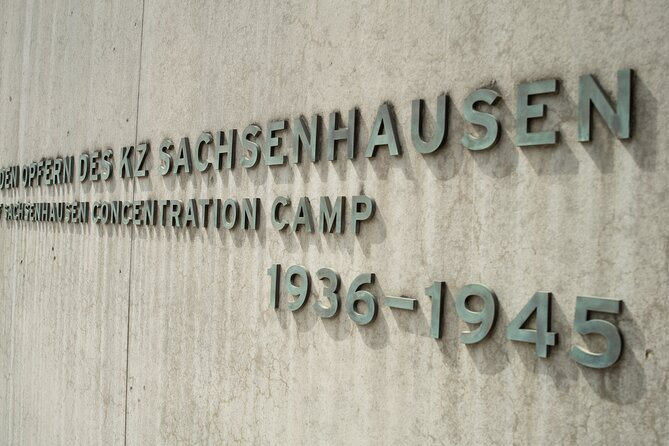
The walk also gives the guide time to set the scene. Sachsenhausen was built in 1936 by the SS, first to imprison people seen as political opponents of the Nazi regime. Its purpose widened quickly. People were arrested because the NSDAP classified them as enemies, outsiders, or threats to its racial and political ideas.
That wider context matters. Sachsenhausen was not simply an isolated prison. The Camp Administration Center once supervised the concentration camp system’s 32 main camps and more than 1,000 satellite camps. The camp’s layout and offices show how persecution depended on paperwork, orders, guards, transport, labor, and a chain of command.
If you have walking difficulties, take the access warning seriously. The tour is not wheelchair accessible and is not recommended for people with limited mobility. One guide has been praised for taking extra care with a participant who had walking difficulties, but that should not be taken as a promise that the route will suit every need.
The Camp Administration Center and the machinery of control
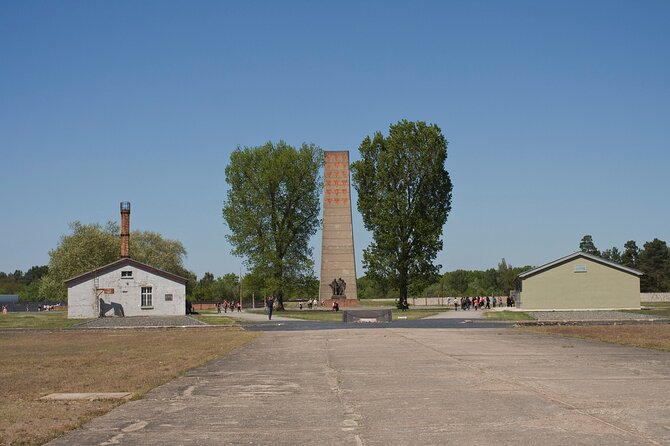
The guided visit begins at the former Concentration Camps Inspectorate, now the Camp Administration Center museum. This is one of the most useful places to begin because it moves the story beyond the individual barracks.
Here, you learn how Sachsenhausen was managed and how its administration connected to camps across the Third Reich. The building represents the bureaucratic side of terror. Lists, orders, classifications, and labor assignments helped turn people into categories and numbers.
Your guide then takes you through the camp grounds, explaining the physical arrangement and what each area was used for. The tour does not simply point at buildings. It connects the buildings to the daily experience of prisoners: overcrowding, punishment, forced labor, hunger, disease, abuse, and the constant power of the SS.
This is where the quality of the guide matters most. The best guides make the sequence clear without turning the visit into a lecture. Daniel is often singled out for using photographs and stories to make the people and places easier to understand. Guides including Paul, Xavier, Georgia, and Gregor have also been praised for explaining painful material with care and for answering questions patiently.
Barracks, Jewish prisoners, and the routine of cruelty
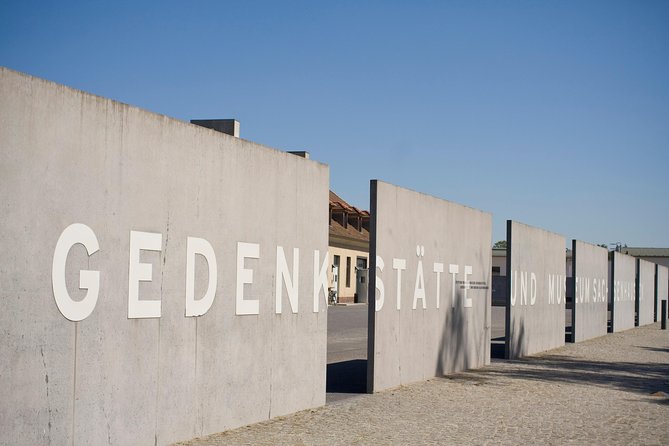
The surviving and reconstructed barracks show the basic environment in which inmates were held. You see the confined spaces and the plain, hard conditions that defined camp life.
The Jewish Barracks form a key part of the visit. Your guide explains the persecution of Jewish prisoners and the revolt by Jewish inmates in 1942. Resistance did not always look like an open uprising. It could involve hiding information, refusing an order, damaging equipment, or helping another prisoner survive.
You also hear about resistance by British prisoners and acts of sabotage by Soviet and Polish prisoners. These stories prevent the camp from being reduced to a story only of helplessness. The prisoners were subjected to overwhelming violence, yet many still found ways to resist, protect others, and hold on to their identity.
The tour also introduces the different groups imprisoned at Sachsenhausen and the unequal treatment they received. You may hear about political prisoners, Jewish prisoners, Soviet prisoners of war, British POWs, and other people targeted by the Nazi system. One notable prisoner was Stalin’s son, a detail that helps show the broad reach of the camp system, though the larger focus remains on the many ordinary people imprisoned there.
More wartime history tours in Berlin:
- Berlin: Sachsenhausen Concentration Camp Memorial Tour
★ 4.7 · 3,716 reviews - Third Reich Berlin: Hitler and WWII Walking Tour
★ 5.0 · 3,301 reviews - Sachsenhausen Concentration Camp Bus Tour in English from Berlin
★ 5.0 · 1,962 reviews - Sachsenhausen Concentration Camp Memorial Tour (Max. 15 Guests)
★ 5.0 · 1,516 reviews
Station Z and the places of mass murder
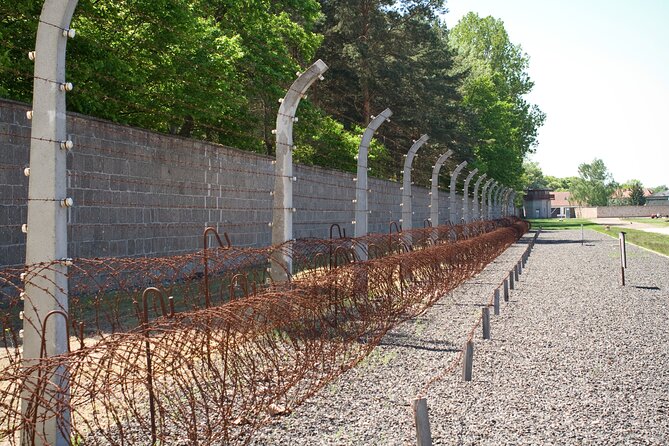
Station Z is one of the hardest parts of the visit. The name refers to the killing facility built at the far end of the camp, a grim counterpart to the entrance area. The site included the gas chamber and places where mass murder took place.
The remains and memorial markers do not recreate every detail, and that restraint can make the place more difficult rather than less. You are left to listen, look, and consider what happened there without the distraction of a theatrical display.
The guide explains how killing was organized and how Station Z fitted into the camp’s wider system. The tone is serious and respectful. This is not a place for casual photographs or light conversation, and a good guide helps the group understand the proper mood.
The gallows are another stark stop. Together, Station Z and the gallows show that the camp used several forms of violence, from organized mass murder to public punishment and execution. The point is not to count horrors. It is to understand that terror was built into the camp’s design and daily operation.
Punishment cells, pathology, and the infirmary
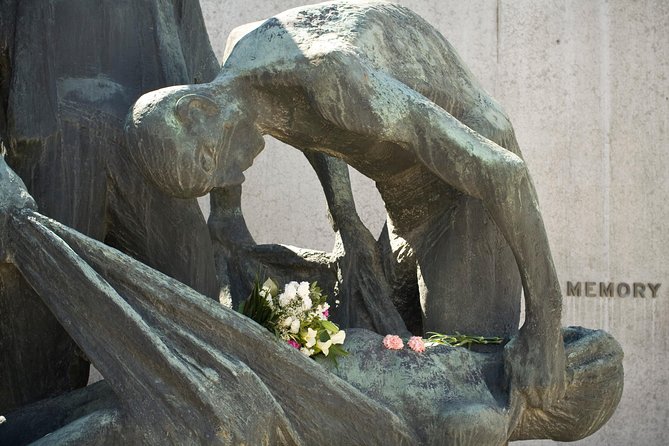
The Punishment Cells show how the SS used detention and isolation to control prisoners. Your guide explains the role of punishment within the camp, including the way the threat of confinement affected everyday life.
The Pathology Laboratory and Infirmary add another layer. The infirmary was not simply a place of care. It was also connected with medical experiments and the abuse of prisoners. The pathology area shows how Nazi violence reached into medical and administrative spaces.
These buildings can be especially challenging because they reveal how normal institutions were twisted into tools of harm. A hospital, laboratory, or office might appear ordinary from the outside, but its role inside the camp system was shaped by SS policy and racial ideology.
You should expect difficult descriptions. The tour is educational, but it is not emotionally light. Some people may prefer to read background material before arriving so they can spend more time processing the site rather than trying to absorb every basic fact on the spot.
The Soviet special camp after 1945
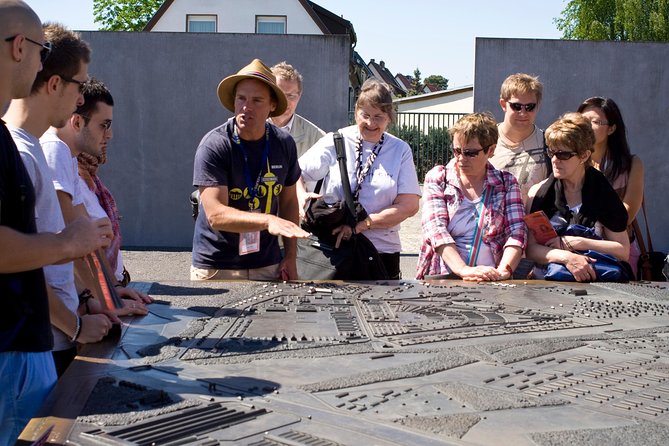
Sachsenhausen’s story did not end when the Nazi camp was liberated in 1945. The Soviet authorities later used part of the site as Special Camp 1/7. The tour visits this area and explains how the camp was repurposed after the war.
This section is important because it resists a simple beginning-and-end version of history. The memorial site contains evidence of different periods of imprisonment, with different governments and reasons for detention. The later Soviet use does not erase the Nazi crimes, and it should not be used to blur the specific responsibility of the Nazi regime. Instead, it shows how a place built for confinement could remain tied to state imprisonment after the war.
The SS Training Camp also helps explain the wider system. Sachsenhausen was a place where SS personnel were trained, not merely a site where prisoners were held. The connection between training, administration, camp discipline, and violence gives you a broader view of how the system operated.
A three-hour guided walk in all weather
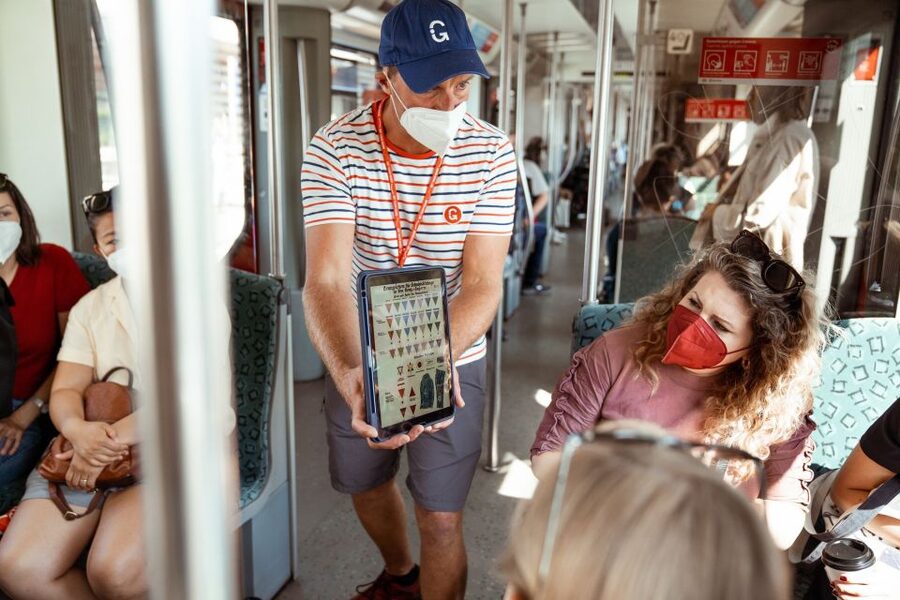
The main visit lasts about three hours. Much of it takes place outdoors, and the route includes several buildings and memorial areas spread across the grounds.
I would plan this as a serious half-day outing, not a quick add-on between Berlin museums. Wear comfortable shoes and clothes suited to the weather. The tour runs in rain, cold, and other ordinary conditions, and winter wind can be especially unpleasant across the open site.
Bring water and a snack. Food and drinks are not included, and the timing can carry you into a late lunch. One participant specifically found a good breakfast or packed snacks useful, especially during a December visit.
The guides appear to make practical adjustments when weather is poor. Georgia, for example, has been praised for positioning the group out of the wind during explanations. Irish Paul was also praised for choosing safe, workable arrangements during very cold weather. Still, the weather remains your responsibility, so check the forecast and dress properly.
Group size can vary. Private and small-group options are available, while larger departures may be divided into smaller groups for the memorial visit. That split is helpful because a guide can speak more directly to the group and manage questions better.
Is $22 good value for this day?
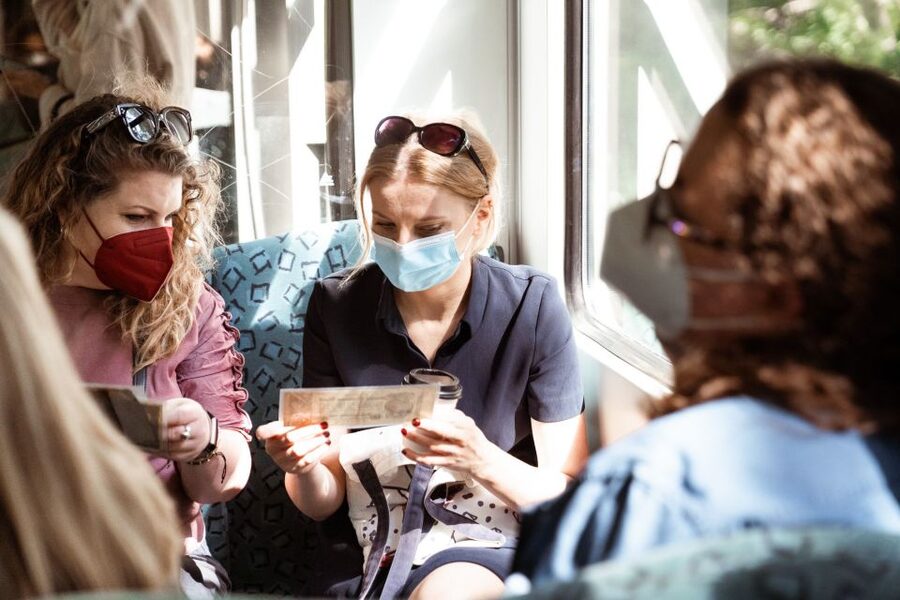
At about $22 per person, the tour is inexpensive for a five-and-a-half to six-hour experience with a licensed English-speaking guide and a three-hour guided visit. It also includes a €3 donation to the memorial.
You must pay separately for the ABC public transport ticket, and you handle your own food and drink. Hotel pickup and drop-off are not included unless you select a private option with a hotel meeting arrangement. Even after adding transport and a snack, the price remains strong if you want guided context rather than a self-guided visit.
The real value is the time saved and the structure provided. You do not need to work out the route to Oranienburg, identify every building, or decide how to approach the site. The guide explains the chronology, points out locations that are easy to miss, and helps connect the Nazi and Soviet periods.
A self-guided visit may suit you if you prefer silence, a slower pace, or more time in the museums. This tour suits you if you want someone to explain what you are seeing and help you handle the logistics. It is not a luxury tour, and public transport is part of the experience, but that is also why the price stays low.
What the guides do best
The strongest part of the experience is the human explanation. This subject needs accuracy, restraint, and a clear sense of proportion. The tour’s most praised guides include Daniel, Paul, Xavier, Georgia, Gregor, Rebecca, Tina, Ariel, Lucia, and Pete F.
Different guides bring different styles. Daniel is described as energetic, organized, and good at using photographs and stories. Paul is praised for combining warmth with serious detail, even in freezing weather. Xavier is noted for balanced explanations and careful treatment of the subject. Georgia receives praise for sensitivity, clarity, and attention to the group.
You cannot assume you will receive one particular guide unless the booking option says so. You can, however, expect an English or German-speaking guide depending on your selected tour. The guide leads the group on public transport and back to central Berlin.
The return journey is included in the guided schedule. At the end, the official drop-off locations include Reichstagufer 17 in Berlin. You may also have the option to remain at the memorial longer and visit museum areas on your own, depending on the day’s arrangements. Confirm this with your guide before separating from the group.
Who should book this Sachsenhausen tour?
I would choose this tour if you have a serious interest in 20th-century history, Nazi Germany, the Holocaust, or memorial sites. It is also useful if you want a first visit with a clear structure and the chance to ask questions.
Families with older children may find it worthwhile, but parents should prepare them for the subject matter. One family found the guide helpful in explaining the development of the camp system in a way their children could understand. Younger children may find the material and walking difficult.
You should think twice if you dislike group schedules, cannot walk for several hours, or want a quiet visit without ongoing explanation. The site is not wheelchair accessible, and the route is not designed for people with walking impairments.
This is not an entertainment outing. A guide may use gentle humor or a friendly manner to keep the group engaged, but the subject remains painful. That balance can help you listen for several hours without making light of the victims or the place.
Should you book it?
Book this Sachsenhausen tour if you want a well-organized, low-cost way to reach the memorial from Berlin and you value clear guidance at a difficult site. The combination of public transport, a licensed guide, three hours at Sachsenhausen, and the €3 memorial donation makes the price easy to justify.
Skip it if you need step-free access, cannot manage moderate walking, or would rather set your own pace. For everyone else, bring sturdy shoes, water, a snack, and weatherproof clothing. Give the site the time and respect it requires, and this can become one of the most important days of your Berlin visit.
FAQ
Where does the Sachsenhausen tour begin?
Meet your guide outside Friedrichstraße train station, on the square beside the Traenenpalast, also called the Palace of Tears. Look for guides holding yellow umbrellas.
How long does the tour last?
The full experience lasts about five and a half to six hours. The guided visit at the memorial lasts about three hours.
How do you reach Sachsenhausen from Berlin?
You travel by public train to Oranienburg, then walk for about 20 minutes to the memorial site. Your guide accompanies you during the journey.
Is public transport included?
No. You need to buy an ABC public transport ticket for the journey to Sachsenhausen and back to Berlin. Staff can help you purchase it at the meeting point.
Is the memorial donation included?
Yes. The tour includes a €3 donation to the camp memorial.
Is the tour available in English?
Yes. English-speaking guides are available. German tours are also offered.
Is hotel pickup included?
Hotel pickup and drop-off are not included in the standard tour. For a private tour, the guide can meet you at your hotel or another preferred location shortly before the start.
Does the private tour use a private vehicle?
No. Even the private option uses public transport, with the guide accompanying you.
Is the tour wheelchair accessible?
No. The activity is not wheelchair accessible and is not recommended for people with limited mobility or walking impairments.
What should you bring?
Bring comfortable shoes, water, snacks, comfortable clothing, a public transport ticket, and clothing suitable for the weather. The tour operates in all weather conditions.
Just added around Berlin
- From Berlin: Gardens & Palaces of Potsdam Bike Tour★ 5.0 · 61 reviews
- Berlin: Battle for Seelow Heights WW2 tour -Clash of Titans★ 5.0 · 27 reviews
- From Berlin: Historical Gems of Potsdam Private Day Trip★ 4.4 · 4 reviews
- Berlin: Französischer Dom 360° Panorama & Crémant to go★ 3.9 · 5 reviews
- Explore Berlin Tour: History and Highlights★ 4.7 · 5 reviews
- Berlin: Evening Yacht Cruise with Aperitif & Dinner Upgrade★ 4.6 · 178 reviews
- Berlin: Expats in Berlin Comedy Show Ticket★ 4.7 · 182 reviews
- Berlin: The Epic Comedy Club Friday Night Showcase★ 4.8 · 28 reviews
Berlin Tours, compared.
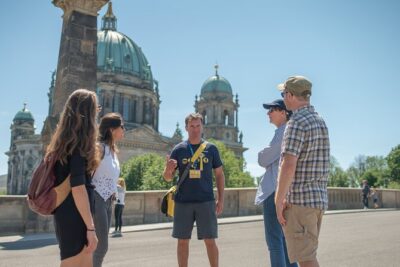
Reichstag, Dome and Government District Guided Tour
Read our review →
1-Hour City Tour by Boat with Guaranteed Seating
Read our review →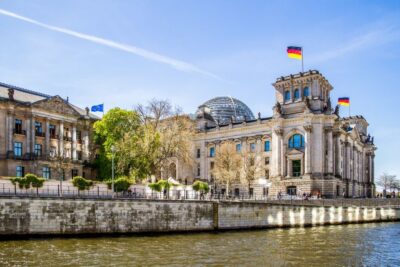
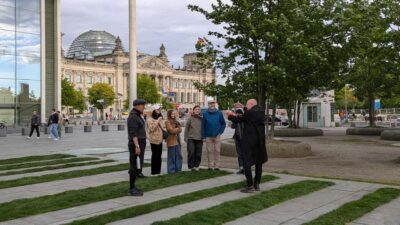
Reichstag, Plenary Chamber, Cupola & Government Tour
Read our review →
Browse the lists this tour appears in