
Review · BERLIN TOURS
Sachsenhausen Concentration Camp Bus Tour in English from Berlin
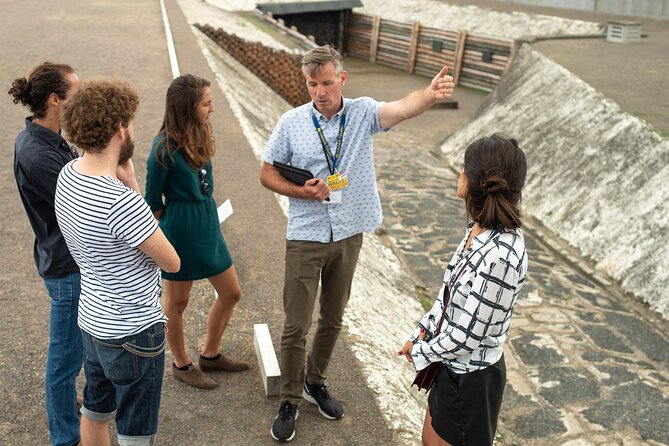
Sachsenhausen is not a light sightseeing stop. It is a quiet, stark memorial where you confront the machinery of Nazi persecution, then learn how the Soviets reused the site after the war. The four-hour bus tour gives you a clear route through a difficult place without making you handle the transport alone.
I like the direct coach from central Berlin and the guides’ strong focus on context before you reach the camp. Guides such as Hannah, Rebecca, Ariel, Maria, and Irish Paul have been praised for explaining the site with care and answering questions clearly. The main drawback is time: four hours is enough for the major points, but not always enough to read every personal account inside the exhibitions.
Key points
- Visit a site used from 1936 to 1945, where about 35,000 people died during the Nazi period.
- See Tower A and the ARBEIT MACHT FREI gate, along with the commandant’s house and infirmary barracks.
- Learn about the Soviet special camp, which operated here after the Second World War and caused another 12,500 deaths between 1945 and 1950.
- Ride by air-conditioned coach from Friedrichstraße, avoiding the train connection to Oranienburg.
- Travel with an English-speaking guide trained by the memorial authority, with the formal group limit listed as 28 people.
- Bring water and a snack, since food and drinks are not included and the memorial visit involves substantial walking.
Why Sachsenhausen Belongs on a Berlin Itinerary
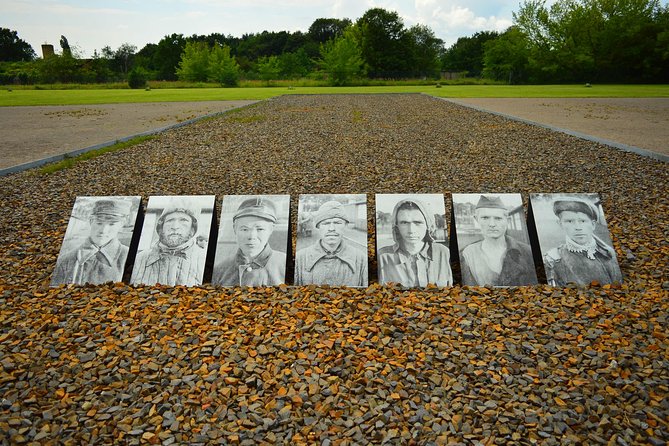
Berlin has no shortage of museums about National Socialism and the Second World War. Sachsenhausen gives you something different: a physical place where the system operated, with the scale, layout, and cold logic of the camp still shaping what you see.
The memorial is not presented as a polished attraction. Large open spaces, surviving structures, reconstructed buildings, and bare foundations make the visit feel spare. That restraint matters. You are not being entertained. You are being asked to look carefully and think about how an organized state turned imprisonment, forced labor, punishment, and murder into routine administration.
The camp operated from 1936 to 1945. About 35,000 people died there during the Nazi period. After the war, Soviet authorities used the site as a special camp from 1945 to 1950, and another 12,500 people died in that period.
That second chapter is easy to miss if you visit without preparation. This tour includes it, giving you a fuller understanding of the site rather than treating Sachsenhausen as a single-period memorial.
More WWII History Tours in Berlin
- Berlin: Third Reich and Cold War 2 Hour Walking Tour
★ 4.9 · 6,830 reviews - Berlin: Sachsenhausen Concentration Camp Tour in English
★ 5.0 · 5,711 reviews - Berlin’s Best: 2 Hour Walking Tour Third Reich and the Cold War
★ 5.0 · 5,486 reviews
Meeting at Friedrichstraße and Riding to Oranienburg
You meet at Reichstagufer 17 near Friedrichstraße station at 10:00 in the morning. Arrive at least 15 minutes early. The coach does not provide hotel pickup, so you need to make your own way to central Berlin.
The air-conditioned bus is one of the clearest reasons to choose this tour over an independent visit. Sachsenhausen is in Oranienburg, outside central Berlin, and the coach takes care of the outward and return journey. You do not need to work out the train route, change plans around local transport, or find the memorial after arriving.
During the ride, your guide begins setting the scene. The trip is used to explain Sachsenhausen, Oranienburg, and the camp system. You may also hear about where prisoners worked in the town and what local people knew about the realities of the camp network.
That context is useful. A camp did not exist in isolation from the town around it. Understanding the relationship between the camp and the local population helps you think about knowledge, denial, fear, and cooperation in a more grounded way.
The group is described as small, with a maximum of 28 people listed in the practical information. The tour highlights also refer to groups no larger than 25, so the exact size can vary. Either way, this is a guided group visit rather than a private tour.
Walking Through Tower A and the Main Camp
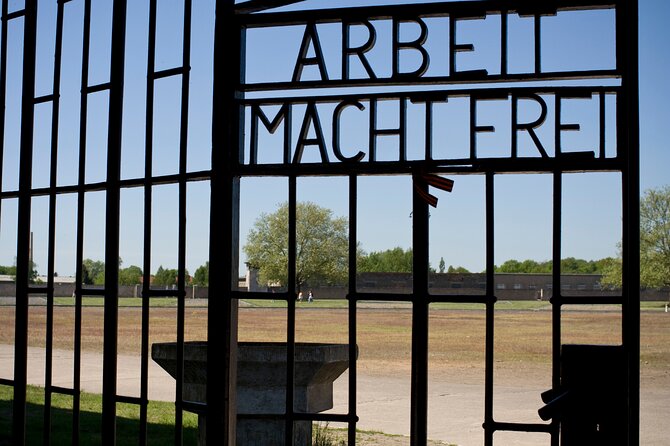
Once you enter the memorial, the guide leads you through the main areas. One of the first major sights is Tower A, the entrance gate carrying the words ARBEIT MACHT FREI.
The phrase is familiar from photographs and other former camps, but seeing it in its original setting is different. The gate was part of the camp’s system of control and intimidation. It presented imprisonment as work while hiding the cruelty and exploitation behind that claim.
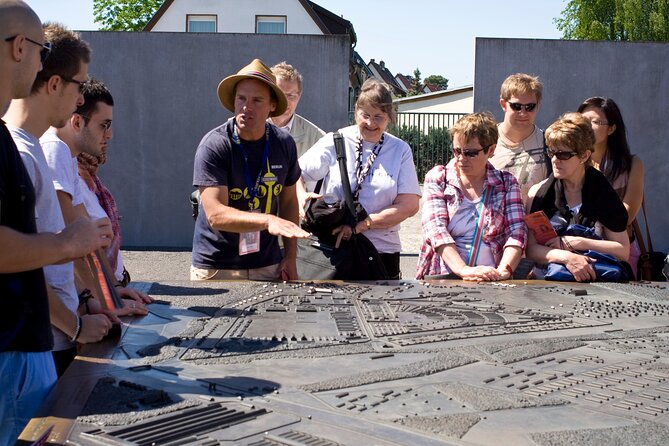
The tour also explains the camp’s design and its intended role. Sachsenhausen was built under Heinrich Himmler as a modern, expandable concentration camp. Its layout reflected the Nazi desire for a system that could grow, organize prisoners, and impose control with grim efficiency.
You will walk through the interior of the former camp area, passing surviving buildings and traces of structures that no longer remain. The open spaces can make the site feel larger and more exposed than you might expect. In cold weather, the lack of shelter adds to the physical seriousness of the visit, so dress for conditions rather than treating this as an ordinary museum trip.
The walking is manageable for people with moderate fitness, but it is not a short stroll between nearby exhibits. The experience is not recommended for people with limited mobility or walking impairments.
The Commandant’s House and Infirmary Barracks
The commandant’s house offers one of the site’s most unsettling contrasts. It represents the administrative and domestic side of the camp system, close to the place where prisoners endured hunger, forced labor, disease, violence, and death.
The guide uses locations such as this to show that the camp was not simply a collection of barracks. It was a controlled institution with staff, offices, rules, routines, and a hierarchy designed to make brutality appear orderly.
The infirmary barracks add another layer. During the war, medical experimentation took place there. You should expect this part of the visit to be difficult. The value of having a guide is especially clear here, since careful explanation can prevent the site from becoming a collection of shocking facts without context.
Guides including Rebecca, Ariel, Maria, Joseph, and Irish Paul have been praised for handling this material with respect and clarity. The guide on your departure will vary, but the tour is intended to be led by someone licensed and trained by the memorial authority.
A strong guide can also help you connect the larger political story to individual lives. That is important at Sachsenhausen, where statistics alone can flatten what happened. The site’s exhibitions contain personal accounts and individual stories, but the schedule may not leave enough time to study all of them closely.
More wartime history tours in Berlin:
- Berlin: Sachsenhausen Concentration Camp Memorial Tour
★ 4.7 · 3,716 reviews - Third Reich Berlin: Hitler and WWII Walking Tour
★ 5.0 · 3,301 reviews - Berlin: Sachsenhausen Concentration Camp Tour in English
★ 4.8 · 1,889 reviews - Sachsenhausen Concentration Camp Memorial Tour (Max. 15 Guests)
★ 5.0 · 1,516 reviews
The Soviet Special Camp After 1945
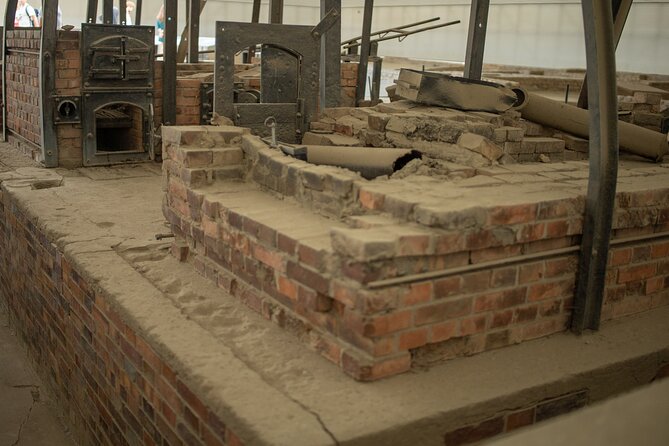
Many people associate Sachsenhausen only with Nazi Germany. The tour also explains its later use by the Soviet authorities as a special camp after the Second World War.
This is not an attempt to blur the two systems into one. The political circumstances and purposes were different. But the postwar chapter is part of the site’s story, and the deaths of another 12,500 people between 1945 and 1950 deserve attention.
Including this period makes the visit more useful for anyone trying to understand Berlin and Germany after 1945. The end of Nazi rule did not instantly erase the camp’s history or turn the site into a simple symbol of liberation. It continued to be used as a place of imprisonment.
The tour’s broad time frame helps you see Sachsenhausen as a memorial with several layers. Still, if you want a close reading of every exhibition, you may find the guided visit too quick. One important tradeoff is convenience and structure versus free time for your own research.
What the Four-Hour Schedule Really Gives You
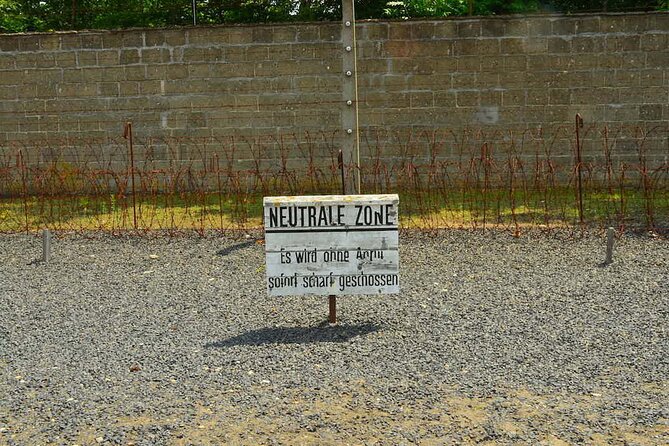
Four hours includes the coach journey from central Berlin, the guided visit, and the return to Friedrichstraße. That makes this an efficient half-day activity, but the schedule is tight.
You will receive a guided introduction, see the main structures, hear the major historical story, and have time to ask questions. The guide also continues helping on the journey back. Several guides have offered Berlin suggestions during the return trip, including advice about places to eat and other sights.
I like that final touch because it makes the tour feel connected to the rest of your time in Berlin. After such a serious morning, practical advice about your next meal or afternoon visit can help you shift back into ordinary city life.
The limit is that the visit cannot cover everything in depth. Two separate pieces of feedback point to the same issue: there may be too little time to read the many individual stories displayed around the memorial. One person described the outing as an express tour and suggested going independently by train if you want longer with the museum material.
That is fair advice. If your main goal is a structured introduction, the tour works well. If you want to spend hours reading testimonies, studying documents, and moving at your own pace, independent travel may suit you better.
Guides Who Shape the Experience
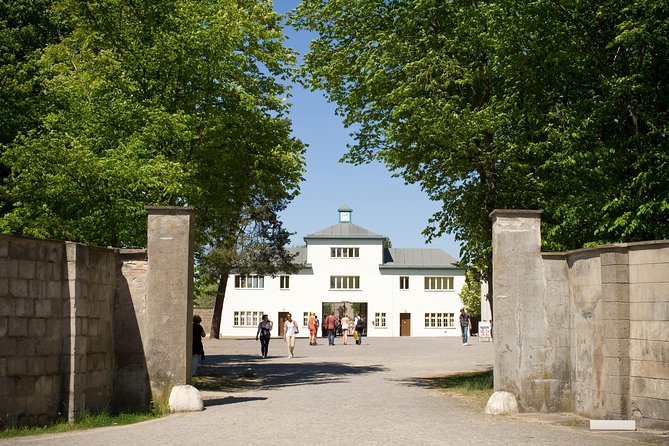
The guide matters greatly here. Sachsenhausen is not a place where a fast list of dates is enough. You need someone who can explain the rise of the Nazi regime, the camp’s purpose, the prisoner experience, and the postwar period without turning suffering into spectacle.
The guides named in the feedback include Hannah, Rebecca, Ariel, Maria, Joseph, Irish Paul, Mikhail, Michal, Jamie S., Campbell, Georgia, Klaus, and Joshua. Hannah was especially noted for combining historical detail with a family story about her grandparents’ escape from Nazi Germany. Rebecca was praised for answering questions, adding context, and speaking with care on the bus and at the memorial.
Ariel was described as engaging, well paced, and able to answer questions. That pacing matters in winter, when the cold can make a long outdoor explanation hard to follow. Joshua was appreciated for his genuine storytelling, though the limited schedule was clear during that visit.
Your guide will not necessarily be one of these people. Names can change by departure date. The useful point is that the tour depends heavily on the individual leading it, and the strongest experience comes when the guide gives both context and room for quiet thought.
Price, Group Size, and What You Get
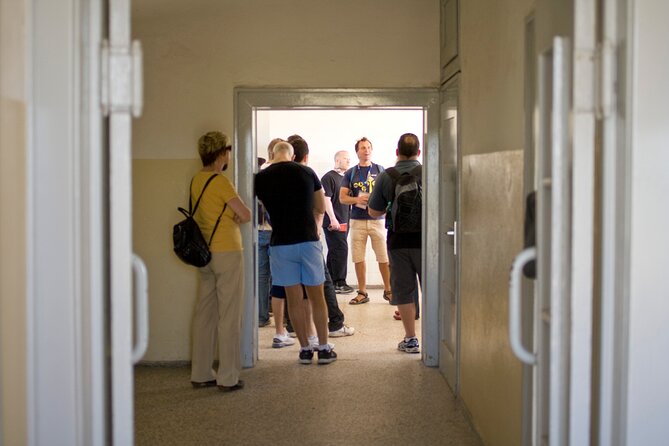
At about $68.77 per person, the tour is not the cheapest way to reach Sachsenhausen. You are paying for the coach, driver, licensed guide, memorial admission, guided group visit, return transport, and a €3 donation to the memorial.
The value is strongest if you want a simple half-day plan from central Berlin. Transport is handled, the route is organized, and you have an English-speaking guide to explain what you are seeing. For a first visit, that can prevent the site from feeling confusing or disconnected.
The value is weaker if you already have a strong grasp of the history or want to spend a long time with the exhibitions. In that case, the train may cost less and give you more control over your pace, though you would lose the included guide and direct coach service.
The formal maximum of 28 people is worth noting. This is not an intimate private walk, but it is also not presented as a huge coach excursion. Arriving early helps you start calmly and find the group before departure.
Practical Advice for a Difficult Outdoor Visit
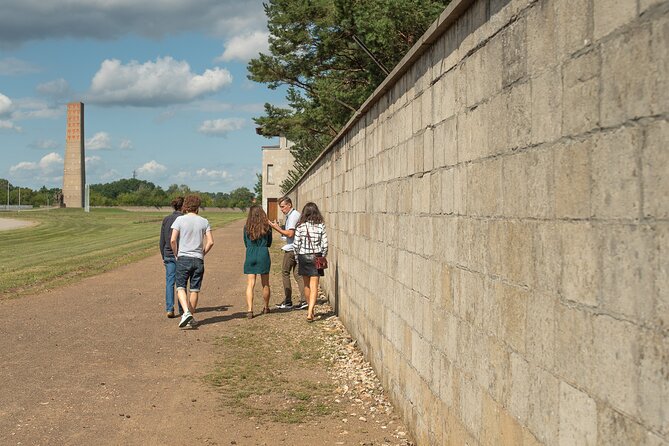
Wear comfortable shoes. The tour requires a moderate level of fitness and includes walking across a large memorial site. Limited mobility or walking difficulties could make the visit hard.
Bring a drink and a snack. Food and beverages are not included, and the schedule is long enough that you may want something with you. Keep the snack discreet and follow the memorial’s rules, since this is a place of remembrance rather than a casual picnic stop.
Dress for the forecast. Much of the visit takes place outdoors, and one account specifically described the cold and snow as making the experience even more harrowing. You do not need to seek out harsh weather, but you should be ready for it.
Give yourself emotional space afterward. You might find the visit upsetting, especially in the infirmary area or when hearing personal stories. The tour ends back at the Friedrichstraße meeting point, but the subject may stay with you long after the bus ride.
You can cancel for a full refund if you do so at least 24 hours before the start time. Cancellations or changes made less than 24 hours before departure are not accepted for a refund. Most important on the day itself, arrive 15 minutes early. The bus leaves from the meeting point, and missing it can mean missing the entire visit.
Who Should Book This Sachsenhausen Tour?
I recommend it if you have limited time in Berlin and want a guided introduction to Nazi-era history outside the city center. It suits you especially well if you prefer direct transport, clear explanations, and a set four-hour schedule.
It is also a good choice for families and small groups who want to learn together. The subject is serious, but guides have been praised for being respectful, approachable, and willing to answer questions. The bus ride gives the group time to prepare before arrival and talk afterward.
I would think twice if you dislike fixed schedules or want to read every exhibition label. The tour covers the principal areas, but the short format can leave little time for extended personal study. An independent visit may be better for a researcher, a history student, or anyone returning to Sachsenhausen for a second look.
Should You Book It?
Book this tour if you want convenient transport and strong historical guidance in a half-day format. Sachsenhausen is too important to treat as a quick photo stop, and the best guides help you understand both the site and the wider events that created it.
Do not book it expecting unlimited time inside every exhibition. The main compromise is clear: you gain a coach, a planned route, and an English-speaking guide, but you give up some freedom to linger.
For a first visit from Berlin, I think the balance is good. Bring water, wear shoes you can walk in, arrive early, and approach the memorial with patience. This is a difficult place, but learning what happened there is one of the most serious and worthwhile things you can do during a Berlin stay.
FAQ
Where does the Sachsenhausen bus tour start?
The tour starts at Reichstagufer 17, 10117 Berlin, near Friedrichstraße station. The scheduled departure time is 10:00 am.
How early should I arrive?
You should arrive 15 minutes before the scheduled departure time. Hotel pickup is not included, so you need to reach the meeting point yourself.
How long does the tour last?
The experience lasts approximately four hours, including the journey from central Berlin, the memorial visit, and the return trip.
Is transportation included?
Yes. An air-conditioned coach takes you from central Berlin to Oranienburg and returns you to the Friedrichstraße meeting point.
Is entry to Sachsenhausen included?
Yes. The price includes entry to the Sachsenhausen Memorial and a guided group visit. It also includes a €3 donation per person to the memorial.
Is the tour conducted in English?
Yes. The activity is offered in English and includes a licensed guide trained by the memorial authority.
Is food included?
No. Food and drinks are not included. You should bring a snack and a drink with you.
Can I cancel for a full refund?
Yes. You can cancel at least 24 hours before the local start time for a full refund. Cancellations and changes made less than 24 hours before departure are not accepted for a refund.
Just added around Berlin
- From Berlin: Gardens & Palaces of Potsdam Bike Tour★ 5.0 · 61 reviews
- Berlin: Battle for Seelow Heights WW2 tour -Clash of Titans★ 5.0 · 27 reviews
- From Berlin: Historical Gems of Potsdam Private Day Trip★ 4.4 · 4 reviews
- Berlin: Französischer Dom 360° Panorama & Crémant to go★ 3.9 · 5 reviews
- Explore Berlin Tour: History and Highlights★ 4.7 · 5 reviews
- Berlin: Evening Yacht Cruise with Aperitif & Dinner Upgrade★ 4.6 · 178 reviews
- Berlin: Expats in Berlin Comedy Show Ticket★ 4.7 · 182 reviews
- Berlin: The Epic Comedy Club Friday Night Showcase★ 4.8 · 28 reviews
Berlin Tours, compared.
Reichstag, Dome and Government District Guided Tour
Read our review →
1-Hour City Tour by Boat with Guaranteed Seating
Read our review →
Reichstag, Plenary Chamber, Cupola & Government Tour
Read our review →
Browse the lists this tour appears in