
Review · BERLIN TOURS
Cold War, Berlin Wall, Spies and the East Side Gallery
The most powerful part of this Cold War Berlin tour is the chance to connect big events with ordinary lives. You move from Friedrichstrasse Station, where families once faced painful separations, to Wall remains and the former death strip, then finish at the East Side Gallery, where the old barrier has become public art.
I like the route for two reasons. First, it covers both the political story and the personal one, from NATO and Soviet tension to escape attempts and Stasi surveillance. Second, the guides make good use of photos, personal stories, and questions. Klaus is praised for his clear storytelling, while Nikolai and Tobi have offered firsthand insight into life in East Germany.
The main drawback is practical: this is not a pure stroll. You need a Berlin AB transport ticket, and the group uses public transport between some sites. One poor experience also involved a passenger being dropped at the wrong meeting location, so check the exact starting point carefully and arrive early.
Key things to know before booking
- The Palace of Tears sets the emotional tone: This former border crossing explains what division meant for families, not just governments.
- You see the Wall from several angles: The route includes Bernauer Strasse, memorial areas, death-strip traces, and the East Side Gallery.
- The tour uses Berlin public transport: Bring or buy the required AB Zone ticket, listed at €10 per person.
- Guide quality is central: Names praised for strong storytelling include Klaus, Nikolai, Paul, Tobi, Xavier, Jamie, and others, though your assigned guide can vary.
- The finish is convenient: The East Side Gallery end point has many onward transport choices.
- The group is capped at 22 people: That is small enough for questions, though hearing the guide can still depend on where you walk.
Why this Cold War route works
Berlin can make the Cold War feel oddly invisible. The Wall is gone from much of the city, border posts have vanished, and modern buildings fill former frontier zones. This tour helps you read the clues that remain.
The central idea is simple: Berlin was not merely a city split in two. It was the place where the United States, its NATO allies, the Soviet Union, and its allies faced one another through political pressure, military threats, propaganda, and espionage. The guide explains that larger contest while showing you the streets where it affected work, family life, travel, and escape.
I like that the route does not stop at famous photo points. You visit the Palace of Tears, former East Berlin power centers, a broad socialist boulevard, Wall memorial sites, and the art-covered Wall at the East Side Gallery. Each stop gives you a different piece of the story.
The experience lasts about three hours and is offered in English. It costs $18.04 per person, which is a low price for a guided introduction to such a wide subject. Add the €10 AB transport ticket, and the cost is still reasonable if you want context rather than a quick look at a few Wall fragments.
More Wall and Cold War walks:
- Berlin: Third Reich and Cold War 2 Hour Walking Tour
★ 4.9 · 6,830 reviews - Berlin’s Best: 2 Hour Walking Tour Third Reich and the Cold War
★ 5.0 · 5,486 reviews - Berlin: DDR Museum Tickets
★ 4.3 · 3,443 reviews
Meeting Berlin’s division at Friedrichstrasse Station
The tour begins at Friedrichstrasse Station, with the booking details giving the meeting point as Reichstagufer 17, 10117 Berlin. You should arrive 15 minutes before the 10 a.m. start. The station is more than a convenient place to meet. It was a major crossing point between East and West Berlin.
The opening explanation gives you the basic map of the divided city and the political situation after World War II. Berlin had changed from the capital of Nazi Germany into the main pressure point in the struggle over postwar Europe. That background matters, because the Wall was not an isolated construction project. It was the visible result of years of conflict over occupation, power, and movement.
The first section also includes an underground route described as a ghost train, referring to lines that continued beneath the divided city while some stations were closed or heavily controlled. The experience is not simply about looking at a historic station. It starts by showing how division reached into the city’s transport system.
You need to pay attention here. Friedrichstrasse is a busy transport hub, and a group meeting outside a large station can be easy to miss. The supplied directions identify Reichstagufer 17, so use that exact address rather than relying only on a broad map label.
The SED and the Palace of Tears
A short stop at the Admiralspalast points out where the East German Socialist Unity Party, or SED, was founded in 1946. The visit is brief, only about five minutes, but it helps explain how political power was organized in the Soviet occupation zone and later in East Germany.
The heart of this early section is the Tränenpalast, or Palace of Tears. It was a border crossing at Friedrichstrasse Station where people said goodbye when East and West Berliners could no longer move freely between the two sides. Its nickname comes from the human cost of those separations.
Allow about 20 minutes here. The site now contains a museum with exhibits on border controls, escape attempts, separation, and reunification. This is one of the tour’s strongest stops because it turns an abstract political conflict into a family story. You can understand surveillance and border rules in a more direct way when you consider the simple act of saying goodbye without knowing when you will meet again.
The Palace of Tears is also a useful correction to the idea that the Berlin Wall only affected people living beside it. The division reached trains, offices, schools, friendships, and family visits. A short museum visit cannot explain every detail, but it gives the rest of the tour a human center.
Alexanderplatz and the daily life of East Berlin
At Alexanderplatz, the guide shifts from border crossings to daily life. The square was a major public space in East Berlin, used for official gatherings, communist displays, shopping, transport, and ordinary errands.
This is where the Cold War becomes less about dramatic spy stories and more about the routines of a tightly controlled state. The guide discusses what it meant to live in the German Democratic Republic, including the reach of the Stasi, the East German secret police. You hear about surveillance methods linked to the Stasi, as well as the CIA and KGB.
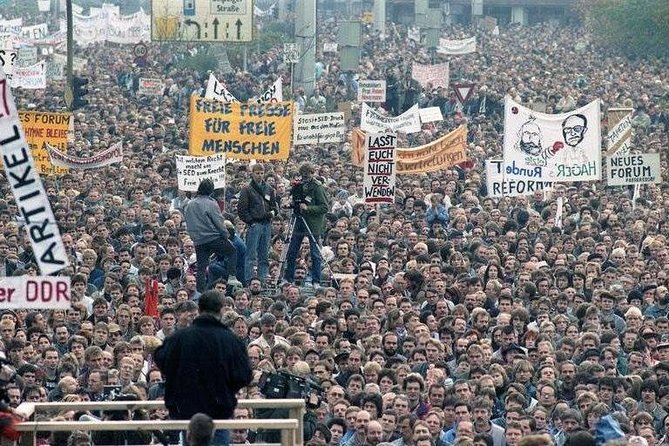
The stop lasts about 15 minutes. Alexanderplatz is not a preserved Cold War site in the same way as the Palace of Tears, so you will get more from it if you listen closely to the explanation of the buildings, public space, and political symbolism. The square’s scale helped make it suitable for mass rallies and state messaging, but it was also simply part of everyday East Berlin.
This is an area where a strong guide makes a real difference. Klaus is praised for offering a large amount of information in a clear, easy-to-follow way. Other guides, including Paul and James, have been noted for using photos and answering questions. If you enjoy connecting present-day streets with older images, ask the guide to show how the square and surrounding architecture have changed.
More museums and galleries in Berlin:
- Berlin: Jewish Museum Berlin Entrance Ticket
★ 4.5 · 8,393 reviews - Berlin: Natural History Museum Entrance Ticket
★ 4.6 · 3,382 reviews - Berlin: Neues Museum Entry Ticket
★ 4.6 · 3,261 reviews - Skip-the-Line: Berlin Wall Museum at Checkpoint Charlie
★ 4.1 · 2,041 reviews
Karl-Marx-Allee and socialist showpiece architecture
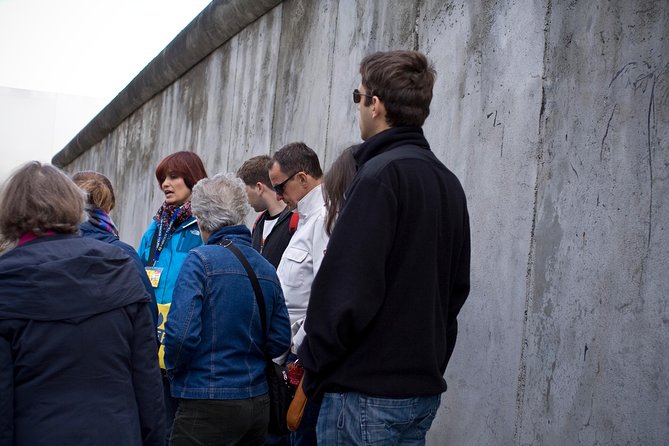
The walk continues to Karl-Marx-Allee, a grand East German boulevard lined with monumental Stalinist buildings. The stop takes about 20 minutes and adds an architectural layer to the political story.
The boulevard was designed to project strength and success. Its large scale, formal design, and imposing apartment blocks were meant to display the ideals of the socialist state. Yet the official image did not always match daily life behind the Iron Curtain. That contrast is one of the most useful points to explore here.
You should not expect a long architectural tour with interior visits. The value lies in seeing how the state used buildings and public space to express ideology. The guide can also explain how a showcase boulevard functioned as part of the public face of East Germany.
There is no admission fee listed for the stop, but transport costs are separate. Since the route covers several districts, the required AB ticket is not an optional extra in practical terms. Buy it at the meeting point or have a valid ticket ready before the group moves on.
Bernauer Strasse and the death strip
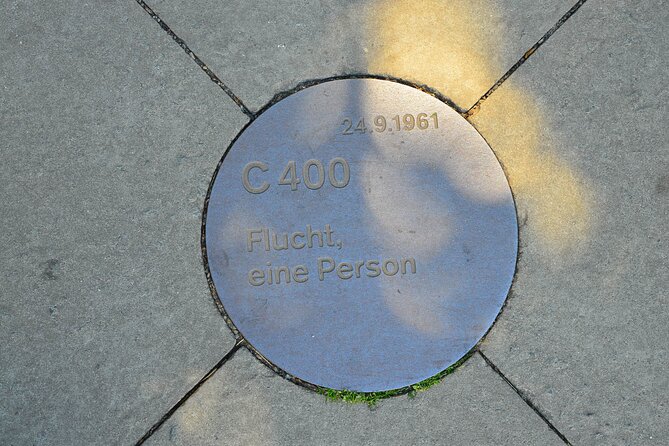
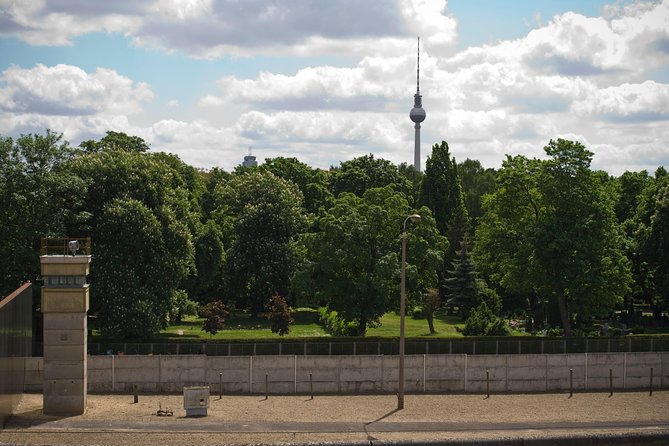
The Wall section at Bernauer Strasse is likely to be the most sobering part of the tour. This area is tied to escape attempts, the physical structure of the border, and the strip of land between barriers that became known as the death strip.
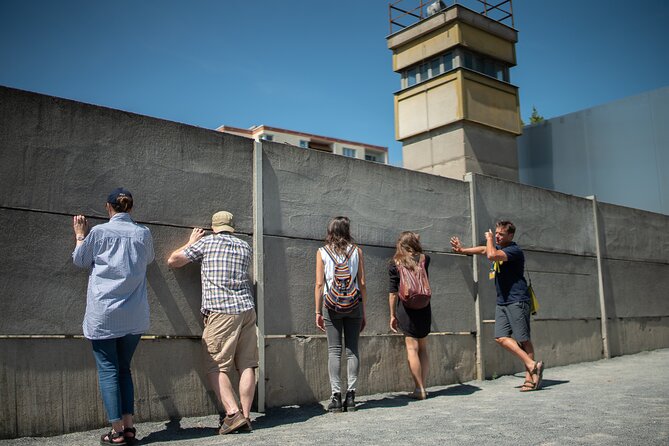
The tour includes remains of the Wall and areas connected with the former Stasi and the East German border system. You are not just looking at a slab of concrete. The guide explains how the border worked, why escape was so dangerous, and how surveillance shaped the choices of people on both sides.
One especially striking detail is the chance to view the western side of the Wall through an opening from the eastern side across the former death zone. That angle helps you understand the Wall as a working border rather than a piece of urban art. The empty space between barriers carried its own threat.
Bernauer Strasse is also associated with remarkable escape attempts. The guide’s stories are important here, but the tone should remain respectful. This is not a stunt or a puzzle trail. It is a place where people risked imprisonment, injury, and death to cross a border imposed on their own city.
The route involves a moderate amount of walking. One guide was praised for keeping a steady pace, and another for allowing time to answer questions. Still, the experience can run beyond three hours if the group asks a lot or the guide adds extra explanation. Allow some flexibility afterward.
From concrete barrier to East Side Gallery
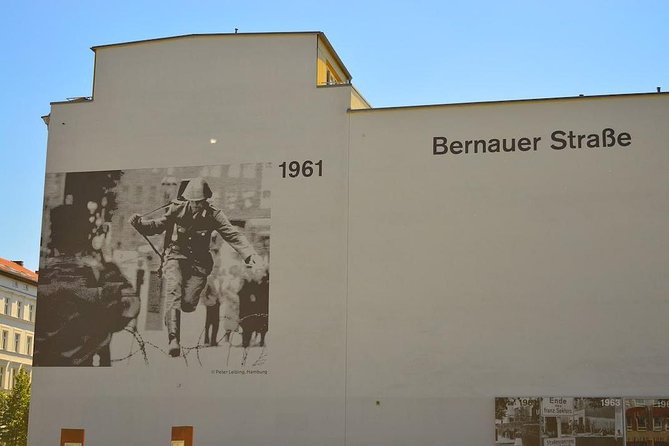
The final stop is the East Side Gallery, reached after the tour’s political and personal history has been laid out. This is the longest remaining section of the Berlin Wall and a permanent outdoor gallery covered with murals.
The change in mood is striking. The Wall once marked a deadly frontier. Here, it carries paintings about freedom, hope, resistance, and the end of the Cold War. The artwork does not erase the Wall’s past, but it shows how Berlin has chosen to use part of it.
You get about 25 minutes at the gallery. That is enough for an introduction and a look at some well-known murals, but not enough to study every work along the long stretch. If the art matters to you, consider returning on your own after the tour. The guided route’s main purpose is the Cold War story, not a detailed examination of each painting.
The tour ends at Mühlenstraße, 10243 Berlin, in the East Side Gallery area. This is a practical finish because there are many transport options for continuing your day. You are also well placed to explore more of the Wall independently.
The guides make or break the experience
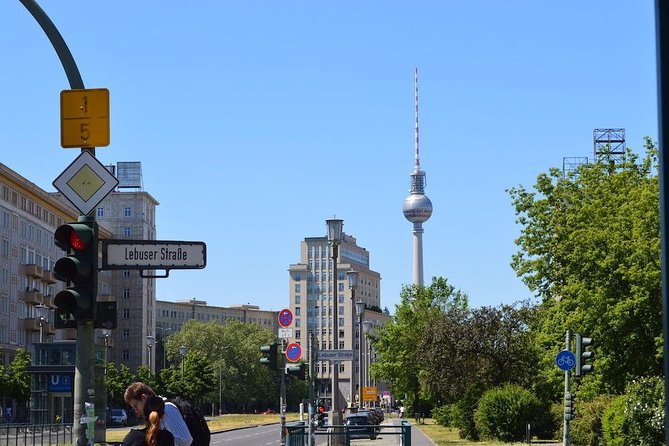
The strongest praise centers on the guides rather than on the route alone. Klaus is described as entertaining, clear, and willing to answer questions. Xavier receives similar praise for energy and enthusiasm. Paul has used an iPad with historical photos, which can make vanished borders easier to picture.
Nikolai is noted for connecting the subject to his own family’s experience of the Iron Curtain. Tobi has spoken about growing up in East Germany. Those personal links can make a major difference, especially for families and younger visitors who know the Cold War mainly from textbooks.
Other praised guides include Ariel, Grayson, James, Jasper, Tina, Rohan, Lewis, Aran, Glen, Eran, and two guides named Jamie. The assigned guide is not guaranteed, so you should book this for the route and subject, not for one particular person.
There is one important caution. A low-rated experience described weak historical structure, too much time spent on guessing games, poor sound, and loose group control. That is a reminder that live walking tours can vary by guide and group. The overall rating is 4.9 from 1,024 reviews, with 99 percent recommending it, but you should still stay near the guide and speak up if you cannot hear.
Price, pace, and practical tradeoffs
At $18.04, the tour offers good value if you want a broad explanation of Cold War Berlin. A private guide would cost far more, while a self-guided walk would require you to research the political background and connect sites yourself.
The extra €10 AB ticket raises the real cost, but it covers the transport needed for the route. The tour is not a single continuous walk from start to finish. Public transport helps connect sites that are spread across Berlin, and it also gives you a brief sense of how the divided city’s transport network worked.
The group limit is 22 people. That is fairly manageable, especially when the guide stops at open spaces, though you may need to position yourself close to the guide in noisy streets or stations. Most people can take part, and service animals are allowed.
Food and drinks are not included. Plan to eat before the 10 a.m. start or after the 1 p.m. finish. Wear shoes suited to city walking and dress for the weather. One person found the day cold enough to need a jacket, so Berlin’s changeable conditions are worth taking seriously.
Free cancellation is available until 24 hours before the start time. Changes or cancellations inside that period are not refunded, and the cut-off uses Berlin local time.
Who should book this Berlin Wall tour
I would choose this tour if you want a structured first look at Berlin’s Cold War story and prefer a guide to connect the sites. It suits adults, families, and anyone interested in politics, espionage, architecture, or the human cost of borders.
It is especially useful if you already know the basic Wall story but want more context. The route goes beyond the famous Brandenburg Gate and East Side Gallery to explain the Stasi, escape attempts, socialist architecture, and life in East Germany.
You may want a different option if you dislike public transport, want a very slow museum visit, or prefer to focus only on Wall art. You should also allow extra time if you have a tight afternoon booking, since the tour can run long when questions and added stories take hold.
Should you book it?
Yes, if you want value, strong historical context, and several very different Cold War sites in one morning. The Palace of Tears and the Bernauer Strasse death-strip views give the tour emotional weight, while Alexanderplatz, Karl-Marx-Allee, and the East Side Gallery show how politics shaped the whole city.
Book it with the correct AB transport ticket, arrive early at Reichstagufer 17, and keep your afternoon flexible. The experience is best for someone who wants Berlin’s Cold War past explained in plain language, with room for personal stories and questions rather than a rushed checklist of monuments.
FAQ
How long does the Cold War Berlin tour last?
The tour lasts approximately three hours, beginning at 10 a.m.
Where does the tour start?
The meeting point is listed as Reichstagufer 17, 10117 Berlin, Germany, near Friedrichstrasse Station. Arrive 15 minutes before the start.
Where does the tour end?
The tour ends at the East Side Gallery on Mühlenstraße, 10243 Berlin.
Is public transport included?
No. You need a Berlin AB Zone transport ticket, listed at €10 per person. It can be purchased from the meeting point.
Is the tour offered in English?
Yes. The experience is offered in English.
What sites are included?
The route includes Friedrichstrasse Station, the Admiralspalast area, the Palace of Tears, Alexanderplatz, Karl-Marx-Allee, Wall memorial areas including Bernauer Strasse, and the East Side Gallery.
Is food included?
No. Food and drinks are not included.
How large is the group?
The group has a maximum of 22 people.
Can I cancel for a refund?
Yes. You can cancel at least 24 hours before the start time for a full refund. Cancellations or changes made less than 24 hours before the experience are not refunded.
Just added around Berlin
- From Berlin: Gardens & Palaces of Potsdam Bike Tour★ 5.0 · 61 reviews
- Berlin: Battle for Seelow Heights WW2 tour -Clash of Titans★ 5.0 · 27 reviews
- From Berlin: Historical Gems of Potsdam Private Day Trip★ 4.4 · 4 reviews
- Berlin: Französischer Dom 360° Panorama & Crémant to go★ 3.9 · 5 reviews
- Explore Berlin Tour: History and Highlights★ 4.7 · 5 reviews
- Berlin: Evening Yacht Cruise with Aperitif & Dinner Upgrade★ 4.6 · 178 reviews
- Berlin: Expats in Berlin Comedy Show Ticket★ 4.7 · 182 reviews
- Berlin: The Epic Comedy Club Friday Night Showcase★ 4.8 · 28 reviews
Berlin Tours, compared.
Reichstag, Dome and Government District Guided Tour
Read our review →
1-Hour City Tour by Boat with Guaranteed Seating
Read our review →
Reichstag, Plenary Chamber, Cupola & Government Tour
Read our review →
Browse the lists this tour appears in