
Review · BERLIN TOURS
Berlin: Guided Bike Tour of the Berlin Wall and Third Reich
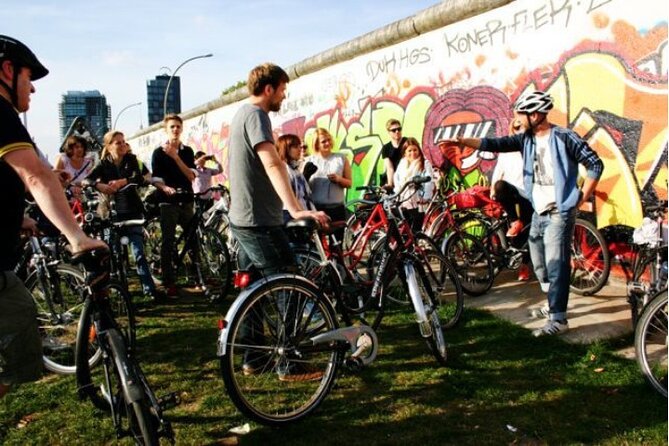
Berlin’s past becomes easier to grasp when you follow it by bike. This three-hour ride covers about 15 kilometers, linking Berlin Wall remains, former border zones, ghost stations, bunkers, and sites tied to Hitler’s plan for Germania.
I like the way the tour uses side streets and bike paths, where you can reach places a bus cannot. I also like the human scale: guides such as Juliet, Jake, Bjorn, Martin, and Peter, a former East Berliner, are known for connecting major events to ordinary life in the divided city.
The main consideration is distance and weather. Fifteen kilometers is manageable for most reasonably active cyclists, but winter cold or heavy rain can make the ride harder. The route is flexible, so the exact stops can change, and you should not book this expecting entry into Hitler’s bunker.
Key points to know before you book
- About 15 kilometers by bike: A practical way to cover several distant Berlin sites in three hours.
- A flexible route: The guide can adjust the ride, so the exact sequence and stops may differ.
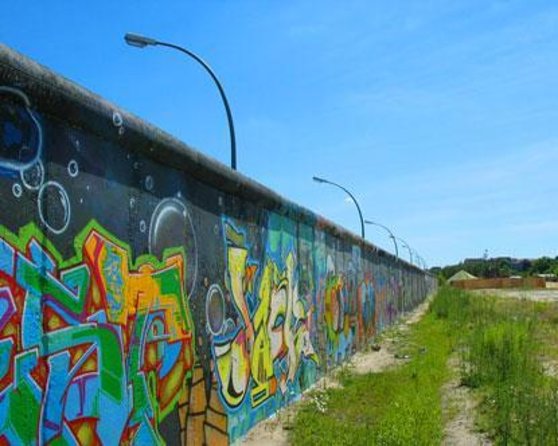
- Wall history beyond the postcard sites: You follow former border lines, see old bunkers, and learn about ghost stations and escape attempts.
- Nazi-era sites with difficult subject matter: The tour explains the bunker remains and the planned Germania project without pretending these places are ordinary sights.
- Good bikes and useful rain gear: Rental bikes have baskets, are checked by a certified mechanic, and waterproof ponchos are available.
- E-bike option: Book under the senior price category if you want an e-bike, so the provider knows to prepare one.
Starting in Nikolaiviertel, Berlin’s old center
You meet at the Free Berlin office in the courtyard entrance of Poststraße 11. Look for the FREE BERLIN sign. The meeting point is in Nikolaiviertel, about five minutes on foot from the TV Tower, making it easy to reach if you are already exploring central Berlin.
Nikolaiviertel is a fitting place to begin. It is associated with the earliest history of Berlin, while the tour itself quickly turns toward the city’s more recent and painful chapters. That contrast helps set the tone: this is not only a sightseeing ride, but a trip through the political forces that reshaped Berlin in the twentieth century.
After choosing a bike, you receive a short introduction to the ride. The bikes have baskets, which are useful for a small day bag, and they are regularly checked by a certified mechanic. Helmets are available if you request one, rather than automatically placed on every bike.
The ride ends back at the same meeting point. That makes planning simple, especially if you have an evening reservation or want to leave luggage with the operator during the tour. Large pieces of luggage can be stored safely on request.
More WWII History Tours in Berlin
- Berlin: Third Reich and Cold War 2 Hour Walking Tour
★ 4.9 · 6,830 reviews - Berlin: Sachsenhausen Concentration Camp Tour in English
★ 5.0 · 5,711 reviews - Berlin’s Best: 2 Hour Walking Tour Third Reich and the Cold War
★ 5.0 · 5,486 reviews
Following the former Berlin Wall
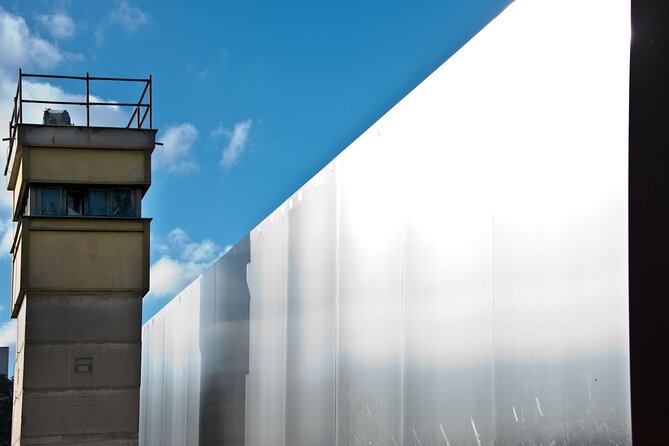
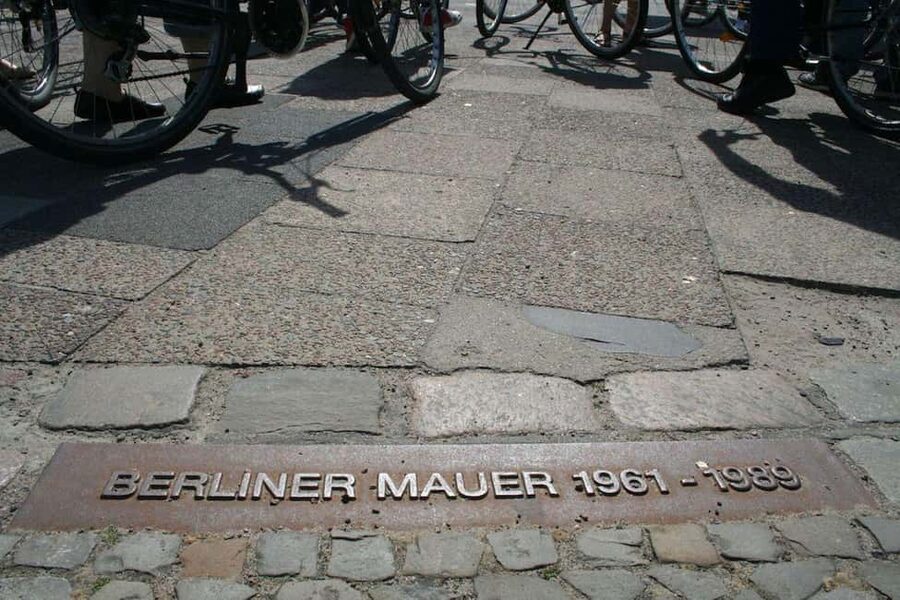
The Wall section is the heart of the ride. Instead of seeing one famous fragment and moving on, you trace parts of the former borderland through Berlin streets and bike paths. The bicycle gives you a better sense of distance, gaps, and changing neighborhoods than a single museum visit can.
You learn how the border divided streets, railway lines, parks, and homes. The subject is not treated only as a line on a map. The guides explain what daily life felt like in a city split between East and West, including the restrictions that shaped work, family visits, travel, and movement.
This is where the guide’s personal approach matters. Peter, who grew up in East Berlin, has shared his own family experience of the final decades of the divided city. Bjorn has also connected the history to his family’s life. Personal detail can make the Wall less abstract, though the exact guide depends on the date you book.
Cycling also lets the group stop at smaller traces that are easy to miss from a car. You might see where the border once ran, old sections of defensive infrastructure, or places where modern use has covered over the former division. The tour’s aim is to show how the borderland has been reused rather than leaving it frozen in 1989.
Ghost stations, escapes, and the city underground
One of the more unusual parts of the tour is its attention to ghost stations. During the division, some Berlin subway and rail stations were closed or heavily controlled because lines from West Berlin passed through East Berlin. Trains could pass through without stopping, creating eerie gaps in the public transport network.
The guides use these stations to explain how political division reached into everyday transport. A train ride that should have been routine became a reminder of the border. The subject also ties into stories of escape, surveillance, and the risks people took to cross from East to West.
Do not expect a long underground visit. The tour is conducted by bike, and much of the value comes from learning what stood in these locations and why access was restricted. You see Berlin as a working city built over its former divisions, with the guide pointing out traces that would be easy to miss alone.
For me, this is one of the strongest reasons to choose the bicycle format. The route can connect several separated places without the delays of a large walking group. You cover enough ground to see how the Wall related to transport, housing, public space, and the wider city.
Nazi-era sites and the remains of a bunker
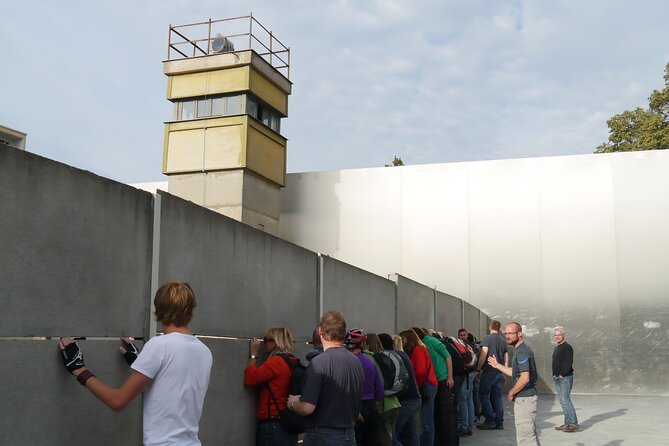
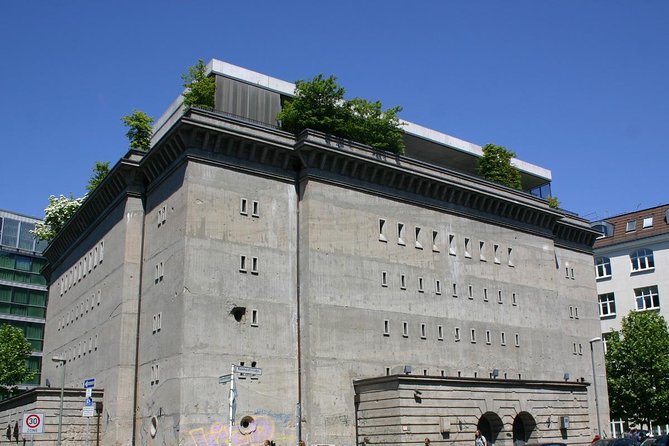
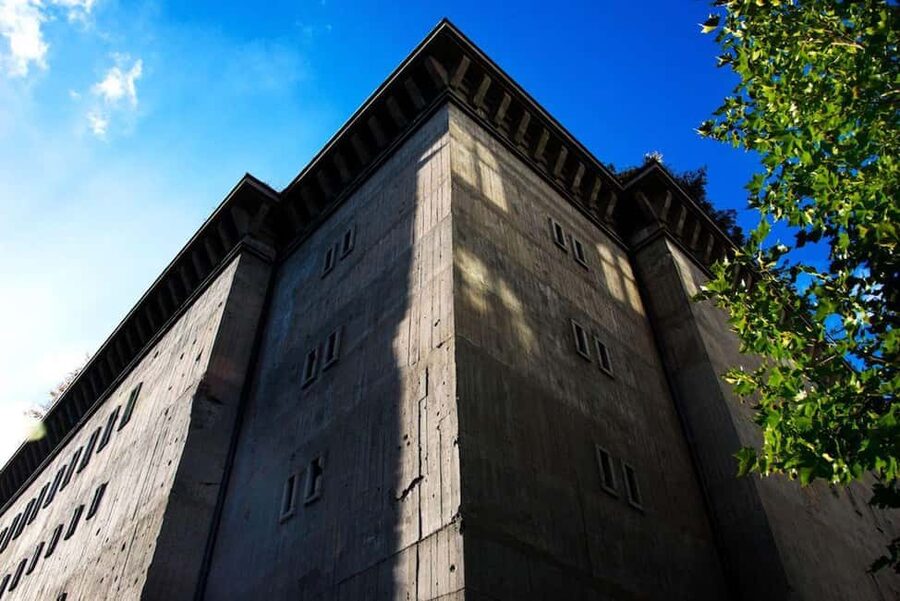
The tour also examines Berlin under National Socialism and the final stages of the Second World War. One stop concerns the remains of a large bunker, along with the planned redesign of Berlin under Hitler’s Germania vision.
This material requires a serious frame of mind. You are not visiting a conventional monument with a polished interior and a clear viewing platform. Some sites are fragmentary, altered, or deliberately difficult to access. The guide’s role is to explain what you are seeing and why the physical remains are limited.
Hitler’s Führerbunker is a key example. You cannot enter it. The site is no longer accessible as an underground historical attraction, and the area has been covered and changed. The tour explains why you cannot visit the bunker itself, but the precise route may not stop at the location every time.
That distinction matters. If seeing the bunker site is your main reason for booking, ask the operator about the planned route before you reserve. The published tour description promises information about why access is impossible, not entry or a guaranteed extended stop.
The Germania material adds another layer. You hear about the proposed vision for Berlin, including the enormous scale of the plans and the way Nazi power tried to express itself through architecture and urban design. It is useful context for understanding why certain central sites look the way they do, even when the grand plan was never completed.
More wartime history tours in Berlin:
- Berlin: Sachsenhausen Concentration Camp Memorial Tour
★ 4.7 · 3,716 reviews - Third Reich Berlin: Hitler and WWII Walking Tour
★ 5.0 · 3,301 reviews - Sachsenhausen Concentration Camp Bus Tour in English from Berlin
★ 5.0 · 1,962 reviews - Berlin: Sachsenhausen Concentration Camp Tour in English
★ 4.8 · 1,889 reviews
A human guide makes the difficult history clearer
The strongest feature of this activity is the guide. Several guides have received especially warm praise for being engaging, personal, and able to explain complex subjects without turning the ride into a lecture.
Juliet has led tours with a friendly, confident style and a strong command of Berlin’s history. Jake has been singled out for keeping the ride informative even in poor weather. Martin is known for mixing serious historical detail with humor, while Simone brings clear enthusiasm to the Wall story.
Dominick has focused on the people who lived through Berlin’s division, rather than treating the city as a collection of dates. Peter’s background as a former East Berliner can offer a particularly direct perspective. Bjorn has added family experiences to the wider story.
You should not assume that one particular guide will lead your tour unless the operator confirms it. Still, the range of named guides suggests an important strength of the experience: the tour depends heavily on live explanation, questions, and personal connection rather than a fixed audio script.
The best guides also manage the tone well. Nazi persecution, wartime destruction, surveillance, border deaths, and failed escapes are not light subjects. A good guide can keep the material human and direct without making it sensational.
Why the bicycle is worth choosing
At $40 per person, the tour offers solid value if you want both transport and interpretation. You get a bike, a guide, and access to a route that covers about 15 kilometers in three hours. A comparable private guide with separate bike rental could cost more, while a museum visit alone would not give you the same sense of distance between sites.
The bike is not just a novelty. Berlin’s twentieth-century sites are spread across the center and beyond. Walking between all of them would take much longer, and a bus would leave you looking through windows or stopping only at major sights.
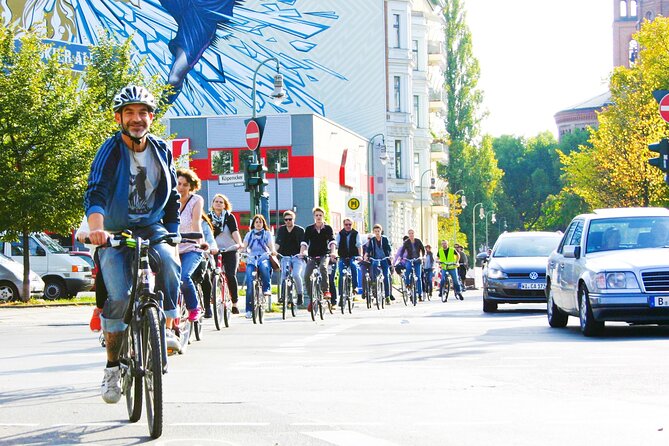
The route uses side streets and bike paths where possible. That keeps the pace more relaxed than a road-heavy city ride and allows the group to reach corners that larger vehicles cannot. You still need to pay attention to cycling conditions and remain comfortable on a bike for several hours.
The tour is described as active but not overly difficult. That said, the ride is physical, and one participant specifically advised bringing warm clothing and gloves in winter. Rain can also change the experience, though waterproof ponchos are available.
If you are concerned about the effort, ask for an e-bike. The provider uses the senior booking category for this option, with the adjusted price covering the e-bike. That is a practical solution if you want the reach of the cycling route without making the ride the main challenge of your day.
What the flexible route means for you
Free Berlin uses a flexible tour concept, so the guide can design the route freely. This is good news if conditions, group interests, or local access make one route more useful than another.
The tradeoff is predictability. You may not visit every location suggested in the broad description, and the order can change. The guide may spend more time on the Wall, focus more on Nazi-era sites, or adjust the ride to suit a private group.
This flexibility works best if you arrive with a general interest rather than a strict checklist. Tell your guide which subjects matter most: escape stories, daily life in East Berlin, bunker remains, Nazi architecture, or the former border route.
The three-hour length also means that stops are selective. You cover many sites, but you will not spend museum-length time at each one. One participant who took a similar World War II-focused route appreciated the number of locations but noted that there was limited time at each stop. That is the natural compromise of a broad cycling tour.
If you want detailed interiors, long archival displays, or extended time at one memorial, add a museum visit on another day. If you want a citywide framework that helps you understand where those museums and memorials fit, this ride is more useful.
Group size, languages, and private tours
The tour runs with a live guide in German, English, or French. A private group is available, which may suit families or friends who want to ask more questions and request a particular emphasis.
Small groups can be especially helpful with this subject. You have more room to stop, hear the guide, and discuss difficult points without losing the thread. It can also make the ride feel less like a standard sightseeing circuit.
Families with teenagers may find the format effective. The combination of movement, real locations, personal stories, and clear historical explanation can hold attention better than a long indoor presentation. It is still important to prepare younger riders for serious material about dictatorship, war, persecution, and the Wall.
The activity is also a good first or second day choice in Berlin. It gives you a broad map of the city’s major historical themes, then you can return later to places that deserve more time.
Practical advice for a smoother ride
Wear comfortable clothes that suit the forecast. Berlin weather can shift, and the tour continues in rain with waterproof ponchos available. In colder months, gloves and warm layers are especially useful.
Arrive at the Poststraße 11 courtyard entrance with enough time to find the office and select your bike. The TV Tower is a useful landmark, but do not wait on the main street. Look for the FREE BERLIN sign inside the courtyard entrance.
Ask for a helmet if you want one. It is available on request, along with the bike basket for carrying small items. If you need to leave large luggage, arrange this with the operator rather than assuming the space will be available.
Keep your expectations clear. The ride is designed to explain places from the outside and connect them through the city streets. It is not a bunker entry tour, a full museum visit, or a guaranteed fixed itinerary.
Cancellation is free up to 24 hours before the start, and you can reserve while paying later. Those terms are useful if your Berlin schedule is still shifting, but check the available starting times before booking because the three-hour ride takes a substantial part of the day.
Who should book this Berlin bike tour?
Book it if you want to cover a lot of ground, prefer active sightseeing, and care about the stories behind Berlin’s major historical sites. It is especially useful for first-time visitors who want a clear introduction to the Wall, the divided city, Nazi-era planning, bunker remains, and the city’s postwar changes.
It suits reasonably active adults, families with older children, and anyone who finds long museum visits tiring. The option of a private group or e-bike makes it easier to adapt the experience to your party.
You may want a different activity if you dislike cycling, need guaranteed access to a particular site, or want to spend an hour studying one exhibition. The flexible route and broad subject matter mean you trade depth at individual stops for a wider view of Berlin.
At $40, I consider it a worthwhile way to orient yourself. The bikes help you reach more than a walking tour, while the live guides add the personal and local detail that a self-guided route can miss. Just dress for the weather, allow for a physical ride, and confirm any must-see stop in advance.
FAQ
How long is the Berlin Wall and Third Reich bike tour?
The tour lasts three hours and covers about 15 kilometers by bicycle.
Where does the tour begin?
Meet the guide at the Free Berlin office in the courtyard entrance of Poststraße 11. Look for the FREE BERLIN sign. The meeting point is in Nikolaiviertel, about five minutes on foot from the TV Tower.
Where does the tour end?
The activity ends back at the same meeting point at Poststraße 11.
Which languages are available?
The live tour guide can conduct the experience in German, English, or French.
Is a bike included?
Yes. Bike rental is included in the tour price. The rental bikes have baskets and are regularly checked by a certified mechanic.
Can I request a helmet?
Yes. Bike helmets are available if requested.
Can I book an e-bike?
Yes. If you want an e-bike, book under the senior price category so the provider knows to prepare one and include the adjusted e-bike cost.
Can I cancel the tour or pay later?
You can cancel up to 24 hours before the activity for a full refund. You can also reserve now and pay later.
More Bike Tours in Berlin
- Berlin: Sights and Highlights Bike Tour with a Local Guide
★ 4.8 · 2,698 reviews - Berlin Highlights 3-Hour Bike Tour
★ 5.0 · 948 reviews - Berlin City Bike Tour with Beer Garden Stop
★ 5.0 · 917 reviews - Berlin Highlights: 3-Hour Bike Tour
★ 4.9 · 809 reviews
More Cold War Tours
- Berlin: DDR Museum Tickets
★ 4.3 · 3,443 reviews - Skip-the-Line: Berlin Wall Museum at Checkpoint Charlie
★ 4.1 · 2,041 reviews - Cold War, Berlin Wall, Spies and the East Side Gallery
★ 5.0 · 1,024 reviews - Berlin: Cold War Walking Tour on Berlin Wall Route
★ 4.8 · 437 reviews
Just added around Berlin
- From Berlin: Gardens & Palaces of Potsdam Bike Tour★ 5.0 · 61 reviews
- Berlin: Battle for Seelow Heights WW2 tour -Clash of Titans★ 5.0 · 27 reviews
- From Berlin: Historical Gems of Potsdam Private Day Trip★ 4.4 · 4 reviews
- Berlin: Französischer Dom 360° Panorama & Crémant to go★ 3.9 · 5 reviews
- Explore Berlin Tour: History and Highlights★ 4.7 · 5 reviews
- Berlin: Evening Yacht Cruise with Aperitif & Dinner Upgrade★ 4.6 · 178 reviews
- Berlin: Expats in Berlin Comedy Show Ticket★ 4.7 · 182 reviews
- Berlin: The Epic Comedy Club Friday Night Showcase★ 4.8 · 28 reviews
Berlin Tours, compared.
Reichstag, Dome and Government District Guided Tour
Read our review →
1-Hour City Tour by Boat with Guaranteed Seating
Read our review →
Reichstag, Plenary Chamber, Cupola & Government Tour
Read our review →
Browse the lists this tour appears in