
Review · BERLIN TOURS
Third Reich Berlin: Hitler and WWII Walking Tour
Berlin’s most important Third Reich sites are scattered across the government quarter, and many look ordinary today. That is exactly why this three-hour walking tour is useful. It connects the former ministries, memorials, bunker site, and Battle of Berlin landmarks into one clear story of dictatorship, war, resistance, and defeat.
I like two things here: the route shows how close the Nazi government offices were to one another, and the guides explain both the machinery of the regime and the lives of ordinary Berliners under it. Guides including Paul, Maria, Ru, Chris, Tom, Ru, and Ciarán have been praised for clear storytelling and patient answers. The main drawback is simple: you will walk briskly for about 5,000 steps, mostly outdoors, so winter weather and tired feet can affect the experience.
Key points before you book
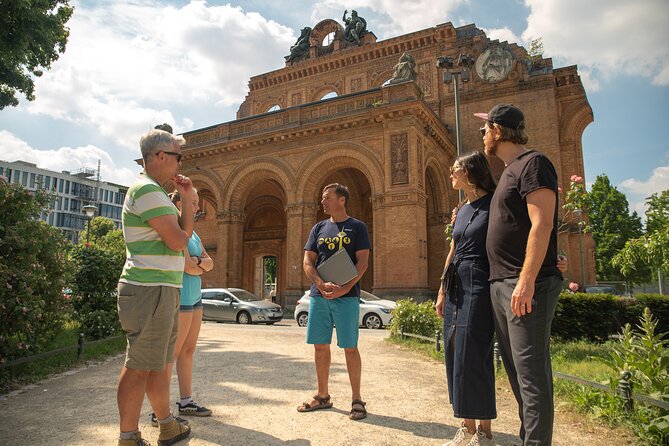
- Hitler’s bunker site: You stand above the location where Hitler spent his final days in April 1945, beside the former Reich Chancellery site.
- A route through Nazi power: See the former Air Ministry, Propaganda Ministry area, Wilhelmstrasse, and other government sites tied to the regime.
- Strong memorial stops: The route includes the Holocaust Memorial, the Soviet War Memorial, and the Trains to Life, Trains to Death memorial.
- Battle of Berlin context: Your guide explains the final Soviet assault, the fall of the Reichstag, and the last days of Nazi rule.
- Three hours on foot: Expect a compact, brisk route with outdoor stops and little time to sit.
- Good value at $24.07: For the price, you get a local expert, a focused route, and historical explanation that is hard to recreate alone.
Why this route helps you understand Berlin
Berlin has no single Third Reich museum that tells the whole story from Hitler’s rise to the end of the war. Instead, the evidence is spread across streets, government buildings, memorials, and empty spaces. A walking tour gives those places a sequence.
You begin near Friedrichstrasse Station, close to the Reichstag, and move through the former center of Nazi government. Along the way, you hear how Hitler’s party exploited political crisis, how democracy was dismantled, how propaganda and military planning worked, and how the city became a battlefield in 1945.
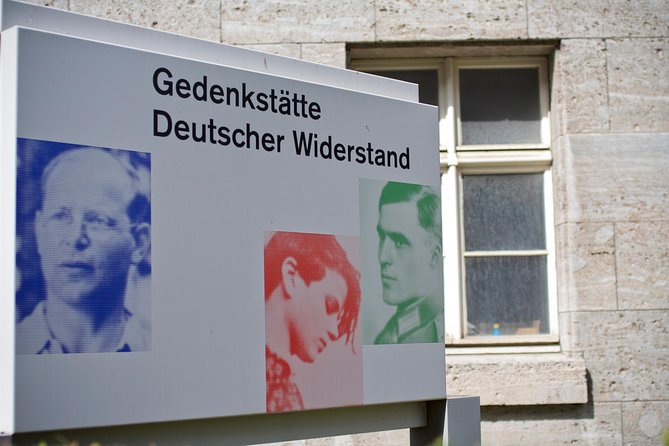
The route also avoids treating the period as a parade of famous villains. It includes resistance figures such as Henning von Tresckow, Hans Oster, and Claus von Stauffenberg. You also hear about Lebensraum, the expansionist policy that fed Nazi militarism and helped create the conditions for mass murder and war.
That wider frame matters. You are not simply looking at where Hitler died. You are learning how a modern state used law, fear, propaganda, bureaucracy, and war to destroy democratic life and persecute millions of people.
More WWII History Tours in Berlin
- Berlin: Third Reich and Cold War 2 Hour Walking Tour
★ 4.9 · 6,830 reviews - Berlin: Sachsenhausen Concentration Camp Tour in English
★ 5.0 · 5,711 reviews - Berlin’s Best: 2 Hour Walking Tour Third Reich and the Cold War
★ 5.0 · 5,486 reviews
Starting near Friedrichstrasse Station
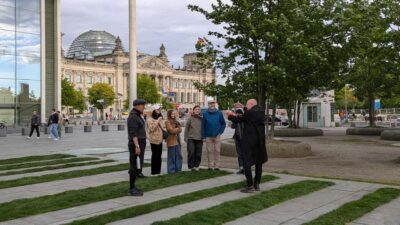
The advertised meeting point is Reichstagufer 17, near Friedrichstrasse Station and the Reichstag area. Arrive 15 minutes early. The first stop is not an indoor orientation session, so you should be ready to begin outside and walk.
Your guide first lays out the route and introduces the main locations. This opening is helpful because many Nazi-era buildings have been demolished, rebuilt, or given new uses. Without context, a plain office block or empty patch of ground can be easy to miss.
The starting area also brings you close to the Reichstag, a building tied to both the destruction and restoration of German democracy. Your guide explains the 1933 Reichstag fire and how the Nazi government used it to suspend civil liberties and tighten its grip on power.
This is one of the tour’s strongest teaching points. The fire did not, by itself, create a dictatorship. It gave the new government a pretext to attack political opponents and weaken constitutional protections. You get a useful lesson in how democracy can be dismantled through legal measures and public fear.
Trains to Life, Trains to Death
This small memorial recalls the deportation of Jewish people from Berlin to concentration camps during the Nazi period. It is a short stop, but the subject is heavy.
The memorial focuses attention on the forced removal of people from their homes and their transport by train to places of imprisonment and murder. It helps shift the tour from government offices and military operations to the human cost of Nazi policy.
You should expect the guide to keep the stop focused rather than turn it into a long museum visit. The memorial works best as part of the larger route, where the political decisions made in nearby ministries are connected to the persecution carried out across Germany and occupied Europe.
The Reichstag and the final Soviet assault
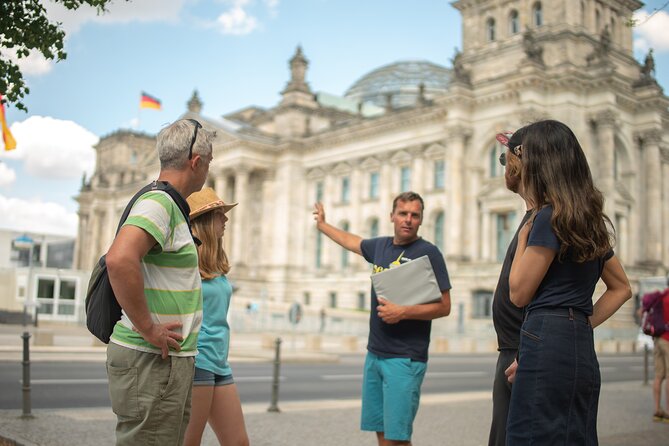
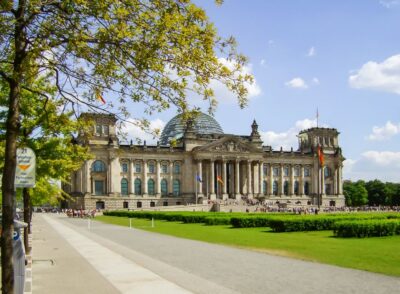
The Reichstag is one of Berlin’s most recognizable buildings, but its Nazi-era story is more complicated than a quick photograph suggests. The 1933 fire helped the Nazis suppress opposition and remove civil liberties. Twelve years later, Soviet forces fought their way into Berlin and raised their flag over the damaged building.
The Reichstag became a powerful symbol of Nazi defeat, even though the building was not the only or necessarily the most important military objective in the city. Your guide places it within the final Battle of Berlin and explains how the Soviet assault moved through the capital.
The tour does not include admission to the Reichstag. That means you should expect to view the building from outside rather than enter its dome or interior. This is not a major problem for a route focused on the Third Reich, but it is worth knowing if you hoped for an indoor visit.
More wartime history tours in Berlin:
- Berlin: Sachsenhausen Concentration Camp Memorial Tour
★ 4.7 · 3,716 reviews - Sachsenhausen Concentration Camp Bus Tour in English from Berlin
★ 5.0 · 1,962 reviews - Berlin: Sachsenhausen Concentration Camp Tour in English
★ 4.8 · 1,889 reviews - Sachsenhausen Concentration Camp Memorial Tour (Max. 15 Guests)
★ 5.0 · 1,516 reviews
Soviet War Memorial in Tiergarten
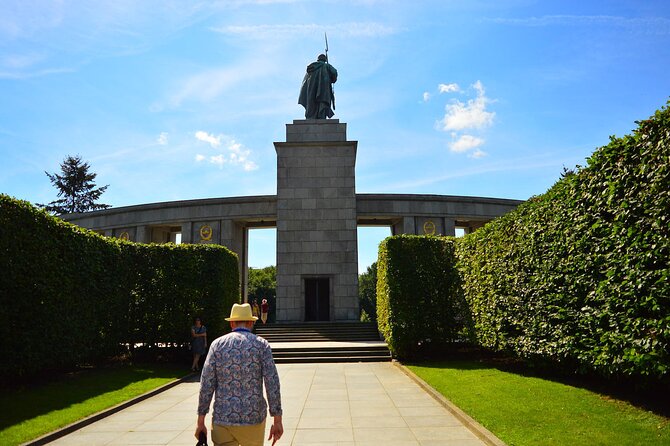
The Soviet War Memorial in Tiergarten is both a military cemetery and a monument to Red Army soldiers killed in the Battle of Berlin. Its large Soviet soldier sculpture and formal layout make it hard to ignore.
The site can prompt difficult questions. The Soviet Union played a decisive role in defeating Nazi Germany, but the Red Army’s advance also brought enormous destruction and suffering to Berlin. A good guide can help you hold both facts together without turning the stop into a simple victory story.
This is one of the route’s most useful pauses because it shows the scale of the final fighting. The war did not end with a quiet political decision in a government office. It ended in a ruined city, with soldiers fighting street by street and civilians trapped in the middle.
Brandenburg Gate and the Academy of Arts
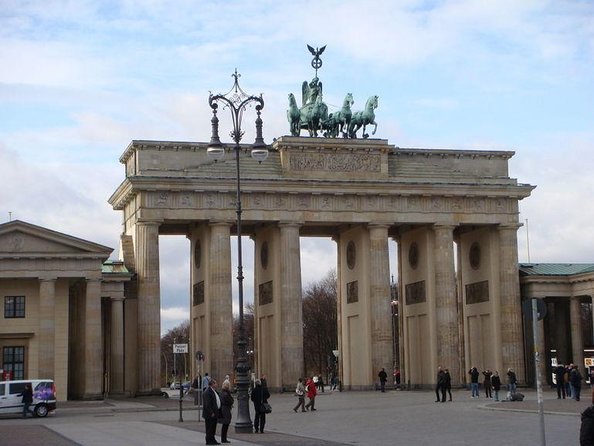
The Brandenburg Gate is now linked with German reunification, but during the Nazi period it served as a backdrop for displays of power and propaganda. The regime used the gate and other grand spaces to present itself as strong, unified, and destined to rule.
You will not find much physical evidence of those events at the gate today. Its importance comes from the explanation, not from surviving Nazi decoration. This is a recurring feature of Berlin: the city often asks you to imagine what once occupied a site while confronting what replaced it.
The route also passes the Akademie der Künste. This stop opens a broader discussion about art, architecture, and political power. Albert Speer’s monumental designs promoted the image of a commanding Nazi state, and the arts were not separate from that political project.
The Academy is now associated with contemporary arts, so the stop is less about a preserved Nazi building than about institutional responsibility and the way culture can support political authority. It adds useful range to a tour that might otherwise focus only on war and military leaders.
The Holocaust Memorial
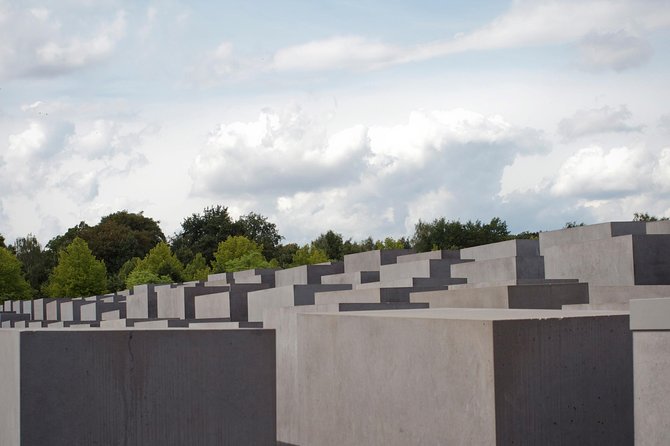
The Memorial to the Murdered Jews of Europe is made up of 2,711 concrete slabs of different heights. You walk through narrow, uneven paths that create a changing sense of scale and orientation.
The memorial is deliberately open to interpretation, but your guide can place it within the facts of the Holocaust and Berlin’s role in Nazi persecution. This is not a conventional monument with a simple inscription and a fixed viewpoint. The experience changes as you move through it.
The stop is brief, around 10 minutes, so it is best viewed as an introduction rather than a full visit. If you want time to walk through the memorial quietly, read more, and visit its underground information center, plan to return on your own. The walking tour gives you context, but it cannot provide the reflective time that a separate visit allows.
Hitler’s bunker and the New Reich Chancellery
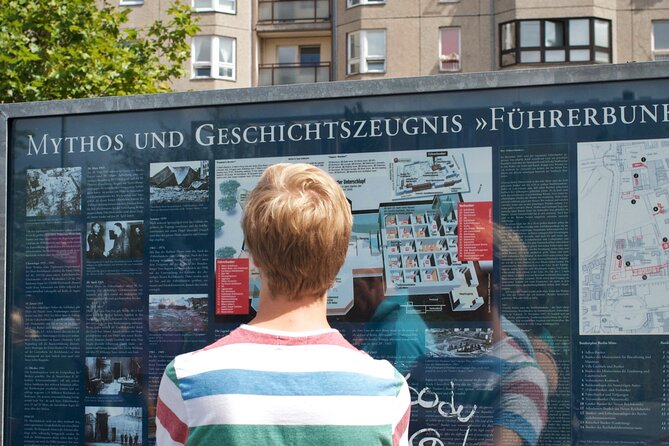
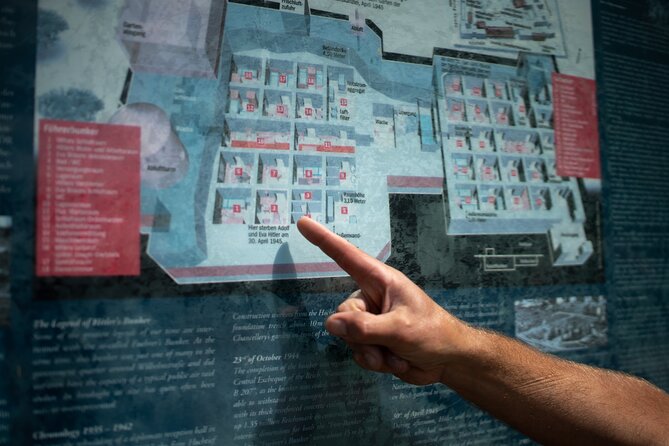
At the former Führerbunker site, you stand above the place where Hitler spent his final days and died in April 1945. There is no dramatic entrance to explore. The location is deliberately understated, and the surrounding modern buildings can make it seem almost unremarkable.
That lack of spectacle is important. The site is not a shrine, and there is no preserved room to enter. The guide explains the bunker’s position beneath the former New Reich Chancellery and describes the final days of the Nazi leadership as Soviet forces closed in on Berlin.
Albert Speer designed the New Reich Chancellery as a grand expression of Nazi power. Almost none of that monumental complex remains in its original form. The contrast between the former ambition of the site and its plain appearance today makes the guide’s explanation essential.
One guide, Eran, was praised for waiting until the group reached the bunker sign before revealing exactly what they were standing above. That kind of presentation can make the location more striking without resorting to theatrical treatment of a grim subject.
Wilhelmstrasse and the former Air Ministry
Wilhelmstrasse was the administrative core of Nazi government. Ministries, the Reich Chancellery, the Foreign Office, and the Propaganda Ministry were concentrated along or near this street.
Your guide explains how decisions made in these offices shaped military operations, persecution, and the treatment of occupied territories. You also learn about Joseph Goebbels and the role of propaganda in building support for the regime and controlling public opinion.
The former Reich Air Ministry, associated with Hermann Göring and the Luftwaffe, is another important surviving building. Its scale and formal architecture reflect the government’s desire to project authority. Today, the building has been repurposed, so you are looking at a structure with a new public role and a dark institutional past.
This part of the walk is especially valuable for showing that Nazi crimes were not carried out only by a small circle around Hitler. They depended on ministries, administrators, police forces, military offices, and public institutions.
Topography of Terror and the end of the route
The tour ends at the Topography of Terror on Niederkirchnerstrasse, very close to Checkpoint Charlie. The museum occupies the former site of the SS and Gestapo headquarters and focuses on state repression, persecution, and the Holocaust.
This is a fitting end because it brings together the political and human sides of the story. Earlier stops show where the regime planned and presented its policies. Here, you can learn more about the organizations that enforced them.
Admission to the walking tour’s stops is free, but you should check the available time if you want to enter the museum after the tour. The route ends nearby, making it easy to continue independently, visit the exhibition, or move on toward Checkpoint Charlie.
The final location also gives you a practical advantage. You finish in a central part of Berlin with good public transport access, rather than being left far from the city center.
How the guides shape the experience
The guide matters a great deal on a tour covering such a large amount of material. The strongest descriptions emphasize clear explanations, a lively speaking style, and the ability to answer questions without losing the thread of the story.
Named guides praised for their delivery include Paul, Maria, Ru, Chris, Tom, Ciarán, Tina, Jim, Hannah, Xavier, Callam, Pete, Emma, Georgia, Jamie G, Thomas, and Irish Paul. You cannot choose a specific guide from the information provided, but the range of positive comments suggests that the operator has a sizable guiding team.
The best guide style for this subject is not sensational. You want someone who can explain the rise of the Nazi Party, the destruction of democracy, Lebensraum, the Holocaust, resistance, and the Battle of Berlin in plain language. You also want room for questions, since the history often raises difficult issues.
Several guides have been praised for making complex events easy to follow in a short time. That is important here. Three hours is enough for a strong overview, but not enough for every battle, person, or political development.
Walking conditions, timing, and group size
The tour lasts about three hours and can include around 5,000 steps. The pace has been described as brisk, though one account also found it comfortable. I would plan on steady walking between stops, with short explanations at each location.
Almost everything takes place outdoors. Berlin can be bitterly cold, especially when you are standing still while listening. Wear layers, bring comfortable shoes, and consider carrying a hot drink. In icy conditions, take extra care on the pavement.
The group can include up to 25 people. That is large enough for a social atmosphere but small enough for a guide to speak to the whole group at street corners and memorials. Larger groups may make questions harder to hear, so stay near the guide when possible.
The tour is offered in English and includes a mobile ticket and local expert guide. Hotel pickup and drop-off are not included, so you need to reach the central meeting point yourself. The route is near public transport, and service animals are allowed.
Is $24.07 good value?
At $24.07 per person, this is a strong value if you want an organized introduction to Nazi Berlin. You are paying for a three-hour route, a guide who supplies context, and access to sites that are free but not always easy to interpret alone.
You could walk between many of these locations without paying an admission fee. The catch is that the physical sites alone tell only part of the story. The ministries have changed uses, the bunker is buried, and memorials require thought and context. A guide helps turn a list of places into a connected historical account.
The price does not cover entry to the Reichstag or any separate museum visit. If you want a longer examination of the Holocaust Memorial’s information center or the Topography of Terror exhibition, treat the tour as your orientation and add independent time afterward.
The tour is booked an average of 27 days ahead, so do not assume you can always leave it until the last minute. Free cancellation is available if you cancel at least 24 hours before the start time. After that point, the paid amount is not refunded.
Who should book this walking tour?
I would choose this tour if you are visiting Berlin for a short stay and want a clear half-day introduction to the Third Reich. It suits history buffs, families with older children, and anyone who wants to understand why central Berlin looks the way it does today.
It can also work well for teenagers. One parent found that a 15-year-old stayed engaged throughout, which makes sense: the tour combines real places, military events, political choices, and personal stories rather than relying only on dates.
You should think twice if you dislike long outdoor walks, need frequent indoor breaks, or want to enter every building. This is a street-level history lesson, not a museum tour. The subject is also grim, so it requires a willingness to discuss dictatorship, persecution, mass murder, and war with care.
Final recommendation
Book it if you want the major Nazi-era locations explained in one practical route, especially during a first visit to Berlin. The bunker site, Reichstag, Holocaust Memorial, Soviet War Memorial, Wilhelmstrasse, and Topography of Terror create a strong framework for further museum visits.
Skip it only if you already know Berlin’s Third Reich sites well or prefer to explore at your own pace. For most visitors, $24.07 is a sensible price for three hours of walking, historical context, and a route you would be unlikely to connect so neatly on your own.
FAQ
How long is the Third Reich Berlin walking tour?
The tour lasts approximately three hours.
What language is the tour offered in?
The tour is offered in English.
Where does the tour begin?
The listed meeting point is Reichstagufer 17, 10117 Berlin, Germany, near Friedrichstrasse Station and the Reichstag area.
Where does the tour finish?
The tour ends at Topography of Terror, Niederkirchnerstraße 8, 10963 Berlin. The endpoint is very close to Checkpoint Charlie.
Is entry to the Reichstag included?
No. Admission to the Reichstag is not included.
Are hotel pickup and drop-off provided?
No. Hotel pickup and drop-off are not included.
How large can the group be?
The tour can have a maximum of 25 travelers.
How far in advance should I book?
The experience is booked an average of 27 days in advance. Confirmation is provided when you book, and you should arrive 15 minutes before the start time.
More Walking Tours in Berlin
- Discover Berlin Half-Day Walking Tour
★ 5.0 · 9,624 reviews - Berlin: Discover Berlin Walking Tour
★ 4.9 · 5,998 reviews - Berlin: Hidden Backyards Guided Walking Tour
★ 4.8 · 5,360 reviews - Berlin: Alternative Berlin Walking Tour
★ 4.6 · 1,204 reviews
Just added around Berlin
- From Berlin: Gardens & Palaces of Potsdam Bike Tour★ 5.0 · 61 reviews
- Berlin: Battle for Seelow Heights WW2 tour -Clash of Titans★ 5.0 · 27 reviews
- From Berlin: Historical Gems of Potsdam Private Day Trip★ 4.4 · 4 reviews
- Berlin: Französischer Dom 360° Panorama & Crémant to go★ 3.9 · 5 reviews
- Explore Berlin Tour: History and Highlights★ 4.7 · 5 reviews
- Berlin: Evening Yacht Cruise with Aperitif & Dinner Upgrade★ 4.6 · 178 reviews
- Berlin: Expats in Berlin Comedy Show Ticket★ 4.7 · 182 reviews
- Berlin: The Epic Comedy Club Friday Night Showcase★ 4.8 · 28 reviews
Berlin Tours, compared.
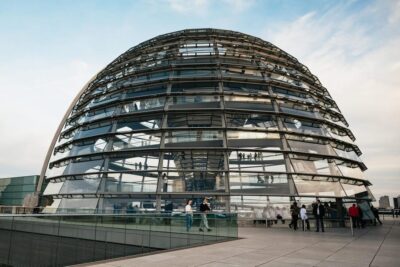
Reichstag, Dome and Government District Guided Tour
Read our review →
1-Hour City Tour by Boat with Guaranteed Seating
Read our review →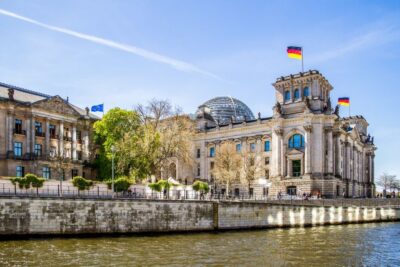
Reichstag, Plenary Chamber, Cupola & Government Tour
Read our review →
Browse the lists this tour appears in