
Review · BERLIN TOURS
Berlin Third Reich & Cold War Walking Tour With A Guide
Berlin’s past comes into sharp focus on this compact route, which links Brandenburg Gate, the Reichstag, the Holocaust Memorial, Hitler’s bunker site, and the Topography of Terror. I like the clear two-hour structure and the way the walk connects Nazi rule, World War II, and the Cold War rather than treating each site as a separate postcard stop.
I also like the choice of a private or small-group format, plus the option to request a guide in English, Spanish, French, German, or Italian. Carlo is praised for being precise, engaging, and good with children. The main consideration is pace: this is an outdoor city tour, not an inside visit to the monuments or museums, and the five-stop route leaves limited time for long exhibits.
Key points to know before booking
- Five major sites in about two hours: The route covers Berlin’s central historical core without taking up half a day.
- The guide provides the links between events: You move from Prussian-era symbolism to Nazi dictatorship, wartime destruction, and the Cold War division of Germany.
- The Holocaust Memorial gets a proper pause: Its 2,711 concrete slabs create a more powerful setting than a quick photograph suggests.
- Hitler’s bunker site is deliberately plain: An information board marks the location, so the value comes from explanation and context rather than a dramatic monument.
- You do not tour inside the buildings: Entry fees and museum visits are not included, and the walk is focused on exterior sites and guided interpretation.
- Private and small-group choices add flexibility: Group bookings require at least two participants, while private tours are limited to your own party.
Why this two-hour Berlin history walk works
Berlin can feel like a history book spread across a modern city. A street corner may mark a Nazi ministry, a Cold War escape route, or the site of a wall that divided families. Without a guide, you can easily walk past these places without understanding what happened there.
This tour gives you a firm route and a clear sequence. Starting near Unter den Linden, you move through the political center of Berlin and finish at the Topography of Terror, a fitting place to end because it deals directly with the machinery of Nazi persecution.
The route is not designed as a full museum day. Instead, it gives you a framework. You get the location, the main facts, and the connection between events. I find that useful early in a Berlin visit, since it helps you understand the city before returning on your own to the museums or memorials that interest you most.
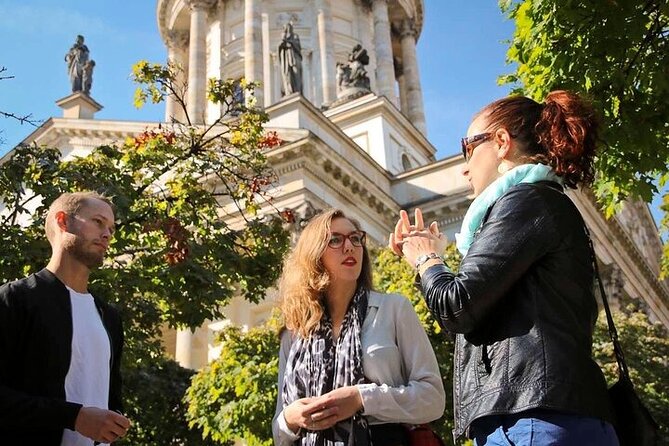
The guide matters here. Dates and names are easy enough to read on a plaque, but the harder task is explaining how power worked, how public spaces were used, and how Berlin changed after 1945. The available guides speak English, Spanish, French, German, and Italian. Carlo is specifically praised for detailed explanations, careful preparation, and an engaging approach that worked for a family with children.
More WWII History Tours in Berlin
- Berlin: Third Reich and Cold War 2 Hour Walking Tour
★ 4.9 · 6,830 reviews - Berlin: Sachsenhausen Concentration Camp Tour in English
★ 5.0 · 5,711 reviews - Berlin’s Best: 2 Hour Walking Tour Third Reich and the Cold War
★ 5.0 · 5,486 reviews
Brandenburg Gate sets the political stage
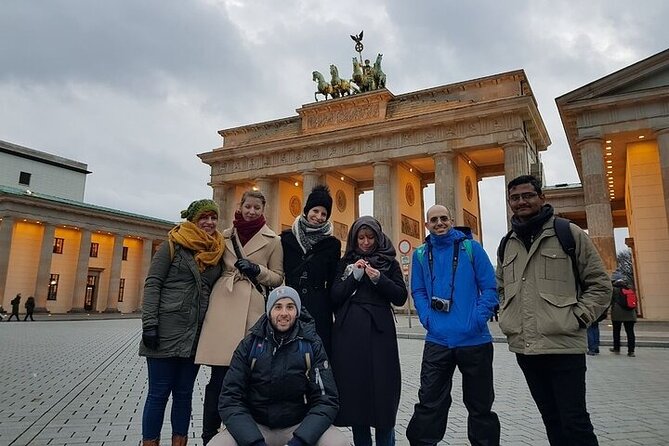
The walk begins at Brandenburg Gate, one of Berlin’s best-known landmarks. Its neoclassical design gives it a grand, ceremonial feel, but its importance comes from the events that gathered around it.
The gate has represented different ideas at different times. On this tour, it serves as an opening lesson in how Berlin’s symbols were repeatedly claimed and reshaped. It is connected with German unity and peace, but also with the political drama of the 20th century, including the fall of the Berlin Wall.
You receive about 24 minutes here. That is enough for a guide to explain the monument and its setting, though not enough for an exhaustive architectural discussion. The admission cost is free, and the stop is outside, so you are not waiting in a ticket line or entering a formal museum.
I like beginning here because it gives you a visual anchor. You can see the monument, hear why it matters, and then follow the story into the government district. Take a moment to look beyond the columns and notice how open the space feels today. That openness carries extra meaning after learning how Berlin was divided during the Cold War.
The Reichstag connects old power with new Germany
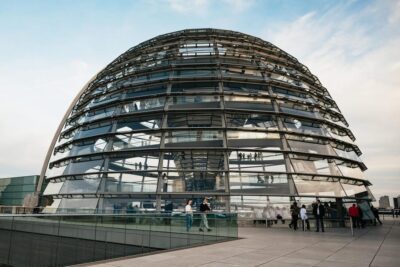
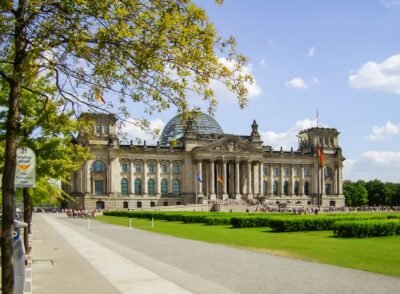
From Brandenburg Gate, the route continues to the Reichstag Building, home of the German Parliament. Its historic exterior and modern glass dome make it one of the clearest examples of Berlin’s habit of placing the past beside the present.
The building helps explain Germany’s political center, but it also raises a practical point about this tour. You view the Reichstag from the outside. The modern glass dome is a major attraction, yet entry is not part of the walk. The tour provider can help arrange tickets for desired visits, but monument and museum admission costs are separate.
That distinction matters when you compare prices. At $42.06 per person, you are paying mainly for the guide’s time, route planning, and explanation, not for a collection of admissions. If you want to visit the dome, you need to plan that separately and allow extra time.
The stop lasts about 24 minutes. Your guide can explain the building’s role and point out how the surrounding government quarter changed after reunification. You should not expect a full Reichstag visit during this walk. Think of this as a useful introduction that helps you decide if the interior deserves a separate booking.
The Holocaust Memorial asks you to slow down
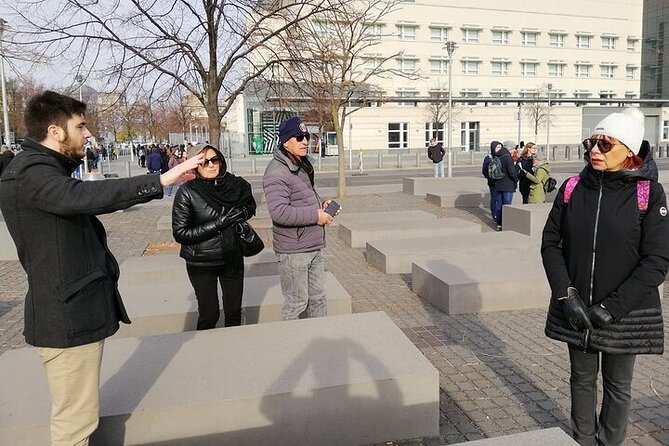
The Memorial to the Murdered Jews of Europe is made up of 2,711 concrete slabs arranged across a large open area. The design is spare and unsettling. As you walk between the blocks, the ground shifts and the columns appear to change height around you.
The tour allows about 24 minutes here. That gives you time to enter the memorial space, listen to the guide, and form your own response. It is not a place for a rushed photo stop, though the schedule remains fairly tight if you want to explore at length.
This is one of the strongest parts of the route because the memorial changes the tone of the walk. Brandenburg Gate and the Reichstag are public symbols tied to government and national identity. Here, the focus turns to the people murdered under Nazi persecution.
A guide can add essential context, but you should also have a quiet moment without constant commentary. The memorial is free to enter, and there is no formal admission procedure for the outdoor field. An underground information center exists at the memorial site, but entry to museums and monuments is not included in this tour, so do not assume that section forms part of the visit.
More wartime history tours in Berlin:
- Berlin: Sachsenhausen Concentration Camp Memorial Tour
★ 4.7 · 3,716 reviews - Third Reich Berlin: Hitler and WWII Walking Tour
★ 5.0 · 3,301 reviews - Sachsenhausen Concentration Camp Bus Tour in English from Berlin
★ 5.0 · 1,962 reviews - Berlin: Sachsenhausen Concentration Camp Tour in English
★ 4.8 · 1,889 reviews
Hitler’s bunker site shows how little remains

The next stop is the site of Hitler’s bunker, now marked by an information board. You will not descend into a preserved bunker or visit a dramatic underground chamber. The location is intentionally ordinary, and that plainness can surprise people who expect a major structure.
The guide explains the final days of World War II, the collapse of the Third Reich, and what happened around the bunker as Berlin fell. The value here comes from separating fact from the myths that often surround Hitler’s last days.
You get about 24 minutes at the site. That is enough for a focused explanation and questions, but not a long historical seminar. The stop works best if you approach it as a lesson about the end of a dictatorship, rather than as a chance to see a famous wartime relic.
I consider this an important stop precisely because there is so little to look at. The absence of a grand memorial keeps attention on the events and their consequences. Your guide has to make the place meaningful through clear storytelling. The comments about detailed facts, precise preparation, and authentic explanations are especially relevant here.
The Topography of Terror gives the tour its hardest evidence
The walk ends at the Topography of Terror, an indoor and outdoor museum on the former site of the Gestapo and SS headquarters. This is where the route moves from major public symbols and memorial spaces to the institutions that organized Nazi terror.
The exhibits document the Gestapo, the SS, and the crimes carried out under the Nazi regime. Because the site deals with perpetrators and systems of persecution, it adds an important layer to the Holocaust Memorial. One presents a space for remembrance; the other explains the offices, police structures, and decisions that made mass violence possible.
The stop is scheduled for about 24 minutes, but that is not enough to read every panel in detail. If you want to study the displays carefully, plan a return visit. Entry to the museum is not included, so check the arrangements before booking any additional visit.
Ending here makes sense. The tour begins with national symbols and political buildings, then moves through remembrance and the final collapse of the Nazi government. At the Topography of Terror, you finish with a clearer picture of how repression was organized, not just where major events occurred.
What the guide adds to the route
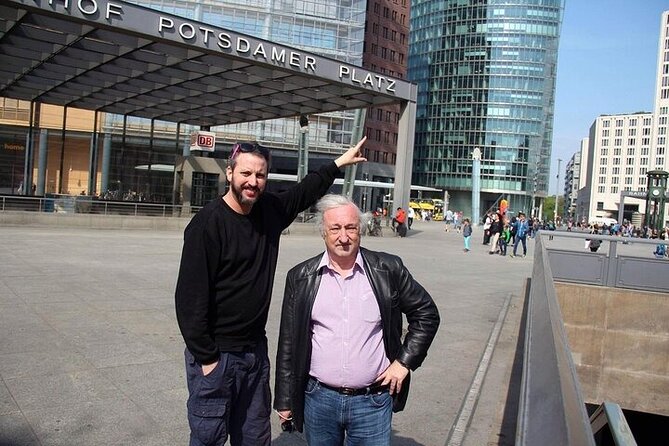
A walking tour like this rises or falls on the person leading it. The landmarks are free, and you can find basic facts online. You pay for a guide who can organize the story, answer questions, and make sense of the gaps between one site and the next.
Carlo is praised for an engaging style, detailed explanations, and an ability to keep children involved. That suggests a useful balance for families: serious material, but not a dry lecture. The comments also point to a guide who handles data and facts carefully while keeping the walk enjoyable.
The guide language options are English, Spanish, French, German, and Italian. When booking, check which language you want and whether that guide is available for your date. The supplied information confirms the languages offered, but it does not guarantee that every guide is available at every departure.
Customization is included, which is especially useful on a private tour. You may be able to shape the emphasis around Nazi history, the Cold War, architecture, or family questions. Ask about this before the walk rather than assuming that every guide follows the same script.
The pace, group size, and practical tradeoffs
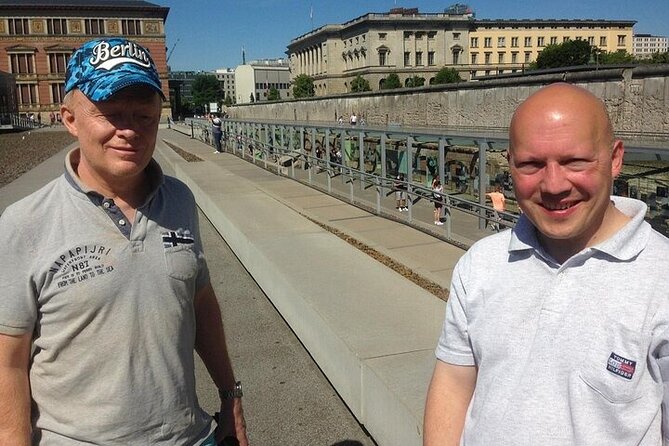
The tour lasts about two hours and allows roughly 24 minutes at each of five stops. That is a sensible length for a first look at central Berlin, especially if you want to combine it with another activity later in the day.
You should wear comfortable shoes and prepare for a continuous city walk. The information confirms that the route is near public transportation and that most people can participate. Transport costs are not included, although the listed route itself is presented as a walking tour.
The group arrangement needs a close look. Private tours are available, and only your group takes part in a private activity. A small-group option is also offered, with a minimum of two participants. Group discounts may be available, making this more attractive for families or friends booking together.
The compact schedule is both a strength and a limit. You cover a lot without committing a full day, but you will not have time to read every museum panel or linger at each site. If you prefer a slow, reflective visit, use this tour as an introduction and return to the Holocaust Memorial or Topography of Terror separately.
Is $42.06 a fair price?
At $42.06 per person, the cost is reasonable if you value a private or small-group explanation of Berlin’s central historical sites. The locations themselves are free, so the price should be judged against the guide service, route design, language options, and chance to ask questions.
For a larger party, group discounts could improve the value. A private format also gives you more control than a large public walk, especially if you are traveling with children or have a particular interest in the Nazi period or Cold War Berlin.
The price is less attractive if you mainly want entry to museums or the Reichstag dome. Those admissions are separate, and this activity does not take you inside the monuments. Add those costs only after checking availability and timing.
I see the best value for first-time visitors who want an organized introduction. You get five major sites in one walk and a guide who can connect them. You are not paying for a long museum visit, so book it for interpretation rather than admission access.
Who should book this Berlin walk?
I would recommend it to families, couples, and small groups who want a serious history lesson without spending an entire day indoors. The route is also a good fit if you are visiting Berlin for a short time and need a focused introduction to the city’s 20th-century past.
The format suits people who like to ask questions. A private or small-group guide can adjust explanations more easily than a large group, and the customization option may help if you have children or a particular area of interest.
It may not suit you if you want a leisurely museum tour, a full Reichstag visit, or a deep exploration of Cold War sites beyond this central route. The title promises both Third Reich and Cold War history, but the listed stops give more physical attention to Nazi-era locations. The Cold War thread is strongest at Brandenburg Gate and through the discussion of Berlin’s division and reunification.
The subject matter is also heavy. The Holocaust Memorial and Topography of Terror require a respectful mood, and the tour deals with dictatorship, murder, war, and political repression. That is a strength for serious history, but it may not be the right choice immediately after a long day of sightseeing with very young children.
Final booking advice
Book this tour if you want a clear, guided introduction to Berlin’s most important Nazi-era landmarks, with some Cold War context added along the way. The combination of a short route, multilingual guides, private options, and free cancellation up to 24 hours before the start makes it easy to fit into a Berlin schedule.
Before paying, confirm the tour language, group format, and any separate tickets you want for the Reichstag dome or museum interiors. Choose it for the guide’s historical context and direct access to questions, not for included admissions. If Carlo is leading your departure, his detailed and family-friendly approach could be a particular advantage.
FAQ
How long does the Berlin Third Reich and Cold War Walking Tour last?
The tour lasts approximately two hours.
Where does the tour begin?
The meeting point is Unter den Linden 77, 10117 Berlin, Germany.
Where does the tour end?
The activity ends back at the meeting point.
Is the tour private or shared with other people?
A private tour is available, and only your group will participate in that format. A small-group option is also offered, with a minimum of two participants required for the group option.
Which languages can the guide speak?
Guides are available in English, Spanish, French, German, and Italian.
Are museum and monument entry tickets included?
No. Entry to monuments and museums is not included. This is a city walking tour rather than a tour inside the monuments, although the team can help arrange tickets for desired visits.
Can I cancel for a full refund?
Yes. You can cancel at least 24 hours before the experience start time for a full refund. Cancellations or changes made less than 24 hours before the start time are not accepted for a refund.
More Walking Tours in Berlin
- Discover Berlin Half-Day Walking Tour
★ 5.0 · 9,624 reviews - Berlin: Discover Berlin Walking Tour
★ 4.9 · 5,998 reviews - Berlin: Hidden Backyards Guided Walking Tour
★ 4.8 · 5,360 reviews - Berlin: Alternative Berlin Walking Tour
★ 4.6 · 1,204 reviews
More Cold War Tours
- Berlin: DDR Museum Tickets
★ 4.3 · 3,443 reviews - Skip-the-Line: Berlin Wall Museum at Checkpoint Charlie
★ 4.1 · 2,041 reviews - Cold War, Berlin Wall, Spies and the East Side Gallery
★ 5.0 · 1,024 reviews - Berlin: Guided Bike Tour of the Berlin Wall and Third Reich
★ 4.7 · 499 reviews
Just added around Berlin
- eSIM for Germany and 34 European Countries★ 4.5 · 16 reviews
- Your ticket to The Wall Museum Berlin★ 3.0 · 60 reviews
- Walking on the Wall: 3-Hour Tour in Berlin★ 4.5 · 34 reviews
- Rickshaw Tours Berlin – Groups of up to 16 people with several rickshaws★ 4.0 · 97 reviews
- Warnemuende Shore Excursion: Private Berlin Tour★ 4.5 · 27 reviews
- Love and War in Berlin: Self-Guided Story Puzzle Walk★ 5.0 · 7 reviews
- Warnemuende Shore Excursion: Berlin Private Sightseeing Tour from Rostock★ 5.0 · 4 reviews
- Cold War Berlin – Private Live Virtual Experience★ 5.0 · 4 reviews
Berlin Tours, compared.
Reichstag, Dome and Government District Guided Tour
Read our review →
1-Hour City Tour by Boat with Guaranteed Seating
Read our review →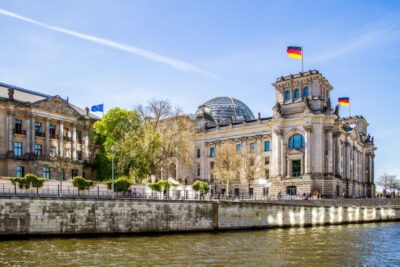
Reichstag, Plenary Chamber, Cupola & Government Tour
Read our review →
Browse the lists this tour appears in