
Review · BERLIN TOURS
Hitler to Stalin – WWII & Cold War Tour (Small Group)
Berlin’s past is unusually easy to read on foot. In a little over two hours, this walk links the Brandenburg Gate, Reichstag, Holocaust Memorial, Führerbunker site, Berlin Wall, and Checkpoint Charlie, turning central Berlin into one connected story rather than a set of separate sights.
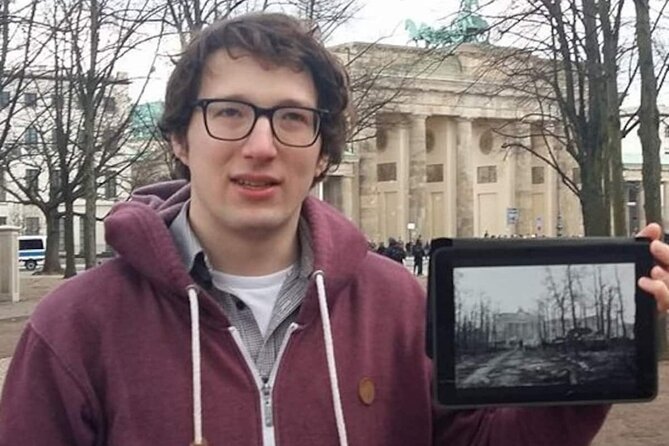
I like the small maximum of 15 people, which gives the guide room to answer questions. I also like the use of old photographs, a detail that guide Mark reportedly uses well to show Berlin before and after the war. The main drawback is that this is an outdoor walking tour with several timed stops, so poor weather or a slow walking pace can affect the experience.
Key points to know before booking
- A clear route from Hitler’s final headquarters to Cold War Berlin: The walk starts at Brandenburg Gate and ends at Checkpoint Charlie.
- Small group, up to 15 people: This is more personal than a large city tour and should make questions easier.
- Mark is a particularly strong guide: His historical detail, enthusiasm, and use of comparison photographs are central strengths.
- Nine major stops in about 2 hours and 30 minutes: You cover a lot of ground, with most stops lasting 10 to 20 minutes.
- No separate admission fees are listed: The tour visits outdoor landmarks and public sites, making the $23 price easy to assess.
- A serious subject handled across two eras: You move from Nazi rule and wartime destruction to Soviet control, division, protest, and reunification.
Why this Berlin history walk works
Many Berlin sightseeing walks give you a quick look at the Brandenburg Gate, a photograph at Checkpoint Charlie, and little else. This route has a stronger idea behind it. It follows the political and physical changes that shaped the city, beginning with the symbols of imperial and Nazi-era Berlin, then moving through the Second World War and into the divided city of the Cold War.
The route is also well chosen for a first visit. You see famous landmarks, but you also pause at places that need explanation. The Führerbunker site, for example, has no dramatic surviving entrance to explore. Without a guide, it is easy to walk past without understanding why the ordinary-looking area matters.
I like that the walk treats Berlin as a place of human decisions and suffering, not just a collection of grand buildings. The Holocaust Memorial, the June 17 uprising memorial, and the Berlin Wall Memorial give the tour a human scale. You are asked to think about victims, resistance, state power, and the cost of division.
At $23, the value is strong if you want a guided introduction to twentieth-century Berlin. The tour does not include paid museum entry, but that is part of the appeal. You spend the money on interpretation and direction, then choose your own museums later if you want more detail.
More WWII History Tours in Berlin
- Berlin: Third Reich and Cold War 2 Hour Walking Tour
★ 4.9 · 6,830 reviews - Berlin: Sachsenhausen Concentration Camp Tour in English
★ 5.0 · 5,711 reviews - Berlin’s Best: 2 Hour Walking Tour Third Reich and the Cold War
★ 5.0 · 5,486 reviews
Starting at the Brandenburg Gate
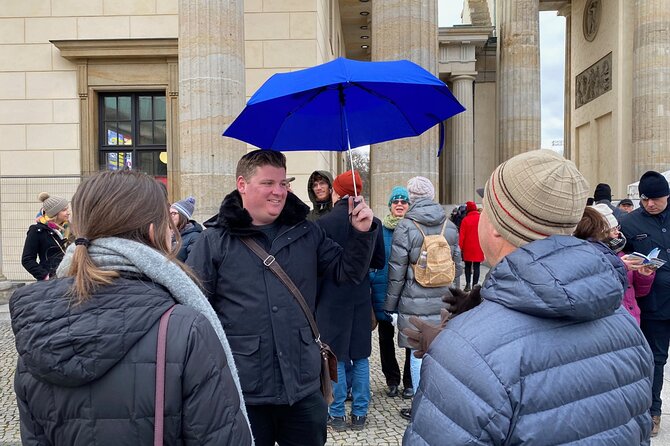
The meeting point is at Pariser Platz, beside the Brandenburg Gate. This is a practical place to begin because the gate is easy to recognize and sits near several major sights in central Berlin.
The gate was built in the eighteenth century under Frederick William II on the site of an earlier city gate. Its meaning changed repeatedly. It has been linked with Prussian power, Nazi spectacle, the division of Berlin, and the city’s later reunification.
Your guide has about 10 minutes here, enough to set the theme without using the entire tour on one monument. Pay attention to how the gate works as both a physical passage and a political symbol. Today it is commonly connected with European unity and peace, but its earlier associations were far less reassuring.
This opening stop should help you get your bearings quickly. It also gives the guide a natural place to explain how central Berlin became the stage for events that affected all of Europe.
The Reichstag and the collapse of old Germany
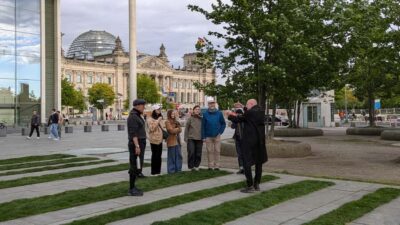
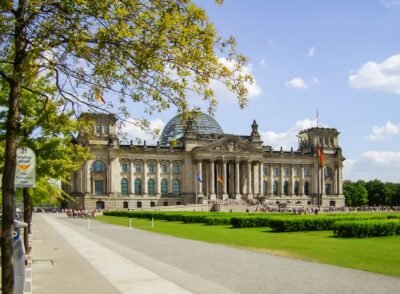
The Reichstag is only a short part of the walk, with about 15 minutes scheduled. That may sound brief, but the building has a story that reaches from the German Empire through the Nazi period and into the modern federal republic.
Completed in 1894, the Reichstag was built for the Imperial Diet. It later became associated with the fire of 1933, an event that helped the Nazi government tighten its grip on political life. The building suffered heavy damage during the Second World War and was restored for use by Germany’s lower house of parliament in 1999.
You should not expect a full interior visit on this tour. The stop is about understanding the building’s role and its place in Berlin’s changing political order. If you want to visit the Bundestag afterward, you will need to make separate arrangements.
The Soviet Memorial in Tiergarten
The Soviet War Memorial in the Großer Tiergarten adds a different view of the war. The Soviet Union erected it in 1945 to honor soldiers who died during the Battle of Berlin.
This stop lasts about 15 minutes and gives the guide room to explain the final fighting in the city. The memorial also raises a difficult question: Berlin remembers liberation from Nazi rule, but the postwar Soviet presence soon became part of another system of control.
That tension is useful. A simple good-versus-bad story cannot explain Berlin after 1945. The Soviet role in defeating Nazi Germany and the later division of the city belong in the same account, even when the subject is uncomfortable.
More wartime history tours in Berlin:
- Berlin: Sachsenhausen Concentration Camp Memorial Tour
★ 4.7 · 3,716 reviews - Third Reich Berlin: Hitler and WWII Walking Tour
★ 5.0 · 3,301 reviews - Sachsenhausen Concentration Camp Bus Tour in English from Berlin
★ 5.0 · 1,962 reviews - Berlin: Sachsenhausen Concentration Camp Tour in English
★ 4.8 · 1,889 reviews
Entering the Holocaust Memorial
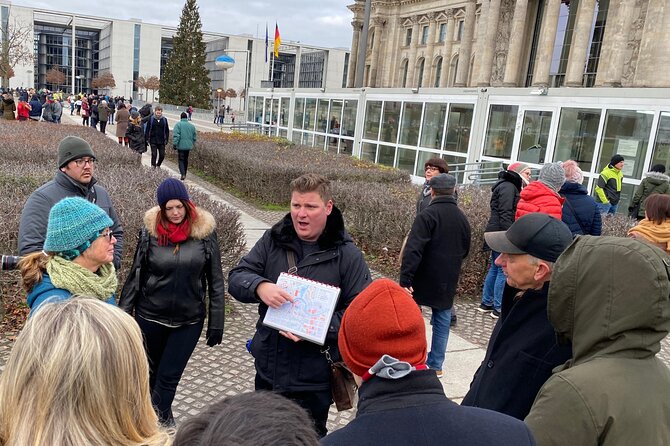
The Memorial to the Murdered Jews of Europe is one of the most powerful stops on the route. Architect Peter Eisenman designed the site with 2,711 concrete slabs spread across roughly 19,000 square meters.
The memorial is intentionally abstract. The ground slopes and the slabs vary in height, creating a sense of uncertainty as you walk among them. The design does not tell you exactly what to feel, and the guide’s explanation can help you understand why that open-ended approach matters.
The scheduled stop is 15 minutes. That is enough for a thoughtful introduction, but not enough for a long, quiet visit if you want to consider the site on your own. I suggest returning later, when you can walk through without the group and take more time.
The memorial deserves respectful behavior. It is not simply a photo stop, and the atmosphere can change quickly when the paths dip between the tall slabs.
The Führerbunker site and the end of Nazi rule
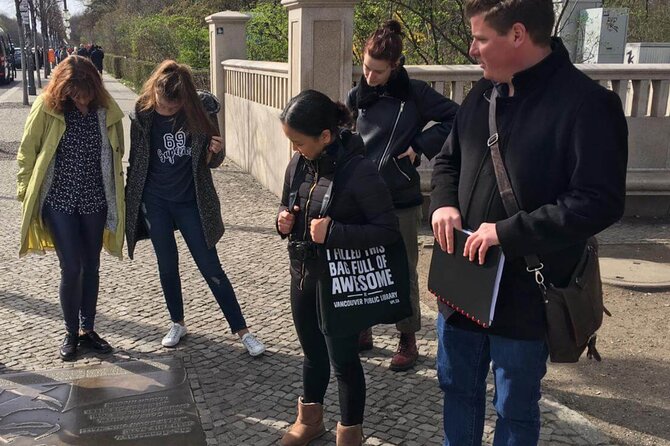
The former Führerbunker site is one of the tour’s most revealing locations precisely because so little is visible. The air-raid shelter served as Hitler’s final headquarters. He moved into the bunker on January 16, 1945, married Eva Braun on April 29, and died there with her less than 40 hours later.
The old Chancellery buildings were later leveled by the Soviets, while new buildings went up around the underground complex. The bunker remained mostly undisturbed until 1988. Today, the value of the stop comes from the story and the location, not from a preserved underground attraction.
This is where historical photographs can make a real difference. A guide such as Mark can show you how the area looked during the war and compare it with the ordinary city setting you see today. That contrast helps explain how a place connected with dictatorship and destruction can become visually unremarkable.
I appreciate the restraint of a stop like this. It does not turn Hitler’s last headquarters into a spectacle. Instead, it places the end of the Nazi regime within the wider destruction of Berlin.
The Korean embassy and Berlin’s divided geography
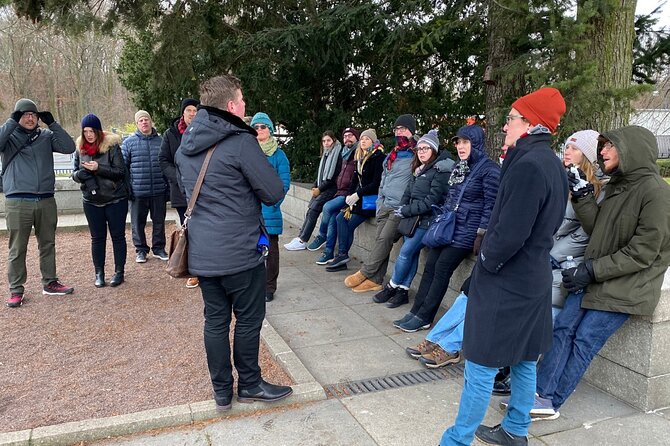
The itinerary includes a 10-minute stop at the Embassy of the Democratic People’s Republic of Korea at Glinkastraße 5 in Mitte. The connection may not be obvious at first, which is why a guide’s context matters.
This stop points toward Berlin’s international and political role during the Cold War. The city was not merely divided into two neighborhoods. It was a focal point for competing political systems, alliances, and global tensions.
The supplied tour details identify this as the embassy of the Democratic People’s Republic of Korea, although the stop heading also refers to the Republic of Korea. If this detail matters to you, confirm the exact location and emphasis with the provider before booking.
The June 17, 1953 uprising
The memorial to the June 17, 1953 uprising shifts the story from wartime defeat to postwar resistance. This was the first major challenge to the communist regime in East Germany after the war.
The uprising was suppressed by Soviet tanks, and about 15,000 people were arrested afterward. The stop lasts about 15 minutes, long enough to introduce the protest and show that the Cold War was not only a contest between governments. Ordinary workers and residents could also challenge the system around them, at great personal risk.
This is an important pause because it prevents the Berlin Wall story from beginning in 1961 and ending in 1989. The pressure behind the division had been building for years.
The Berlin Wall Memorial
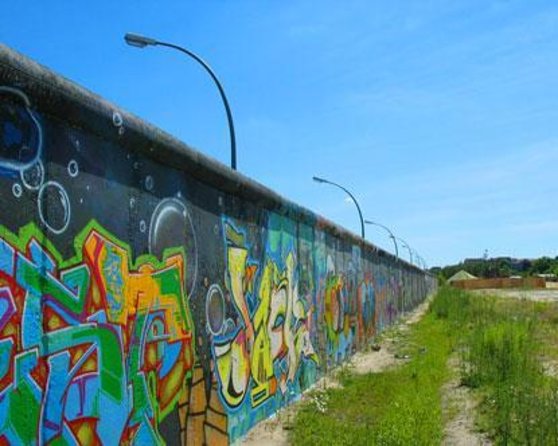
The Berlin Wall Memorial commemorates both the division of Berlin and the deaths that occurred at the wall. The scheduled visit is about 15 minutes.
You will get a concise explanation of what the wall meant in daily life and why crossing it was so dangerous. The memorial provides a more serious setting than some of the better-known wall photo spots. It keeps attention on the people affected by the border rather than only on the wall as a political image.
The route’s history lessons are especially effective here because you have already heard about the 1953 uprising and the city’s postwar power struggle. The wall no longer seems like an isolated structure. It becomes the physical result of years of conflict.
Finishing at Checkpoint Charlie
Checkpoint Charlie is the final stop, with about 20 minutes scheduled. Located on Friedrichstraße, it was the best-known crossing point between East and West Berlin during the Cold War. Western Allied forces called it Checkpoint C, with Charlie used in the phonetic alphabet.
The site is a useful ending because it brings together the major themes of the walk: military power, divided sovereignty, restricted movement, and the pressure that eventually led to change. After hearing about the Berlin Wall Memorial, you can better understand why a checkpoint mattered so much.
Checkpoint Charlie is also one of Berlin’s most commercialized historic locations. The fame can make it feel less solemn than the Holocaust Memorial or the June 17 memorial. That is not a reason to skip it, but you should keep your expectations realistic. The guide’s explanation is more valuable here than the checkpoint structure itself.
Ending at Friedrichstraße 43 to 45 also gives you a clear place to continue your day. The tour does not include onward transportation, but the central location is convenient for exploring more of Mitte.
What the $23 price includes in practical terms
The $23 cost is reasonable for a 2-hour-30-minute guided walk through nine significant locations. There are no admission charges listed for the stops, so you are paying mainly for the guide’s research, route planning, and ability to connect scattered sites.
That value depends on your interests. If you already know Berlin’s wartime and Cold War story well, you may prefer visiting the sites independently. If you are new to the subject, a good guide can save you from seeing important places without understanding them.
The group is capped at 15 people. That is small enough to make questions possible, though it is not a private tour. The mobile ticket is convenient, and confirmation is provided at booking.
Most people can participate, service animals are allowed, and the route is near public transportation. The experience requires good weather and a minimum number of participants. You can cancel for a full refund up to 24 hours before the start time, but cancellations or changes within 24 hours are not refunded or accepted.
Who will get the most from this tour
I would choose this walk if you want a focused introduction to Berlin’s twentieth-century history before visiting museums. It suits first-time visitors, students of European history, and anyone who prefers to learn through places rather than long indoor displays.
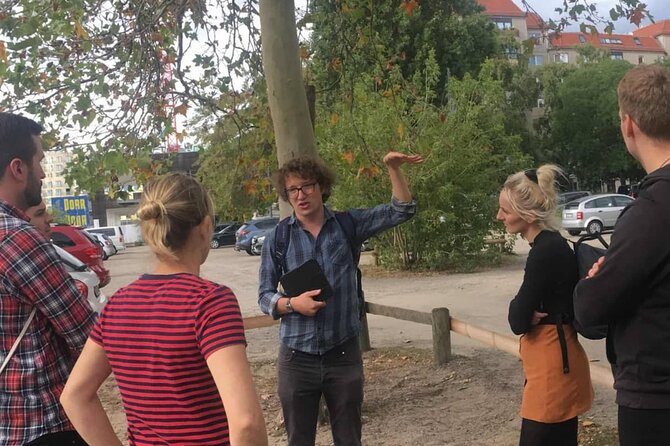
It is also a good fit if you like asking questions. Mark is named as one of the guides, and his use of photographs, clear explanations, and enthusiasm for the subject are major strengths. The guide’s ability to answer questions matters more here than a polished script because the route covers complex political events in a short time.
You should think twice if you dislike walking, need a slow schedule, or want extended time at each memorial. The tour gives most stops 10 to 20 minutes, so it offers breadth more than quiet reflection. I would also avoid booking it as your only Berlin history experience if you want detailed museum-level coverage of the Holocaust or the Cold War.
Should you book the Hitler to Stalin walk?
Book it if you want Berlin’s best-known wartime and Cold War locations connected by a single, serious story. The $23 price, 15-person maximum, and guide-led use of historical photographs make it a strong choice for a first look at the city’s past.
Skip it if you want interior access, a private guide, or long periods at each memorial. For most visitors with two and a half hours to spare, though, this is a practical way to understand why Berlin looks the way it does today.
FAQ
How long does the Hitler to Stalin tour last?
The tour lasts approximately 2 hours and 30 minutes.
Where does the tour begin?
It begins at the Brandenburg Gate on Pariser Platz, 10117 Berlin, Germany.
Where does the tour end?
It ends at Checkpoint Charlie at Friedrichstraße 43 to 45, 10117 Berlin, Germany.
What sights are included?
The route includes Brandenburg Gate, the Reichstag Building, the Soviet Memorial in Tiergarten, the Holocaust Memorial, the Führerbunker site, the Embassy of the Democratic People’s Republic of Korea, the June 17, 1953 uprising memorial, the Berlin Wall Memorial, and Checkpoint Charlie.
How large is the group?
The tour has a maximum of 15 participants.
Is the tour guided by a historian?
The experience is led by passionate historians. Mark is one guide named in the tour information, and he uses photographs and historical detail during the walk.
Is admission to the sights included?
The listed stops have free admission. The tour is an outdoor walking experience and does not list separate paid entry to museums or buildings.
Is the tour accessible to everyone?
Most people can participate, and service animals are allowed. The tour is a walking activity, so you should consider whether a 2-hour-30-minute route suits your needs.
What happens if I need to cancel?
You can receive a full refund if you cancel at least 24 hours before the start time. Cancellations or changes made less than 24 hours before the experience are not refunded or accepted. If bad weather or an insufficient number of participants cancels the tour, you will be offered another date or experience, or a full refund.
More Cold War Tours
- Berlin: DDR Museum Tickets
★ 4.3 · 3,443 reviews - Skip-the-Line: Berlin Wall Museum at Checkpoint Charlie
★ 4.1 · 2,041 reviews - Cold War, Berlin Wall, Spies and the East Side Gallery
★ 5.0 · 1,024 reviews - Berlin: Guided Bike Tour of the Berlin Wall and Third Reich
★ 4.7 · 499 reviews
Just added around Berlin
- eSIM for Germany and 34 European Countries★ 4.5 · 16 reviews
- Your ticket to The Wall Museum Berlin★ 3.0 · 60 reviews
- Walking on the Wall: 3-Hour Tour in Berlin★ 4.5 · 34 reviews
- Rickshaw Tours Berlin – Groups of up to 16 people with several rickshaws★ 4.0 · 97 reviews
- Warnemuende Shore Excursion: Private Berlin Tour★ 4.5 · 27 reviews
- Love and War in Berlin: Self-Guided Story Puzzle Walk★ 5.0 · 7 reviews
- Warnemuende Shore Excursion: Berlin Private Sightseeing Tour from Rostock★ 5.0 · 4 reviews
- Cold War Berlin – Private Live Virtual Experience★ 5.0 · 4 reviews
Berlin Tours, compared.
Reichstag, Dome and Government District Guided Tour
Read our review →
1-Hour City Tour by Boat with Guaranteed Seating
Read our review →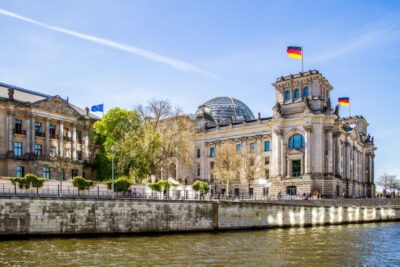
Reichstag, Plenary Chamber, Cupola & Government Tour
Read our review →
Browse the lists this tour appears in