
Review · BERLIN TOURS
Berlin: Guided Bike tour of the Berlin Wall and Third Reich
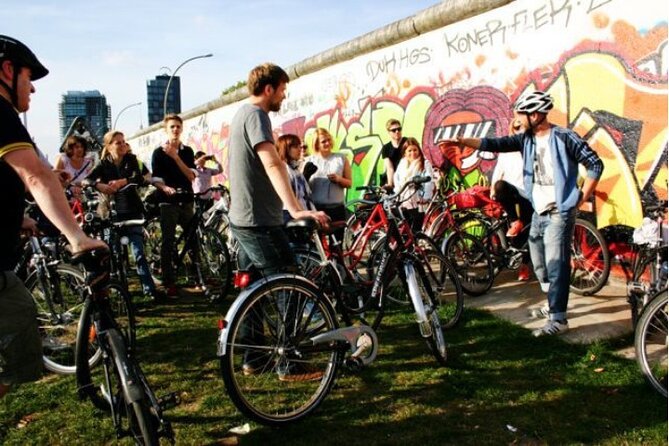
Berlin’s past is easier to grasp when you move through it. This three-hour bike tour links the Berlin Wall, Nazi-era sites, Holocaust memorials, government buildings, and former border crossings into one active history lesson. You cover a lot more ground than you would on foot, while still stopping often for stories and questions.
I especially like the local guide approach, since guides such as Paul, a native of West Berlin, can explain how division shaped daily life on both sides of the city. I also like the bikes themselves: comfortable city bikes come with helmets, baskets, and infant seats on request. The main drawback is the flexible route. Your guide may not visit every listed site, so tell the guide your must-sees before setting off.
Key points to know before you ride
- Berlin’s history comes in layers: The route connects the medieval Nikolaiviertel, Nazi bunkers, the Berlin Wall, Cold War checkpoints, and modern government buildings.
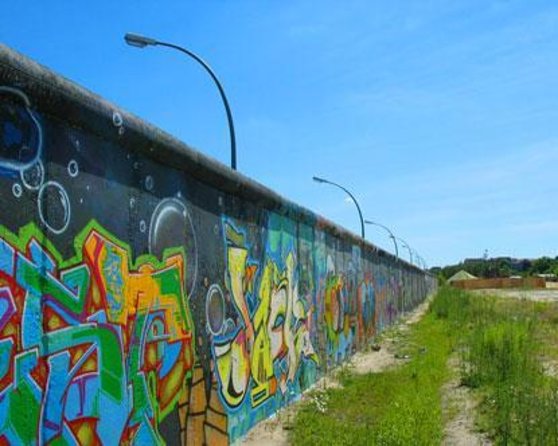
- The Wall section is the heart of the tour: The Berlin Wall Memorial, Mauerpark, Günter Litfin Memorial, and Invalidenfriedhof show both the physical barrier and its human cost.
- Guides shape their own route: The Free Berlin concept keeps tours personal, but some advertised stops may be exchanged for others.
- You ride at an easy pace: Berlin is flat, and the route includes frequent stops. One family reported cycling about 13 kilometers without finding it tiring.
- Traffic requires attention: Some riding takes place on main roads and cycle lanes, though guides give instructions and work to keep the group together.
- English and German options differ: Checkpoint Charlie is included only on the English version of the tour.
Why a bike works so well for Berlin history
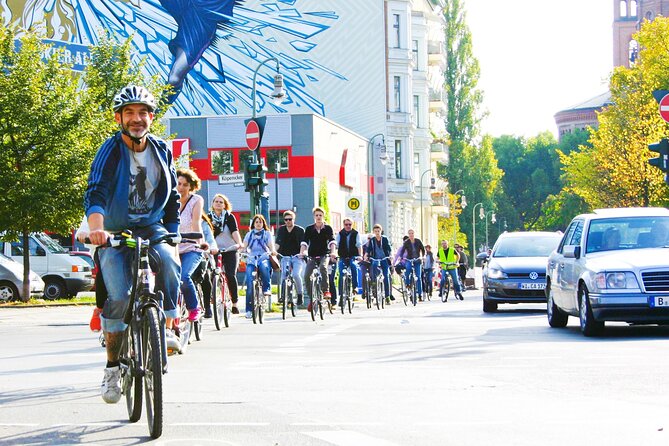
Berlin is spread out, and its major historical sites are not gathered around one compact old center. A bike solves that problem neatly. You can move from the former East Berlin to the government quarter, then on to the Wall and Checkpoint Charlie without spending much of your limited sightseeing time underground or waiting for traffic.
The ride is not meant to be a race. Expect short stretches of cycling followed by stops of roughly five to ten minutes. That rhythm lets you see the city while giving the guide time to explain what happened at each place.
The tour is also a useful choice if you want more than polished monuments. You pass through ordinary streets, parks, cemeteries, and former border areas. Berlin’s difficult past often makes the most sense in these less formal places, where a remaining tower, a line in the pavement, or a gap between buildings can show how the city was divided.
Most groups have between four and 15 people. A group of 12 can still be handled well, but cycling together requires care at traffic lights and crossings. One guide split a larger booking into two smaller groups, which made the ride easier to manage. Ask about group size if you are concerned about riding in traffic.
More WWII History Tours in Berlin
- Berlin: Third Reich and Cold War 2 Hour Walking Tour
★ 4.9 · 6,830 reviews - Berlin: Sachsenhausen Concentration Camp Tour in English
★ 5.0 · 5,711 reviews - Berlin’s Best: 2 Hour Walking Tour Third Reich and the Cold War
★ 5.0 · 5,486 reviews
Nikolaiviertel: Berlin’s carefully rebuilt old town
The tour begins at Poststraße 11, near Nikolaiviertel in central Berlin. This neighborhood is presented as Berlin’s only true old town, but its age needs a little explanation.
Much of what you see was rebuilt after severe wartime destruction. That makes Nikolaiviertel useful as an opening lesson: Berlin’s historic appearance is often a mixture of original fragments, reconstruction, and modern interpretation. In about ten minutes, the guide sets up the larger theme of the tour, namely how war, ideology, division, and rebuilding changed the city.
Because this is the meeting point, arrive ready to sort out your bike and helmet before the ride begins. The tour ends back here, which is convenient if you have left other belongings nearby or want to continue exploring central Berlin afterward.
Neue Synagoge and a story of civil courage
The brief stop at the Neue Synagoge, home of the Centrum Judaicum, turns attention to Jewish life and the persecution of Jews under Nazi rule. The building’s distinctive dome makes it easy to recognize, but the important part of the stop is the story attached to it.
You hear about a police officer whose actions helped save the synagogue during Kristallnacht, the night of broken glass. The stop is short, so it works as a focused introduction rather than a full museum visit. If you want to study the building or its exhibitions, plan a separate visit.
This is one of the tour’s strengths: the guide does not treat Nazi history as a list of dates. Individual decisions, acts of courage, and the fate of communities help connect the large events to real people.
Wall memorials where the border becomes clear
The Berlin Wall Memorial is the most important Wall stop on the route. The tour describes it as one of the few places where you can really understand how the Wall worked, rather than simply see a surviving slab of concrete.
That distinction matters. A short piece of wall can look like a stray relic unless you understand the former border zone around it. At the memorial, the guide can explain how the barrier affected streets, homes, transport, and escape attempts. You get a better sense of the Wall as a system, not just a structure.
The stop lasts about ten minutes, so you should not expect time for every exhibit or a slow walk through the full memorial grounds. If the Wall is your main reason for booking, keep an extra visit free. One participant held off visiting the Wall independently and later wished the bike stop had allowed more time.
Mauerpark offers a different view of the same history. Once part of the divided border area, it is now associated with open-air life and a Sunday flea market. The contrast is the point. A place shaped by surveillance and separation became a public space for music, markets, and free expression.
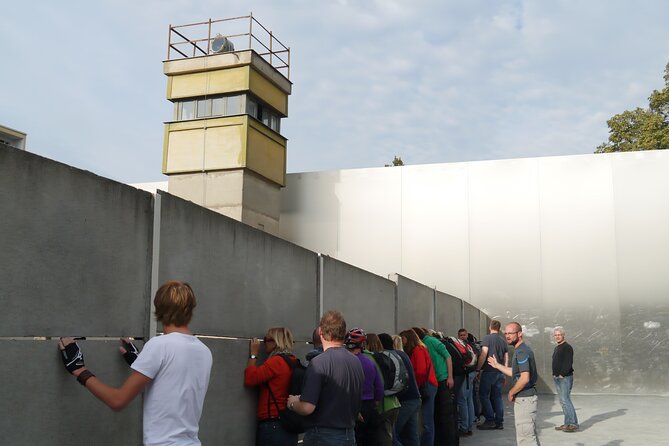
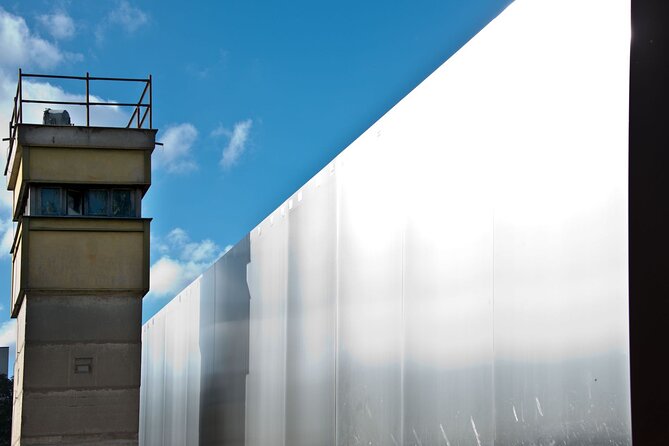
The tour then reaches the Günter Litfin Memorial. The preserved watchtower recalls Günter Litfin, identified here as the first person shot at the Wall. This small site can be more affecting than a large monument because the remaining tower gives the story a physical setting.
At Invalidenfriedhof, the guide discusses a cemetery that was cut through by the Wall. The burial ground is linked to Prussian military history, but the tour shifts attention toward escape attempts. Its position near former checkpoints and the canal helps explain why this area mattered during the division of Berlin.
These stops work best together. The memorial shows the border as a planned structure, Mauerpark shows its later transformation, the watchtower recalls a specific death, and the cemetery reveals how the division cut through older layers of the city.
More wartime history tours in Berlin:
- Berlin: Sachsenhausen Concentration Camp Memorial Tour
★ 4.7 · 3,716 reviews - Third Reich Berlin: Hitler and WWII Walking Tour
★ 5.0 · 3,301 reviews - Sachsenhausen Concentration Camp Bus Tour in English from Berlin
★ 5.0 · 1,962 reviews - Berlin: Sachsenhausen Concentration Camp Tour in English
★ 4.8 · 1,889 reviews
Humboldthain Flak Tower and the mark of Nazi power
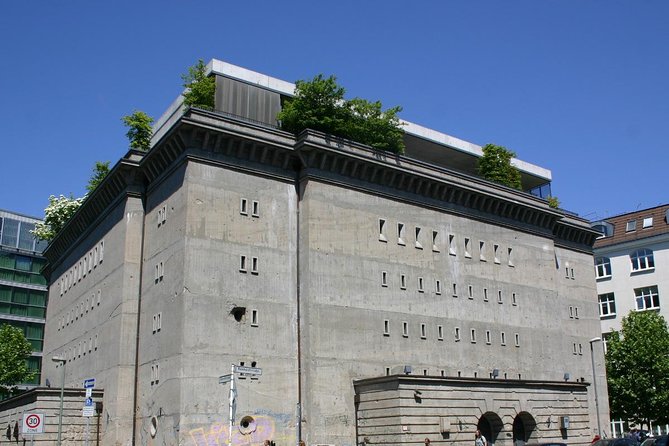
The Humboldthain Flak Tower brings you face to face with Nazi military architecture. It was built as a large fortress and air-raid shelter, and today it also provides a panoramic view.
The view is not just a pleasant pause. From above, you can better understand Berlin’s broad scale and the distances between major sites. The tower also raises a difficult question: how should a modern city live with structures built for dictatorship and war?
The stop lasts about ten minutes. Access details are not specified, so think of this as a viewpoint and history stop rather than a guaranteed interior tour. Wear shoes suited to cycling and walking around uneven urban sites.
From the Spreebogen to the Reichstag
At Spreebogenpark, the route turns toward modern Germany’s government quarter. You get a clear view over the area around the Reichstag and the institutions of the federal government.
The guide also discusses Albert Speer’s plans for Hitler’s proposed Great Hall, a structure intended to hold 180,000 people. That idea reveals the scale of Nazi megalomania. Berlin’s government district is therefore not only about the buildings you see today. It is also about the city that Nazi planners wanted to create, and the future Germany rejected after the war.
The Reichstag stop focuses on Hitler’s rise to power and Germany’s democratic development. You view the building from outside rather than going in. That keeps the tour moving, but it means you will need a separate reservation or visit if you want to see the interior and dome.
This pairing is especially useful because it links political power with physical space. You see today’s democratic institutions while hearing about the dictatorship that once tried to replace them.
Holocaust memorials and the Fuhrerbunker site
The Holocaust Memorial, officially the Memorial to the Murdered Jews of Europe, is one of the tour’s most serious stops. Its field of concrete blocks changes as you walk beside it, and the setting invites personal reflection rather than a single fixed reading.
The guide allows time for the group to discuss its impressions. That conversation can make the visit more meaningful, though some people may prefer to experience the memorial quietly. The stop lasts about ten minutes, so treat it as an introduction. The underground information center is not part of the bike tour.
The route also refers to memorials for other major victim groups of the Holocaust. The descriptions identify more than one such memorial stop, but the exact sequence can vary with the guide’s route. This is another reason to tell your guide if a particular memorial matters to you.
At the Fuhrerbunker site, there is no dramatic ruin to inspect. The area is now a parking lot, and the guide explains why the bunker was covered and why little is visible today. That absence is part of the lesson. You are standing at the place where Hitler spent his final weeks and died, but the city has deliberately avoided turning it into a shrine or spectacle.
Checkpoint Charlie and the Cold War
Checkpoint Charlie is included on the English version of the tour. It was the best-known crossing point associated with the Cold War and the only one shared by American and Soviet forces, according to the tour’s historical explanation.
The stop covers the confrontation that nearly brought the superpowers into direct conflict in central Berlin. It is a useful place to discuss how a local border could become a global flashpoint.
Keep your expectations realistic. Checkpoint Charlie today is a busy tourist location, not a preserved border post in its original form. The value lies in the explanation of what happened there, not in expecting an untouched historical site.
If you book the German option, confirm the route before departure, since Checkpoint Charlie is specified only for the English tour. Also ask about any must-see stops, especially if your interest is more Third Reich history than the Wall.
How good are the bikes, pace, and safety?
The bikes and helmets are included in the price. The city bikes have baskets, with one rider specifically noting a rear basket carriage that worked well for water, a coat, or a small bag. Infant seats can be provided if requested, and children are welcome when accompanied by an adult.
Berlin is notably flat, which makes this a manageable ride for most people who are comfortable on a bicycle. One family with children aged 10, 14, and 17 covered about 13 kilometers at an easy pace with many breaks.
The main challenge is city traffic. You may ride on main roads and in cycle lanes, and one participant found that intimidating at first. Guides such as Theo gave clear instructions, waited when riders were delayed by red lights, and kept the group together.
This is not a private, stop-anytime cycling day. You need to follow the guide’s pace and pay attention to the group. Still, the route is designed for sightseeing, not athletic performance. Dress for the weather because the tour operates in rain and other conditions.
Guide style and the Free Berlin route
The guide can make or break a history tour, and this experience gives each guide room to shape the route. Paul brings a personal West Berlin perspective, while Simon, Juliette, Theo, Simone, Yonis, Constantine, Peter, and Jacob have each been praised for clear storytelling, good questions, safe riding, or personal accounts.
That variety is both a strength and a warning. One guide may spend more time on the Wall, another may give more attention to Nazi Germany, and another may adjust the route because of a city event such as the Berlin Marathon. The company calls this the Free Berlin concept: guides create their own route within the tour’s subject.
I like the chance to hear a guide’s personal connection to Berlin, especially when the story concerns life before the Wall fell and the differences between East and West. But if you expect every numbered stop, you may be disappointed. A participant booked this as a Third Reich tour and missed the Reichstag, Holocaust Memorial, Fuhrerbunker, Invalidenfriedhof, Spreebogenpark, and Checkpoint Charlie when the guide chose another route.
The practical fix is simple. At the start, name your top two or three priorities. The guide may not be able to include everything, but can explain what is possible.
Price, timing, and who gets the most value
At $42.34 per person, the tour offers solid value if you want a broad introduction to Berlin’s twentieth-century history. You receive a bike, helmet, professional guide, and about three hours of riding and instruction. Visiting the same spread of sites independently would require careful route planning and a good deal of walking or public transport.
The value is lower if you want long visits inside museums or memorial centers. Most stops last five to ten minutes, and the tour does not include food, drinks, Reichstag entry, or a full visit to the Holocaust Memorial’s underground center.
I would book it early, since it is commonly reserved about 17 days ahead. Free cancellation is available up to 24 hours before the start time. The tour needs at least four participants, and if that minimum is not reached, you can receive another date or a full refund.
The tour suits families, first-time visitors, history-minded adults, and anyone who wants to understand Berlin’s geography while seeing the city outdoors. It is less suited to anyone who dislikes cycling in traffic, needs long quiet periods at memorials, or wants a tightly fixed itinerary.
Should you book the Berlin Wall and Third Reich bike tour?
Book this tour if you want context, distance, and local storytelling in one afternoon. It gives you a useful map of Berlin’s divided past, covers sites that are easy to miss on foot, and adds personal perspective to major events.
Before you ride, decide which history matters most to you. If the Wall is your priority, ask for generous time at the Berlin Wall Memorial. If the Third Reich is your main interest, confirm that the Reichstag, Holocaust Memorial, Fuhrerbunker, and related memorials can fit the route.
I would choose this experience as an active first look, then return on your own to the sites that demand more time. At 4.8 out of 5 from 160 ratings, with 94 percent recommending it, the format clearly works for many people. Its success depends on accepting the flexible route and speaking up about your priorities.
FAQ
Where does the bike tour begin and end?
It begins at Free Berlin Bike Tours & Rental, Poststraße 11, 10178 Berlin. The tour ends back at the same meeting point.
How long does the tour last?
The tour lasts approximately three hours.
What is included in the price?
The price includes use of a city bicycle, a helmet, and a professional guide. Infant seats can be provided on request.
Is the tour offered in English?
Yes. The experience is offered in English and German, depending on the option selected. Checkpoint Charlie is included only in the English version.
Can children join the tour?
Yes. Children are welcome, but they must be accompanied by an adult. Infant seats can be provided on request.
Does the tour operate in bad weather?
Yes. The tour operates in all weather conditions, so you should dress appropriately.
Can I cancel for a full refund?
Yes. You can cancel for a full refund up to 24 hours before the experience start time. Cancellations or changes made less than 24 hours before the start time are not refunded or accepted.
More Bike Tours in Berlin
- Berlin: Sights and Highlights Bike Tour with a Local Guide
★ 4.8 · 2,698 reviews - Berlin Highlights 3-Hour Bike Tour
★ 5.0 · 948 reviews - Berlin City Bike Tour with Beer Garden Stop
★ 5.0 · 917 reviews - Berlin Highlights: 3-Hour Bike Tour
★ 4.9 · 809 reviews
More Cold War Tours
- Berlin: DDR Museum Tickets
★ 4.3 · 3,443 reviews - Skip-the-Line: Berlin Wall Museum at Checkpoint Charlie
★ 4.1 · 2,041 reviews - Cold War, Berlin Wall, Spies and the East Side Gallery
★ 5.0 · 1,024 reviews - Berlin: Guided Bike Tour of the Berlin Wall and Third Reich
★ 4.7 · 499 reviews
Just added around Berlin
- eSIM for Germany and 34 European Countries★ 4.5 · 16 reviews
- Your ticket to The Wall Museum Berlin★ 3.0 · 60 reviews
- Walking on the Wall: 3-Hour Tour in Berlin★ 4.5 · 34 reviews
- Rickshaw Tours Berlin – Groups of up to 16 people with several rickshaws★ 4.0 · 97 reviews
- Warnemuende Shore Excursion: Private Berlin Tour★ 4.5 · 27 reviews
- Love and War in Berlin: Self-Guided Story Puzzle Walk★ 5.0 · 7 reviews
- Warnemuende Shore Excursion: Berlin Private Sightseeing Tour from Rostock★ 5.0 · 4 reviews
- Karl-Marx-Allee Tour: Life and Architecture in East Berlin★ 5.0 · 19 reviews
Berlin Tours, compared.

Reichstag, Dome and Government District Guided Tour
Read our review →
1-Hour City Tour by Boat with Guaranteed Seating
Read our review →




Reichstag, Plenary Chamber, Cupola & Government Tour
Read our review →
Browse the lists this tour appears in