
Review · BERLIN TOURS
The History of Berlin: WWII PRIVATE Walking Tour With Locals
Berlin’s WWII story comes into focus when you connect places rather than view them as isolated monuments. This private walk links the Holocaust Memorial, Hitler’s bunker site, Brandenburg Gate, Bebelplatz, Museum Island, and Cold War locations into one long, moving lesson in how power reshaped the city.
I like the one-party format, which lets you ask questions without holding up a busload of strangers. I also like the flexible route. Guides such as Sara, Seth, Boyd, and Miha have tailored walks to personal interests, added photography stops, suggested restaurants, and made room for a coffee break or a little extra sightseeing.
The main consideration is the amount of walking. One guest counted about 15,000 steps, and the experience does not include attraction admissions. Guide quality can also vary, so it is sensible to share your priorities when you book and confirm the plan at the start.
Key points to know before you book
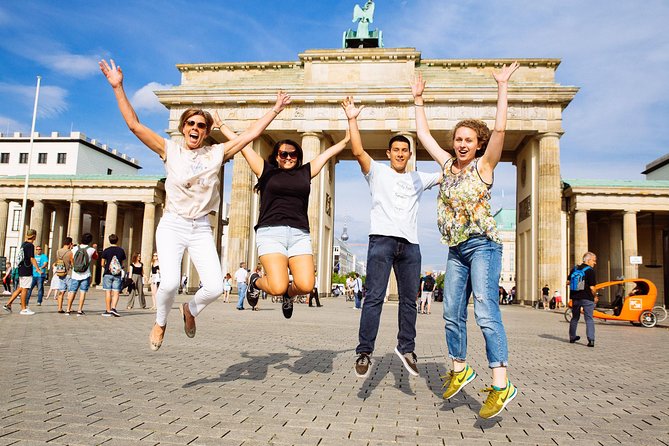
- See Berlin’s darkest sites in one connected walk: The route may include the Holocaust Memorial, Hitler’s bunker site, Bebelplatz, Brandenburg Gate, and former Cold War crossings.
- A genuinely private experience: Your party gets the guide’s full attention, with no strangers joining the walk.
- The route can change: You can ask for more WWII history, more Cold War context, architecture, photography, or lesser-known historical locations.
- Expect a serious half-day on foot: Four hours can mean roughly 15,000 steps, with stops for questions and refreshments.
- Outdoor access is the norm: Museum Island and the Reichstag are visited from outside unless you arrange and pay for an attraction separately.
- Guide names matter: Sara, Seth, Boyd, Miha, Amelia, and others have received especially warm praise, but the assigned guide is not guaranteed.
Starting on Oranienburger Strasse
The walk begins at Oranienburger Strasse 36, near public transportation, and ends at the same meeting point. This is a useful location for a history tour because you begin in an area where Berlin’s Jewish heritage, wartime destruction, Cold War division, and modern rebuilding sit close together.
Your first nearby landmark is the New Synagogue. Its Moorish-style exterior catches the eye at once, with a grand facade that makes the building easy to recognize. The guide uses it as a starting point for discussing Berlin’s Jewish community and the damage suffered during the Nazi period. You should think of this stop as an exterior introduction, not a museum visit, since entry tickets are not part of the tour.
The route then moves toward the Palace of Tears, a former crossing point between East and West Berlin. Its name comes from the emotional farewells that took place there, especially when people from East Berlin had to leave family and friends who were permitted to visit the West.
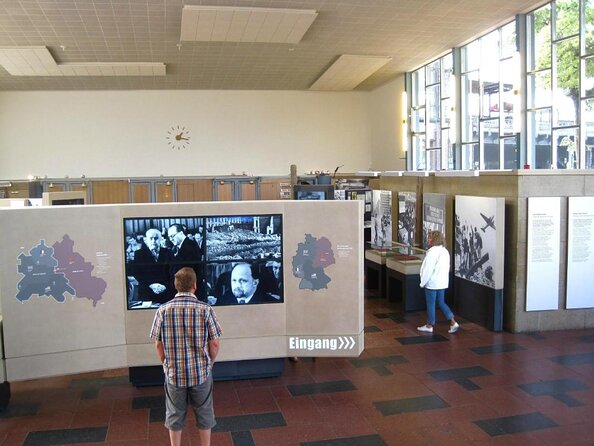
Inside, an exhibition explains the mechanics of the divided city and the risks faced by people trying to leave Russian-occupied East Berlin for the Allied sectors. The tour description includes this exhibition, but attraction access is generally not included, so check the arrangements before you expect an indoor visit. At minimum, the guide can explain why this modest-looking site carried such weight for ordinary Berliners.
More WWII History Tours in Berlin
- Berlin: Third Reich and Cold War 2 Hour Walking Tour
★ 4.9 · 6,830 reviews - Berlin: Sachsenhausen Concentration Camp Tour in English
★ 5.0 · 5,711 reviews - Berlin’s Best: 2 Hour Walking Tour Third Reich and the Cold War
★ 5.0 · 5,486 reviews
Brandenburg Gate and the Holocaust Memorial
Brandenburg Gate is one of Berlin’s essential stops, but its importance goes well beyond the familiar photograph. The gate has witnessed imperial ceremony, Nazi spectacle, wartime damage, Cold War separation, and German reunification.
A private guide can add useful context here because the gate is easy to admire without understanding how often its meaning changed. You get time for photographs, but the stop is also a chance to ask how the monument was used by different governments and how it came to represent a reunified Berlin.
From here, the walk reaches the Memorial to the Murdered Jews of Europe, usually called the Holocaust Memorial. Its field of concrete slabs creates a quiet, uneasy place in the middle of the city. Walk slowly, and you will notice how the ground changes as the blocks rise and the paths shift.
This is not a site for a quick checklist photograph. The guide’s role is to explain the memorial’s purpose and place it within the Nazi persecution of Europe’s Jews. The subject is painful, and the best guides handle it with care rather than turning it into a string of sensational stories.
The memorial is outdoors and free to enter. You should allow time to walk through it at your own pace, since the experience changes depending on the path you take. If you have mobility concerns, tell the guide before setting out, as the route covers a large area on foot.
Hitler’s bunker site and the Nazi rise to power
The former location of Hitler’s bunker is one of Berlin’s most unusual historical stops. There is no grand ruin waiting underground and no dramatic entrance to tour. The site is marked in a low-key way, beneath or near an ordinary modern setting, because the city has chosen not to create a shrine around it.
That lack of spectacle is part of the point. A good guide can explain the bunker’s role in the final days of the Nazi regime, then connect it to the earlier rise of Hitler’s party and the systems of propaganda, repression, and state power that made the dictatorship possible.
This stop works best when you want context rather than a dramatic artifact. The value is in the explanation of what happened and why the place remains politically sensitive. If you are expecting an underground attraction, you may find the visit anticlimactic.
The tour also passes Bebelplatz, a handsome square surrounded by important buildings. The area is closely tied to Nazi book burning, and its architecture gives the guide a chance to discuss the relationship between Berlin’s cultural institutions and the dictatorship.
Bebelplatz is one of the places where Berlin’s beauty and difficult memory meet within a few steps. You can look at the buildings, learn about the square’s role in Nazi history, and consider how public space can be used both to celebrate culture and to destroy it.
Reichstag, Checkpoint Charlie, and the divided city
The Reichstag Building is listed as a 30-minute stop, generally viewed from outside. Built in 1894 for the parliament of the German Empire, it later suffered severe fire damage in 1933. That event became a major political tool for the Nazis and helped them tighten their grip on Germany.
The building’s long story makes it useful on a WWII walk, even though it is not a dedicated Nazi-era museum. Your guide can tie together imperial Germany, the Weimar period, the Nazi takeover, wartime destruction, and the building’s later role in the modern German government.
Do not assume this tour includes entry to the Reichstag dome. Attraction admissions are not included, and the experience is primarily an outdoor walking tour. If you want to visit inside, treat that as a separate plan.
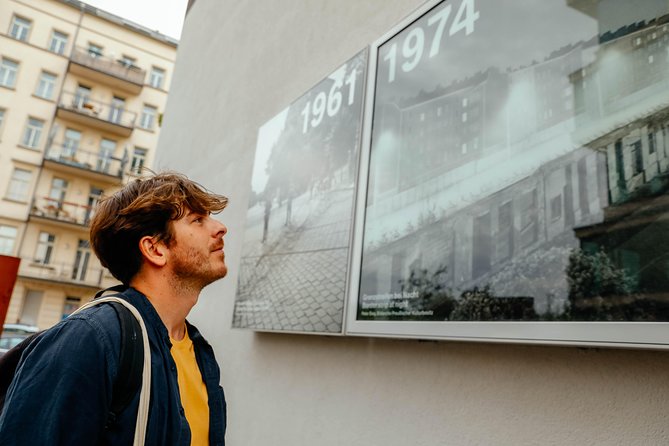
Checkpoint Charlie provides a different kind of history. It was the best-known Allied crossing between East and West Berlin during the Cold War, and its name came from the Western Allies’ designation system. Today, the surrounding streets are heavily visited and more commercial than the original crossing point.
That contrast is worth discussing. A guide can help you separate the surviving historical meaning from the modern presentation. You will learn how the border worked, why it mattered, and how Berliners tried to cross or escape, rather than simply pose beside a guardhouse replica.
The route does not guarantee every major Cold War location on every departure. A previous guest was disappointed after missing the Berlin Wall, Brandenburg Gate, Checkpoint Charlie, and the Holocaust Memorial. That is precisely why you should tell your guide at the outset which places are essential to you.
More wartime history tours in Berlin:
- Berlin: Sachsenhausen Concentration Camp Memorial Tour
★ 4.7 · 3,716 reviews - Third Reich Berlin: Hitler and WWII Walking Tour
★ 5.0 · 3,301 reviews - Sachsenhausen Concentration Camp Bus Tour in English from Berlin
★ 5.0 · 1,962 reviews - Berlin: Sachsenhausen Concentration Camp Tour in English
★ 4.8 · 1,889 reviews
Museum Island and Berlin’s rebuilt center
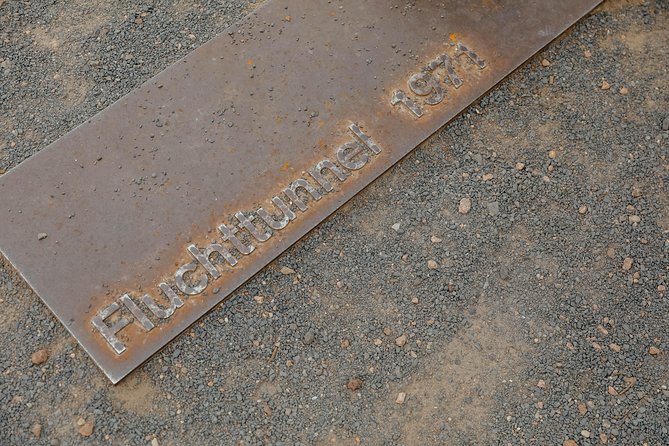
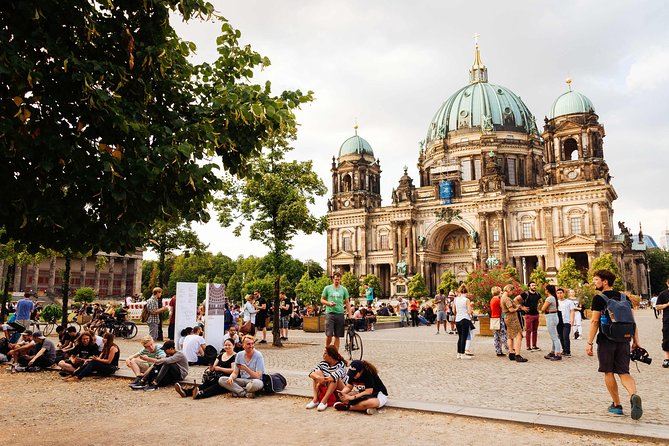
Museum Island occupies the northern part of the Spree Island in Berlin’s historic center. Its collection of major museums and grand buildings makes it one of the city’s most important cultural areas, even when you only see it from the outside.
The walk allows about an hour here, with admissions not included. You can use that time to study the architecture, ask how the island was affected by war, and hear how Berlin has repaired and reinterpreted its central buildings.
Museum Island is also a helpful final chapter for the tour because it brings the story into modern Berlin. The city is not simply a collection of wartime scars. It is a place that has repaired damaged structures, rebuilt public spaces, and placed memorials beside working government buildings and museums.
The experience may include additional locations depending on the guide and route. Some guides have added a former Gestapo camp, extra photography points, or less familiar buildings. Others have focused more heavily on architecture and the way different governments altered Berlin across the decades.
That flexibility is a strength, but it also means the exact four-hour route is not fixed. If you want a strict checklist, write down your top three sites and discuss them before the walk begins.
What the private format adds
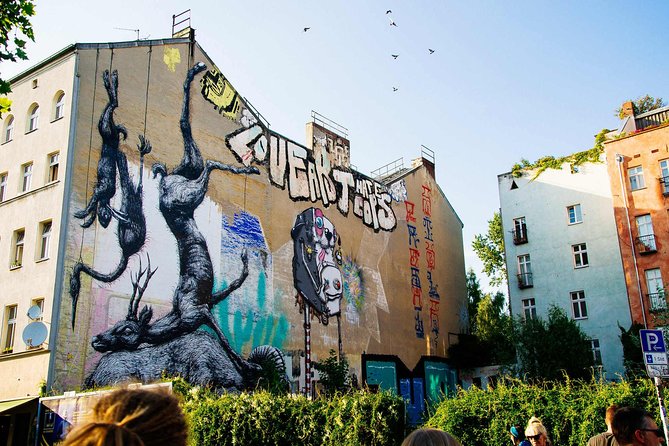
A private tour costs $143.97 per person, with group discounts available. That is a substantial price for a walking tour, especially for one or two people. The value depends on how much you use the private format.
You are not paying for entry tickets or transportation. You are paying for a local guide who can adjust the pace, answer your questions, explain connections between sites, and change direction when a particular subject catches your interest.
For a couple or small family, that can be worthwhile. You can ask about Nazi policy, Berlin’s division, postwar reconstruction, architecture, or local restaurants without waiting for a group to move on. Several guides have also adjusted meeting locations or added a little extra time when the route allowed it.
The private setup is particularly useful if the people in your group have different levels of background knowledge. One person can ask basic questions while another asks about military history or Cold War politics. The guide can also slow down for photographs or shorten a section that is less important to you.
The format is less compelling if you only want to see monuments quickly. A public walking tour or self-guided route may cost less, and you would not be paying for personal attention you do not plan to use.
Guide quality deserves a candid note. Sara has been praised for energy, clear explanations, and careful attention to breaks and practical needs. Seth has been singled out for making four hours pass quickly and for linking famous and lesser-known sites. Boyd has been appreciated for his historical explanations and help planning further sightseeing. Miha has been praised for answering questions, finding good photo locations, and adding places such as the former Gestapo camp.
Those names are useful preferences, not guarantees. The company assigns the guide, and one very poor experience shows that the fit can occasionally be wrong. Introduce yourselves, state your interests, and ask for a route outline before you begin. If the guide is not meeting the expected standard, contact the provider promptly rather than waiting until the end.
Walking, timing, and practical comfort
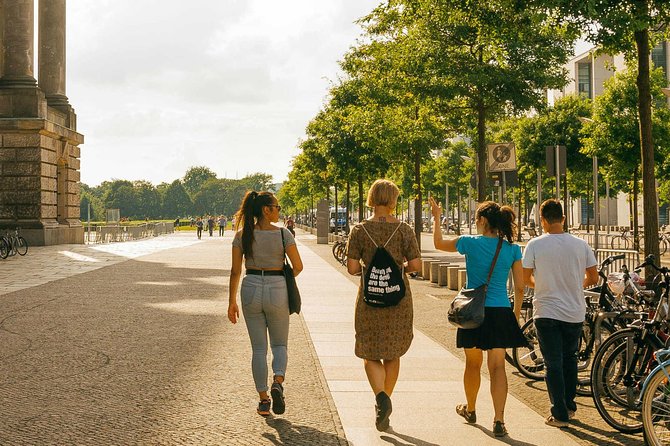
Plan on four hours, though some walks have lasted about four and a half hours. The route is long enough that comfortable shoes matter more than stylish ones. One guest counted about 15,000 steps, so this is not a gentle stroll between two nearby monuments.
The tour requires a moderate level of physical fitness. You will be outdoors for much of the time, moving between central Berlin districts and standing at historic sites. Refreshment and bathroom stops can be arranged more easily on a private walk, but do not count on a scheduled tea or beer break unless you request one.
Small children may find the length and serious subject matter difficult. The guide can be notified in advance if children are joining, allowing the pace and content to be adjusted. Older children and teenagers with an interest in history may benefit from the personal question-and-answer format.
The experience is offered in English and uses a mobile ticket. Confirmation arrives when you book, and free cancellation is available up to 24 hours before the start time. A cancellation inside that window is not refunded, and changes made that late are not accepted.
The tour is carbon neutral because the provider offsets the emissions connected with its tours. That does not change the walking route, but it may matter to you when comparing similar experiences.
Is this Berlin history walk worth booking?
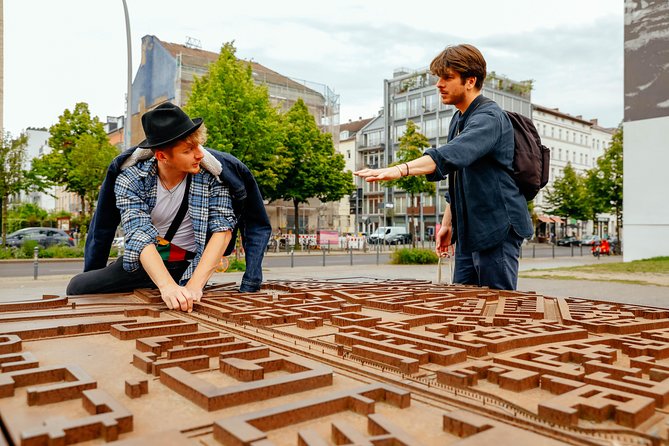
Book it if you want the major WWII and Cold War landmarks explained by one person who can adapt the story to your questions. It is especially well suited to first-time visitors who want a strong historical framework before exploring Berlin on their own.
I would book it for couples, families with older children, and anyone who prefers conversation to a rehearsed group script. Tell the guide that the Holocaust Memorial, Hitler’s bunker site, Brandenburg Gate, Checkpoint Charlie, the Berlin Wall, or Museum Island are priorities, since not every route includes every location.
I would skip it if you dislike long walks, want museum interiors included, or are mainly looking for a low-cost overview. At $143.97 per person, the experience earns its price through flexibility and personal attention, not through admissions or transport.
For history-minded visitors who prepare a short wish list and use the private format well, this can be a thoughtful and efficient way to understand Berlin’s hardest chapters.
FAQ
How long does the private Berlin history tour last?
The tour lasts approximately four hours. Some experiences may run to about four and a half hours depending on the route and pace.
Where does the tour start?
It starts at Oranienburger Strasse 36, 10117 Berlin, Germany.
Where does the tour end?
The activity ends back at the starting point.
Is the tour private?
Yes. Only your own group participates, and the itinerary can be customized to your interests and preferences.
What language is the tour offered in?
The tour is offered in English.
Are attraction entrance tickets included?
No. Admission tickets are not included. The route visits attractions and landmarks from outside, although the Palace of Tears exhibition is included in the described route, so you should confirm access arrangements when booking.
Does the tour include hotel pickup and drop-off?
No. Hotel pickup and drop-off are not included.
How much walking is involved?
A moderate level of physical fitness is required. The route can involve substantial walking, with one account estimating about 15,000 steps.
Can I cancel for a full refund?
Yes, if you cancel at least 24 hours before the experience start time. Cancellations made less than 24 hours in advance are not refunded, and late changes are not accepted.
More Walking Tours in Berlin
- Discover Berlin Half-Day Walking Tour
★ 5.0 · 9,624 reviews - Berlin: Discover Berlin Walking Tour
★ 4.9 · 5,998 reviews - Berlin: Hidden Backyards Guided Walking Tour
★ 4.8 · 5,360 reviews - Berlin: Alternative Berlin Walking Tour
★ 4.6 · 1,204 reviews
More Historical Tours in Berlin
- Berlin: Natural History Museum Entrance Ticket
★ 4.6 · 3,382 reviews - Berlin: World Heritage Cruise to Potsdam
★ 4.5 · 1,435 reviews - Berlin Historical Highlights Walking Tour
★ 4.9 · 657 reviews - Berlin Private Complete History All Day Walking Tour
★ 5.0 · 474 reviews
Just added around Berlin
- eSIM for Germany and 34 European Countries★ 4.5 · 16 reviews
- Your ticket to The Wall Museum Berlin★ 3.0 · 60 reviews
- Walking on the Wall: 3-Hour Tour in Berlin★ 4.5 · 34 reviews
- Rickshaw Tours Berlin – Groups of up to 16 people with several rickshaws★ 4.0 · 97 reviews
- Warnemuende Shore Excursion: Private Berlin Tour★ 4.5 · 27 reviews
- Love and War in Berlin: Self-Guided Story Puzzle Walk★ 5.0 · 7 reviews
- Warnemuende Shore Excursion: Berlin Private Sightseeing Tour from Rostock★ 5.0 · 4 reviews
- Cold War Berlin – Private Live Virtual Experience★ 5.0 · 4 reviews
Berlin Tours, compared.

Reichstag, Dome and Government District Guided Tour
Read our review →
1-Hour City Tour by Boat with Guaranteed Seating
Read our review →




Reichstag, Plenary Chamber, Cupola & Government Tour
Read our review →
Browse the lists this tour appears in