
Review · BERLIN TOURS
Berlin: Natural History Museum Entrance Ticket
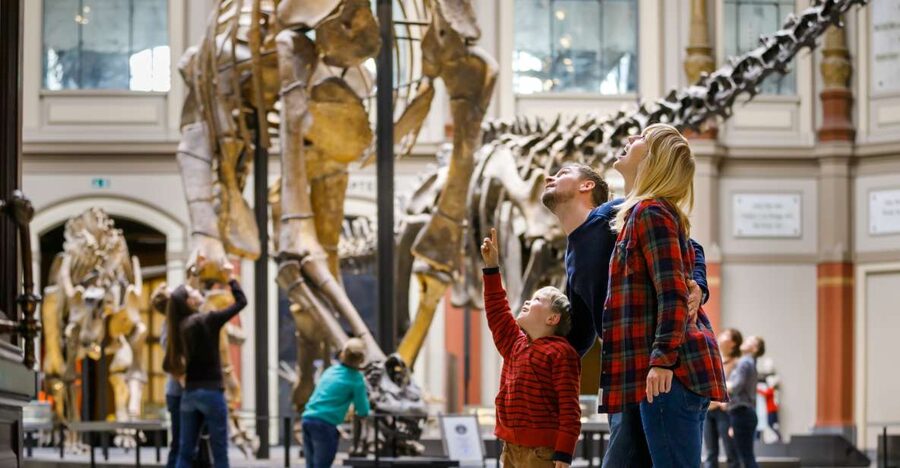
Berlin’s Museum für Naturkunde greets you with a dinosaur so tall that its neck reaches toward the ceiling. The Giraffatitan brancai is the museum’s great showstopper, but the rare Archaeopteryx and the original T. rex skeleton called Tristan Otto give the visit real weight.
I like the museum’s mix of spectacular fossils and serious science, especially the one-million-specimen wet collection and the wall showing 3,000 species at once. I also like the low $12 price and family-friendly scale. The catch is that some displays have limited English text, and the online audio guide works best if you bring your own phone and headphones.
Key things to know
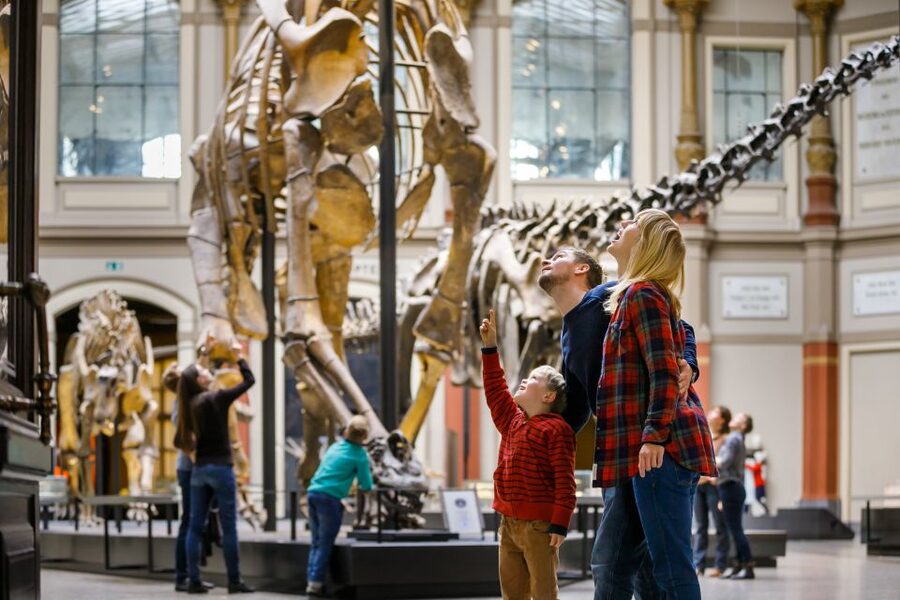
- See the world’s tallest mounted dinosaur skeleton: Giraffatitan brancai dominates the Dinosaur Hall.
- Find Tristan Otto: The museum displays one of the few original T. rex skeletons in Europe.
- Look for the Archaeopteryx: This delicate fossil is often called the Mona Lisa of natural history.
- Study a million animals in alcohol: The East Wing reveals the working collection behind modern research.
- Use your phone for audio: Free downloadable content is available in English and 10 other languages.
- Allow more than 30 minutes if you read carefully: The museum can work as a quick stop or a longer afternoon visit.
Berlin’s dinosaur hall delivers the big moment
The first room most people seek is the Dinosaur Hall, where the museum recreates life in the Upper Jurassic period, about 150 million years ago. You do not need a child with you to enjoy it. The scale of the skeletons makes this a memorable stop for adults, too.
At the center is Giraffatitan brancai, described by the museum as the tallest mounted dinosaur skeleton in the world. Its long neck and high shoulders give you an instant sense of the animal’s size. This is the kind of exhibit that makes you stop at the doorway before you have even read a label.
The hall is arranged around fossil evidence, but it also asks you to think about how scientists build a picture of a vanished world. Bones are not just old objects in glass cases. They still provide clues about movement, anatomy, diet, and the conditions in which these creatures lived.
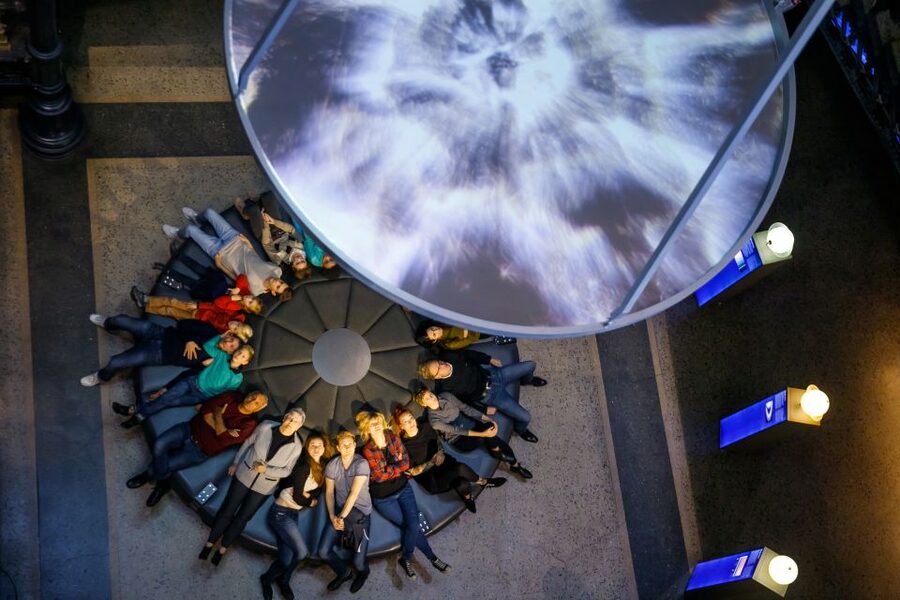
Some of the displays include interactive elements, though you should not expect a hands-on science center packed with activities. The strongest appeal here is visual: huge skeletons, detailed fossil material, and the chance to look closely at objects that continue to raise new questions.
More museums and galleries in Berlin:
- Berlin: Jewish Museum Berlin Entrance Ticket
★ 4.5 · 8,393 reviews - Berlin: DDR Museum Tickets
★ 4.3 · 3,443 reviews - Berlin: Neues Museum Entry Ticket
★ 4.6 · 3,261 reviews
Tristan Otto and the rare Archaeopteryx
Tristan Otto is the other major draw. This T. rex skeleton is one of the few original skeletons of its kind in Europe, and it gives the museum a second powerful focal point after Giraffatitan.
The display has a different feel from the towering plant-eating dinosaur. Tristan Otto is built for drama, with the skull, teeth, and overall shape making the animal instantly recognizable. If you are visiting with children, this is likely to be the moment they remember most. If you are interested in paleontology, it is also worth slowing down to examine the structure rather than simply taking a photograph.
At the back of the Dinosaur Hall, look for Archaeopteryx lithographica. The fossil is presented in a protective showcase because of its rarity and value. The museum calls it the Mona Lisa of natural history, a dramatic comparison, but one that helps explain why this small fossil receives so much attention.
Archaeopteryx matters because it helps connect dinosaurs and early birds. Its appearance is far less imposing than the giant skeletons, so it is easy to miss if you rush through the hall. I would make a point of finding it before leaving. It rewards a quiet look, especially after the visual noise of the larger exhibits.
The East Wing shows science behind the displays
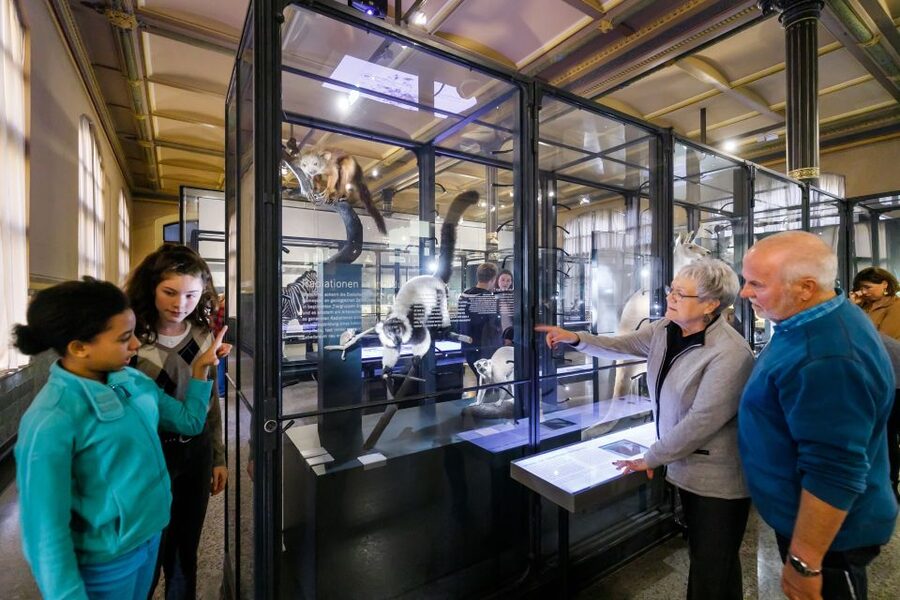
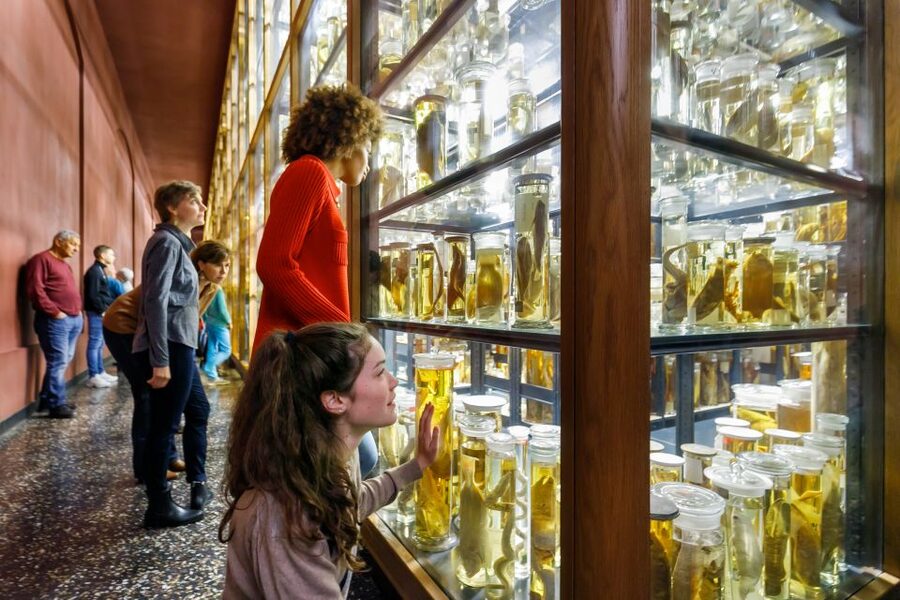
The museum is not only a collection of extinct creatures. In the East Wing, you can see a genuine scientific research collection containing about one million animals preserved in 80 tonnes of alcohol.
This is a very different experience from standing beneath a dinosaur skeleton. Rows of preserved specimens show how natural history museums support research. The collection helps scientists compare species, study change over time, and investigate the many forms of life that cannot be represented by a single dramatic fossil.
For some people, the wet collection will be fascinating. For others, it may feel more clinical. The specimens are real scientific material, not a theatrical attraction, and the presentation asks you to consider how researchers document biodiversity. If you prefer only spectacular objects, you may move through this section quickly. If you want to understand what a natural history museum actually does, this is one of the most valuable parts.
The collection also gives the museum a useful sense of purpose. You are not simply looking at old bones and stuffed animals. You are seeing part of a working institution with about 200 scientists and more than 30 million items in its wider scientific collections.
The Biodiversity Wall puts loss into one view
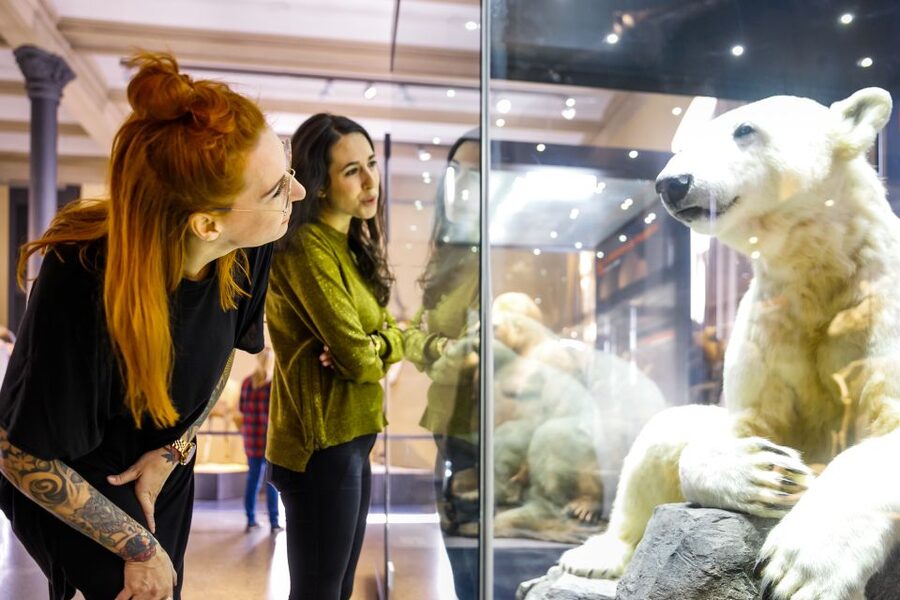
The Biodiversity Wall displays more than 3,000 different species in a single installation. It is one of the museum’s clearest attempts to move from collecting nature to discussing its future.
The wall can feel overwhelming at first. That is part of its point. A single room filled with such variety makes the scale of life easier to grasp than a few isolated examples. It also raises a harder question: what happens when species disappear faster than we can study them?
I like this section because it adds meaning to the visit without turning the museum into a lecture. The dinosaurs show you what has already vanished. The Biodiversity Wall reminds you that extinction is not only a prehistoric subject.
You may want to spend more time here than your children do. The display is visually strong, but its message is more reflective than playful. It works best as a pause between the dramatic fossil halls and the other scientific collections.
More history-led days in Berlin:
- Berlin: World Heritage Cruise to Potsdam
★ 4.5 · 1,435 reviews - Berlin Historical Highlights Walking Tour
★ 4.9 · 657 reviews - Berlin Private Complete History All Day Walking Tour
★ 5.0 · 474 reviews - Berlin: Historic Boat Sightseeing City Center Tour
★ 4.5 · 415 reviews
More than dinosaurs, from minerals to the Earth
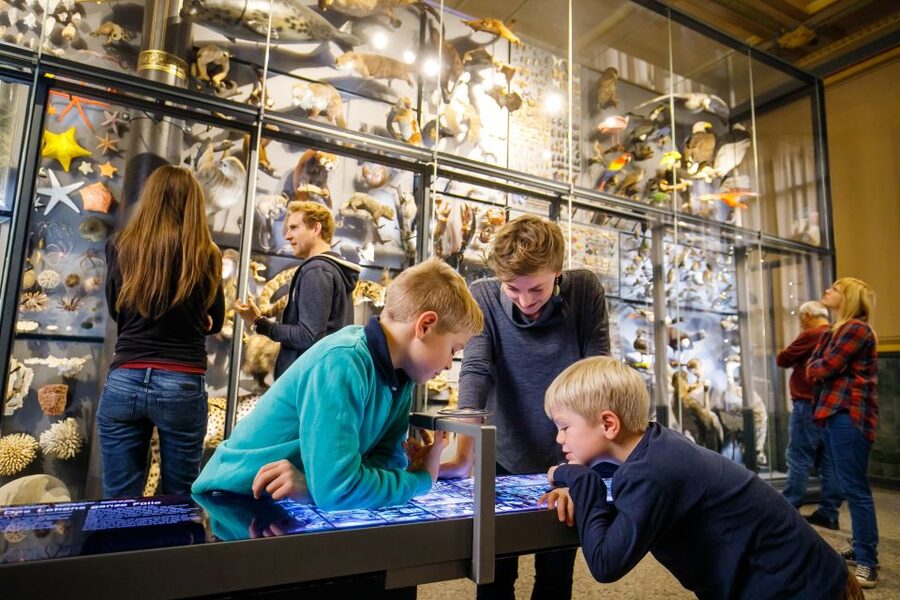
The dinosaur exhibits receive the most attention, but the rest of the museum helps round out the visit. Displays include minerals, taxidermy specimens, extinct animals, and material related to Earth, geography, biology, and the solar system.
The mineral collection is a good stop if you enjoy color, texture, and natural formations. It also changes the pace. After the familiar drama of dinosaurs, minerals offer a quieter way to look at the planet’s physical side.
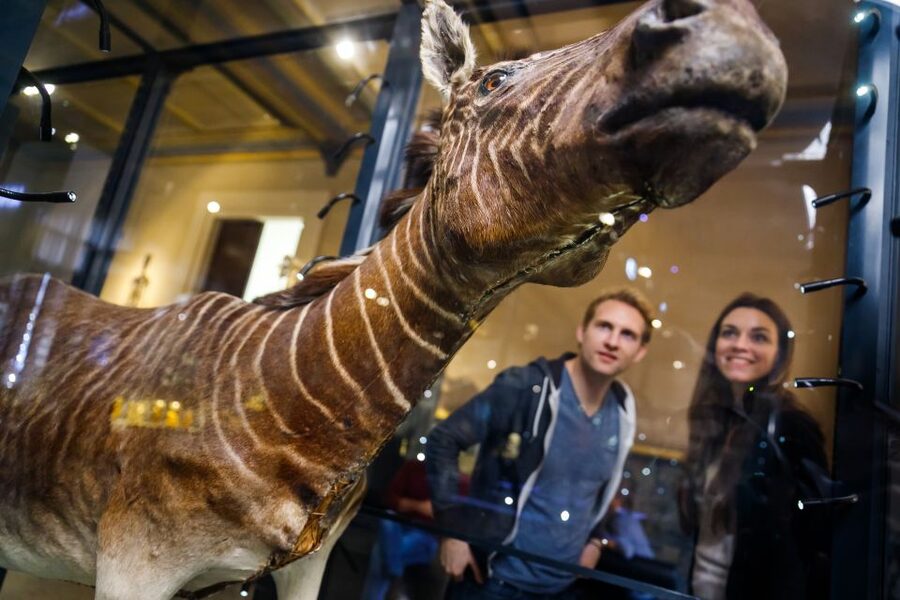
Taxidermy collections can be fascinating, but they are not for everyone. One display may provoke wonder, while another may feel uncomfortable because it involves real animals preserved for study. That reaction is understandable. The museum presents these specimens as part of natural history and research, but you should know that the collection includes actual preserved animals, not only models.
The museum also includes videos and educational material. The exact balance of exhibits can vary, and some areas may feel more modern or engaging than others. One useful expectation to set is that this is a focused natural history museum, not a huge institution on the scale of London’s Natural History Museum.
How long should you spend here?
The listed visit duration is 30 minutes to one hour, but that is best understood as a flexible estimate rather than a fixed tour length. You can see the major attractions in about half an hour if you head directly to the dinosaurs, Tristan Otto, Archaeopteryx, and a few nearby displays.
I would allow at least an hour if you want to read labels and visit more than the headline exhibits. The collection is large enough for a longer stop, and some people spend several hours here. Families may prefer a shorter visit because young children can lose interest once the main dinosaur room is finished.
The museum’s layout is divided by subject, with individual rooms focused on different themes. That makes it easier to know what each area contains, though the overall route can still feel unclear. Maps help, but you may need to make your own plan rather than expect a perfectly obvious one-way path.
A sensible visit looks like this:
- Start with the Dinosaur Hall and Giraffatitan.
- Find Tristan Otto and the Archaeopteryx.
- Continue to the Earth, mineral, and solar system material.
- Visit the wet collection and Biodiversity Wall.
- Return to any display you skipped once you know the layout.
This order puts the most visually powerful exhibits first, which is useful if you are traveling with children or have limited time.
Audio help, labels, and language limits
Your admission includes access to downloadable audio content in English, French, German, Italian, Japanese, Polish, Portuguese, Russian, Spanish, and Turkish. It is not a traditional physical audio guide handed to you at the entrance.
You need to log in to a website, so bring your phone and headphones. Free Wi-Fi is available, but setting up audio content can still take a few minutes. If you arrive without headphones, playing audio from your phone may be awkward, particularly in crowded rooms.
Written information is available in English for many displays, but not every label may be translated in the same way. Some material relies on QR codes or online content, and digital links may not always be convenient. If detailed English interpretation matters to you, prepare to use your phone rather than assume every case has a full English panel.
The multilingual audio is a real benefit for international visitors. It lets you choose how much explanation you want and can make the museum easier for children and adults who do not read German. Still, I would treat it as a useful extra, not a replacement for a physical guide at the desk.
Price, entry, and the value of booking ahead
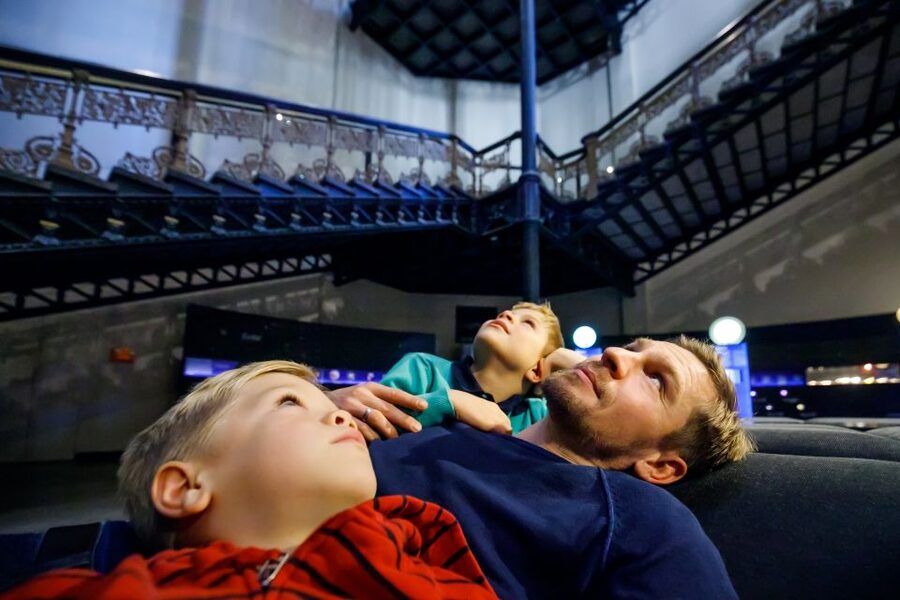
At $12 per person, this is a good-value museum admission, especially if you focus on the large dinosaurs, Tristan Otto, and Archaeopteryx. It is less compelling if you expect a giant museum with hours of interactive entertainment.
The mobile ticket allows you to skip the ticket line, which can matter on busy days. Capacity can still affect entry. The museum has reached full capacity at times, so booking ahead is sensible even though the ticket is inexpensive.
At the main entrance on Invalidenstraße 43, staff scan the mobile voucher. Bring your passport or another accepted ID, particularly if you have a reduced ticket. The cloakroom is included, and the museum is wheelchair accessible.
Keep your booking confirmation easy to open. A few visitors have had trouble when the actual ticket was not visible in the app, so do not rely on a vague confirmation screen. Have the voucher ready before you reach the entrance.
You can cancel up to 24 hours before the visit for a full refund, and the reserve-now, pay-later option gives you some flexibility. Those policies are useful if your Berlin schedule is still changing, but the main practical advantage remains the ability to secure admission before a busy period.
Families, adults, and the museum’s limits
This is a strong choice for families with young children. The giant skeletons are easy to appreciate without a long explanation, and the museum has enough variety to keep a four-year-old interested for a reasonable visit. The short suggested duration also helps you avoid pushing children past their limit.
Older children may want more interactive stations. The museum has some activities, but it is not filled with touchscreens, games, or play areas. If your child learns best by pressing buttons and handling objects, the dinosaurs may be the main reason to come.
Adults can enjoy the museum for different reasons. You might come for the famous fossils, the scientific collections, the minerals, or the chance to think about biodiversity and extinction. The exhibits are accessible without being shallow, though some sections are more traditional and less polished than others.
The museum can also work well on a rainy afternoon. You do not need a full day to justify the ticket, and a focused 30-minute visit still gives you several memorable sights. If you have the time, slow down and treat it as more than a dinosaur stop.
What I would do differently on a first visit
I would reserve a timed entry in advance, download the audio content before entering, and bring headphones. I would also check the ticket carefully so the scannable voucher is ready on my phone.
Inside, I would not try to read every panel in order. I would first see Giraffatitan, Tristan Otto, and Archaeopteryx, then return to the displays that caught my attention. This keeps the visit lively and prevents the museum from feeling like a school assignment.
I would also plan for some noise if visiting on a weekend or during school hours. Groups of children can make the museum loud, particularly in the popular dinosaur areas. Early or quieter visiting times may suit you better if you want to read in peace, though the available starting times should be checked when booking.
Finally, do not skip the less famous rooms automatically. The wet collection and Biodiversity Wall explain why the museum matters beyond its headline fossils. They are the parts most likely to turn a quick dinosaur visit into a more thoughtful natural history experience.
Should you book the Museum für Naturkunde?
Book it if you want a reasonably priced, family-friendly museum with world-famous dinosaur displays and enough science to reward adults. The combination of Giraffatitan, Tristan Otto, Archaeopteryx, minerals, preserved animals, and biodiversity material gives you more range than the ticket price suggests.
You may want to choose another attraction if you need a huge museum, a fully guided tour, or constant hands-on activities. The audio guide is online rather than physical, some English explanations require digital help, and certain sections can feel dated or smaller than expected.
For most visitors, I would book ahead and allow one to two hours. Go straight to the Dinosaur Hall if time is tight, but stay for the wet collection and Biodiversity Wall if you want to understand the museum’s real purpose. At $12, it is an easy Berlin stop to recommend, especially for families and anyone who still stops to look up when a dinosaur reaches the ceiling.
FAQ
Where is the Museum für Naturkunde Berlin?
The museum is at Invalidenstraße 43, 10115 Berlin. Enter through the main entrance.
How much does admission cost?
The listed price is $12 per person.
How long does a visit take?
The activity is listed as lasting 30 minutes to one hour. You can make a quick visit to the major exhibits, or stay longer to explore the collections and read the displays.
Is an audio guide included?
Downloadable audio content is included. It requires logging in to a website, and you should bring your phone and headphones. A physical audio guide is not included.
Which languages are available for the audio content?
Audio content is available in English, French, German, Italian, Japanese, Polish, Portuguese, Russian, Spanish, and Turkish.
What are the main exhibits?
The main highlights include Giraffatitan brancai, the world’s tallest mounted dinosaur skeleton, Tristan Otto the T. rex, Archaeopteryx lithographica, the wet collection of about one million animals, and the Biodiversity Wall with more than 3,000 species.
Is the museum wheelchair accessible?
Yes, the museum is wheelchair accessible. A cloakroom is also included with admission.
Just added around Berlin
- From Berlin: Gardens & Palaces of Potsdam Bike Tour★ 5.0 · 61 reviews
- Berlin: Battle for Seelow Heights WW2 tour -Clash of Titans★ 5.0 · 27 reviews
- From Berlin: Historical Gems of Potsdam Private Day Trip★ 4.4 · 4 reviews
- Berlin: Französischer Dom 360° Panorama & Crémant to go★ 3.9 · 5 reviews
- Explore Berlin Tour: History and Highlights★ 4.7 · 5 reviews
- Berlin: Evening Yacht Cruise with Aperitif & Dinner Upgrade★ 4.6 · 178 reviews
- Berlin: Expats in Berlin Comedy Show Ticket★ 4.7 · 182 reviews
- Berlin: The Epic Comedy Club Friday Night Showcase★ 4.8 · 28 reviews
Berlin Tours, compared.
Reichstag, Dome and Government District Guided Tour
Read our review →
1-Hour City Tour by Boat with Guaranteed Seating
Read our review →



Reichstag, Plenary Chamber, Cupola & Government Tour
Read our review →
Browse the lists this tour appears in