
Review · BERLIN TOURS
Visita en español al campo de concentración Sachsenhausen
Sachsenhausen is not a sightseeing stop in the usual sense. It is a place of forced labor, imprisonment, execution, and systematic cruelty, and this Spanish-language tour gives you a structured way to face it. You visit the entrance, Tower A, barracks, kitchen, command headquarters, casino, armory, and execution area while a guide explains how the camp operated and how prisoners lived.
I like two things here: the Spanish explanations make difficult material easier to follow, and the guide-led route gives the visit shape in a place where bare grounds and partial buildings can otherwise feel confusing. Guides including Alberto, Vicent, Micaela, Edu, Francisco, Eduardo, and Jorge have been praised for clear, respectful storytelling and patient answers. The main drawback is time. Three hours inside the memorial can feel tight, and one account describes the pace as closely timed, especially for families with children.
Key points at a glance
- Spanish-language history lesson: The guide explains the camp and wider Second World War context in Spanish, with room for questions.
- Several major camp areas: The route includes Tower A, the barracks, command headquarters, casino, armory, kitchen, and execution area.
- About three hours at Sachsenhausen: The full experience lasts around five hours, but the memorial visit itself is listed at three hours.
- Public transport is not included: You need to buy an ABC transport ticket before the tour.
- Small enough for a guided walk: The maximum group size is 30, with groups sometimes divided between guides.
- A serious, weather-exposed visit: Much of the site is outdoors, so warm layers, rain protection, and comfortable shoes matter.
Why a Spanish guide changes the visit
At Sachsenhausen, a guide is more than a useful extra. The memorial includes open spaces, reconstructed or preserved buildings, exhibits, and marked locations, but the meaning of each place is not always obvious from the architecture alone. A Spanish-speaking guide can explain the system behind the buildings, the daily routine forced on prisoners, and the role each part of the camp played.
I would choose this tour if Spanish is your strongest language for serious historical subjects. You can concentrate on the material rather than translating signs in your head. That matters when the subject includes Nazi persecution, imprisonment, executions, forced labor, and the treatment of people as numbers rather than individuals.
The best guide accounts are specific about delivery. Alberto is described as pleasant and highly informed. Vicent is praised for making the past feel immediate while keeping the tone appropriate. Micaela is noted for her attention and command of the subject, while Francisco is remembered for telling the story with evident care. Edu, Eduardo, and Jorge are also singled out for clear explanations, patience, and good handling of questions.
Guide assignments can vary, so you should not book expecting one particular person. The useful point is that the experience depends heavily on the guide, and the feedback consistently places the explanations at the center of the tour.
More WWII History Tours in Berlin
- Berlin: Third Reich and Cold War 2 Hour Walking Tour
★ 4.9 · 6,830 reviews - Berlin: Sachsenhausen Concentration Camp Tour in English
★ 5.0 · 5,711 reviews - Berlin’s Best: 2 Hour Walking Tour Third Reich and the Cold War
★ 5.0 · 5,486 reviews
Meeting in Berlin at 9:00 a.m.
The meeting point is Pariser Platz 4, 10117 Berlin, near the Brandenburg Gate area. The start time is 9:00 a.m., so allow enough time to arrive without rushing. A morning departure also leaves the rest of the day open, though the subject matter may make this less of a light sightseeing day than the schedule suggests.
The tour includes a professional guide and a local guide, but your ABC transport ticket is not included. You must purchase the correct Berlin and surrounding-area ticket yourself before the visit. This is an important cost and planning detail because Sachsenhausen is in Oranienburg, outside central Berlin.
The transport arrangement is explained at the meeting point, and some groups are divided between two guides. One reported setup had Edu and Mika welcoming the group and then splitting it into smaller sections. That can make a group of up to 30 more manageable, though your exact guide and group arrangement may differ.
The published information lists the end point as Sachsenhausen Memorial and Museum, Str. d. Nationen 22, 16515 Oranienburg. At the same time, the tour is presented as a round-trip outing from Berlin, and the visit includes transport instructions from the Berlin meeting point. Since the stated end location and the round-trip description do not match perfectly, confirm the return arrangement when you meet the guide. Do not assume the listed end point tells the whole transport story.
Arriving at Sachsenhausen Memorial and Museum
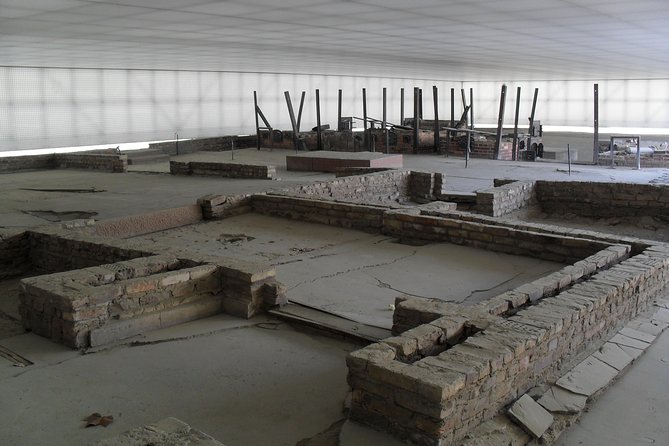
The memorial is a large former concentration camp site, and the first impression is its scale. You are not walking through one preserved building. You are moving through the former camp grounds, with surviving structures, rebuilt elements, empty spaces, and outdoor sections that show how extensive the complex was.
That openness can be unsettling. It also means you need to listen closely. Without context, a cleared area may look like an ordinary field, while the guide can explain what once occupied it and how it fitted into the camp system.
The tour covers both the interior and exterior of the former facilities. That is worth noting for practical reasons. You will spend time outside in all weather conditions, and the memorial does not become easier simply because the day is cold, wet, or windy. Wear clothing suited to the forecast, with firm shoes and enough warmth for several hours outdoors.
The group size is capped at 30 people. That is not a private tour, but it is a workable size for a walking explanation. If the group is divided, you may get a closer listening experience. Still, keep near your guide, especially at transitions between buildings and outdoor locations.
Tower A and the camp entrance
Tower A is one of the key places on the route. The entrance area is not just a point where the tour begins inside the memorial. It helps you understand how the camp was controlled and how prisoners passed through a system built to intimidate, isolate, and strip away personal freedom.
The guide sets the location within the wider operation of Sachsenhausen. This is where a strong Spanish explanation adds value. You receive the physical layout and the human meaning at the same time, rather than seeing a gate and moving on with only a photograph.
This is also where the tone of the tour becomes clear. The subject is treated seriously, without turning the camp into a spectacle. The most effective accounts describe a guide who is respectful, direct, and willing to answer questions. Expect difficult material, but not theatrical presentation.
More wartime history tours in Berlin:
- Berlin: Sachsenhausen Concentration Camp Memorial Tour
★ 4.7 · 3,716 reviews - Third Reich Berlin: Hitler and WWII Walking Tour
★ 5.0 · 3,301 reviews - Sachsenhausen Concentration Camp Bus Tour in English from Berlin
★ 5.0 · 1,962 reviews - Berlin: Sachsenhausen Concentration Camp Tour in English
★ 4.8 · 1,889 reviews
Barracks, kitchen, and the prisoners’ daily life
The barracks and kitchen bring the visit down from broad political events to the routines imposed on prisoners. The tour explains how people lived, how the camp was organized, and how deprivation shaped ordinary hours.
That focus on daily life is one of the strongest reasons to choose a guided visit. Dates and names matter, but the structure of a prisoner’s day can make the system easier to understand. You may come away with a clearer sense of how control worked through food, labor, housing, discipline, and constant surveillance.
The kitchen is especially useful as part of that explanation. It is not simply another building to check off. The guide connects it to the basic needs of a large imprisoned population and to the unequal, punitive conditions under which those needs were handled.
The barracks can also require patience. Parts of the site are preserved or reconstructed, and the experience is not a sequence of fully furnished rooms. You are looking at remains and interpreting them through the guide’s words, displays, and the layout of the grounds.
Command headquarters, casino, and armory
The route also includes the command headquarters, casino, and armory. These locations show that Sachsenhausen was not only a prison area. It was an organized institution with offices, staff spaces, supplies, and a chain of authority.
The casino may sound like an odd stop if you do not already know the site. That is precisely why the explanation matters. Its inclusion helps show the sharp divide between those who administered the camp and those who were confined within it.
The armory adds another piece to the same picture. Taken together, these buildings help you see the camp as a controlled administrative and military environment, not an isolated collection of barracks. The guide’s job is to connect those structures to the larger Nazi system and to the experience of the people held there.
This is one area where the tour’s broad historical framing can be useful. One guide was praised for explaining events beyond the camp itself, including wider Second World War context. That can help you place Sachsenhausen within the larger history without turning the visit into a general Berlin war tour.
The execution area and the hardest part of the visit
The execution area is among the most difficult stops. It requires quiet attention and respect. The guide explains what occurred there and why the location matters, but the emotional response belongs to you.
You should not expect this portion to feel comfortable. That discomfort is part of the point, but a good guide keeps the presentation factual and measured. The strongest feedback describes an experience that is shocking and painful while still educational, rather than sensational.
If you are visiting with children, think carefully about the timing and the amount of detail they can handle. Most participants can take part, but the subject is severe, and the tour does not appear designed as a child-focused activity. One critical account also found the fixed pace stressful for children, who may need more time to walk, process the material, or pause.
Three hours inside the memorial
The on-site visit is listed as three hours, within an overall experience of roughly five hours. That is enough time for a substantial guided route, but not necessarily enough for every exhibit or location at an unhurried pace.
One practical tradeoff is coverage versus reflection. A guide can take you to many of the major points, yet moving through the full route leaves less time to stop on your own. One person specifically wished for about 45 more minutes to explore in greater depth.
The schedule may feel efficient rather than leisurely. A criticism described the guide timing sections closely, with the pace becoming stressful and making it harder to look around independently. That does not mean every group will have the same experience, but you should know what kind of outing this is: a planned guided circuit, not an open-ended museum visit.
I like the structure for a first visit. You see the main areas, receive an explanation in Spanish, and avoid wandering past important locations without understanding them. If you have already studied Sachsenhausen or want extended time with exhibits, you may prefer to add a separate visit, if the day and admission arrangements allow it. The provided tour details do not specify extra independent time, so ask the guide what is possible.
What the $34.58 price really covers
At $34.58 per person, the tour offers a guide-led visit and a practical way to reach Sachsenhausen from Berlin. The main value is not a luxury vehicle, meal, or special access. It is the Spanish interpretation, the organized route, and the human context supplied at each location.
You still need to pay for food and drinks, unless a specific value-added offer is stated in the guidebook, and you must buy your ABC transport ticket. Factor those costs into the final budget before deciding that the headline price is the complete amount.
For me, the price makes the most sense if you would otherwise struggle to follow German or English explanations. A guided visit in your own language can turn a confusing memorial into a clear, coherent historical experience. If you are comfortable studying the site independently and already have strong background knowledge, the added cost may feel less essential.
The 99 percent recommendation rate and 4.9 rating from 1,170 reviews indicate very strong satisfaction, but the individual comments also reveal the real compromise: the guide is the major strength, while limited time and a firm pace are the main concerns.
Who should book this Sachsenhausen visit
This tour suits you best if:
- You want the tour conducted in Spanish.
- You are visiting Sachsenhausen for the first time.
- You prefer a guide to explain the layout and historical context.
- You want an organized morning departure from central Berlin.
- You are comfortable spending several hours with difficult subject matter.
- You can manage a steady walking route in changing weather.
It may be less suitable if you want to explore every display slowly, pause often, or set your own route. Families should also consider the fixed schedule and emotional weight of the subject. The tour permits service animals, is near public transportation, and states that most participants can take part, but it does not promise a private or highly flexible visit.
Dress for all weather. Bring water and plan food around the schedule, since meals and drinks are not included. Keep your ABC transport ticket ready, stay close to the guide, and use the meeting time to clarify the return journey.
Should you book it?
I would book this tour if you want a serious, Spanish-language introduction to Sachsenhausen and value clear explanation over free time. The route includes the camp’s major areas, the guides are repeatedly praised for preparation and respectful delivery, and the morning departure makes the memorial practical as a Berlin day trip.
I would hesitate only if you dislike timed group visits or want to study the memorial at your own pace. In that case, three hours may feel compressed. For most first-time visitors who want help understanding what they are seeing, though, the Spanish guide is the strongest reason to go.
The subject is painful, but the visit has a clear purpose: to learn what happened, understand how such a system operated, and remember the people who suffered there. That makes this one of Berlin’s most serious and worthwhile excursions.
FAQ
How long does the Sachsenhausen tour last?
The full experience lasts approximately five hours. The guided visit inside and outside the Sachsenhausen Memorial and Museum is listed as three hours.
Where does the tour begin?
The meeting point is Pariser Platz 4, 10117 Berlin, Germany. The scheduled start time is 9:00 a.m.
Is the tour conducted in Spanish?
Yes. It is designed for Spanish-speaking visitors, with a Spanish-language guide explaining the camp, prisoner life, and the wider historical context.
Is public transportation included?
No. You must purchase your own ABC transport ticket before the tour. Food and drinks are also not included, apart from any value-added offers specified in the guidebook.
What parts of Sachsenhausen are visited?
The route includes the armory, entrance, casino, command headquarters, Tower A, execution area, barracks, and kitchen. The visit covers both the interior and exterior of the former camp facilities.
Can I cancel the booking?
Yes. You can cancel for a full refund up to 24 hours before the experience start time. Cancellations or changes made less than 24 hours in advance are not accepted for a refund, and the tour may be canceled if its minimum number of participants is not reached.
Just added around Berlin
- From Berlin: Gardens & Palaces of Potsdam Bike Tour★ 5.0 · 61 reviews
- Berlin: Battle for Seelow Heights WW2 tour -Clash of Titans★ 5.0 · 27 reviews
- From Berlin: Historical Gems of Potsdam Private Day Trip★ 4.4 · 4 reviews
- Berlin: Französischer Dom 360° Panorama & Crémant to go★ 3.9 · 5 reviews
- Explore Berlin Tour: History and Highlights★ 4.7 · 5 reviews
- Berlin: Evening Yacht Cruise with Aperitif & Dinner Upgrade★ 4.6 · 178 reviews
- Berlin: Expats in Berlin Comedy Show Ticket★ 4.7 · 182 reviews
- Berlin: The Epic Comedy Club Friday Night Showcase★ 4.8 · 28 reviews
Berlin Tours, compared.
Reichstag, Dome and Government District Guided Tour
Read our review →
1-Hour City Tour by Boat with Guaranteed Seating
Read our review →
Reichstag, Plenary Chamber, Cupola & Government Tour
Read our review →
Browse the lists this tour appears in