
Review · BERLIN TOURS
Never Again Sachsenhausen Concentration Camp
Sachsenhausen is not a quick sightseeing stop. It is a place where Nazi control was designed into the camp itself, from the layout of the buildings to the treatment of prisoners as expendable tools. This four-hour visit also follows the site’s later use as a Soviet special camp and a pro-communist propaganda setting.
I like the walk from the train station, which helps you shift from Berlin’s busy center into a more serious frame of mind. I also like the small group limit of 15 and the guide-led discussion with Siobhán, whose feminist and present-day political perspective adds context beyond dates and buildings. The main drawback is that the experience is emotionally heavy, and the public transport ticket is not included.
Key points to know before booking
- A four-hour visit with a walk from the station: Allow enough time for transport from Potsdamer Platz, the station walk, and the memorial itself.
- A small English-speaking group: The tour accepts no more than 15 people, making questions and discussion easier.
- More than a Nazi-era history lesson: The visit also covers Sachsenhausen under Soviet control and its later political use.
- A guide with a clear point of view: Siobhán connects Nazi racism, women’s bodies, eugenics, and current far-right politics.
- A donation is included: Your tour price helps support the memorial, though snacks, water, and the ABC-zone transport ticket cost extra.
- Best for mature, attentive visitors: The subject includes mass suffering, medical abuse, racism, and death, so this is not a light half-day outing.
Why Sachsenhausen requires more than a quick visit
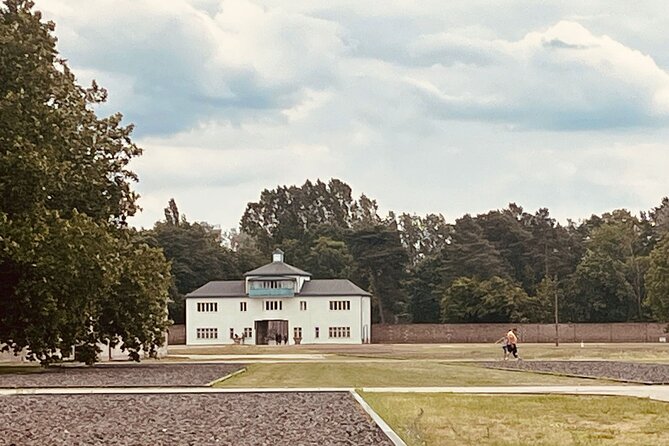
Sachsenhausen was created by the Nazis as a model concentration camp. That phrase does not mean humane or orderly. It means the camp was designed to show how the SS wanted a concentration camp to function, with control built into the physical plan and daily routine.
That design is one reason a guide is useful here. Models at the visitors’ center help you understand the camp’s structure before you walk through the remaining buildings. You can begin to see how architecture, surveillance, forced labor, punishment, and hierarchy worked together.
The site also carries several layers of history. After the Nazi period, Sachsenhausen became a Soviet special camp. Later, it was used as a pro-communist, anti-fascist propaganda tool. The tour puts these periods beside one another without pretending they are identical. For you, that makes the memorial more than a single chapter about 1933 to 1945. It becomes a place where political systems shaped memory as well as suffering.
More WWII History Tours in Berlin
- Berlin: Third Reich and Cold War 2 Hour Walking Tour
★ 4.9 · 6,830 reviews - Berlin: Sachsenhausen Concentration Camp Tour in English
★ 5.0 · 5,711 reviews - Berlin’s Best: 2 Hour Walking Tour Third Reich and the Cold War
★ 5.0 · 5,486 reviews
From Potsdamer Platz to the memorial entrance
The meeting point is at Potsdamer Platz 10 in central Berlin. From there, you travel toward Sachsenhausen using public transport, with the route requiring an ABC-zone ticket that you must buy separately.
That transport detail matters. The four-hour duration refers to the experience as a whole, but you should still arrive on time at Potsdamer Platz and keep some flexibility around the journey. The walk from the train station to the memorial is part of the approach. It is not a coach drop-off directly at the gate.
I like this kind of arrival for a site such as Sachsenhausen. You do not step straight from a bus into a display. The gradual walk gives you time to leave the city behind and prepare for difficult material. It also means you should wear comfortable shoes and be ready for a moderate amount of walking.
The group is limited to 15 people. That is a useful size here. A very large group could make the memorial feel like a hurried procession, while a small group gives you a better chance to hear the guide and ask questions. The format is offered in English, and confirmation is sent when you book.
The visitors’ center and the camp’s design
The first main stop is the visitors’ center, where detailed models explain the camp’s physical structure. This is an important start because the buildings that remain do not tell the whole story on their own.
The models show how the camp was planned around control and the supposed superiority of the SS over prisoners. The lesson is not only that terrible things happened inside the camp. It is that the system was organized to make humiliation, confinement, labor, and violence part of everyday life.
A guide can make the difference at this point. Without context, you might see a gate, barracks, or open ground and struggle to understand how the entire site functioned. With the camp model in front of you, the later walk has a clearer purpose.
One especially unsettling detail is the present use of the former SS training camp as a Brandenburg police academy. That does not erase the memorial, but it creates an uncomfortable connection between the site’s past and its current surroundings. You are asked to think about how institutions occupy places with terrible histories, and how remembrance fits beside ordinary modern life.
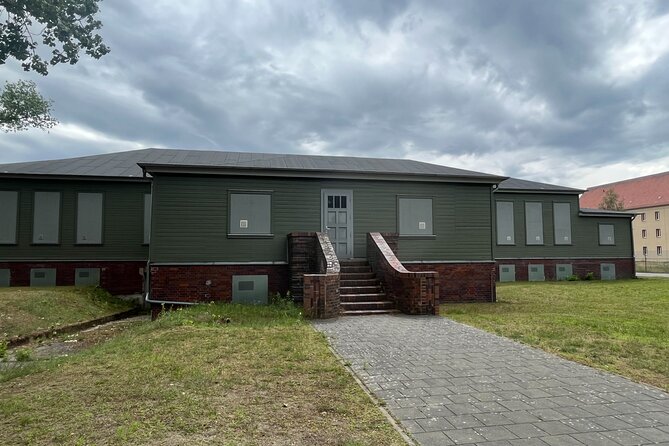
Barracks and kitchen: seeing daily control
The tour then moves into an autonomous exploration of the prisoners’ barracks and camp kitchen. This part gives you time to look at the buildings and absorb the details at your own pace, rather than hearing every point as a continuous lecture.
The barracks help explain the daily reality of confinement. The kitchen points toward the basic needs that were controlled inside the camp, including food, labor, and access to necessities. These spaces may look plain, but their meaning comes from the system around them. A room used for cooking was also part of a structure where prisoners had almost no control over their own lives.
The guide’s role here is to keep the facts connected to the larger picture. Siobhán’s approach, according to the tour’s stated focus, links the camp’s history with current issues rather than treating the past as safely finished. The discussion includes attacks by Holocaust-denying neo-Nazis at the site, as well as connections to the AfD, a German far-right political group.
That modern link will appeal to some people and frustrate others. The tour does not present Sachsenhausen as a sealed historical subject. It asks you to consider how denial, extremism, and political memory continue to affect Germany today. If you prefer a strictly neutral audio guide with no current political discussion, this may not be your ideal outing. If you want help connecting history to the present, it is a central strength.
More wartime history tours in Berlin:
- Berlin: Sachsenhausen Concentration Camp Memorial Tour
★ 4.7 · 3,716 reviews - Third Reich Berlin: Hitler and WWII Walking Tour
★ 5.0 · 3,301 reviews - Sachsenhausen Concentration Camp Bus Tour in English from Berlin
★ 5.0 · 1,962 reviews - Berlin: Sachsenhausen Concentration Camp Tour in English
★ 4.8 · 1,889 reviews
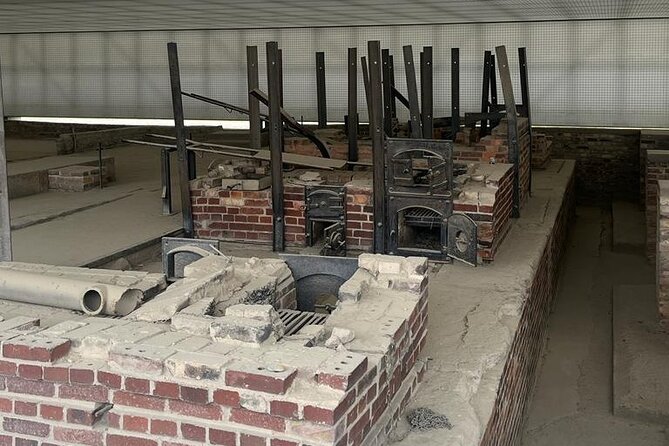
The infirmary and the abuse of medicine
The infirmary is likely to be the most difficult section for many people. Here the subject shifts toward racism, control over women’s bodies, eugenics, and medical experiments.
The key point is that prisoners were not only denied care. Some were treated as laboratory material by Nazi doctors who used their suffering to advance their own careers. That makes the infirmary essential to understanding how Nazi ideology entered medicine. Racist theories were not just words on a page. They were used to classify people, justify violence, control reproduction, and destroy basic medical ethics.
The focus on women’s bodies gives the tour a perspective that many standard site visits may not provide. It helps you see how gender and racial ideology worked together. This material is disturbing, but it also prevents the history from being reduced to military events or the actions of a few political leaders.
You should expect the guide to handle this section with care. The tour’s tone is respectful and serious, but not relentlessly bleak. Appropriate moments of lightness may help you remain attentive during four hours of painful material. That is not the same as making the subject casual. It is a practical way to keep the group engaged without losing respect for the people who suffered.
A guide-led visit with room for discussion
This experience is not presented as a dense academic lecture or a fully scripted performance. It sits between an audio guide and a formal classroom talk. You receive enough explanation to understand the site, then have room to examine the buildings and ask questions.
That balance is useful at Sachsenhausen. You need structure because the site carries so much information, but you also need quiet time. A guide who fills every second with facts can make the visit feel mechanical. A guide who says too little leaves you with disconnected images.
Siobhán’s stated approach is progressive and feminist, with links between the history of the camp and current politics. She also adapts to the group and answers questions, which matters if you are visiting with teenagers and adults together. The subject is hard for younger visitors, so a guide who can adjust explanations is valuable.
The political angle is worth considering before you book. The tour does not hide its point of view. That does not make it unsuitable, but it means you should choose it because you want interpretation as well as information. If your priority is an impersonal, institution-led presentation, another format may suit you better.
Is the $31.29 price fair?
At $31.29 per person, this is a reasonable price for a four-hour guided experience, especially with a small group and a memorial donation included. You are paying for the guide’s time, the planning around the long trip from central Berlin, the interpretation of several historical periods, and the chance to ask questions.
The value is not in the number of buildings you see. It is in understanding what those buildings meant and how the camp functioned. A self-guided visit may cost less, but it can leave you working out the site’s structure and historical connections alone.
You should budget for two small extras. The ABC-zone public transport ticket is not included, and neither are snacks or bottled water. Four hours is long enough that carrying water and a small snack is sensible, though the memorial itself is not presented as a food-focused outing.
The free-cancellation policy gives you some flexibility. You can cancel for a full refund up to 24 hours before the start time. Changes or cancellations inside that window are not accepted, and the minimum group requirement means the operator may cancel if too few people book. In that case, you are offered another date or experience, or a full refund.
Who will get the most from this experience?
I would choose this tour if you want a serious history visit with a human guide and a clear connection to present-day politics. It is particularly suited to people who want more than a list of dates, names, and camp buildings.
It also fits families or mixed groups of older teenagers and adults who are prepared for difficult material. The guide can respond to questions and adjust to the group, but the subject remains intense. You should talk with younger members of your party beforehand about what the visit may cover.
This is a good choice if you value a small group. Fifteen people is still enough for varied discussion, but not so many that asking a question feels like interrupting a crowd.
It may not suit you if you want a light outing between Berlin museums, a fast transfer, or a strictly neutral presentation. Sachsenhausen requires attention, and this particular tour adds direct discussion of the AfD, neo-Nazi attacks, feminism, and present-day political memory.
The experience is also more physically demanding than a short indoor museum visit. You walk from the station and explore the memorial grounds and buildings for about four hours. A moderate level of fitness is recommended, and service animals are allowed.
Practical details for a respectful visit
Start at Potsdamer Platz 10 and make sure you have the required ABC-zone public transport ticket. Since the transport ticket is not part of the price, buy it before the journey rather than assuming it will be supplied.
Wear comfortable shoes. The route includes the station walk and movement around the memorial site, with time spent in several buildings. Carry water and perhaps a snack, since both are excluded from the tour.
Give yourself emotional space after the visit. The infirmary section, in particular, deals with medical abuse, eugenics, racism, and the treatment of prisoners as experimental subjects. You may not want to schedule another demanding attraction immediately afterward.
The memorial donation included in the price is a small but worthwhile feature. It helps support the place where this history is preserved and taught. At a site connected to denial and political misuse, maintaining accurate public memory matters.
Should you book Never Again Sachsenhausen?
Book it if you want a small-group, English-language visit that explains Sachsenhausen as a Nazi model camp, a Soviet special camp, and a site later used for political propaganda. Siobhán’s approach adds attention to women’s bodies, eugenics, racism, Holocaust denial, and modern far-right politics.
Skip it if you want a short, purely factual stop with no present-day political discussion. This tour asks you to think, not just look. Its four-hour length and difficult subject are real commitments, but the structure, guide access, memorial donation, and $31.29 price make it a strong choice for visitors who want serious context and a respectful presentation.
FAQ
Where does the Sachsenhausen tour start?
The tour starts at Potsdamer Platz 10, 10785 Berlin, Germany.
Where does the activity end?
The activity ends back at the meeting point in Berlin.
How long does the experience last?
The experience lasts approximately four hours.
Is the tour offered in English?
Yes. The experience is offered in English.
Is public transportation included?
No. The ABC-zone public transport ticket is not included in the price.
Is admission to the memorial included?
Yes. Admission is included, and the tour price also includes a donation for the memorial.
How many people can join the group?
The activity accepts a maximum of 15 people.
Can I cancel for a full refund?
Yes. You can cancel at least 24 hours before the start time for a full refund. Cancellations or changes made less than 24 hours before the start are not accepted.
Are service animals allowed?
Yes. Service animals are allowed on the activity.
Just added around Berlin
- eSIM for Germany and 34 European Countries★ 4.5 · 16 reviews
- Your ticket to The Wall Museum Berlin★ 3.0 · 60 reviews
- Walking on the Wall: 3-Hour Tour in Berlin★ 4.5 · 34 reviews
- Rickshaw Tours Berlin – Groups of up to 16 people with several rickshaws★ 4.0 · 97 reviews
- Warnemuende Shore Excursion: Private Berlin Tour★ 4.5 · 27 reviews
- Love and War in Berlin: Self-Guided Story Puzzle Walk★ 5.0 · 7 reviews
- Warnemuende Shore Excursion: Berlin Private Sightseeing Tour from Rostock★ 5.0 · 4 reviews
- Cold War Berlin – Private Live Virtual Experience★ 5.0 · 4 reviews
Berlin Tours, compared.

Reichstag, Dome and Government District Guided Tour
Read our review →
1-Hour City Tour by Boat with Guaranteed Seating
Read our review →




Reichstag, Plenary Chamber, Cupola & Government Tour
Read our review →
Browse the lists this tour appears in