
Review · BERLIN TOURS
Hitler’s Germany: Berlin During the Third Reich & WWII
Berlin’s streets carry the story of the Third Reich in a remarkably direct way. On this four-hour walk, you’ll move from the former Jewish district to Anhalter Bahnhof, the Nazi government quarter, the Gestapo and SS headquarters, Hitler’s bunker site, and the Reichstag.
I like the strong route through central Berlin, which links familiar sights with places you might otherwise pass without noticing. I also like the guides’ mix of serious subject knowledge and human storytelling. Names such as Glen, Jonathan N, Jimmy, Artie, Rohan, and Amelie come up often in bookings, and each is praised for keeping a heavy subject clear and engaging.
The main drawback is practical: this is an outdoor walking tour in all weather, and you need a public transport ticket for the short metro ride. You also do not enter the buildings, so you should see this as a guided street history tour rather than a museum visit.
Key points to know before booking
- Four hours on foot: Expect a substantial city walk, with a short metro journey between sections.
- Hitler’s bunker site: Learn how the final days of the Nazi regime unfolded near the place where Hitler died.
- The former Nazi power center: See the Luftwaffe headquarters, former Gestapo and SS offices, and the Propaganda Ministry from the outside.
- A stop at the Topography of Terror: Take a break at the museum connected to the Gestapo and SS headquarters.
- Memorials beyond the usual sights: Visit the Sinti and Roma memorial and the memorial to 96 politicians arrested in 1933.
- English, German, or private format: Shared group and private options are available, depending on the booking you choose.
A serious walk through Berlin’s Nazi past
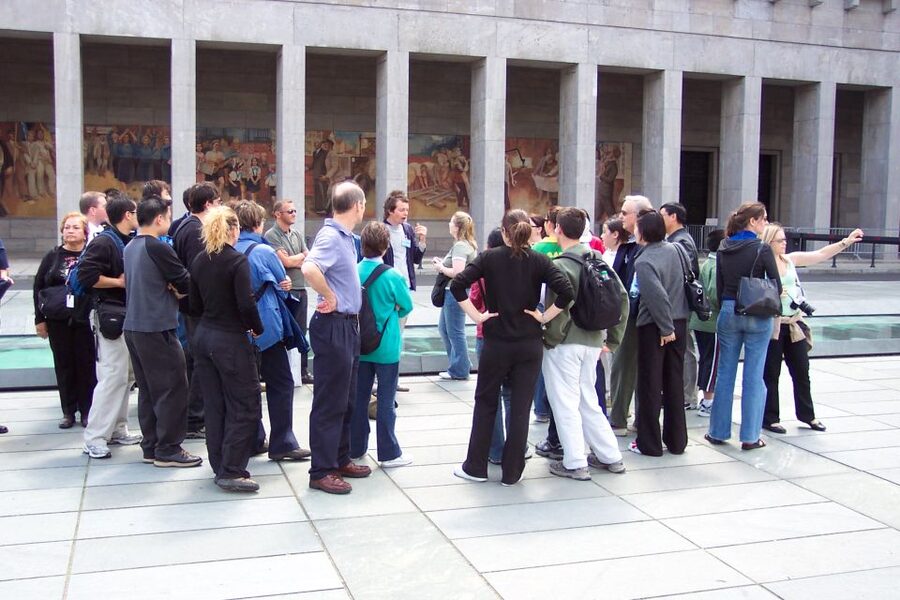
This is not a tour built around grand buildings and easy photo stops. It asks you to look closely at streets, empty spaces, memorials, and surviving government offices, then connect them to the machinery of dictatorship and war.
That approach works well in Berlin. Much of the Nazi-era city was destroyed, rebuilt, or deliberately left as a warning. A good guide helps you understand what is still here, what disappeared, and why the gaps matter.
The route covers the Nazi seizure of power, persecution of Jewish people, propaganda, forced killing, the Holocaust, and the Battle of Berlin. The subject is painful, but the guides are expected to present it with care rather than shock value. Several guides, including Rohan, Jasper, Emma, Quincy, and Tom, have been praised for keeping the tone respectful while still making the material understandable.
You should come ready to concentrate. This is not a casual sightseeing stroll with a few wartime facts added along the way. It is a focused look at how a government district, police system, propaganda machine, and military command structure helped turn ideology into policy.
More WWII History Tours in Berlin
- Berlin: Third Reich and Cold War 2 Hour Walking Tour
★ 4.9 · 6,830 reviews - Berlin: Sachsenhausen Concentration Camp Tour in English
★ 5.0 · 5,711 reviews - Berlin’s Best: 2 Hour Walking Tour Third Reich and the Cold War
★ 5.0 · 5,486 reviews
Beginning in the Jewish Quarter
Your guide starts in central Berlin with an account of the nearby Jewish district and the Nazi destruction of Jewish life there. This opening matters because it places ordinary people before the official buildings and military story.
You’ll hear about life, persecution, and memory, rather than only dates and commanders. That gives the later stops a human frame. The tour is not simply about Hitler’s headquarters or wartime strategy. It also considers the people targeted by the regime and the ways Berlin remembers them now.
The exact meeting point can vary with the option booked, so check your confirmation carefully. The tour may be shared or private, and the group size can affect how easy it is to ask questions and hear the guide. One booking described a group of nine, small enough for personal attention, while private groups offer more control over the pace.
This first section also sets the tone for the rest of the walk. Berlin’s memorials can be easy to see without fully understanding, especially when you are moving between major attractions. A guide gives each place a reason for being there.
Anhalter Bahnhof and the city’s wartime scars
The group then takes a short metro ride to the site of Anhalter Bahnhof, once a huge train station destroyed during the Second World War. This is one of the tour’s useful changes of scene.
You are not simply walking from one famous government building to another. The station site helps show the scale of wartime damage and the way Berlin’s transport and civic spaces were caught up in the conflict. It also gives the guide a natural point to shift from the prewar city to the government quarter and the war years.
A single AB public transport ticket is needed if required for the route, and it is not included. Treat this as a small extra cost and remember to allow time for the transfer. The tour listing does not specify the exact ticket arrangement for every booking, so follow the guide’s instructions on the day.
Anhalter Bahnhof is also a reminder that the tour is partly about absence. You will see some surviving Nazi-era structures later, but other major places are represented by fragments, open areas, or memorials. That can be less visually dramatic than entering a preserved palace, but it is central to understanding modern Berlin.
The Luftwaffe headquarters and Nazi architecture
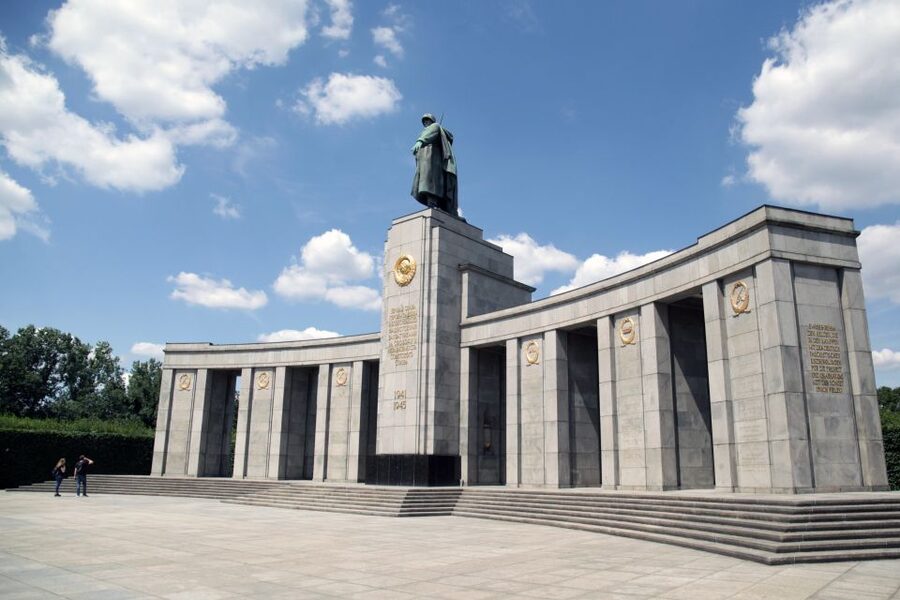
From the station area, the route enters the former Nazi government district. One of the major sights is the colossal former Luftwaffe headquarters, associated with Hermann Göring and the German air force.
The building is described as one of the best surviving examples of Nazi architecture. Its size and stern design give you a direct sense of how the regime used public buildings to project authority. You will view it from outside, not go inside, but the exterior is enough to support a useful discussion about power, scale, and government image.
This stop is valuable because it gets beyond the usual personal focus on Hitler. The Nazi state depended on a wide command structure, and the former air force headquarters points to the military and administrative systems around the Führer.
Your guide can also help separate the building’s present use from its Nazi-era role. Berlin is full of offices and institutions that look ordinary today but carry difficult associations. Without context, the building is simply a large block. With context, it becomes part of the story of how the regime organized itself.
More wartime history tours in Berlin:
- Berlin: Sachsenhausen Concentration Camp Memorial Tour
★ 4.7 · 3,716 reviews - Third Reich Berlin: Hitler and WWII Walking Tour
★ 5.0 · 3,301 reviews - Sachsenhausen Concentration Camp Bus Tour in English from Berlin
★ 5.0 · 1,962 reviews - Berlin: Sachsenhausen Concentration Camp Tour in English
★ 4.8 · 1,889 reviews
The Gestapo, SS, and the Topography of Terror
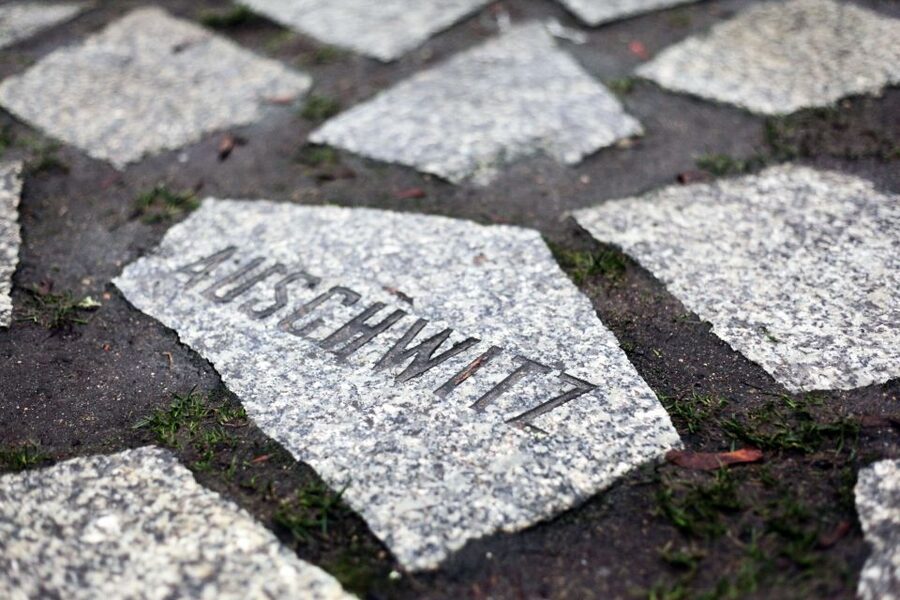
The route continues to the former Gestapo and SS headquarters, now home to the Topography of Terror Museum. This is the tour’s main museum break and an important pause in a long outdoor experience.
The Gestapo was the Nazi secret police, while the SS formed a central part of the regime’s system of terror and mass murder. The museum setting gives you a chance to absorb documents and information connected to those institutions, although the tour itself does not involve entering every building along the route.
The provided details say the guide continues after the museum break, so you should not expect a full museum visit built into the four hours. Think of it as a planned pause within the walk. If you want to spend several hours reading every display, you will need to return separately.
This stop also helps the tour move from architecture to action. The buildings matter because of what happened through them: arrests, persecution, administration, and the enforcement of Nazi policy. The guide’s role is especially important here, since a large amount of information can otherwise feel scattered.
The best guides use clear storytelling without turning the subject into entertainment. Jimmy, Jonathan N, and Gregor have been praised for making difficult material approachable, while still treating it with respect. That balance is important on a tour about state violence.
Propaganda, forced killing, and the Holocaust
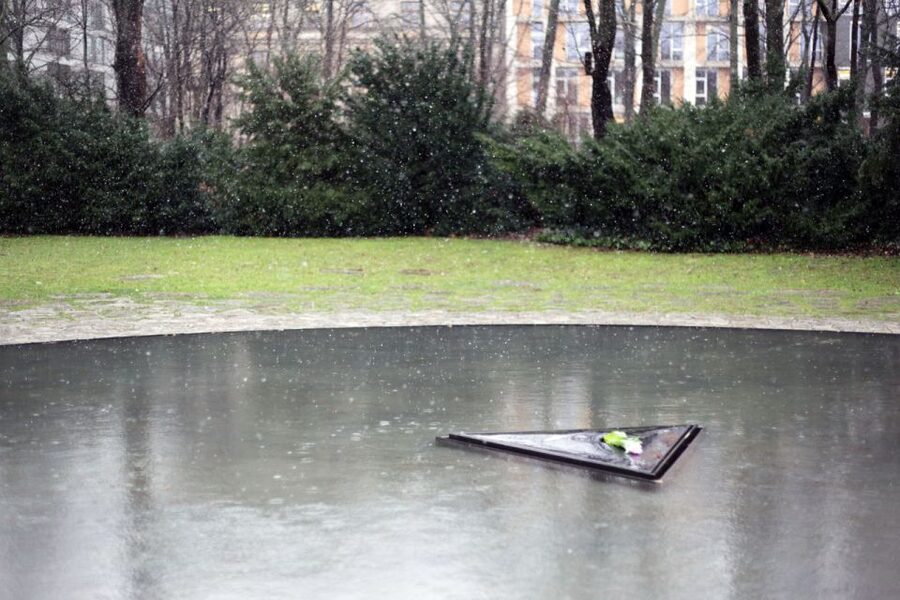
After the museum break, the tour addresses some of the regime’s most sinister actions. These include Joseph Goebbels’ use of propaganda, the T4 euthanasia program, and the Holocaust.
The value of this section is the way it links different parts of Nazi rule. Propaganda was not just a side story about speeches and posters. It helped shape public attitudes and support for the regime. The T4 program shows the persecution of disabled people and the use of bureaucracy in organized killing. The Holocaust reveals the full scale and murderous purpose of antisemitic policy.
You should expect difficult material, and the guide may discuss events that are emotionally heavy. This is one reason the tour suits adults and older teenagers who are prepared for a serious subject. One family specifically found that three teenagers stayed engaged, but the experience is not designed as light entertainment.
The route’s strength is that it keeps these topics tied to actual places in Berlin. You are not hearing a general lecture detached from the city. You are standing near the offices, streets, and memorials where the capital’s political system operated.
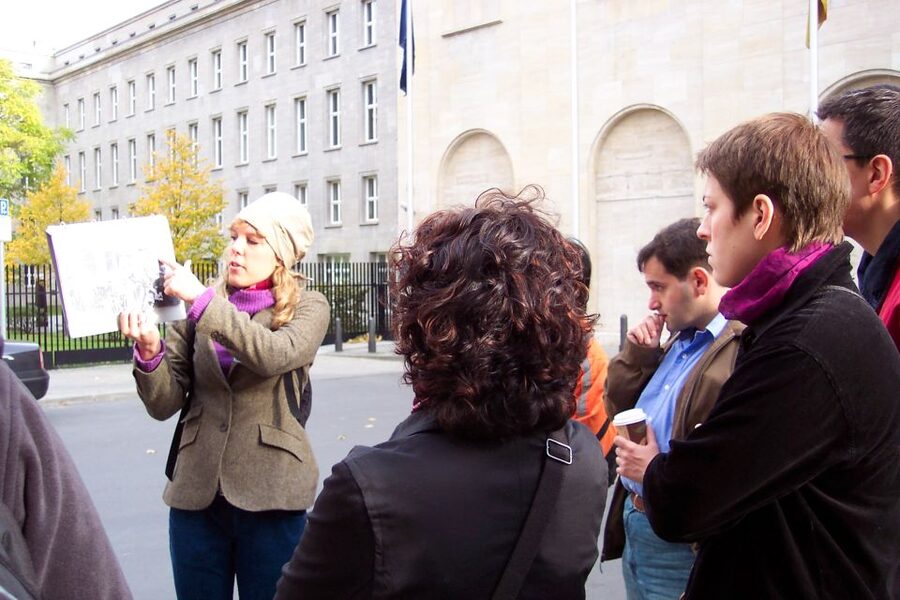
Guides bring different personalities to the subject. Amelie, for example, has been described as a historian who uses maps, photographs, and other documents. A guide who carries visual material can make the changing shape of Berlin easier to follow, especially when the original buildings are gone.
Memorials in and near the Tiergarten
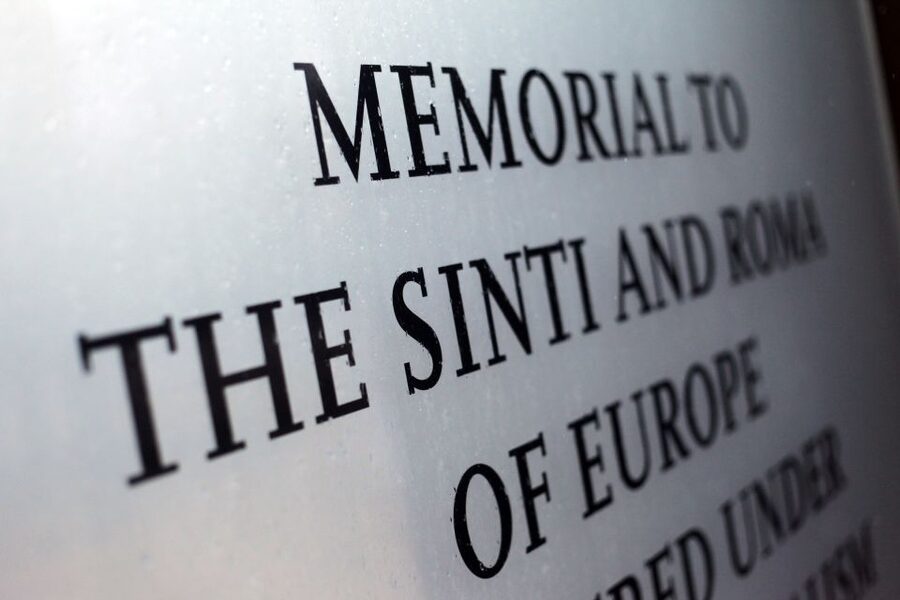
As you head toward the Tiergarten, Berlin’s largest park, the route visits the Memorial to the Sinti and Roma Victims of National Socialism. This is a key stop because it focuses attention on a group often left out of a basic Second World War sightseeing route.
The memorial adds breadth to the tour’s account of Nazi persecution. It also reinforces the idea that remembrance in Berlin is not limited to one monument or one victim group. You will hear how the city presents these crimes today, not just what happened during the dictatorship.
The tour also visits the memorial for 96 politicians arrested by the Nazis as they seized power in 1933. This stop connects the persecution of minorities with the destruction of democratic government.
That connection is easy to miss if you only visit the Reichstag or the Holocaust Memorial as isolated attractions. Here, the guide can show you how political repression began alongside the wider process of dictatorship. The memorial is a quieter stop, but it helps explain how opposition was attacked at the start of Nazi rule.
The Tiergarten section may feel like a welcome change after the dense government district. Still, do not mistake the park walk for downtime. The route continues to carry a serious argument about memory, power, and responsibility.
The Holocaust Memorial and Hitler’s bunker site
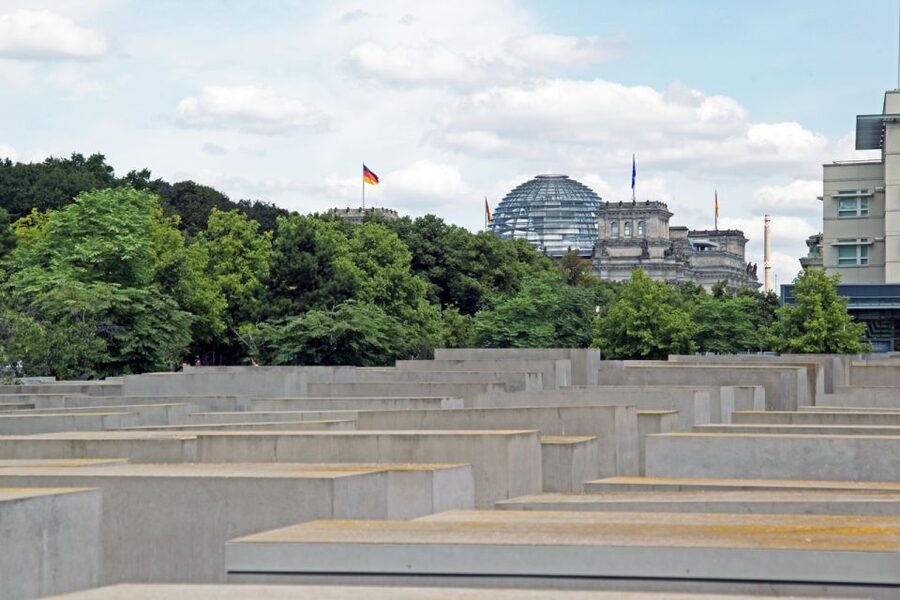
The tour includes the Holocaust Memorial and the site of Hitler’s bunker. These are among the places most associated with Nazi Berlin, but they are also places where context matters greatly.
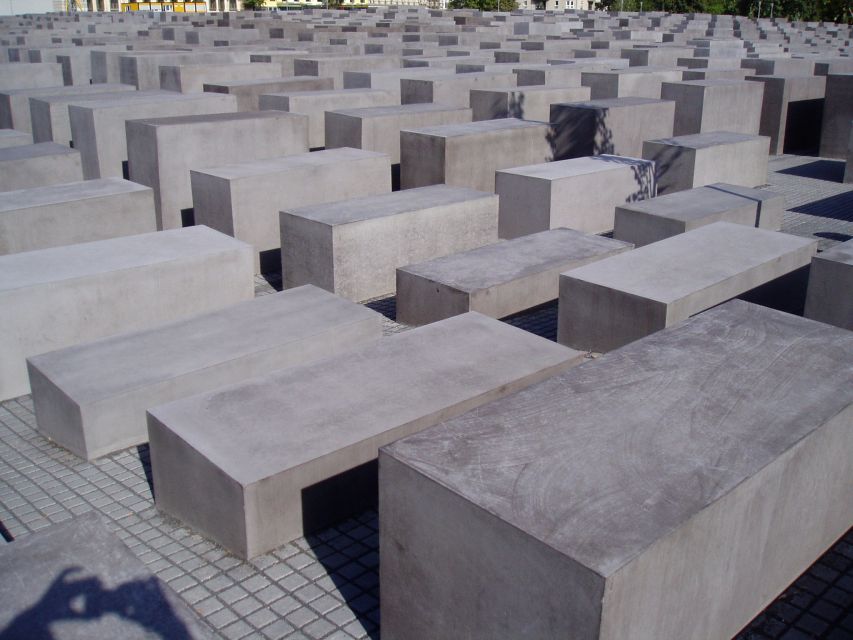
At the Holocaust Memorial, you can consider how a modern city marks the murder of Europe’s Jews in a central public space. The monument is visually powerful, but its meaning is not self-explanatory. Your guide can connect it to the earlier discussion of Jewish life, persecution, and the Holocaust.
The bunker site is more understated. The bunker itself is not open as a tourist attraction, and the tour does not enter buildings. You will learn about the location and the final days of the Nazi leadership, including Hitler’s suicide less than a mile from the Reichstag.
This is a useful correction to the idea that Berlin’s Nazi history is preserved in one dramatic underground room. The site is important precisely because it is ordinary and difficult to picture. A guide helps you understand the geography and the sequence of events without turning the location into a shrine.
The tour treats Hitler as part of a wider system rather than the only figure who matters. Earlier stops bring in Göring, Goebbels, the Gestapo, the SS, and the political and military administration that kept the regime running.
Ending at the Reichstag and the imagined Germania
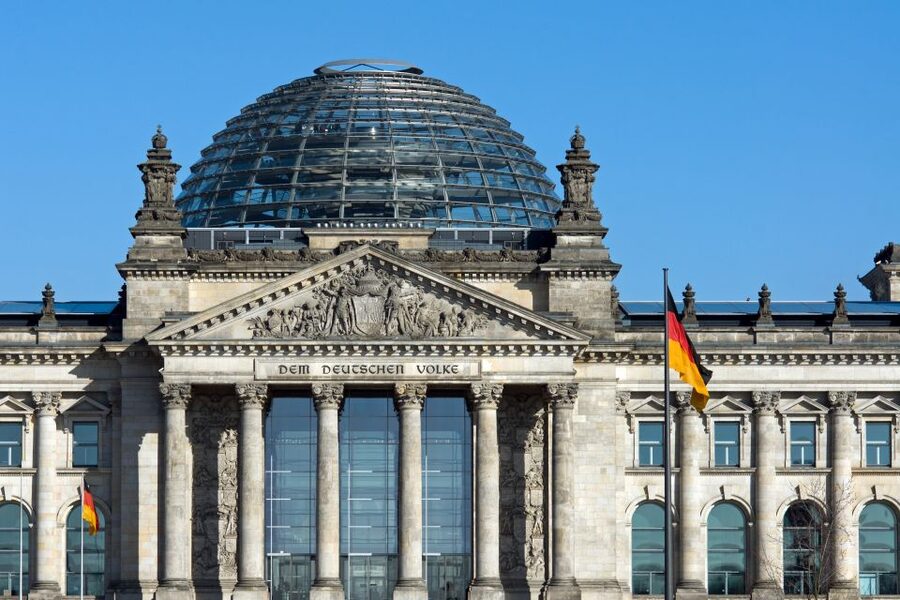
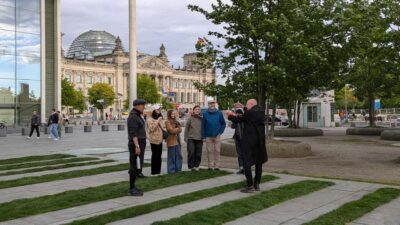
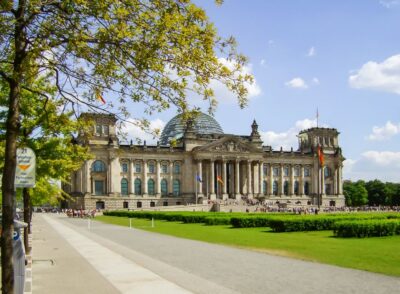
The walk finishes in front of the Reichstag, Germany’s parliament building. Here the guide explains Hitler and Albert Speer’s plan to rebuild Berlin as Germania, a capital for a world empire.
The plan is important because it shows the regime’s ambition in physical form. Nazi leaders did not simply want to govern Berlin. They wanted to reshape it into a monumental capital that expressed domination and permanence.
The final discussion turns to the Battle of Berlin. You’ll hear how Soviet soldiers assaulted the Reichstag under anti-aircraft fire while Hitler was committing suicide nearby. Ending here gives the tour a strong geographical finish: the building that represented German government became one of the final battle points of the European war.
You should not confuse this with a Reichstag interior visit. The tour ends outside, and no buildings are entered. If you want to visit the parliament building itself, you will need to make separate arrangements.
I like this ending because it brings together architecture, dictatorship, war, and memory. You finish at a functioning parliament, not at a preserved Nazi headquarters. That contrast says a great deal about Berlin’s attempt to confront its past while carrying on as a modern capital.
Why the guides matter so much
The route covers a lot in four hours, so the guide makes or breaks the experience. The strongest guide reports praise clear explanations, a good speaking style, humor used carefully, and the ability to answer questions without losing the group.
Several names have received especially warm comments. Glen is repeatedly praised for enthusiasm and strong command of Berlin’s past. Jonathan N is described as funny, welcoming, and full of useful details. Jimmy is often credited with keeping the group involved, while Artie is praised for his energy and background in history.
Rohan, Jasper, Quincy, Emma, Tom, Peter, Steve, and Amelie have also been singled out for clear presentations and thoughtful group care. The exact guide depends on the date and booking, so you should not assume you will receive a particular person.
Native-level English is included, and English and German are offered. The guide may use photographs, maps, or other documents, but the materials vary by guide. A private group can be useful if you want more time for questions or a pace suited to your party.
The four-hour format and what to bring
Four hours is a good length for this subject. It allows the guide to connect the stops rather than rush through a checklist, but it is long enough that your legs and attention will notice.
Wear comfortable shoes and dress for the forecast. The tour runs in all weather and on public holidays. Rain has not stopped the route from being useful, but it can make the outdoor portions harder. Bring suitable clothing, and remember that the tour includes a metro ride and a planned museum break.
There are no building interiors included, so the experience is mainly outdoors. That makes the weather more important than on a museum tour. It also means you should not book this as your only indoor activity on a cold or wet day.
The schedule includes many stops and explanations, with time for a break. Several people found that the four hours passed quickly because the guides used stories and questions to keep the group involved. Still, the pace may feel demanding if you dislike long walks or sustained discussion.
Is $23 a good value?
At $23 per person, this is a strong value for a four-hour guided introduction to Nazi Berlin. You are paying for an expert English or German-speaking guide, a carefully connected route, and historical explanation at places that are often confusing without help.
The price is especially fair if this is your first serious visit to Berlin’s Third Reich sites. A self-guided walk would cost less, but you would need to research the locations, find the surviving buildings, understand the memorials, and work out how the stops fit together.
The value is lower if you want extensive museum time or interior access. The Topography of Terror stop is a break within the walking tour, not a replacement for a dedicated museum visit. You will also pay separately for the required public transport ticket when needed.
For a private group, the price may be different depending on the option booked. Compare the total cost, not only the per-person figure, if you are traveling with family or friends.
Who should book this tour?
I would recommend it to anyone with a serious interest in Berlin’s Nazi era, the Second World War, political history, or memorial culture. It is also a useful first-day orientation if you want the city’s major sites explained in relation to one another.
It suits adults and older teenagers who can handle difficult subjects. The guides make the material accessible, but they do not remove its disturbing nature.
You may want something else if your priority is entering historic buildings, spending long periods inside museums, or taking a relaxed sightseeing walk. This route is active, outdoors, and focused.
Book it if you want to see the connections between places, not just collect photographs of famous landmarks. Skip it if you already know Berlin’s Nazi-era sites well and prefer independent museum visits. For most first-time visitors interested in this period, $23 buys a useful four hours and a much clearer understanding of the city.
FAQ
How long does the Hitler’s Germany tour last?
The tour lasts four hours. Starting times vary, so check availability for the date you want.
What languages are available?
Live guiding is available in English and German. The English-speaking guides are described as having native-level English.
Does the tour enter any buildings?
No. The tour does not enter buildings. You will visit outdoor sites and have a museum break at the Topography of Terror area.
Is public transportation included?
No. A single AB public transport ticket is needed for the route when required, and it is not included in the tour price.
Does the tour run in bad weather?
Yes. The tour operates in all weather and on public holidays.
Is a private tour option available?
Yes. A private group option is available, as well as a shared group format.
Can I cancel for a refund?
You can cancel up to 24 hours in advance for a full refund. You can also reserve now and pay later, keeping your plans flexible.
Just added around Berlin
- From Berlin: Gardens & Palaces of Potsdam Bike Tour★ 5.0 · 61 reviews
- Berlin: Battle for Seelow Heights WW2 tour -Clash of Titans★ 5.0 · 27 reviews
- From Berlin: Historical Gems of Potsdam Private Day Trip★ 4.4 · 4 reviews
- Berlin: Französischer Dom 360° Panorama & Crémant to go★ 3.9 · 5 reviews
- Explore Berlin Tour: History and Highlights★ 4.7 · 5 reviews
- Berlin: Evening Yacht Cruise with Aperitif & Dinner Upgrade★ 4.6 · 178 reviews
- Berlin: Expats in Berlin Comedy Show Ticket★ 4.7 · 182 reviews
- Berlin: The Epic Comedy Club Friday Night Showcase★ 4.8 · 28 reviews
Berlin Tours, compared.
Reichstag, Dome and Government District Guided Tour
Read our review →
1-Hour City Tour by Boat with Guaranteed Seating
Read our review →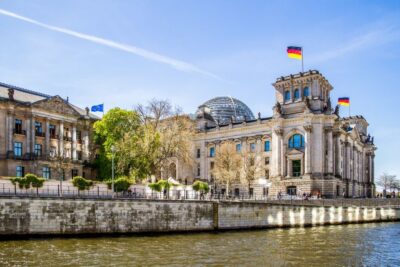
Reichstag, Plenary Chamber, Cupola & Government Tour
Read our review →
Browse the lists this tour appears in