
Review · BERLIN TOURS
From Berlin: Licensed Sachsenhausen Tour with max. 15 people
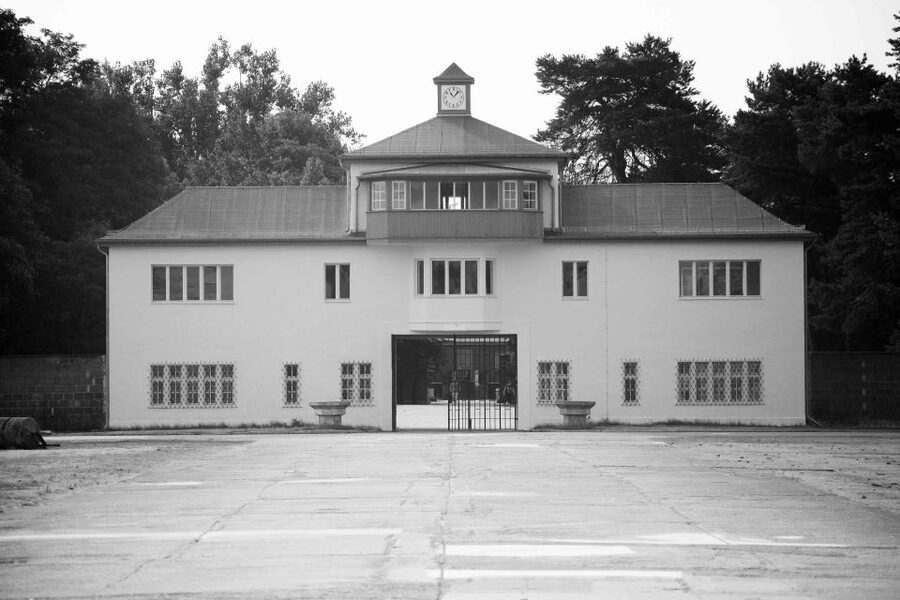
Sachsenhausen is not a quick photo stop. It is a vast memorial site where empty ground, ruined barracks, watchtowers, and memorials force you to consider how the Nazi camp system worked. The three-hour guided visit gives the place shape and meaning, from forced labor to the 1945 death march.
I like two things here. First, the small limit of 15 people makes it easier to hear the guide and ask serious questions. Second, the trip by public transport turns the visit into a shared journey rather than a sealed-off coach excursion. Guides such as Sarah, Ronja, Lewis, Rebecca, and Natalie have been praised for clear explanations and calm handling of difficult subjects.
The main drawback is the length and the lack of food on site. You spend about five and a half to six hours away from central Berlin, with roughly 40 minutes of walking and much of the memorial outdoors. Bring water, a snack, sturdy shoes, and proper rain gear.
Key points to know before you book
- A full half-day commitment: The tour includes about 100 minutes of public transport, walking, and three hours inside the memorial.
- A small group of up to 15: You get more room for questions than on a large coach tour.
- A licensed English-speaking guide: Guides are specially trained by Original Berlin Walks and officially licensed by the memorial.
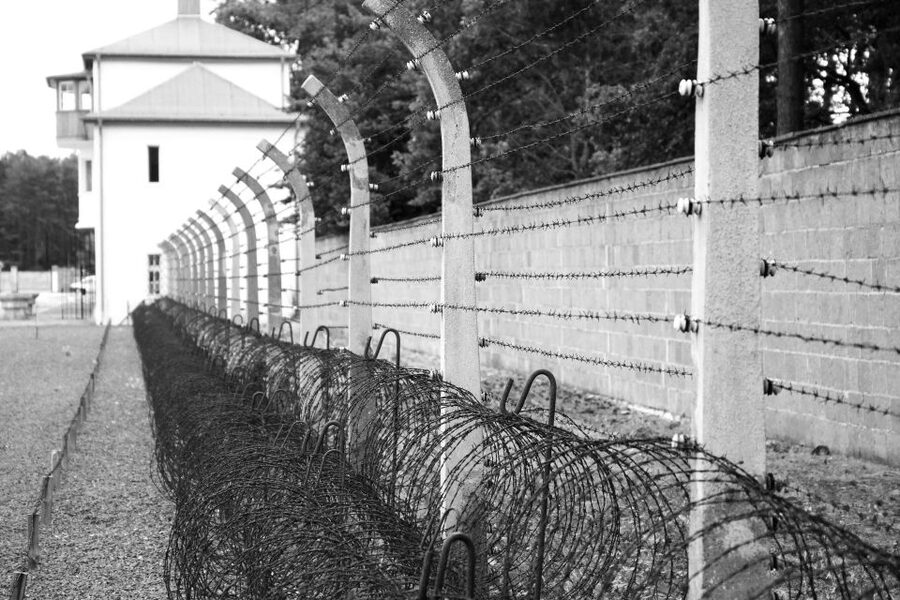
- Important sites in one visit: Expect Tower A, the Jewish barracks, Station Z, the shoe-testing track, prison kitchen, infirmary barracks, and remaining watchtowers.
- Bring your own food and drink: There are no shops or cafés in or around the memorial site.
- Good value at $38: The fee includes the guide, memorial fee, and a €3 donation, but your ABC public transport ticket costs extra.
Why Sachsenhausen needs a guided visit
Sachsenhausen was built by the SS in 1936, after Dachau, as one of Nazi Germany’s main concentration camps. It was created to imprison political opponents of the Nazi regime, then became part of a much wider system of persecution, forced labor, imprisonment, and mass murder.
The site is large and spread out. Without context, you see a gate, a few reconstructed or preserved buildings, concrete foundations, memorials, and open ground. A guide helps connect those pieces to the camp’s purpose and development.
This is also a place where the absence of buildings matters. Much of Sachsenhausen no longer looks like a functioning camp. That can make the experience harder to understand at first, not easier. The guide explains what once occupied the empty spaces and how prisoners were controlled within them.
The tone matters greatly. This is not entertainment, and a good guide must explain the facts without turning suffering into spectacle. The guides named in the feedback, including Sarah, Georgia, Anya, Ronja, Lewis, Emma, Rebecca, and Natalie, were repeatedly praised for combining clear information with care and patience. You should expect a serious visit, but not a cold or mechanical one.
More WWII History Tours in Berlin
- Berlin: Third Reich and Cold War 2 Hour Walking Tour
★ 4.9 · 6,830 reviews - Berlin: Sachsenhausen Concentration Camp Tour in English
★ 5.0 · 5,711 reviews - Berlin’s Best: 2 Hour Walking Tour Third Reich and the Cold War
★ 5.0 · 5,486 reviews
Meeting at Hackescher Markt and taking the train north
The day begins outside Starbucks opposite Hackescher Markt S-Bahn station, at Neue Promenade 3. This is a practical central meeting point, though you should arrive with enough time to find the exact spot and your guide.
From there, the group travels north by public transport toward Oranienburg, about 20 miles from central Berlin. The journey takes roughly 50 minutes each way, although transport problems can change the route. One guide, Emma, reportedly handled several train changes after service interruptions, while Ronja and Rebecca were also praised for helping people manage the transport.
That support is one of the tour’s real advantages. You do not simply get dropped at a station and left to work out the rest. The guide keeps the group together, explains the route, and helps you return to Berlin. For someone unfamiliar with Berlin’s fare zones and rail system, this removes a fair amount of stress.
You need a public transport ticket, and an ABC day pass is recommended. That ticket is not included in the $38 tour price, so add it to your budget before booking. The guide and memorial fee are included, along with a €3 donation to the memorial.
The 20-minute walk from Oranienburg
After reaching Oranienburg, you walk for about 20 minutes to the Sachsenhausen Memorial. This is not a major sightseeing walk, but it is part of the day’s rhythm. You leave the city behind and arrive at a site that requires a slower, more serious frame of mind.
The walk also means you should not wear flimsy shoes. Paths can be muddy after rain, and the tour runs in all weather. Comfortable walking shoes are essential, while a waterproof jacket and sensible layers can make a cold or wet day far more manageable.
There are no shops or cafés in or around the memorial site. Bring a bottle of water and food for a simple break. Several people appreciated being able to buy food during brief stops, but you should not count on a proper café meal during the visit.
Tower A and the camp entrance
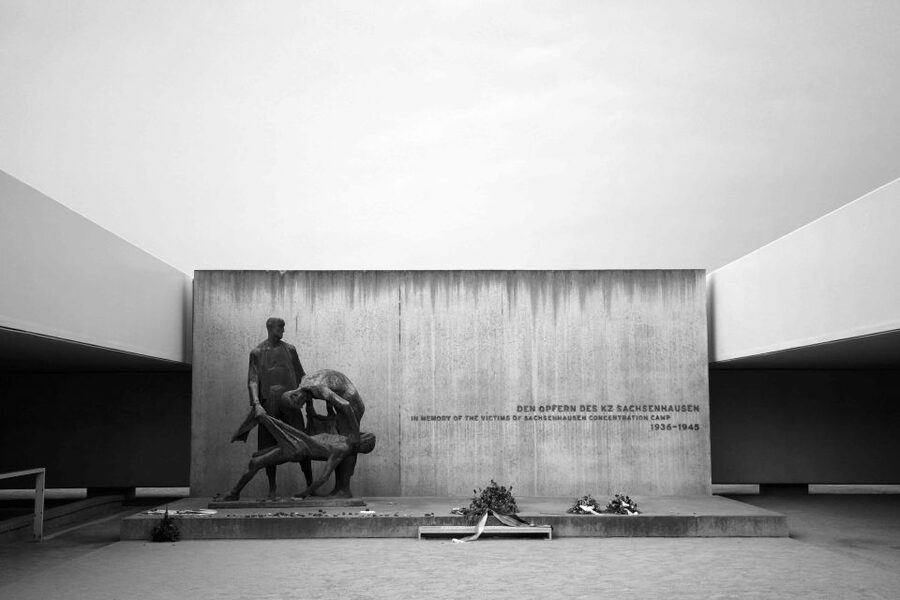
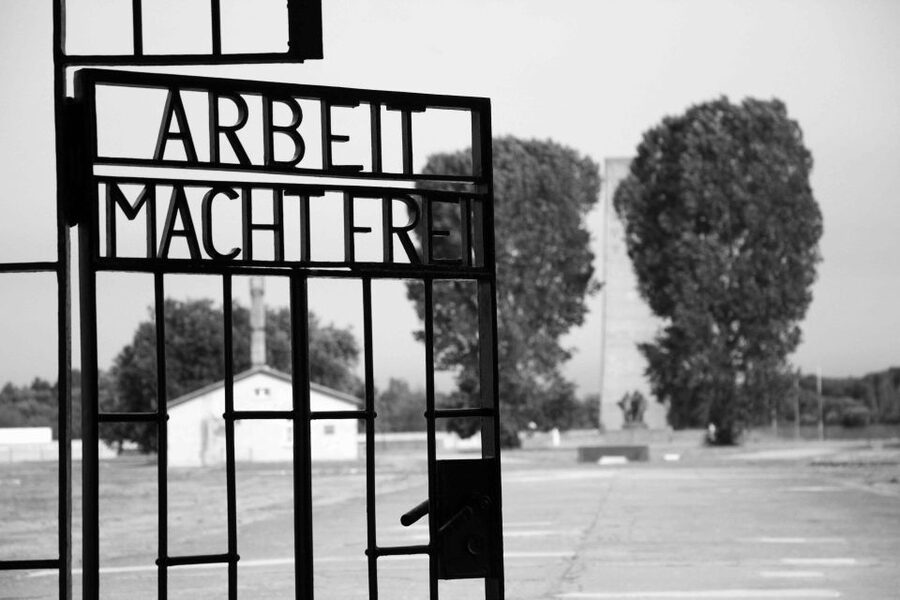
The guided tour begins with the camp entrance, including Tower A and the gate carrying the infamous slogan work sets you free. This is one of the best-known images associated with Nazi concentration camps, but seeing the gate in its actual setting gives it a different force.
Your guide explains how the entrance functioned within the camp and how language was used to disguise violence. The slogan was not an ordinary promise of work or release. It was part of a system built on deception, humiliation, forced labor, and terror.
This first stop sets the tone for the rest of the visit. You are not just looking at an old gate. You are learning how the camp was organized and how the Nazi system presented imprisonment as something orderly or justified.
More wartime history tours in Berlin:
- Berlin: Sachsenhausen Concentration Camp Memorial Tour
★ 4.7 · 3,716 reviews - Third Reich Berlin: Hitler and WWII Walking Tour
★ 5.0 · 3,301 reviews - Sachsenhausen Concentration Camp Bus Tour in English from Berlin
★ 5.0 · 1,962 reviews - Berlin: Sachsenhausen Concentration Camp Tour in English
★ 4.8 · 1,889 reviews
Barracks, prisoner life, and forced labor
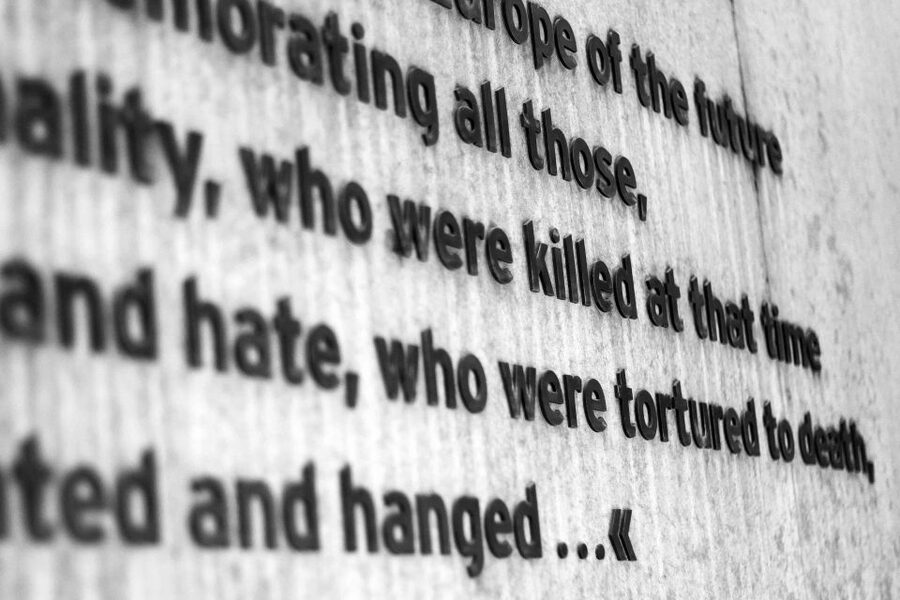
The tour continues through the remains and memorial markers of the prisoner area. You see barrack locations, watchtowers, and displays connected with daily life inside the camp.
The guide uses witness accounts and current historical research to explain what prisoners faced. The subject includes forced labor, overcrowding, brutality, hunger, disease, punishment, and the different categories of people imprisoned by the Nazi regime.
The Jewish barracks are an especially important stop. You also hear about the revolt of Jewish prisoners in 1942 and the ways some prisoners resisted the camp system. Resistance here was not limited to armed action. It could involve preserving identity, helping another person, hiding information, or attempting escape under almost impossible conditions.
One unusual story concerns the forgery workshop, where Jewish prisoners were forced to counterfeit millions of pounds sterling. This episode shows the range of work imposed on prisoners and the way the Nazi regime exploited their skills for its own purposes.
You may want more time in each exhibition room to read every photograph and display. That is the main tradeoff of a guided visit. The guide gives you a clear route and a connected explanation, but a three-hour tour cannot allow unlimited reading at every stop.
Station Z, the execution area, and memorial spaces
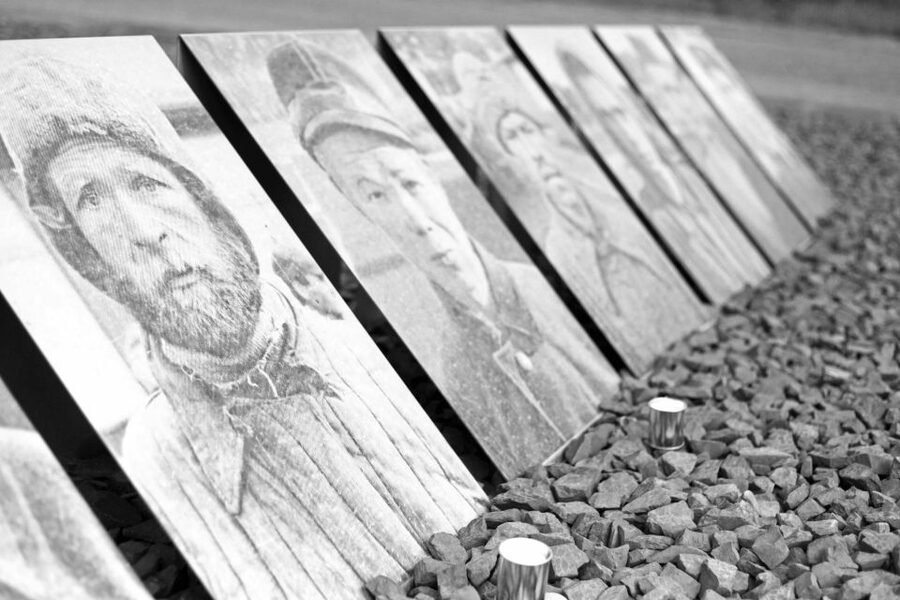
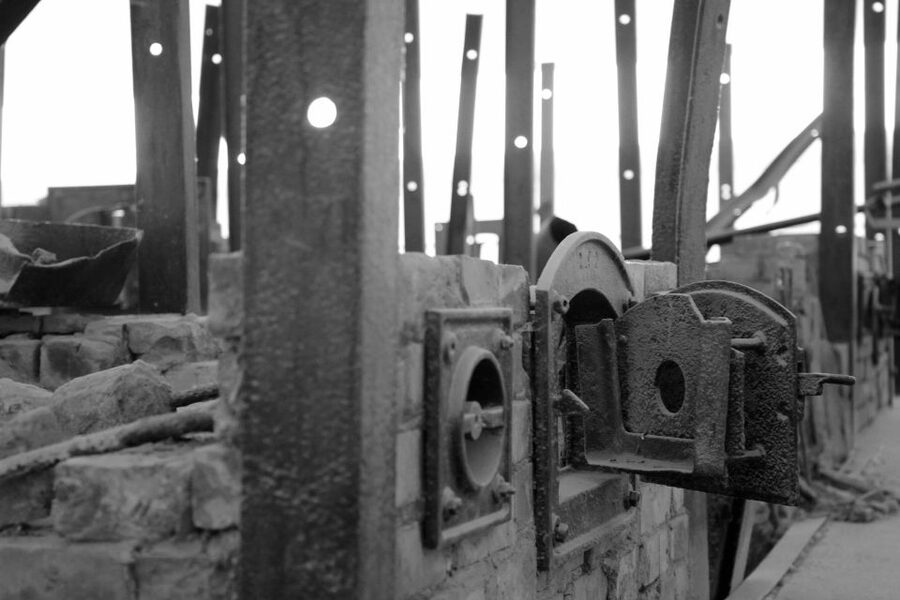
Station Z is the memorial connected with the camp’s execution center. The name itself is stark: it followed the camp’s numbering system from the entrance at Tower A toward the site of killing. Your guide explains the function of the area and the evidence that remains.
This section is emotionally demanding. You are walking through a place where prisoners were murdered, and the memorial does not need theatrical effects to make that reality clear. Expect your guide to pause, explain, and allow the group to absorb what it is seeing.
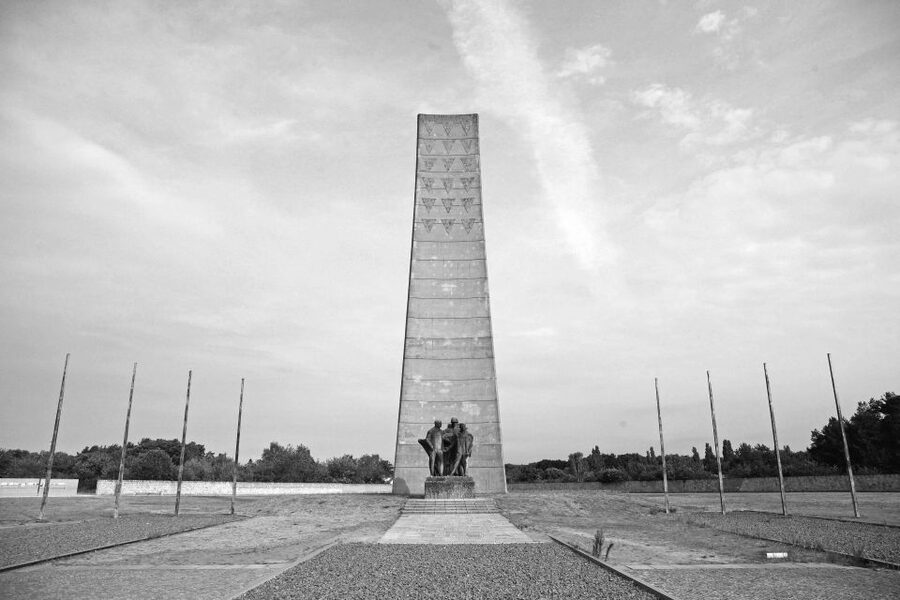
The site also includes memorial statues, plaques, and areas marking buildings that no longer survive. These memorials help preserve individual and collective memory, but they do not turn Sachsenhausen into a museum set. Much of the experience remains open-air and physically bare.
That is why weather can affect the day. Rain, wind, or cold are not minor inconveniences when you are standing outside for long periods. Check the forecast, but pack for conditions that may change.
The shoe-testing track, kitchen, and infirmary
The shoe-testing track is one of the more revealing parts of the visit. Prisoners were forced to walk long distances on different surfaces while testing footwear for German military use. The site shows how ordinary commercial or military needs could be placed above human life.
The prison kitchen and infirmary barracks add more detail about the machinery of camp life. These places help you see that the camp was not only a collection of cells and fences. It required food systems, medical facilities, records, workshops, guards, and administration, all operating within a structure of abuse.
Your guide can connect these locations to the broader camp system and explain what prisoners experienced inside them. The best part of the guided format is that these buildings do not remain isolated points on a map. You understand why they existed and how they fit together.
The walking pace is generally steady, based on the feedback, but this is still a long time on your feet. If you need frequent rests, tell the guide early. The group size makes it easier for the guide to keep an eye on everyone and answer questions without losing the whole party.
Escape stories, resistance, and the death march
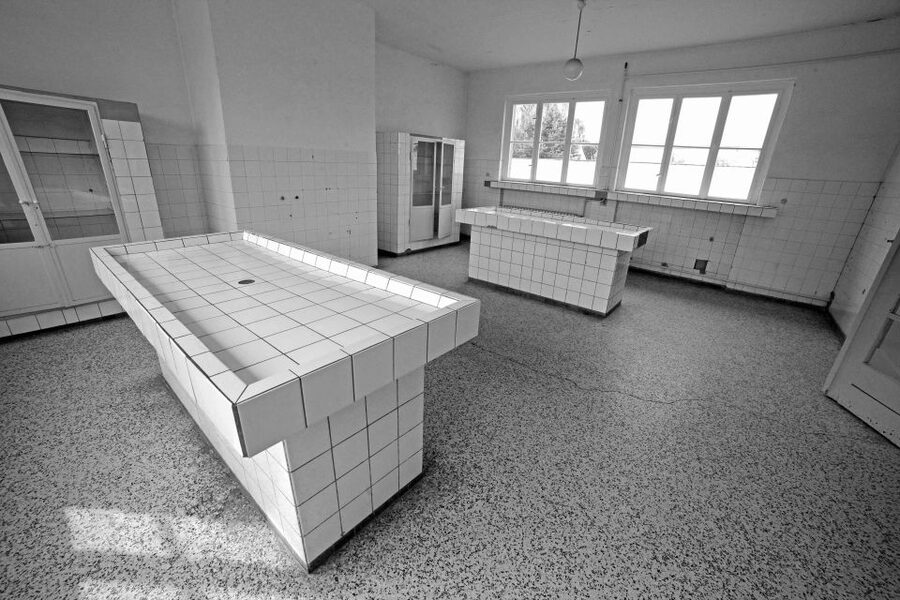
Sachsenhausen’s story is not only one of persecution and murder. The guide also tells stories of resistance, escape, and survival, including the tunnel dug by Jimmy James.
These stories should not be treated as cheerful relief from the subject. They matter because they show the determination and ingenuity of prisoners who were denied almost every normal means of control over their own lives. The forgery operation and the 1942 revolt provide other examples of resistance within a brutal system.
You also learn about the death march before the camp’s liberation in 1945. As Allied forces approached, prisoners were forced out of the camp and marched away. The subject helps explain that liberation did not arrive as a simple moment for everyone still held there. Many suffered or died during the evacuation.
Guides such as Lewis and Rebecca were praised for ending difficult sections with stories that recognized human courage and the possibility of life after the camp. That does not soften the facts. It gives you a way to leave the memorial with more than horror alone.
Returning through Oranienburg to central Berlin
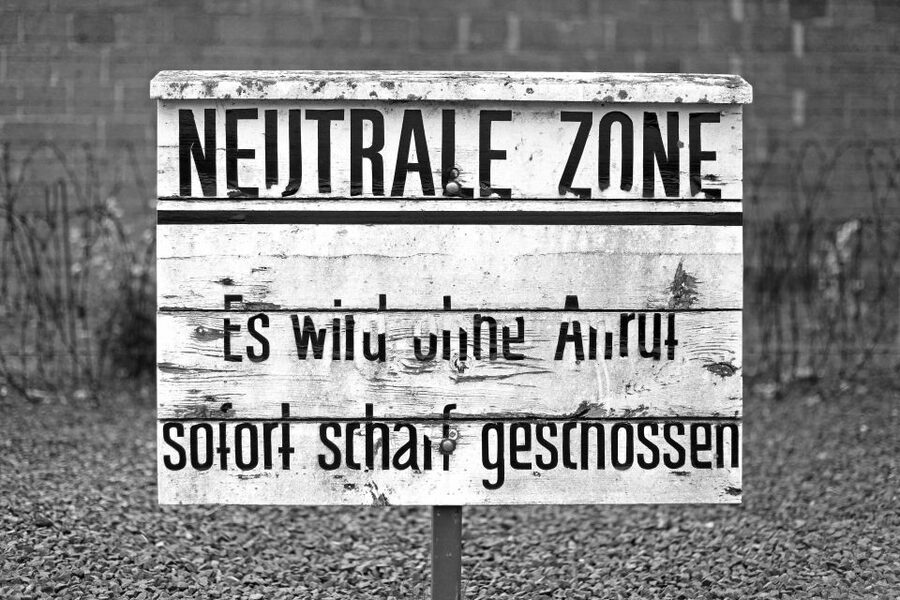
After roughly three hours at the memorial, you walk back to Oranienburg for the return journey. The transport takes about 50 minutes, with arrival at a central Berlin station such as Hauptbahnhof, Friedrichstraße, or Gesundbrunnen.
The exact arrival point can vary, so do not plan a tight connection immediately afterward. Service interruptions are possible, and the guide may need to adjust the route. The return trip is also a useful time to ask follow-up questions or get general Berlin suggestions. Several guides, including Anja, Rebecca, and Emma, were praised for helping with onward transport and city recommendations.
You may feel tired, quiet, or emotionally drained by this point. That is normal for the subject and the length of the day. The tour is not designed to rush you back into sightseeing mode.
Small group size and guide quality
The maximum group size is 15. That is small enough for the guide to speak to the whole group without shouting, yet large enough to include a range of questions and perspectives.
The strongest praise goes to the guides’ delivery. Sarah was noted for making the subject feel immediate while answering questions in depth. Georgia was praised for helping people feel at ease during a difficult day. Ronja was described as organized and able to adapt when transport went wrong, while Lewis was credited with balancing seriousness, warmth, and appropriate humor.
Guide quality can vary because the named guide is not guaranteed. Still, the licensing and training matter. The guide is specially trained by Original Berlin Walks and officially licensed by the memorial, which is more reassuring than relying on a general city guide with limited site preparation.
You should also expect an active conversation rather than a lecture alone. Questions are encouraged, and the small group makes it easier to ask about particular prisoner groups, buildings, historical terms, or family connections.
Is $38 good value?
At $38 per person, this is a fairly priced way to visit Sachsenhausen with an expert-led structure. The price includes the licensed guide, memorial fee, and a €3 donation to help support the site for individual visitors, schools, and tour groups.
Your public transport ticket is extra, and you need to bring food and drinks. Even after adding the ABC ticket and a snack, the cost remains reasonable for nearly six hours of transport support and guided interpretation.
The value is not just in getting there. You could reach Sachsenhausen independently, but you would need to plan the route, understand the site, decide what to see, and supply the historical framework yourself. This tour handles the route and gives you a coherent explanation of the camp system.
For a person already trained in Holocaust history, the guided structure may sometimes move too quickly through museum displays. You can ask questions and use the free time to look around, but this is not a private research visit. It is best for building a clear understanding of the site in one day.
Who should choose this tour?
I would choose this tour if you want serious historical context, support with Berlin public transport, and a small group rather than a large bus party. It suits first-time visitors to a concentration camp memorial and anyone who wants help understanding how individual buildings fit into the wider Nazi system.
It is also a good option if you are concerned about handling the subject alone. The guide sets a respectful pace, explains what you are seeing, and helps the group move through difficult sections without turning the visit into a spectacle.
You should think twice if you dislike long public transport journeys, outdoor walking, or fixed group schedules. This is not a short excursion, and you cannot count on a café stop. People with limited energy should prepare carefully and tell the guide if they need a pause.
FAQ
How long does the Sachsenhausen tour take?
The activity lasts about 330 minutes, or five and a half hours. The schedule includes about 50 minutes of public transport each way, a 20-minute walk each way between Oranienburg and the memorial, and around three hours at the site.
What public transport ticket do I need?
You need a Berlin ABC public transport ticket. An ABC day pass is recommended, and the ticket is not included in the tour price.
Is the tour conducted in English?
Yes. The tour has a live English-speaking guide.
What should I bring?
Bring comfortable shoes, drinks, a snack, and clothing suited to the weather. The site can be muddy after rain, and there are no shops or cafés in or around the memorial.
What is the maximum group size?
The group is limited to 15 participants.
What does the tour price include?
The $38 price includes a licensed and trained guide, the memorial fee, and a €3 donation to the Sachsenhausen Memorial. Public transport tickets, food, and drinks are not included.
Should you book this Sachsenhausen tour?
Book it if you want a well-organized, serious visit with a licensed guide and help managing the train journey from Berlin. The small group, three hours at the memorial, and clear focus on both the camp system and individual stories make it a strong choice at $38.
Go prepared for a long and emotionally difficult day. Pack food, wear shoes that can handle mud, and leave space in your schedule afterward. If you want to understand Sachsenhausen rather than simply walk through it, this tour gives you the structure and human care the site demands.
Just added around Berlin
- From Berlin: Gardens & Palaces of Potsdam Bike Tour★ 5.0 · 61 reviews
- Berlin: Battle for Seelow Heights WW2 tour -Clash of Titans★ 5.0 · 27 reviews
- From Berlin: Historical Gems of Potsdam Private Day Trip★ 4.4 · 4 reviews
- Berlin: Französischer Dom 360° Panorama & Crémant to go★ 3.9 · 5 reviews
- Explore Berlin Tour: History and Highlights★ 4.7 · 5 reviews
- Berlin: Evening Yacht Cruise with Aperitif & Dinner Upgrade★ 4.6 · 178 reviews
- Berlin: Expats in Berlin Comedy Show Ticket★ 4.7 · 182 reviews
- Berlin: The Epic Comedy Club Friday Night Showcase★ 4.8 · 28 reviews
Berlin Tours, compared.
Reichstag, Dome and Government District Guided Tour
Read our review →
1-Hour City Tour by Boat with Guaranteed Seating
Read our review →
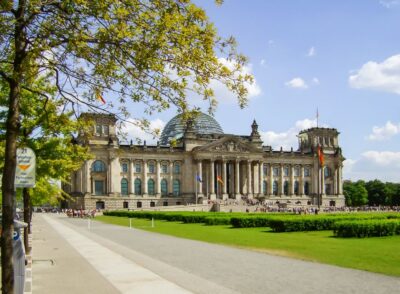
Reichstag, Plenary Chamber, Cupola & Government Tour
Read our review →
Browse the lists this tour appears in