
Review · BERLIN TOURS
Berlin Third Reich Sites: Half-Day Walking Tour
Berlin’s Nazi past is written into ordinary streets, empty spaces, ruined buildings, and memorials. This four-hour walk links those places into one clear story, beginning near Hackescher Markt and ending outside the Reichstag, where the Nazi seizure of power began and the war ended in wreckage.
I like the efficient route, which lets you cover Jewish Berlin, Nazi government offices, memorials, and the final-war sites without spending half your day studying a map. I also like having a historian-guide who can connect the stones and buildings to the people affected by them. The main drawback is simple: four hours on foot is a long stretch, especially in rain or cold, and the subject matter is emotionally heavy.
Key points to know before booking
- The route covers ten major sites, including Anhalter Bahnhof, the Topography of Terror, the Holocaust Memorial, and the Reichstag.
- Guides set the wider context first, explaining Hitler’s rise and the Nazi dictatorship before focusing on individual places.
- The tour is in English, with guides such as Peter, Hannah, Tom, Jonathan, James, and Gregor praised for clear explanations and thoughtful answers.
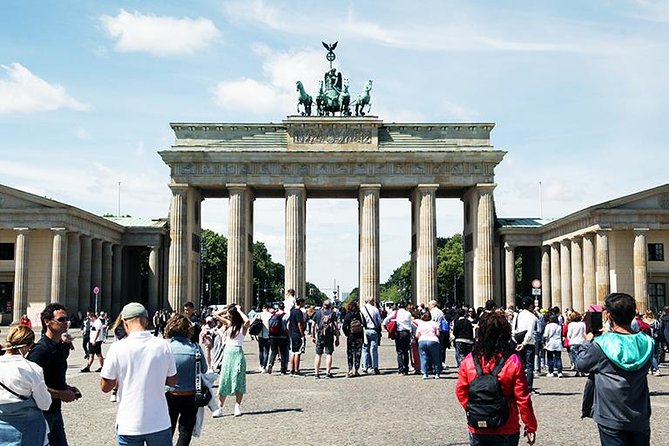
- It ends near the Reichstag, leaving your afternoon open for museums, the Brandenburg Gate, or your own Berlin plans.
- You pay about $21.77, but the AB Zone transport ticket is extra at about €3.80.
- The walk operates in all weather, so shoes, water, and suitable clothing matter.
Why this four-hour walk works in Berlin
Berlin can make the Third Reich period feel scattered. One site sits beside a modern office block. Another is marked by a modest sculpture. A memorial may occupy a large open square, while the original building has vanished completely.
That is why a guided route helps. The guide gives you a timeline, then keeps returning you to it. You begin with Hitler and the Nazi Party, follow the machinery of dictatorship and persecution, and finish with the collapse of the regime in 1945.
The route is also practical for a short visit. You do not spend a full day inside one museum. Instead, you get short explanations at many locations, with the option to return later to the places that catch your attention.
The group can include up to 25 people. That is not a private tour, but it is small enough for questions and easier to manage than a large city walk. Past guides named Peter, Glen, Rohan, Tom, Giles, Hannah, Gregor, Paul, and Jonathan have been singled out for their command of the subject, clear voices, patience, and ability to keep the group engaged.
More WWII History Tours in Berlin
- Berlin: Third Reich and Cold War 2 Hour Walking Tour
★ 4.9 · 6,830 reviews - Berlin: Sachsenhausen Concentration Camp Tour in English
★ 5.0 · 5,711 reviews - Berlin’s Best: 2 Hour Walking Tour Third Reich and the Cold War
★ 5.0 · 5,486 reviews
Starting near Hackescher Markt
The walk begins at Neue Promenade 3, near Hackescher Markt S-Bahn station, at 10:00 in the morning. Check your meeting instructions carefully, since the station area has several exits and busy pedestrian routes.
You need an AB Zone public transport ticket to reach the meeting point if you are using Berlin’s S-Bahn, U-Bahn, tram, or bus network. It costs about €3.80 and is not included in the tour price.
The guide starts with Adolf Hitler and the Nazi Party. This opening matters. Without it, the later stops can become a string of grim addresses. With it, you get a basic framework for how a democratic system was dismantled, how state power was used, and how persecution became organized violence between 1933 and 1945.
This is also a good moment to ask questions. Guides such as Jonathan N and Jimmy have been praised for giving broader political context, while others, including Gregor, have helped explain how ordinary people were drawn into Nazi schemes and how Germany dealt with the consequences afterward.
Jewish Berlin at Otto Weidt and the New Synagogue
The first stops bring Jewish life and persecution into view before the walk reaches the main Nazi offices.
At the Museum Blindenwerkstatt Otto Weidt, the guide explains the history of the site. The stop is brief, about five minutes, and admission is free. You should not expect a long museum visit here. Instead, the guide uses the location as a starting point for discussing Berlin’s Jewish population and the way individual lives were threatened under Nazi rule.
The tour then moves to the Stiftung Neue Synagoge Berlin, also known as the Centrum Judaicum. Again, the formal stop is about five minutes, with the guide providing the background.
These short pauses work best if you listen for the human scale of the story. The tour is not only about Hitler, military decisions, and government buildings. It also asks you to picture the communities targeted by those decisions. Several guides have been praised for including Jewish Berlin as a central part of the tour rather than treating it as a side note.
The limitation is time. You will not explore each site in depth, and the route does not replace a dedicated visit to Berlin’s Jewish Museum or the Centrum Judaicum. Think of these stops as an introduction and a way to understand the city around you.
Anhalter Bahnhof and the mechanics of deportation
The ruins of Anhalter Bahnhof are among the route’s most powerful places. Once a major railway station, it became connected with the deportation of many of Berlin’s Jewish residents to concentration camps.
Only part of the old station survives. That absence is part of the experience. The guide explains what happened here, linking the damaged structure to the wider system of forced removal, imprisonment, and mass murder.
The stop lasts about five minutes, so the value comes from the explanation rather than a long inspection of the site. Bring your attention to the setting. This was a place of departure, but not a normal journey. The guide’s role is to make that difference clear.
This section may be especially useful if you know the broad outline of the Holocaust but want to understand how persecution operated in a real city. Deportation was not an abstract event happening far away. It was tied to stations, offices, paperwork, police power, and streets used by the public.
More wartime history tours in Berlin:
- Berlin: Sachsenhausen Concentration Camp Memorial Tour
★ 4.7 · 3,716 reviews - Third Reich Berlin: Hitler and WWII Walking Tour
★ 5.0 · 3,301 reviews - Sachsenhausen Concentration Camp Bus Tour in English from Berlin
★ 5.0 · 1,962 reviews - Berlin: Sachsenhausen Concentration Camp Tour in English
★ 4.8 · 1,889 reviews
The Topography of Terror and Nazi state power
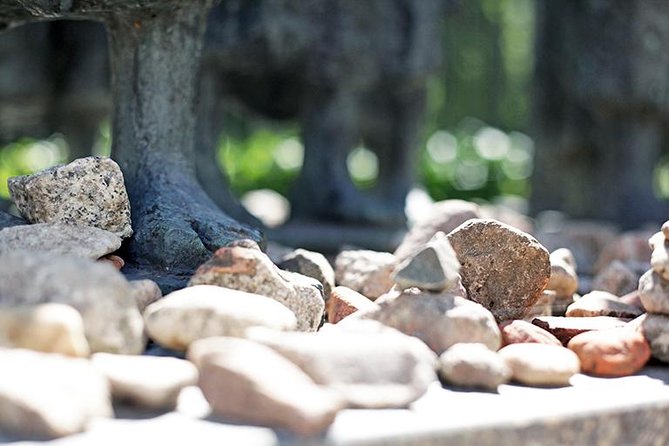
The tour continues to the site of the former SS and Gestapo headquarters on what was once Prinz-Albrecht-Strasse. Today, the Topography of Terror museum occupies the area.
The guide explains how the SS and Gestapo worked and how these institutions helped enforce the dictatorship. This is one of the tour’s longer stops, at about 15 minutes, though it is still an outdoor explanation rather than a full museum visit.
The Topography of Terror is important because it shifts the focus from Nazi ideology to administration and control. You hear about the institutions that investigated, arrested, interrogated, and terrorized people. The guide can also show how the regime depended on more than speeches and battlefield orders. It required offices, officials, police, records, and cooperation.
You may want to return here after the walk. The museum is free, and the tour’s short stop can give you enough context to decide if you want more time with its exhibits. If you prefer to take in museums slowly, note that this walking tour will not give you that kind of extended visit.
The former Aviation Ministry and the people targeted by Nazi rule
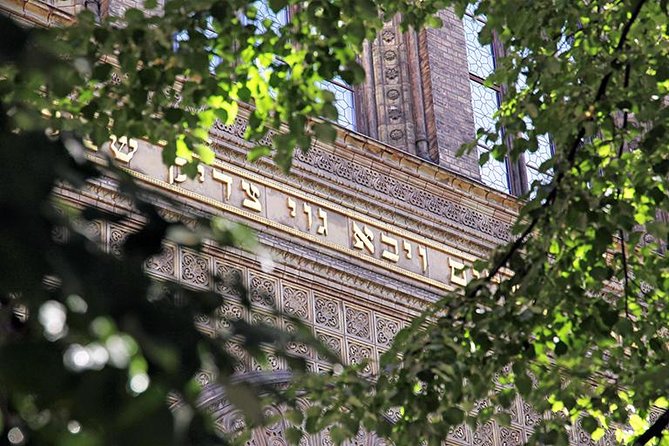
The next stop is the former Ministry of Aviation, once the headquarters of the German Luftwaffe. The building remains an imposing reminder of the Nazi state, and the guide explains its role while also discussing the consequences of Nazi rule for Jewish people and for Sinti and Roma communities.
This is an important expansion of the tour’s subject. The Nazi persecution system targeted more than one group, and the walk makes room for that broader picture. The guide connects government institutions with the policies they helped carry out.
The stop lasts about ten minutes. You will not go inside as part of the tour, but the exterior gives the guide a solid place to discuss the machinery of the regime.
A good guide keeps the discussion precise and respectful. The strongest comments about guides such as Hannah, James, and Gregor focus on this balance: they explained a dark period without turning it into a theatrical performance. That matters here. The material is painful, and humor, if used at all, needs careful timing.
Johann Georg Elser and resistance to Hitler
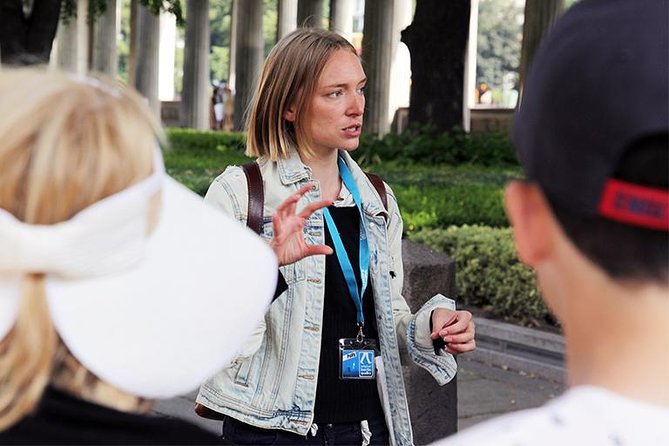
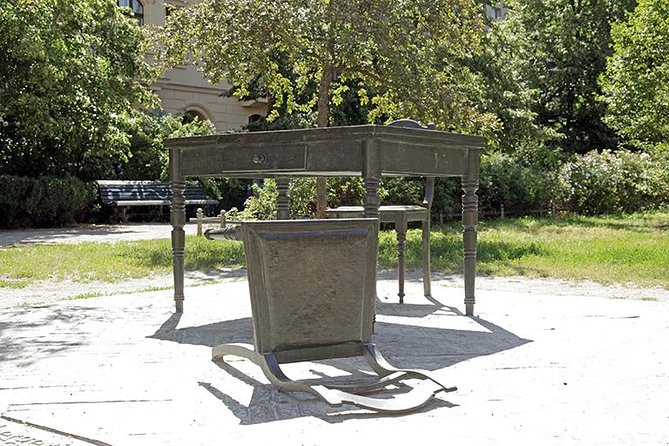
At the Johann Georg Elser Sculpture, the guide tells the story of an attempt on Hitler’s life. The stop lasts about five minutes.
This small monument gives the tour a different angle. Much of the route shows how the Nazi state controlled people. Elser’s story introduces resistance and the risks involved in trying to stop Hitler.
Do not expect a long study of every resistance group in Germany. The stop is brief, but it reminds you that opposition existed and that the period cannot be reduced to a simple story of total public agreement.
The sculpture also works well as a pause before the tour moves into the memorial district. You are still walking through central Berlin, but the meaning of the streets has changed. The guide keeps showing how places that look ordinary today carried extraordinary pressure during the dictatorship.
The Holocaust Memorial and the limits of a short stop
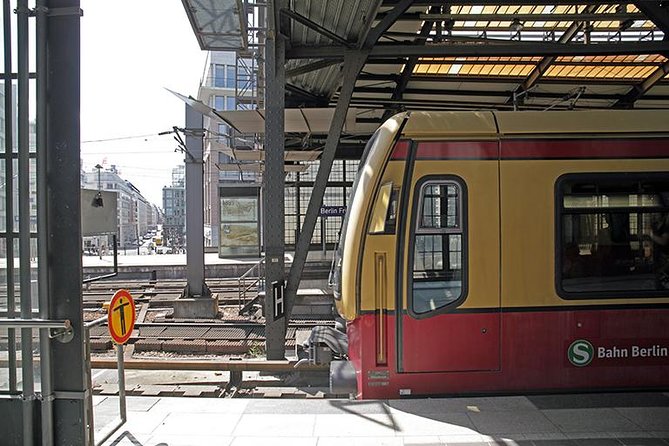
The Memorial to the Murdered Jews of Europe is one of Berlin’s best-known sites. The tour stops here for about ten minutes, and the guide explains its purpose and history.
You will likely want to spend extra time walking among the concrete blocks on your own. Ten minutes is enough for a guided introduction, but not enough to absorb the memorial at your own pace or visit the underground information center.
This is a recurring pattern on the tour. The guide provides a useful first layer, then you decide where to return. I find that approach helpful on a first Berlin visit, since the route gives you a map of important places without locking your entire day into one subject.
The memorial can feel stark and confusing, which is part of its design. Listen to the guide before wandering through it. The explanation helps you consider why the site looks and feels so different from a conventional statue or plaque.
The memorials for persecuted groups
The route also visits the Monument to Homosexuals Persecuted Under the National Socialist Regime. The guide explains the memorial and the persecution it represents, with about ten minutes at the site.
This stop broadens your understanding of Nazi victimization and shows how Berlin’s memorial culture addresses groups that were targeted for different reasons. The tour also discusses the suffering of Sinti and Roma people at the former Aviation Ministry, so the story does not focus only on the most familiar sites.
The guide’s tone matters especially here. The best experience comes from clear facts, room for questions, and respect for the people represented. Guides praised for their sensitivity, including Peter and Gregor, seem to fit this part of the route well, though guide assignments can vary.
The Soviet Memorial in Tiergarten
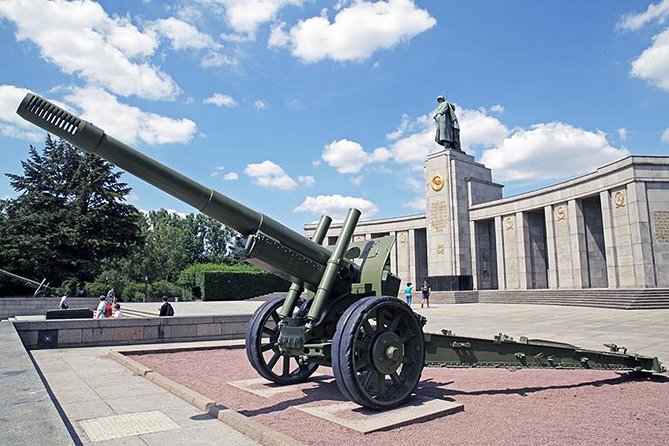
The Soviet Memorial Tiergarten adds the war’s final phase to the walk. The guide explains the history of the site during a stop of about ten minutes.
This memorial helps you understand how the defeat of Nazi Germany was represented in Berlin after 1945. It also provides a bridge between the dictatorship’s crimes and the physical destruction left by the war.
The route now moves toward the Reichstag. At this point, the story is no longer only about the creation of Nazi power. It is also about its collapse, the fighting that reached Berlin, and the ways the city remembered the Soviet role in defeating Germany.
A few people have wished for more discussion of non-Nazi Berlin landmarks along the route. That is a fair point, but it also reflects the tour’s narrow purpose. If you want architecture, Prussian history, or the Cold War treated in equal detail, you will need a separate walk.
Finishing at the Reichstag
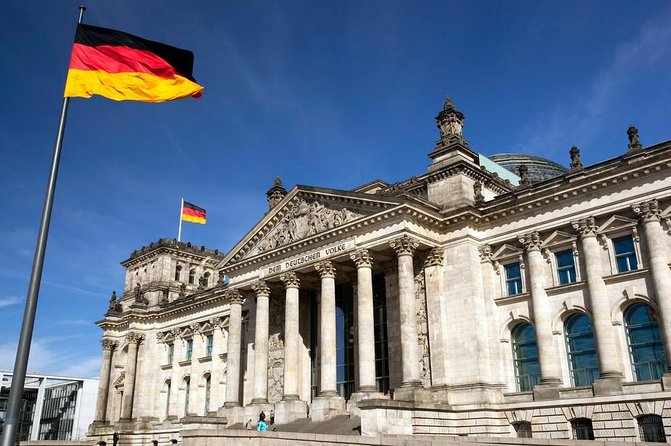
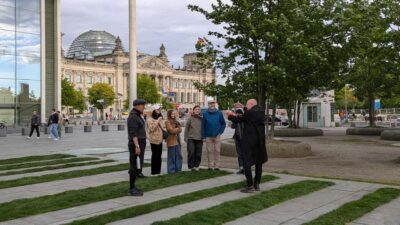
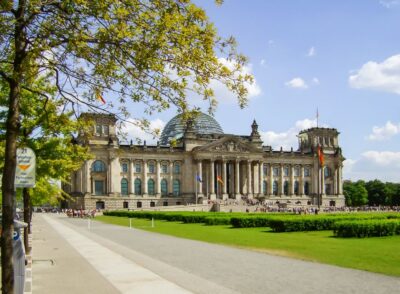
The tour ends outside the Reichstag Building at Platz der Republik. The guide explains the site, including its connection with the Nazis coming to power in 1933 and the final days of World War II in 1945.
Ending here gives the walk a strong shape. You start with the political rise of Hitler and finish at the building associated with Germany’s parliament, surrounded by the physical and political consequences of the war.
The Reichstag is also a useful place to continue exploring. The tour does not include an interior visit, so check your separate plans if you want to see the building inside. The end point leaves you close to other central Berlin sights, making it easy to continue your day independently.
Price, pace, and practical value
At about $21.77 per person, this is a low-cost way to put many major Third Reich sites into one route. The price does not include the roughly €3.80 AB Zone transport ticket, but that is the only stated extra cost for the walk itself.
The value depends on how you use the tour. If you already have a strong grasp of Nazi Berlin and enjoy researching sites alone, you may prefer to visit fewer places at greater length. If you want a clear introduction, the guide adds something difficult to get from plaques alone: sequence, explanation, and the chance to ask why a place matters.
The tour lasts about four hours and may cover a lot of ground. Wear comfortable shoes, bring water, and dress for the forecast. It operates in all weather, and Berlin rain can make a serious walking tour feel much longer.
Most people can participate, and service animals are allowed. Still, the tour is not built around long indoor breaks. If walking for four hours is difficult, consider your own pace before booking.
Who should book this Berlin history walk?
I would choose this tour for a first visit to Berlin, especially if you have one free morning and want a firm foundation before exploring museums alone. It also suits anyone who wants to connect Jewish Berlin, Nazi institutions, resistance, memorials, and the war’s end in one outing.
Families with older teenagers may find it useful. One guide kept two teenagers interested by using stories and clear explanations, while another adjusted answers for people from different generations. The subject is serious, but a good guide can make it approachable without making light of it.
This is less suitable if you want extensive museum time, a private guide, or a relaxed pace. The schedule includes ten stops, and several are short. You are buying a guided overview on foot, not a series of full site visits.
FAQ
Where does the tour begin?
It begins at Neue Promenade 3, 10178 Berlin, near Hackescher Markt S-Bahn station.
What time does the tour start?
The tour starts at 10:00 am.
Where does the tour end?
It ends outside the Reichstag Building at Platz der Republik 1, 11011 Berlin.
Is public transportation included?
No. You need an AB Zone transport ticket, which costs about €3.80 per person and is available at the station near the meeting point.
Is the tour offered in English?
Yes. The tour is offered in English and includes a professional English-speaking guide.
What happens if it rains?
The tour operates in all weather conditions. Dress appropriately and wear shoes suited to several hours of walking.
Should you book it?
Book this walk if you want clear historical structure, a wide route, and a guide who can answer questions as Berlin’s difficult past unfolds around you. The strongest guides, including Hannah, Tom, Peter, Jonathan, and Gregor, have been praised for making complex events understandable and for handling the subject with care.
Skip it if you want to linger inside museums or prefer to explore at your own speed. For most first-time visitors, though, the price, four-hour format, and final stop at the Reichstag make this a useful start to understanding modern Berlin. Expect a serious morning, plenty of walking, and a much clearer sense of how the city’s sites fit together.
More Half-Day in Berlin
- Potsdam Half-Day Walking Tour from Berlin
★ 4.5 · 398 reviews - From Berlin: Potsdam Half-Day Guided Tour
★ 4.6 · 167 reviews - Half-Day Berlin Highlights Segway Expedition
★ 4.6 · 60 reviews - From Munich: Dachau Memorial Site Half-Day Trip
★ 4.7 · 2,526 reviews
More Walking Tours in Berlin
- Discover Berlin Half-Day Walking Tour
★ 5.0 · 9,624 reviews - Berlin: Discover Berlin Walking Tour
★ 4.9 · 5,998 reviews - Berlin: Hidden Backyards Guided Walking Tour
★ 4.8 · 5,360 reviews - Berlin: Alternative Berlin Walking Tour
★ 4.6 · 1,204 reviews
Just added around Berlin
- From Berlin: Gardens & Palaces of Potsdam Bike Tour★ 5.0 · 61 reviews
- Berlin: Battle for Seelow Heights WW2 tour -Clash of Titans★ 5.0 · 27 reviews
- From Berlin: Historical Gems of Potsdam Private Day Trip★ 4.4 · 4 reviews
- Berlin: Französischer Dom 360° Panorama & Crémant to go★ 3.9 · 5 reviews
- Explore Berlin Tour: History and Highlights★ 4.7 · 5 reviews
- Berlin: Evening Yacht Cruise with Aperitif & Dinner Upgrade★ 4.6 · 178 reviews
- Berlin: Expats in Berlin Comedy Show Ticket★ 4.7 · 182 reviews
- Berlin: The Epic Comedy Club Friday Night Showcase★ 4.8 · 28 reviews
Berlin Tours, compared.
Reichstag, Dome and Government District Guided Tour
Read our review →
1-Hour City Tour by Boat with Guaranteed Seating
Read our review →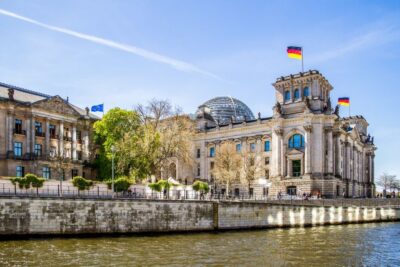
Reichstag, Plenary Chamber, Cupola & Government Tour
Read our review →
Browse the lists this tour appears in