
Review · BERLIN TOURS
Berlin: Third Reich, Hitler, and WWII Walking Tour
Berlin’s Nazi past is not tucked away in one museum. It lies under office blocks, beside busy streets, and beneath a nondescript parking area. This three-hour walking tour connects those scattered places, showing you where Hitler’s government worked, where the SS and Gestapo held power, and where the war finally reached its brutal end.
I like the route for two clear reasons: the sites are tied together in a logical story, and the guides bring plenty of detail beyond what you would notice alone. Guides such as Hannah, Mikhail, Jimmy, Martin, and Will have been praised for clear explanations and thoughtful handling of difficult subjects. The main drawback is practical: there are no scheduled water or toilet breaks, and a large group can make it harder to hear or keep pace.
Key points to know before you book
- Hitler’s bunker site: See the ordinary-looking location where Hitler spent his final days and died in April 1945.
- Nazi power center: Walk past the former Luftwaffe, Propaganda Ministry, SS, and Gestapo headquarters.
- Topography of Terror: Use this important exhibit to connect the street-level sites with the machinery of Nazi persecution.
- Soviet victory memorial: Finish near T-34 tanks and Red Army howitzers at the Soviet War Memorial.
- Three hours on foot: Wear good shoes and bring your own drink, since the route operates without planned refreshment stops.
- Flexible booking: The $20 price includes the walking tour and guide, with private and small-group options available.
Walking through Berlin’s former Nazi power center
This is not a tour built around grand surviving buildings. Much of Hitler’s Berlin was destroyed, demolished, or covered by later construction. That can sound like a weakness, but it gives the tour an important purpose: your guide helps you read the modern city as a historical map.
You begin outside Friedrichstraße train station, on the square between the station and the Tränenpalast, also called the Palace of Tears. Look for guides wearing a blue lanyard and yellow name tag, usually with yellow umbrellas. This meeting point is easy to reach by public transport, but give yourself a few minutes to find the correct side of the station.
The tour then moves through central Berlin toward the former government quarter. Your guide explains how the Nazi regime gathered political, military, and police power in a compact part of the city. That setting helps you understand that dictatorship was not only enforced from distant camps or battlefields. It operated from ministries, offices, press rooms, police headquarters, and public squares.
I find this opening section useful because it gives you a framework for the rest of the walk. Instead of seeing isolated war ruins, you begin to see how propaganda, military planning, surveillance, and political control worked together.
More WWII History Tours in Berlin
- Berlin: Third Reich and Cold War 2 Hour Walking Tour
★ 4.9 · 6,830 reviews - Berlin: Sachsenhausen Concentration Camp Tour in English
★ 5.0 · 5,711 reviews - Berlin’s Best: 2 Hour Walking Tour Third Reich and the Cold War
★ 5.0 · 5,486 reviews
The Luftwaffe ministry and the planning of war
One major stop is the former Air Defence Ministry, associated with Hermann Göring and the Luftwaffe. The building is a reminder that the air war was planned from government offices, not simply carried out by pilots in the sky.
Your guide explains the ministry’s role in the Nazi war machine and the Blitz. The exterior remains part of Berlin’s built environment, so you are looking at a real surviving structure rather than a reconstruction. The value comes from the explanation around it: a plain façade becomes a place connected to military decisions that affected cities and civilians across Europe.
This part of the walk can be especially helpful if your knowledge of the Second World War is stronger on the battlefield than in political history. The guide links military action to the people and institutions directing it.
Propaganda, the SS, and the Gestapo
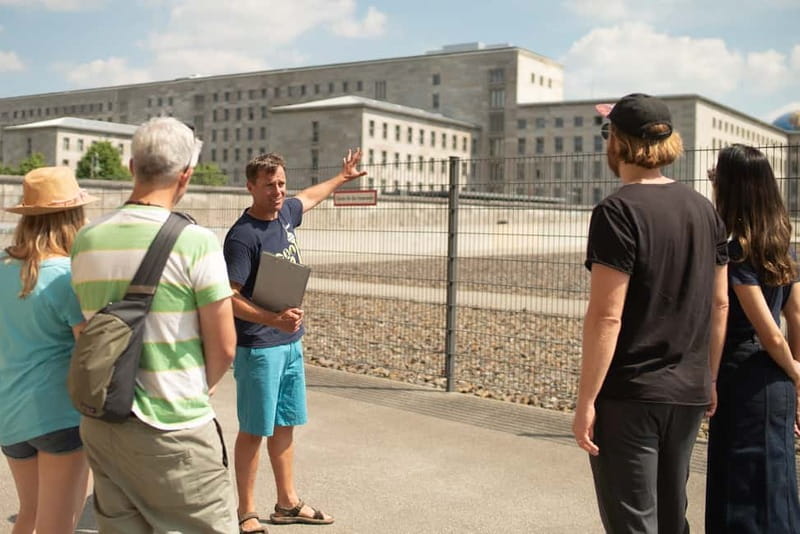
The route also passes the former locations of Joseph Goebbels’ Propaganda Ministry and Heinrich Himmler’s SS and Gestapo headquarters. These stops focus on two different but connected forms of control.
The Propaganda Ministry shaped the messages Germans heard, saw, and read. It helped create the public image of Hitler’s regime, promoted racial ideology, and presented military aggression as national destiny. The SS and Gestapo sites point to the regime’s coercive side: surveillance, arrests, interrogation, and terror.
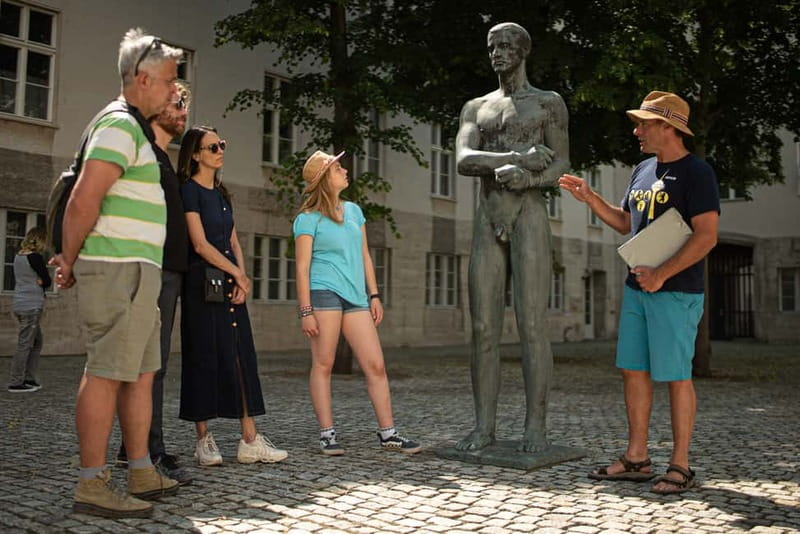
Not every building survives in a way that makes its former function obvious. That is where the live guide matters most. A strong guide can tell you what occupied the site, how the organization fitted into the Nazi state, and why its location in central Berlin mattered.
The best guides also avoid turning these places into theatrical props. Hannah has been praised for discussing sensitive subjects with care, while guides such as Mikhail and Martin have been singled out for answering questions and keeping the material approachable. You should expect serious history, not costume drama or sensational storytelling.
Albert Speer’s Germania plans
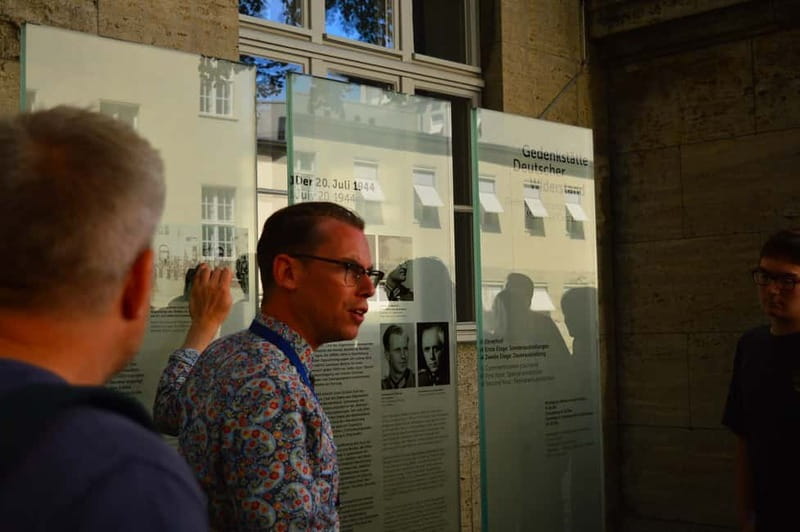
As you walk along parts of Hitler’s planned Germania axis, the scale of the Nazi architectural vision comes into view. Albert Speer designed plans for a transformed capital filled with monumental avenues and oversized state buildings.
The walk does not present Germania as a successful finished city. Instead, it shows you the political purpose behind the design. Architecture was meant to project power, permanence, and obedience. The proposed capital would have placed the Nazi state physically at the center of a remade Europe.
I like this section because it adds another layer to the tour. You are not only learning where events happened. You are seeing how the regime wanted people to experience power through stone, scale, ceremony, and controlled public space.
Since much of the planned axis was never completed, you need to listen closely and use your imagination. If you want intact Nazi architecture at every stop, this tour may feel less satisfying. If you enjoy learning how present-day streets relate to vanished plans, it is one of the more interesting parts.
More wartime history tours in Berlin:
- Berlin: Sachsenhausen Concentration Camp Memorial Tour
★ 4.7 · 3,716 reviews - Third Reich Berlin: Hitler and WWII Walking Tour
★ 5.0 · 3,301 reviews - Sachsenhausen Concentration Camp Bus Tour in English from Berlin
★ 5.0 · 1,962 reviews - Berlin: Sachsenhausen Concentration Camp Tour in English
★ 4.8 · 1,889 reviews
Standing above Hitler’s Führer Bunker
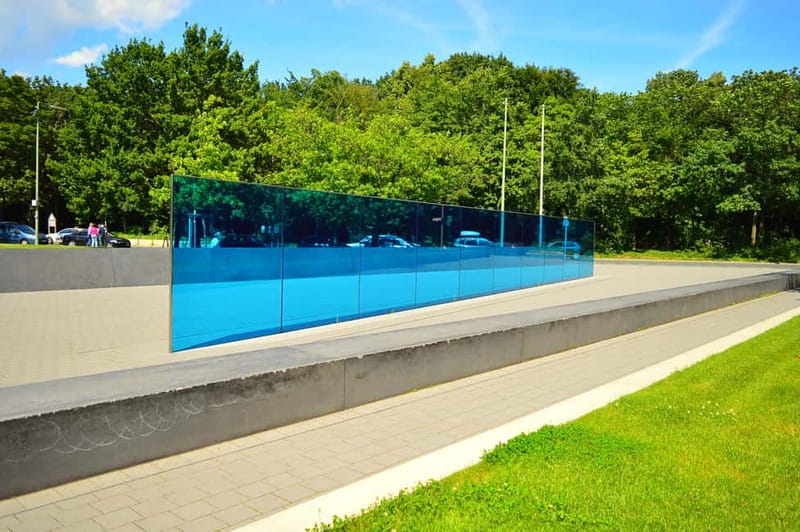
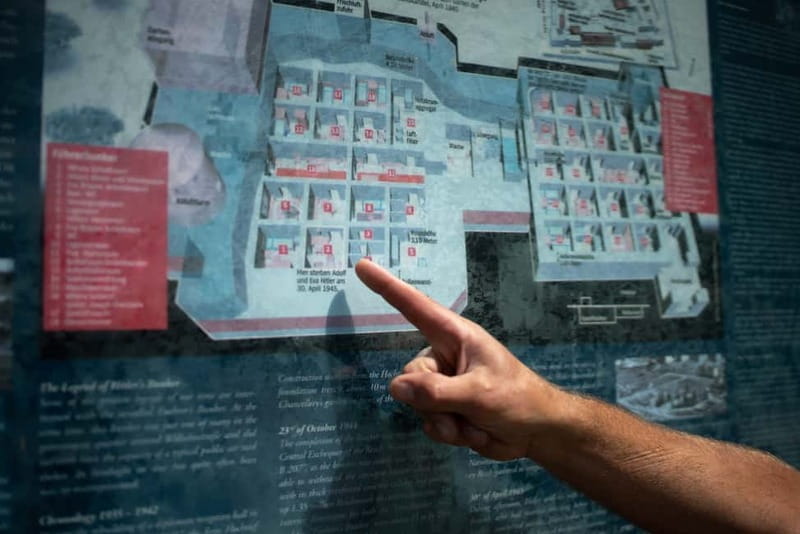
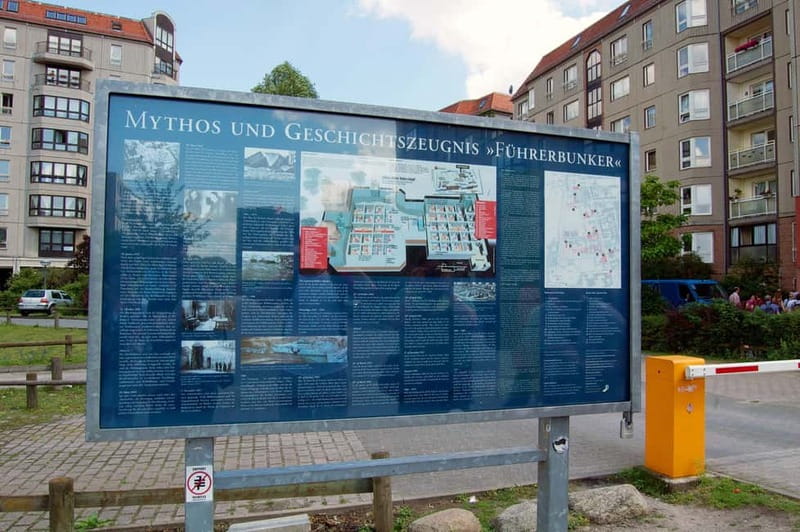
The bunker site is one of the tour’s most anticipated stops. Hitler’s underground headquarters once lay near what is now an ordinary urban area. The bunker was destroyed, and the location is marked without the kind of dramatic monument you might expect.
That plain setting is part of the lesson. The regime that aimed to dominate Europe ended in a cramped underground command post, surrounded by a city in ruins. Your guide describes Hitler’s final days, the collapse of the government, his suicide, and what happened to his remains.
This material needs careful treatment. The point is not to make Hitler into a tragic or fascinating hero. The point is to understand the last stage of a criminal dictatorship and the chaos left behind as Berlin fell.
A well-paced guide can explain the sequence without rushing. Will, Mikhail, and other guides have been praised for making complex political and military developments easy to follow. You can ask questions here, but the subject is emotionally heavy, and the group setting may not allow long personal discussion at every stop.
The Reichstag and the final battle
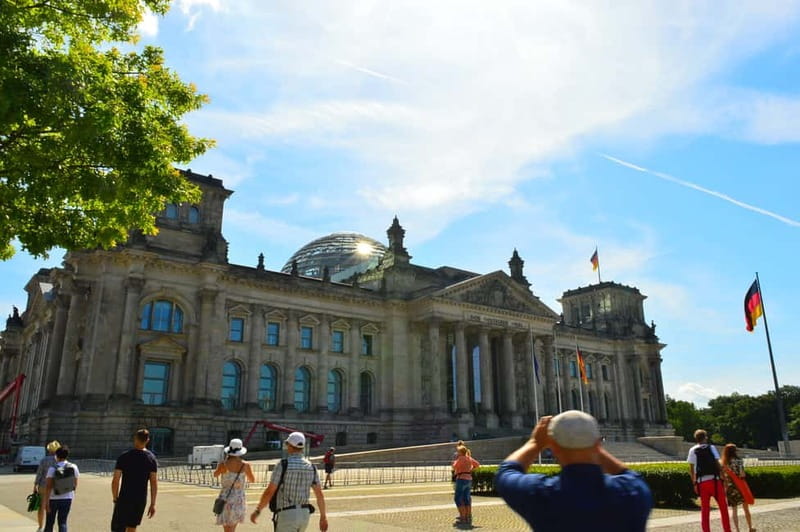
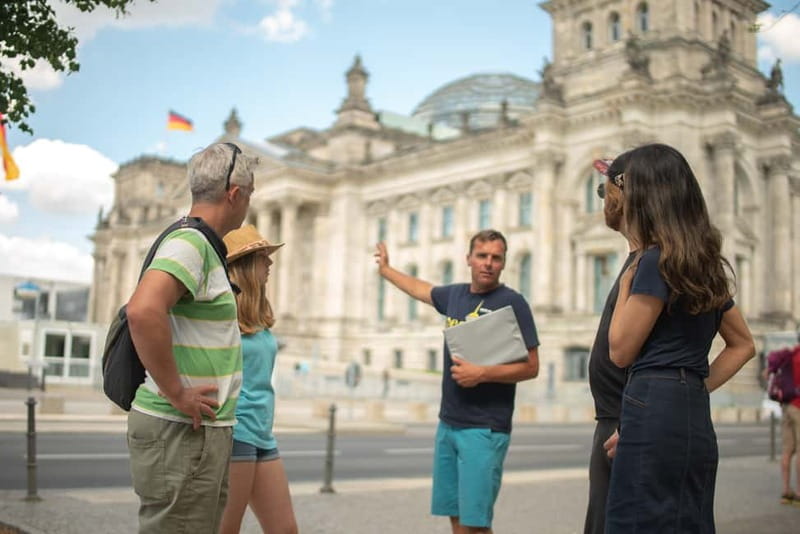
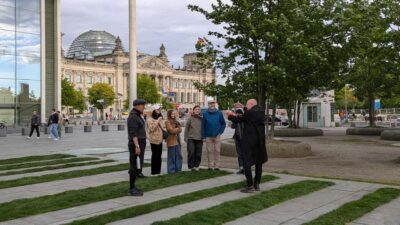
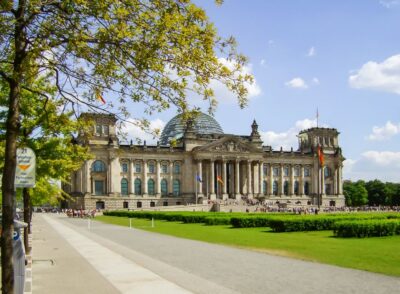
From the bunker area, the route continues toward the Reichstag. This building became one of the final major battle sites in the Soviet assault on Berlin. It also carries layers of later German history, so your guide may connect the Nazi period with the building’s role before and after the war.
The Reichstag is visually impressive, but this stop is not simply about taking a photograph. It helps you understand the final military struggle for Berlin and the symbolic importance of capturing the seat of Germany’s parliament.
The route then passes through the Brandenburg Gate. Under the Nazi regime, the gate served as a symbol of power and ceremony. During the Cold War, it became part of a divided city and a restricted border zone. That change gives the walk a useful wider frame: the same monument can carry very different meanings as governments rise and fall.
I appreciate this connection between the Second World War and the Cold War. Berlin’s twentieth-century story does not stop in 1945, and the Brandenburg Gate makes that clear without requiring a separate tour.
Topography of Terror and the evidence of state terror
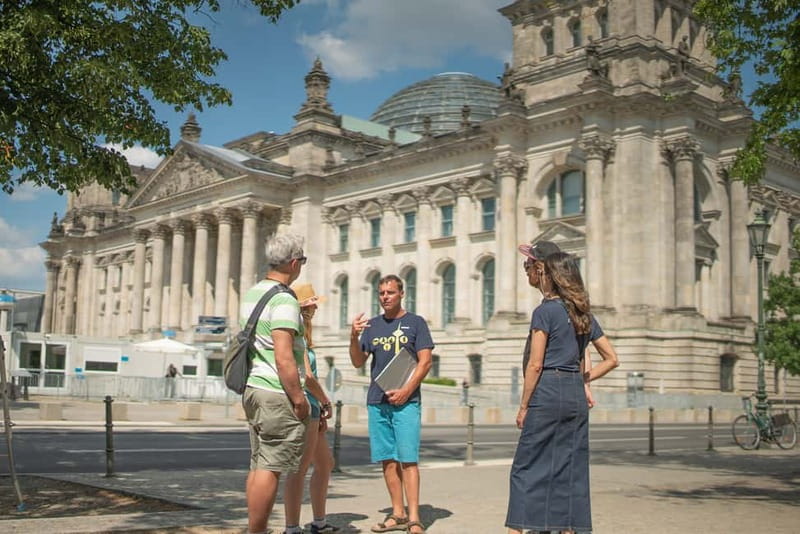
The Topography of Terror exhibit is one of the strongest parts of the route for readers who want documents and historical evidence alongside outdoor sites. It occupies the former area of the Gestapo and SS headquarters and examines the institutions responsible for Nazi persecution.
The exhibit gives context to the street locations you have already seen. It helps explain how police agencies, security offices, and the SS operated, rather than leaving you with only a list of names and buildings.
You should allow for the fact that this is a serious educational stop, not a light sightseeing break. The subject matter includes political repression and mass violence. I would pay close attention here, since the material can make the earlier discussion of ministries and headquarters much more concrete.
The exact amount of time available at each location depends on the guide and the group’s pace. This remains a walking tour, not a museum visit with unlimited time, so you may want to return to the Topography of Terror later if you want a slower look.
Ending beside Soviet tanks and howitzers
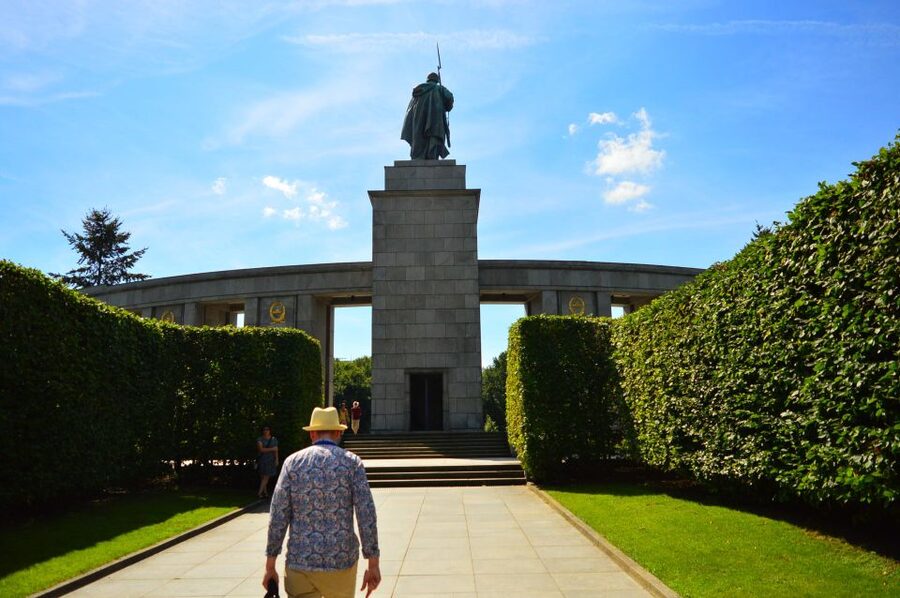
The tour ends back at the starting point after a stop at the Soviet War Memorial. The memorial is guarded by T-34 tanks and Red Army howitzers, making it one of the route’s most visually direct reminders of the battle for Berlin.
Here, the story shifts from Nazi power to Soviet victory and the enormous cost of defeating Germany. The memorial also raises questions about memory and politics. It commemorates Soviet soldiers while existing in the capital of the country that Nazi Germany attacked and devastated.
This is a strong final stop because it brings the route back to the physical end of the regime. You have followed the Nazi government from its ministries and propaganda offices to the bunker, the Reichstag, and the battlefield where Berlin fell.
The activity finishes at the original meeting point. That makes it easy to continue sightseeing or return to Friedrichstraße station afterward.
Guide quality and the question of group size
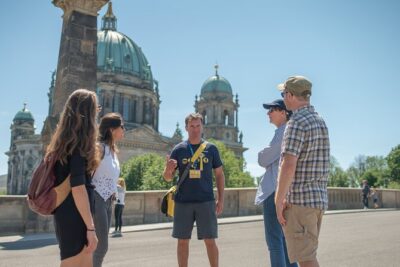
The guide is the heart of this experience. The route includes many locations where a plaque or map cannot tell the whole story. You need someone who can explain cause and effect, answer questions, and keep the chronology clear.
The guide team includes English, German, and Spanish speakers. Names praised for strong delivery include Hannah, Xavier, Jörg, Will, Mikhail, Jim, Rafa, Artie, Callum, Thomas, Jimmy, Mikey, Martin, Jasper, Tina, and Marty. Your guide will depend on the departure and date, so you should not book on the assumption that one specific person will lead your walk.
The strongest traits to look for are clear speaking, respect for difficult subjects, and an ability to answer questions. Those qualities come through repeatedly in the feedback about this tour. Guides have also been described as funny and approachable, which can help during a long, serious walk, though the tone remains educational.
Group size matters. One evaluation specifically found the group too large, while other comments praised the pace and the chance to ask questions. A private or small-group option is available if you want more direct contact with the guide or prefer a quieter setting.
Is $20 good value for three hours?
At $20 per person, this is a strong value if you want a guided introduction to central Berlin’s Nazi history. The price includes the walking tour and guide, and the route covers several major sites that would be difficult to connect into one coherent story on your own.
You are paying for interpretation more than admission tickets. The outdoor stops do not require a costly entry fee, and the most important service is the guide’s ability to explain what has disappeared, what remains, and how the locations relate.
I would not choose this as your only source of information about Nazi Germany. Three hours can introduce the subject, but it cannot cover every aspect of the dictatorship, the Holocaust, the war, or postwar memory. Pair it with time at the Topography of Terror or another museum if you want more documents and interior exhibits.
The flexible booking terms also help. You can reserve now and pay later, and cancellation is allowed up to 24 hours before the tour for a full refund. Those terms are useful if your Berlin schedule is still changing.
What to bring and how to handle the walk
Wear comfortable shoes and weather-appropriate clothing. The tour operates in rain or shine, and there is no promise of shelter throughout the route.
Bring your own water. One guide specifically advised carrying drinks, and there are no scheduled water or toilet breaks. That is easy to overlook when booking a three-hour city walk, especially if you are visiting in warm weather.
Stay attentive to the guide and avoid working on email during the walk. One person lost the group while trying to work, which is a useful warning. This tour depends on staying with the party as it moves between stops.
The standard tour starts and ends at Friedrichstraße station. Hotel pickup is only available with private options. If you choose private pickup, wait in your hotel lobby five minutes before the scheduled time and look for the yellow name tag.
Who will get the most from this tour?
I would recommend it to first-time Berlin visitors who want a clear route through the Nazi period without spending the entire day in a museum. It also suits history students, since the walk links political institutions, military planning, propaganda, and the final battle in a straightforward order.
Families with older children may find it useful if everyone is ready for difficult material. A guide such as Martin has been praised for making the subject clear to a student studying GCSE history. Still, parents should explain beforehand that the tour deals with suicide, dictatorship, persecution, and war.
It is less suitable if you want a relaxed sightseeing stroll or a tour focused only on architecture. The subject is grim, the walking is continuous, and the group may be too large for easy conversation.
Should you book the Berlin Third Reich tour?
Book it if you want a serious, well-organized introduction to Nazi Berlin, especially if you value a guide who can connect vanished headquarters with surviving landmarks. The $20 cost is modest for three hours of focused explanation, and the route covers the bunker site, Reichstag, Brandenburg Gate, Topography of Terror, Nazi ministries, and Soviet War Memorial.
Skip it if you dislike walking in all weather, need regular breaks, or want long, quiet visits inside museums. For most visitors with a serious interest in Berlin’s twentieth-century past, I would book the small-group option if available, carry water, wear good shoes, and keep the rest of the day flexible for more time at the exhibits.
FAQ
How long does the Berlin Third Reich, Hitler, and WWII Walking Tour last?
The tour lasts three hours. Starting times vary, so check availability for the date you want.
How much does the tour cost?
The listed price is $20 per person.
Where does the tour meet?
Meet outside Friedrichstraße train station, on the square between the station and the Tränenpalast, or Palace of Tears, at Reichstagufer 17, 10117 Berlin.
How do I identify the guide?
Guides wear a blue lanyard and yellow name tag and hold yellow umbrellas.
Where does the tour finish?
The activity ends back at the Friedrichstraße meeting point.
What languages are available?
The tour is available in English, German, and Spanish.
Is the tour offered in private or small groups?
Yes. Private and small-group options are available.
Does the tour operate in bad weather?
Yes. The tour operates rain or shine, so bring weather-appropriate clothing.
What should I bring?
Bring comfortable shoes, comfortable clothing, weather-appropriate layers, and your own water or other drink.
Can I cancel the tour for a refund?
You can cancel up to 24 hours in advance for a full refund. You can also reserve now and pay later.
More Walking Tours in Berlin
- Discover Berlin Half-Day Walking Tour
★ 5.0 · 9,624 reviews - Berlin: Discover Berlin Walking Tour
★ 4.9 · 5,998 reviews - Berlin: Hidden Backyards Guided Walking Tour
★ 4.8 · 5,360 reviews - Berlin: Alternative Berlin Walking Tour
★ 4.6 · 1,204 reviews
Just added around Berlin
- From Berlin: Gardens & Palaces of Potsdam Bike Tour★ 5.0 · 61 reviews
- Berlin: Battle for Seelow Heights WW2 tour -Clash of Titans★ 5.0 · 27 reviews
- From Berlin: Historical Gems of Potsdam Private Day Trip★ 4.4 · 4 reviews
- Berlin: Französischer Dom 360° Panorama & Crémant to go★ 3.9 · 5 reviews
- Explore Berlin Tour: History and Highlights★ 4.7 · 5 reviews
- Berlin: Evening Yacht Cruise with Aperitif & Dinner Upgrade★ 4.6 · 178 reviews
- Berlin: Expats in Berlin Comedy Show Ticket★ 4.7 · 182 reviews
- Berlin: The Epic Comedy Club Friday Night Showcase★ 4.8 · 28 reviews
Berlin Tours, compared.
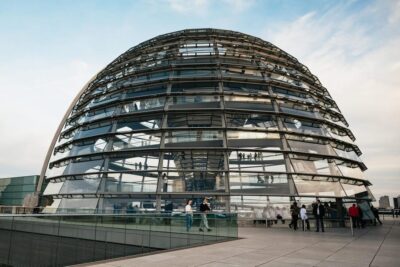
Reichstag, Dome and Government District Guided Tour
Read our review →
1-Hour City Tour by Boat with Guaranteed Seating
Read our review →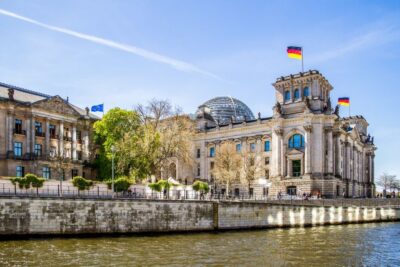
Reichstag, Plenary Chamber, Cupola & Government Tour
Read our review →
Browse the lists this tour appears in