
Review · BERLIN TOURS
Berlin: Third Reich and World War II Private Guided Tour
Berlin keeps its hardest history in plain sight. This three-hour private walk links the Reichstag, Holocaust Memorial, and Hitler’s Bunker site with the places where Nazi power rose, fought, and finally collapsed. Your guide supplies the links between bare pavement, memorials, and famous buildings.
I like the private format because you can ask direct questions and shape the discussion around your interests. I also like the route’s mix of major sights and sober memorial sites, especially the Topography of Terror and Soviet War Memorial. The main caution is the amount of walking, plus one serious record of a guide failing to appear. The published score is 3.9 from five ratings, so reliable confirmation matters.
Key points to know before booking
- Six major stops in three hours: The route covers the Brandenburg Gate area, Reichstag, Soviet War Memorial, Holocaust Memorial, Hitler’s Bunker site, Topography of Terror, and Checkpoint Charlie.
- A private multilingual guide: Tours are offered in English, German, Russian, French, Spanish, and Italian, with Sven praised by name for punctuality and professionalism.
- A serious subject, not a light sightseeing walk: Expect difficult material about Nazi rule, war, persecution, and Berlin’s destruction.
- Mostly an outdoor walking experience: Comfortable shoes, water, and weather-ready clothing are essential.
- No attraction admissions included: The value rests mainly in the guide’s explanation and private attention, not included entry tickets.
- Check mobility details carefully: The tour is described as wheelchair accessible in one place but also unsuitable for wheelchair users and people with mobility impairments elsewhere.
Why this Berlin history walk matters
Many Berlin sightseeing routes show you famous buildings. This one asks you to read the city as evidence. The Reichstag points to modern German democracy, the Holocaust Memorial confronts the murder of Europe’s Jews, and the former bunker site brings the final days of Hitler’s regime into the middle of an ordinary city street.
That contrast is the point. You will not be touring a preserved Nazi headquarters or entering Hitler’s bunker. Instead, you move between buildings, open spaces, memorials, and information sites while a guide explains what happened in each place and why Berlin still marks it so carefully.
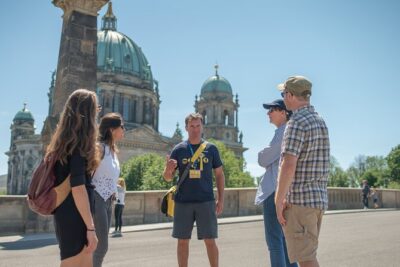
I find a private tour especially useful for this subject. A good guide can slow down when you need context, clarify terms, and answer questions without having to manage a large group. You also avoid the flat, disconnected feeling that can come from seeing several monuments without understanding how they relate.
Still, three hours is a tight window. You will get an organized introduction rather than a full study of the Third Reich or World War II. If you want museum interiors, long exhibit visits, or time to read every panel, plan a separate visit after the walk.
More WWII History Tours in Berlin
- Berlin: Third Reich and Cold War 2 Hour Walking Tour
★ 4.9 · 6,830 reviews - Berlin: Sachsenhausen Concentration Camp Tour in English
★ 5.0 · 5,711 reviews - Berlin’s Best: 2 Hour Walking Tour Third Reich and the Cold War
★ 5.0 · 5,486 reviews
Starting beside the Brandenburg Gate
The meeting point is next to Hotel Adlon Kempinski Berlin, beside the Brandenburg Gate. This is a practical place to begin because it is easy to identify and places you immediately in the center of Berlin’s government district.
The gate itself is more than a photo stop. It helps frame the political story of Berlin, from imperial rule to division and reunification. Your guide uses the opening area to set the stage for the rise and fall of the Third Reich and the city’s role during the war.
Arrive ready to walk rather than expecting a long introduction indoors. Bring water and wear shoes you can use for several hours on city streets. The route can change because of weather, season, timing, or your group’s interests, so the listed order should be treated as a strong plan rather than an absolute script.
The Reichstag and the question of German democracy
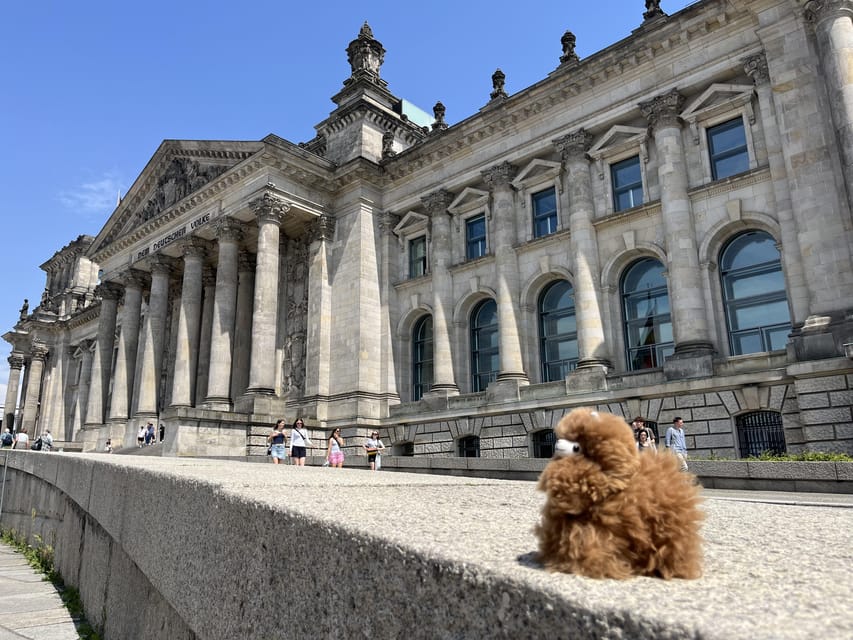
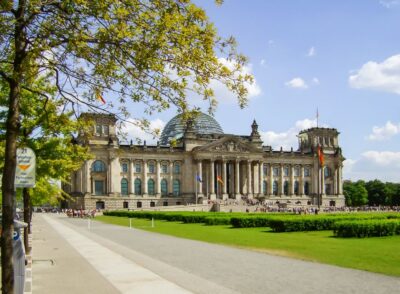
The Reichstag is one of the most useful first stops because it connects the past to present-day Germany. The building is tied to the political history of the Weimar Republic and later became a powerful symbol after the war and the division of Berlin.
A guide can make this stop more than an exterior photograph by explaining how democratic government was weakened and how the Nazi state gained control. You should expect a guided explanation of the site, not a guaranteed visit inside the building. Entrance fees are not included, and the tour description does not promise access to interior areas.
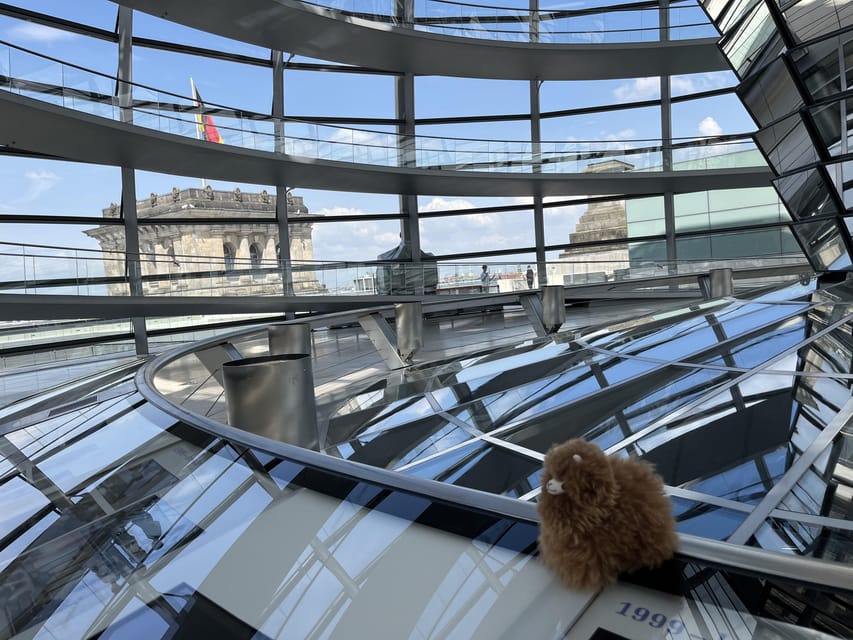
That distinction matters when you compare prices. If you are hoping to see the dome or enter the Reichstag, ask before booking. The strength of this stop is its setting within the wider story, not necessarily an included admission.
The Soviet War Memorial in Tiergarten
The Soviet War Memorial in Tiergarten adds another layer to Berlin’s wartime story. Here, the focus shifts toward the defeat of Nazi Germany and the Soviet role in the final phase of the war.
This stop is valuable because it prevents the tour from becoming a narrow biography of Hitler. The war was fought across Europe, and Berlin’s monuments also reflect the armies that reached the city and the enormous human cost of the fighting.
Your guide will provide the historical explanation at the memorial. You should expect an outdoor stop, with time affected by the group’s pace and the three-hour schedule. It is another reason to dress for the forecast. Berlin weather can make an otherwise manageable walk feel much longer.
More wartime history tours in Berlin:
- Berlin: Sachsenhausen Concentration Camp Memorial Tour
★ 4.7 · 3,716 reviews - Third Reich Berlin: Hitler and WWII Walking Tour
★ 5.0 · 3,301 reviews - Sachsenhausen Concentration Camp Bus Tour in English from Berlin
★ 5.0 · 1,962 reviews - Berlin: Sachsenhausen Concentration Camp Tour in English
★ 4.8 · 1,889 reviews
The Holocaust Memorial and the limits of a quick visit
The Memorial to the Murdered Jews of Europe is one of Berlin’s most recognizable sites. Its field of concrete blocks is simple in form but difficult to take in as a casual monument. The experience changes as you walk around and through the rows, with the ground and sightlines shifting around you.
This is likely to be one of the tour’s most serious pauses. Your guide can explain what the memorial represents, how it fits into Germany’s process of remembrance, and why the site is placed so close to the government center and Brandenburg Gate.
Three hours does not allow unlimited time here. If the memorial affects you and you want more, the underground information center may deserve a separate visit. The tour information does not promise entry there, and attraction admissions are not included.
Please treat the memorial with care. Photography is allowed, but flash photography is not permitted inside certain landmarks. Even outdoors, this is a place where respectful behavior matters more than collecting a quick picture.
Hitler’s Bunker site, without the movie version
The former location of Hitler’s bunker is a useful stop precisely because so little of the bunker is visible. You should not expect an underground tour, preserved rooms, or dramatic ruins. The site is associated with the final days of the Nazi leadership, but the physical remains are not presented as a conventional attraction.
A guide gives this otherwise ordinary urban location its meaning. You can learn how the Nazi regime ended, what happened in Berlin during the final battles, and why the bunker site has been handled with restraint.
I consider this one of the route’s most interesting stops for visitors who want history rather than spectacle. It also calls for realistic expectations. If you have seen fictionalized bunker scenes in films, the actual location may feel plain. That plainness is part of the lesson: the city has grown around a place tied to terrible decisions, but it does not turn the site into a shrine.
The Topography of Terror and Nazi persecution
The Topography of Terror is among the strongest stops for understanding how Nazi power operated. The site is connected with the institutions that carried out repression, including the machinery of political terror and persecution.
A guided visit here can help you move beyond the familiar names and symbols of the Nazi period. The important question is not only what happened at the end of the war, but how an authoritarian system controlled people, targeted groups, and used state power to carry out its crimes.
The route description promises a guided stop, but it does not include entrance fees or guarantee a full indoor museum visit. Ask your guide how much time is planned there and which sections are available on your date. If you want a detailed museum experience, set aside extra time after the tour.
For me, this stop gives the walk its clearest educational purpose. It connects ideology with administration and action. That helps you understand the period as a system, not just a sequence of famous speeches, battles, and personalities.
Finishing at Checkpoint Charlie
The tour ends at the Wall Museum and Checkpoint Charlie. This brings the route beyond World War II into the divided city that followed.
Checkpoint Charlie is tied mainly to the Cold War, but it makes sense as a finish. Berlin’s wartime destruction did not end the city’s political story. The capital was divided, occupied, and turned into a front line between competing powers.
The ending is also practical. You are left in a central area with museums, restaurants, and transport options nearby, though the tour itself does not include transportation to or from the activity. The exact final stop may vary, so confirm the meeting and ending details when you book.
Do not confuse this final section with a full Cold War tour. The main subject is the Third Reich and World War II. Checkpoint Charlie works as a short bridge into the later history of Berlin, not as a complete treatment of the Berlin Wall.
What three hours really gives you
The route includes a lot for its length. You will cover several major sites, but some stops will be concise. The guide’s skill matters more here than the number of locations.
A private group can make the schedule more flexible. You might spend longer at the Holocaust Memorial or Topography of Terror if that suits your interests, then move more quickly through a photo stop. The guide can also explain terms and events at the level you need.
The tradeoff is depth. You are paying for a focused walk with a professional guide, not a day-long history course. If you already know the broad story, the private questions and location-based explanations may be the main benefit. If you are new to Berlin’s history, the tour can give you a useful framework for later museum visits.
The listed price is $224 per person. That is a substantial amount for three hours, especially since meals, drinks, transportation, and attraction admissions are not included. The private format makes the cost easier to justify for a small group that wants personal attention and several languages to choose from. It is harder to justify if you mainly want photographs or a quick orientation.
Ask yourself what you are buying. You are buying a guide’s time, route planning, and ability to connect locations. You are not buying a package of admissions or a long indoor museum program.
Guide quality and the reliability question
The guide is the key part of this experience. The tour offers English, German, Russian, French, Spanish, and Italian, which is helpful if you want to discuss difficult material in a language you understand well.
Sven is specifically praised for being punctual and professional, and a Spanish-language account describes a dynamic, informative walk with a pleasant guide who explained the monuments and places in Spanish. Those details suggest that the best version of this tour depends heavily on the individual guide assigned to your booking.
There is also a serious warning. One verified booking from January 2025 reports that the guide did not show up and requests a full refund. The overall published score of 3.9 from five ratings is not strong enough for me to ignore that problem.
I would confirm the appointment close to the tour date and keep the provider’s contact details handy. That does not guarantee a perfect day, but it is sensible protection when a no-show would cost you valuable Berlin time. The cancellation policy allows a full refund when you cancel at least 24 hours in advance, and the reserve-now, pay-later option keeps payment flexible.
Walking, weather, and accessibility
This is a walking tour with a significant amount of time outside. Bring comfortable shoes, water, a camera, and clothing suited to the forecast. Food and drinks are not allowed during the tour, so eat beforehand and plan a meal after the finish.
Large bags or luggage may be awkward because of the walking. Leave heavy items elsewhere if you can.
The accessibility information needs clarification. The activity is marked wheelchair accessible in one section, but it is also listed as unsuitable for wheelchair users and people with mobility impairments. Those statements conflict. Contact the provider before booking if this affects you, and ask about the exact route, surfaces, rest opportunities, and access to any indoor site.
Children under 10 are not considered suitable for this experience. The subject matter is serious, and the walking pace may also be demanding for young children.
Who will get the most from this tour?
I would choose this for an adult or older child who wants a clear introduction to Berlin’s Nazi-era history and prefers asking questions in a private setting. It is also a good fit for a couple, family, or small group that wants a guide in a particular language.
The tour suits you if you value context more than entry tickets. You will see important places, but the meaning comes from the explanations between them.
I would choose something else if you want a relaxed sightseeing walk, a full museum visit, or guaranteed interior access to the Reichstag or other sites. I would also avoid booking without clarification if mobility access is essential.
Should you book the Berlin Third Reich tour?
Book it if you want a focused, private introduction to Berlin’s Nazi past and you understand that the experience is mainly an outdoor walking tour. The route covers an unusually useful set of locations, and the multilingual format can make difficult subjects easier to discuss.
At $224 per person, I would book only after confirming the guide, language, meeting time, and exact access arrangements. Sven’s punctual, professional feedback is encouraging, but the reported no-show means reliability deserves attention.
If you do book, arrive beside Hotel Adlon Kempinski with good shoes, water, and realistic expectations. Come ready for a serious history lesson in places that often look ordinary at first glance. That is where this tour can be most effective.
FAQ
How long is the Berlin Third Reich and World War II private tour?
The tour lasts three hours. Starting times depend on availability.
Where does the tour begin?
The meeting point is next to Hotel Adlon Kempinski Berlin, near the Brandenburg Gate.
Where does the tour finish?
It finishes at the Wall Museum and Checkpoint Charlie, although specific landmarks and final details may vary.
Which languages are available?
The live guide may lead the tour in English, German, Russian, French, Spanish, or Italian.
Are entrance fees, food, drinks, or transportation included?
No. Attraction entrance fees, meals, drinks, and transportation to or from the activity are not included.
Is the tour suitable for wheelchair users?
The information is conflicting. One section says the activity is wheelchair accessible, while another says it is unsuitable for wheelchair users and people with mobility impairments. Contact the provider before booking to confirm the route and access conditions.
Just added around Berlin
- From Berlin: Gardens & Palaces of Potsdam Bike Tour★ 5.0 · 61 reviews
- Berlin: Battle for Seelow Heights WW2 tour -Clash of Titans★ 5.0 · 27 reviews
- From Berlin: Historical Gems of Potsdam Private Day Trip★ 4.4 · 4 reviews
- Berlin: Französischer Dom 360° Panorama & Crémant to go★ 3.9 · 5 reviews
- Explore Berlin Tour: History and Highlights★ 4.7 · 5 reviews
- Berlin: Evening Yacht Cruise with Aperitif & Dinner Upgrade★ 4.6 · 178 reviews
- Berlin: Expats in Berlin Comedy Show Ticket★ 4.7 · 182 reviews
- Berlin: The Epic Comedy Club Friday Night Showcase★ 4.8 · 28 reviews
Berlin Tours, compared.
Reichstag, Dome and Government District Guided Tour
Read our review →
1-Hour City Tour by Boat with Guaranteed Seating
Read our review →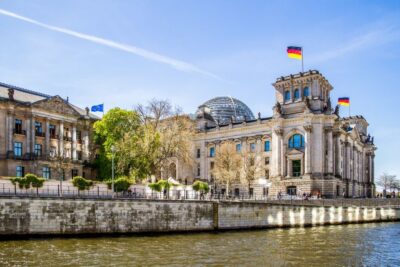
Reichstag, Plenary Chamber, Cupola & Government Tour
Read our review →
Browse the lists this tour appears in