
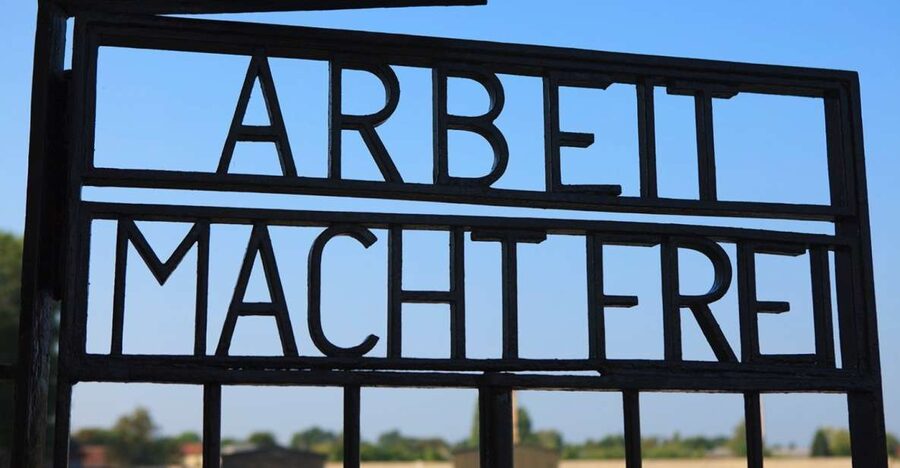
Review · BERLIN TOURS
Berlin: Sachsenhausen Memorial 6-Hour Tour in Spanish
Sachsenhausen is not a sightseeing stop in the usual sense. It is a place of murder, forced labor, and state terror, first under the Nazis and later under Soviet rule. This six-hour tour takes you from central Berlin to the memorial with a Spanish-speaking guide who explains what happened without softening the facts.
I like two things here: the 50-minute train ride keeps the trip simple, and the tour connects the camp’s Nazi past with its later Soviet use. I also like the focus on A Tower and Station Z, two locations that help you understand how the camp operated.
The main drawback is the outdoor setting. You will walk and stand for much of the visit, often in cold, wind, or rain, and there is no shop at Sachsenhausen. Bring food, water, and suitable clothing.
Key points at a glance
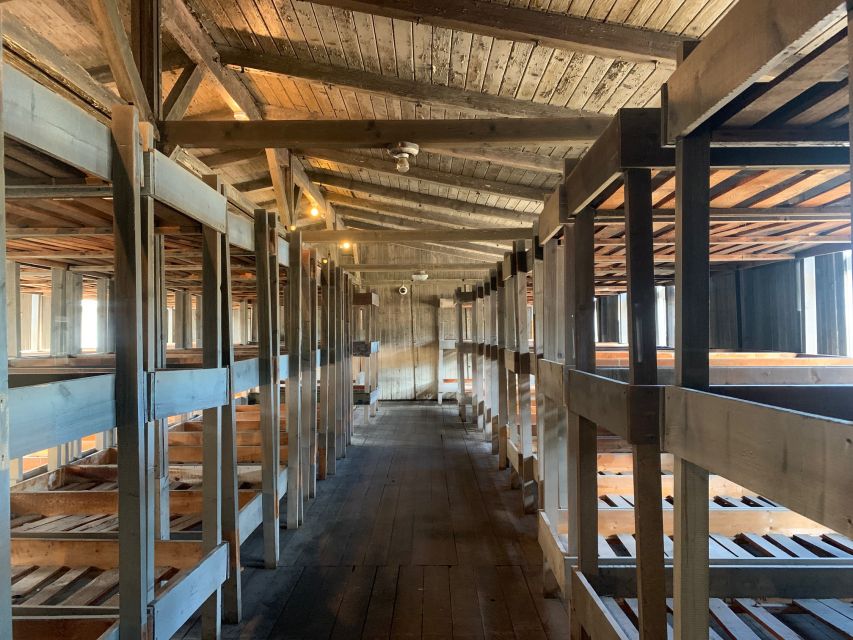
- Station Z: See the 1942 killing facility built to murder people quickly and systematically.
- A Tower: Learn how roll calls helped control prisoners and organize camp life.
- Spanish-language guidance: Guides including Héctor and Helena have led recent departures, with clear explanations of the camp’s legal and administrative machinery.
- Two eras of repression: The memorial covers both the Nazi concentration camp and the Soviet special camp that followed.
- Simple departure from Alexanderplatz: Meet beside the TV Tower, then take a train for about 50 minutes to the northern edge of Berlin.
- Bring your own refreshments: Sachsenhausen has no shop, so snacks and drinks matter during a six-hour outing.
Why Sachsenhausen is worth a full half-day
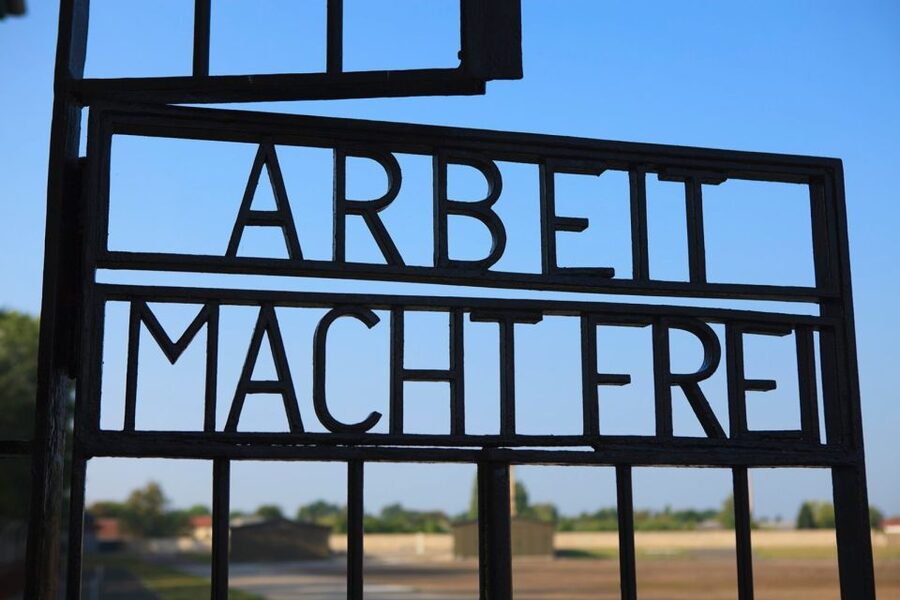
Many Berlin visitors learn about Nazi Germany through museums in the city center. Sachsenhausen gives that subject physical scale. You can see the former camp area, the places connected to roll calls and executions, and the museum displays that explain how the system worked.
The camp was close enough to Berlin to serve as a model site. It also became the administrative center for other Nazi concentration camps. More than 200,000 people passed through Sachsenhausen, and at least 50,000 died.
Those figures are difficult to grasp on a page. Walking through the memorial helps you connect the numbers to a controlled place with rules, work details, punishment, killing facilities, and paperwork. The Spanish guide is important because the subject is complex, and the tour uses survivor accounts, photographs, and official documents rather than relying only on a spoken overview.
This is a serious educational visit. It is not designed to entertain you, and that is precisely why the guide’s tone matters. The strongest departures explain the system directly, including the legal structures that allowed persecution to become routine government policy.
More WWII History Tours in Berlin
- Berlin: Third Reich and Cold War 2 Hour Walking Tour
★ 4.9 · 6,830 reviews - Berlin: Sachsenhausen Concentration Camp Tour in English
★ 5.0 · 5,711 reviews - Berlin’s Best: 2 Hour Walking Tour Third Reich and the Cold War
★ 5.0 · 5,486 reviews
Meeting at Alexanderplatz and taking the train
The meeting point is easy to identify, but Alexanderplatz is busy, so read the instructions carefully. Look for a green flag marked tours en español beside the only entrance to the Fernsehturm, the Berlin TV Tower. It is between the TV Tower and Alexanderplatz train station, next to Espresso House.
The train ride to the northern outskirts of Berlin takes about 50 minutes. You need a public transport ticket covering zones ABC. That ticket is not included in the tour price, so plan for it before you meet the guide.
I like this arrangement because the trip begins in a central, familiar part of Berlin rather than at a difficult suburban meeting point. The train also gives you time to settle into the subject before arriving. Still, allow enough time to find the flag, especially if you are unfamiliar with Alexanderplatz.
The tour lasts six hours in total. That includes the journey from Berlin and the visit itself, so you should treat this as a major half-day commitment, not a quick side trip. If you have only one free morning in Berlin, this may not fit comfortably. If you want to understand the memorial properly, the time is justified.
A Tower and the mechanics of control
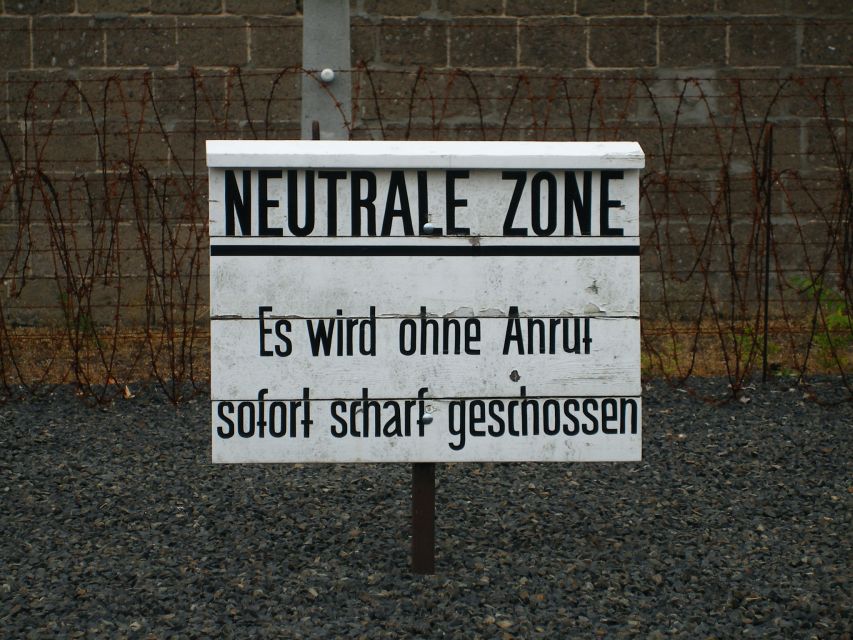
A Tower marks the entrance area and the former roll-call setting. Roll calls were not a minor administrative task. They were one of the ways the camp authorities counted, controlled, punished, and publicly humiliated prisoners.
Your guide uses this area to explain daily camp life and the work prisoners were forced to perform. The value of a live guide becomes clear here. A preserved building or open space can look bare, but the explanation connects it to the people who were made to stand there and to the larger system around them.
The tour also covers the origins of Sachsenhausen and why its location near Berlin mattered. Because the camp was used as a model and administrative center, its story reaches beyond the site itself. You are learning not only what happened to prisoners in one camp, but also how the Nazi camp network was organized.
Expect the subject to become more disturbing as the tour proceeds. This is not a place where you can keep a comfortable emotional distance at every stop. That is part of its purpose, but it also means you should consider whether younger children or anyone sensitive to descriptions of torture and mass killing would find the visit manageable.
Station Z and the most difficult part of the visit
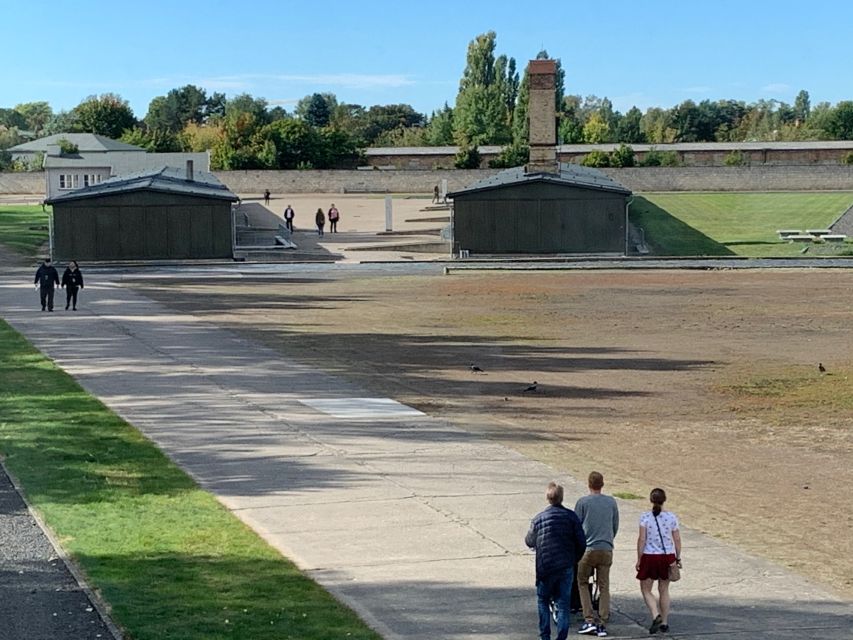
Station Z was added in 1942 to kill victims quickly and clinically. The name can sound impersonal, which reflects the cold administrative character of the killing process. At the site, the guide explains what happened there and why it became one of Sachsenhausen’s most haunting locations.
This is likely to be the hardest part of the tour. You may find that the physical remains and exhibits are less visually dramatic than expected, yet the facts make the place more powerful, not less. The tour gives context through personal accounts, photographs, and official records.
I value this approach because it avoids turning a killing site into a spectacle. The point is to understand the machinery of murder and the people trapped inside it. Station Z is not treated as a grim photo opportunity. It is presented as evidence of a deliberate process carried out by institutions and individuals.
Give yourself permission to move slowly and listen. You do not need to fill every quiet moment with conversation or photographs. A respectful visit means paying attention to the guide and to the memorial’s purpose.
More wartime history tours in Berlin:
- Berlin: Sachsenhausen Concentration Camp Memorial Tour
★ 4.7 · 3,716 reviews - Third Reich Berlin: Hitler and WWII Walking Tour
★ 5.0 · 3,301 reviews - Sachsenhausen Concentration Camp Bus Tour in English from Berlin
★ 5.0 · 1,962 reviews - Berlin: Sachsenhausen Concentration Camp Tour in English
★ 4.8 · 1,889 reviews
Museum exhibits and survivor accounts
Sachsenhausen includes a museum and several exhibits. These displays add the human detail that open spaces alone cannot provide. Photographs, official documents, and survivor accounts help explain who the prisoners were, what they endured, and how the camp functioned.
The work performed by prisoners is another important part of the tour. Forced labor was central to the camp system, and the guide explains how labor, punishment, administration, and survival fit together. You will come away with a clearer idea of how violence was built into ordinary routines.
A Spanish-language tour can make a real difference here. Museum displays may include material in several languages, but a Spanish-speaking guide can explain terms and connections as you encounter them. The guide can also answer questions in Spanish rather than leaving you to piece together an unfamiliar subject in a second language.
Recent departures have included guides named Héctor and Helena. Héctor has been especially direct in explaining the subject, and the tour can be emotionally demanding even when the weather is worse than expected. Do not choose this outing for a light introduction to Berlin. Choose it because you want a serious explanation in Spanish.
From Nazi camp to Soviet special camp
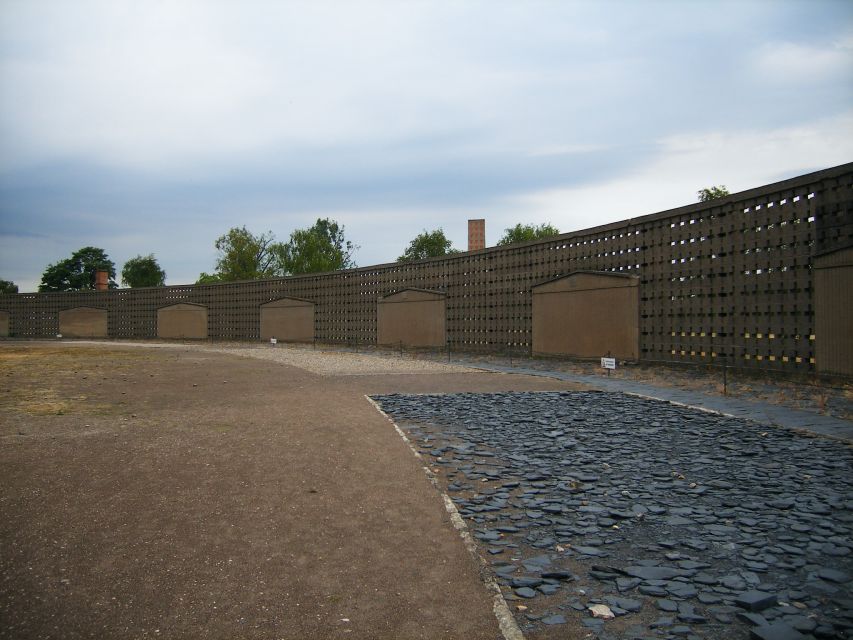
One of the most useful parts of the visit is the second chapter. After Hitler’s fall, the Soviet authorities used Sachsenhausen as a gulag for their own prisoners. The memorial therefore deals with two different systems of political imprisonment on the same site.
The Soviet period is often left out when people discuss Nazi camps, but it matters here. The later use of Sachsenhausen does not erase the Nazi crimes, and it should not be used to blur the differences between the two periods. Instead, it shows how a place built for repression continued to hold prisoners after the war.
You also visit the GDR memorial. This adds another layer, since the site was later preserved and interpreted under East German rule. The memorial’s changing purpose helps you think about how governments remember, explain, and sometimes frame difficult parts of the past.
For me, this broader view is one of the tour’s best features. You are not given a single, tidy story that ends in 1945. You see how Sachsenhausen remained tied to political power and imprisonment afterward.
What the six-hour schedule feels like
Six hours sounds long until you consider the train journey, the size of the memorial, the museum material, and the number of subjects covered. You need time to move between locations, listen to the guide, and absorb what you are seeing.
The pace is likely to feel serious rather than rushed. The tour covers the camp’s origins, prisoner life, forced work, A Tower, Station Z, museum exhibits, the Soviet period, and the GDR memorial. Trying to compress all of that into two or three hours would leave major gaps.
The practical cost is energy. You may spend long periods outdoors, and the memorial does not have a shop where you can buy a sandwich or drink. Pack snacks and water before leaving Berlin. Wear comfortable shoes and check the weather, particularly in winter. A December visit can be very cold and windy, and the exposed setting may make the subject feel even more physically immediate.
The activity is listed as wheelchair accessible. Because the tour takes place across a historic memorial site, you should still confirm any specific access needs when booking. The supplied information supports wheelchair access, but it does not describe every surface or route in detail.
Is the $41 price good value?
At $41 per person, the tour is reasonably priced for a six-hour guided trip from Berlin. The fee includes the full Sachsenhausen tour with a Spanish-speaking guide and the €3 Concentration Camp Foundation surcharge. You must pay separately for the ABC public transport ticket.
The value is not in the number of attractions checked off. It comes from having a guide explain a complicated memorial in your language, connect the Nazi and Soviet periods, and point out why A Tower and Station Z matter. If you visited without preparation, you could still see the site, but you might miss the administrative and historical connections that make Sachsenhausen important.
A good guide also helps you handle the emotional weight of the visit. The strongest feedback about Héctor and other guides focuses on direct explanations and clear subject knowledge. One useful practical criticism concerns communication after booking, with a suggestion that a direct contact number would make meeting arrangements easier if app messages, calls, or emails fail. I would save the meeting details and arrive early rather than depend on last-minute contact.
The price makes the tour especially appealing if you are not comfortable organizing the train trip and museum visit yourself. Independent visitors can choose their own pace, but the guided option gives you a framework and a Spanish-speaking interpreter for a difficult subject.
Who should book this Spanish tour?
You should book it if you want a serious account of Sachsenhausen and prefer to discuss the subject in Spanish. It suits adults and older students interested in Nazi Germany, Soviet repression, memorials, and the way political systems use law and administration to control people.
It is also a strong choice for a first visit to Berlin if you want context beyond palaces, museums, and nightlife. The outing will not feel easy, but it may become one of the most meaningful parts of your time in the city.
You may want to skip it if you are looking for a relaxed day out, dislike long train trips, or have little tolerance for outdoor walking in poor weather. You should also think carefully before bringing children who may not be ready for the subject. The tour does not hide the worst parts of the camp’s story.
Book with the right expectations: this is a memorial visit, not a standard guided attraction. Its success depends heavily on your guide, and the high rating of 4.8 from 549 ratings suggests that the Spanish-language guiding has worked well for many bookings. The individual guide matters, so if you are assigned Héctor or Helena, expect a direct and personal presentation rather than a neutral audio-guide style.
Practical advice before you go
Bring a valid ABC transport ticket, snacks, water, and clothing suited to the forecast. You will not find a shop at Sachsenhausen, and the six-hour schedule is too long to leave food to chance.
Arrive at the Alexanderplatz meeting point early. Find the green Spanish tours flag beside the TV Tower entrance, between the tower and the train station and next to Espresso House. This is more precise than simply searching for Alexanderplatz, which covers a large area.
Keep the day open after the tour if you think the subject may affect you. The visit deals with mass death, forced labor, and political imprisonment. You may want quiet time afterward rather than another packed museum schedule.
Free cancellation is available up to 24 hours before departure, and you can reserve now and pay later. Those terms help if your Berlin plans are still shifting, but they do not replace the need to check the start time and transport details before booking.
Final verdict: book it for depth, not entertainment
I recommend this tour if you want Sachsenhausen explained in Spanish and you value context as much as seeing the site. The combination of a central meeting point, a manageable train ride, live guidance, museum exhibits, survivor material, Station Z, and the Soviet-era memorial gives you a serious and useful visit.
The main cautions are clear: bring food, prepare for outdoor weather, buy the ABC ticket, and allow the full six hours. If you are ready for a sobering experience, the $41 fee is fair. If you want a gentle introduction to Berlin, choose something else.
FAQ
Where does the Sachsenhausen tour meet in Berlin?
Meet beside the front of the Alexanderplatz TV Tower, next to the only entrance to the Fernsehturm. The meeting point is between the TV Tower and Alexanderplatz train station, beside Espresso House, near a green flag marked tours en español.
How long does the tour last?
The tour lasts six hours, including the journey from central Berlin and the visit to Sachsenhausen.
How long is the train ride to Sachsenhausen?
The train ride from Berlin to the northern outskirts takes about 50 minutes.
Do I need a public transport ticket?
Yes. You need a ticket covering public transport zones ABC, and that ticket is not included in the tour price.
Is the tour conducted in Spanish?
Yes. The tour includes a live Spanish-speaking guide. Recent departures have included guides named Héctor and Helena.
What are the main places visited at Sachsenhausen?
The tour covers A Tower, Station Z, the museum and other exhibits, and the GDR memorial. It also explains the camp’s Nazi and Soviet periods.
Is food available at Sachsenhausen?
There is no shop at the memorial site. Bring snacks and drinks with you.
Is the tour wheelchair accessible?
The activity is listed as wheelchair accessible. The supplied details do not specify every route or surface at the memorial, so confirm any particular access needs before booking.
Can I cancel the tour?
You can cancel up to 24 hours in advance for a full refund. You can also reserve now and pay later.
Just added around Berlin
- From Berlin: Gardens & Palaces of Potsdam Bike Tour★ 5.0 · 61 reviews
- Berlin: Battle for Seelow Heights WW2 tour -Clash of Titans★ 5.0 · 27 reviews
- From Berlin: Historical Gems of Potsdam Private Day Trip★ 4.4 · 4 reviews
- Berlin: Französischer Dom 360° Panorama & Crémant to go★ 3.9 · 5 reviews
- Explore Berlin Tour: History and Highlights★ 4.7 · 5 reviews
- Berlin: Evening Yacht Cruise with Aperitif & Dinner Upgrade★ 4.6 · 178 reviews
- Berlin: Expats in Berlin Comedy Show Ticket★ 4.7 · 182 reviews
- Berlin: The Epic Comedy Club Friday Night Showcase★ 4.8 · 28 reviews
Berlin Tours, compared.
Reichstag, Dome and Government District Guided Tour
Read our review →
1-Hour City Tour by Boat with Guaranteed Seating
Read our review →
Reichstag, Plenary Chamber, Cupola & Government Tour
Read our review →
Browse the lists this tour appears in