
Review · BERLIN TOURS
Berlin: Hitler and the Third Reich – a private walking tour
Berlin’s darkest story is told through ordinary streets, empty plots, memorials, and buildings that still serve the city. This private walk connects the Nazi government district, the former SS and Gestapo headquarters, the Holocaust Memorial, and the spot where Hitler spent his final days.
I like the small private format, which gives you a better chance to ask direct questions. I also like the use of old photographs by guide Stefan Knoll, which can help you see how these sites looked before the war and after the city’s destruction. The main drawback is pace: two hours is enough for an excellent overview, but not enough for long visits inside museums or a full study of every memorial.
Key points at a glance
- Hitler’s bunker site: See the unmarked area where the Führerbunker once stood and learn how the Nazi regime ended there.
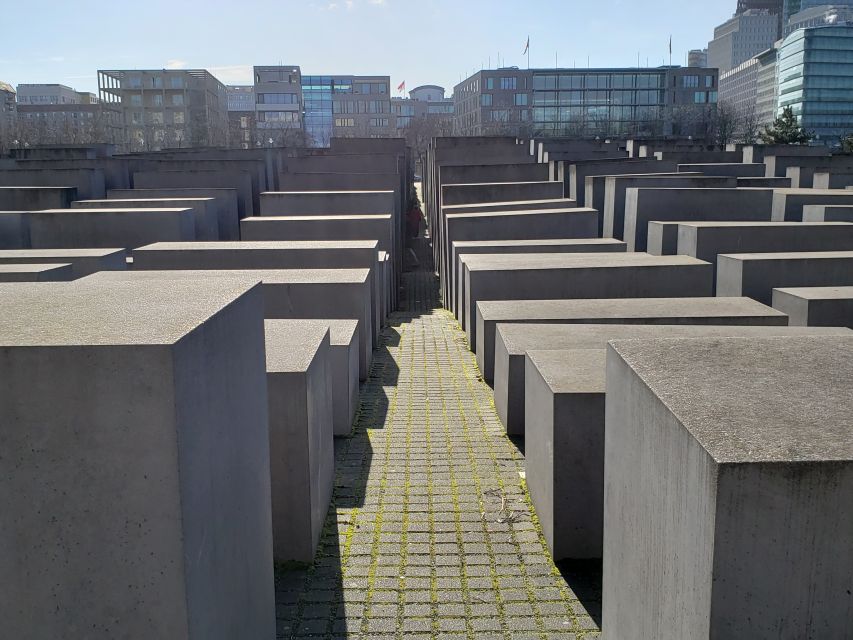
- 2,710 concrete steles: Walk through Berlin’s Memorial to the Murdered Jews of Europe, a place that feels different from every angle.
- Original Nazi-era locations: Pass the former Reich Aviation Ministry, the New Reich Chancellery site, and the former SS and Gestapo complex.
- Topography of Terror finish: End beside an open-air documentation center on the former Secret State Police grounds.
- Private guidance: Ask questions in English or German without being tied to a large group.
- Good value at $22: The fee covers a private guide and two-hour walking tour, but not museum entry.
Why this two-hour walk matters in Berlin
Berlin does not hide its difficult past behind polished plaques and distant museums. The city places memorials and documentation centers right beside government offices, apartment blocks, busy roads, and open public squares.
That makes this tour useful. You are not only hearing about the rise and fall of Hitler and the Nazi Party. You are seeing where decisions were made, where terror was organized, and where the regime ended.
The route also gives you a quick outline of Berlin beyond the Nazi period. Your guide can connect the story from the Teutonic Knights and the growth of the city to National Socialism, the Cold War, and reunification. That broader frame helps you understand why Berlin looks the way it does today.
At $22 per person, the tour offers good value if you want a clear introduction without paying for several separate museum admissions. The price includes the guide and private walking tour. It does not include entry to attractions, although the main value here is the outdoor route and the explanations along the way.
More WWII History Tours in Berlin
- Berlin: Third Reich and Cold War 2 Hour Walking Tour
★ 4.9 · 6,830 reviews - Berlin: Sachsenhausen Concentration Camp Tour in English
★ 5.0 · 5,711 reviews - Berlin’s Best: 2 Hour Walking Tour Third Reich and the Cold War
★ 5.0 · 5,486 reviews
Meeting at Brandenburg Gate
You meet your guide in front of the tourist information center at Brandenburg Gate. Look for a sign with your name.
This is a sensible starting point. Brandenburg Gate is one of Berlin’s best-known symbols, but it is also tied to the city’s political past. You begin in a grand public setting, then move toward the former government center of the Nazi regime.
The gate itself receives a guided introduction rather than a long visit. You should arrive ready to walk, with comfortable shoes and water. Weather-appropriate clothing matters too, since the route is outdoors and the tour continues in rain or cold unless conditions lead to a change by the operator.
A private start can be especially helpful here. Brandenburg Gate is a busy meeting point, and a guide holding your name makes the first few minutes simple.
The Soviet War Memorial in leafy Tiergarten
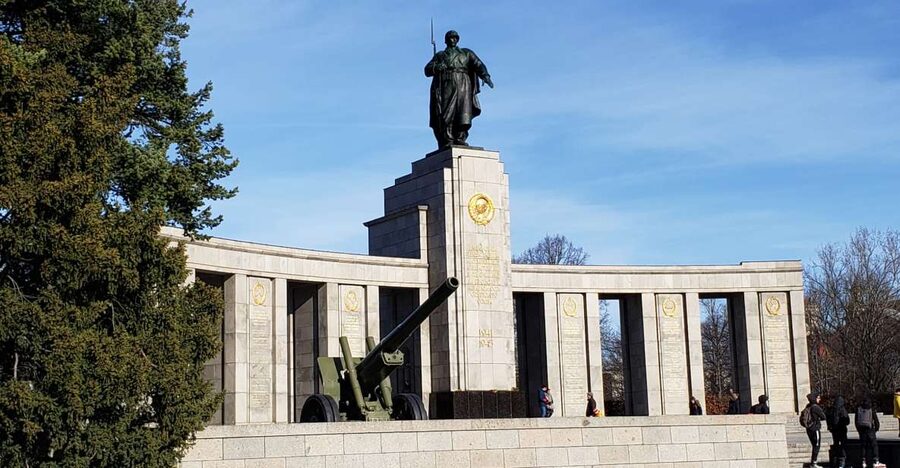
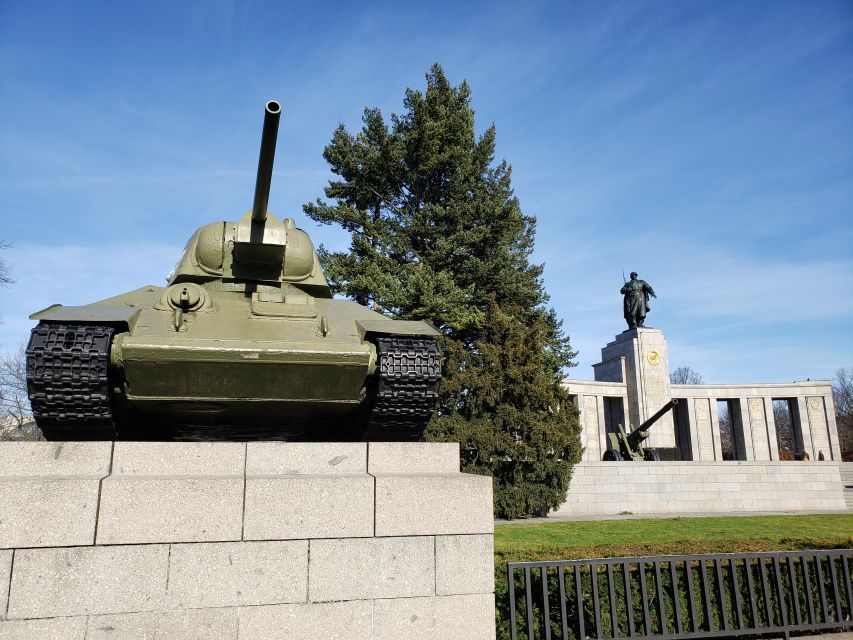
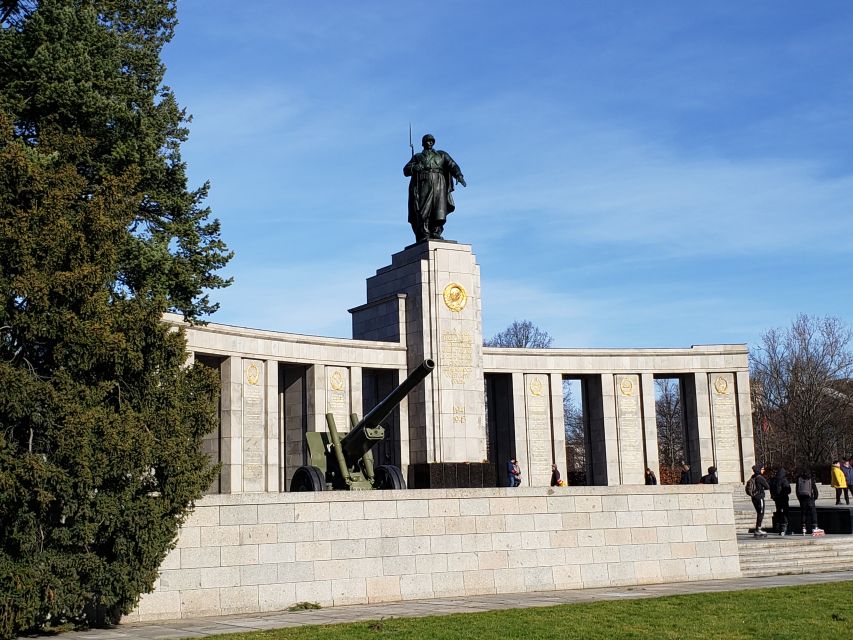
One early stop is the Soviet War Memorial in Tiergarten. Its large scale and formal design make it easy to notice, even among the trees and open paths of the park.
The memorial adds an important second layer to the tour. The story is not only about Nazi power. It is also about the military defeat that ended the Third Reich and the Soviet role in the battle for Berlin.
Your guide can place the memorial within the wider story of the war and Berlin’s division after 1945. That is valuable because the city’s later Cold War history grew directly from the ruins of the Nazi period.
You will not get a long museum visit here. Think of it as a carefully chosen outdoor stop that helps connect the war, the fall of Berlin, and the political split that followed.
Walking through the Memorial to the Murdered Jews of Europe
The Memorial to the Murdered Jews of Europe is one of the route’s most affecting stops. It consists of 2,710 concrete steles arranged across a large open field near Brandenburg Gate.
You can walk between the blocks as the ground changes beneath you. From the outer edges, the memorial appears orderly and low. Inside, the paths can feel narrower and the concrete forms taller. That shift is part of the experience, and it is best taken slowly rather than treated as a quick photo stop.
Your guide provides context for the memorial and its place in modern Berlin. The visit is not a substitute for the full information center below the memorial, and entrance is not included. Still, the outdoor section gives you time to think about how Germany has chosen to remember the murder of Europe’s Jews in the center of its capital.
The route also includes the memorial dedicated to the murdered Roma and Sinti. That detail matters because Nazi persecution targeted more than one group, and Berlin’s memorials present a wider picture of the regime’s victims.
Please keep this part of the tour respectful. The memorial is a place of remembrance, not simply an unusual piece of architecture.
More wartime history tours in Berlin:
- Berlin: Sachsenhausen Concentration Camp Memorial Tour
★ 4.7 · 3,716 reviews - Third Reich Berlin: Hitler and WWII Walking Tour
★ 5.0 · 3,301 reviews - Sachsenhausen Concentration Camp Bus Tour in English from Berlin
★ 5.0 · 1,962 reviews - Berlin: Sachsenhausen Concentration Camp Tour in English
★ 4.8 · 1,889 reviews
The unmarked ground above Hitler’s bunker
The bunker site is one of Berlin’s most famous non-sights. You stand above the area where Hitler spent the final days of his life, but you will not find a grand ruin or dramatic entrance.
The former New Reich Chancellery and the bunker complex were destroyed, altered, and covered over. The site today is deliberately understated, which can feel strange if you expect a visible historic structure.
That contrast makes the stop worthwhile. You are asked to picture the final collapse of the Nazi regime in an ordinary urban setting. Your guide can explain the bunker’s role, the last days of Hitler’s government, and how the Third Reich ended there.
This is also where old photographs can help. Stefan Knoll has used images showing locations as they looked years ago, giving you a way to compare the present streetscape with the wartime setting. The visual comparison turns a bare patch of ground into a location you can place in time.
Do not expect access to the bunker. You view the site from above ground and learn about it from the guide.
Former Nazi government buildings and the Reich Aviation Ministry
The walk continues through the former government district of the National Socialists. You see the site of the New Reich Chancellery and the former Reich Aviation Ministry, built for Hermann Göring.
These buildings show how the Nazi government used architecture and offices to project authority. They also make the history more concrete. Instead of hearing only about ministries and officials in the abstract, you see the places where the state’s machinery operated.
The former Reich Aviation Ministry is particularly useful for understanding how much of the Nazi administrative world was built into the existing city. Berlin’s political center was not an isolated compound. It occupied streets and buildings that later passed through new governments and new uses.
The route focuses on exterior sites. If you want detailed architectural study or indoor exhibitions, plan a separate museum visit. For a short walking tour, the benefit is the connection between several locations rather than a long stay at any single building.
The former SS and Gestapo headquarters
One of the most important sections comes at the former site of the SS and Secret State Police, known as the Gestapo. Here you visit the documentation center called the Topography of Terror.
An open-air exhibition explains the institutions that carried out persecution and political terror. The setting is powerful because the center sits on the ground where these agencies once worked. You are not looking at a distant monument. You are learning about the system from the place where it operated.
This stop also gives the tour a needed shift in focus. Hitler’s bunker and the major government buildings tell the story of leadership and collapse. The Topography of Terror helps explain how repression functioned through police, SS, and administrative structures.
The tour finishes here, which is a smart choice. You end with documentation rather than a dramatic final image. If you have time afterward, you may want to continue studying the exhibition at your own pace, but any entrance requirements or extra visits are separate from the walking tour.
What the private guide adds
A private group changes the feel of a serious history walk. You can ask about a particular building, request clarification, or spend a little longer at a site that matters most to you.
The guide is listed in German and English. Stefan Knoll led the tour for several bookings and received especially strong marks for clear explanations, engaging storytelling, and a friendly manner. One useful habit he brings is the use of historical photographs to show how the places looked in earlier decades.
That visual aid can make a major difference in Berlin. War damage, rebuilding, demolition, and modern construction have changed many of these sites. Without context, you may walk past a location without realizing what once occupied it.
A private guide also helps with the sensitive tone of the subject. Nazi history requires accuracy and care. The best part of this experience is not shock value. It is the way the guide links names, buildings, dates, and political decisions into a story you can follow.
Do remember that guide quality can vary if Stefan is not the person assigned to your booking. The advertised languages are German and English, and the tour is designed as a guided overview rather than a university lecture.
Walking demands, timing, and access
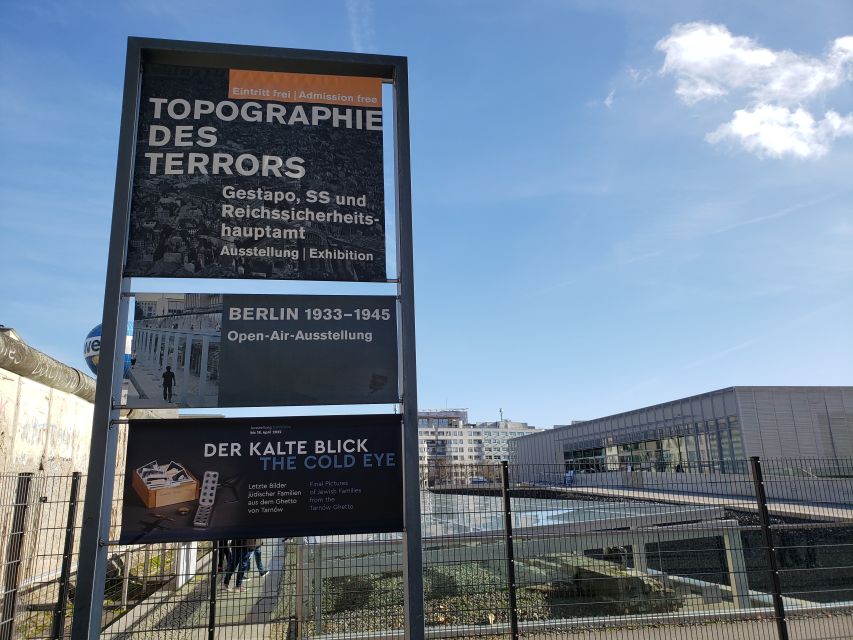
The tour lasts two hours and is conducted on foot. The route includes Brandenburg Gate, Tiergarten, the Holocaust Memorial, the bunker site, former government buildings, and the Topography of Terror.
You should wear comfortable shoes. Bring water, and dress for the weather. There is no hotel pickup or drop-off, so you need to reach Brandenburg Gate on your own and arrange your return from the Topography of Terror.
The tour is listed as wheelchair accessible. Even so, the route includes outdoor public areas and memorial spaces, so you may want to confirm current conditions if you have specific mobility needs.
Two hours is a useful length for an introduction. It fits well into a day of sightseeing and leaves time for another museum or neighborhood afterward. The tradeoff is that explanations must move at a steady pace. If you stop often for photographs or long questions, you may have less time at the final documentation center.
Who will get the most from this tour
I would choose this tour if you are visiting Berlin for the first time and want the Nazi-era sites explained in a logical order. It is also a good fit if you prefer a private guide to a large group, especially when the subject calls for questions and careful discussion.
Families with older children and teenagers may find the route useful because it combines visible places with a serious lesson. The outdoor format can be easier to follow than a long indoor museum visit, though parents should decide if the subject is suitable for their children.
History-focused visitors may want more time than the tour allows. If you already know Berlin’s Nazi history well, you might prefer spending several hours at the Topography of Terror, the German Resistance Memorial Center, or another specialist museum. Those visits are not part of this two-hour experience.
The tour also suits anyone with limited time. You get a compact route through several major sites without having to work out the connections yourself.
Price, flexibility, and what is not included
At $22 per person, this is a modest price for a private two-hour guide. Its value depends on your group size and what you want from Berlin.
For a couple or small family, the private format can be worth more than a cheaper large-group walk because you can ask questions and keep the discussion focused. For a solo visitor, $22 is still reasonable if you want a structured introduction, though a group tour may offer a lower individual price elsewhere.
The fee does not cover entry to attractions. That is less serious here than it would be on a museum tour because the main route is outdoors. Still, you should not expect a full indoor visit at the Topography of Terror or the information center beneath the Holocaust Memorial as part of the price.
You can cancel up to 24 hours before the start for a full refund, and you can reserve now and pay later. Those terms make it easier to fit the walk around changing Berlin plans.
Should you book it?
Book this tour if you want Berlin’s Third Reich sites connected by a clear story, not just pointed out on a map. The Holocaust Memorial, bunker site, Nazi ministries, Soviet War Memorial, and Topography of Terror form a strong two-hour route.
I especially recommend it for first-time visitors, private groups, and anyone who values a guide who can use old photographs to make altered or vanished sites easier to understand. Stefan Knoll is a strong choice when available, based on his clear speaking style, engaging explanations, and thoughtful use of visual material.
Skip it if you want long museum visits, extensive military detail, or a relaxed pace with time to study every display. In that case, book individual museums and give them more time. For a focused outdoor introduction at $22 per person, this is a practical and worthwhile way to begin understanding Berlin’s most difficult chapter.
FAQ
Where does the tour begin?
The tour begins at Brandenburg Gate, in front of the tourist information center. Your guide will hold a sign with your name.
Where does the tour finish?
The tour finishes at the Topography of Terror documentation center.
How long does the walking tour last?
The tour lasts two hours.
Is the tour private?
Yes. It is offered for a private group.
Which languages are available?
The live guide is available in German and English.
Is admission to attractions included?
No. The price includes the guide and private walking tour, but entrance to attractions is not included.
More Walking Tours in Berlin
- Discover Berlin Half-Day Walking Tour
★ 5.0 · 9,624 reviews - Berlin: Discover Berlin Walking Tour
★ 4.9 · 5,998 reviews - Berlin: Hidden Backyards Guided Walking Tour
★ 4.8 · 5,360 reviews - Berlin: Alternative Berlin Walking Tour
★ 4.6 · 1,204 reviews
Just added around Berlin
- From Berlin: Gardens & Palaces of Potsdam Bike Tour★ 5.0 · 61 reviews
- Berlin: Battle for Seelow Heights WW2 tour -Clash of Titans★ 5.0 · 27 reviews
- From Berlin: Historical Gems of Potsdam Private Day Trip★ 4.4 · 4 reviews
- Berlin: Französischer Dom 360° Panorama & Crémant to go★ 3.9 · 5 reviews
- Explore Berlin Tour: History and Highlights★ 4.7 · 5 reviews
- Berlin: Evening Yacht Cruise with Aperitif & Dinner Upgrade★ 4.6 · 178 reviews
- Berlin: Expats in Berlin Comedy Show Ticket★ 4.7 · 182 reviews
- Berlin: The Epic Comedy Club Friday Night Showcase★ 4.8 · 28 reviews
Berlin Tours, compared.
Reichstag, Dome and Government District Guided Tour
Read our review →
1-Hour City Tour by Boat with Guaranteed Seating
Read our review →
Reichstag, Plenary Chamber, Cupola & Government Tour
Read our review →
Browse the lists this tour appears in