
Review · BERLIN TOURS
Private Sachsenhausen Concentration Camp Memorial Tour
Sachsenhausen is not a casual day trip. It is a place of prison buildings, execution grounds, empty barracks sites, and hard facts that demand attention. A private guide helps you understand how this camp developed within the Nazi dictatorship, rather than leaving you to piece the story together from signs.
I like the private format, which lets you ask difficult questions and spend more time where you need it. I also like the guide’s wider view of German and military history, praised in connection with guides such as Aaron and Paul. The main drawback is practical: transportation is not included, and the day requires roughly six hours for a serious visit.
Key points to know before booking
- A private group of up to five: The guide works only with your party, so the visit can follow your pace and interests.
- Six hours from central Berlin: The day includes getting to Sachsenhausen and back, with about three hours at the memorial itself.
- A licensed memorial guide: The guide is trained and licensed by the camp’s Memorial Foundation.
- Important sites in one visit: You will see Tower A, the infirmary and pathology building, Station Z, the former camp kitchen, SS and Gestapo Prison, and former barrack blocks.
- Transport is your responsibility: Public transportation tickets and private transportation are not included.
- A serious, demanding subject: This is best for people who want context, careful explanation, and time to reflect.
Why a private guide changes Sachsenhausen
Sachsenhausen can be visited without a guide, but the site makes more sense when someone explains how its buildings fit into the Nazi system. The camp was the first purpose-built German concentration camp, and its design, administration, prisoner population, and later use all connect to the growth of Nazi rule.
With a private guide, you can stop and ask why a particular building mattered, how prisoner categories changed, or what happened as the Second World War expanded. That personal exchange is the chief reason to choose this tour instead of simply arriving alone.
You are not placed in a large group with a fixed script. The guide can adapt the visit to your questions and give you quiet time in certain areas. That balance matters at a memorial site. You need explanation, but you also need moments without commentary.
Past tours have featured guides named Aaron, Paul, and Julian. Aaron was praised for building a clear timeline of the period’s politics and for connecting the camp to the wider war. Paul was described as an easygoing graduate student with strong knowledge of the site, while Julian was noted for detailed explanations and flexibility. Your assigned guide may differ, but these comments point to the kind of teaching this experience aims to provide.
More WWII History Tours in Berlin
- Berlin: Third Reich and Cold War 2 Hour Walking Tour
★ 4.9 · 6,830 reviews - Berlin: Sachsenhausen Concentration Camp Tour in English
★ 5.0 · 5,711 reviews - Berlin’s Best: 2 Hour Walking Tour Third Reich and the Cold War
★ 5.0 · 5,486 reviews
Starting at Pariser Platz and reaching the memorial
The meeting point is the Academy of Arts at Pariser Platz 4, near central Berlin. This is a practical location beside one of the city’s best-known central areas, but the tour does not include a private vehicle or public transportation ticket.
That means you should plan for the transport part of the day. One useful feature of the private arrangement is that the guide can help you understand the route and public transportation process. A family who booked the tour found the guide’s help with the various modes of transport especially useful, even though it was not a conventional private hotel pickup.
Read the meeting instructions carefully before setting out. The activity ends back at the starting point, and the full outing takes about six hours. The memorial portion is listed as three hours, so the remaining time accounts for the journey and the start and finish of the day.
This timing makes Sachsenhausen more than a quick stop between Berlin attractions. You will need to give it most of a day. That is a fair trade for a visit that does not feel rushed, but it is worth knowing before you book.
Tower A gives you the first sense of the camp
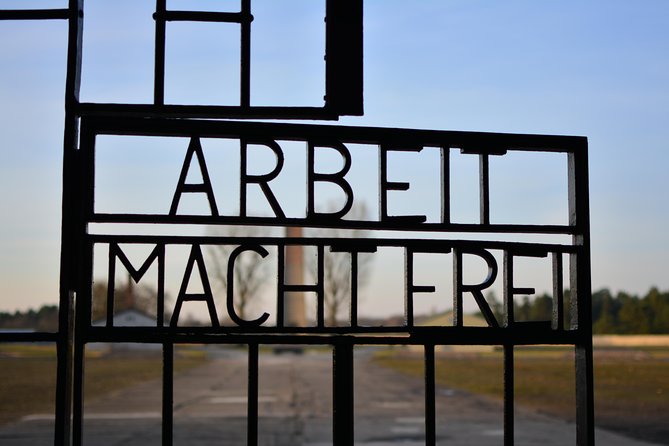
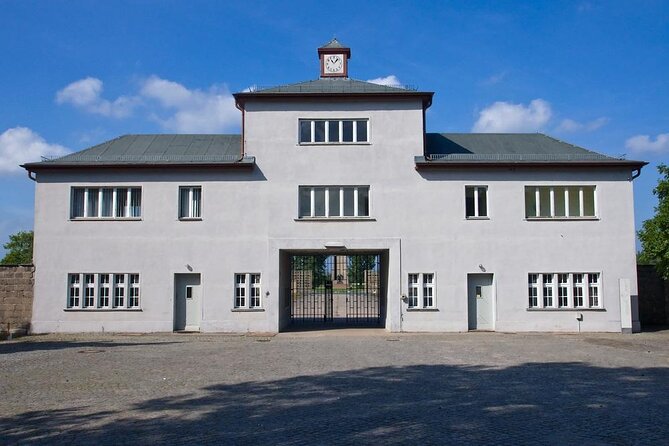
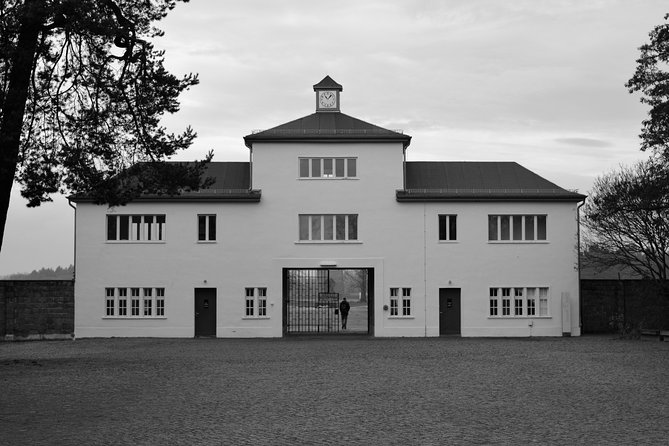
The visit begins with Tower A, the main entrance. This is an important place to start because it introduces the controlled, institutional nature of the camp. Your guide can explain how the camp operated and how its structure supported the wider concentration camp system.
The entrance is not simply an architectural feature. It helps you see the relationship between the prisoners, the guards, the camp administration, and the outside world. Starting here gives the rest of the visit a clear frame.
This is also where a good guide’s ability to organize information matters most. The history covers the 1930s, the strengthening dictatorship, the war years, and changes in prisoner groups and nationalities. Without a timeline, those facts can blur together. The tour is designed to build that timeline as you move through the site.
Former barracks show daily control and confinement
The former prisoner barrack blocks are among the clearest reminders that Sachsenhausen was a functioning prison camp, not only a place of killing. Much of what you see is shaped by the passage of time, but the layout helps explain how prisoners were housed and controlled.
Your guide will connect these buildings to the changing prisoner population. The camp held different types of prisoners, and the numbers and nationalities shifted as Nazi policies changed and the war spread across Europe.
That context is one of the tour’s strongest features. You are not left with a single, frozen picture of Sachsenhausen. Instead, you learn how the camp developed over time and how political decisions affected the people imprisoned there.
The former barracks also provide space for questions about daily life, camp organization, and the difference between the site’s original purpose and its later history. This is an area where the private format can be especially helpful. Your group can spend longer on points that matter to you instead of moving on with a larger party.
More wartime history tours in Berlin:
- Berlin: Sachsenhausen Concentration Camp Memorial Tour
★ 4.7 · 3,716 reviews - Third Reich Berlin: Hitler and WWII Walking Tour
★ 5.0 · 3,301 reviews - Sachsenhausen Concentration Camp Bus Tour in English from Berlin
★ 5.0 · 1,962 reviews - Berlin: Sachsenhausen Concentration Camp Tour in English
★ 4.8 · 1,889 reviews
The infirmary and pathology building reveal the camp’s medical system
The camp infirmary and pathology building form another essential part of the visit. These areas show how medicine and administration operated within the camp, and they add a grim layer to the story beyond the barracks and guard structures.
Your guide will place these buildings within the camp’s wider system. The subject can be difficult, so expect a sober explanation rather than a light sightseeing stop. The value here comes from understanding how the camp functioned as a controlled institution, where medical spaces were tied to the treatment of prisoners and the policies imposed on them.
The private setting gives you room to ask for clarification. It also lets the guide adjust the amount of detail to your group. That can help if you are visiting with teenagers or family members who need careful explanations of difficult material.
One family described the tour as a meaningful way to teach children about the past and the consequences of unchecked political power. That is a good reason to bring older children or teenagers, provided you know they are ready for the subject.
Station Z confronts the camp’s killing machinery
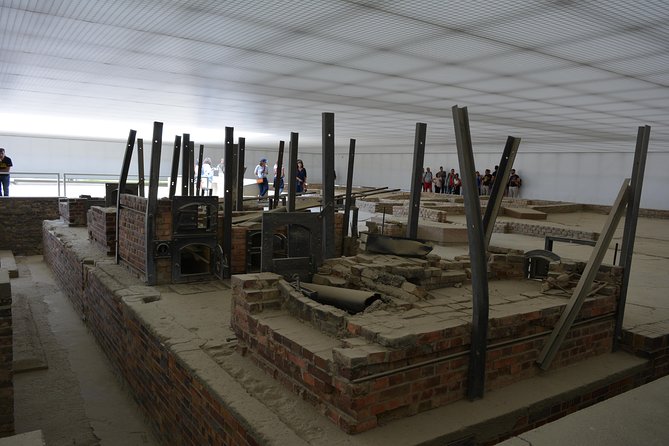
Station Z was the purpose-built execution facility. This is one of the most sobering parts of the memorial, and it requires a slower pace than an ordinary sightseeing stop.
The name itself can feel stark, but the place is even more powerful when your guide explains its role within the camp. You will not simply see a structure and move on. The tour connects Station Z to the development of Sachsenhausen and to the broader system created under Nazi rule.
This is also where the emotional weight of the visit may become strongest. Several people described the grounds as deeply moving and difficult to put into words. That reaction is understandable. Give yourself permission to be quiet here, and do not expect the day to feel like a standard museum visit.
A private guide can provide facts without forcing a particular emotional response. You can ask questions, take a pause, or spend time alone in part of the area. That freedom is a meaningful advantage over a large scheduled group.
The former camp kitchen adds documents and daily structure
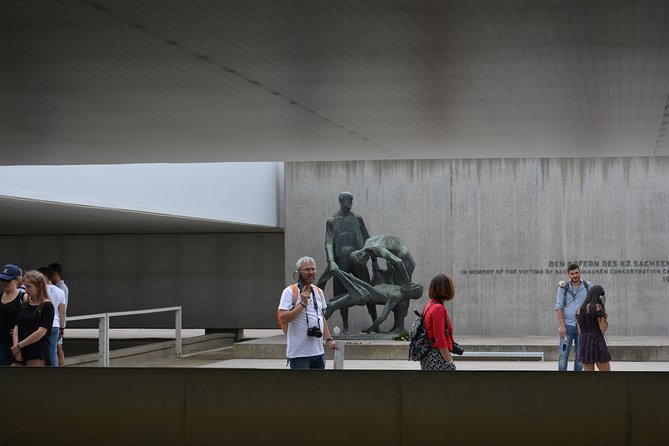
The exhibition in the former camp kitchen offers another way to understand the camp. Rather than focusing only on individual buildings, it helps show how the site was organized and managed.
This stop can provide useful balance after the more difficult areas. The kitchen was part of the camp’s daily structure, and the exhibition helps connect administration, prisoner life, and the machinery of confinement.
Your guide can help explain how this part of the camp fits into the larger story. If you have already studied the Holocaust, you may value the details that connect Sachsenhausen to Germany’s pre-war politics and the later demands of the war. If the subject is new to you, the guide can help keep the information in order.
The tour’s aim is not just to list what happened in each building. It is to show how a concentration camp came into being, developed, and changed as the dictatorship grew more powerful.
The SS and Gestapo Prison shows another form of imprisonment
The former SS and Gestapo Prison brings attention to imprisonment within the camp system itself. It is a useful reminder that Sachsenhausen contained different layers of control and punishment.
The prison helps broaden your understanding beyond the image of a single camp population living in barracks. Your guide will explain how prisoner categories, nationalities, and numbers changed, and how those changes reflected Nazi policy and wartime events.
This stop is especially valuable if you want to understand the camp as part of a wider political system. The site was not isolated from German government power. It was connected to the dictatorship’s methods of arrest, detention, punishment, and terror.
Because the tour is private, you can focus on the questions that interest your group most. A person interested in military history may want more wartime context. Someone studying German politics may want to follow the rise of the dictatorship. Families may prefer clear explanations of how the system affected ordinary people and targeted groups.
Three hours at Sachsenhausen is serious but not rushed
The memorial visit itself lasts about three hours. That is enough time to cover the key locations listed for the tour, though the exact pace will depend on your group and the guide.
I see the timing as a strength. A shorter stop would risk reducing Sachsenhausen to a string of grim sights without enough explanation. Three hours lets you follow the story, ask questions, and have quiet moments.
Still, you should prepare yourself for a demanding morning or afternoon. The subject matter is heavy, and the grounds may feel emotionally tiring even when the walking itself is manageable. Wear practical shoes and bring what you need for changing weather, but do not expect the tour to feel relaxed in the usual vacation sense.
The guide can also give you time alone in selected parts of the site. One person especially valued being allowed to visit certain areas independently after receiving detailed explanations. That is a thoughtful touch, since reflection cannot always happen while someone is speaking.
The $390.50 group price can make sense for five
The advertised price is $390.50 for a private group of up to five people. At the full group size, that works out to about $78 per person before transportation costs. For two people, the per-person cost is much higher, so the value improves significantly for a family or small group of friends.
You are paying for a private licensed guide, not just admission. The guide’s role is to explain the site, place it in German and European history, answer questions, and adjust the pace to your group. Admission to the memorial is included, while transport is not.
That price is harder to justify if you want only a brief look at the grounds or prefer to read on your own. It makes more sense if you want a structured visit with a specialist, especially if you are bringing teenagers or have limited time in Berlin.
The fact that the experience is often booked well ahead, with an average booking lead time of about 32 days, suggests that you should not leave it until the last moment if this is important to your schedule. The tour has a five-star rating from 16 ratings and is recommended by 100 percent of those who rated it, but the small number means I would treat that as encouraging rather than final proof for every type of visitor.
Who will get the most from this tour
This tour suits you if you want more than basic facts. It is a strong choice for:
- Families with older children or teenagers who are ready for serious historical discussion
- People studying the Holocaust, Nazi Germany, or the Second World War
- Visitors who prefer a private pace and direct conversation
- Small groups that want help with public transportation
- Anyone who wants the camp placed within the political history of the 1930s and wartime Europe
You may prefer a different plan if you find concentration camp memorials too emotionally difficult, have only a short window in Berlin, or want to control every part of the visit alone. The private setting offers flexibility, but it does not soften the subject.
Service animals are allowed, and the activity is near public transportation. Most people can participate, though the supplied information does not provide detailed accessibility specifications for every part of the grounds. Contact the provider if you need precise mobility information.
Booking, cancellation, and the final call
You receive confirmation when you book. Free cancellation is available up to 24 hours before the start time for a full refund. Changes or cancellations made less than 24 hours before the start time are not accepted for a refund, and the cut-off uses local time.
I would book this tour if you want Sachsenhausen explained with care rather than treated as a quick excursion from Berlin. The private format, licensed memorial guide, flexible pace, and wider political context make the price reasonable for a full group of five.
I would skip it if you want a light day out, dislike guided discussion, or are not prepared for a solemn memorial. For the right visitor, this is one of the clearest ways to understand how Sachsenhausen developed and how it fitted into the Nazi concentration camp system.
FAQ
Where does the tour start?
It starts at the Academy of Arts, Pariser Platz 4, 10117 Berlin, Germany.
Where does the tour end?
The activity ends back at the meeting point.
How long does the tour last?
The total experience lasts approximately six hours. About three hours are allocated to the Sachsenhausen memorial visit.
How many people can join the private tour?
The private group can include up to five people.
Is the tour offered in English?
Yes. The experience is offered in English.
Is admission to Sachsenhausen included?
Yes. Admission to the memorial is included.
Is transportation included?
No. Public transportation tickets and private transportation are not included.
Which parts of Sachsenhausen will I see?
The visit includes Tower A, the camp infirmary and pathology building, Station Z, the exhibition in the former camp kitchen, the SS and Gestapo Prison, and former prisoner barrack blocks.
Who leads the tour?
A professional guide licensed and trained by the camp’s Memorial Foundation leads the tour.
Can I cancel for a full refund?
Yes, if you cancel at least 24 hours before the experience’s local start time. Cancellations or changes made less than 24 hours before the start time are not eligible for a refund.
Just added around Berlin
- eSIM for Germany and 34 European Countries★ 4.5 · 16 reviews
- Your ticket to The Wall Museum Berlin★ 3.0 · 60 reviews
- Walking on the Wall: 3-Hour Tour in Berlin★ 4.5 · 34 reviews
- Rickshaw Tours Berlin – Groups of up to 16 people with several rickshaws★ 4.0 · 97 reviews
- Warnemuende Shore Excursion: Private Berlin Tour★ 4.5 · 27 reviews
- Love and War in Berlin: Self-Guided Story Puzzle Walk★ 5.0 · 7 reviews
- Warnemuende Shore Excursion: Berlin Private Sightseeing Tour from Rostock★ 5.0 · 4 reviews
- Cold War Berlin – Private Live Virtual Experience★ 5.0 · 4 reviews
Berlin Tours, compared.

Reichstag, Dome and Government District Guided Tour
Read our review →
1-Hour City Tour by Boat with Guaranteed Seating
Read our review →




Reichstag, Plenary Chamber, Cupola & Government Tour
Read our review →
Browse the lists this tour appears in