
Review · BERLIN TOURS
Third Reich and the Holocaust in Berlin Private Guided Tour
Berlin’s Nazi past is not tucked away in one museum. It is spread through streets, government buildings, memorials, and the places where propaganda, persecution, and war shaped daily life. This private tour brings those pieces together, beginning at the Topography of Terror and continuing through central Berlin.
I like the personal pace and the chance to ask direct questions. I also like that the longer option includes Otto Weidt’s Blindenwerkstatt, a small museum with a very human story about a workshop owner who protected mostly blind and deaf Jewish workers. The main drawback is the price: at $219 per person, this makes the most sense for a small private group that wants focused guidance rather than a budget walk.
Key points at a glance
- The Topography of Terror begins the story at the former Gestapo and SS headquarters, giving the tour a serious historical foundation.
- The five-hour route adds Berlin’s Jewish Quarter and Otto Weidt’s Blindenwerkstatt, the most personal stop on the itinerary.
- You see major symbols of Nazi Germany and modern remembrance, including the Brandenburg Gate, Reichstag, Holocaust Memorial, and Soviet War Memorial.
- Private guiding lets you set the pace, ask sensitive questions, and spend more time on the subjects that matter most to you.
- Guides speak seven languages, including English, German, French, Spanish, Italian, Russian, and Polish.
- Named guides praised for their approach include Gunnar, Silvia, and Manfred, with Silvia noted for her background as a historian specializing in World War II.
Starting at the Topography of Terror
The tour meets in front of Typisch Berlin cafe at Wilhelmstraße 42. Do not go inside the cafe. It is only the meeting point, and its staff is not involved with the tour.
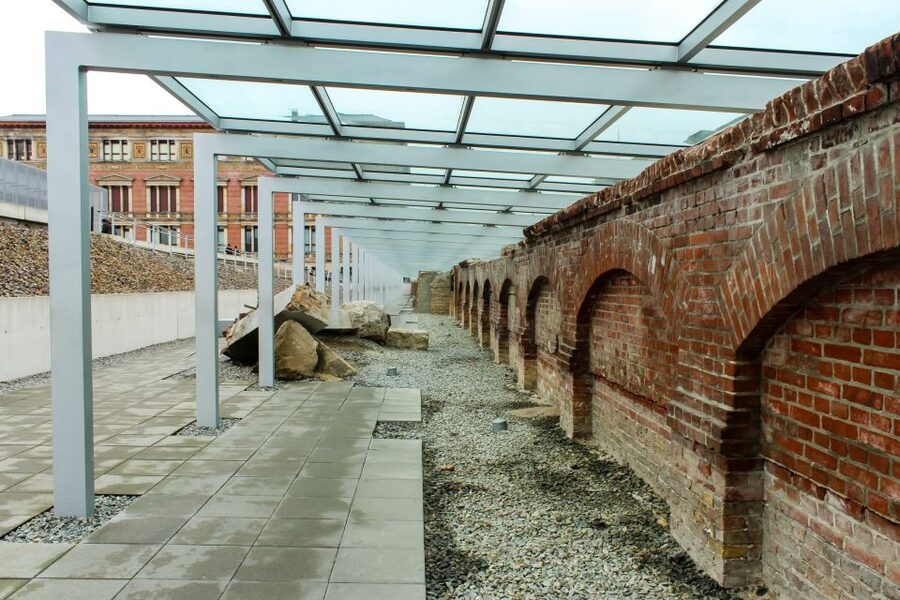
From there, you visit the Topography of Terror. The museum occupies the former headquarters of the Gestapo and SS, so the setting itself carries weight. Its exhibitions explain how the Nazi Party gained power, how its institutions operated, and how persecution grew into mass murder and war.
This is an important place to begin because it moves the subject beyond Adolf Hitler alone. You learn about the wider machinery of dictatorship, including the people and offices that organized terror. Your guide adds context as you move through the displays, helping connect events in Germany with the wider course of World War II.
Expect a serious museum visit rather than a quick photo stop. The subject matter is difficult, and the value lies in taking time to understand how propaganda and state power worked together. If you prefer a lighter introduction to Berlin, this tour will feel demanding from the first hour. That is also its purpose.
More WWII History Tours in Berlin
- Berlin: Third Reich and Cold War 2 Hour Walking Tour
★ 4.9 · 6,830 reviews - Berlin: Sachsenhausen Concentration Camp Tour in English
★ 5.0 · 5,711 reviews - Berlin’s Best: 2 Hour Walking Tour Third Reich and the Cold War
★ 5.0 · 5,486 reviews
Potsdamer Platz and a divided capital
The route continues through central Berlin toward Potsdamer Platz. Here, the story shifts from Nazi rule to the end of the war and the occupation that followed.
Potsdamer Platz marked the point where the American, British, and Soviet zones met after Berlin was liberated. That detail gives the square more meaning than its modern buildings suggest. Your guide can place the postwar division of the city beside the earlier story of Nazi rule, showing how Berlin moved from dictatorship and destruction into Allied occupation and Cold War tension.
This is one reason a private guide helps. Berlin’s central districts have been rebuilt and altered so heavily that the past is not always easy to read from the street. You need someone to explain what happened here and why the location mattered.
The tour is conducted on foot, so comfortable shoes are sensible. The exact route and timing can be adjusted to your interests and pace, but you should still expect several hours of walking through the Old Town and, on the longer option, the Jewish Quarter.
The Holocaust Memorial and the problem of remembrance
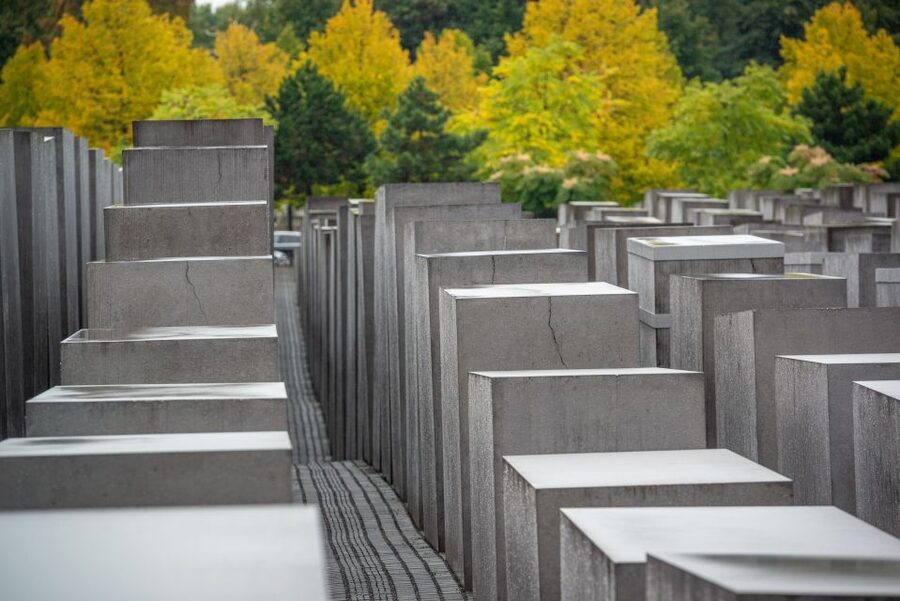
The Memorial to the Murdered Jews of Europe is one of Berlin’s best-known sites. Its field of concrete blocks creates a powerful space for reflection, but its meaning is not always obvious from a quick visit.
A guide can help you place the memorial within Germany’s effort to confront the Holocaust in the heart of its capital. You will hear about the six million Jewish victims murdered during the Holocaust, while also considering how a modern city chooses to remember a crime committed by its own government.
This part of the tour is not only about taking photographs. The memorial works best when you pause and listen. The uneven ground and changing height of the blocks alter your sense of direction, though the tour does not claim that one fixed interpretation explains the site for everyone.
I appreciate that this stop is paired with the Topography of Terror. One explains the institutions behind Nazi persecution. The other asks you to consider the human cost and the act of remembrance. Together, they create a stronger visit than either location would provide on its own.
The Brandenburg Gate and Reichstag Building

The Brandenburg Gate is now a symbol of Berlin and German unity, but the tour also examines how the Nazis used it as a backdrop for propaganda rallies. That contrast matters. A familiar landmark can look very different once you understand how political power used it.
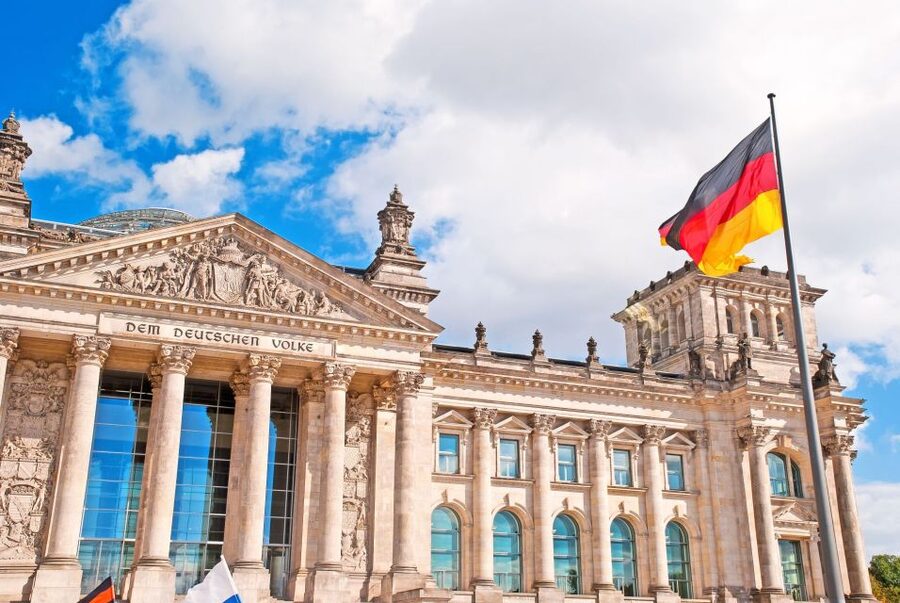
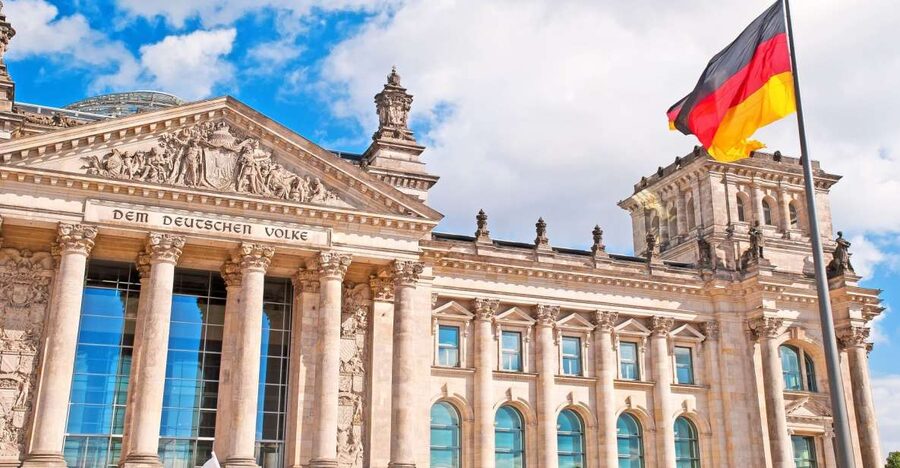
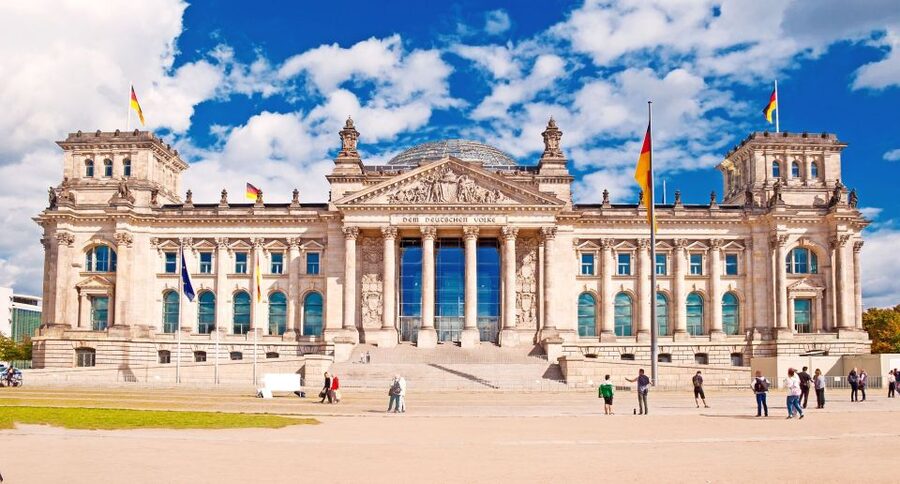
You then see the Reichstag Building, Germany’s former parliament. It was burned in 1933, an event tied closely to the Nazi seizure of power. Your guide explains why the fire mattered in the early years of Hitler’s regime and how the event was used politically.
These stops are outdoors and viewed from the route rather than described as interior visits. That is useful to know if you expect a tour of the Reichstag itself. The focus here is the building’s role in German political history and the way public symbols can be turned into tools of power.
The guide’s commentary is especially useful at these locations because the architecture alone does not tell the full story. You see the landmarks, then hear how they fitted into dictatorship, propaganda, war, and the rebuilding of Germany.
More wartime history tours in Berlin:
- Berlin: Sachsenhausen Concentration Camp Memorial Tour
★ 4.7 · 3,716 reviews - Third Reich Berlin: Hitler and WWII Walking Tour
★ 5.0 · 3,301 reviews - Sachsenhausen Concentration Camp Bus Tour in English from Berlin
★ 5.0 · 1,962 reviews - Berlin: Sachsenhausen Concentration Camp Tour in English
★ 4.8 · 1,889 reviews
Ending at the Soviet War Memorial
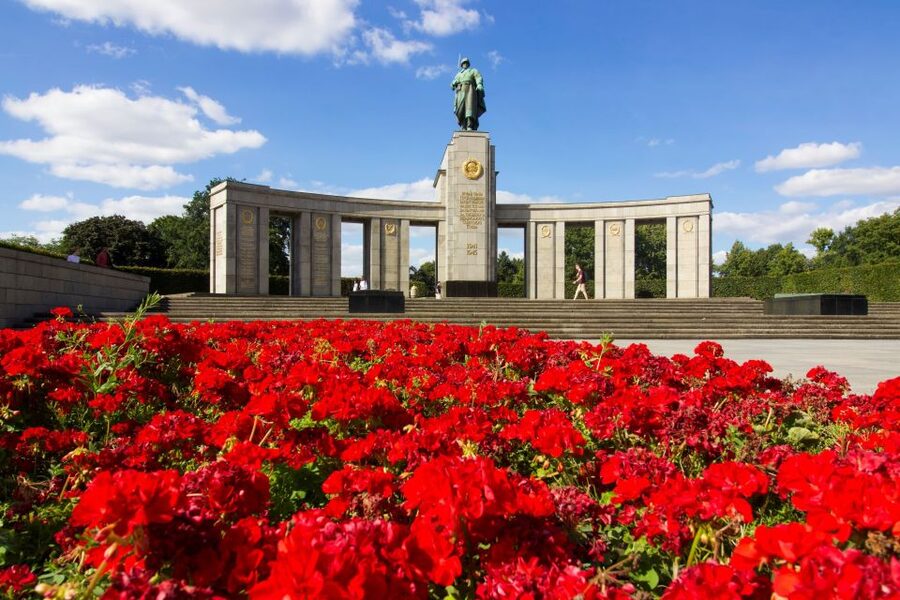
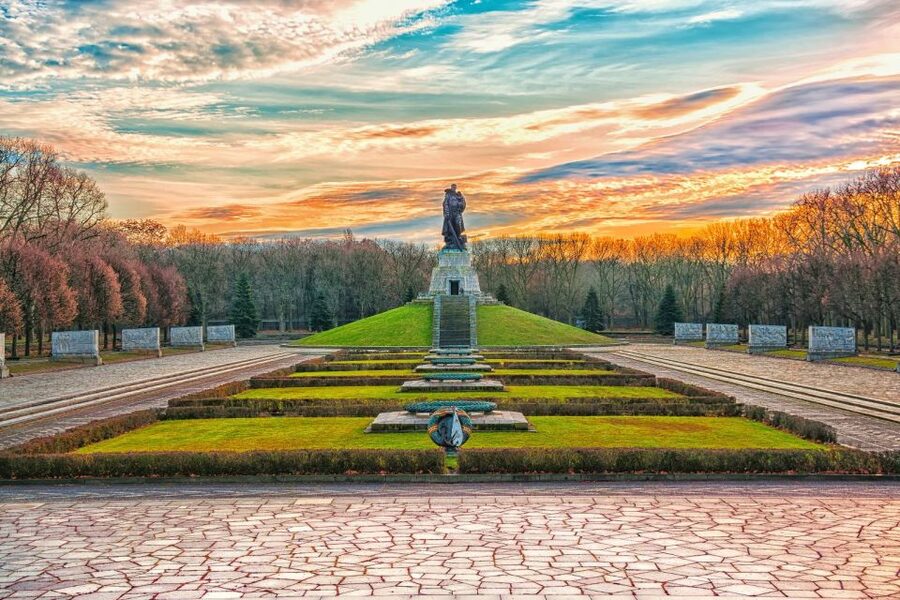
The shorter route ends at the Soviet War Memorial, one of several Berlin memorials erected by the Soviet Union for its war dead. It provides a different view of the conflict from the Holocaust Memorial and the Topography of Terror.
Here, the emphasis is on the Soviet role in defeating Nazi Germany and the soldiers who died in the war. The memorial also reminds you that Berlin’s wartime story did not end with liberation. Soviet power shaped the city after 1945, and the memorial belongs to that wider political history.
The route is therefore more than a tour of Nazi landmarks. It follows a chain of events: the rise of the Nazi regime, the machinery of persecution, the Holocaust, the destruction of the war, and the competing memories left behind.
What the five-hour Jewish Quarter option adds
If you choose the five-hour tour, the itinerary continues beyond the main central memorials. You visit Friedrichstrasse and see Trains to Life, Trains to Death, a monument to children murdered during the Holocaust.
This is a particularly direct memorial. Its subject is children, which makes the scale of Nazi persecution personal in a way that broad political history cannot. Your guide provides the historical setting, while the monument gives you a clear point of human focus.
The route then continues through Spandauer Vorstadt and Berlin’s Jewish Quarter. You see the surviving New Synagogue and learn more about Jewish life in Berlin before, during, and after the Nazi period.
The longer route is worth considering if Jewish history is central to your visit. The three-hour version covers major war sites and memorials, but the five-hour option gives you more time with the Jewish history of the city itself. It also reduces the risk that the Holocaust is treated only as one chapter in a general World War II walk.
Otto Weidt’s Blindenwerkstatt tells a smaller story
The most distinctive addition on the five-hour tour is Otto Weidt’s Blindenwerkstatt Museum. The museum tells the story of Otto Weidt, who employed mostly blind and deaf Jewish workers in his workshop during World War II.
This stop offers a different scale of history. The Topography of Terror explains institutions and crimes committed across Europe. The Blindenwerkstatt focuses on one workshop, one employer, and the people he tried to protect.
I find that contrast valuable. Large memorials help you grasp the size of the Holocaust, while a small personal story helps you understand how danger affected ordinary work and daily survival. You are not left with only dates, political speeches, and military movements.
The museum visit is included in the five-hour option, not the three-hour tour. If you have only a morning or afternoon, the shorter route may be enough. If you want the human stories behind Berlin’s Jewish history, the additional two hours make the longer version the better choice.
The guide makes the difference
This is a private tour with a licensed guide fluent in your selected language. Available languages are English, French, Russian, Spanish, Italian, German, and Polish.
The private format matters for this subject. You can ask about difficult points without worrying about holding up a large group. You can also tell the guide if you want more time at a memorial, more political background, or a clearer explanation of Jewish life in Berlin.
The guide lineup is not fixed in the information provided, but several names appear in the experience details. Gunnar led a tour described as relaxed and informative. Silvia was identified as a historian specializing in World War II, and her teaching style was praised for bringing events vividly into focus. Manfred was noted for explaining the city’s history through an easy conversation.
Those details point to the main strength you should look for: not just facts, but the ability to explain them clearly and sensitively. A guide who can connect a building, a memorial, and a personal story will serve you better than someone who simply recites dates.
The tour is also offered at an adjusted tempo. That does not mean the walking disappears. It means a private group can move at a pace that suits its needs and interests.
Three hours or five hours?
The shorter tour is designed around the major war sites in Berlin’s Old Town. It includes the Topography of Terror, Potsdamer Platz, the Memorial to the Murdered Jews of Europe, Brandenburg Gate, the Reichstag Building, and the Soviet War Memorial.
Choose it if you want a focused introduction to Berlin under the Third Reich and the physical reminders of World War II. It gives you the main political and memorial sites without committing most of a day.
The five-hour route adds Friedrichstrasse, Trains to Life, Trains to Death, Spandauer Vorstadt, the Jewish Quarter, the New Synagogue, and Otto Weidt’s Blindenwerkstatt Museum.
Choose the longer route if you want the history to include Jewish Berlin rather than stopping with Nazi government sites and war memorials. The added time also allows more room for questions and discussion, which is useful when the subject is complex.
The supplied details identify the overall experience as five hours while also describing a three-hour option. Check the selected duration carefully when booking. The Jewish Quarter and Blindenwerkstatt are not part of the three-hour tour.
Is $219 per person good value?
At $219 per person, this is not a casual sightseeing walk. You are paying for a private group, a licensed guide, live commentary in your chosen language, and a route built around one of Berlin’s most difficult subjects.
The price is easier to justify if you are traveling with family or friends and want the guide’s full attention. It is also useful if your group has different levels of background knowledge. A private guide can explain basic points without making history specialists sit through material they already know.
The value is less clear if you are alone, on a tight budget, or happy to visit museums independently. Berlin offers many public memorials and historical sites that you can see without a private guide. The premium here buys interpretation, structure, and flexibility.
For the five-hour option, the Blindenwerkstatt and Jewish Quarter add real substance rather than simply making the walk longer. If you choose the private format, I would favor the extended route so you get the full benefit of the price.
Practical details before you book
You can cancel up to 24 hours before the tour for a full refund, and you can reserve now and pay later. Check availability for the starting times because the exact schedule is not fixed in the information provided.
Read the email sent the day before. It contains important tour information, and you should confirm the meeting details before setting out.
The meeting point is in front of Typisch Berlin cafe at Wilhelmstraße 42, 10963 Berlin. Do not enter the cafe expecting to find a tour desk. The staff is not informed about the activity.
Because this is a walking tour of central Berlin, wear shoes suited to several hours on city streets. Also plan your emotional energy. The tour deals directly with the Holocaust, Nazi propaganda, mass murder, and wartime destruction. That seriousness is a strength, but it is worth knowing before you book.
Who should book this Berlin history tour?
I would recommend it to first-time visitors who want a guided framework for Berlin’s Nazi past, families who need a flexible pace, and anyone who wants to ask detailed questions in a private setting.
The five-hour option is best for people who want Jewish history included in a serious way. The shorter version suits you if your schedule is tight or if you mainly want the central political sites and memorials.
I would not choose it for a relaxed general city tour. It is focused, emotionally heavy, and built around difficult material. You should also compare the cost with your group size before booking. A private tour becomes better value as more people share the guide’s time, though the stated price is per person.
Should you book it?
Book this tour if you want Berlin’s Third Reich and Holocaust history explained in context, with time for questions and a route tailored to your group. The five-hour version is the stronger choice because the Jewish Quarter and Otto Weidt’s workshop add the personal stories that make the wider history easier to understand.
Choose the three-hour route if you need a shorter introduction and want the major sites in the Old Town. At $219 per person, this is a premium experience, but it earns that price through private guiding, language choice, and a serious route that connects museums, memorials, and surviving landmarks.
FAQ
Where does the tour meet?
Meet your guide in front of Typisch Berlin cafe at Wilhelmstraße 42, 10963 Berlin. Do not enter the cafe because it is only the meeting point and the cafe staff is not informed about the tour.
How long does the tour last?
The experience is available as a three-hour walking tour or an extended five-hour tour. Check the selected option and starting time when booking.
What languages are available?
The live guide is available in English, French, Russian, Spanish, Italian, German, and Polish.
What is included in the five-hour tour?
The five-hour option includes a private walking tour of major war sites and memorials, the Jewish Quarter, and a visit to Otto Weidt’s Blindenwerkstatt Museum.
Is the Blindenwerkstatt Museum included in the three-hour tour?
No. The Jewish Quarter and Blindenwerkstatt Museum are included only in the five-hour option.
Can I cancel the booking?
Yes. You can cancel up to 24 hours in advance for a full refund. You can also reserve the tour and pay later.
Just added around Berlin
- eSIM for Germany and 34 European Countries★ 4.5 · 16 reviews
- Your ticket to The Wall Museum Berlin★ 3.0 · 60 reviews
- Walking on the Wall: 3-Hour Tour in Berlin★ 4.5 · 34 reviews
- Rickshaw Tours Berlin – Groups of up to 16 people with several rickshaws★ 4.0 · 97 reviews
- Warnemuende Shore Excursion: Private Berlin Tour★ 4.5 · 27 reviews
- Love and War in Berlin: Self-Guided Story Puzzle Walk★ 5.0 · 7 reviews
- Warnemuende Shore Excursion: Berlin Private Sightseeing Tour from Rostock★ 5.0 · 4 reviews
- Cold War Berlin – Private Live Virtual Experience★ 5.0 · 4 reviews
Berlin Tours, compared.

Reichstag, Dome and Government District Guided Tour
Read our review →
1-Hour City Tour by Boat with Guaranteed Seating
Read our review →




Reichstag, Plenary Chamber, Cupola & Government Tour
Read our review →
Browse the lists this tour appears in