
Review · BERLIN TOURS
Never Again Berlin – Sachsenhausen Concentration Camp
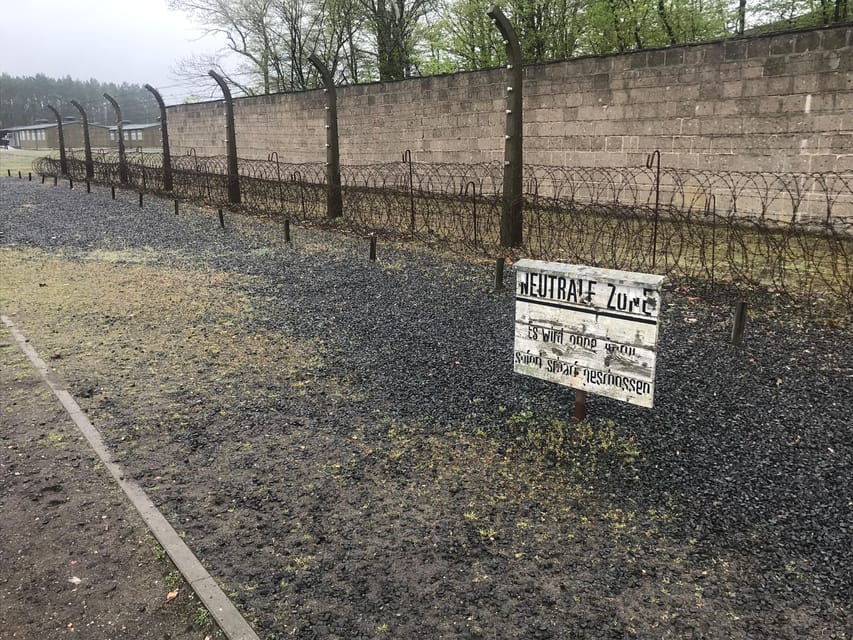
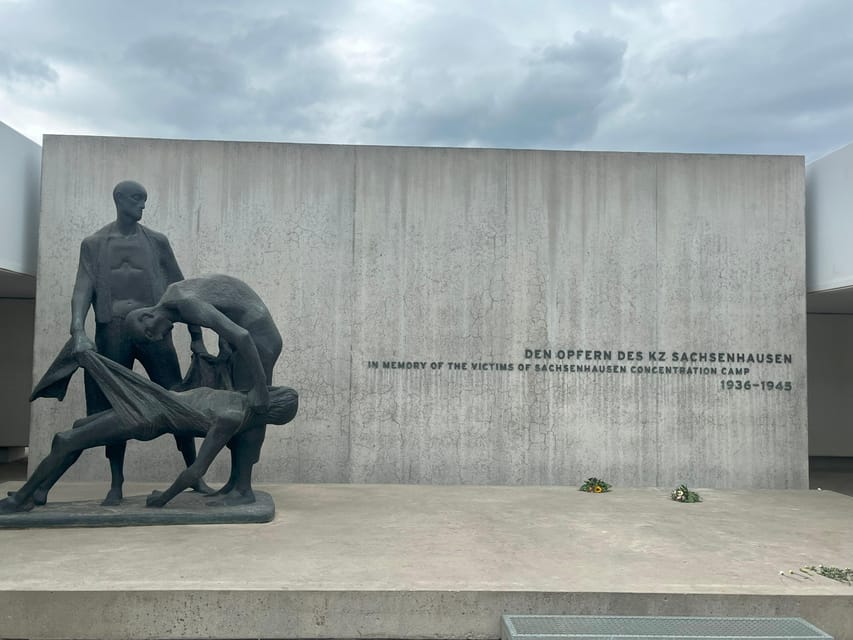
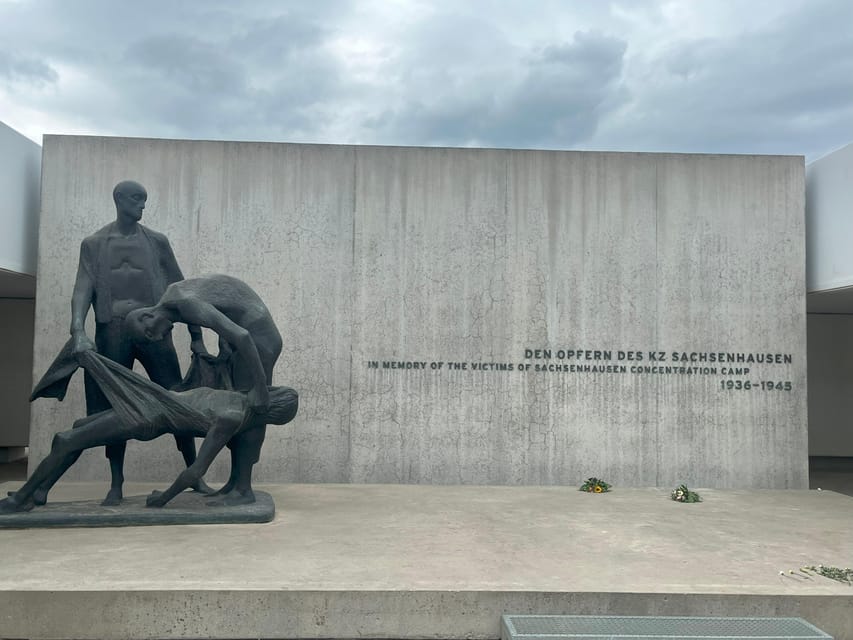
Sachsenhausen is not a sightseeing stop in the usual sense. It is a place where the machinery of Nazi terror becomes painfully clear: the SS offices, prisoner barracks, roll-call ground, infirmary, and Station Z, where Soviet prisoners were murdered. The tour also shows how ordinary family life continued for camp officers just beyond the prison fences.
I like the later starting time, which suits anyone who does not want an early-morning departure from Berlin. I also like the route from Potsdamer Platz through Oranienburg, since the guide places the memorial in its city setting instead of treating it as an isolated museum. The main caution is that the quality depends heavily on the guide. Siobhan earned strong praise for her clear, caring explanations, but one booking reported a guide who spent much of the visit outside the memorial and offered little help inside.
Key points to know before you book
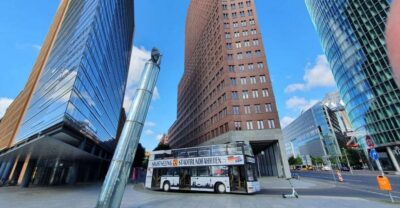
- The tour begins at Potsdamer Platz: Meet in front of Espresso House and look for the guide’s small yellow flag.
- The train fare is extra: You need a Berlin ABC ticket for the journey to Oranienburg and back.
- Station Z is one of the hardest stops: This area explains the murder of Soviet prisoners and the gas chamber and crematorium complex.
- The tour lasts about four and a half hours: That includes the train, bus, walking, breaks, and time at the memorial.
- Bring food and water: Camp food options are limited and may not be open.
- The tour is in English and wheelchair accessible: Children under 12 cannot join.
Why Sachsenhausen matters beyond the camp gates
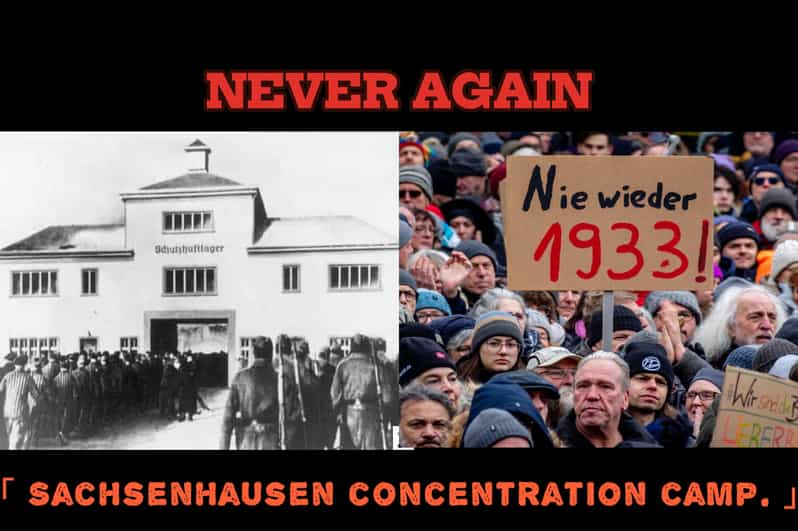
The tour starts in Berlin, but the main lesson begins before you reach the memorial. On the train to Oranienburg, you get an introduction to Hitler’s rise, the Nazi system of concentration camps, and the reasons this site was chosen.
That context matters. Without it, Sachsenhausen can feel like a collection of stark buildings and empty spaces. With it, you begin to understand that the camp was planned as a model of Nazi control. Its layout, guard positions, prisoner zones, work areas, and administrative buildings were all part of a system built to reduce people to categories, labor, and numbers.
Oranienburg itself also adds an important layer. The city endured wartime bombing, yet the camp was left untouched. That contrast raises difficult questions about what local people knew, what they chose not to see, and how a place of imprisonment could exist beside normal town life.
I appreciate that the tour does not present the camp as a remote crime scene with no connection to the present. It links the memorial to modern German politics, including the rise of the AfD, a German far-right party. You are asked to look at the past, then consider how racism, denial, and political extremism can return in new forms.
More WWII History Tours in Berlin
- Berlin: Third Reich and Cold War 2 Hour Walking Tour
★ 4.9 · 6,830 reviews - Berlin: Sachsenhausen Concentration Camp Tour in English
★ 5.0 · 5,711 reviews - Berlin’s Best: 2 Hour Walking Tour Third Reich and the Cold War
★ 5.0 · 5,486 reviews
From Potsdamer Platz to Oranienburg
Your meeting point is in front of Espresso House at Potsdamer Platz. The guide carries a mini yellow flag, which should make the group easier to find in this busy part of Berlin.
The train ride takes about 35 minutes. A bus or coach then carries you for roughly 10 minutes to the Sachsenhausen Memorial. This is public transport rather than a private door-to-door excursion, so allow for a little movement between the different parts of the journey.
You need a Berlin ABC ticket, and it is not included in the tour price. Buy it before setting out, since the trip crosses from central Berlin into the outer fare zone. The return journey follows the same basic pattern, with about 10 minutes by bus and 35 minutes by train back to Potsdamer Platz.
The transport plan is simple, but the extra ticket is an important cost detail. At $38 per person, the tour price covers the guide and entrance arrangement, not your train fare. Since the memorial itself is free to enter, you are paying mainly for interpretation, organization, and the convenience of traveling with a guide.
The visitor center and the camp’s planned design
The walk from the station leads to the visitor center. Models there help you see the full layout before you enter the main memorial grounds.
This is one of the most useful parts of the visit. Sachsenhausen can be difficult to read on foot because much of the original camp has been lost or altered. A model lets you see how buildings, fences, guard towers, work areas, and prisoner blocks fit together.
The guide explains how architecture was used to control people. This was not simply a place with walls around it. The design helped the SS watch, separate, intimidate, and punish prisoners. The physical plan supported the Nazi belief in racial hierarchy and absolute authority.
You also learn about the former SS training camp. It has since become a Brandenburg police academy, an unsettling change of use that connects the site’s past with present-day institutions. I find this kind of detail more valuable than a list of dates because it forces you to think about how places carry difficult memories after the original events end.
The SS area and the normal life of camp officers
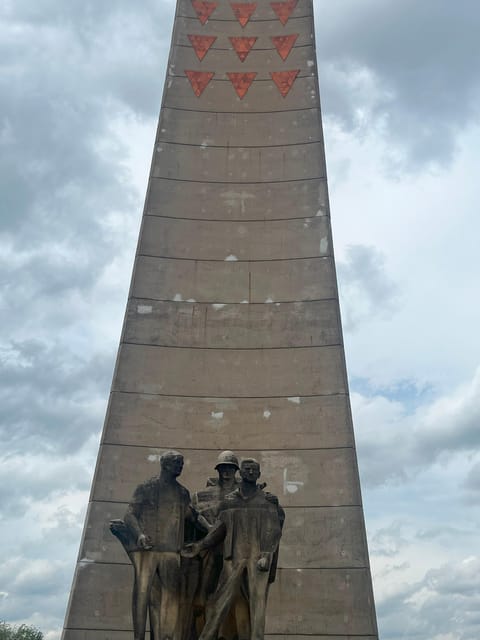
The tour continues through the former SS troop camp and toward the head of the camp’s house. Here, the distance between perpetrators and victims becomes especially disturbing.
SS officers could spend time with their families while prisoners suffered nearby. The point is not simply that guards committed violence. It is that they could treat that violence as a job, then return to domestic routines.
The tour also discusses the sexual exploitation of female prisoners. Women were forced into sex work, while reporters, ambassadors, and humanitarian groups visited the camp at different times. That history leads to a hard question: who knew?
This section helps you see the camp as a social system, not only a killing site. People worked there, visited it, administered it, profited from prisoner labor, and lived close enough to know that something terrible was happening.
More wartime history tours in Berlin:
- Berlin: Sachsenhausen Concentration Camp Memorial Tour
★ 4.7 · 3,716 reviews - Third Reich Berlin: Hitler and WWII Walking Tour
★ 5.0 · 3,301 reviews - Sachsenhausen Concentration Camp Bus Tour in English from Berlin
★ 5.0 · 1,962 reviews - Berlin: Sachsenhausen Concentration Camp Tour in English
★ 4.8 · 1,889 reviews
Tower A, roll calls, and the business of cruelty
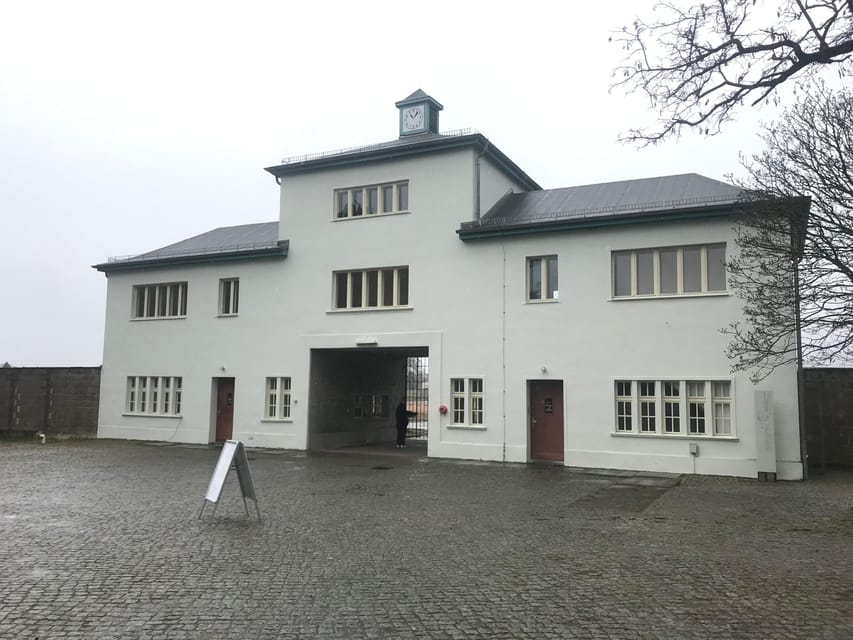
Tower A is the main entrance and one of the most recognizable parts of Sachsenhausen. Its Perpetrators’ Room exhibition focuses on SS indoctrination and the men who carried out the camp system.
Portraits of officers show how the Nazi system trained people to accept racial ideology and cruelty as normal. The tour asks you to consider how propaganda and group loyalty can turn ordinary careers into instruments of terror.
From Tower A, the story moves into the daily routines imposed on prisoners. Roll calls could take hours, regardless of weather or illness. Prisoners were reduced to bodies that could be counted, inspected, punished, and sent to work.
One of the most disturbing examples is the shoe-testing track. Prisoners from the lowest categories were forced to walk or run for long periods to test military footwear. The SS and private companies gained useful information and labor, while prisoners suffered exhaustion, injury, and death.
That detail makes the camp’s economic purpose clear. The Nazis did not only imprison people because of race, politics, religion, or identity. They also exploited their labor. Human pain became part of a business process.
Barracks and kitchen: what you explore on your own
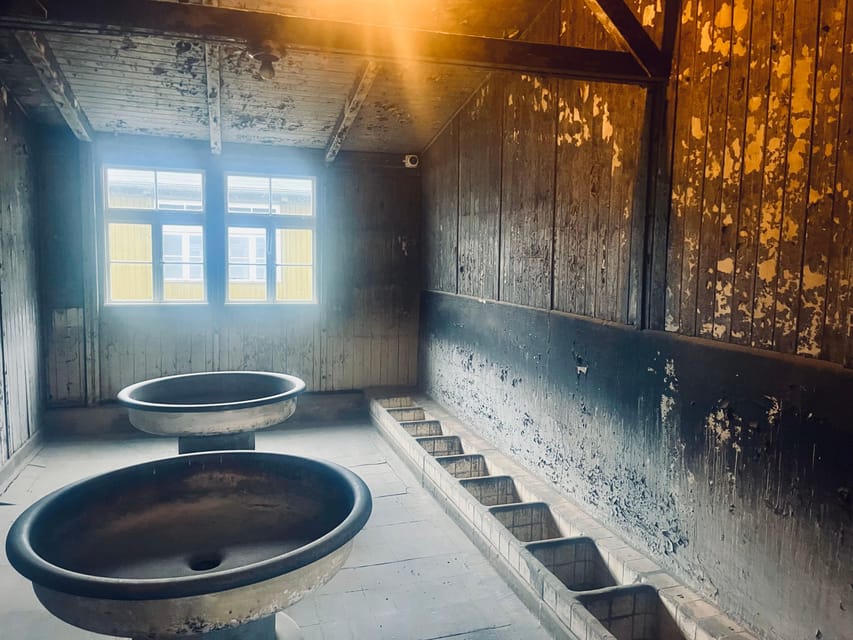
Part of the visit allows you to explore the prisoner barracks and camp kitchen independently. This gives you time to absorb the site at your own speed, but it also creates a possible weakness.
One booking reported that the guide accompanied the group through only a small portion of the memorial and stayed outside because the site was not comfortable with guides inside. That experience is not consistent with the strong praise given to Siobhan and other guides, but it is worth considering before you pay for a guided visit.
Ask at the beginning how much of the memorial the guide will walk through with you and where independent time begins. A good guide can add meaning that you will not get from signs alone, but you also need enough time to read and look quietly.
The barracks and kitchen have another modern connection. Neo-Nazi groups have attacked parts of the memorial while denying the Holocaust. That fact shows why preservation matters. The site is not only about events that ended in 1945. It remains a target in current political struggles over truth, memory, and racism.
Station Z and the murder of Soviet prisoners
Station Z is the most direct encounter with mass murder on the route. It explains the killing of Soviet prisoners, including child soldiers, and the operation of the gas chambers and crematorium.
The name itself has a grim logic. Tower A was the entrance to the camp, while Station Z represented the end. The area was designed for murder away from the main prisoner compound, although no physical arrangement could make the crimes less connected to the wider camp system.
This is a quiet place, and you should expect the tone of the group to change here. The guide’s job is not to make the story easier than it is. It is to explain what happened clearly and give you enough context to understand the scale and method of the crimes.
If you are sensitive to descriptions of murder, gas chambers, cremation, and children being killed, prepare yourself before booking. This is not an attraction for casual entertainment. It is a serious memorial visit, and the tour’s title, Never Again, is a direct statement of purpose rather than a marketing flourish.
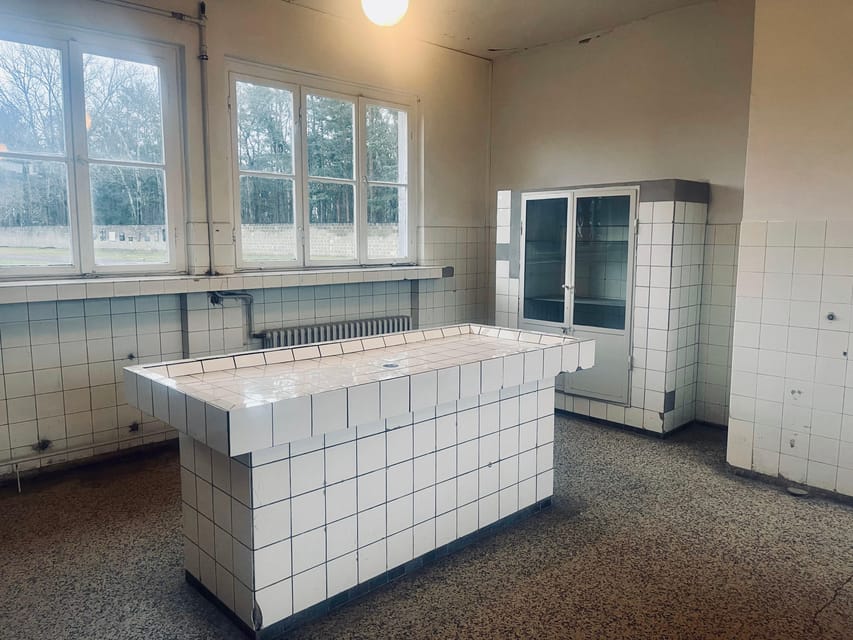
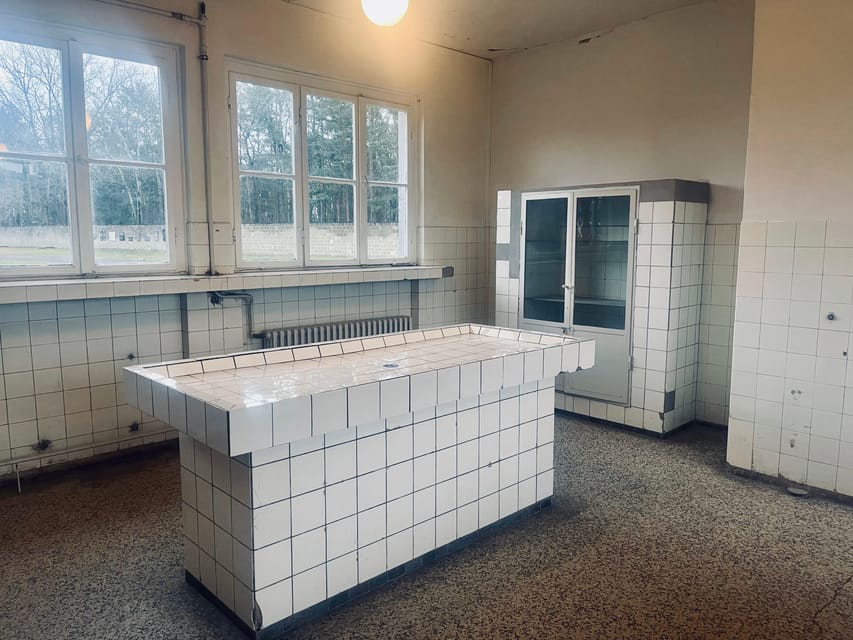
The infirmary and Nazi medical crimes
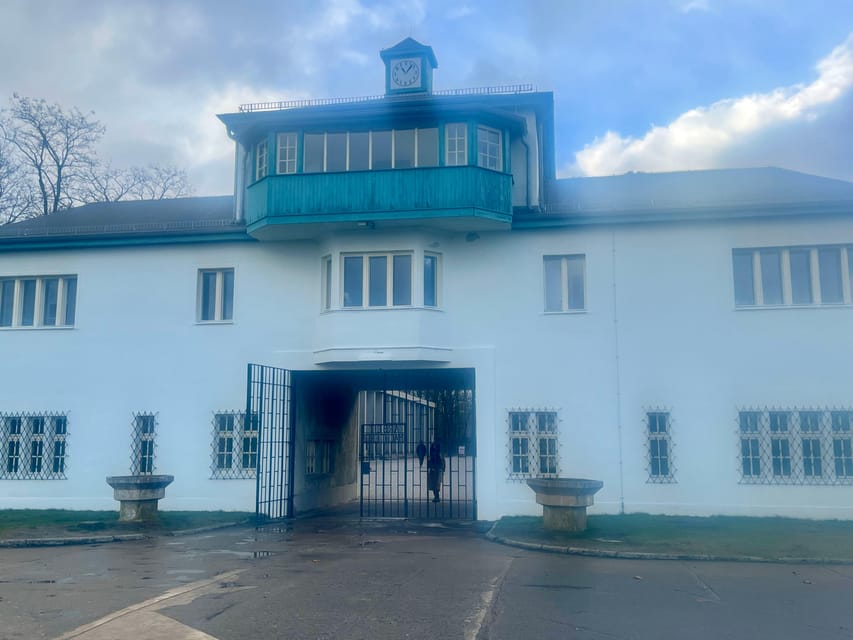
The infirmary reveals another part of the camp system: the use of prisoners for medical experiments and professional advancement.
Here, the tour covers racism, eugenics, control over women’s bodies, and the treatment of prisoners as laboratory subjects. Nazi doctors could use people in their care to build careers, conduct experiments, and support racial theories.
This section is especially important because it shows that Nazi crimes were supported by educated professionals, bureaucratic systems, and medical language. Evil did not appear only in the form of shouting guards and weapons. It also appeared in paperwork, diagnosis, research, and institutional ambition.
The story of women’s bodies is also central. The infirmary helps explain how Nazi racial policy affected reproduction, health, and personal control. You leave with a broader understanding of persecution, not just the image of a prisoner behind a fence.
How good is the guide service?
The strongest part of this experience is the guide when the guide is engaged with the group. Siobhan received especially warm praise for her careful explanations, passion, and ability to adjust the visit to the people with her. She also helped a group after they made a mistake and waited for them, which is useful on a long public-transport outing.
That personal help matters. Sachsenhausen is spread out, and the train and bus connections add another chance for confusion. A guide who keeps the day calm and explains the site in plain English can make a serious visit easier to manage.
The feedback is not entirely consistent. One booking described a vague, disjointed explanation and said the guide did not accompany the group for most of the visit. Another concern was that two languages were handled at once, which can slow the pace and make explanations less direct.
The tour is advertised in English, so confirm the language arrangement when you arrive. If the group is mixed, you may spend longer waiting between explanations. The overall rating is 4.3 from 26 ratings, which suggests a generally positive experience but not a flawless one.
Is $38 a fair price?
The listed price is $38 per person, and you must add the Berlin ABC train ticket. Entrance to the memorial is free, so the price can feel high if you are only measuring admission.
The real value is the guided interpretation and the planning. You do not have to work out the route to Oranienburg, identify each memorial area, or connect the camp to the rise of Hitler, forced labor, medical crimes, and modern far-right politics by yourself.
Still, this is an affordable tour rather than a premium private experience. The guide may ask for a donation if the visit leaves a strong impression. Treat that as optional, not as a hidden admission charge.
I would book it if you want a structured first visit and prefer to travel with someone who can explain the site in English. If you are comfortable arranging transport, reading the memorial material, and spending several hours alone with difficult history, you can visit without paying for a guide.
Timing, comfort, and who should book
The full outing lasts 270 minutes, or about four and a half hours. The memorial portion is listed at roughly four hours, with the train and bus legs making up the rest.
Wear comfortable shoes and clothes. You will walk outdoors and spend a long time on your feet. Bring water and snacks because there are only two food options at the camp, and they may not be open.
The experience is not suitable for children under 12. That age limit makes sense given the subjects covered, including murder, forced labor, sexual exploitation, medical experiments, and the crematorium.
The tour is wheelchair accessible, but the route includes public transport and walking. If you have specific mobility needs, ask the provider for current route details before booking. Free cancellation is available up to 24 hours in advance, and you can reserve now and pay later, which gives you some flexibility with a Berlin schedule.
Should you book Never Again Sachsenhausen?
Book this tour if you want serious historical guidance, an English-speaking group, and a later start from central Berlin. The route covers far more than the entrance and barracks: you see the SS world, Tower A, the shoe-testing track, Station Z, the infirmary, and the memorial’s links to modern Germany.
I would be more cautious if you expect a fully escorted tour inside every building or want the lowest possible cost. The train fare is extra, the memorial entrance is free, and guide quality appears to vary.
For a first visit, the tour offers useful structure and emotional context. Bring food, buy your ABC ticket in advance, wear good shoes, and ask how much time will be guided versus independent. If Siobhan is leading your departure, the available feedback suggests you are likely to get the careful, human explanation this difficult place deserves.
FAQ
Where does the tour start?
Meet in front of Espresso House at Potsdamer Platz. The guide will carry a mini yellow flag.
How long does the experience last?
The total duration is 270 minutes, or about four and a half hours.
How do I reach Sachsenhausen from Berlin?
The group takes a train from Potsdamer Platz to Oranienburg, followed by a bus or coach to the memorial. Each train segment takes about 35 minutes, and each bus segment takes about 10 minutes.
Is the train ticket included?
No. You need to buy a Berlin ABC ticket for the journey to Oranienburg and back.
Is entrance to Sachsenhausen included?
Yes. The tour price includes entrance arrangements, although the memorial itself is free for visitors.
What language is the tour in?
The live tour guide speaks English. One booking raised a concern about two languages being handled at the same time, so you may wish to confirm the language setup before departure.
What should I bring?
Bring comfortable shoes, water, snacks, and comfortable clothes. Food and drink choices at the camp are limited and may not be available.
Can children join the tour?
No. The experience is not suitable for children under 12.
Is the tour wheelchair accessible?
Yes, the activity is listed as wheelchair accessible. Since the trip uses a train, bus, and walking route, ask the provider about your specific needs before booking.
Just added around Berlin
- eSIM for Germany and 34 European Countries★ 4.5 · 16 reviews
- Your ticket to The Wall Museum Berlin★ 3.0 · 60 reviews
- Walking on the Wall: 3-Hour Tour in Berlin★ 4.5 · 34 reviews
- Rickshaw Tours Berlin – Groups of up to 16 people with several rickshaws★ 4.0 · 97 reviews
- Warnemuende Shore Excursion: Private Berlin Tour★ 4.5 · 27 reviews
- Love and War in Berlin: Self-Guided Story Puzzle Walk★ 5.0 · 7 reviews
- Warnemuende Shore Excursion: Berlin Private Sightseeing Tour from Rostock★ 5.0 · 4 reviews
- Cold War Berlin – Private Live Virtual Experience★ 5.0 · 4 reviews
Berlin Tours, compared.
Reichstag, Dome and Government District Guided Tour
Read our review →
1-Hour City Tour by Boat with Guaranteed Seating
Read our review →

Reichstag, Plenary Chamber, Cupola & Government Tour
Read our review →
Browse the lists this tour appears in