
Review · BERLIN TOURS
Berlin: Berlin Wall & East Side Gallery Walking Tour
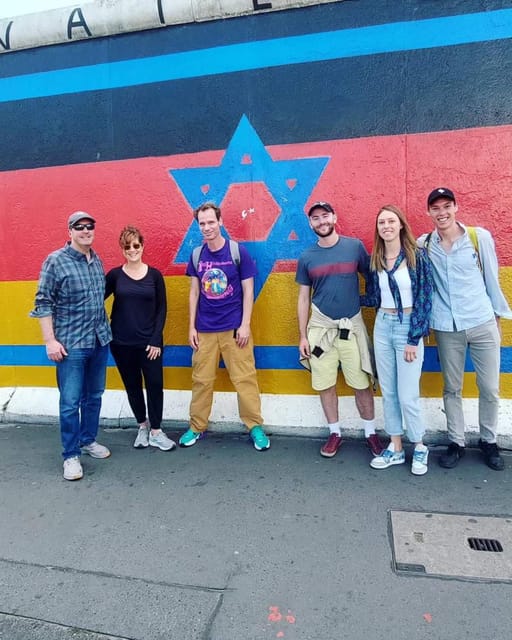
Berlin’s Wall is more than a strip of concrete and painted murals. On this two-hour walk, you connect the Cold War story to the art, architecture, and politics that shaped modern Berlin. Guide Cristobal, also called Cris, brings an art historian’s eye to the East Side Gallery and explains why these paintings mean more than their familiar postcard images suggest.
I like two things in particular. First, the tour links the Wall with the East Side Gallery’s artists and symbolism, rather than treating the murals as a row of photo stops. Second, Cris offers photography help and useful suggestions for coffee, food, shopping, and nearby sights after the walk. The main consideration is pace: two hours is tight for so much material, and the tour may spend more time on street art than on the Wall itself.
Key points
- East Side Gallery in depth: Spend about an hour examining murals, their political messages, and the artists who created them.
- History beyond dates: Connect Berlin’s division, the Wall’s fall, and the 1990s art scene to present-day politics and city life.
- A useful route: Walk through Friedrichshain, cross Oberbaumbrücke, and finish near Schlesisches Tor in Kreuzberg.
- Photography guidance: Learn where to frame street art, old architecture, and major Berlin landmarks.
- Personal, flexible style: The guide adapts explanations and sometimes adjusts the pace for weather or group needs.
- Good neighborhood advice: Finish with suggestions for local coffee, restaurants, landmarks, or shopping.
Why this Berlin Wall walk feels different
Many Berlin Wall tours focus on escape attempts, border guards, and the political crisis that divided Germany. Those subjects matter, but this walk adds another layer: what happened to the Wall after the border opened and how artists turned a former symbol of control into a public art site.
That makes the experience a good fit if you want more than a list of dates. You will hear about the Wall and Cold War episodes, then look closely at how artists responded to the events around them. The tour treats art as part of Berlin’s political story, not as decoration placed beside it.
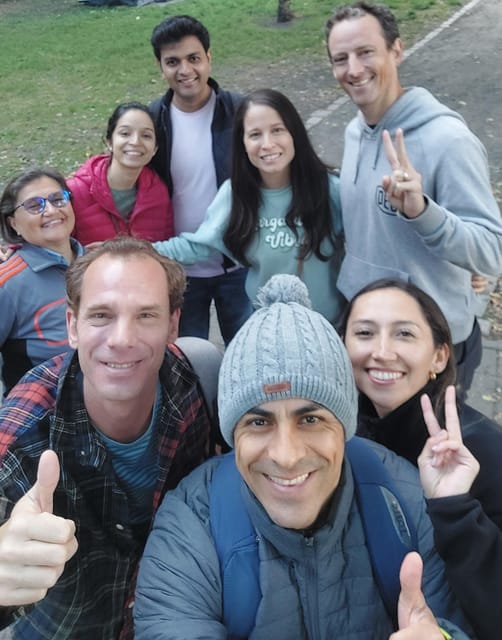
Cris is the central reason the tour has such a strong identity. He speaks English and Spanish, and his explanations cover art, architecture, local history, and geopolitics. He is especially interested in the techniques, influences, and social ideas behind the murals. If you ask questions, the format allows room for discussion rather than forcing you through a fixed speech.
The style can be energetic and personal. That is a plus if you enjoy a guide who offers interpretation and alternative points of view. If you prefer a strictly neutral, date-by-date presentation, you may find the approach more opinionated than a standard history walk.
More Wall and Cold War walks:
- Berlin: Third Reich and Cold War 2 Hour Walking Tour
★ 4.9 · 6,830 reviews - Berlin’s Best: 2 Hour Walking Tour Third Reich and the Cold War
★ 5.0 · 5,486 reviews - Berlin: DDR Museum Tickets
★ 4.3 · 3,443 reviews
Starting in Friedrichshain and Kreuzberg
The listed meeting point is East Side Bäckerei at Warschauer Str. 34-36, though the exact starting place depends on the option you book. Check your confirmation carefully before setting out, since this part of Berlin has several busy streets and transport connections.
The opening section covers Friedrichshain and Kreuzberg for about 20 minutes. This is useful preparation for the Wall because you begin with the neighborhood rather than arriving at the gallery without context. You get a sense of the old division between East and West Berlin, along with the changes brought by reunification and the city’s later art culture.
This part also helps explain why the area is such a natural setting for a street art tour. Old structures, former industrial spaces, public walls, and newer creative businesses appear close together. The tour’s focus is not only on famous landmarks. It also points out other locations connected to Berlin’s art and street art scenes.
Keep your eyes open during this first stretch. The guide may point out architectural details or urban art that you would easily pass on your own. The route is designed to get you looking at the city as a photographer and observer, not simply as someone moving between attractions.
Reading the East Side Gallery mural by mural
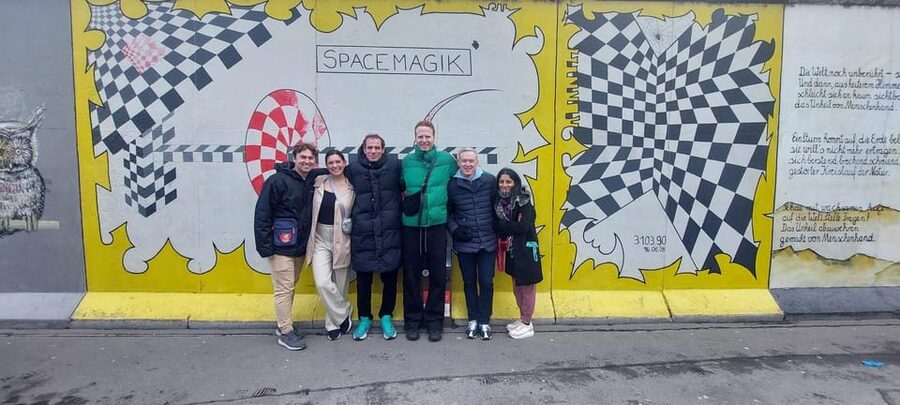
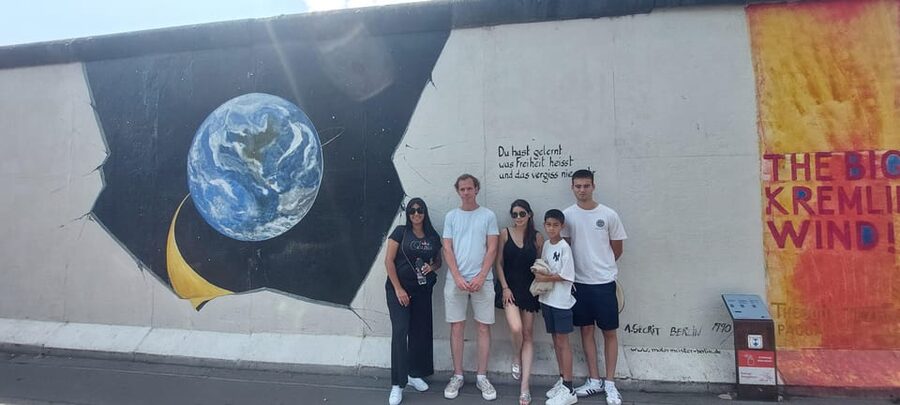
The East Side Gallery is the heart of the tour, with about an hour set aside for a guided visit. This is the longest stop for good reason. The open-air gallery contains one of the world’s largest collections of murals on a remaining section of the Berlin Wall, and the paintings carry very different tones, styles, and messages.
You will not simply walk past the famous images while taking photographs. Cris explains the artists’ motivations, the historical moment after the Wall fell, and the cultural meaning of the work. He also discusses artistic methods and the way political ideas appear through color, symbols, figures, and composition.
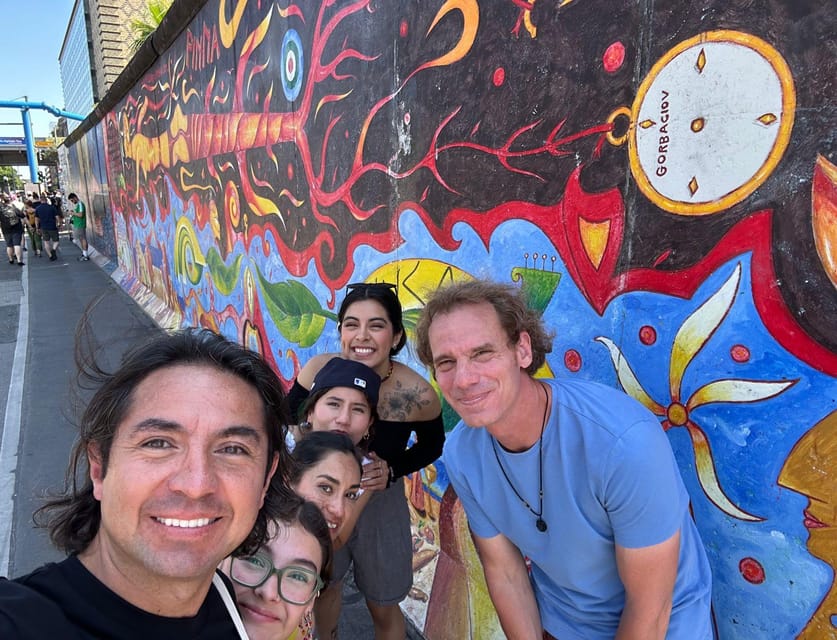
That extra explanation changes how you see the murals. A painting that first looks playful or familiar may connect to freedom, division, peace, government, national identity, or the hopes surrounding reunification. You are encouraged to form your own interpretation, too. The guide provides background, but he does not treat every image as having only one possible meaning.
The East Side Gallery also raises an important question about public art: what happens when spontaneous political expression becomes a major tourist attraction? The tour can help you think about the tension between preservation, public access, photography, graffiti, and the changing purpose of the Wall.
This is where the experience is strongest for art lovers. Cris has a clear passion for urban art and explains the influences behind the paintings with unusual care. Families can also get a lot from this stop because the art gives younger visitors a concrete way to discuss freedom, borders, political change, and how societies remember difficult events.
Allow time for crowds, interruptions, and uneven walking conditions. The gallery is outdoors, and the experience depends on the weather. In winter, cold can make it harder to concentrate, although the guide has adjusted the pace and kept groups involved during freezing conditions.
The Wall’s history beneath the painted surface
The art is the main attraction, but the tour also puts it into the setting of Berlin’s division. You learn about the Wall’s role in the Cold War and the episodes that made it one of the most powerful political symbols of the 20th century.
The route includes the Berlin Wall and a Berlin Wall museum or memorial point listed among the landmarks. The exact amount of time spent at each historical location can vary, since the walk gives substantial attention to the artwork. If your main goal is a detailed study of escape tunnels, border systems, or every stage of the Wall’s construction, you may want a more specialized history tour as well.
For most people, the balance is appealing. You see the remaining physical traces while also learning how Berlin’s divided past still affects its politics and identity. The guide connects major events to what you are looking at on the street, which makes the subject easier to grasp than a lecture indoors.
One useful feature is the discussion of the 1990s, when artists created work during a period of dramatic change. The Wall’s fall did not erase the differences between East and West overnight. Art became one way for people to express optimism, confusion, protest, and a new sense of possibility.
The tour also reaches into current geopolitics. That does not mean every stop becomes a political debate, but the guide uses Berlin’s past to explain why the city still matters in today’s world. If you enjoy connecting history with present events, this is one of the walk’s strongest qualities.
More museums and galleries in Berlin:
- Berlin: Jewish Museum Berlin Entrance Ticket
★ 4.5 · 8,393 reviews - Berlin: Natural History Museum Entrance Ticket
★ 4.6 · 3,382 reviews - Berlin: Neues Museum Entry Ticket
★ 4.6 · 3,261 reviews - Skip-the-Line: Berlin Wall Museum at Checkpoint Charlie
★ 4.1 · 2,041 reviews
Crossing Oberbaumbrücke
After the gallery, the route reaches Oberbaumbrücke, one of Berlin’s best-known bridges. The bridge links Friedrichshain and Kreuzberg and makes a natural transition between the two sides of the tour.
Here, architecture and history come together. The bridge is visually striking, and it provides a strong setting for photographs. The walk uses the crossing to discuss the area’s identity and the way Berlin’s former division still echoes through its neighborhoods.
The bridge is also a good reminder that Berlin’s landmarks are not isolated museum pieces. People cross it for ordinary reasons, while visitors stop to look at the structure and the river views. That mixture of daily life and major history is part of what makes this part of Berlin so interesting.
The bridge can be busy, and city sounds may interrupt the conversation. Sirens, traffic, and passing motorcycles have occasionally made it harder to hear, so stay close to the guide and ask him to repeat anything you miss. The tradeoff is that you are experiencing a real city street, not a quiet exhibition hall.
Finishing in Kreuzberg near Schlesisches Tor
The final section takes about 20 minutes through Kreuzberg and ends at Schlesisches Tor. It gives the walk a useful local finish instead of dropping you back at the starting point.
Kreuzberg is important to the tour because its streets help show how history, migration, art, nightlife, food, and neighborhood change overlap in Berlin. The route does not promise a full tour of every part of Kreuzberg, but it gives you a short introduction and helps you understand the connection between the Wall area and the surrounding districts.
This is also where Cris’s practical advice becomes valuable. He can suggest places for coffee and food, along with other landmarks and shopping areas. One particularly useful approach is to treat the end of the tour as a starting point for your own afternoon. Ask for a recommendation that matches your budget and interests before you leave.
Ending near Schlesisches Tor may suit you if you plan to continue exploring Kreuzberg or the nearby streets. It is less convenient if you need to return to the original meeting point, so plan your next stop from the finish rather than assuming the walk is circular.
Photography tips that add real value
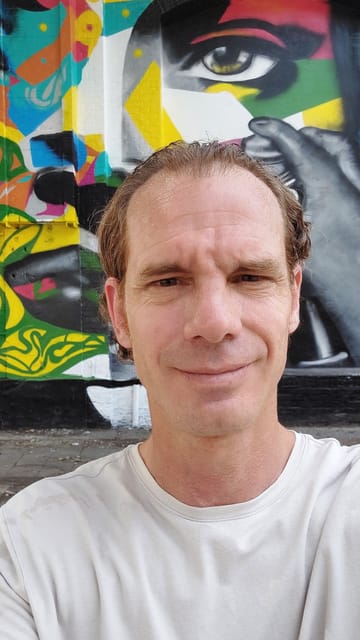
The tour includes photography guidance and suggestions for taking specific pictures at specific places. This is not a formal camera course, but it can help you make better use of the Wall, mural surfaces, old architecture, and bridge views.
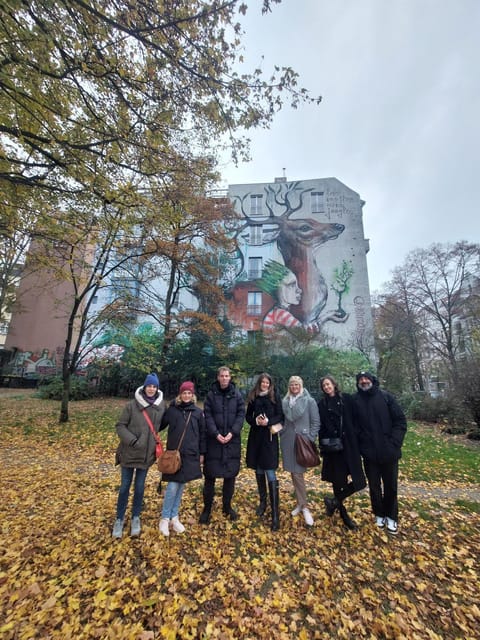
You may be shown how to frame a mural with its surrounding architecture, where to position a family group, or how to avoid taking the same flat image as everyone else. Cris also offers to take photographs for participants, which is useful if you want a picture of your whole group rather than another collection of solo shots.
Bring a phone or camera with enough battery. The tour is particularly worthwhile for people who already enjoy visual details, but you do not need professional equipment. The photography advice works at a basic level and is tied directly to the places you are visiting.
Remember that stopping for photographs can affect the pace. If you want to study every mural and take many pictures, two hours may feel short. If you prefer a brisk overview with a few good images, the timing should feel more comfortable.
How much value do you get for $29?
At $29 per person, this is fairly priced for a two-hour guided walk in one of Berlin’s most significant areas. You are paying not only to be led between landmarks, but for interpretation of the murals, historical context, photography help, and neighborhood suggestions.
The value depends on your interests. If you would otherwise walk along the East Side Gallery alone and only recognize the most famous paintings, the guide adds a great deal. The difference between seeing a mural and understanding its political setting is substantial.
The price is less compelling if you want a long, exhaustive Wall history lesson. Two hours does not allow for every memorial, museum exhibit, and Cold War episode. This experience is best understood as a combined art and history walk, with the East Side Gallery receiving the most attention.
The intimate feel can also vary with group size. Some departures have been very small, including one-person or four-person groups, while the supplied details do not guarantee a particular maximum. A smaller group gives you more room for questions and photography help, but you should not book solely on the assumption that every departure will be private.
Weather, walking, and language

Berlin weather can change quickly, and this is an outdoor walking activity. Wear comfortable shoes and dress for the forecast. In cold months, bring warm, thermal, or snow clothing as needed. The guide has adapted the route and pace during icy weather, but good clothing is still your responsibility.
The walk is listed as wheelchair accessible, but it is still a walking tour with outdoor surfaces and regular movement between stops. The activity information advises against attending with a broken foot or similar physical problem. If you have a hearing impairment, note that no sign language interpreter is provided.
The tour is conducted in English or Spanish. You should be comfortable speaking and listening in your chosen language, since much of the value comes from detailed explanations and discussion. If you need a slower pace of spoken English, communicate that before or at the start, because the guide may cover a great deal of material in two hours.
Free cancellation is available up to 24 hours before the start for a full refund, and you can reserve without paying immediately. Those policies make it easier to fit the walk around uncertain plans, but they do not remove the need to check the exact meeting point and start time.
Who should book this East Side Gallery tour?
I would choose this walk if you fall into one of these groups:
- You want Berlin Wall history with serious attention to art and symbolism.
- You enjoy street art, architecture, photography, or urban culture.
- You are visiting Berlin for the first time and want a lively introduction to Friedrichshain and Kreuzberg.
- You like asking questions and discussing different ways to interpret public art.
- You want neighborhood tips for food, coffee, shopping, and nearby sights.
- You are happy with a personal guide’s perspective rather than a purely formal presentation.
Families can enjoy it, especially if children respond better to visual stories than to museum displays. The paintings offer plenty to discuss, and the guide can make large political events easier to understand through concrete images.
You may want another tour instead if your priority is Nazi-era Berlin, a full Cold War timeline, or a museum-centered experience. You should also allow extra time on your own if you want to photograph every mural carefully.
Should you book it?
Book this tour if you want to understand why the East Side Gallery matters, not just take pictures of it. Cristobal’s strength is the link between art, Berlin’s divided past, architecture, and present-day politics. His enthusiasm for the artists and his willingness to discuss different interpretations give the walk a personal character.
The main caution is the limited two-hour schedule. You may spend more time on street art than expected, and the Wall history will not cover every subject in equal depth. For most people interested in both art and history, that is a fair trade at $29.
Wear proper shoes, dress for the weather, arrive ready to walk, and keep the rest of your day flexible near Schlesisches Tor. If you want a thoughtful, visually engaging introduction to this corner of Berlin, this is a strong choice.
FAQ
How long does the Berlin Wall and East Side Gallery tour last?
The tour lasts two hours. It includes guided time in Friedrichshain-Kreuzberg, about one hour at the East Side Gallery, time at Oberbaumbrücke, and a final section in Kreuzberg.
What landmarks are included?
The experience includes the Berlin Wall, a Berlin Wall museum or memorial point, the East Side Gallery, the Cengaver Katranci Memorial, Oberbaumbrücke, Friedrichshain-Kreuzberg, and Kreuzberg.
What languages are available?
The live tour guide speaks English or Spanish. You should be able to speak and understand your selected language well enough to follow a detailed walking discussion.
Is the tour wheelchair accessible?
The activity is listed as wheelchair accessible. It is still an outdoor walking tour, so the activity information advises against attending with a physical problem such as a broken foot.
What should I wear or bring?
Bring comfortable shoes and clothing suited to the weather. In cold conditions, use warm, thermal, or snow clothing. Check the Berlin forecast before you leave.
Where does the tour finish?
The listed finish point is Schlesisches Tor in Kreuzberg. The meeting point can vary depending on the option booked, so check the details for your selected departure.
More Walking Tours in Berlin
- Discover Berlin Half-Day Walking Tour
★ 5.0 · 9,624 reviews - Berlin: Discover Berlin Walking Tour
★ 4.9 · 5,998 reviews - Berlin: Hidden Backyards Guided Walking Tour
★ 4.8 · 5,360 reviews - Third Reich Berlin: Hitler and WWII Walking Tour
★ 5.0 · 3,301 reviews
Just added around Berlin
- From Berlin: Gardens & Palaces of Potsdam Bike Tour★ 5.0 · 61 reviews
- Berlin: Battle for Seelow Heights WW2 tour -Clash of Titans★ 5.0 · 27 reviews
- From Berlin: Historical Gems of Potsdam Private Day Trip★ 4.4 · 4 reviews
- Berlin: Französischer Dom 360° Panorama & Crémant to go★ 3.9 · 5 reviews
- Explore Berlin Tour: History and Highlights★ 4.7 · 5 reviews
- Berlin: Expats in Berlin Comedy Show Ticket★ 4.7 · 182 reviews
- Berlin: Evening Yacht Cruise with Aperitif & Dinner Upgrade★ 4.6 · 178 reviews
- Berlin: The Epic Comedy Club Friday Night Showcase★ 4.8 · 28 reviews
Berlin Tours, compared.
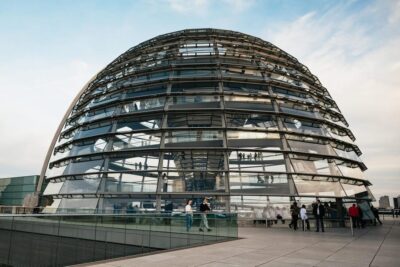
Reichstag, Dome and Government District Guided Tour
Read our review →
1-Hour City Tour by Boat with Guaranteed Seating
Read our review →
Reichstag, Plenary Chamber, Cupola & Government Tour
Read our review →
Browse the lists this tour appears in