
Review · BERLIN TOURS
DDR Museum Berlin Admission Ticket
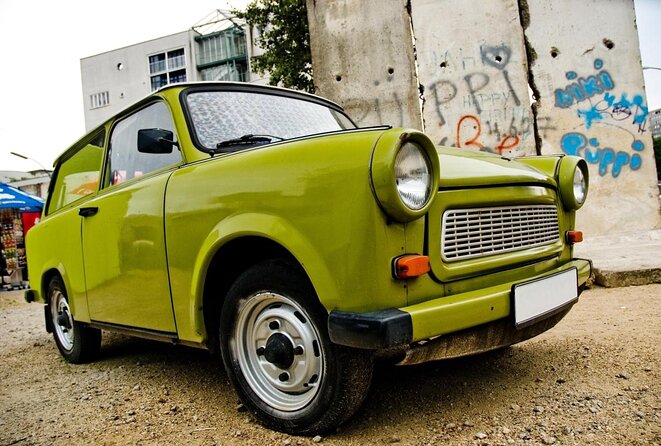
The most revealing part of the DDR Museum is not a grand political display. It is the ordinary stuff: a cramped East German apartment, a television showing state programming, kitchen appliances, school and work details, and the famous Trabant car. These objects show how socialism shaped daily life in East Germany from 1949 to 1989.
I like the hands-on exhibits, especially the chance to sit inside a Trabant and explore a recreated home. I also like the museum’s central location, directly opposite Berlin Cathedral, which makes it easy to fit into a day of sightseeing along the River Spree.
The main drawback is space. This is a small museum, and it can become uncomfortably crowded. Some displays require reading, and the word interactive sometimes means opening a drawer or pressing a button rather than taking part in a full activity. Go at a quiet time if you want to read everything.
Key points to know before you go
- A close look at ordinary GDR life: See a recreated living room, kitchen, bedrooms, household goods, and everyday technology.
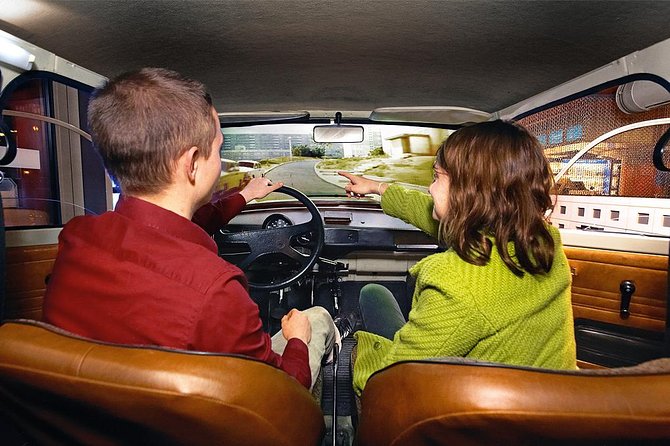
- The Trabant is a highlight: Sit inside the iconic East German car while films recreate the feel of driving through East Berlin.
- History you can handle: Open drawers, inspect objects, vote in a simulated GDR election, and experience a mock Stasi interrogation.
- English information is available: Most displays include English text, making the museum accessible to international visitors.
- Plan for one to two hours: The museum is compact, but careful readers can spend much longer with the displays.
- Crowds matter: The museum is open daily from 9 a.m. to 9 p.m., so an early or later visit may feel easier.
Seeing East Germany through daily life
The DDR Museum presents East Germany, officially the German Democratic Republic, through the routines of ordinary people. That approach makes the subject easier to grasp than a room filled only with political dates and official speeches.
You move through exhibits about home life, school, work, shopping, transportation, elections, and the Socialist Unity Party. The displays explain how the socialist state worked, but they also show how people adapted to it. You get a sense of what citizens owned, watched, drove, and experienced at home.
I find this useful because the museum connects large political events to small personal details. A government policy becomes more understandable when you see how it affected housing, consumer goods, television, or travel.
The museum covers the period after the Second World War, when East Germany came under a socialist regime behind the Iron Curtain. It continues through the decades leading to the fall of the Berlin Wall and the end of the GDR in 1989.
This is not a vast museum with long galleries and grand architecture. It is a compact, tightly packed exhibition. That helps keep the visit focused, but it also means the displays can feel crowded together.
More Wall and Cold War walks:
- Berlin: Third Reich and Cold War 2 Hour Walking Tour
★ 4.9 · 6,830 reviews - Berlin’s Best: 2 Hour Walking Tour Third Reich and the Cold War
★ 5.0 · 5,486 reviews - Berlin: DDR Museum Tickets
★ 4.3 · 3,443 reviews
Recreated rooms make the past tangible
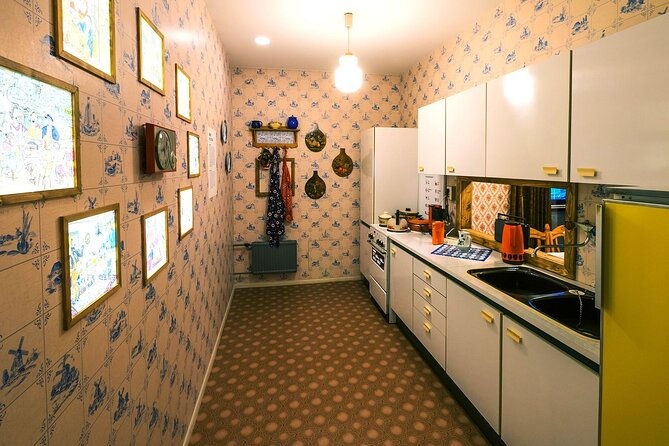
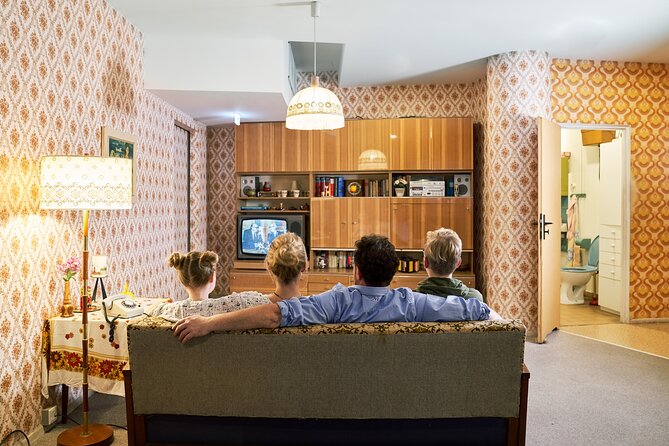
The reconstructed East German living spaces form the museum’s most memorable section. You can examine a living room with an original Carat cupboard, look at household equipment, and see how an ordinary apartment might have been arranged.
The kitchen recreation is especially useful. It shows the practical limits of small assigned housing and gives you a better sense of how families used restricted space. Rather than hearing only that housing was limited, you can look at the furniture, appliances, and room arrangement.
A television in the living room plays East German programming and propaganda. This is an important detail. Television was not simply entertainment, and the screen helps explain how the state presented its own version of events inside the home.
You should take your time here. The rooms are easy to pass through quickly, but the cupboards, appliances, labels, and screens reward closer attention. English explanations are available throughout much of the museum, so you do not need German to understand the basic story.
The displays also include bedrooms and other household areas. These sections give children something physical to inspect, while adults may spend more time reading about how housing and family life worked under the GDR system.
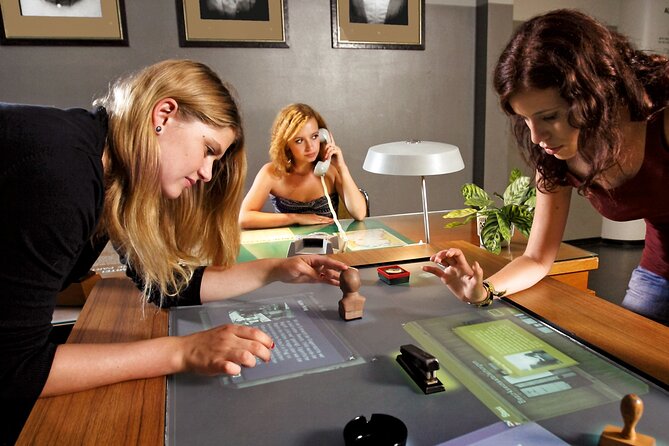
Still, families should set expectations. This is not an activity center with nonstop games. Some interactive features involve pulling out a drawer to reveal information or operating a small display. Children who enjoy pressing buttons and looking inside things should have fun, but older children may need encouragement to read the accompanying material.
The Trabant section adds a welcome change of pace
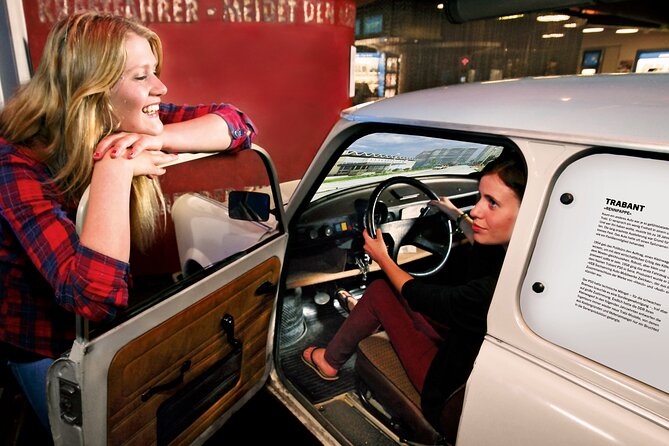
The Trabant, often called the Trabi, is one of the museum’s strongest attractions. This small car became a standard vehicle of the Eastern Bloc and is closely linked with everyday life in East Germany.
You can climb inside the car and experience a simulated trip through East Berlin. Films show ordinary street scenes, while a virtual tour takes you through a GDR housing estate. After reading about restrictions and shortages, the car gives you a physical object that makes transportation feel real.
I like this section because it breaks up the reading. The Trabant is also a natural hit with children, who can sit behind the wheel and engage with the display. Adults often find it just as interesting, especially if they remember seeing these cars in Berlin before or after reunification.
Do not expect a full driving experience. It is a simulation inside a museum exhibit, not a road tour. Its value is visual and sensory: you sit in the car, see the streets, and connect the vehicle to the larger story of East German society.
The housing-estate simulation continues that idea. It shows the planned residential areas associated with the GDR and helps explain the setting in which many families lived. Together, the car and apartment displays provide a useful picture of movement and home life.
Political exhibits explain the system behind the objects
The DDR Museum does not treat East Germany as a collection of quirky retro objects. Along with household goods and cars, it explains the political structure that controlled life from 1949 to 1989.
You can learn about the Socialist Unity Party and take part in a simulated GDR election. This helps show the difference between the appearance of political participation and the reality of a one-party socialist state.
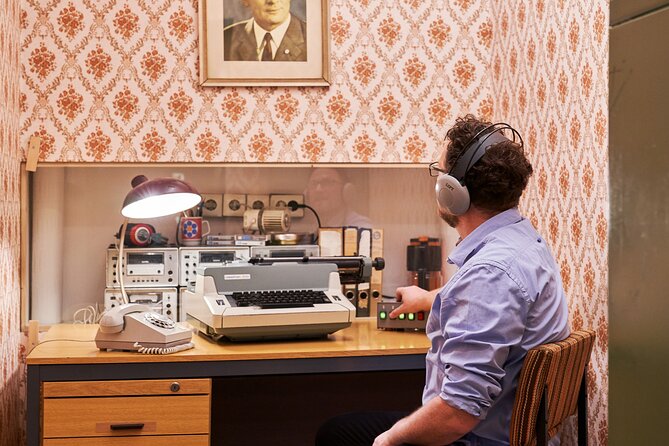
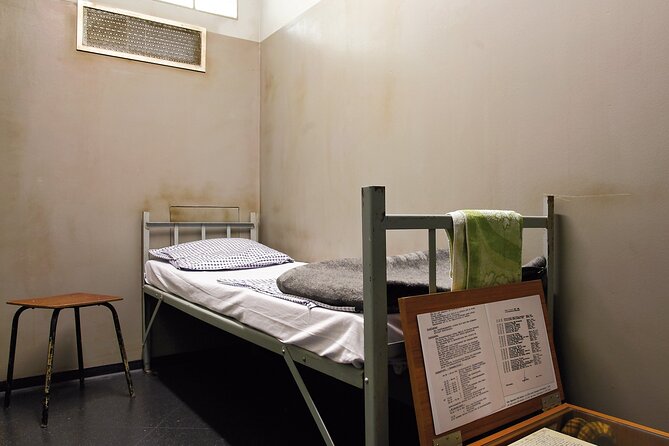
Another exhibit presents a Stasi interrogation. The Stasi, East Germany’s state security service, played a major role in surveillance and political control. The simulated interrogation gives the museum a more serious tone after the lighter household and car displays.
That balance is important. The museum is designed to be approachable and family-friendly, but the subject includes censorship, surveillance, political pressure, and the limits of personal freedom. Some people may feel that the buttons and simulations make a difficult subject too playful. I think the interactive format works best when you treat it as a starting point, not as the whole lesson.
Read the political panels as carefully as the household displays. The museum is small enough that you can see the main sections in one visit, but there is more information than you might expect in the drawers, videos, and labels.
More museums and galleries in Berlin:
- Berlin: Jewish Museum Berlin Entrance Ticket
★ 4.5 · 8,393 reviews - Berlin: Natural History Museum Entrance Ticket
★ 4.6 · 3,382 reviews - Berlin: Neues Museum Entry Ticket
★ 4.6 · 3,261 reviews - Skip-the-Line: Berlin Wall Museum at Checkpoint Charlie
★ 4.1 · 2,041 reviews
Exiting through the Berlin Wall gives the visit a clear ending
Near the end, you leave through a hole in the Berlin Wall. It is a simple device, but it gives the visit a strong finish.
The wall was not an abstract border. It divided neighborhoods, families, workplaces, and the city itself. Moving through an opening after seeing how East German life was organized gives the visit a physical sense of release.
You will not need a guide to direct you from room to room. This is a self-guided museum, and you can move at your own pace. That suits visitors who want a quick hour-long stop, as well as those who want to spend two hours reading and watching the videos.
The museum’s location makes this ending easy to connect with other Berlin sights. It is at Karl-Liebknecht-Strasse 1, on the River Spree and opposite Berlin Cathedral. You can combine it with a walk around Museum Island, although the DDR Museum itself is a separate attraction and should not be confused with the larger state museums nearby.
How long should you allow?
The stated visit time is about one to two hours. One hour is enough for a brisk look at the key rooms, the Trabant, and the main political displays.
I would allow closer to two hours if you want to read the English text, watch the videos, inspect the household objects, and try the interactive features. The compact layout can be deceptive. There may not be many large rooms, but small displays often contain extra information.
You can also spend less time if you are traveling with young children or fitting the museum between other appointments. The exhibits are arranged so that you can see the main highlights without committing to a half-day.
The best timing depends on your priorities. The museum is open daily from 9 a.m. to 9 p.m. Early morning visits may give you more room around the exhibits. A later visit can also work, since the long opening hours spread out the options. Avoid the busiest periods if reading and photography matter to you.
Crowding is the biggest practical concern
The museum’s popularity is both a strength and a weakness. A full museum creates energy, especially around the Trabant and the apartment displays, but the narrow exhibition areas can become difficult to navigate.
When it is crowded, you may need to wait to open a drawer, sit in the car, or stand close enough to read a panel. People can also bunch up around the most popular interactive stations. If you want a calm historical visit, timing matters more here than at a larger museum with broad galleries.
The building has also been described as very warm, particularly when crowded. There is no air conditioning, so a summer visit may feel uncomfortable. You may wish to keep your visit flexible rather than planning it as the central event of an entire day.
The admission ticket is a mobile ticket and costs about $16.26 per person. That is fair if you use the interactive exhibits and stay for around two hours. It feels less convincing if you rush through in an hour or find that the displays are too crowded to use.
The ticket is most useful for visitors who already plan to see the museum and want a scheduled admission. Confirmation is provided at booking, and the experience is offered in English. Keep the mobile ticket ready, but allow a little patience at the entrance. Some visitors have had trouble with electronic passes or vouchers that did not show a clear QR code or barcode.
If the ticket does not scan, show the full voucher to the staff rather than repeatedly trying the same screen. The entrance problem is not part of the museum visit itself, but it is worth knowing so you are not caught off guard.
Free cancellation is available if you cancel at least 24 hours before the start time. Cancellations or changes made inside that period are not refunded.
Who will get the most from this museum?
I would recommend the DDR Museum to anyone curious about how political systems affect ordinary routines. It works particularly well for adults who want context for Berlin’s divided past, families with children who like interactive displays, and first-time visitors who want an introduction to East German life.
It is also a good choice if you prefer objects and reconstructed rooms to long chronological displays. The apartment, kitchen, television, car, and interrogation room create a physical connection with the subject.
You may want to choose another museum, or at least keep your expectations modest, if you prefer large collections, quiet galleries, or detailed academic treatment. The museum is small, and the family-oriented format can make the historical subject feel lighter than some visitors expect.
Children can participate, but they will not understand every political section without help. I would point out the difference between a normal election and a controlled one, explain why the Stasi mattered, and use the apartment and car to start a conversation about daily life.
Is the DDR Museum worth booking?
Book it if you want an accessible, hands-on introduction to East Germany and can visit at a quieter time. The strongest parts are the recreated apartment, the Trabant simulation, the English information, and the way political control is linked to ordinary home life.
Think twice if you dislike compact museums or expect a large, formal collection. At $16.26, the ticket offers good value for a focused one to two-hour visit, but crowding can reduce what you get from it.
My practical choice would be an early morning or later evening slot. Come ready to read, not just press buttons, and give yourself enough time to use the exhibits. If Berlin’s divided past is on your list, this museum is a worthwhile stop, provided you accept its small size and lively family atmosphere.
FAQ
Where is the DDR Museum located?
The museum is at Karl-Liebknecht-Strasse 1 in central Berlin, opposite Berlin Cathedral on the banks of the River Spree.
How long does a visit take?
Plan on about one to two hours. You can see the main displays in around an hour, but careful reading and video viewing may take closer to two hours.
What are the museum’s opening hours?
The DDR Museum is open Monday through Sunday from 9 a.m. to 9 p.m.
Is the ticket available on a mobile phone?
Yes. The admission includes a mobile ticket. Keep your voucher ready at the entrance, since some electronic passes may require staff assistance.
Is the museum offered in English?
Yes. The experience is offered in English, and English information is available throughout the exhibits.
Does the ticket include food, drinks, or hotel transportation?
No. The ticket includes DDR Museum admission only. Food, drinks, hotel pickup, and hotel drop-off are not included.
Can I cancel the ticket for a refund?
Yes. You can receive a full refund if you cancel at least 24 hours before the experience start time. Cancellations or changes made less than 24 hours before the start time are not accepted or refunded.
Just added around Berlin
- Berlin: Battle for Seelow Heights WW2 tour -Clash of Titans★ 5.0 · 27 reviews
- From Berlin: Gardens & Palaces of Potsdam Bike Tour★ 5.0 · 61 reviews
- From Berlin: Historical Gems of Potsdam Private Day Trip★ 4.4 · 4 reviews
- Berlin: Französischer Dom 360° Panorama & Crémant to go★ 3.9 · 5 reviews
- Explore Berlin Tour: History and Highlights★ 4.7 · 5 reviews
- Berlin: Evening Yacht Cruise with Aperitif & Dinner Upgrade★ 4.6 · 178 reviews
- Berlin: Expats in Berlin Comedy Show Ticket★ 4.7 · 182 reviews
- Berlin: The Epic Comedy Club Friday Night Showcase★ 4.8 · 28 reviews
Berlin Tours, compared.

Reichstag, Dome and Government District Guided Tour
Read our review →
1-Hour City Tour by Boat with Guaranteed Seating
Read our review →
Reichstag, Plenary Chamber, Cupola & Government Tour
Read our review →
Browse the lists this tour appears in