
Review · BERLIN TOURS
Berlin: Cold War History and Berlin Wall Guided Walking Tour
Berlin’s Cold War story becomes clearest when you walk the old border line instead of viewing it from a museum room. This three-hour tour links Brandenburg Gate, Checkpoint Charlie, Potsdamer Platz, and the Berlin Wall Memorial, showing how a divided city worked in daily life.
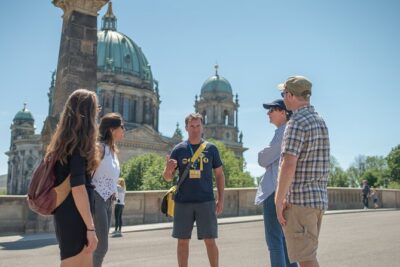
I like the mix of major sights and human stories. I also like that guides such as Eugen, Cieran, and Paul explain not only what happened, but why it happened, sometimes using family photographs and personal memories. The main drawback is simple: you walk for three hours, often beside traffic, and sound can make some explanations harder to hear.
Key points to know before you book
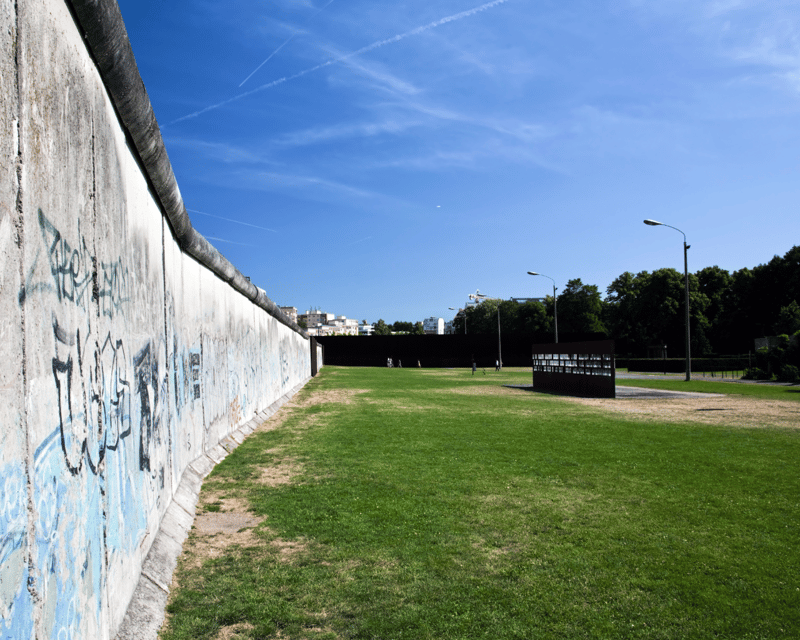
- The route covers about 75 minutes at the Berlin Wall Memorial, the tour’s main stop and best place to understand the border system.
- Checkpoint Charlie is only one part of the story, not the whole tour. You also see wall remnants, Potsdamer Platz, and the former border area along Niederkirchnerstrasse.
- The guides focus on cause and effect, from the uneasy postwar alliance to the Wall’s construction and eventual fall.
- Personal escape stories give the history a human scale, including accounts connected with families who lived through the division.
- The $31 price is fair for a three-hour guided walk, especially if you want a clear introduction before exploring museums on your own.
- Wear good shoes and dress for the weather, since the experience is outdoors and continues in rain, cold, or snow.
Berlin’s Cold War story starts at Brandenburg Gate
Meet your guide outside Hopfingerbräu at Ebertstraße 24, beside Brandenburg Gate. This is a practical starting point because the gate gives you an immediate sense of Berlin’s old division. Once a symbol of Prussian power, it later sat in the restricted area near the Wall, inaccessible to ordinary East Berliners and difficult to approach from the West.
The opening stop lasts about 15 minutes. That is enough time for your guide to place the gate in the wider postwar story without turning the first stop into a long lecture. I like starting here because you get the political setting before moving into the more physical remains of the border.
Your guide explains what happened after the Second World War, when Germany and Berlin were split among the Soviet Union, the United States, Britain, and France. The former allies soon disagreed over how Germany should be governed. Those arguments helped create two German states and turned Berlin into a major pressure point in the Cold War.
A good guide will help you keep the timeline straight. The city was divided before the Wall was built, and the Wall did not appear out of nowhere. Movement between the sectors became more restricted as tensions grew, but the final closure in 1961 changed daily life in a single night.
More Wall and Cold War walks:
- Berlin: Third Reich and Cold War 2 Hour Walking Tour
★ 4.9 · 6,830 reviews - Berlin’s Best: 2 Hour Walking Tour Third Reich and the Cold War
★ 5.0 · 5,486 reviews - Berlin: DDR Museum Tickets
★ 4.3 · 3,443 reviews
Reading the remaining Wall near central Berlin
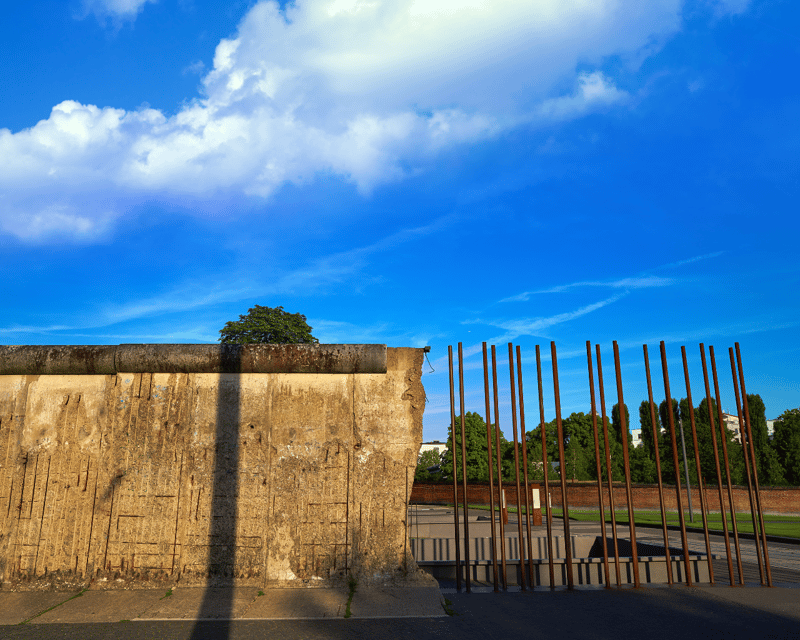
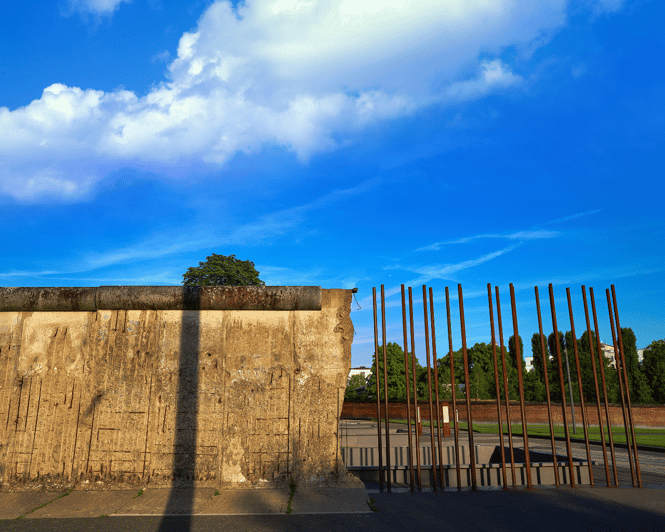
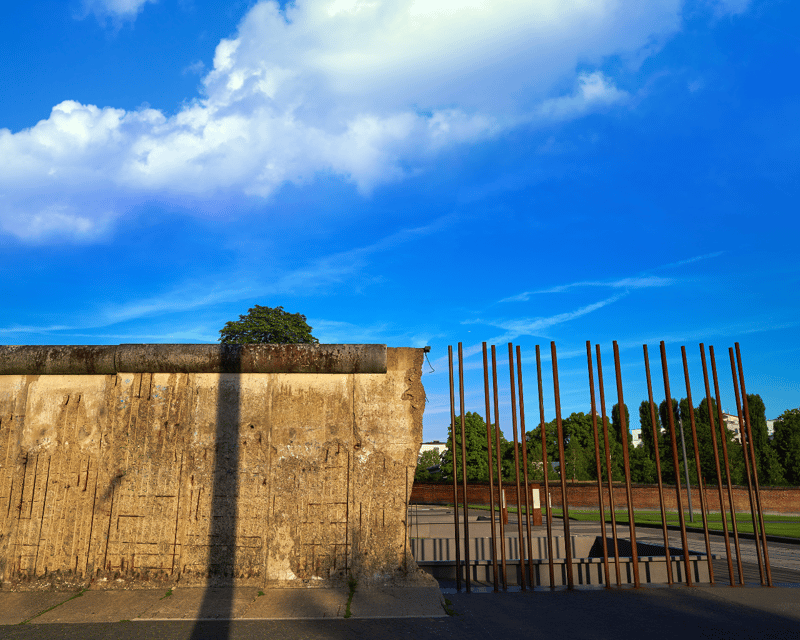
The route then brings you to a surviving section of the former Berlin Wall. The tour includes a roughly 200-meter stretch along Niederkirchnerstrasse, near the Topography of Terror and the former border zone.
This part is useful because the Wall was not just one slab of concrete. It formed part of a guarded border system, with different barriers and controlled spaces between East and West. Looking at the remaining section while hearing how the border operated helps you understand why escape was so dangerous.
The stop at the Berlin Wall lasts about 25 minutes. You may see only fragments compared with the enormous barrier that once cut through the city, but that is also the point. Much of the Wall has disappeared, and a guided walk helps you read the traces that remain in the streets.
The nearby Topography of Terror stop lasts around 15 minutes. It connects the Cold War period with the Nazi past, a link that matters because Berlin’s postwar division grew out of the destruction and occupation that followed the Nazi regime.
The tour is not mainly about the Third Reich, so you should not expect a full visit to the Topography of Terror exhibition. Instead, your guide uses the location to show how one troubled chapter of German history led into another. That short stop adds context without pulling the walk too far from its Cold War focus.
Potsdamer Platz and a city split in two
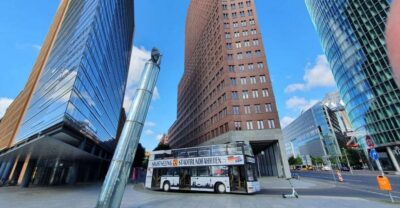
Potsdamer Platz is another brief stop, lasting about 15 minutes. Before the Second World War, it was a busy city center. During the years of division, the area became part of the empty border zone, and after reunification it returned to central Berlin.
That change makes Potsdamer Platz one of the clearest places to think about Berlin’s physical scars. Modern buildings now fill much of the area, but the open spaces and border markings help you picture how sharply the city was cut apart.
I find this stop valuable for travelers who might otherwise think of the Berlin Wall as a single isolated attraction. The Wall crossed roads, interrupted tram routes, separated homes from workplaces, and changed the shape of whole neighborhoods. Potsdamer Platz shows how a political conflict altered the daily map of Berlin.
The guide’s explanation matters here. Without context, you may see a busy modern square and move on. With the Cold War story in place, you can understand why this ordinary-looking location became part of a heavily controlled frontier.
Checkpoint Charlie, fame and reality
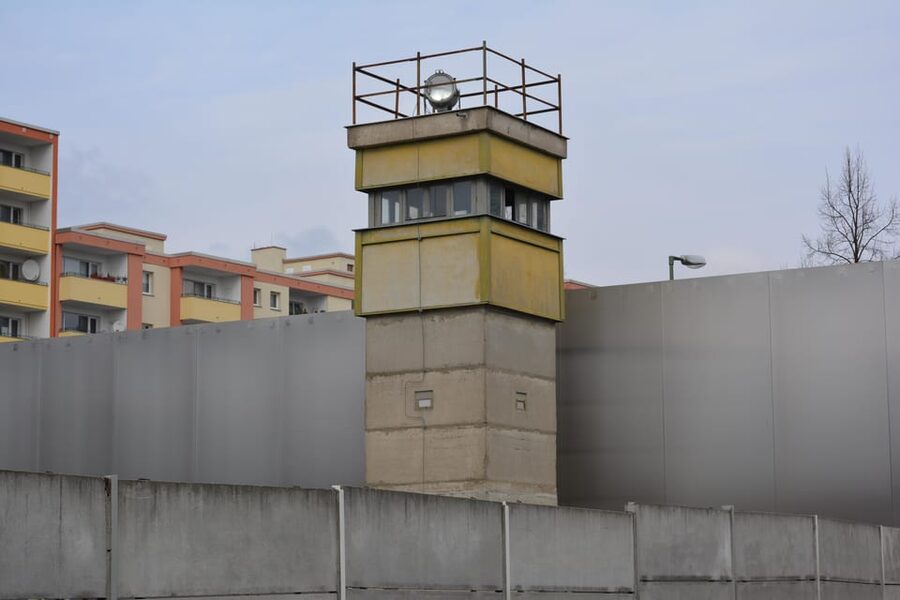
Checkpoint Charlie receives about 25 minutes of guided attention. It was the best-known crossing between East and West Berlin, and its name remains one of the city’s most familiar Cold War labels.
The site is important, but you should set your expectations. Checkpoint Charlie is famous, yet the original border scene has largely disappeared. The modern area can feel busy and commercial, and the reconstructed guardhouse does not give you the full impression of the former crossing on its own.
That is why the guide adds real value. You hear how the crossing worked, why it became a symbol of the confrontation between the superpowers, and what it meant for people trying to move through the divided city.
The tour also covers daring escapes and the risks faced by people who tried to leave East Germany. These stories bring the border down to a human scale. Instead of hearing only about presidents and military standoffs, you learn what the Wall meant to families, workers, and people separated from those they loved.
Some explanations take place beside traffic, which is the main practical weakness noted in the feedback. Noise can make it difficult to catch every word, so stand close to the guide and face the group when the explanation begins. This is especially useful if you have hearing difficulties or are visiting with children.
More history-led days in Berlin:
- Berlin: Natural History Museum Entrance Ticket
★ 4.6 · 3,382 reviews - Berlin: World Heritage Cruise to Potsdam
★ 4.5 · 1,435 reviews - Berlin Historical Highlights Walking Tour
★ 4.9 · 657 reviews - Berlin Private Complete History All Day Walking Tour
★ 5.0 · 474 reviews
The 75-minute Berlin Wall Memorial visit
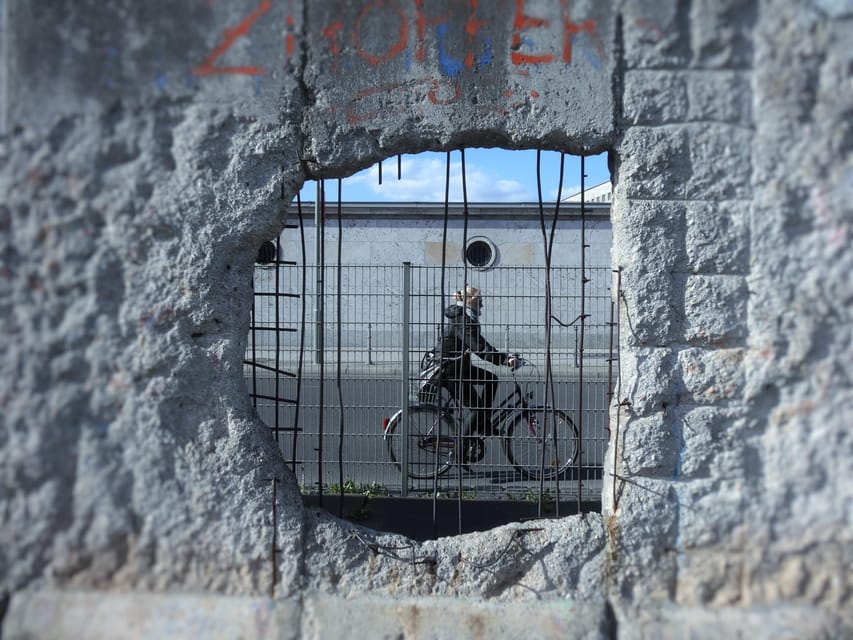
The longest stop is the Berlin Wall Memorial, with about 75 minutes of guided touring. This is the heart of the experience, and it is where the earlier stops begin to fit together.
The memorial preserves a section of the former border area and commemorates the people who died as a result of the division. It gives you a better sense of the Wall as a system rather than a photo opportunity. Your guide can explain the barriers, the controlled zone, and the ways people attempted to escape.
Allow yourself to pay attention to the details here. Berlin’s Wall remains are often fragmentary, but the memorial helps restore the missing parts through its layout and historical information. You can better understand the gap between the concrete barrier seen in photographs and the larger border structure that made crossing so difficult.
The guide also explains life on both sides of the divide. East and West Berlin were not simply two neighborhoods with different flags. They developed under different political and economic systems, and the border shaped housing, work, family visits, schooling, and travel.
This is where the strongest guides make a real difference. Eugen has been praised for linking dates and political events to personal stories, while Cieran has used photographs from his own family’s experience with the Wall. Paul has also been singled out for clear explanations of the Cold War and Berlin’s divided past.
Guide assignments can vary, so you should not book on the assumption that you will receive one particular person. Still, the repeated pattern is clear: the tour depends heavily on a guide who can tell the story with care and answer questions without reducing a painful subject to a series of quick facts.
Why personal stories make this tour work
The Cold War can feel abstract. You hear about the Soviet Union, the Western Allies, nuclear tension, and competing political systems, but those subjects can remain distant from everyday life.
This walk gives the larger conflict a physical setting. You stand at places where people faced border guards, where roads ended, and where families could suddenly lose access to one another. Escape stories show both courage and danger, while personal photographs can make the Wall feel like lived experience rather than an old political backdrop.
I especially like the focus on why the Wall was built and what led to its fall. Many quick city tours jump from 1961 to 1989 without explaining the pressure in between. Here, you get a clearer chain of events: the postwar split, growing conflict between East and West, the movement of people out of East Germany, the decision to close the border, decades of separation, and the political changes that finally brought the Wall down.
The tone is serious, but the tour is not presented as a dry classroom lesson. The strongest feedback praises the guides’ storytelling, tact, and willingness to answer questions. That combination suits Berlin, where the subject calls for both clear facts and respect for the people involved.
How much value do you get for $31?
At $31 per person, this is reasonably priced for a three-hour tour with a live local guide. You are not paying for entry to a major museum or a special monument visit. You are paying for structure, explanation, and the ability to connect scattered sites across central Berlin.
That structure is worth money. You could walk to Brandenburg Gate, Niederkirchnerstrasse, Potsdamer Platz, Checkpoint Charlie, and the Wall Memorial on your own. The challenge would be understanding how they connect and knowing which traces matter.
The price works best if you are new to Berlin or want a Cold War foundation early in your stay. After the walk, you can choose museums and memorials with a better sense of what you are looking at.
It is less useful if you want a quiet, slow stroll or a visit focused only on preserved wall sections. The route covers several locations, and some explanations take place outdoors near traffic. You should also expect a steady three hours on foot rather than a short photo stop at Checkpoint Charlie.
The tour offers free cancellation up to 24 hours before the start and lets you reserve now while paying later. It is also listed as wheelchair accessible. Starting times vary, so check availability when you choose your date.
Who will get the most from this walk?
I would recommend it to first-time Berlin visitors who want a clear introduction to the city’s Cold War period. It also suits history-minded adults, families with older children, and anyone who finds political history easier to understand when tied to streets and buildings.
You do not need prior knowledge. The route begins with the postwar division and builds toward the Wall, the border crossings, escape attempts, and reunification.
The tour may be less suitable if you dislike long walks, cold weather, or outdoor explanations. One January group continued through heavy snow, and the guide kept the energy up, but you should still wear comfortable shoes and weather-appropriate clothing.
English and German are available. If English is not your first language, stay near the guide and ask for clarification when needed. Traffic noise may interfere at a few points.
My verdict on the Berlin Cold War walking tour
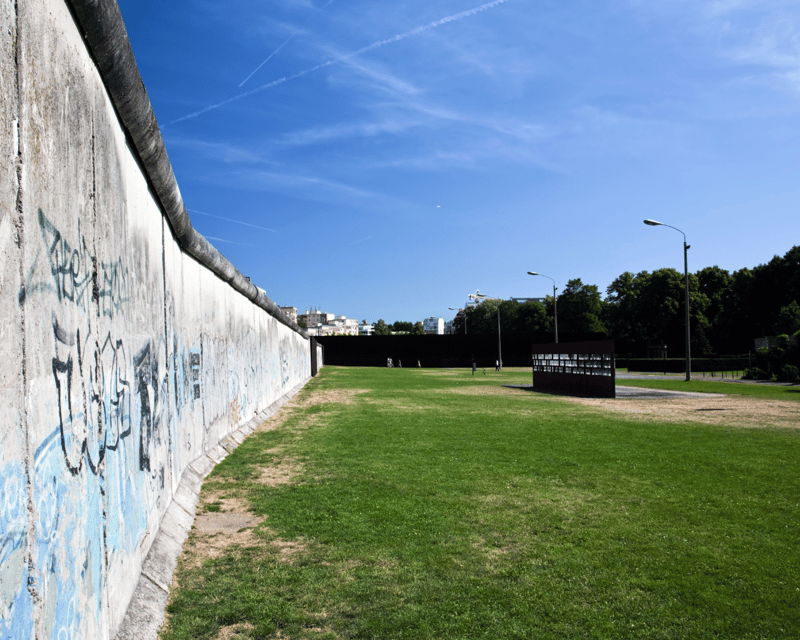
You should book this tour if you want more than a quick photograph at Checkpoint Charlie. Its best feature is the way it connects several central sites into one understandable story, then gives the most time to the Berlin Wall Memorial.
The $31 price is good for three hours of guiding, especially when you consider how much background is needed to make the surviving Wall fragments meaningful. You should come prepared for outdoor walking, changing weather, and occasional city noise.
I would choose this experience near the start of a Berlin visit. It gives you the basic map and timeline, introduces the personal cost of division, and leaves you better prepared to explore the city’s museums and memorials on your own.
FAQ
Where does the Berlin Cold War walking tour meet?
Meet your guide outside Hopfingerbräu at Ebertstraße 24, next to Brandenburg Gate.
How long does the tour last?
The walking tour lasts three hours.
Which languages are available?
The live tour guide is available in English and German.
What main places does the tour visit?
The route includes Brandenburg Gate, a remaining section of the Berlin Wall, Topography of Terror, Potsdamer Platz, Checkpoint Charlie, and the Berlin Wall Memorial.
How much time is spent at the Berlin Wall Memorial?
The guided visit to the Berlin Wall Memorial lasts about 75 minutes.
Is Checkpoint Charlie the only border crossing included?
No. Checkpoint Charlie is included, along with the Berlin Wall Memorial and other former border areas in central Berlin.
What should I bring?
Bring comfortable shoes and clothing suited to the weather.
Is the tour wheelchair accessible?
Yes, the activity is listed as wheelchair accessible.
More Walking Tours in Berlin
- Discover Berlin Half-Day Walking Tour
★ 5.0 · 9,624 reviews - Berlin: Discover Berlin Walking Tour
★ 4.9 · 5,998 reviews - Berlin: Hidden Backyards Guided Walking Tour
★ 4.8 · 5,360 reviews - Third Reich Berlin: Hitler and WWII Walking Tour
★ 5.0 · 3,301 reviews
Just added around Berlin
- eSIM for Germany and 34 European Countries★ 4.5 · 16 reviews
- Your ticket to The Wall Museum Berlin★ 3.0 · 60 reviews
- Walking on the Wall: 3-Hour Tour in Berlin★ 4.5 · 34 reviews
- Rickshaw Tours Berlin – Groups of up to 16 people with several rickshaws★ 4.0 · 97 reviews
- Warnemuende Shore Excursion: Private Berlin Tour★ 4.5 · 27 reviews
- Love and War in Berlin: Self-Guided Story Puzzle Walk★ 5.0 · 7 reviews
- Warnemuende Shore Excursion: Berlin Private Sightseeing Tour from Rostock★ 5.0 · 4 reviews
- Cold War Berlin – Private Live Virtual Experience★ 5.0 · 4 reviews
Berlin Tours, compared.

Reichstag, Dome and Government District Guided Tour
Read our review →
1-Hour City Tour by Boat with Guaranteed Seating
Read our review →
Reichstag, Plenary Chamber, Cupola & Government Tour
Read our review →
Browse the lists this tour appears in