
Review · BERLIN TOURS
The Berlin Wall / Cold War Berlin (Private 3 Hours Walking Tour)
The most powerful part of this private Berlin Wall tour is that it connects famous places with the machinery of everyday division. You begin at Brandenburg Gate, once trapped beside the Wall, then follow the story to the Palace of Tears and the preserved border zone at the Berlin Wall Memorial.
I like the private format, since your guide can explain the Cold War at your group’s pace. I also like the careful mix of landmarks, original remains, escape tunnels, and daily life in East Germany. The main consideration is the walking: three hours is a fair stretch, so wear comfortable shoes and remember that public transportation and snacks cost extra.
Key points to know before you book
- A private group tour for up to 15 people: The $331.37 price covers the group, not each person, making the cost more sensible for families or friends traveling together.
- Four sharply different stops: You see Brandenburg Gate, the Palace of Tears, the Berlin Wall Memorial, and a museum about ordinary life in East Germany.
- Ninety minutes at the Berlin Wall Memorial: This is the heart of the tour, with original Wall sections, border land, escape tunnels, and stories of attempted flight.
- A guide-led history lesson: Sandra, Monti, and Andrés are among the guides named in the feedback, with particular praise for clear explanations and personal stories.
- Hotel pickup is offered: Your guide can meet you in your hotel lobby, though public transportation tickets are not included.
- Free cancellation up to 24 hours ahead: Cancel at least 24 hours before the start for a full refund.
Why this private walk helps make sense of Berlin
Berlin’s Cold War story can feel scattered. A section of concrete here, a watchtower there, a museum across town, and a famous gate that seems to belong to several different eras at once. This tour gives those places a sequence.
You start with the political symbol, move to the human cost of crossing the border, then spend the longest part at the place where the Wall’s systems are easiest to understand. The final museum shifts the focus from border guards and escape routes to shopping, work, family life, and routine in East Germany.
That order matters. You first learn what Berlin looked like as a divided capital. Then you see how the border affected families. At the Berlin Wall Memorial, you get the physical evidence. Finally, the Museum in der Kulturbrauerei asks what life felt like behind the political slogans.
The private setup is especially useful for a subject that can become a blur of dates and acronyms. You can stop your guide, ask why the Wall was built, or request a simpler explanation for children. One account of the tour specifically praises Monti for making the Cold War, the Iron Curtain, and the reason for the Wall understandable to children.
The tour is offered in English and lasts about three hours. Pickup from your hotel lobby is available, which saves you the trouble of finding an unfamiliar meeting point. Still, ask about the pickup arrangement when booking, since public transportation tickets are not part of the price.
More Wall and Cold War walks:
- Berlin: Third Reich and Cold War 2 Hour Walking Tour
★ 4.9 · 6,830 reviews - Berlin’s Best: 2 Hour Walking Tour Third Reich and the Cold War
★ 5.0 · 5,486 reviews - Berlin: DDR Museum Tickets
★ 4.3 · 3,443 reviews
Brandenburg Gate, where division became visible
The tour begins at Brandenburg Gate, with about 20 minutes here. Admission is free, so you are paying for the guide’s interpretation rather than an entry ticket.
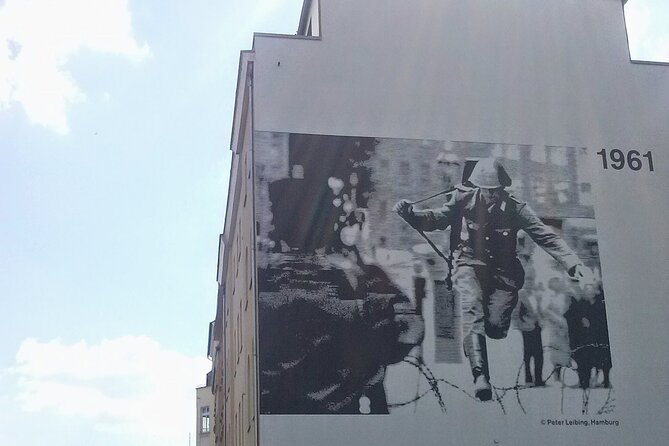
Brandenburg Gate is one of Berlin’s grandest monuments, but the Cold War gave it a strange role. The Wall passed close by, turning a symbol of the city into part of a sealed border zone. After the Wall fell, the gate became one of the most recognizable images of reunification.
I like this as an opening stop because it gives you a clear before-and-after picture. The same structure represented a divided city and later the collapse of that division. You do not need a long stop here, but the guide’s explanation helps prevent the usual mistake of viewing the gate only as a pretty neoclassical monument.
Twenty minutes is enough for orientation and discussion. If you want a long photo session, you may feel pressed, but this tour has more important ground ahead.
The Palace of Tears and the human side of border control
Next comes the Palace of Tears, with about 30 minutes devoted to the site. Its name comes from the farewells made there. West Berliners could visit family members in the East, but at the end of the visit they had to say goodbye and return by train.
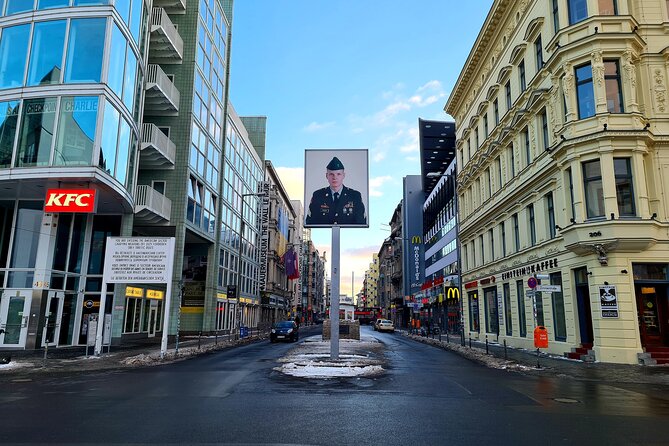
This was the crossing point at Friedrich Street, one of the most important border stations in Berlin. The building is authentic, and its museum explains how the crossing worked.
For me, this stop gives the history an intimate scale. Brandenburg Gate shows the political drama. The Palace of Tears shows what that drama did to parents, children, siblings, and friends. A border is not only a wall and a checkpoint. It is also a forced goodbye with no clear date for the next meeting.
The 30-minute visit should give your guide enough time to explain the site without turning it into a long museum session. The admission charge is free, and the museum adds useful context to the walk.
This is also a good stop for families. One of the tour accounts describes a guide making complicated Cold War subjects understandable for children. That skill matters here, because the emotional meaning of the Palace of Tears can be easier for younger visitors to grasp than a long political lecture.
Ninety minutes at the Berlin Wall Memorial
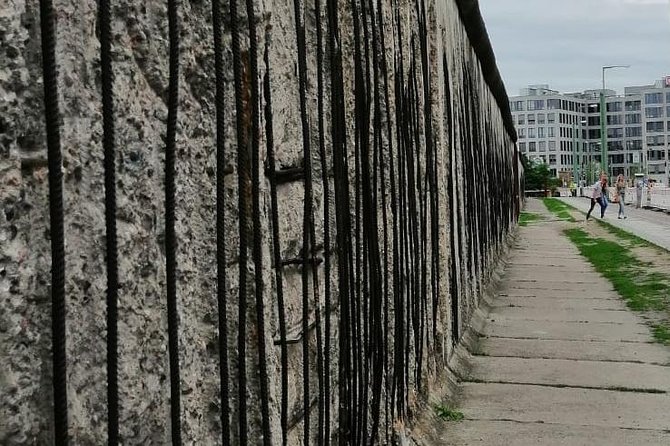
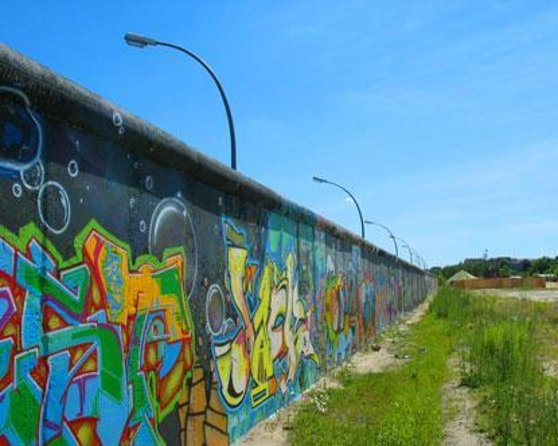
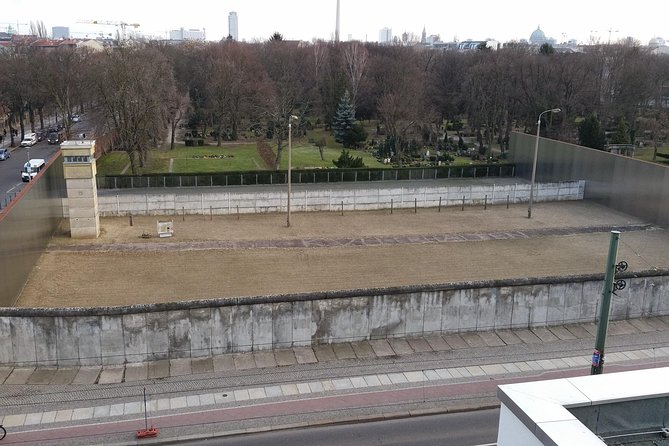
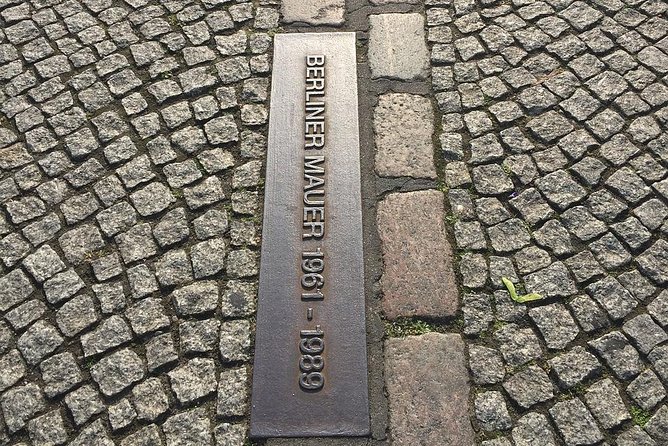
The Berlin Wall Memorial receives the largest block of time, about 1 hour and 30 minutes. That is the right balance. This is not just a surviving slab of concrete. The site preserves original remains of the Wall and parts of the former no-man’s-land, allowing you to see how the border operated as a system.
You can expect your guide to explain the layers of security, the difficult route across the border zone, and the ways people tried to escape. The area is also linked with famous tunnels dug under the Wall. Some escape attempts took place here, giving the site a direct connection to the risks people took to leave East Berlin.
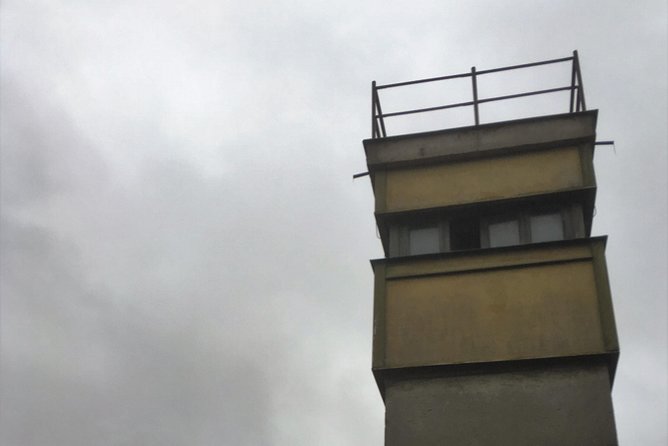
The value of this stop is physical evidence. A photograph can show a Wall, but preserved border structures help you understand the space between East and West. You can see why crossing was so difficult and why escape plans required secrecy, patience, and great personal risk.
I would treat this as the main history lesson of the morning or afternoon. Take your time with the explanations, ask questions, and pay attention to the difference between the Wall itself and the larger border zone around it. The distinction is important. The border was not simply one concrete barrier. It included controlled areas and obstacles designed to prevent escape.
The site is free to enter, so again, the value comes from the licensed guide’s ability to connect the remains with the people who lived beside them. One account specifically praises Andrés for combining historical facts with personal stories. That combination can make this part easier to remember than a list of dates.
There is a practical issue here: you are walking and standing for much of the tour. Wear sturdy, comfortable shoes. The first account of the experience gives exactly that advice, and it is worth following.
More walking tours in Berlin:
- Discover Berlin Half-Day Walking Tour
★ 5.0 · 9,624 reviews - Berlin: Discover Berlin Walking Tour
★ 4.9 · 5,998 reviews - Berlin: Hidden Backyards Guided Walking Tour
★ 4.8 · 5,360 reviews - Third Reich Berlin: Hitler and WWII Walking Tour
★ 5.0 · 3,301 reviews
East German life at the Museum in der Kulturbrauerei
The last stop is the Museum in der Kulturbrauerei, with about 30 minutes inside. The subject changes from border mechanics to daily life in East Germany.
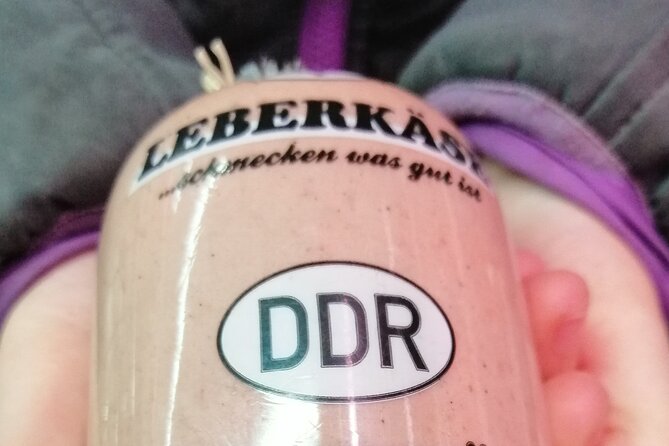
That shift is one of the best features of the route. If you only visit Wall sites, you may leave with an image of East Germany defined entirely by surveillance, concrete, and escape attempts. This museum broadens the picture by focusing on ordinary life under the East German system.
You can expect an exhibition about how people lived, rather than another political monument. The half-hour visit is fairly brief, so this is an introduction rather than a full museum afternoon. If modern German history is your main interest, you may want extra time on another day.
Still, as a final stop, it works well. You have just seen the border that divided families and neighborhoods. Now you consider the society on the eastern side and the routines that continued behind the political barrier. The contrast helps you understand that Cold War Berlin was not only a conflict between governments. It was also a place where millions of people worked, raised children, waited in lines, visited relatives, and made private choices within a restricted system.
What the guides add to the experience
A private walking tour depends heavily on the guide. The named guides connected with this experience include Sandra, Monti, and Andrés. The strongest praise centers on three qualities: clear explanations, personal commitment to the subject, and the ability to make difficult history understandable.
Sandra is described as explaining everything clearly and helping the group understand the subject. Monti is singled out for explaining the reason for the Wall, the Cold War, and the Iron Curtain in a way children could follow. Andrés is noted for adding personal stories to historical facts.
You may not receive one particular guide, so do not book on the assumption that Sandra, Monti, or Andrés will lead your group. But these details give you a useful idea of the guiding approach to expect: history presented in plain language, with human stories alongside dates and political events.
The private arrangement gives you room to shape the discussion. Ask for more detail at the Berlin Wall Memorial if that is your priority. If you are with children, tell the guide at the start so the explanations can stay clear and age-appropriate. If your group already knows the basic Cold War timeline, ask for more attention to personal experiences and escape attempts.
Price, group size, and practical value
The cost is $331.37 per group of up to 15 people. That is not a cheap walking tour for one person, but the pricing becomes more attractive as your group grows.
For two people, the per-person cost is high. For a family or a group of friends sharing the full price, the calculation changes. A group of six would pay much less per person than six separate private bookings, while still receiving a private guide and hotel pickup option.
All fees and taxes are included. Admission at the four listed stops is free, so there are no surprise museum charges built into the route. Snacks are not included, and you must pay separately for public transportation tickets if they are needed.
The three-hour length also affects the value. You are not paying for a quick photo stop at the Wall. The tour gives 90 minutes to the main memorial, plus three shorter stops that create a fuller story. If you want an entire day of Cold War museums and sites, this will not be enough. If you want a focused introduction without spending a full day indoors, it is a sensible format.
The service runs Monday through Sunday between 8:00 AM and 5:00 PM during the stated operating period, from October 28, 2019 through November 27, 2026. Confirmation is provided at booking, and free cancellation is available until 24 hours before the start time. A cancellation made less than 24 hours ahead is not refundable, and late changes are not accepted.
Who should book this Berlin Wall experience
I would recommend this tour to families, first-time visitors, and small groups who want the Cold War explained rather than simply photographed. The private format is useful if your group has mixed ages or different levels of background knowledge.
It also suits anyone who prefers walking through a city instead of moving from museum to museum by bus. You get a clear route, a human guide, and time at the places where the story happened.
History specialists may want more time at each site than three hours allows. The Museum in der Kulturbrauerei receives only 30 minutes, and the overall schedule leaves little room for long independent visits. If you prefer to read every display at length, book the tour as an introduction and return to the places that interest you most.
The walk may not suit someone who has difficulty with extended walking or standing. The information says most people can participate, service animals are allowed, and the sites are near public transportation. Even so, bring comfortable shoes and confirm any personal mobility needs before booking.
Should you book it?
Book this private tour if you want Berlin’s Cold War story arranged into a clear, three-hour route, with a guide who can adjust the explanation to your group. The strongest reasons are the long visit at the Berlin Wall Memorial, the authentic Palace of Tears, and the move from border history to ordinary East German life.
Skip it if you are looking for a low-cost group walk, a full-day museum program, or a tour with no standing and walking. For families and groups of friends, the per-group price can be fair, especially with hotel pickup and a private English-speaking guide. Wear good shoes, arrive ready to ask questions, and give the Berlin Wall Memorial the attention it deserves.
FAQ
How long is the Berlin Wall and Cold War Berlin tour?
The tour lasts approximately three hours.
Is the tour private?
Yes. Only your group participates, and the private group can include up to 15 people.
What language is the tour offered in?
The experience is offered in English.
Does the guide pick us up at our hotel?
Pickup is offered from the lobby of your hotel.
Which places are visited?
The route includes Brandenburg Gate, the Palace of Tears, the Berlin Wall Memorial, and the Museum in der Kulturbrauerei.
Are admission fees included?
All fees and taxes are included. The listed stops have free admission.
Are public transportation tickets included?
No. Public transportation tickets are not included in the price.
Can I cancel for a full refund?
Yes, if you cancel at least 24 hours before the experience start time. Cancellations made less than 24 hours ahead are not refundable.
Is the tour suitable for most people?
The activity information says most people can participate. Service animals are allowed, and the sites are near public transportation. Because this is a three-hour walking tour, comfortable shoes are recommended.
More 3-Hour Experiences in Berlin
- Berlin Highlights 3-Hour Bike Tour
★ 5.0 · 948 reviews - Berlin Highlights: 3-Hour Bike Tour
★ 4.9 · 809 reviews - Berlin: 3-Hour Street Art Tour
★ 4.7 · 778 reviews - Berlin: 3-Hour Secret Food Tour
★ 4.8 · 269 reviews
Just added around Berlin
- eSIM for Germany and 34 European Countries★ 4.5 · 16 reviews
- Your ticket to The Wall Museum Berlin★ 3.0 · 60 reviews
- Walking on the Wall: 3-Hour Tour in Berlin★ 4.5 · 34 reviews
- Rickshaw Tours Berlin – Groups of up to 16 people with several rickshaws★ 4.0 · 97 reviews
- Warnemuende Shore Excursion: Private Berlin Tour★ 4.5 · 27 reviews
- Love and War in Berlin: Self-Guided Story Puzzle Walk★ 5.0 · 7 reviews
- Warnemuende Shore Excursion: Berlin Private Sightseeing Tour from Rostock★ 5.0 · 4 reviews
- Cold War Berlin – Private Live Virtual Experience★ 5.0 · 4 reviews
Berlin Tours, compared.
Reichstag, Dome and Government District Guided Tour
Read our review →
1-Hour City Tour by Boat with Guaranteed Seating
Read our review →

Reichstag, Plenary Chamber, Cupola & Government Tour
Read our review →
Browse the lists this tour appears in