
Review · BERLIN TOURS
Cold War, Berlin Wall, Spies and the East Side Gallery
Berlin’s Cold War story becomes much clearer when you follow it across the city, from the Palace of Tears at Friedrichstrasse to the painted remains of the Wall at the East Side Gallery. This three-hour tour links border crossings, socialist architecture, former Wall sites, and stories of spies, informants, escape tunnels, and divided families.
I like the way the route combines big landmarks with human stories. I also like the use of public transportation, since you see how widely the former East Berlin sites are spread rather than treating the Wall as one isolated monument. Guides such as Paul, Xavier, Tina, Klaus, Nikolai, and Jamie G have been praised for clear storytelling and personal insight.
The main consideration is pace. You cover a lot in three hours, with train rides and several walking sections. You must also buy an AB public transport day pass separately, so the $18 price is excellent but not the complete cost of the outing.
Key points to know before booking
- The Palace of Tears begins the story: See the former departure hall where people said goodbye at the border between East and West Berlin.
- Karl-Marx-Allee reveals communist ambition: Walk the broad socialist boulevard and examine how architecture served politics and propaganda.
- Alexanderplatz connects daily life with rebellion: Learn how the square became a major center of East German public life and the 1953 workers’ uprising.
- The Wall is treated as a human story: Hear about escape attempts, Stasi surveillance, and the risks faced by ordinary people.
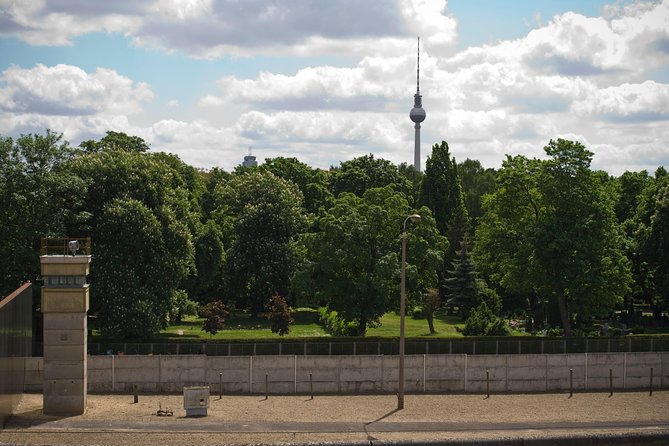
- The East Side Gallery provides a striking finale: Walk beside the longest remaining open-air art section of the Berlin Wall.
- Public transport is part of the plan: Bring or buy an AB day pass, wear good shoes, and dress for weather that may change.
A Cold War route that crosses the old divide
This is not a single-site Berlin Wall walk. It is a moving history lesson that ties together places across the former East and West, showing how the political divide shaped streets, stations, housing, work, and family life.
The route lasts about three hours and uses Berlin’s trains between walking sections. That makes the day pass important, but it also gives the tour a useful sense of scale. You are not just looking at a preserved strip of concrete. You are moving through neighborhoods that once belonged to a separate political system.
The central theme is life under division. You hear about the Stasi, East Germany’s secret police, and the network of informants used to monitor citizens. You also hear about people who tried to leave through tunnels, over rooftops, and across heavily guarded border zones.
The strongest guides bring these events down to a human level. Paul has been praised for explaining the subject to people with little prior knowledge, while Xavier is noted for combining historical detail with humor and attention to the group. Nikolai and Klaus have also drawn praise for personal accounts of life in communist East Germany and the former German Democratic Republic.
That range matters. Berlin’s Cold War past can easily become a list of dates and political slogans. A good guide explains what those events meant for someone trying to visit a relative, attend school, keep a job, or decide if an escape attempt was worth the danger.
More Wall and Cold War walks:
- Berlin: Third Reich and Cold War 2 Hour Walking Tour
★ 4.9 · 6,830 reviews - Berlin’s Best: 2 Hour Walking Tour Third Reich and the Cold War
★ 5.0 · 5,486 reviews - Berlin: DDR Museum Tickets
★ 4.3 · 3,443 reviews
Starting at the Palace of Tears
The usual meeting point is outside Friedrichstrasse train station, on the square beside the Tränenpalast, or Palace of Tears. Look for a guide with a yellow name badge and yellow umbrella.
The name refers to the farewells that took place inside this former border crossing. During the division of Berlin, people from East Berlin and East Germany could be checked here when visiting the West, while friends and relatives faced the painful possibility of not knowing when they would meet again.
You spend about 20 minutes at the site. That is enough for an introduction to border controls, divided families, and the emotional cost of crossing between two political systems. The setting is useful because it begins with ordinary people rather than military strategy. The Cold War was fought by governments, but it was felt at railway stations, apartment blocks, workplaces, and family gatherings.
The Palace of Tears also helps you understand the tour’s wider subject. Berlin’s division was not only a wall around a city. It was a system of permits, checks, surveillance, and restricted movement.
The tour may also offer pickup from your accommodation, depending on the option you book. If you use that service, you are asked to wait in the hotel lobby five minutes before the scheduled time. Confirm the selected option carefully, since the standard meeting point is Friedrichstrasse station.
Alexanderplatz and the 1953 workers’ uprising
A short train ride of about five minutes takes the group to the Alexanderplatz area. The guided visit here lasts around 20 minutes.
Alexanderplatz is one of the best places to see the public face of East Germany. Its broad open spaces and surviving GDR-era buildings reflect the scale and order that communist planners wanted to project. The square also carried the everyday pressures of East Berlin life, from shopping and transport to public gatherings and state ceremonies.
The guide uses the area to explain how communist leaders presented their society as modern, organized, and secure. The architecture was not accidental decoration. Monumental buildings and wide avenues were meant to show confidence in the system.
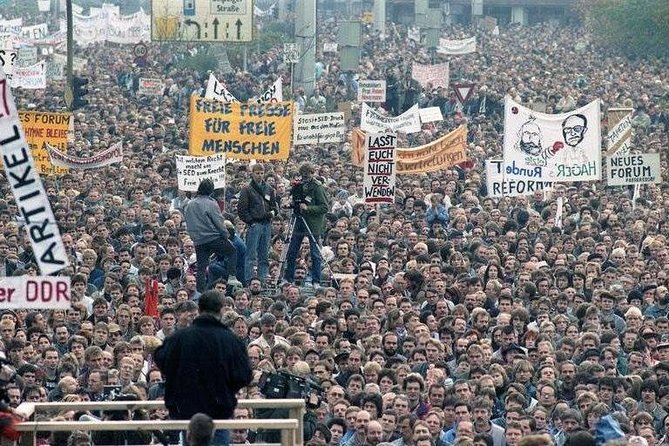
Alexanderplatz is also tied to the 1953 workers’ uprising. Protests began with workers’ demands and grew into a wider challenge to the East German government. The rebellion shook the regime and showed that public dissatisfaction was not limited to a few isolated individuals.
This is a valuable stop if you want more than a Wall-focused tour. You see how politics appeared in public space and how quickly an economic or workplace dispute could become a challenge to state power.
Do not expect a long museum visit here. The stop is a guided look at the square and its surroundings, not a dedicated exhibition. The value comes from the explanation, so stay close to the guide and ask questions if the political background is new to you.
Karl-Marx-Allee and the architecture of a socialist paradise
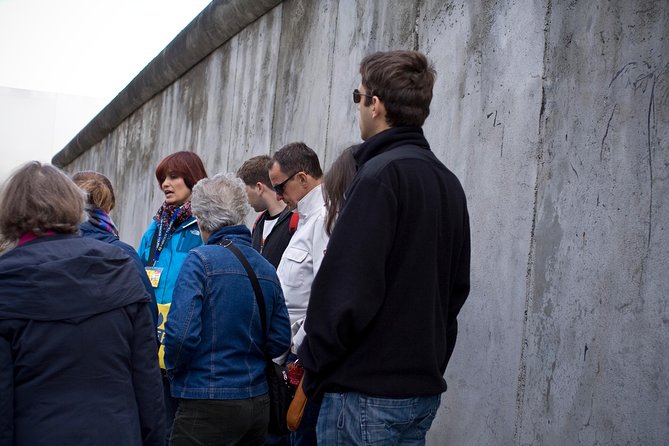
The next walking section follows Karl-Marx-Allee for roughly 20 minutes. This enormous boulevard was designed as a showcase for East German socialism.
Its scale tells you what the government wanted people to believe. The avenue was planned to look orderly, powerful, and generous, with monumental architecture intended to symbolize a new society. Your guide explains how the buildings and boulevard were used as political messaging, not simply as housing and transport infrastructure.
The walk also offers a useful contrast with Alexanderplatz. There, you see a major public square shaped by state planning. Along Karl-Marx-Allee, you see how that same vision extended into daily residential life.
The boulevard is one of the tour’s more unusual inclusions. Many first-time visitors come to Berlin expecting fragments of Wall, guard towers, and memorials. They do not always consider apartment design or urban planning as Cold War evidence. Here, the physical city becomes part of the argument.
You will be outdoors for much of this section, so good shoes and weather-appropriate clothing matter. The tour operates in rain and other conditions. Bring a jacket or umbrella rather than assuming the weather will cooperate.
More museums and galleries in Berlin:
- Berlin: Jewish Museum Berlin Entrance Ticket
★ 4.5 · 8,393 reviews - Berlin: Natural History Museum Entrance Ticket
★ 4.6 · 3,382 reviews - Berlin: Neues Museum Entry Ticket
★ 4.6 · 3,261 reviews - Skip-the-Line: Berlin Wall Museum at Checkpoint Charlie
★ 4.1 · 2,041 reviews
Friedrichshain and the traces of the former border
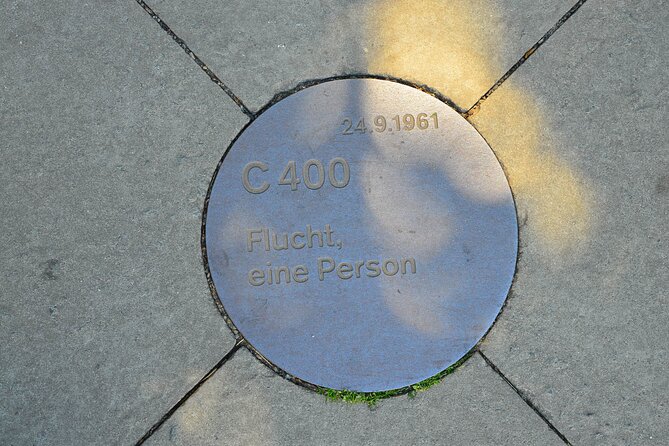
After Karl-Marx-Allee, another train ride of about six minutes takes you toward Friedrichshain. The guided walk here lasts roughly 20 minutes.
Friedrichshain helps connect the grand political story with the actual route of the Berlin Wall. The neighborhood contains reminders of how the border cut through built-up parts of the city, separating streets, homes, workplaces, and transport links.
The Wall was never just one slab of concrete. The border zone included multiple barriers and controlled areas, with guards and surveillance designed to stop people from reaching the West. The tour explains this former death strip area and the risks involved in trying to cross it.
This is also where stories of escape become especially important. You hear about attempts through tunnels, across rooftops, and through other dangerous routes. The point is not to turn escape into adventure fiction. These were desperate acts under a system that made legal departure extremely difficult and placed people under close watch.
The Stasi element adds another layer. Surveillance did not end at the Wall. Informants and secret police shaped what people said, whom they trusted, and how openly they could criticize the government.
The exact remains you see can vary by route and city conditions, so think of this portion as a guided reading of the neighborhood rather than a preserved single exhibit. The guide’s photographs and stories are particularly useful here. One guide, Jim, was praised for using iPad images to show how the area looked during the division.
Seeing the Berlin Wall as a guarded system
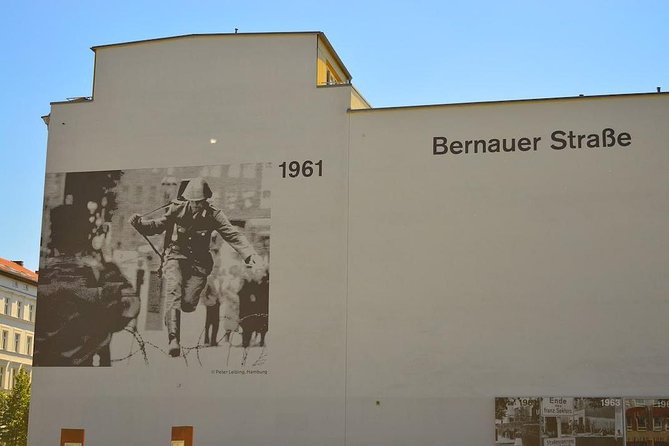
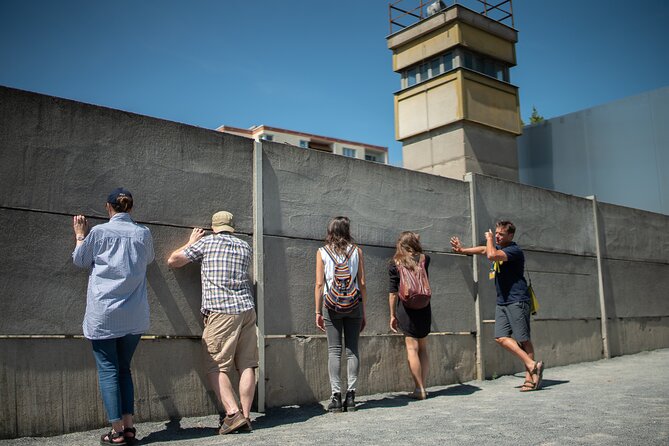
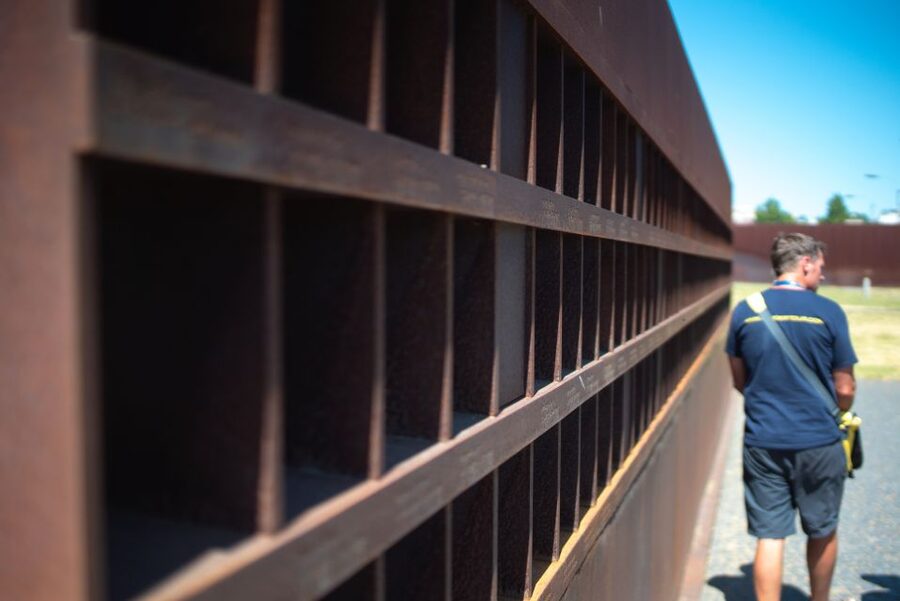
The Berlin Wall section lasts about 16 minutes, and it focuses on the physical border and the people who tried to cross it.
The tour explains how the Wall changed over time and why crossing the border was so dangerous. You learn about the barriers, the open strip between them, and the surveillance that made an escape attempt difficult to conceal.
The death strip is an important part of this explanation. Visitors often picture the Wall as a single vertical surface, but the border was designed as a zone. Open ground, barriers, watch points, and patrol systems worked together to prevent escape.
This is where the human stories carry the most weight. The guides explain how families and individuals faced impossible choices, including the risk of imprisonment, injury, or death. They also show how the Wall affected people who never attempted escape, since restrictions shaped work, travel, relationships, and daily routines.
If you already know Berlin’s Wall history, you may appreciate the smaller details more than the basic timeline. If you are starting from scratch, the guides are accustomed to building the story from the beginning. Several guides have been praised for answering a large number of questions and for making the subject understandable without assuming specialist knowledge.
The tour is not only about the politics of the United States and Soviet Union. One earlier participant wanted more military and political history and less focus on the Wall itself. That is a fair warning. This experience is best for people most interested in divided Berlin, escape stories, surveillance, and the impact of the Wall on ordinary life.
Finishing at the East Side Gallery
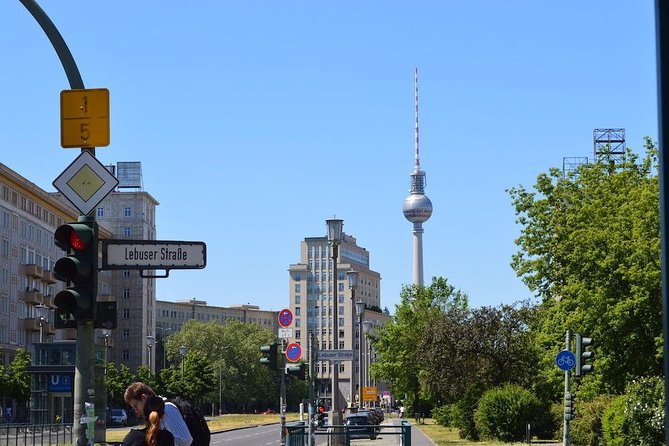
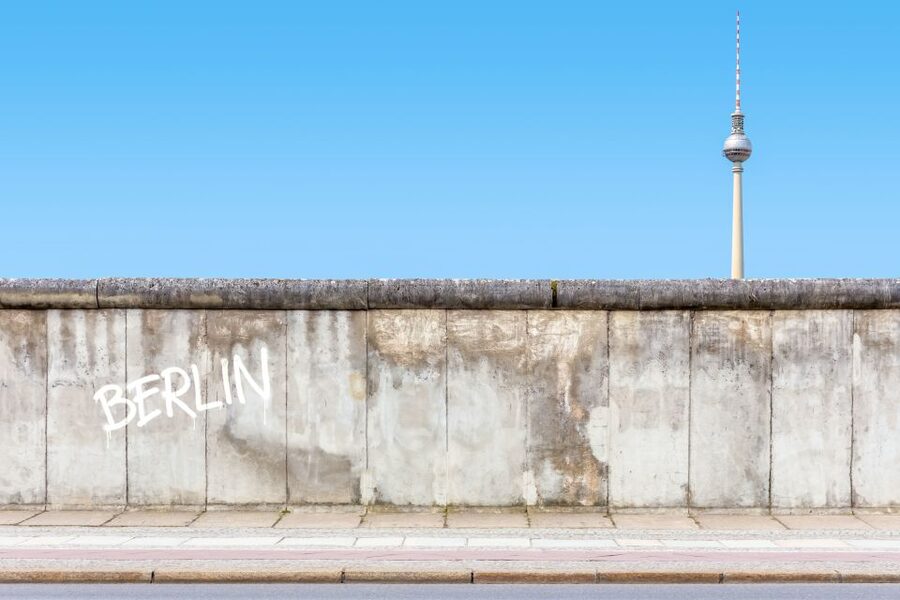
The final major stop is the East Side Gallery, where you walk along a long surviving section of the Berlin Wall for about 20 minutes.
After the grim border stories, the painted wall feels like a sharp change in mood. Artists transformed a former instrument of control into an open-air gallery. The murals turn the Wall from a symbol of fear into a public place for expression, memory, and political comment.
The art is the visual payoff of the route, but it should be read alongside what came before. Without the earlier explanation of the Wall, the paintings can seem like colorful street art beside a riverfront path. With that context, the same concrete carries a different meaning.
You will have time to walk along the gallery and take photographs, though 20 minutes is not enough for a slow look at every mural. If you want to study the artwork in detail, plan to return on your own.
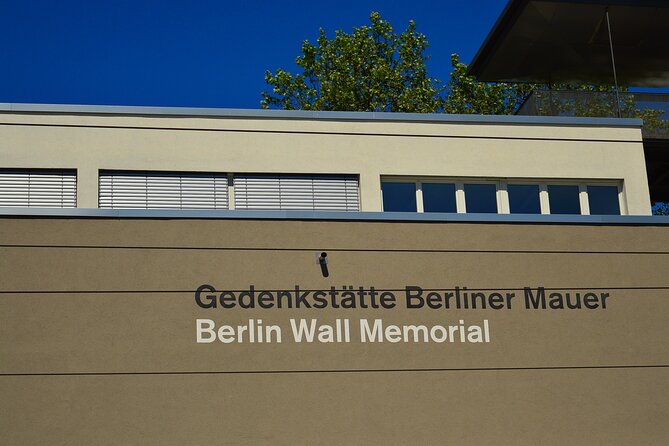
The tour ends with two possible drop-off locations, including Bernauer Straße. Depending on the selected option, another drop-off arrangement may be provided at the Brandenburg Gate Tourist Information point. Check your booking details so you know where the group finishes.
What the $18 price really covers
At $18 per person, this is an unusually low-cost way to spend three hours with a live guide. The price covers the guided experience, the East Side Gallery walk, and visits to Alexanderplatz and Karl-Marx-Allee.
You must pay separately for an AB public transport day pass. The guide or on-site staff can help you buy one on the day. This extra cost is worth planning for, since the route includes at least two train rides and Berlin’s transport system connects the separate historical sites.
The tour does not include food, drinks, or hotel transportation as standard. Pickup is optional for some booking choices, so read the selected option rather than assuming it is included.
For the money, I like the balance between guided interpretation and independent sightseeing time. You are not paying for a museum admission package or a meal. You are paying for someone to connect places that would otherwise feel scattered across East Berlin.
A small-group or private option may suit you if you want more time for questions. Larger groups can still work well, but one past participant noted that a guide had to speak loudly when the group was especially large. That is a practical reason to stay near the guide, especially around busy streets and train stations.
Who should book this Berlin Cold War tour?
I would choose this tour if you want a clear introduction to Cold War Berlin and prefer stories tied to real streets. It suits first-time visitors, history fans, families with older children, and anyone who wants to understand what life behind the Iron Curtain meant in practice.
It is also a good choice if you have already seen the main central sights and want to explore the former East Berlin through its architecture and public spaces. The route adds context to Alexanderplatz, Karl-Marx-Allee, Friedrichshain, and the East Side Gallery.
You should think twice if you dislike walking, public transportation, or outdoor sightseeing in uncertain weather. The tour covers a lot of ground, and the three-hour format leaves little room for lingering at each stop.
Wear comfortable shoes, bring a camera, and dress for the forecast. English and German tours are available, and the activity is described as wheelchair accessible, though the exact route and transport arrangements are worth confirming when booking.
My verdict on the route
I like this experience because it explains Berlin as a divided city rather than reducing the Cold War to a few wall fragments. The Palace of Tears, Alexanderplatz, Karl-Marx-Allee, Friedrichshain, and the East Side Gallery each show a different part of the story.
The best reason to book is the guide. Names such as Paul, Xavier, Tina, Klaus, Nikolai, Jim, and Jamie G have been associated with clear explanations, personal stories, humor, and careful attention to questions. Guide quality can vary on any scheduled departure, but this tour clearly depends on strong storytelling.
Book it if you want the city’s Cold War history explained in plain language and tied to places you can actually see. Skip it if you want a slower museum visit or a tour focused mainly on military strategy. For $18 plus public transport, it offers strong value and a thoughtful way to spend a morning or afternoon in Berlin.
FAQ
How long does the Cold War, Berlin Wall, Spies and the East Side Gallery tour last?
The tour lasts three hours.
What is the price of the tour?
The listed price is $18 per person.
Is public transportation included?
No. You need an AB public transport day pass separately. On-site staff can help you purchase it on the day.
Where does the tour begin?
The standard meeting point is outside Friedrichstrasse train station, on the square beside the Palace of Tears. Look for a guide with a yellow name badge and yellow umbrella.
Which places does the tour visit?
The route includes the Palace of Tears, Alexanderplatz, Karl-Marx-Allee, Friedrichshain, a Berlin Wall site, and the East Side Gallery.
Is hotel pickup available?
Pickup is optional for some booking choices. If included in your selected option, wait in your hotel lobby five minutes before the scheduled pickup time.
Where can the tour finish?
The listed drop-off locations include Bernauer Straße in Berlin. An optional arrangement may finish at the Tourist Information point near the Brandenburg Gate, depending on the booking choice.
What languages are offered?
Live guided tours are available in English and German.
What should I bring?
Bring comfortable shoes, a camera, comfortable clothing, and weather-appropriate clothing. The tour continues in poor weather.
Just added around Berlin
- From Berlin: Gardens & Palaces of Potsdam Bike Tour★ 5.0 · 61 reviews
- Berlin: Battle for Seelow Heights WW2 tour -Clash of Titans★ 5.0 · 27 reviews
- From Berlin: Historical Gems of Potsdam Private Day Trip★ 4.4 · 4 reviews
- Berlin: Französischer Dom 360° Panorama & Crémant to go★ 3.9 · 5 reviews
- Explore Berlin Tour: History and Highlights★ 4.7 · 5 reviews
- Berlin: Evening Yacht Cruise with Aperitif & Dinner Upgrade★ 4.6 · 178 reviews
- Berlin: Expats in Berlin Comedy Show Ticket★ 4.7 · 182 reviews
- Berlin: The Epic Comedy Club Friday Night Showcase★ 4.8 · 28 reviews
Berlin Tours, compared.
Reichstag, Dome and Government District Guided Tour
Read our review →
1-Hour City Tour by Boat with Guaranteed Seating
Read our review →
Reichstag, Plenary Chamber, Cupola & Government Tour
Read our review →
Browse the lists this tour appears in