
Review · BERLIN TOURS
Berlin: Historical Sights & Berlin Wall Tour with a Berliner
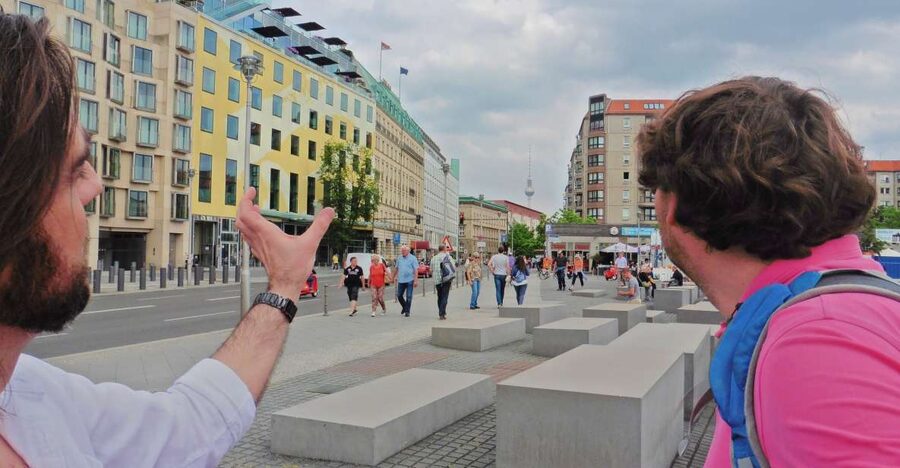
Berlin’s Cold War story becomes clearest when you walk its former border. This tour links Brandenburg Gate, the Berlin Wall, and Checkpoint Charlie in two hours, with a local guide explaining why the city was once an island of freedom and how a tense 1961 standoff nearly sparked a wider war. I like the small group of no more than 10 people, and I like the personal touch offered by guides such as Carlo, who grew up in West Berlin.
The route is compact and easy to understand, but it is still a fairly quick look at a huge subject. The tour is conducted in German, so it is best for German-speaking visitors, and the Wall remains only in fragments along much of the route. You get strong historical context, not a museum visit or a long stop at each landmark.
Key points to know before you book
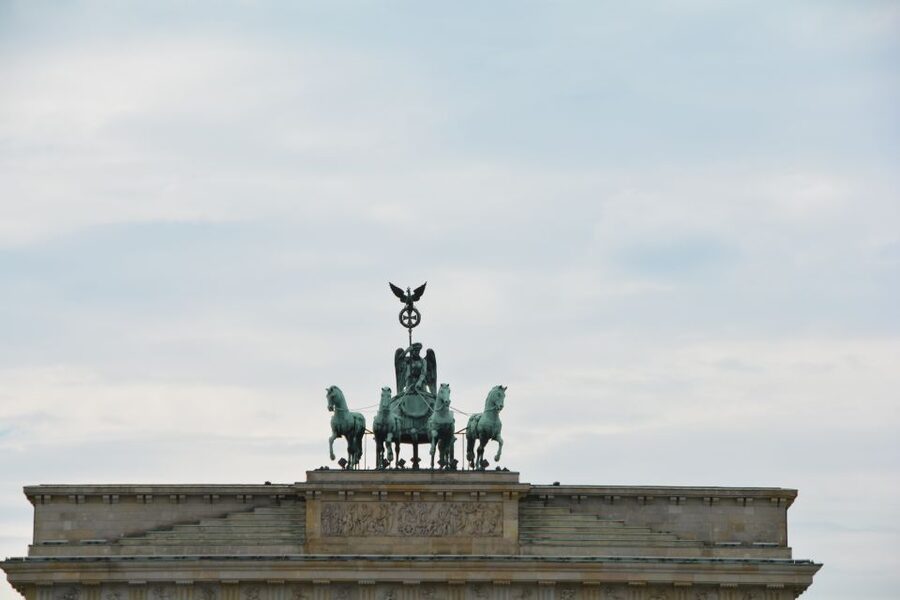
- Brandenburg Gate starts the story: Learn why this famous monument was isolated for 28 years and later became a symbol of German reunification.
- The Wall is explained through human stories: Hear accounts of escape attempts from East Berlin, not just dates and political labels.
- Carlo brings local memories: His experiences growing up in West Berlin add a personal angle to the Cold War period.
- The group stays small: With a maximum of 10 people, you should have a better chance to hear the guide and ask questions.
- The tour ends at Checkpoint Charlie: You finish at the former Allied crossing point, including the tense 1961 confrontation between American and Soviet forces.
- Plan for all weather: The walk operates on public holidays and in rain or other conditions, so wear practical clothing and shoes.
Why this two-hour route works for Berlin history
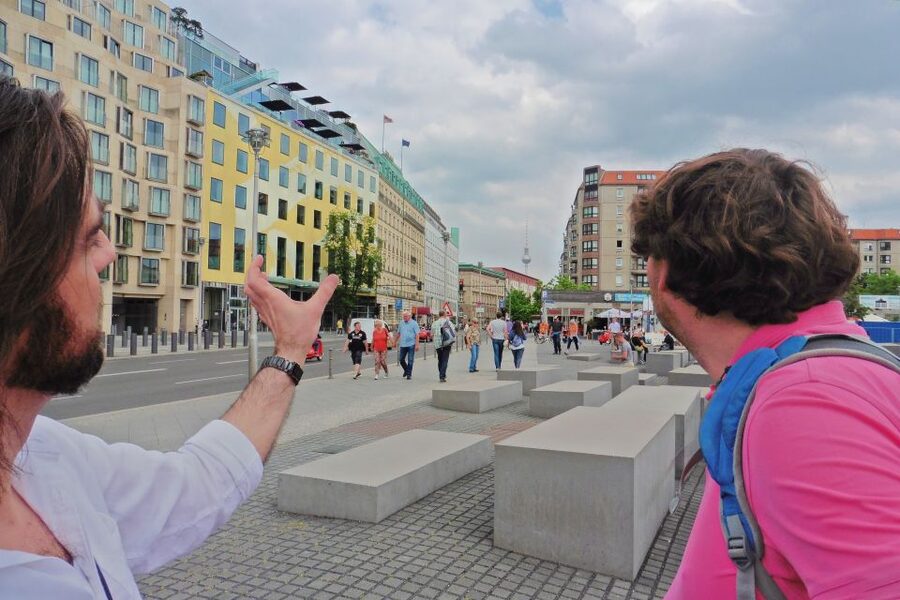
Berlin can feel like a history book scattered across a modern city. A palace here, a memorial there, a strip of Wall somewhere else. This walk gives you a basic thread to follow: the divided city, the border, daily life during the Cold War, and the eventual reunification of Germany.
I like that the tour begins at Brandenburg Gate rather than at a less familiar corner of town. You start with a landmark you can easily identify, then connect it to the political changes that reshaped Berlin. By the time you reach Checkpoint Charlie, the border is no longer just a photo stop. You have heard why it mattered.
The two-hour length is also useful. It fits neatly into a morning or afternoon, and you can pair it with a museum visit afterward. You will not get every detail of Berlin’s twentieth-century story, but you will gain a clear framework for understanding the major sights.
The walk is listed at $43 per person. That is fair if you want a live guide, a small group, and a connected explanation of several key places. It is less compelling if you only want quick photos, since you can see Brandenburg Gate and Checkpoint Charlie without joining a tour. The real value is in the stories and the links between the sights.
More Wall and Cold War walks:
- Berlin: Third Reich and Cold War 2 Hour Walking Tour
★ 4.9 · 6,830 reviews - Berlin’s Best: 2 Hour Walking Tour Third Reich and the Cold War
★ 5.0 · 5,486 reviews - Berlin: DDR Museum Tickets
★ 4.3 · 3,443 reviews
Meeting your guide at Brandenburg Gate
The meeting point is directly outside the exit of S+U Brandenburger Tor station, exit B, in the direction of Pariser Platz and Straße des 17. Juni. Look for the guide holding the GetYourGuide, You in Berlin flag.
That detail matters. Brandenburg Gate has several paths, streets, and station exits around it, so arriving at the wrong side can cost you precious minutes. Give yourself enough time to come out of the station and orient yourself in the open square.
The gate itself is one of Berlin’s most recognizable structures. It was once tied to Prussian power, then became a symbol of division because it sat in the restricted area near the Berlin Wall. For 28 years, it was isolated from ordinary movement between East and West Berlin.
Your guide explains how the monument changed meaning over time. The same gate that once represented a divided city later became a powerful image of reunification. That shift is a useful introduction to Berlin, where buildings often carry several political meanings at once.
Brandenburg Gate and the former border
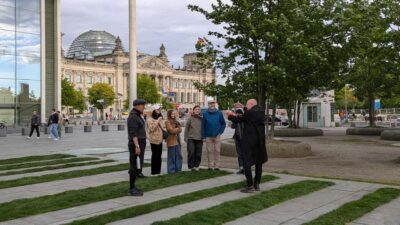
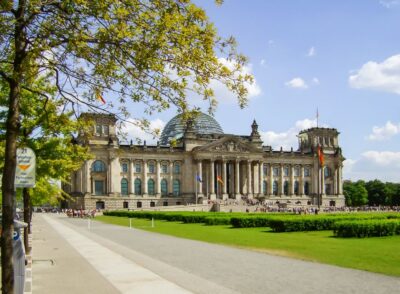
From Brandenburg Gate, the walk follows places connected with the former boundary between East and West Berlin. You will also pass the Reichstag and the Hotel Adlon Kempinski Berlin as part of the route.
The Reichstag is an important sight in its own right, but here it is part of the wider story rather than a full building tour. You should expect exterior sightseeing and explanation while walking, not entry inside the parliament building.
The Hotel Adlon offers another recognizable point along the way. Its location near Brandenburg Gate places it in the middle of one of Berlin’s most symbolic areas. Again, the focus is on seeing the building and hearing about the setting, not visiting the hotel.
This is where a local guide can help you read the city. Without context, the streets around Brandenburg Gate may look polished and modern. With the border story in mind, you begin to notice how close major civic buildings, hotels, and public spaces once were to a hard political divide.
Walking beside the Berlin Wall
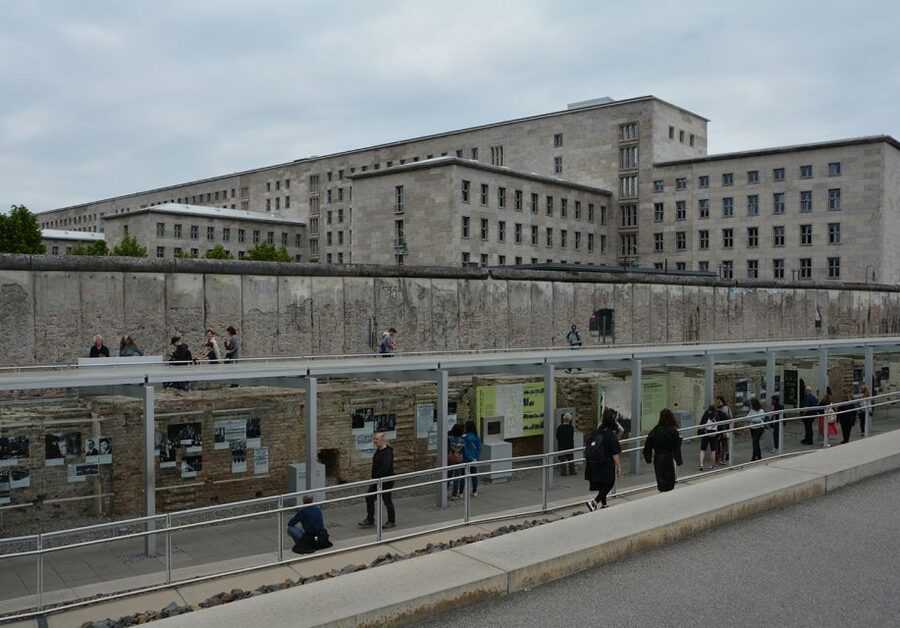
The Wall is not one continuous barrier today. Much of it has gone, and what remains can appear modest beside the scale of the events that took place here. That can be one of the tour’s strengths, since the guide helps you understand the gap between the physical remains and their enormous effect on people’s lives.
The route includes a section of the Berliner Mauerweg, the path associated with the former Wall. You walk along the old border and hear about attempts to escape from East Berlin. These accounts give the tour its human focus.
The subject can be difficult. Escape stories are not just clever tales of secret routes. They point to the risks people took to leave East Germany, the strict division of families and friends, and the fear built into ordinary movement across the city.
Carlo, also referred to as Carlos in the tour information, is especially suited to this kind of conversation. His personal memories of growing up in West Berlin can add a direct local perspective to the political history. You should not expect a scripted academic lecture. The strongest part of this tour is likely to be the chance to connect broad events with someone’s own experience of the city.
The guide is described as a professional, certified multilingual guide, but the live tour language is German. That distinction is important. If you need an English-language tour, this experience may not suit you. If you understand German, the local stories and space for questions should make the walk more rewarding.
More history-led days in Berlin:
- Berlin: Natural History Museum Entrance Ticket
★ 4.6 · 3,382 reviews - Berlin: World Heritage Cruise to Potsdam
★ 4.5 · 1,435 reviews - Berlin Historical Highlights Walking Tour
★ 4.9 · 657 reviews - Berlin Private Complete History All Day Walking Tour
★ 5.0 · 474 reviews
Berlin as the front city of the Cold War
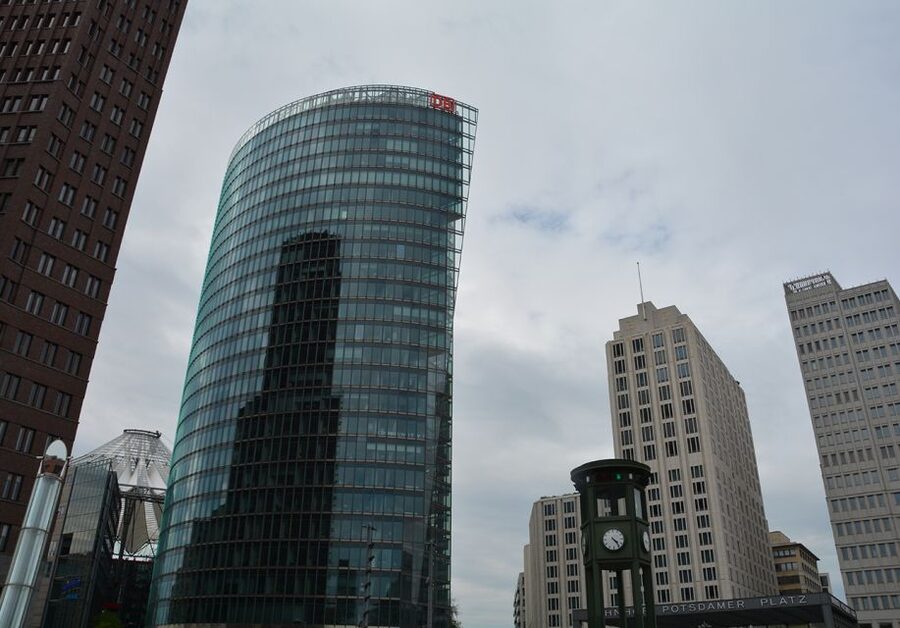
One of the tour’s useful ideas is Berlin as the front city. West Berlin was surrounded by East Germany, yet it remained linked to the Western political world. That made it feel like an island of freedom inside a much larger communist state.
You hear how this special position shaped the city. Berlin was not simply divided into two neighborhoods. It was a central pressure point in the Cold War, where the interests of the United States, the Soviet Union, Britain, France, East Germany, and West Germany met in a very small area.
The guide also explains why the Wall was more than a line on a map. It changed commutes, separated families, restricted movement, and created a daily sense of tension. The value of hearing this while walking the border is that distances become physical. You are not only learning where East and West met. You are moving through the same central corridor where that division once controlled daily life.
This portion should appeal to you if you enjoy history told through place. If you prefer long museum displays, documents, or a detailed political timeline, you may want to add a museum visit later. The tour gives you a strong introduction, but it cannot cover every part of the Cold War in 120 minutes.
Reaching Checkpoint Charlie
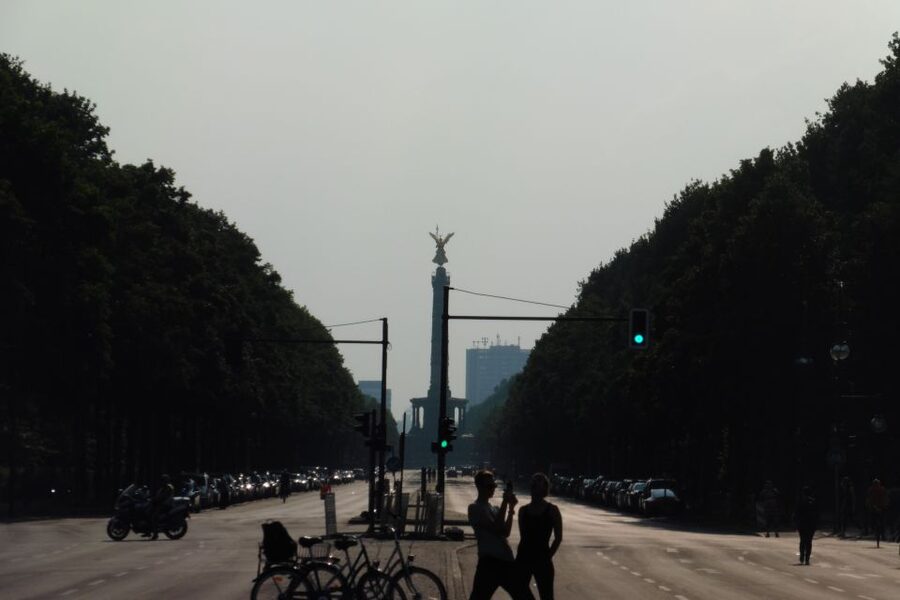
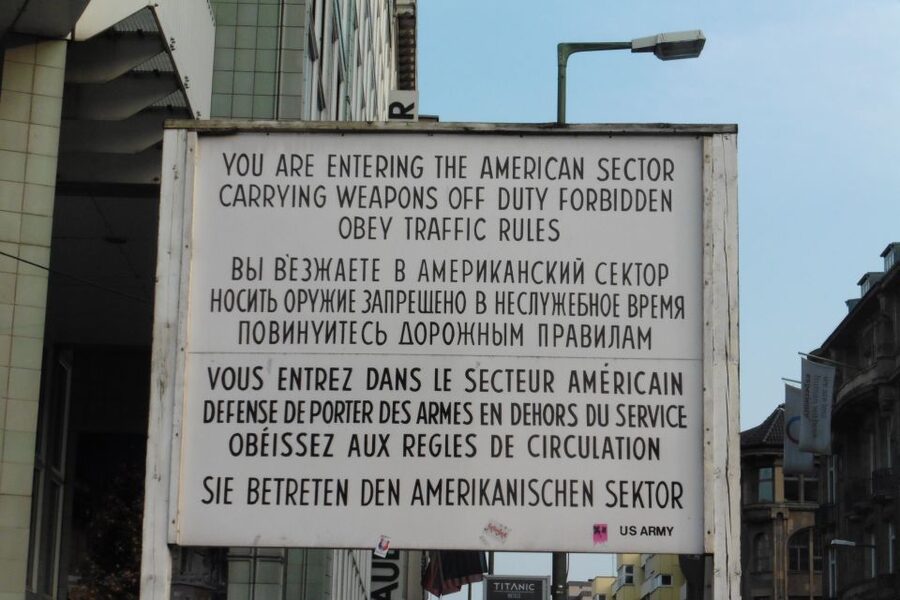
Checkpoint Charlie is the final stop. During the division of Berlin, it was an official Allied crossing point between West and East Berlin. Today it is a familiar photo location, but the original setting was a tense border crossing with serious political meaning.
The guide tells the story of an altercation there in 1961, when American and Soviet forces faced one another. The incident came close to igniting a much larger conflict. Hearing that account at the checkpoint gives the location more weight than a quick photograph usually can.
I would keep your expectations realistic. Checkpoint Charlie is now a busy sightseeing stop, and the modern setting does not recreate the Cold War border. The value comes from understanding what happened there and why the crossing mattered, not from seeing a complete original checkpoint complex.
The tour finishes here, which is practical. You can continue exploring central Berlin, stop for food, or visit another historical site without needing to retrace the route. The endpoint also makes this walk easy to combine with other plans.
What the small group changes
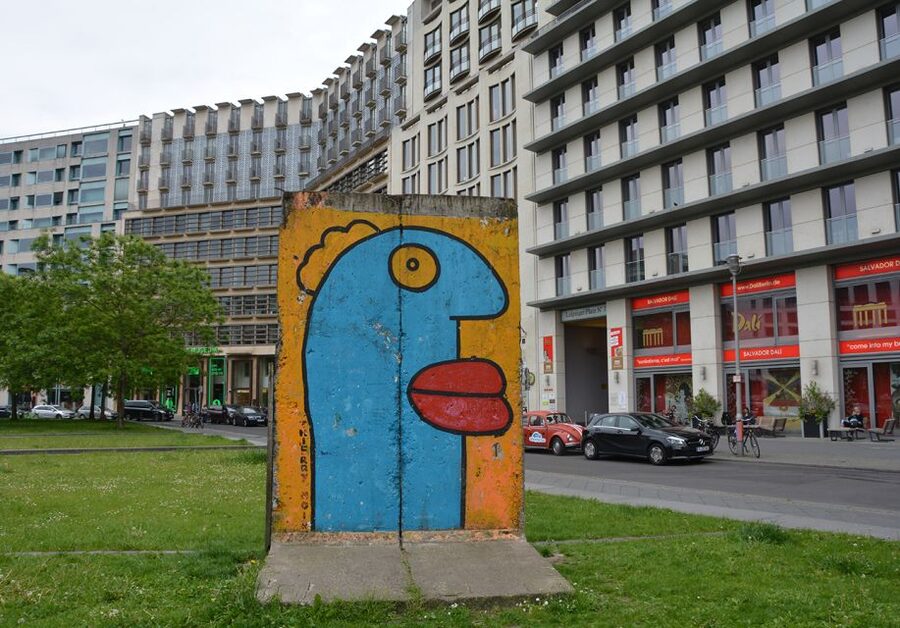
The group is limited to 10 participants. That is a useful size for a walking tour in central Berlin. You can usually stay close enough to hear the guide, and questions are less likely to disappear in a crowd.
A small group also suits the personal nature of the subject. Stories about divided families, escape attempts, and life in West Berlin work better when the guide can pause and explain a point instead of rushing to keep a large crowd together.
The tradeoff is that the tour may feel less private than a one-to-one walk. You are sharing the guide’s time with other people, and the pace needs to suit the whole group. Still, 10 people is small enough to feel personal without paying the much higher cost of a private tour.
Several people who booked the walk singled out the clear explanations, the amount covered in two hours, and the guide’s ability to answer questions. One particularly useful detail is the recommendation of museums and cafes in Berlin. That kind of local advice can help you plan the rest of your stay, though it is an extra benefit rather than a guaranteed part of the formal route.
Walking conditions, language, and access
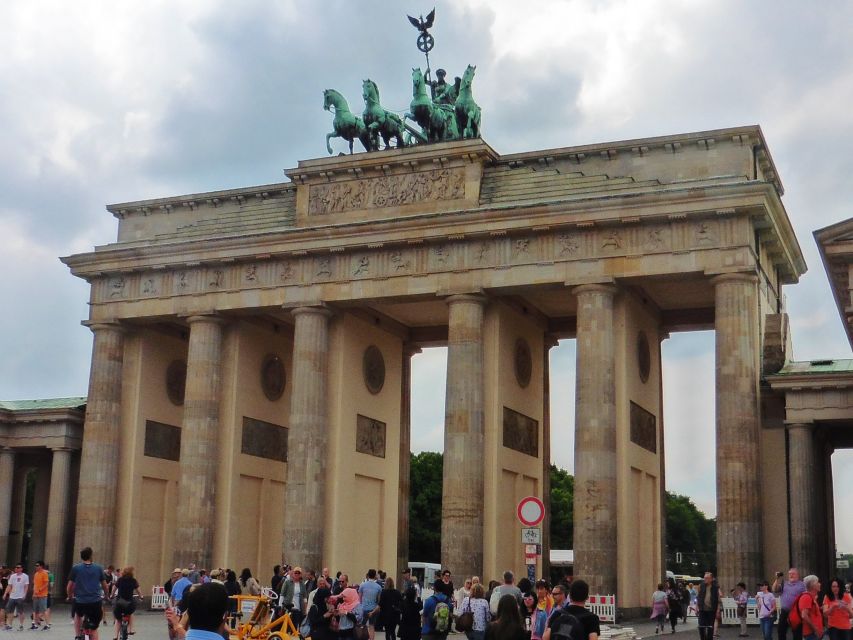
This is an outdoor walking experience, so wear shoes you can use comfortably for two hours. The instructions ask you to dress appropriately and note that the tour runs in all weather conditions and on public holidays.
That means you should check the forecast before leaving your hotel. In good weather, the open route around Brandenburg Gate and the former border should be pleasant. In rain or cold, the same walk can feel harder, especially if you are not prepared.
The activity is listed as wheelchair accessible. Because the tour follows city streets and public areas, access conditions can still depend on the exact path and temporary street conditions, but the supplied information identifies the experience as accessible.
The duration is fixed at two hours, with starting times depending on availability. That makes it a manageable first activity in Berlin, especially if you want to learn the city’s basic structure before visiting more demanding memorials or museums.
Who will get the most from this tour
I would choose this walk if you want a clear introduction to Berlin’s division and reunification, especially if you are visiting for the first time. It suits anyone who prefers to learn while walking rather than reading labels indoors.
It is also a good fit for German-speaking visitors who value local perspective. Carlo’s memories of growing up in West Berlin give the historical material a personal edge that a standard recorded guide cannot provide.
Families and older visitors may appreciate the two-hour format, though the walk still requires suitable clothing and steady movement. The small group should make it easier to ask for clarification, but the tour is not designed as a slow, extended stop at every landmark.
You may want something else if you need English commentary, a private guide, or detailed access inside the Reichstag or other buildings. You also may prefer a longer specialist tour if the Wall and Cold War are your main reason for visiting Berlin.
The booking terms are flexible. You can cancel up to 24 hours before the activity for a full refund, and you can reserve now and pay later. That is helpful when your Berlin schedule is still shifting.
Should you book this Berlin Wall walking tour?
Book it if you want personal stories tied to major Berlin landmarks rather than a list of dates. The route from Brandenburg Gate to Checkpoint Charlie is logical, the two-hour length is easy to fit into a busy visit, and the group size keeps the guide within reach.
The main condition is language. The live tour is in German, so confirm that before booking. Also remember that you are seeing exterior landmarks and remaining sections of the Wall, not entering a museum or touring a preserved border facility.
At $43, I see this as a reasonable orientation walk for a first Berlin visit. It is particularly worthwhile if Carlo is leading and you want local memories alongside the major events. If you already know Berlin’s Cold War story well, use the money for a museum or a private specialist tour instead. For most German-speaking visitors seeking a concise, human account of divided Berlin, this is a smart two-hour choice.
FAQ
How long does the Berlin historical sights and Wall tour last?
The tour lasts two hours.
Where does the tour begin?
Meet at the exit of S+U Brandenburger Tor station, exit B, in the direction of Pariser Platz and Straße des 17. Juni. Look for the guide with the GetYourGuide, You in Berlin flag.
Where does the tour finish?
The tour finishes at Checkpoint Charlie.
What language is the live tour conducted in?
The live tour guide language is German.
How many people are in the group?
The group is limited to 10 participants.
Is the tour wheelchair accessible and does it run in bad weather?
The activity is listed as wheelchair accessible. It operates in all weather conditions and on public holidays, so wear suitable clothing for walking.
Just added around Berlin
- From Berlin: Gardens & Palaces of Potsdam Bike Tour★ 5.0 · 61 reviews
- Berlin: Battle for Seelow Heights WW2 tour -Clash of Titans★ 5.0 · 27 reviews
- From Berlin: Historical Gems of Potsdam Private Day Trip★ 4.4 · 4 reviews
- Berlin: Französischer Dom 360° Panorama & Crémant to go★ 3.9 · 5 reviews
- Explore Berlin Tour: History and Highlights★ 4.7 · 5 reviews
- Berlin: Evening Yacht Cruise with Aperitif & Dinner Upgrade★ 4.6 · 178 reviews
- Berlin: Expats in Berlin Comedy Show Ticket★ 4.7 · 182 reviews
- Berlin: The Epic Comedy Club Friday Night Showcase★ 4.8 · 28 reviews
Berlin Tours, compared.

Reichstag, Dome and Government District Guided Tour
Read our review →
1-Hour City Tour by Boat with Guaranteed Seating
Read our review →
Reichstag, Plenary Chamber, Cupola & Government Tour
Read our review →
Browse the lists this tour appears in