

Review · BERLIN TOURS
Berlin: Cold War Era History Guided Bike Tour
Berlin’s Cold War story makes more sense when you follow the old border by bicycle. This tour links wall fragments, escape sites, watchtowers, former crossings, and major landmarks into one clear route, rather than leaving you to piece the story together from scattered museums and plaques.
I like the relaxed pace and the way the route uses quieter bike paths where possible. I also like the human scale: guides such as Paul, Oleg, Lauren, and Ana are praised for explaining difficult history with humor, patience, and useful visual material. The main consideration is distance. Fifteen kilometers is manageable, but city traffic, road closures, or a major event such as the Berlin Half Marathon can alter the route.
Key points to know before you book
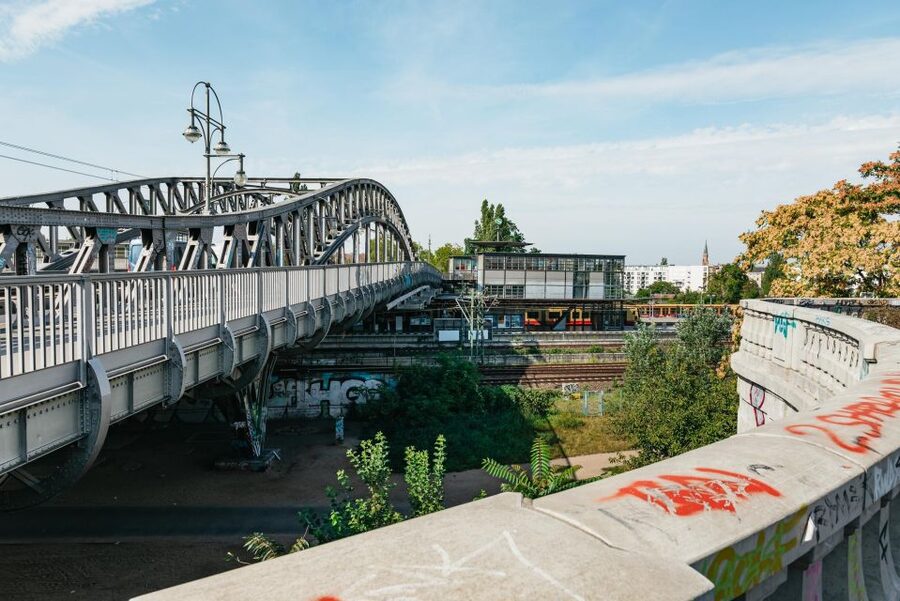
- Follow the Wall across several neighborhoods: The route connects Bornholmerstraße, Mauerpark, Bernauerstraße, Checkpoint Charlie, and Brandenburg Gate.
- Expect about 15 kilometers of easy cycling: The pace is relaxed, with time to stop, listen, ask questions, and take photographs.
- Start at the Kulturbrauerei in Prenzlauer Berg: The Berlin on Bike depot is three U2 stops from Alexanderplatz.
- Learn the personal side of division: Escape attempts, failed crossings, and the Wall’s effect on Berliners are central to the tour.
- Choose from a broad bicycle fleet: Helmets and gloves are available on request, and staff help you find a suitable bike.
- Plan for three to three and a half hours: This is a substantial history tour, not a quick sightseeing loop.
Why a bicycle helps explain Berlin’s divided past
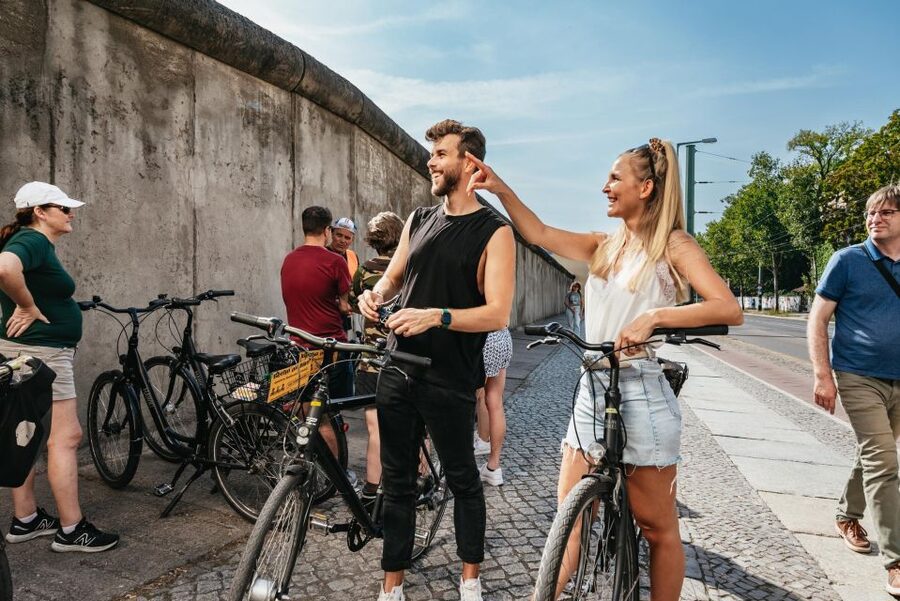
Berlin’s former border was long, irregular, and spread across a large part of the city. On foot, you can visit one memorial, then spend time navigating to the next. By bicycle, you follow the old line itself and see how the Wall cut through streets, parks, railway routes, and ordinary neighborhoods.
That movement matters. A guide can point out where a crossing once operated, where a watchtower watched the border, and where a strip of land once separated families and workplaces. You are not simply collecting famous sights. You are seeing how division was built into daily life.
The ride covers up to 15 kilometers at an easy pace. You stop often, so this is not a race or a test of fitness. Still, you should be comfortable riding for several hours and sharing urban roads or cycle routes with other people. Comfortable clothing and shoes are the sensible choice.
More Wall and Cold War walks:
- Berlin: Third Reich and Cold War 2 Hour Walking Tour
★ 4.9 · 6,830 reviews - Berlin’s Best: 2 Hour Walking Tour Third Reich and the Cold War
★ 5.0 · 5,486 reviews - Berlin: DDR Museum Tickets
★ 4.3 · 3,443 reviews
Starting at the Kulturbrauerei in Prenzlauer Berg
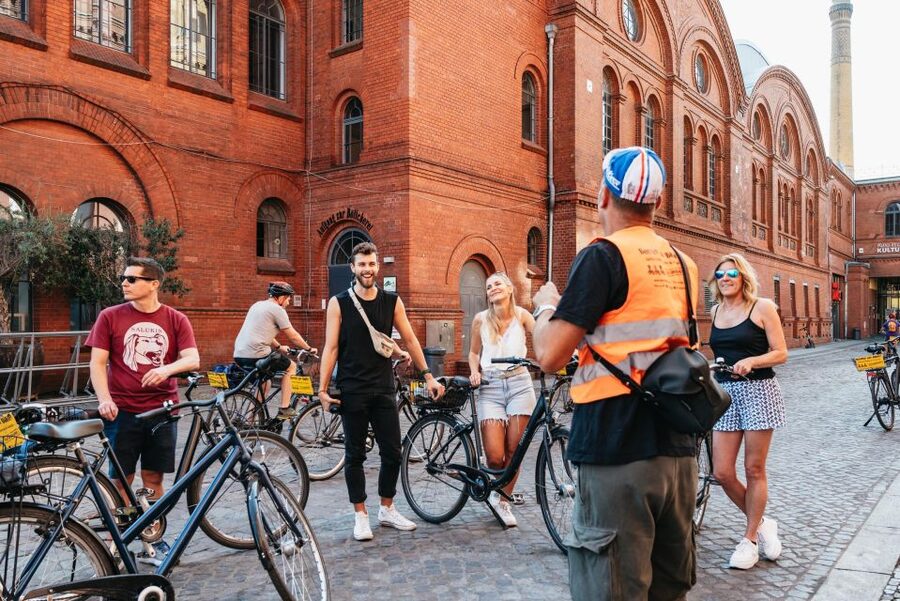
The meeting point is the Berlin on Bike depot inside the Kulturbrauerei, a striking 19th-century brewery complex in Prenzlauer Berg. The location is useful in its own right. It gives you a glimpse of the brick industrial architecture that helps define this part of the city before the historical route begins.
From Alexanderplatz, take the red U2 toward Pankow and leave after three stops at Eberswalder Straße. Use the station exit signposted Kulturbrauerei, then walk along Danziger Straße for about 150 meters. Turn onto Knaackstraße and enter through the large doorway into the complex, following the yellow signs to the bicycle depot.
Allow extra time for this first visit. The depot sits inside the complex rather than directly on the street, and a rushed arrival can make the directions feel more confusing than they are. The tour ends here too, so you do not need to arrange transport back from another neighborhood.
At the depot, you can select a bicycle from a large fleet. This is an important practical advantage. If you prefer a particular frame or braking style, take a moment to test the fit before setting off. One useful warning from the ride experience: a coaster brake can feel unfamiliar if you normally use hand brakes, so choose a bicycle that matches your habits.
Helmets and gloves are available on request. Sunscreen, trouser clips, and rain ponchos are also provided as needed. The exact bicycle selection may vary, but the broad fleet means you are not locked into one standard model.
Bornholmerstraße and the first look at the former border
The route heads toward the former border, including Bornholmerstraße, one of the crossings associated with the Wall. This is an effective early stop because it shows that the border was not just a concrete barrier in a distant historical photograph. It was a controlled passage through the city, with rules that shaped who could move and who could not.
Your guide supplies the political background, but the strongest part of this kind of stop is the practical question: what did this crossing mean for a person living nearby? The answer was different for East Berliners, West Berliners, families, commuters, and people attempting to leave the East. The route gives those distinctions room to become clear.
Guides may use photos or diagrams to help you compare the past with the present. That extra material is useful because much of the Wall has disappeared. Without visual evidence, it can be hard to understand how the border once filled these streets.
Mauerpark and the Wall’s changing afterlife
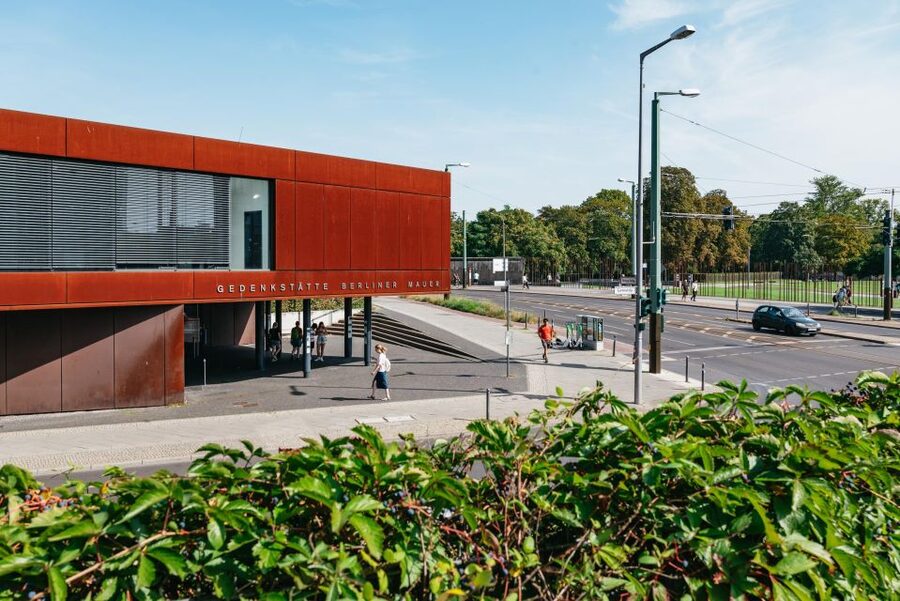
Mauerpark is one of the route’s more revealing stops. Today it is a popular public space, but its name points to the former border that crossed this area. The contrast between a place used for leisure now and a guarded frontier then makes Berlin’s reunification story feel immediate.
The tour does not treat the Wall as a single monument. Instead, it shows fragments, open spaces, former border crossings, and preserved traces. That approach is more useful than seeing one isolated section and assuming it tells the whole story.
This is also where the ride’s bicycle format pays off. You move through several parts of the former border zone without spending your limited sightseeing time on trains or long walks between stops. The route also includes paths and areas that you might not find easily on your own.
More bike days around Berlin:
- Berlin: Sights and Highlights Bike Tour with a Local Guide
★ 4.8 · 2,698 reviews - Berlin Highlights 3-Hour Bike Tour
★ 5.0 · 948 reviews - Berlin City Bike Tour with Beer Garden Stop
★ 5.0 · 917 reviews - Berlin Highlights: 3-Hour Bike Tour
★ 4.9 · 809 reviews
Bernauerstraße and the personal cost of division
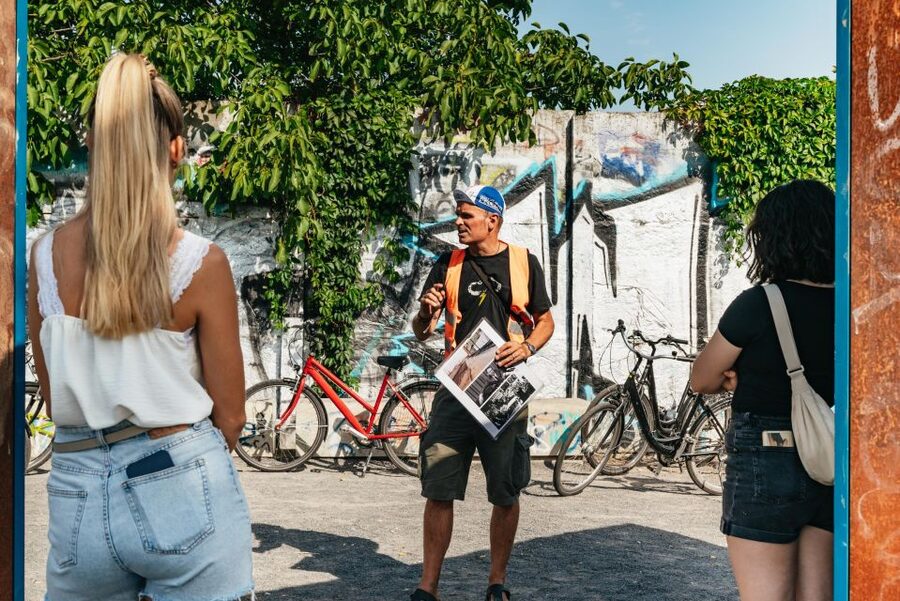
Bernauerstraße is among the most important places on the route because the Wall cut directly through a built-up neighborhood. Buildings, sidewalks, and doorways became part of the border story. The site helps explain how residents lost access to nearby streets and how ordinary homes could sit beside a heavily guarded frontier.
Here, the guide’s storytelling matters more than the bicycle itself. You hear about escape attempts, including both successful and tragic efforts, and learn why crossing the border was so dangerous. This turns a political timeline into a series of human choices made under pressure.
I would plan to ask questions at this stop. The guides are praised for allowing time for discussion and for adapting explanations to the interests of the group. If you want a basic overview, you will get one. If you want to understand how the Wall affected work, family life, and movement around Berlin, this is a good point to ask for more detail.
The history can be heavy, but the best guides keep the tone measured. The tour’s strongest feedback centers on clear explanations, a neutral approach to Cold War history, and a little humor used carefully. That balance helps you stay engaged without making light of the suffering involved.
The last watchtower and the risks of escape
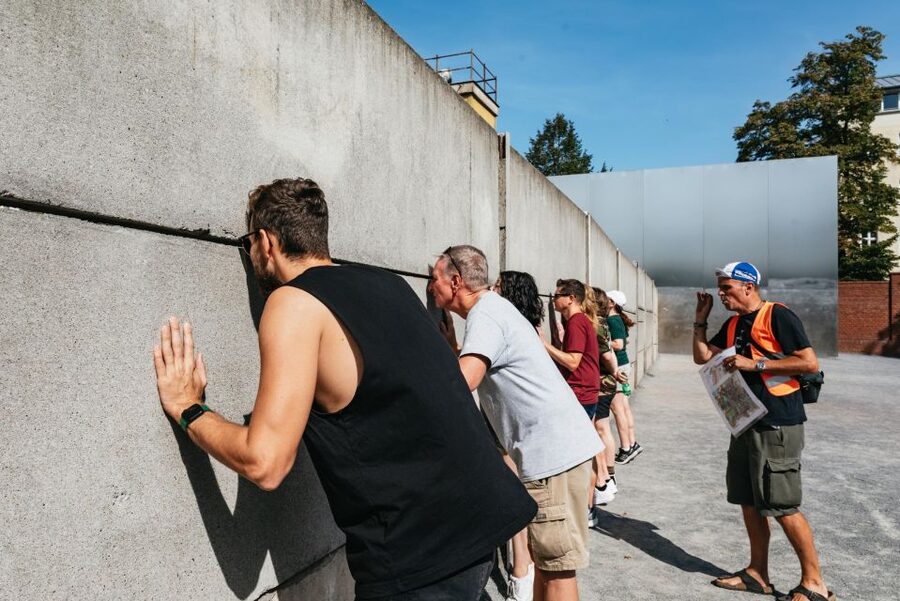
The remaining watchtower offers a direct reminder of the machinery used to control the border. A tower is easy to understand at a glance: it gave guards a high position from which to watch movement along the Wall. But its real value on this tour comes from the stories connected to surveillance, escape, and the danger of being caught.
You will hear about people who tried to leave East Berlin and about the different methods used in escape attempts. The tour does not reduce these stories to adventure tales. Their tragic outcomes and the risks faced by families are part of the explanation.
This stop is especially useful if you have seen photographs of the Wall but never considered how the border operated hour by hour. A guide can connect the tower to the wider system of barriers and crossings, giving you a clearer sense of why escape was so difficult.
Checkpoint Charlie and the famous Cold War symbols
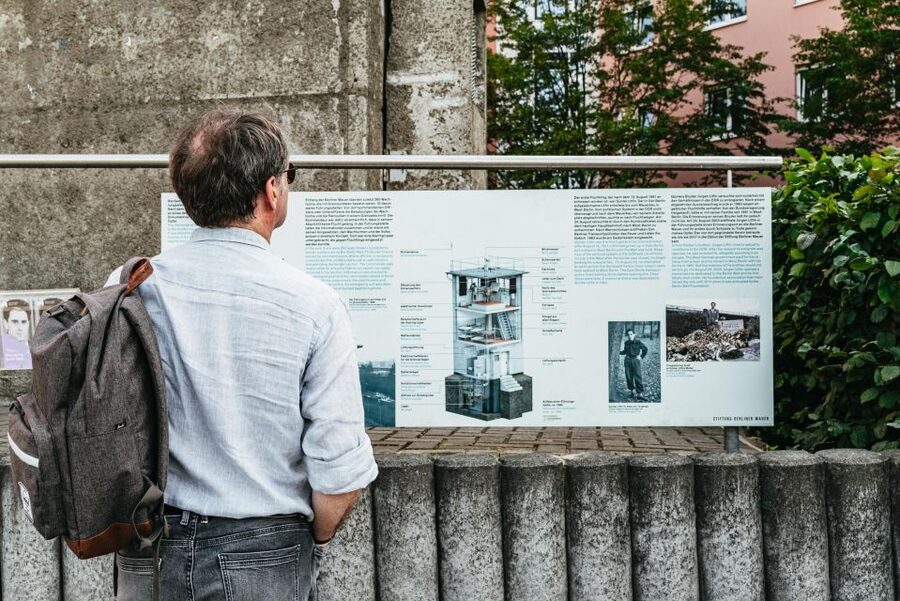
Checkpoint Charlie is one of Berlin’s best-known Cold War sites. It is also one of the places where expectations need managing. The name is famous, and the location is important, but the surrounding area has changed considerably since the Wall came down.
That does not make the stop unworthy. It gives your guide a chance to explain the role of the crossing and the tensions associated with it, including how a checkpoint became a symbol recognized around the world. You get more from the site when you focus on its political meaning rather than expecting a perfectly preserved border post.
The bicycle route also helps put Checkpoint Charlie in context. Instead of treating it as the entire story, you have already seen less polished and more personal sections of the former border. By this point, you can compare a major tourist landmark with the quieter traces found in neighborhoods and parks.
Brandenburg Gate and the Wall’s sudden end
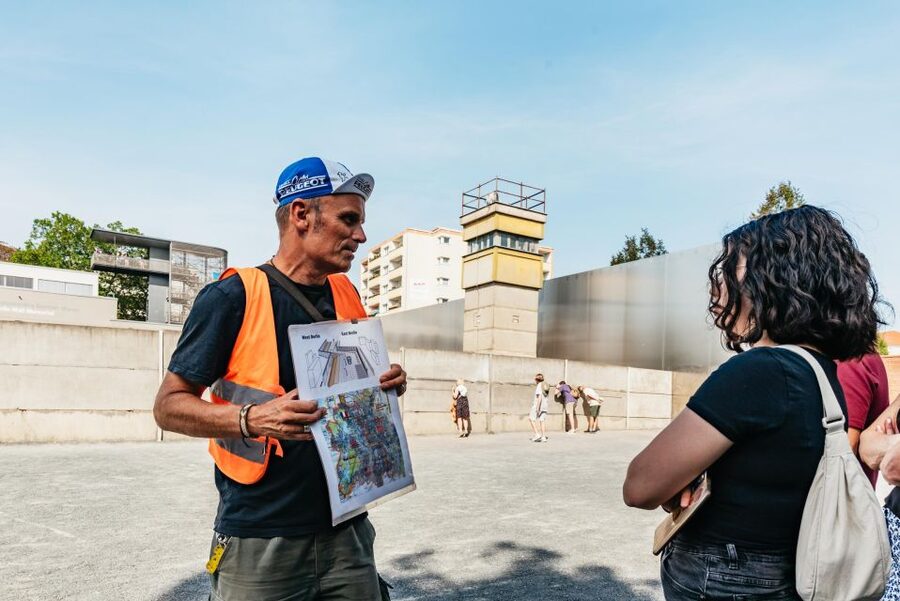
The ride continues toward Brandenburg Gate, Berlin’s famous 18th-century landmark. Your guide explains the gate’s origins and its place in the capital, but the Cold War connection is what gives this stop its special force.
For decades, the gate sat close to the divided city’s border and became a symbol of separation. Today, it is one of Berlin’s most open and recognizable public spaces. Seeing it after the Wall sites creates a natural ending to the political story.
The explanation of the Wall’s fall is another key part of the tour. You learn how it came down overnight after almost 30 years and why that moment had such a lasting effect on Berliners. The point is not only that a barrier disappeared. A city had to adjust to new movement, new memories, and the difficult work of living with a divided past.
After Brandenburg Gate, you return to the bicycle depot. The loop is convenient, particularly if you plan to continue exploring Prenzlauer Berg or head back toward Alexanderplatz afterward.
The guide makes or breaks the history
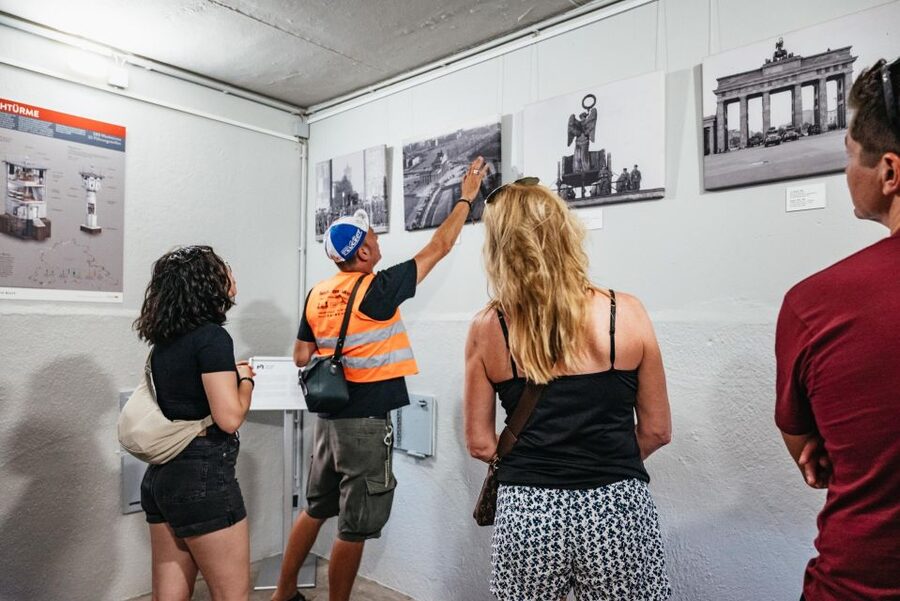
This tour is built around live explanation, so the guide matters greatly. The most praised guides include Paul, Oleg, Lauren, Ana, Almar, Andy, Geoff, James, and others working in English, German, French, or Dutch.
The qualities to look for are clear storytelling, patience at stops, and the ability to keep a group together on city streets. Paul is noted for managing a large group safely and adjusting the route when people arrived late. Lauren is praised for bringing Wall stories to life, while Oleg is singled out for detailed explanations and answers to questions.
You should not expect a single scripted performance to feel identical every day. Group size, road conditions, public events, and your guide’s style can affect the route. That flexibility is often helpful. A guide may adjust the order or spend more time on a subject that interests your group.
The overall rating is 4.8 from 413 reviews, and the consistent strengths are easy to identify: informed guides, good storytelling, an easy pace, safe cycling, and access to places you might skip on foot. Those are meaningful strengths for a history tour, where a flat list of dates would quickly become tiring.
Price, timing, and who gets the best value
At $35 per person, the tour offers good value if you want both transport and interpretation. You receive a bicycle, a guide, and a three to three and a half hour route covering a wide section of Berlin. Renting a bicycle alone would give you movement, but not the explanations that connect the sites.
The value is strongest for first-time visitors who want a solid Cold War overview in one morning or afternoon. It also suits repeat visitors who have seen Brandenburg Gate and Checkpoint Charlie but want to understand how those landmarks fit into the wider border.
The price is less compelling if you dislike cycling, want long indoor museum visits, or prefer to explore every site at your own speed. This is a moving tour with scheduled stops, not a private research day. The route covers a lot, but no single location receives the same time you might give it on a standalone visit.
Private groups are available if you want more control over the pace or discussion. The standard experience may suit most people, while a private booking makes more sense for a family group, a school group, or friends with a specific interest in Berlin’s division.
Children under eight are not permitted. Alcohol and drugs are not allowed. You can cancel up to 24 hours ahead for a full refund, and reserve now while paying later, which helps if your Berlin schedule is still changing.
Possible drawbacks to consider
The ride is relaxed, but 15 kilometers is still a substantial distance. If you rarely cycle, ask the staff to help you select a comfortable bicycle and take the route at an easy pace. Comfortable shoes and clothing will make a bigger difference than dressing for a formal sightseeing outing.
Berlin’s streets and public spaces can also be affected by races, parades, roadworks, or other events. A half marathon has previously forced a route adjustment. The guide may handle this well, but you should accept that the exact order or path can change.
Some wall sites consist of fragments, markers, open ground, or reconstructed displays rather than large intact sections. If you want one dramatic preserved stretch, add a separate visit to a dedicated Wall memorial. This tour is better at showing the border’s full spread and human impact than at presenting one complete wall structure.
Should you book the Cold War bike tour?
Book it if you want Berlin’s division explained through places, not just dates. The route covers major names such as Checkpoint Charlie and Brandenburg Gate, but its real strength is the connection between those icons and quieter traces at Bornholmerstraße, Mauerpark, and Bernauerstraße.
I would choose this tour early in a Berlin visit. It gives you a working map of the former border and helps you understand later museum visits. The steady cycling, broad bicycle choice, and strong guide-led storytelling make the $35 price reasonable for most active adults and older children who meet the age rule.
Skip it if cycling for several hours sounds uncomfortable or if you need a highly flexible itinerary. For everyone else, this is an efficient, personal, and thoughtful way to grasp how the Wall divided Berlin, and how its fall still shapes the city.
FAQ
How long is the Berlin Cold War bike tour?
The tour lasts approximately three to three and a half hours. Check the available dates for the exact starting times.
How far will I cycle?
You will cover approximately 15 kilometers at a relaxed pace, with regular stops to hear explanations and view historical sites.
Where does the tour start?
The tour starts at the Berlin on Bike depot inside the Kulturbrauerei in Prenzlauer Berg. The nearest metro station is Eberswalder Straße on the U2 line.
How do I reach the meeting point from Alexanderplatz?
Take the red U2 toward Pankow and get off at Eberswalder Straße after three stops. Leave through the exit marked Kulturbrauerei, walk along Danziger Straße for about 150 meters, turn onto Knaackstraße, and follow the yellow signs inside the complex.
Where does the tour end?
The tour ends back at the Berlin on Bike depot where it begins.
Which languages are available?
Live guides are available in English, German, French, and Dutch.
Are bicycles and safety equipment included?
A bicycle and guide are included. Helmets and gloves are available upon request. Sunscreen, trouser clips, and rain ponchos are also available when needed.
Is the tour suitable for young children?
The tour is not suitable for children under eight years old. All participants should bring comfortable clothing and shoes.
More Historical Tours in Berlin
- Berlin: Natural History Museum Entrance Ticket
★ 4.6 · 3,382 reviews - Berlin: World Heritage Cruise to Potsdam
★ 4.5 · 1,435 reviews - Berlin Historical Highlights Walking Tour
★ 4.9 · 657 reviews - Berlin Private Complete History All Day Walking Tour
★ 5.0 · 474 reviews
Just added around Berlin
- From Berlin: Gardens & Palaces of Potsdam Bike Tour★ 5.0 · 61 reviews
- Berlin: Battle for Seelow Heights WW2 tour -Clash of Titans★ 5.0 · 27 reviews
- From Berlin: Historical Gems of Potsdam Private Day Trip★ 4.4 · 4 reviews
- Berlin: Französischer Dom 360° Panorama & Crémant to go★ 3.9 · 5 reviews
- Explore Berlin Tour: History and Highlights★ 4.7 · 5 reviews
- Berlin: Evening Yacht Cruise with Aperitif & Dinner Upgrade★ 4.6 · 178 reviews
- Berlin: Expats in Berlin Comedy Show Ticket★ 4.7 · 182 reviews
- Berlin: The Epic Comedy Club Friday Night Showcase★ 4.8 · 28 reviews
Berlin Tours, compared.
Reichstag, Dome and Government District Guided Tour
Read our review →
1-Hour City Tour by Boat with Guaranteed Seating
Read our review →
Reichstag, Plenary Chamber, Cupola & Government Tour
Read our review →
Browse the lists this tour appears in