
Review · BERLIN TOURS
Berlin: Museum Island Guided Walking Tour
Berlin’s Museum Island is more than a row of grand museums. In two hours, this walk links the Berlin Cathedral, Lustgarten, Nikolaiviertel, and Humboldt Forum with the former GDR government district and a working piece of old Berlin harbor. It gives you a useful first look at the city’s center without requiring a museum ticket.
I like the small group size, limited to 10 people, and the local angle. Guides such as Carlo have been praised for making complex Berlin history easy to follow, sometimes extending the walk beyond two hours without rushing. The main consideration is that the tour is in German, runs outdoors in all weather, and does not include entry to the museums themselves.
Key points at a glance
- Five museums in one outdoor circuit: Walk around the UNESCO-listed Museum Island and see its major buildings from the outside.
- A local guide with a strong storytelling style: Carlo has led some departures, bringing detailed knowledge and plenty of enthusiasm to the route.
- Berlin’s cathedral and Lustgarten: See the city’s grandest central square and one of its most recognizable buildings.
- A quieter maritime stop: The historic harbor and ship lock add an unexpected waterside chapter to the walk.
- A useful two-hour introduction: The route ends at the Humboldt Forum, making it easy to continue sightseeing on your own.
- German only, small group: Expect a personal format, but book only if you are comfortable following a guided tour in German.
Why Museum Island makes a strong starting point
Museum Island sits in the middle of Berlin, surrounded by the Spree and packed with some of Europe’s best-known museum buildings. The five museums form a UNESCO World Heritage site, but this outing is an outdoor walking tour rather than a museum admission tour. That distinction matters.
You get the broad story first: why the buildings were placed here, how Berlin presented its culture and power, and how the center changed through war, division, and reunification. You do not get time inside the galleries, and the price does not cover museum entry. For many people, that is a sensible trade. A guide can help you choose which museum deserves your limited sightseeing time later.
The route begins near U Bhf. Rotes Rathaus, at the exit facing Rathausstrasse, Spandauer Strasse, and Schlossplatz. Look for the guide holding a GetYourGuide, You in Berlin flag. The meeting point is central, but check the exact exit before setting off, since large Berlin stations can have several ways out.
More museums and galleries in Berlin:
- Berlin: Jewish Museum Berlin Entrance Ticket
★ 4.5 · 8,393 reviews - Berlin: DDR Museum Tickets
★ 4.3 · 3,443 reviews - Berlin: Natural History Museum Entrance Ticket
★ 4.6 · 3,382 reviews
Nikolaiviertel: old Berlin before the grand monuments
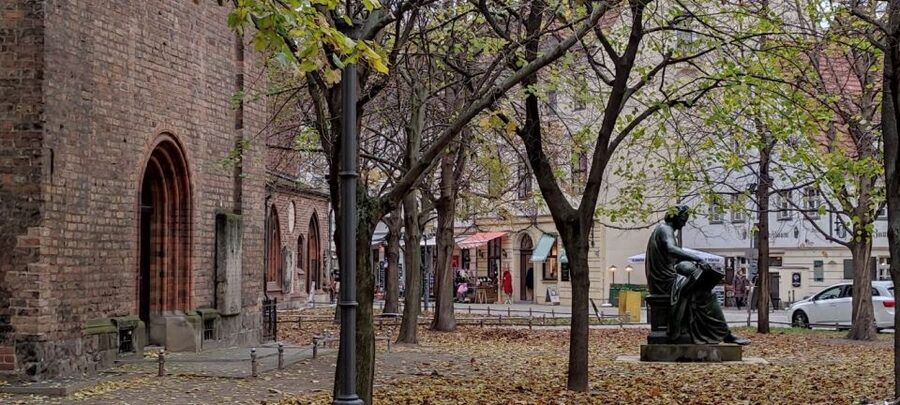
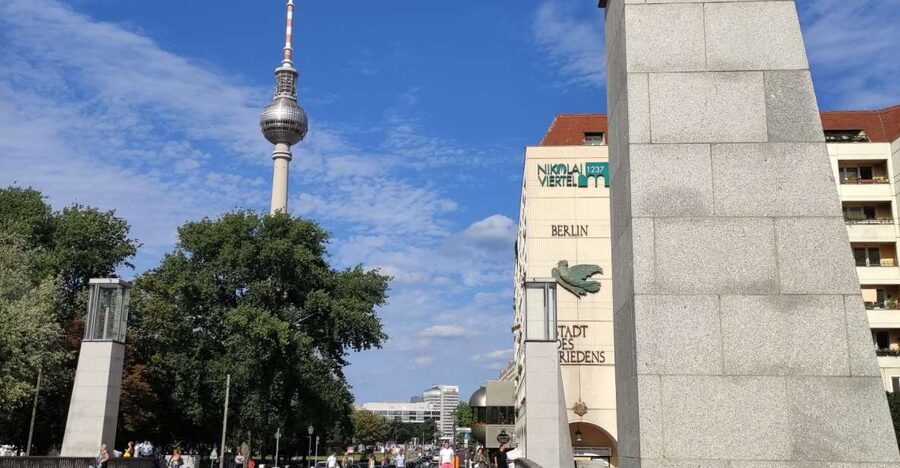
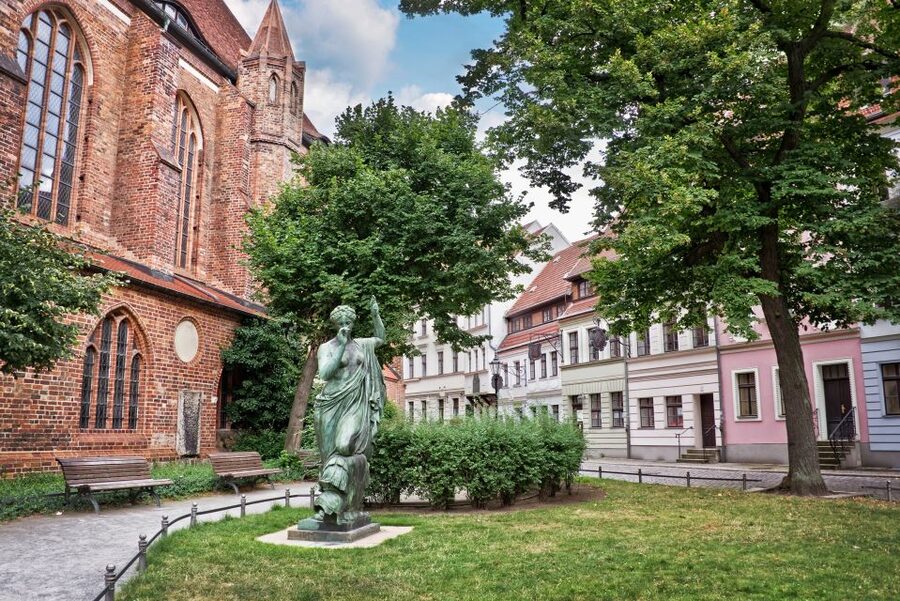
From the meeting point, the walk heads through Nikolaiviertel, a small quarter near the Spree with a more intimate feel than the wide ceremonial spaces ahead. This is a useful opening because it helps you picture Berlin at a human scale before the route reaches its enormous public buildings.
Your guide can point out how this area fits into the story of Berlin’s oldest center and how its streets contrast with the monumental planning around Museum Island. The walk is not simply a march from one famous building to the next. You move through different versions of the city, from older neighborhood streets to royal and state architecture, then into the carefully reconstructed center of modern Berlin.
I like this part for orientation. If you arrive in Berlin unsure how the central districts connect, Nikolaiviertel gives you a quick sense of where the Spree, Rathaus, Schlossplatz, and Museum Island sit in relation to one another. The drawback is that the quarter is brief on this route. You should not expect a full neighborhood tour.
Crossing the Spree toward Museum Island
The walk continues across the Spree and onto Museum Island. That crossing is simple, but it helps explain why this stretch of Berlin feels so distinct. Water, bridges, palace grounds, museums, and government buildings all meet within a compact area.
Your guide introduces the five UNESCO-listed museums as an architectural group. You will see the buildings from the outside and hear about the architects and the ideas behind this cultural center. The buildings were designed by some of the leading architects of their periods, so the route becomes an open-air lesson in changing styles and changing political aims.
This is where a local guide adds real value. Without context, you may see impressive stone facades and move on. With a good explanation, you can read the island as a record of Berlin’s ambitions. The museums were not placed together by accident. They were meant to make art, history, and learning part of the capital’s public identity.
The route includes shopping and sightseeing time around Museum Island, though this is still a guided walk rather than a shopping excursion. Keep your attention on the architecture and the river views. If you hope to browse museum shops or enter one of the collections, plan that for after the tour.
Lustgarten and the Berlin Cathedral
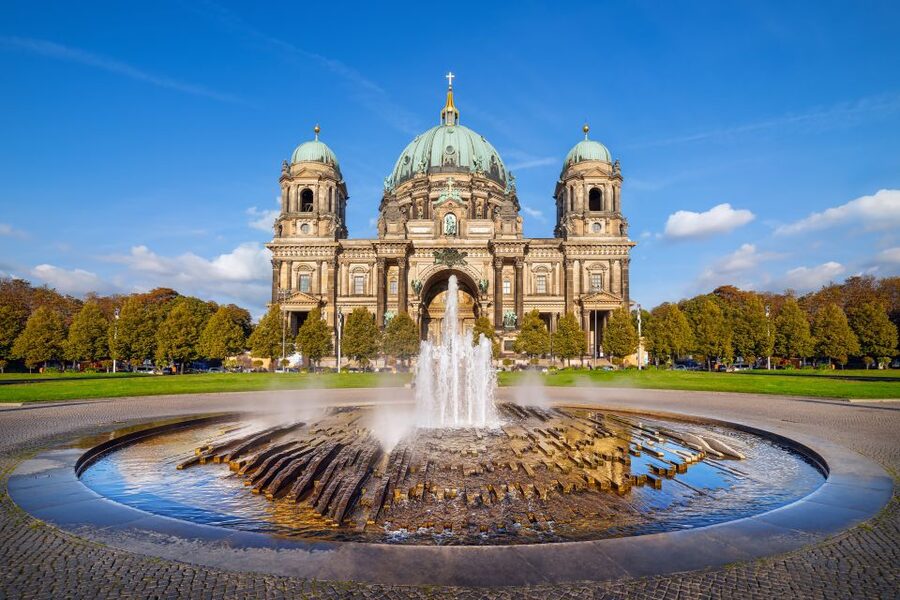
Lustgarten is one of the walk’s clearest highlights. This broad public space faces the Berlin Cathedral and offers a good place to stop, look around, and understand the scale of central Berlin. The cathedral’s dome and monumental facade dominate the view, making it one of the easiest places to grasp the city’s old royal and state-centered character.
I like that the tour does not treat the cathedral as an isolated photo stop. The guide places it within the wider setting of Museum Island, the Spree, and the former government center. That connection helps you see how religion, monarchy, public culture, and political power were placed side by side.
You should not expect to go inside the cathedral or climb its dome on this tour. The experience is about the exterior, the square, and the story told from the street. If the cathedral is high on your list, you may want to return independently when you have more time.
Lustgarten is also a practical pause in the route. Two hours on foot can feel long if every stop requires constant movement. Here, you can take in the view while the guide explains what you are seeing. Bring comfortable shoes, and dress for the forecast. The tour runs in rain or shine and operates on public holidays.
More walking tours in Berlin:
- Discover Berlin Half-Day Walking Tour
★ 5.0 · 9,624 reviews - Berlin: Third Reich and Cold War 2 Hour Walking Tour
★ 4.9 · 6,830 reviews - Berlin: Discover Berlin Walking Tour
★ 4.9 · 5,998 reviews - Berlin’s Best: 2 Hour Walking Tour Third Reich and the Cold War
★ 5.0 · 5,486 reviews
The old harbor and ship lock
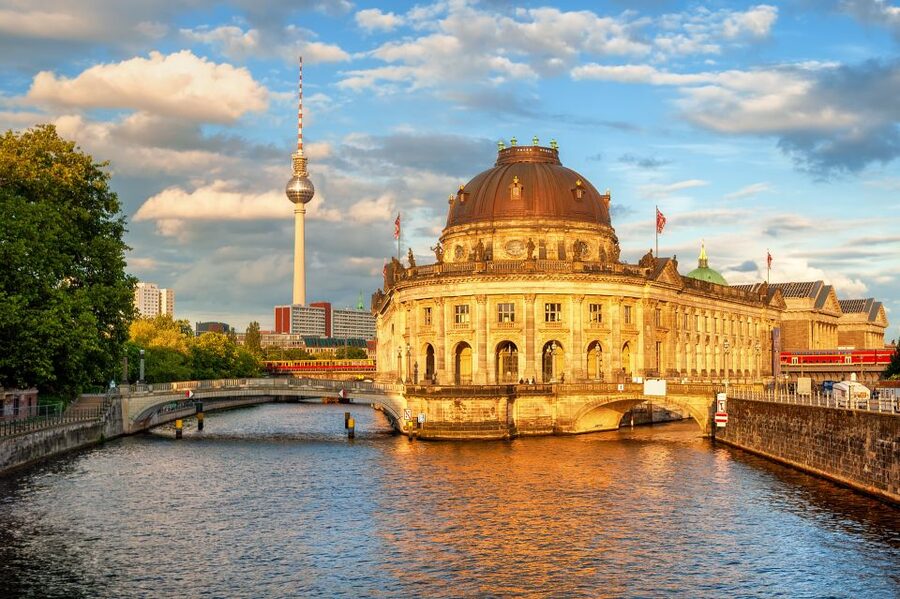
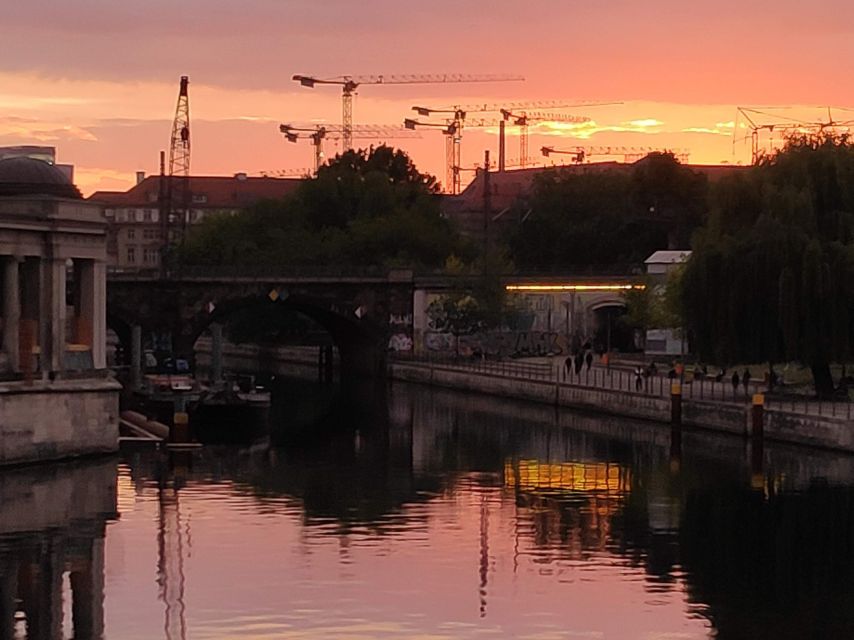
The historic harbor and ship lock provide one of the more unusual moments on the route. Berlin’s center is usually associated with museums, palaces, and political buildings, so the old ships and waterside infrastructure add a different layer to the city.
This stop is valuable because it shows Berlin as a river city. The Spree was not just a scenic backdrop. It helped shape movement, trade, industry, and the growth of the capital. You will see old ships docked at the historical harbor and learn about the lock as part of the city’s working water system.
Do not picture a large port visit or a long boat excursion. This is a short walking stop, included within the wider circuit. Its appeal lies in the contrast. After the formal architecture of the cathedral and museums, the harbor brings you back to practical city life.
The maritime stop also gives the walk some variety. If you prefer tours that mix major sights with less obvious details, this part will likely suit you. If you want only Berlin’s headline monuments, it may feel like a brief detour, though the route remains compact.
The former GDR government district
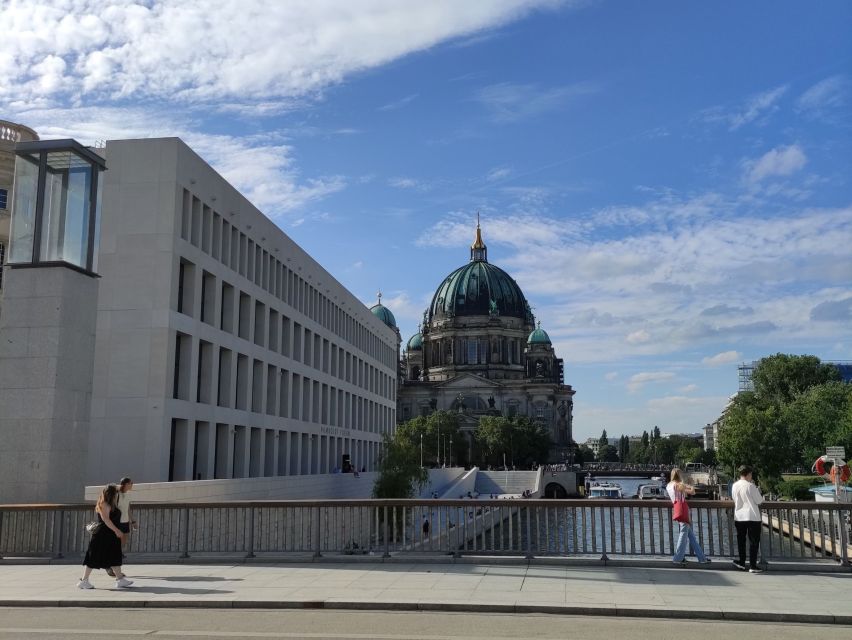
The tour also passes through the former government district of East Germany. This is one of the most useful historical sections because Berlin’s recent past is not limited to the better-known Wall sites farther away.
Your guide explains how the GDR used this central area and how Berlin functioned as a divided capital. The story connects the buildings and streets around you to the political order that shaped East Berlin after the Second World War. You are not just hearing dates. You are seeing how government, public space, and ideology affected the city center.
I especially like this part for first-time visitors who want more than the usual Cold War checklist. The route shows that division was built into everyday urban space, not confined to a single memorial. It also helps you understand why the center can feel like several historical periods placed close together.
The amount of detail will depend on the guide and the group’s pace. Carlo has been leading some tours and is described as especially engaging, thorough, and willing to spend extra time on explanations. Some departures have lasted about two and a half hours rather than exactly two. That can be a bonus if you enjoy history, but do not count on a longer finish if you have a tight appointment afterward.
Humboldt Forum: a practical finish
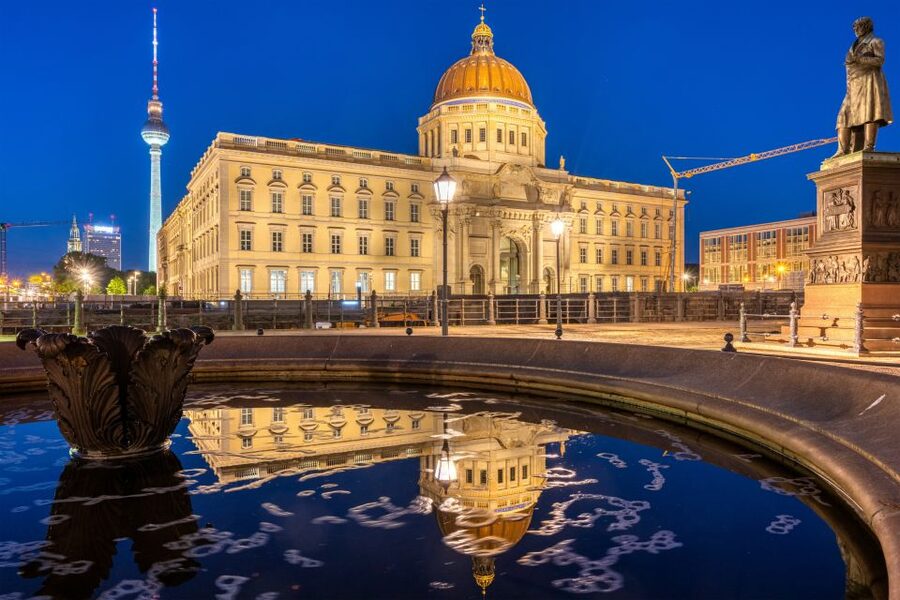
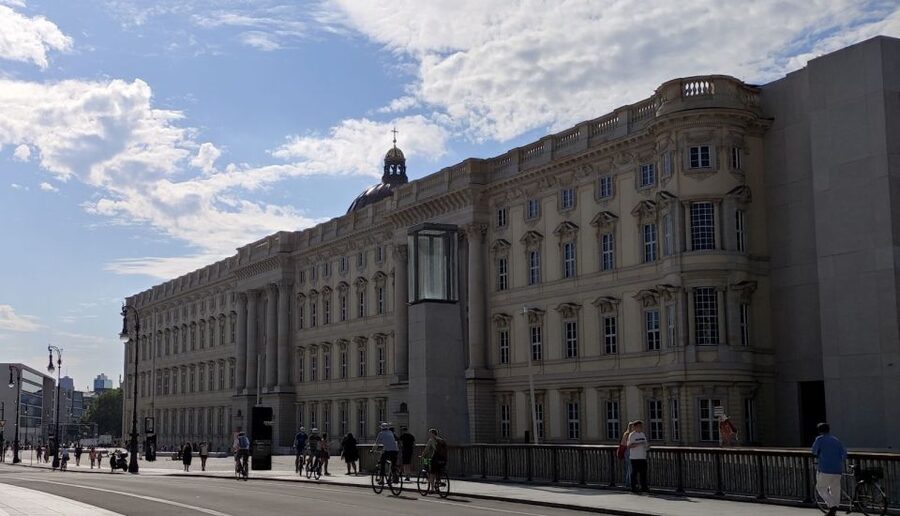
The walk ends outside the Humboldt Forum, a major museum devoted to human history, art, and culture. It is a sensible place to finish because you can continue exploring the center from here or decide which museum visit fits your interests.
The tour does not include entry, so treat the Humboldt Forum as the endpoint, not the final indoor activity. Your guide’s explanation can help you decide if you want to return for a museum visit. You might also use the finish to continue around Schlossplatz and the nearby riverfront, though the walk itself ends outside the building.
Ending here gives the tour a clear shape. You begin near Rotes Rathaus, pass through older Berlin, circle the museums, take in the cathedral and Lustgarten, visit the harbor, and finish with a major cultural institution. It is a compact route with a strong sense of place.
What the guide adds to the experience
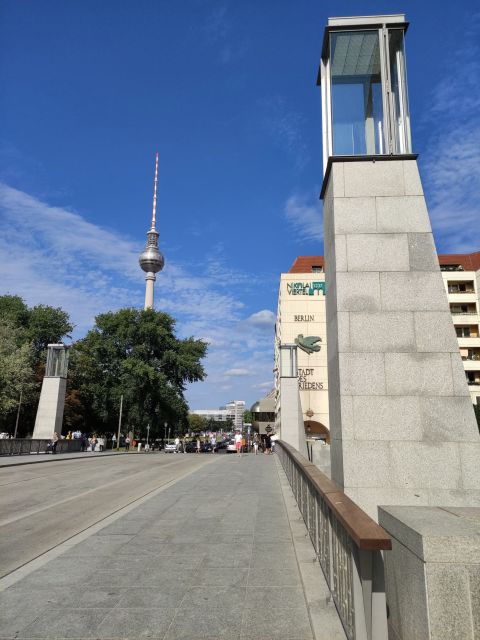
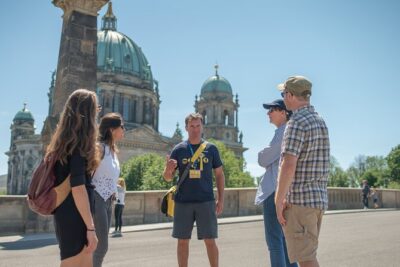
The strongest praise for this tour centers on its guide style. Carlo is repeatedly described as friendly, highly informed, entertaining, and genuinely local. His ability to explain Berlin’s complicated past in a clear way is particularly useful, since the route moves through royal, religious, Nazi-era, GDR, and modern civic settings in a short time.
A guide who knows the city can also adjust the balance between facts and storytelling. You may hear more about architecture at one stop and more about political change at another. Carlo has been known to continue beyond the planned two hours when the group wanted more detail, doing so without making the walk feel hurried.
The small group limit helps here. With no more than 10 participants, you have a better chance of hearing explanations and asking questions than you would on a large city tour. It also makes it easier for the guide to pause at a busy viewpoint or adjust the pace.
There is one firm limit: the live tour guide language is German. The activity is not presented as multilingual, and the supplied information lists German only. If you are not comfortable listening to German for two hours, choose a different format. If you are fluent or learning German, the small group and local setting could make this a useful way to hear the city explained naturally.
Is $43 a fair price?
At $43 per person, this is not the cheapest way to see Museum Island. You are paying for a two-hour guided walk, a small group, and local interpretation rather than for admission to a collection. No museum tickets, food, transport, or indoor visits are included.
I think the price is reasonable if you want context and plan to visit the museums on your own. Museum Island can feel confusing at first, with several grand buildings, changing names, and layers of political history. A well-led walk gives you a framework that can save time later.
The value is weaker if you only want photographs of the cathedral and museums. You can see the main exteriors without a ticket, though you will not get the same explanation of the harbor, GDR district, architecture, or city planning. You are also paying for the German-speaking guide, so the cost makes more sense when you can follow and use that commentary.
The two-hour length keeps the commitment manageable. It works well on a first day in Berlin, before a museum visit, or as a way to connect several central sights. If the guide extends the route to roughly two and a half hours, as has happened with Carlo, regard that as extra time rather than a guaranteed feature.
Who should book this walk?
I would recommend it to you if you enjoy architecture, urban history, and local stories that connect famous buildings to everyday city life. It also suits anyone who wants a calm introduction to Berlin’s center before choosing which museums to enter.
The tour is a good match for:
- People comfortable with a German-language explanation
- First-time Berlin visitors who want central orientation
- Museum fans who need help choosing where to spend indoor time
- History-minded couples and small groups
- Anyone who prefers a personal walking tour over a large crowd
I would hesitate if you need an English tour, dislike walking outdoors in poor weather, or want interior access to the cathedral and museums. You should also leave enough flexibility after the scheduled finish in case the guide spends extra time answering questions.
Book comfortable shoes and weather-appropriate clothing. Since the tour runs on public holidays and in all weather, it can fit into many itineraries, but rain will affect how pleasant the outdoor stops feel. Free cancellation is available up to 24 hours before the start, and you can reserve while paying later, which helps if your Berlin plans are still shifting.
Should you book the Museum Island walk?
Book this tour if you want Berlin explained rather than simply displayed. The route joins the cathedral, Lustgarten, UNESCO-listed museums, old harbor, Spree, and former GDR government district into one readable story. The small group and guides such as Carlo are the main reasons to choose it over a self-guided stroll.
Skip it if you need English, want museum interiors, or prefer to set your own pace. For German speakers with two hours to spare, $43 buys useful context and a well-planned introduction to one of Berlin’s most important central areas.
FAQ
How long does the Museum Island walking tour last?
The scheduled duration is two hours. Some departures led by Carlo have continued for about two and a half hours, but you should plan around the official two-hour length.
Where does the tour meet?
Meet the guide at the exit of U Bhf. Rotes Rathaus, exit A, in the direction of Rathausstrasse, Spandauer Strasse, and Schlossplatz. Look for the GetYourGuide, You in Berlin flag.
Where does the tour finish?
The walk ends outside the Humboldt Forum.
Is the tour offered in English?
The listed live tour language is German. No English-language option is specified.
Does the tour include museum admission?
No. The activity includes a walking tour and a local guide, but museum entry is not included.
What sights are included?
The route passes through Nikolaiviertel, Museum Island, Lustgarten, the Berlin Cathedral area, the Spree riverfront, the historical harbor and ship lock, the former GDR government district, and the Humboldt Forum.
How large is the group?
The tour is limited to 10 participants.
What should I bring?
Bring comfortable shoes and clothing suited to the weather. The tour runs outdoors in rain or shine and operates on public holidays.
Just added around Berlin
- From Berlin: Gardens & Palaces of Potsdam Bike Tour★ 5.0 · 61 reviews
- Berlin: Battle for Seelow Heights WW2 tour -Clash of Titans★ 5.0 · 27 reviews
- From Berlin: Historical Gems of Potsdam Private Day Trip★ 4.4 · 4 reviews
- Berlin: Französischer Dom 360° Panorama & Crémant to go★ 3.9 · 5 reviews
- Explore Berlin Tour: History and Highlights★ 4.7 · 5 reviews
- Berlin: Expats in Berlin Comedy Show Ticket★ 4.7 · 182 reviews
- Berlin: Evening Yacht Cruise with Aperitif & Dinner Upgrade★ 4.6 · 178 reviews
- Berlin: The Epic Comedy Club Friday Night Showcase★ 4.8 · 28 reviews
Berlin Tours, compared.

Reichstag, Dome and Government District Guided Tour
Read our review →
1-Hour City Tour by Boat with Guaranteed Seating
Read our review →
Reichstag, Plenary Chamber, Cupola & Government Tour
Read our review →
Browse the lists this tour appears in