
Review · BERLIN TOURS
Private Walking Tour: Behind the Iron Curtain and Berlin Wall
Berlin’s Cold War story becomes clearest when you walk the places where it happened. This private tour follows former border zones, escape routes, protest sites, and crossing points, turning a complicated political story into something you can see under your feet. I especially like the stop at Bernauer Strasse, where surviving Wall sections and memorials show how the border split homes and families.
I also like the private format, since your guide can adjust the pace and spend more time on the parts that interest you. Guides named Rachel Wells, Alex, and Philippa have led this experience, with particular praise for Alex’s grasp of the DDR and reunification and Philippa’s ability to shape the four hours around a group’s needs. The main drawback is that this is a walking and public-transport tour, so you need a Berlin AB day pass and a moderate level of fitness.
Key points at a glance
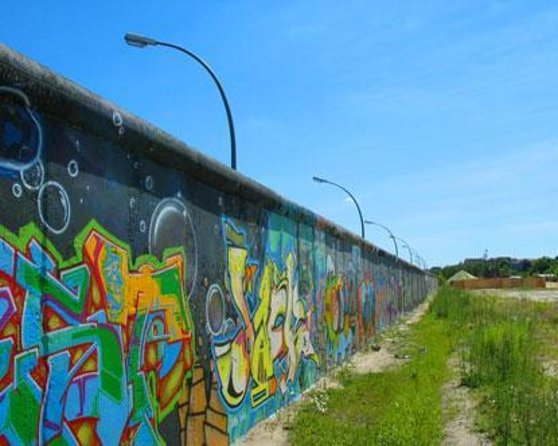
- Bernauer Strasse brings the Wall’s human cost into focus: See remains of the border system and hear about escape attempts.
- Gethsemane Church connects politics with ordinary people: Learn how civil rights activists used the church during the late 1980s protests.
- Bornholmer Strasse marks a turning point: Visit one of the former crossings between East and West Berlin.
- Private guiding keeps the history flexible: Your guide can adjust the route and explanation to suit your group.
- The tour covers more than the Wall itself: You also get background on Berlin’s founding, World War II, the Soviet Union, the GDR, and reunification.
- Plan for transport costs: A public transport day pass for zones AB is required and is not included.
Walking through Berlin’s Cold War story
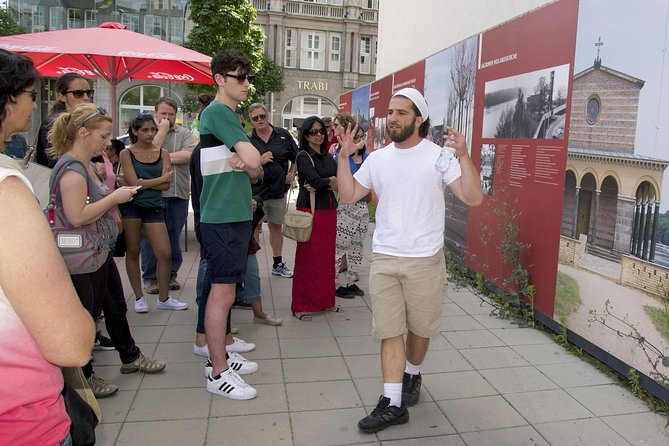
This four-hour tour begins in central Berlin in the morning or afternoon. If your hotel is centrally located, pickup is offered. Otherwise, you meet your guide at an agreed central point and begin with Berlin’s larger story before moving into the details of the divided city.
That wider context matters. Berlin did not simply acquire a wall in 1961 and lose it in 1989. After World War II, the city became the main pressure point between the Soviet Union and the Western powers. Its political division reflected the wider split across Europe, but Berlin made that conflict visible in streets, railway stations, apartment blocks, churches, and public squares.
Your guide connects the city’s earlier history to the Cold War period. You learn how Berlin developed, how the war changed its role, and how the city became divided between the Soviet-controlled East and the Western sectors. This helps prevent the tour from becoming a string of isolated Wall sites.
I like this approach because the Cold War can feel abstract when presented only through dates and treaties. Here, the focus is on what the division meant for movement, work, family life, political speech, and the shape of the city.
More Wall and Cold War walks:
- Berlin: Third Reich and Cold War 2 Hour Walking Tour
★ 4.9 · 6,830 reviews - Berlin’s Best: 2 Hour Walking Tour Third Reich and the Cold War
★ 5.0 · 5,486 reviews - Berlin: DDR Museum Tickets
★ 4.3 · 3,443 reviews
Bernauer Strasse and the former death strip
Bernauer Strasse is likely to be the emotional center of the route. The street became famous because the Wall ran directly along it, separating buildings on one side from the pavement and territory on the other. The area saw remarkable escape attempts, and the surviving remains help explain how the border changed over time.
A visit here is more useful than simply seeing a preserved slab of concrete. The Berlin Wall was not just one wall. It was a controlled border zone with barriers, patrol areas, and open space designed to prevent people from reaching the other side. The former death strip showed how the border worked as a system rather than a single structure.
Your guide can point out where escape efforts took place and explain the risks involved. The subject is serious, but the walking format gives you time to ask direct questions. With a private group, you are not tied to the interests or pace of a large crowd.
The memorial area also makes the Wall’s effect on local residents easier to understand. You are not looking at an isolated monument in a park. You are following a former line through a lived-in part of Berlin, where the border cut across streets and separated people from places that had once been close by.
The drawback is that the site can require concentration. There are several layers of history here, and the meaning of each remaining section depends on your guide’s explanation. If you prefer a quick photo stop, this part may feel slow. If you want to understand how the border operated, the extra time is worthwhile.
Gethsemane Church and peaceful protest
The stop at Gethsemane Church shifts the story from border escapes to organized opposition. Located in Prenzlauer Berg, the church became an important meeting point for civil rights activists in the late 1980s.
This is a valuable stop because it shows that the end of East German rule was not caused by one dramatic event alone. Public pressure grew through churches, civic groups, protests, and people willing to challenge a heavily policed state. Your guide explains how Gethsemane Church fit into that larger movement.
The church also gives you a better sense of daily life in the GDR, the German Democratic Republic. You hear about the limits placed on speech and movement, along with the pressures faced by people who questioned the government. That social side of the story is often more useful than another list of Cold War leaders.
I would pay close attention here if you want to understand how the Wall’s collapse became possible. The tour connects local gatherings and civil rights activity with the broader events that led to the opening of the border in 1989.
The information provided does not specify whether you enter the church, so you should think of this as a historical stop rather than assume a guided interior visit. Its value comes from the site’s role in the protest movement and from the explanation you receive there.
Bornholmer Strasse and the night the border opened
Bornholmer Strasse was one of the crossings between East and West Berlin. It is an important stop because border crossings were the places where the Wall became a daily test of power. For people living in East Berlin, passing through was controlled and restricted. For the authorities, the crossings showed the practical force of the division.
The location also links directly to the Wall’s collapse. Your guide explains the audacious efforts and public pressure that led to the border opening, including the events surrounding the crossing points. This gives the end of the Cold War a physical setting rather than leaving it as a date in a textbook.
I like the contrast between Bornholmer Strasse and Bernauer Strasse. At Bernauer Strasse, you focus on the Wall’s construction, escape attempts, and human cost. At Bornholmer Strasse, you look at the weakening of the system and the moment when control began to fail.
Expect the history to involve both official decisions and public action. The tour is not limited to a simple good side versus bad side story. It explains how the Soviet Union, the Eastern Bloc, East German authorities, protesters, and ordinary people shaped the events that led to reunification.
More walking tours in Berlin:
- Discover Berlin Half-Day Walking Tour
★ 5.0 · 9,624 reviews - Berlin: Discover Berlin Walking Tour
★ 4.9 · 5,998 reviews - Berlin: Hidden Backyards Guided Walking Tour
★ 4.8 · 5,360 reviews - Third Reich Berlin: Hitler and WWII Walking Tour
★ 5.0 · 3,301 reviews
East Side Gallery and the Wall’s afterlife
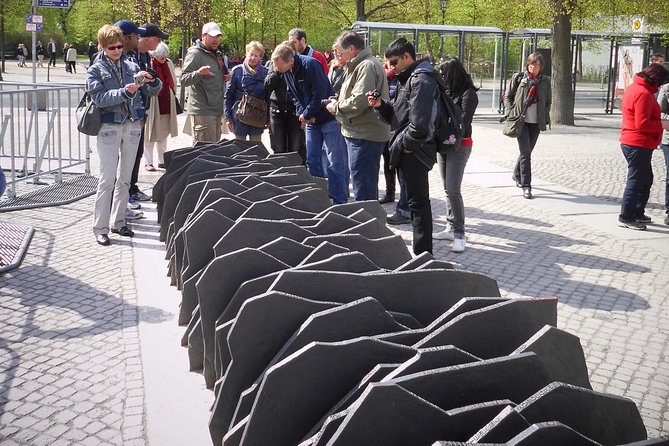
The route also includes the remains of the Wall at East Side Gallery. This is one of Berlin’s best-known places for seeing painted sections of the former barrier.
The site adds a different layer to the tour. Bernauer Strasse presents the Wall as a working border system, while East Side Gallery shows how parts of that border were later preserved and turned into a public symbol. Your guide can help you separate the original political function of the Wall from the way Berlin remembers it today.
Do not expect every part of the Wall to look untouched. The city has changed, and the remaining sections are spread among modern streets and public spaces. That is not a weakness of the tour. It is part of the lesson. The Wall once dominated Berlin, but much of the physical barrier has disappeared.
The exact order of the stops may vary because this is a private walking tour using public transport. The tour description places the Wall Memorial, Gethsemane Church, Bornholmer Strasse, East Side Gallery, and Alexanderplatz within the experience, but the route is not presented as a fixed minute-by-minute schedule.
Alexanderplatz provides a useful finish
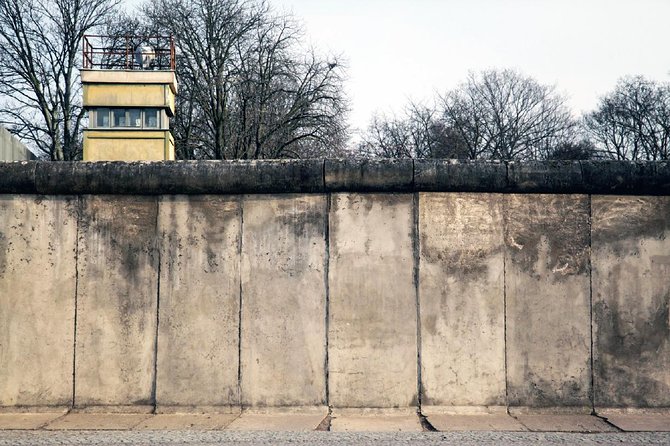
The tour ends at Alexanderplatz, a large public square and transport hub in central Berlin’s Mitte district. This is a practical ending point, especially if you want to continue sightseeing, find food, or return to your hotel by public transport.
Alexanderplatz also works as a final setting for the story. It was an important East Berlin public space, and its location helps connect the former divided city with present-day Berlin. After four hours of border history, ending at a major central square gives you an easy place to pause and sort through what you have seen.
Because the tour ends at a transport hub rather than necessarily returning you to your hotel, ask your guide about your onward route. Hotel pickup is offered only for centrally located hotels, and the included service does not list a return transfer.
What the private format adds
The private arrangement is the strongest reason to choose this experience over a standard group walk. Only your group participates, so you can ask questions without waiting for a large party to catch up or keeping a fixed group schedule.
This matters with Cold War history. You may want more time on the GDR, escape attempts, the Soviet Union, protest movements, or reunification. Another group might care more about architecture or military history. A private guide can give more attention to your interests.
The named guides associated with the experience include Rachel Wells, Alex, and Philippa. Rachel Wells is described as combining historical facts with visits to actual sites. Alex is particularly associated with a strong grasp of the DDR era and reunification, while Philippa is noted for adapting the tour to a private group’s needs.
You should not assume that you will receive a particular guide unless the provider confirms it. Still, these details give you useful questions to ask when booking, especially if you want a guide with a strong focus on East German life or the events of 1989.
Private tours can also feel expensive when priced per person. At $166.52 per person, the cost is significant, especially for a solo visitor or couple. The value improves for a family or group that wants a specialist-led tour without sharing the guide with strangers. Group discounts may also be available, so larger parties should check the final price before deciding.
Duration, walking, and public transport
Four hours is a sensible length for this subject. You get enough time to connect several parts of the city, but the tour still fits into a half-day. You can book a morning or afternoon start, which makes it easier to pair with another Berlin activity.
The tour is not a gentle sightseeing loop. You walk between historical locations and use Berlin’s public transport system. A day pass covering zones AB is required, and you must buy it separately. Food and drinks are also not included, so carry water and plan a meal before or after the tour.
A moderate level of physical fitness is recommended. The information does not give a precise walking distance, number of stairs, or accessibility details, so contact the provider if those issues matter to you. Pickup may reduce the initial fuss for a centrally located hotel, but it does not remove the walking and transit involved in the main experience.
For the smoothest day, buy or arrange your AB transport pass before the tour begins. The price of that pass is an extra cost, but it is also useful for reaching other Berlin sights during the same day.
Who will get the most from this tour
I would choose this tour if you want Berlin’s Cold War story explained through places rather than only through museums. It suits first-time visitors who need a clear introduction, as well as people who already know the basic timeline and want more local detail.
It is especially useful for:
- History-focused visitors interested in World War II’s aftermath, the Soviet Union, the Cold War, and reunification.
- Families or small groups who want a flexible private schedule.
- Visitors who want to see both the physical remains of the Wall and the protest sites that helped bring it down.
- People who prefer questions and discussion instead of a scripted audio guide.
- Anyone staying centrally who can make good use of Berlin’s AB transport network.
It may not suit you if you want a museum-heavy tour, a short photo walk, or a fully vehicle-based experience. The tour covers many locations, so some stops may be viewed from outside or discussed briefly rather than explored at length.
Booking timing and cancellation
The experience is often booked about 12 days ahead, so I would not leave it until the last minute if you need a specific morning or afternoon. Confirmation is normally received at booking. If you book within seven days of the tour, confirmation may arrive within 48 hours and depends on availability.
Free cancellation is available up to 24 hours before the local start time for a full refund. Changes or cancellations made inside that 24-hour window are not accepted or refunded, so check the meeting details before that deadline.
Should you book the Berlin Wall walking tour?
Book it if you want a private, site-based explanation of Berlin’s divided past and you are comfortable walking and using public transport. The best parts are the connections between Bernauer Strasse, Gethsemane Church, Bornholmer Strasse, and the former Wall sections. Together, they show construction, control, protest, escape, and collapse.
The price is high for a single person, but it can make sense for a group that values a private guide and flexible conversation. Bring the cost of the AB day pass into your budget, wear comfortable shoes, and allow the full four hours.
If you want Berlin to make sense beyond its famous fragments of concrete, this is a strong choice. If you want a quick introduction with little walking, choose a shorter city tour instead.
FAQ
How long does the tour last?
The tour lasts approximately four hours and is offered as a morning or afternoon half-day experience.
Is this a private tour?
Yes. Only your group participates in the activity.
Is hotel pickup available?
Pickup is offered from centrally located hotels.
Do I need a public transport ticket?
Yes. A public transport day pass covering Berlin zones AB is required and is not included in the tour price.
Are food and drinks included?
No. Food and drinks are not included.
What sites are included?
The tour includes Berlin’s Cold War locations such as Bernauer Strasse and the Berlin Wall Memorial, Gethsemane Church, Bornholmer Strasse, East Side Gallery, Alexanderplatz, and other relevant sites.
Does the tour cover the history of East Germany?
Yes. The tour explains what it meant to live in the GDR and discusses the country’s place within the Eastern Bloc.
Does the tour discuss the fall of the Berlin Wall?
Yes. You learn about the protests, border crossings, and efforts that led to the Wall’s collapse.
What level of fitness is needed?
A moderate level of physical fitness is recommended because the experience is a walking tour that also uses public transport.
Can I cancel for a full refund?
Yes, if you cancel at least 24 hours before the local start time. Cancellations or changes made less than 24 hours before the start are not refunded or accepted.
Just added around Berlin
- eSIM for Germany and 34 European Countries★ 4.5 · 16 reviews
- Your ticket to The Wall Museum Berlin★ 3.0 · 60 reviews
- Walking on the Wall: 3-Hour Tour in Berlin★ 4.5 · 34 reviews
- Rickshaw Tours Berlin – Groups of up to 16 people with several rickshaws★ 4.0 · 97 reviews
- Warnemuende Shore Excursion: Private Berlin Tour★ 4.5 · 27 reviews
- Warnemuende Shore Excursion: Berlin Private Sightseeing Tour from Rostock★ 5.0 · 4 reviews
- Love and War in Berlin: Self-Guided Story Puzzle Walk★ 5.0 · 7 reviews
- Cold War Berlin – Private Live Virtual Experience★ 5.0 · 4 reviews
Berlin Tours, compared.

Reichstag, Dome and Government District Guided Tour
Read our review →
1-Hour City Tour by Boat with Guaranteed Seating
Read our review →




Reichstag, Plenary Chamber, Cupola & Government Tour
Read our review →
Browse the lists this tour appears in