
Review · BERLIN TOURS
East Berlin and the Berlin Wall 2-Hour Walking Tour
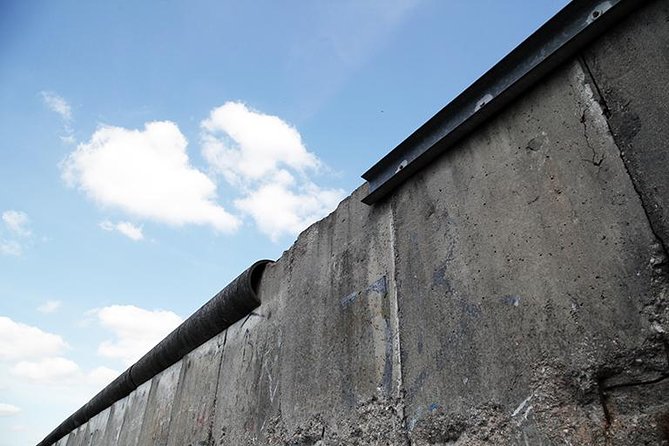
The most powerful part of this walk is not a grand monument. It is the preserved section of the Berlin Wall and Death Strip, where you can see how a border became a killing zone. From the watchtower and viewing area, the Wall feels less like a slab of concrete and more like a carefully planned system built to stop ordinary people from leaving.
I like the way the tour links big political events to daily life in East Berlin, especially through escape stories, the Palace of Tears, and the Stasi headquarters. I also like the strong guide record: Anastasia, Ariel, Dylan, Tom, Georgia, Jimmy, Nathan, Jasper, Heidi, Tobi, Pip, Susan, and others are singled out for clear storytelling and thoughtful answers. The main drawback is time. Two hours goes quickly, and the route involves public transport, so a missed train connection or slow start can reduce time at the sites.
Key points about the East Berlin walk
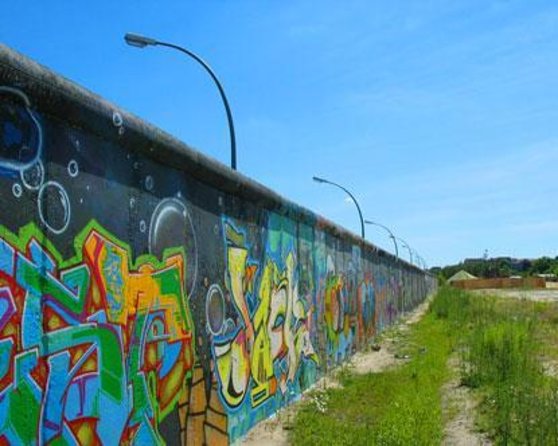
- The Wall memorial is the heart of the tour: You see an original section, the Death Strip, escape routes, and photographs of people who died trying to cross.
- Bornholmer Strasse connects history to one astonishing mistake: Your guide explains how a confused announcement helped open the border on November 9, 1989.
- The Stasi story shows control from the inside: The tour explains how East Germany watched its own citizens and tried to manage everyday life.
- The experience uses Berlin’s streets and trains: Bring a valid Berlin AB transport pass, which costs about €10.60 and is not included.
- The guides make or break the pace: Strong guides such as Tom, Georgia, Dylan, Jasper, and Pip are praised for making complex events easy to follow.
- The tour suits history-minded visitors: It is a good first introduction, but you may want extra time at the Wall memorial afterward.
Why this two-hour tour matters
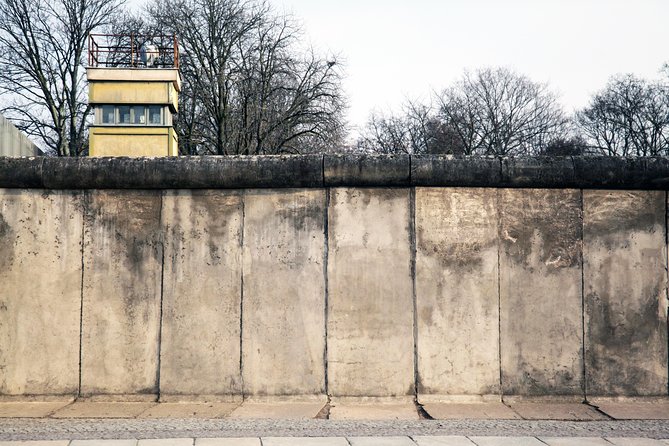
Berlin’s Cold War story can be hard to grasp from isolated sights. You may see a painted fragment of wall, a watchtower, or a marker in the pavement and understand only part of the picture. This tour joins those pieces together.
The guide begins with the split between the United States and the Soviet Union after the Second World War. You learn why Berlin, although located inside the Soviet occupation zone, was divided among the victorious powers. That arrangement turned the city into a pressure point between East and West.
The key question is not simply why the Wall was built. It is why so many people wanted to leave East Germany, why the government treated escape as a crime, and how the Wall changed ordinary routines. Families were separated. Some streets ended at barriers. Railway stations became border points. Homes near the border were sometimes altered or sealed to prevent escape.
That human scale is where the walk earns its low price. At about $21.78, you are paying mainly for the guide’s interpretation, not for admission to a paid attraction. The major outdoor sites are free, yet they can be confusing without context. Add the roughly €10.60 Berlin AB transport pass, and the total remains modest for a focused history experience.
More Wall and Cold War walks:
- Berlin: Third Reich and Cold War 2 Hour Walking Tour
★ 4.9 · 6,830 reviews - Berlin’s Best: 2 Hour Walking Tour Third Reich and the Cold War
★ 5.0 · 5,486 reviews - Berlin: DDR Museum Tickets
★ 4.3 · 3,443 reviews
Starting near Hackescher Markt at 10 a.m.
The meeting point is Neue Promenade 3, beside Hackescher Markt in former East Berlin. The start time is 10 a.m., so you should arrive early enough to find the group and sort out your transport ticket before the explanation begins.
Hackescher Markt is a useful place to start because it puts you in the former eastern part of the city from the first minute. The tour does not begin with a long museum introduction. Instead, your guide uses the surrounding streets to set up the political story, explaining how Berlin became divided and why tension between the United States and the Soviet Union mattered here so much.
The official group limit is 20 people. Several accounts describe groups of about 10, which is a comfortable size for a walking tour. A smaller group makes it easier to hear at street corners and ask questions, although the exact number will vary by date.
The first stop is brief, about five minutes. That is enough to gather everyone and establish the route, but do not expect a long visit to Hackescher Markt itself.
Friedrichstrasse and the Palace of Tears
The walk continues toward Friedrichstrasse, a major central street and an important railway area. The stop here is short, about five minutes, but the location gives the guide a chance to explain how transport and borders worked in divided Berlin.
The nearby Palace of Tears is especially useful for understanding the emotional cost of the division. This was the former border crossing at Friedrichstrasse station, where East Germans said goodbye to visiting family and friends returning to West Germany.
The name is not a formal title from the Cold War period. It is Berlin’s own nickname for the place, a reminder that a railway station could also be a site of repeated farewells. If you have seen the Wall only as a political symbol, this stop helps you picture its effect on families.
The short timing is both good and limiting. It keeps the group moving toward the main memorial, but you will not have a long independent visit here. If the Palace of Tears matters to you, plan to return on your own after the tour.
The Berlin Wall Memorial and the Death Strip
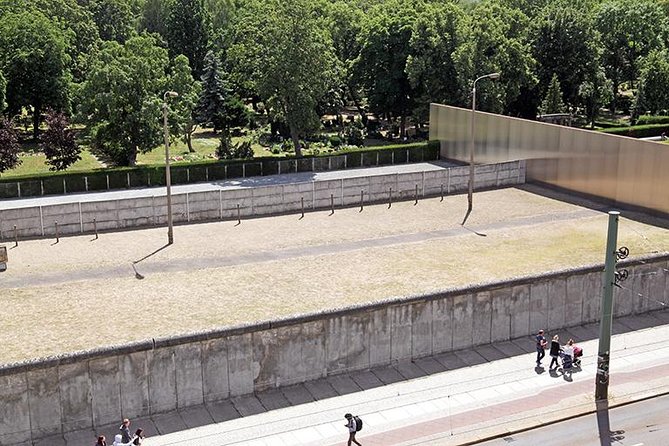
The longest stop is the Berlin Wall Memorial, with about an hour listed for this part of the route. This is the tour’s main historical payoff.
Here, you see a section of the Wall preserved in its original form rather than only a decorated fragment. You can also touch remaining sections of the barrier. That physical contact matters. Berlin has many wall pieces scattered around the city, but a preserved section with the surrounding border layout makes the system easier to understand.
Your guide explains the two-wall arrangement and the open area between the barriers, commonly called the Death Strip. From a viewing point, you can see how watchtowers, fences, open ground, and controlled sight lines worked together. East German guards had orders to shoot people attempting to escape, and the guide discusses the people who died trying.
This is a serious stop, and the best guides keep the tone human rather than theatrical. Tom is praised for combining the broad political story with individual accounts. Steve is remembered for explaining how people tried to escape and how East German authorities bricked up houses along the border. Other guides, including Georgia, Nathan, and Heidi, are praised for making the material clear and personal.
You will also see photographs of people who did not make it across. These images give faces to a history that can otherwise feel distant. The tour is not simply about concrete and dates. It is about choices made under pressure, failed escapes, separated families, and people who risked everything for a different life.
The memorial deserves more time than two hours allows. If you want to read every display, study the photographs, and visit the indoor parts at a slower pace, return later. The walk gives you a strong framework, then you can explore the memorial in detail on your own.
More walking tours in Berlin:
- Discover Berlin Half-Day Walking Tour
★ 5.0 · 9,624 reviews - Berlin: Discover Berlin Walking Tour
★ 4.9 · 5,998 reviews - Berlin: Hidden Backyards Guided Walking Tour
★ 4.8 · 5,360 reviews - Third Reich Berlin: Hitler and WWII Walking Tour
★ 5.0 · 3,301 reviews
Chapel of Reconciliation and the remains of the border
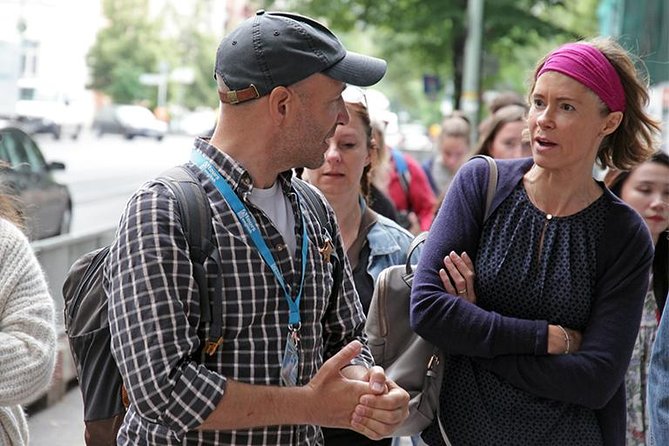
The Chapel of Reconciliation is a brief stop of about five minutes. The guide explains the history of the site and its place within the former border zone.
Its importance comes from what it represents. The Wall did not simply pass through empty land. It cut across communities, streets, and familiar buildings. Religious sites and homes could end up trapped beside or inside the border system.
This is one of several places where the tour asks you to picture the area before and after the Wall. The setting may appear quiet today, but the guide’s account helps you see how thoroughly the border changed it.
Because the visit is short, you should think of the chapel as a marker within the larger memorial rather than a separate attraction visit. You may not have time for an extended look inside.
The old GDR watchtower
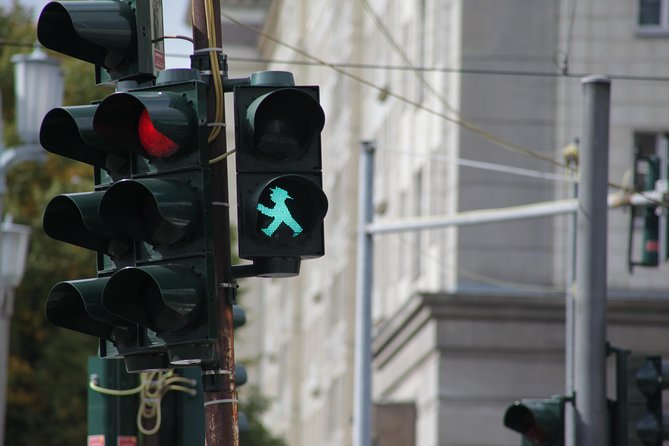
The GDR watchtower is described as the oldest surviving relic of the Berlin Wall. The stop lasts about five minutes, giving you time to see the structure and hear how it fitted into border surveillance.
A watchtower can look small compared with the scale of Berlin, but its purpose was direct. Guards needed clear sight lines across the border zone, and the tower was part of a wider network designed to detect and stop escape attempts.
This is another place where a guide adds real value. Without explanation, you might see an old tower and move on. With the Cold War setting in mind, you can connect it to the fences, open ground, patrol routes, and orders discussed earlier.
The tour also passes Ackerstrasse, where the guide explains the local history. These short street stops help you notice traces of the former border in ordinary city blocks. They are not major sightseeing pauses, but they make the walk feel tied to real neighborhoods rather than only to formal memorials.
Bornholmer Strasse and the night the Wall opened
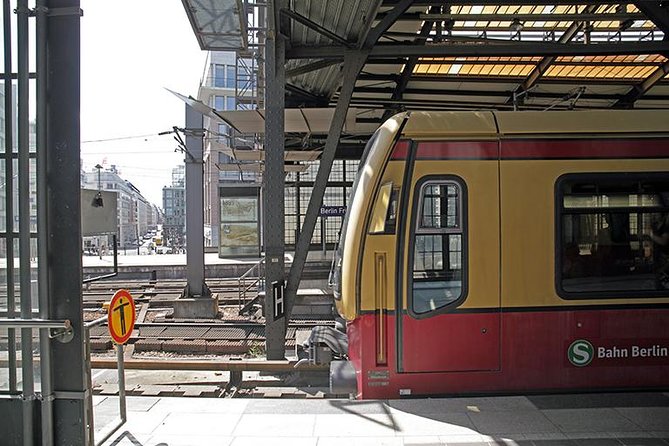
Bornholmer Strasse is one of the most memorable parts of the route. This is where the Wall first came down on November 9, 1989.
The guide tells the unlikely story of an East German politician whose confused announcement helped trigger the opening. The border guards were not prepared for the sudden crowd, and the situation moved beyond the government’s control.
This episode is useful because it shows how political systems can look firm until one mistake, one announcement, and one mass response change everything. The Wall did not fall after a neatly staged ceremony. The opening came amid confusion, pressure, and public demand.
The timing of this stop is important. You get the origin of the Wall, the machinery of repression, the human cost of escape, and then the moment the border broke. That sequence gives the tour a clear shape even though it covers many decades.
The description of the route places Bornholmer Strasse on the way north, while the stop list emphasizes the memorial area and other central sites. Since the published end details also point toward the Berlin Wall Memorial and Nordbahnhof, confirm the precise final route and meeting instructions before setting out. Berlin’s transport connections make this easy enough, but clarity matters when a two-hour tour is moving between districts.
The Stasi and the machinery of control
The tour includes the headquarters of the Stasi, East Germany’s secret police. This section shifts the story from the physical border to the government’s effort to monitor its own population.
The Stasi developed a system of surveillance aimed at controlling citizens, gathering information, and discouraging opposition. Your guide explains how spying affected daily life and how fear could spread through workplaces, apartment blocks, friendships, and families.
The Stasi headquarters adds an important layer to the Wall story. The border was the visible part of the system. Surveillance was the less visible part, reaching into ordinary life. Together, the two subjects explain why escape was dangerous and why many people kept their opinions private.
The stop may be more of an exterior explanation than a full museum visit, depending on the exact route and timing. The information provided does not include admission to the Stasi Museum or a separate interior tour. If you want a detailed look inside the headquarters, plan that as a separate visit.
Alexanderplatz, the TV Tower, and the route’s final point
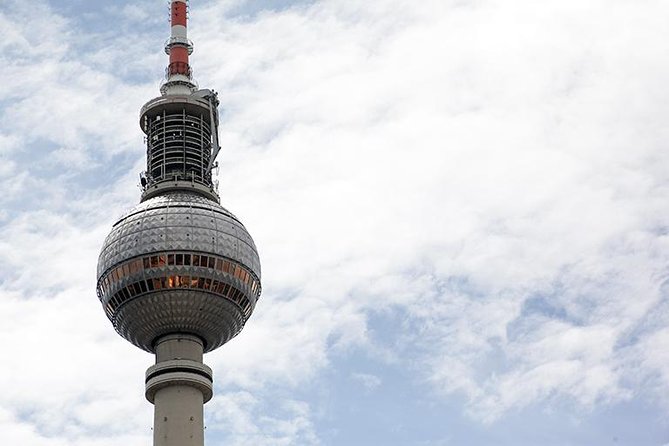
The tour description places the finish at Alexanderplatz, beneath the famous Berlin TV Tower in the heart of the former East German capital. The tower is one of the clearest visual reminders of East Germany’s public image and ambition.
The stop list also gives the Berlin TV Tower as the final point, while the meeting information says the walk ends close to Nordbahnhof by the Berlin Wall Memorial. Treat the exact endpoint as something to verify for your departure date. Both areas have good public transport, but they are not the same place.
If Alexanderplatz is the final stop, it is a useful place to continue exploring. You are close to central East Berlin sights, shops, restaurants, and transport links. If the tour ends near Nordbahnhof, you are well placed to return to the memorial or continue along the former Wall route.
Do not assume admission to the TV Tower is included. It is listed as an outside stop, and entry is not part of the tour price.
How the guides shape the experience
The strongest part of this experience is the guide’s ability to explain complicated history without turning the walk into a lecture. Ariel is praised for mixing facts with humor. Dylan is praised for conversational delivery and for answering questions in detail. Tom is noted for placing individual stories inside the larger political picture.
Georgia, Nathan, Jasper, Heidi, Jimmy, Tobi, Pip, Susan, Campbell, Stephen, and Anastasia are also singled out for clear, engaging presentations. Several guides offer ideas for other places to see, restaurants, and nearby sunset spots, which can be useful if this is your first day in Berlin.
The feedback is not entirely perfect. One account describes poor communication during a train transfer, when the guide helped some people buy tickets and then boarded while others hurried after the group. That is a practical warning: buy your Berlin transport ticket before the tour and stay alert when the group moves through stations.
The tour is offered in English. Since the subject includes dates, political groups, place names, and several stages of border construction, clear listening matters. You should feel comfortable asking the guide to repeat a point if the group is moving or a station is noisy.
Transport, clothing, and practical comfort
This is a walking tour, but it is not only a walk. The route uses Berlin public transport, and a Berlin Transport AB Zone pass costs about €10.60. The pass is not included, so budget for it separately.
Wear shoes you can use comfortably for two hours on city streets and memorial paths. The tour operates in all weather, so bring suitable clothing. Rain, cold, or strong sun can change how much you enjoy the open memorial area.
The start is near public transport, the activity allows service animals, and most people can take part. The group limit is 20, but smaller groups are possible. The experience is not described as step-free or tailored to every mobility need, so contact the provider if you need specific access information.
Free cancellation is available up to 24 hours before the start time. Changes or cancellations inside that window are not accepted for a refund.
Who should book this Berlin history tour?
I would choose this walk if you want a clear introduction to the Berlin Wall and the Cold War before exploring more museums on your own. It works especially well for first-time visitors, families with older children, and anyone who wants people and personal stories rather than a list of dates.
It is also a sensible choice for visitors with only a short stay. Two hours gives you a focused introduction without consuming half a day, and the modest price leaves room in your budget for a museum or a longer independent visit afterward.
You may want something else if you prefer long museum visits, quiet solo exploration, or a tour with no public transport. Two hours is enough for an overview, not for every display at the Berlin Wall Memorial, the Palace of Tears, or the Stasi sites.
Should you book it?
Yes, if you want the Wall to make sense as part of Berlin’s wider story. The route covers the border, escape attempts, surveillance, family separation, the fall of the Wall, and the changing face of East Berlin. That is a lot to cover, but the structure is strong and the price is fair.
Book it early if your dates are fixed, since it is commonly reserved about 18 days ahead and has a maximum of 20 people. Choose a clear morning, arrive with your AB transport pass ready, and plan extra time afterward at the Berlin Wall Memorial.
Skip it only if you already know the Cold War story well and want a specialist museum visit instead. For most people, this is a useful, moving way to get their bearings in East Berlin and understand why the Wall still matters.
FAQ
Where does the East Berlin and Berlin Wall tour begin?
The tour begins at Neue Promenade 3, 10178 Berlin, Germany, next to Hackescher Markt train station.
What time does the tour start?
The scheduled start time is 10:00 a.m.
How long is the walking tour?
The tour lasts approximately two hours.
Is public transportation included?
No. A Berlin Transport AB Zone pass, costing about €10.60, is not included in the tour price.
Is the tour offered in English?
Yes. The experience is offered in English.
Where does the tour end?
The end information places the tour near the Berlin Wall Memorial and close to the S-Bahn station Nordbahnhof. The route description also identifies Alexanderplatz and the Berlin TV Tower as a finishing area, so confirm the exact endpoint for your departure date.
More 2-Hour Experiences in Berlin
- Berlin: 2-Hour Lake Oberhavel Cruise from Tegel
★ 4.4 · 577 reviews - Berlin 2-Hour Segway Tour
★ 4.6 · 238 reviews - Berlin: Backyards of Berlin 2-Hour Tour
★ 4.7 · 163 reviews - Berlin: 2-Hour Premium Segway Tour
★ 4.5 · 157 reviews
Just added around Berlin
- eSIM for Germany and 34 European Countries★ 4.5 · 16 reviews
- Your ticket to The Wall Museum Berlin★ 3.0 · 60 reviews
- Walking on the Wall: 3-Hour Tour in Berlin★ 4.5 · 34 reviews
- Rickshaw Tours Berlin – Groups of up to 16 people with several rickshaws★ 4.0 · 97 reviews
- Warnemuende Shore Excursion: Private Berlin Tour★ 4.5 · 27 reviews
- Love and War in Berlin: Self-Guided Story Puzzle Walk★ 5.0 · 7 reviews
- Warnemuende Shore Excursion: Berlin Private Sightseeing Tour from Rostock★ 5.0 · 4 reviews
- Cold War Berlin – Private Live Virtual Experience★ 5.0 · 4 reviews
Berlin Tours, compared.
Reichstag, Dome and Government District Guided Tour
Read our review →
1-Hour City Tour by Boat with Guaranteed Seating
Read our review →
Reichstag, Plenary Chamber, Cupola & Government Tour
Read our review →
Browse the lists this tour appears in