
Review · BERLIN TOURS
2.5-Hour Berlin Wall and Memorial Sites Walking Tour
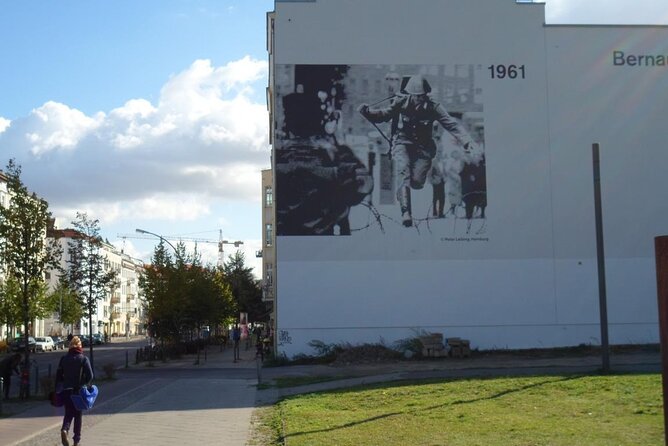
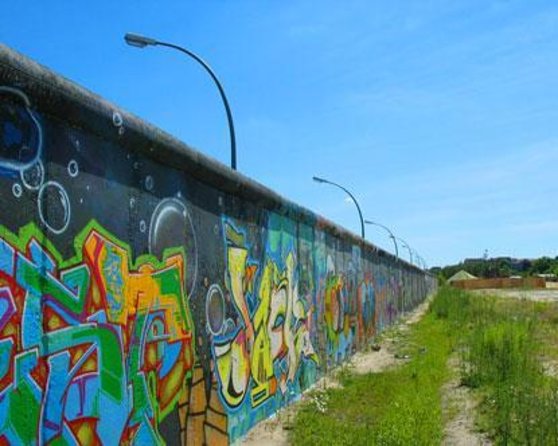
Berlin’s Wall is easiest to understand when you follow its old path on foot. This 2.5-hour walk begins at the Bornholmer Strasse crossing, where the border opened on November 9, 1989, then traces the former death strip toward Nordbahnhof. Along the way, your guide connects bits of concrete, tunnels, stations, and memorials to the human story behind them.
I like the small group of no more than 12 people, which should make it easier to hear the guide and ask questions. I also like the route itself: it links famous places such as the Bernauer Strasse Memorial with less obvious traces, including the Ulbricht Curve, Schwedter Way, and Gleim Tunnel.
The main consideration is the physical demand. You walk for about two and a half hours, with no transportation between stops, and the tour requires a moderate fitness level. The $25.45 price is fair for a professional guide and a focused route, but you will want comfortable shoes and enough time before dinner.
Key points to know before you book
- Start at the November 9, 1989 memorial: The tour begins at the former Bornholmer Strasse border crossing, a key site in the Wall’s fall.
- Walk the former death strip: You follow the old border zone rather than seeing the Wall only as an isolated monument.
- See major and lesser-known sites: The route includes Bernauer Strasse, Berlin Wall Park, Gleim Tunnel, the Church of Reconciliation, and Nordbahnhof.
- Small group format: A maximum of 12 people gives this history walk a more personal feel than a large city tour.
- Two and a half hours on foot: Plan for steady walking and bring water, since food and drinks are not included.
- End near public transport: The walk finishes at Berlin-Nordbahnhof on Invalidenstrasse.
Starting where the Wall opened at Bornholmer Strasse
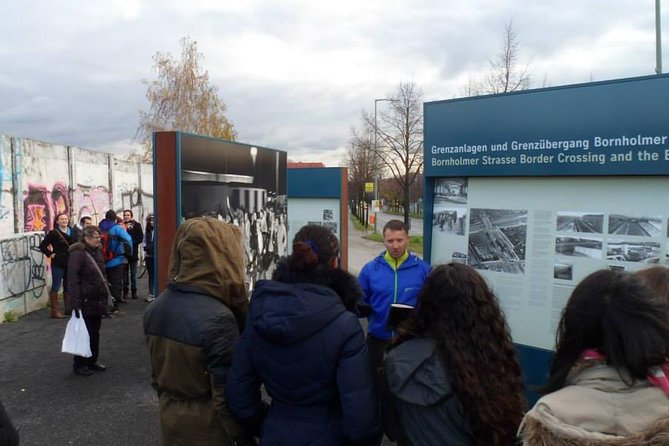
Your meeting point is at Bornholmer Strasse 75A, in the area called the Square of November 9, 1989. The 3 pm start puts you on historically important ground from the first minute, at the former border station where the first East Berlin crossing opened when the Wall fell.
That opening was not a planned public ceremony. It became a turning point after East German officials announced new travel rules and crowds gathered at the crossing. The tour uses this place to begin the larger story of Berlin’s 28 years of division.
I appreciate this opening because it gives the walk a clear purpose. You are not simply moving from one monument to another. You begin with the end of the Wall, then work backward through the border system, escape attempts, separated neighborhoods, and the political pressure that shaped the city.
The guide explains the Cold War in Berlin and Germany as you walk. The personal element can be especially useful here. One guide has been described as sharing personal experience of the Wall, which adds a human layer that a sign or museum label cannot provide. Guide names are not specified, so you should not book expecting a particular individual.
More Wall and Cold War walks:
- Berlin: Third Reich and Cold War 2 Hour Walking Tour
★ 4.9 · 6,830 reviews - Berlin’s Best: 2 Hour Walking Tour Third Reich and the Cold War
★ 5.0 · 5,486 reviews - Berlin: DDR Museum Tickets
★ 4.3 · 3,443 reviews
Following the former border through everyday Berlin
From Bornholmer Strasse, the route follows the old Wall line toward the former ghost station at Nordbahnhof. The key idea is that the Wall was more than the slab of concrete often shown in photographs. It included fences, patrol areas, watchtowers, controlled crossings, and an open strip intended to prevent escape.
That border zone was known as the death strip. Walking along its former path helps you see how division cut through ordinary city spaces. Streets, homes, rail lines, and churches could suddenly sit beside a heavily guarded frontier.
The route includes traces that may be easy to miss without guidance. The Ulbricht Curve and Schwedter Way are not the sort of places most first-time visitors would find by wandering. The guide’s role is to point out what remains, explain what stood there, and show how the city has marked the old boundary.
This is one of the tour’s best features. Berlin has plenty of large historical sights, but the Wall story often lives in small gaps and odd turns in the street. A short stretch of pavement or a changed building line can reveal where the border ran.
Ulbricht Curve, Schwedter Way, and Gleim Tunnel
The Ulbricht Curve adds detail to the political and physical structure of the Wall. Schwedter Way gives you another look at how the boundary passed through the city. These stops are useful because they break up the better-known memorial sites and show that the Wall was a long, complicated system rather than one uniform barrier.
The Gleim Tunnel brings the story underground. Tunnels were part of the escape history around Berlin, and this stop helps explain the risks and planning involved in trying to cross from East Berlin to West Berlin beneath the border.
The itinerary names the tunnel as a stop, but it does not say that you enter it. You should treat it as a place the guide discusses rather than assume an underground visit. That distinction matters if you are comparing this walk with a museum tour or a guided tunnel experience.
I like the way these stops add variety. You get political history, street geography, and escape stories without spending the entire walk at one large memorial. The trade-off is that the value depends heavily on the guide’s explanations. Some locations are subtle, so they may mean little if you pass them without context.
Berlin Wall Park and the Bernauer Strasse Memorial
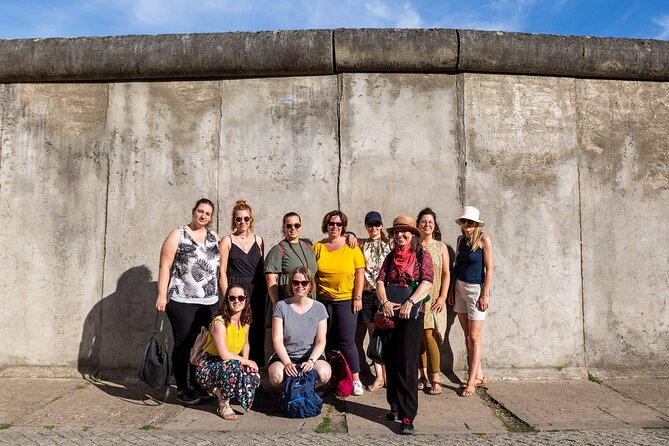
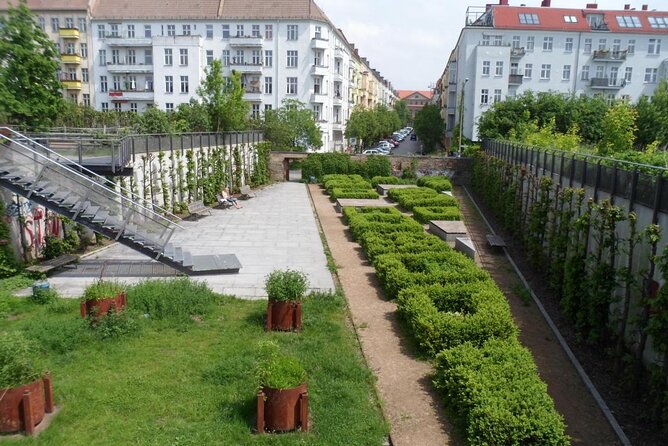
Berlin Wall Park is another important section of the route. The park occupies part of the former border area and lets you see how the old Wall zone has been reshaped for public use. It is a good place to pause and consider the contrast between the guarded frontier of the past and the open city you see today.
The Bernauer Strasse Memorial provides the strongest concentration of Wall remains and memorial features on the walk. Bernauer Strasse became famous because the Wall ran directly beside apartment buildings, separating residents from streets and neighbors only a short distance away.
The memorial area preserves sections of the former border and presents the Wall as a layered system. You can expect the guide to explain the separation of the street, escape attempts, and the effect of the border on local residents. The route also includes the Bernauer Strasse tunnel, another reminder that people tried to cross under as well as over the barrier.
There is a viewing platform at the Berlin Wall Memorial. This is an important stop because you can look over the former border zone from above and understand its width. From street level, it is easy to imagine the Wall as a single line. From the platform, the depth of the old border area becomes much clearer.
For many people, this will be the most powerful part of the walk. It combines preserved remains, personal stories, and a physical view of the old border system. If you have limited time in Berlin, this section alone provides a strong reason to choose a Wall-focused tour.
More walking tours in Berlin:
- Discover Berlin Half-Day Walking Tour
★ 5.0 · 9,624 reviews - Berlin: Discover Berlin Walking Tour
★ 4.9 · 5,998 reviews - Berlin: Hidden Backyards Guided Walking Tour
★ 4.8 · 5,360 reviews - Third Reich Berlin: Hitler and WWII Walking Tour
★ 5.0 · 3,301 reviews
The Church of Reconciliation and the cost of division
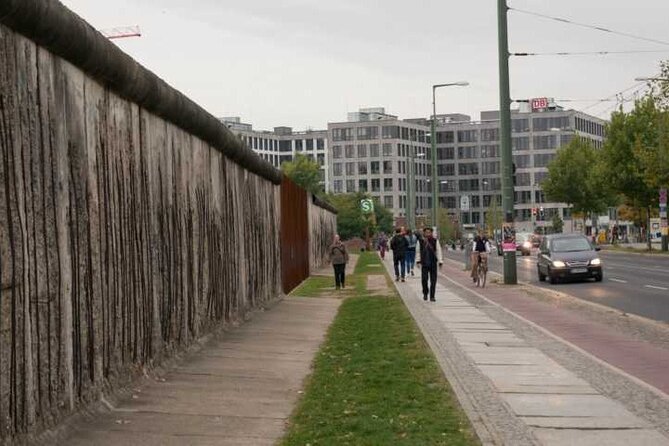
The Church of Reconciliation is one of the route’s most moving stops. The church stood inside the former border area and was eventually removed after the Wall made access difficult. Its story shows how the border did not merely divide streets and families. It also made normal religious and civic life impossible in places caught between the barriers.
The stop gives the tour a useful change of focus. The Wall was a political structure, but it affected buildings, congregations, residents, and daily routines. A church inside the death strip is a stark example of how unusual and severe the border system became.
You should expect an outdoor historical walk rather than a full museum visit. The itinerary includes memorials, the viewing platform, and several marked sites, but it does not promise extended indoor exhibits or admission to a separate museum. If you want photographs, artifacts, and long displays, add a museum visit on another day.
Ending at the former ghost station Nordbahnhof
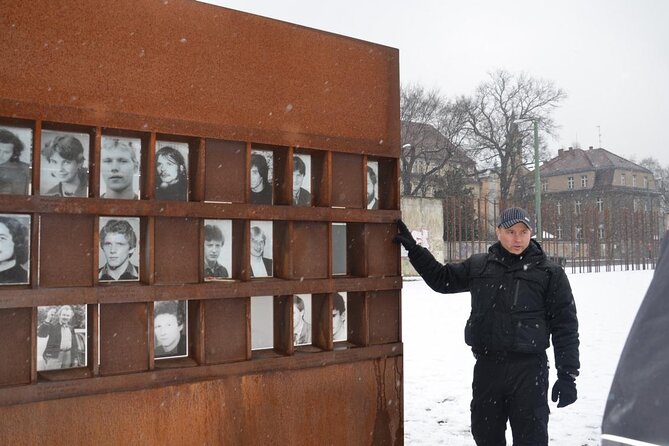
The tour ends at Berlin-Nordbahnhof, at Invalidenstrasse 131. During the division of Berlin, some stations on lines running through East Berlin were closed to West Berlin trains and became known as ghost stations. Nordbahnhof is part of that story.
The ending works well because it adds rail history to the Wall narrative. Berlin’s divided transport system was another way the border shaped daily life. Trains could pass through stations that passengers could not use, and the city’s underground and rail network became part of the security system.
Finishing at Nordbahnhof also makes the tour practical. You do not return to Bornholmer Strasse, so plan your evening from the ending point rather than the starting point. The tour does not include hotel pickup, drop-off, or transportation to the sights. You are responsible for reaching Bornholmer Strasse before 3 pm and arranging your onward trip from Nordbahnhof.
Is $25.45 a good price?
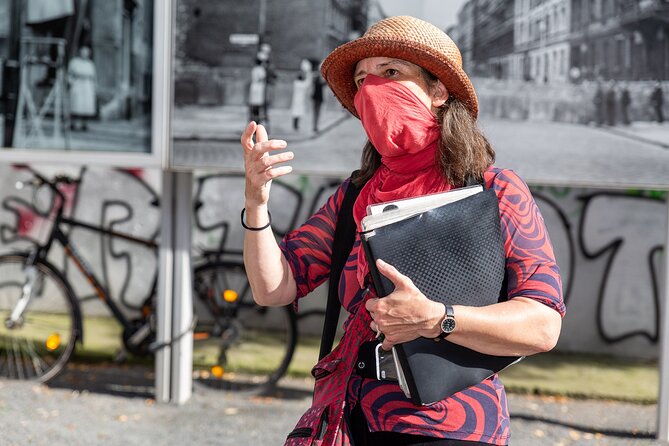
At $25.45 per person, this is a modestly priced guided walk for two and a half hours. The price covers a local professional guide and a small-group format, but not food, drinks, or transport.
I see the value in the route’s focus. A general Berlin city tour may mention the Wall for a few minutes, while this walk gives the subject the full afternoon. You move through a chain of sites and get explanations that help connect them.
The small group matters too. With a maximum of 12 people, the guide can keep the group together without the feel of a large crowd. That is especially useful at street-level stops where signs and remains may be easy to overlook.
The price is less attractive if you want a self-guided visit at your own pace. Much of the route follows public streets and memorial areas, so an independent visitor can see many places without paying. You are paying here for the route planning, historical explanation, and personal stories, not for exclusive access to the sites.
Timing, walking conditions, and what to bring
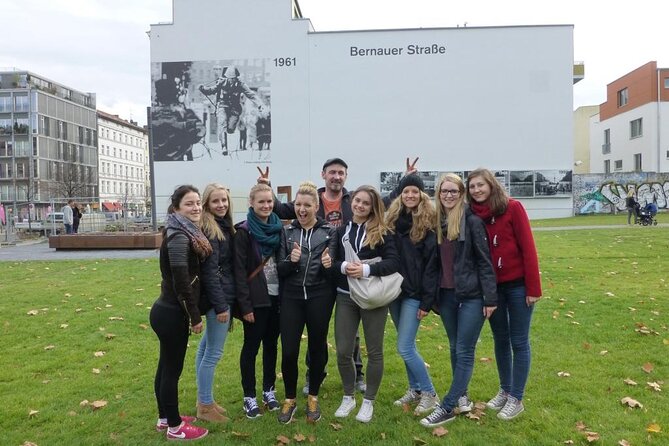
The tour starts at 3 pm and lasts about two hours and 30 minutes. The afternoon schedule leaves your morning open for museums or central Berlin sights, but the finish will be in the early evening.
A pause is included during the walk. Still, food and drinks are not included, so eat beforehand or carry water. Berlin weather can change quickly, and this is an outdoor activity, so dress for the forecast.
You should have a moderate level of physical fitness. The tour involves walking between multiple sites, with no included vehicle transfers. Comfortable shoes are more important than formal clothing, especially since the route covers former border paths, memorial grounds, and city streets.
The mobile ticket is convenient. Keep it available when you arrive at the meeting point. Confirmation is provided at booking, and the tour requires a minimum number of participants. If the operator cancels because that minimum is not reached, you can receive a full refund or choose another date or experience.
Free cancellation is available if you cancel at least 24 hours before the 3 pm start time. Changes or cancellations made less than 24 hours ahead are not accepted for a refund.
Who will get the most from this Wall walk?
This tour suits you if Berlin’s 20th-century history is a main reason for your visit. It is particularly useful if you want more than a photo at a remaining section of concrete and would like to understand the Wall’s route, border controls, escape attempts, and effect on ordinary neighborhoods.
It also works well for first-time visitors who want a clear introduction. The route covers the best-known memorial area at Bernauer Strasse but adds quieter locations that you might miss alone.
History-minded families with older children may enjoy the walk, provided everyone is comfortable walking for two and a half hours. The subject includes death, surveillance, escape attempts, and political repression, so it is not a light sightseeing stroll.
You may want a different option if you have limited mobility, dislike outdoor tours, or prefer a short route with frequent indoor stops. The provided details specify moderate physical fitness and do not include accessibility information, so ask the provider directly before booking if you have specific mobility needs.
Should you book the Berlin Wall and Memorial Sites Walking Tour?
Book it if you want a focused, affordable introduction to Berlin’s Wall history, especially with a guide who can explain personal and lesser-known details. The combination of Bornholmer Strasse, Berlin Wall Park, Bernauer Strasse, the Church of Reconciliation, and Nordbahnhof gives the walk a strong beginning, middle, and end.
Skip it if you would rather explore alone, need transportation between sites, or want a museum-heavy experience. For most visitors with a free afternoon and comfortable walking shoes, the $25.45 cost is a sensible way to make sense of one of Berlin’s most important historical areas.
FAQ
Where does the Berlin Wall walking tour start?
The tour starts at Bornholmer Strasse 75A, 10439 Berlin, Germany, at the Square of November 9, 1989.
What time does the tour begin?
The walking tour starts at 3 pm.
How long does the tour last?
The tour lasts approximately two hours and 30 minutes.
Where does the tour end?
The walk ends at Berlin-Nordbahnhof, Invalidenstrasse 131, 10115 Berlin, Germany.
What sites are included on the route?
The route includes the former Bornholmer Strasse border crossing, Ulbricht Curve, Schwedter Way, Gleim Tunnel, Berlin Wall Park, the Bernauer Strasse tunnel, the Church of Reconciliation, the Berlin Wall Memorial viewing platform, and Nordbahnhof.
Is the tour suitable for everyone?
The tour requires a moderate level of physical fitness. It is a walking activity with no included transportation, food, drinks, hotel pickup, or hotel drop-off.
Just added around Berlin
- eSIM for Germany and 34 European Countries★ 4.5 · 16 reviews
- Your ticket to The Wall Museum Berlin★ 3.0 · 60 reviews
- Warnemuende Shore Excursion: Private Berlin Tour★ 4.5 · 27 reviews
- Walking on the Wall: 3-Hour Tour in Berlin★ 4.5 · 34 reviews
- Rickshaw Tours Berlin – Groups of up to 16 people with several rickshaws★ 4.0 · 97 reviews
- Love and War in Berlin: Self-Guided Story Puzzle Walk★ 5.0 · 7 reviews
- Warnemuende Shore Excursion: Berlin Private Sightseeing Tour from Rostock★ 5.0 · 4 reviews
- Cold War Berlin – Private Live Virtual Experience★ 5.0 · 4 reviews
Berlin Tours, compared.

Reichstag, Dome and Government District Guided Tour
Read our review →
1-Hour City Tour by Boat with Guaranteed Seating
Read our review →




Reichstag, Plenary Chamber, Cupola & Government Tour
Read our review →
Browse the lists this tour appears in