
Review · BERLIN TOURS
Private Cold War Berlin: Espionage, Berlin Wall, a Divided City
Berlin’s Cold War story feels most powerful when you move from the Wall’s escape tunnels to the quiet places where families were watched, questioned, and separated. This private tour links Bernauer Strasse, the Tränenpalast, Checkpoint Charlie, former Stasi sites, and the East Side Gallery into one clear account of a city split in two.
I like the private format, since your guide can shape the talk around your questions. I also like the human focus: Tina is praised for her storytelling, while Toni offers the unusual perspective of having been a child during the Cold War. The main drawback is pace. Seven stops in three to four hours means a lot of ground and short visits, so this suits an active schedule more than a slow museum day.
Key points to know before you book
- Tunnel 29 and Tunnel 57: Hear how East Berliners used underground escape routes, including the 1962 escape that brought 29 people to freedom.
- A private English-language tour: Only your group takes part, with a professional guide and room for questions.
- Seven Cold War sites: The route connects memorials, border crossings, prisons, protest sites, and post-Wall art.
- Hotel pickup and drop-off: This removes some city transport planning, though you should still expect plenty of walking.
- Three to four hours on foot: Wear comfortable shoes and dress for Berlin’s weather, since the tour operates in all conditions.
- Strong guide-led storytelling: Tina and Toni are singled out for clear, calm, personal presentations of the period.
Why this private Cold War tour works
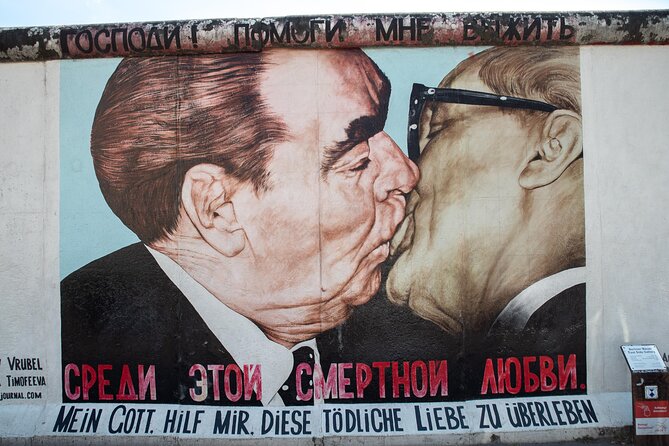
This is not just a tour of famous Cold War landmarks. It follows the full arc of Berlin’s division: the Wall going up, the machinery of surveillance and control, the risks of escape, the peaceful protests, and the city’s attempt to turn a symbol of oppression into public art.
That order gives you useful context. At Bernauer Strasse, you see how the Wall cut through homes and neighborhoods. At the Tränenpalast, you learn how separation felt at close range. Later, at Alexanderplatz, the story reaches the mass protests that helped bring the system down.
The private setup matters here. Cold War history can raise difficult questions about propaganda, political repression, family separation, and the difference between official records and personal memory. With your own guide, you can stop and ask for clarification instead of waiting for a large group to move on.
The tour is offered in English and lasts about three to four hours. Since it is described as a walking experience, you should plan for steady movement between sites. Hotel pickup and drop-off are included, which is especially useful if you are unfamiliar with Berlin or prefer not to arrange the day around several train and tram connections.
At $191.44 per person, this is not a budget sightseeing walk. Its value depends on your group size and your interest in the subject. For one or two people, the price is a serious outlay. For a family or small group splitting the private guide cost, it may compare more favorably with several separate museum visits and a standard group tour.
More Wall and Cold War walks:
- Berlin: Third Reich and Cold War 2 Hour Walking Tour
★ 4.9 · 6,830 reviews - Berlin’s Best: 2 Hour Walking Tour Third Reich and the Cold War
★ 5.0 · 5,486 reviews - Berlin: DDR Museum Tickets
★ 4.3 · 3,443 reviews
Bernauer Strasse and the escape tunnels
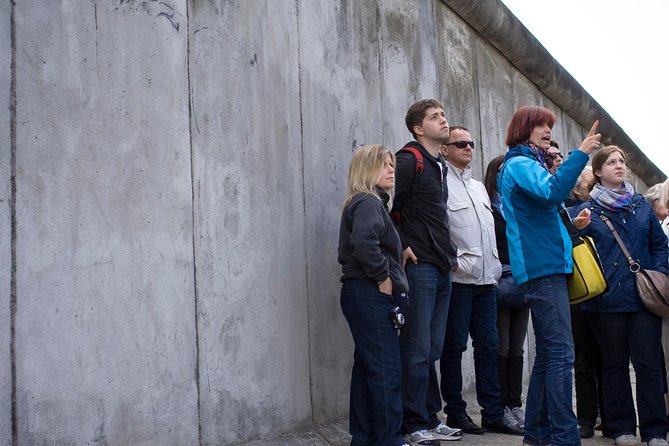
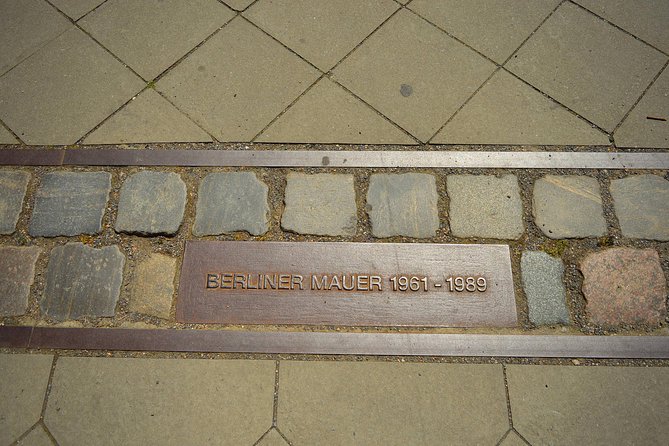
The tour begins at the Berlin Wall Memorial on Bernauer Strasse, one of the best places in Berlin to understand what the Wall did to ordinary life. This was not simply a concrete barrier between two political systems. It ran through a lived-in part of the city, cutting streets, buildings, churches, and relationships apart.
A preserved section of the Wall gives you a physical sense of the barrier’s design. The Chapel of Reconciliation adds a quieter note. Together, these sites help you move beyond the familiar photographs of guards and barbed wire. You can consider the daily strain of living beside a border that could change the route to work, school, or family overnight.
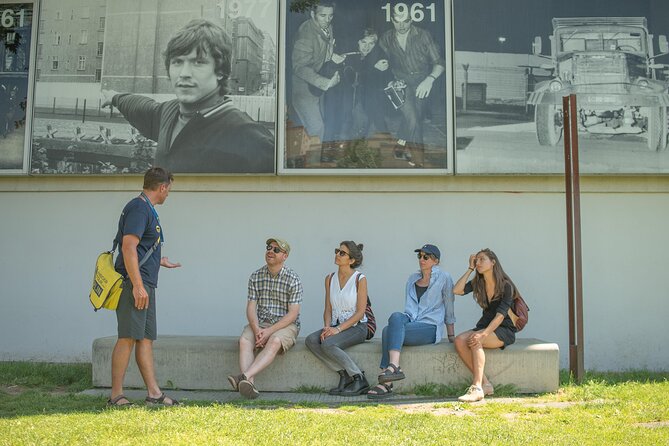
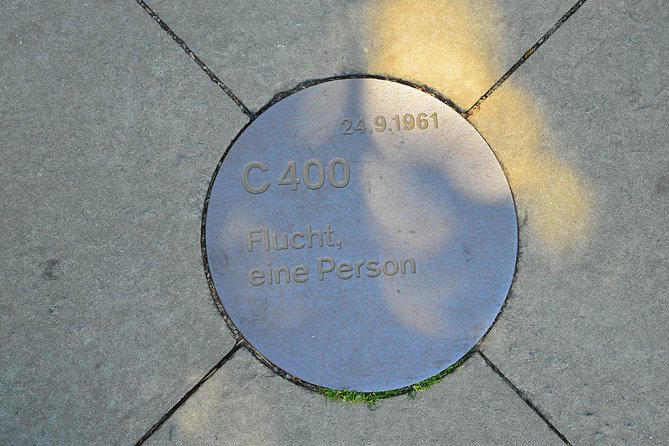
Your guide explains escape attempts connected with Bernauer Strasse, including Tunnel 57 and Tunnel 29. The names refer to underground routes used by East Berliners trying to reach the West. Tunnel 29 became especially famous because 29 people escaped through it in 1962.
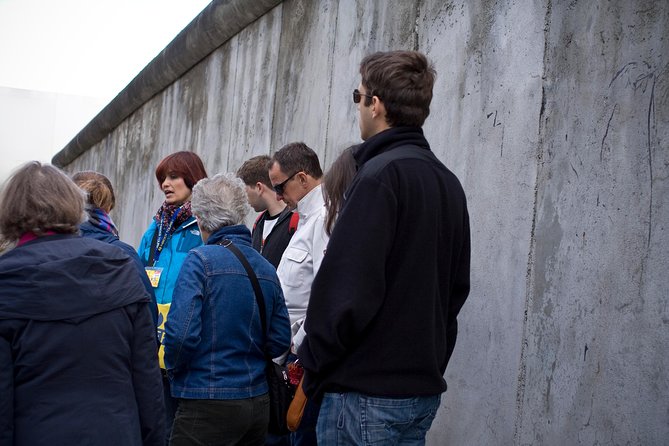
This part of the tour is likely to be the emotional center. The stories are about people making dangerous choices with limited information and enormous consequences. You will hear how the Wall affected families and communities, not just governments and soldiers.
The scheduled time here is about 40 minutes. That is enough for an introduction and some key stories, but not enough for every exhibit or every corner of the memorial. If Bernauer Strasse is your main reason for booking, you may want to return independently for a longer visit.
The Tränenpalast and the human cost of crossing
The Tränenpalast, or Palace of Tears, was a border crossing at Friedrichstrasse. Its name comes from the farewells that took place there as people crossed from East Berlin into the West. The building’s history gives the Cold War a personal scale: a border crossing could also be a place where families struggled to say goodbye.
Inside, the museum covers border controls, the Berlin Wall, and the practical systems used to control movement. The tour also connects the building with espionage. People trying to cross were not the only ones taking risks. Spies and intelligence agents also tried to move between East and West while avoiding detection.
I find this a useful stop because it links two sides of the same system. For ordinary people, crossing meant paperwork, scrutiny, and painful separation. For intelligence operatives, it could mean concealment, false identities, and the danger of arrest.
The visit is scheduled for about 20 minutes, so expect a focused overview rather than a long museum session. The admission is listed as free for the tour, and food and drinks are not included. If you enjoy reading every display, the pace may feel tight.
East Side Gallery and Berlin after 1989
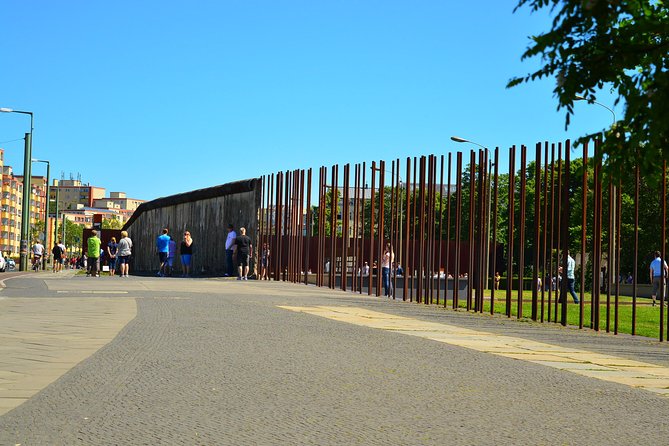
The East Side Gallery changes the mood. This 1.3-kilometer stretch of remaining Wall was painted by artists from around the world after the Wall fell in 1989. The murals reflect the optimism and hope that followed the collapse of the border.
Your guide explains the messages behind the artwork and places the paintings in the period after reunification. The gallery is more than a collection of colorful walls. It shows how Berlin began to use the physical remains of division to express freedom, unity, and political change.
The scheduled time is about 20 minutes. That lets you see a portion of the gallery and understand its role, but it will not allow a careful look at every mural along the full 1.3 kilometers. You should think of this as a guided introduction, not a complete art walk.
The contrast with Bernauer Strasse is important. At the memorial, the Wall is connected with fear and loss. At the East Side Gallery, the same type of structure has become a surface for public expression. The change is striking, even if the art itself is not your main interest.
A few more Berlin half-days to weigh up
- Berlin: Reichstag, Dome and Government District Guided Tour
★ 4.7 · 18,288 reviews - Berlin: 1-Hour City Tour by Boat with Guaranteed Seating
★ 4.3 · 16,993 reviews - Berlin: Boat Tour Along the River Spree
★ 4.4 · 11,252 reviews - Discover Berlin Half-Day Walking Tour
★ 5.0 · 9,624 reviews
The Stasi and the machinery of surveillance
The Stasimuseum takes you into the former headquarters of East Germany’s secret police. This stop focuses on the systems used to watch and control the population, including hidden cameras, wiretapping, and networks of informants.
The guide explains how the Stasi monitored people suspected of dissent and how ordinary citizens could be drawn into surveillance work. That detail matters because repression did not depend only on official officers. It also relied on secrecy, fear, pressure, and the possibility that someone nearby might be reporting on you.
You will hear about interrogation, harassment, and the effects of surveillance on families and individuals. This gives the Cold War story a different weight from the escape stories at Bernauer Strasse. Here, the danger was not only at the border. It could be present at home, at work, or in a personal relationship.
The stop is scheduled for about 25 minutes. The time is short for a large museum, so your guide will need to select the most useful points. The admission is listed as free, but the experience remains strongly dependent on the guide’s explanation. Tina is described as a natural storyteller, and that kind of skill is particularly valuable in a museum where the number of displays can quickly become overwhelming.
Checkpoint Charlie and Cold War confrontation
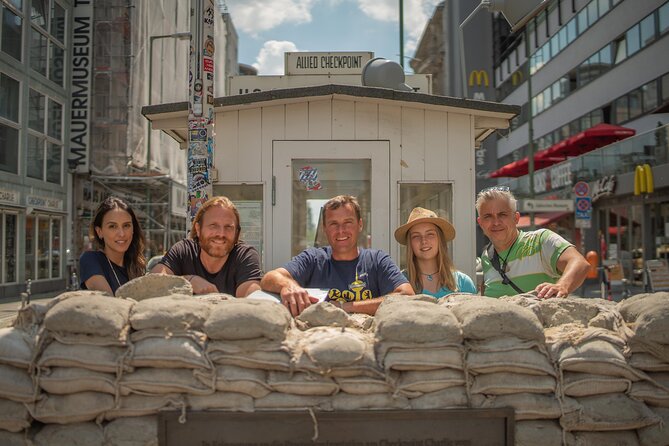
Checkpoint Charlie is the best-known name on the route, though its fame can make it feel more symbolic than personal. This former crossing between East and West Berlin became a global image of the Cold War.
Your guide covers the Berlin Crisis of 1961, when American and Soviet forces faced one another in a tense confrontation after the Wall went up. You also learn about escape attempts, spy exchanges, and the role of this crossing in everyday life.
The value of visiting with a guide is context. On your own, you can see the famous checkpoint setting, but it may be harder to understand which events took place here and which belong to the broader history of Berlin. The tour places the site within the story of a city divided by competing political systems.
The scheduled visit lasts about 15 minutes. That is enough for an explanation and a look at the site, but not a full museum visit. The museum at Checkpoint Charlie is described as having exhibits about espionage, escapes, and the Cold War. If you want extensive time with those displays, you may need to return separately.
Prenzlauer Berg and former prisons
The Fröbelstrasse corner in Prenzlauer Berg offers one of the less familiar stops. The site was used first by Soviet authorities after the Second World War as an NKVD prison. After the German Democratic Republic was established, the Stasi took control of the prison.
Political prisoners, suspected spies, and people considered enemies of the state were held there. The guide discusses the harsh conditions and the methods used by Soviet and East German authorities to silence opposition.
This stop adds an important layer to the tour. The Cold War did not begin with the Berlin Wall in 1961, and it did not end simply because the border opened in 1989. The history of detention and political control reaches across the postwar years.
The visit lasts about 15 minutes and is primarily an outdoor history stop. You should expect an explanation of the site rather than a long prison tour. Its appeal comes from the setting and the stories attached to it, especially if you want to see places outside Berlin’s best-known Cold War circuit.
Alexanderplatz and the November 4 protest
The final stop is Alexanderplatz, a major public square that became central to the last phase of East Berlin’s Cold War story. On November 4, 1989, more than half a million East Berliners gathered there to demand change.
That protest came only days before the Berlin Wall opened. It helps explain why the end of the GDR was not just the result of pressure from foreign governments or a sudden administrative mistake. Large numbers of East Germans were publicly demanding a different future.
Your guide points out Cold War landmarks nearby, including the Television Tower and Red City Hall. The Television Tower represented East German power and modernity. Red City Hall was linked with the city’s GDR leadership.
Alexanderplatz also connects public protest with surveillance. The Stasi watched dissent closely, yet the square became a place where people could gather in numbers too large to ignore. That tension makes the final stop a fitting endpoint.
The scheduled time is about 15 minutes. You will receive the key political context, but the stop is not designed as a long architectural tour of the square.
Walking, timing, and comfort
Although hotel pickup and drop-off are included, this is best understood as an active walking experience. The tour covers seven stops spread across Berlin, and the description emphasizes walking rather than a fully vehicle-based sightseeing trip.
Wear comfortable shoes. Dress for rain, cold, or sun because the tour operates in all weather conditions. You should also keep your schedule flexible around the three- to four-hour duration, since the exact pace can depend on questions, group needs, and the time spent moving between sites.
Most people can take part, and one guide adjusted the commentary to accommodate physical limitations. Still, you should tell the provider about any concerns before the tour. A private group gives the guide more ability to adapt, but it does not remove the walking involved.
The short stop times create both strength and weakness. You get a broad view of Berlin’s Cold War story in one outing, but you will not study every museum in detail. I would choose this tour early in a Berlin visit, then return to one or two favorite sites if you want more time.
What the guides add
The guide makes or breaks a history tour, and the strongest detail here is the individual approach. Tina is praised for clear storytelling and for bringing the lived experience of East and West Germany into focus. Her strength appears to be connecting major events with personal accounts.
Toni is described as calm and informative, with the added perspective of having been a child during the Cold War. That does not replace archival history, but it can help you picture how the period affected daily life.
Another guide accommodated physical limitations, which suggests that the private format allows some practical flexibility. Guide assignments may vary, so you should not assume Tina or Toni will lead your departure. Still, the experience is built around a professional English-speaking guide rather than an audio recording or a fixed script.
Who should book it?
I would recommend this tour if you want a single, well-organized introduction to Berlin’s division and reunification. It suits first-time visitors who need a clear framework, and repeat visitors who want to connect sites they may have seen separately.
It is also a good choice for families or small groups with different levels of background knowledge. The guide can explain basic facts without forcing everyone into a large group’s pace, then answer more specific questions from people already familiar with the Cold War.
You should think twice if you dislike walking, prefer long museum visits, or want a relaxed day with plenty of time at each stop. The route is ambitious for three to four hours. The $191.44 per-person price is easiest to justify when private attention and hotel transport matter to you.
Free cancellation is available if you cancel at least 24 hours before the start time. Changes or cancellations made less than 24 hours before the tour are not accepted for a refund, so check the local start time before making plans.
My booking advice
Book this private Cold War Berlin tour if you want the city’s divided past explained through places, people, and political events rather than through a list of dates. Bernauer Strasse and the Tränenpalast offer the strongest human stories, while the Stasi sites and Alexanderplatz give the tour its political force.
I would not book it as your only museum experience. Use it to get your bearings, ask questions, and see the major sites in a connected way. Then return to Bernauer Strasse, the Tränenpalast, or one of the museums if a particular subject catches your attention.
For an active visitor with a serious interest in twentieth-century history, the private format and strong storytelling make the price easier to accept. For a budget-conscious visitor, a standard group walk or self-guided route may offer better value. The right choice depends on how much you value personal attention and hotel-to-hotel convenience.
FAQ
How long does the Cold War Berlin tour last?
The tour lasts approximately three to four hours.
Is the tour private?
Yes. Only your group participates in the private activity.
Is the tour offered in English?
Yes. The tour is offered in English.
Is hotel pickup included?
Yes. Hotel pickup is included.
Is hotel drop-off included?
Yes. Hotel drop-off is included.
How much does the tour cost?
The listed price is $191.44 per person.
Is this a walking tour?
Yes. It is described as a walking tour and is best suited to active people.
What happens if it rains?
The tour operates in all weather conditions, so you should dress appropriately.
Are food and drinks included?
No. Food and drinks are not included.
Can I cancel for a full refund?
Yes, if you cancel at least 24 hours before the experience start time. Cancellations made less than 24 hours before the start time are not refunded, and changes during that period are not accepted.
Just added around Berlin
- eSIM for Germany and 34 European Countries★ 4.5 · 16 reviews
- Your ticket to The Wall Museum Berlin★ 3.0 · 60 reviews
- Rickshaw Tours Berlin – Groups of up to 16 people with several rickshaws★ 4.0 · 97 reviews
- Warnemuende Shore Excursion: Private Berlin Tour★ 4.5 · 27 reviews
- Walking on the Wall: 3-Hour Tour in Berlin★ 4.5 · 34 reviews
- Love and War in Berlin: Self-Guided Story Puzzle Walk★ 5.0 · 7 reviews
- Warnemuende Shore Excursion: Berlin Private Sightseeing Tour from Rostock★ 5.0 · 4 reviews
- Cold War Berlin – Private Live Virtual Experience★ 5.0 · 4 reviews
Berlin Tours, compared.

Reichstag, Dome and Government District Guided Tour
Read our review →
1-Hour City Tour by Boat with Guaranteed Seating
Read our review →




Reichstag, Plenary Chamber, Cupola & Government Tour
Read our review →
Browse the lists this tour appears in