
Review · BERLIN TOURS
Berlin Wall: Small Group Guided Tour
Berlin’s Wall is easiest to understand on foot, where a quiet strip of pavement can mark a vanished border and an ordinary bridge can carry decades of political weight. This 2.5-hour walk follows the old divide from Bornholmer Straße through the former death-strip and on toward Mauerpark.
I like the small maximum of 12 people, which leaves room for questions and personal stories. I also like the route’s mix of famous memorial sites and less obvious traces, including the cherry trees and Ulbrichtkurve. The main consideration is language: the tour is conducted in German, and the walking route takes place in all weather.
Key points at a glance
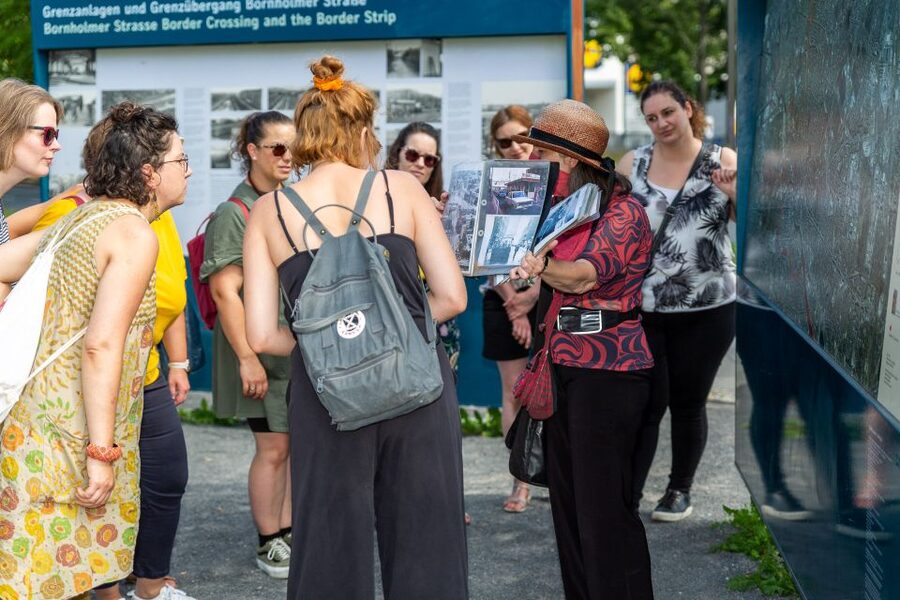
- Bornholmer Straße: Begin where East and West Berliners first crossed freely when the Wall fell.
- Cherry trees along the death-strip: See a gentle-looking reminder of a heavily guarded border.
- Ulbrichtkurve and Schwedter Steg: Follow lesser-known Wall traces near today’s Mauerpark.
- Personal accounts: Guides such as Marcus and Katrine have shared firsthand memories of divided Berlin.
- Small-group format: A maximum of 12 people makes it easier to ask questions and stay connected to the guide.
- Good value at $24: The price covers a live guide and a focused walking tour, with food and drinks extra.
Starting at Bornholmer Straße, where the Wall first opened
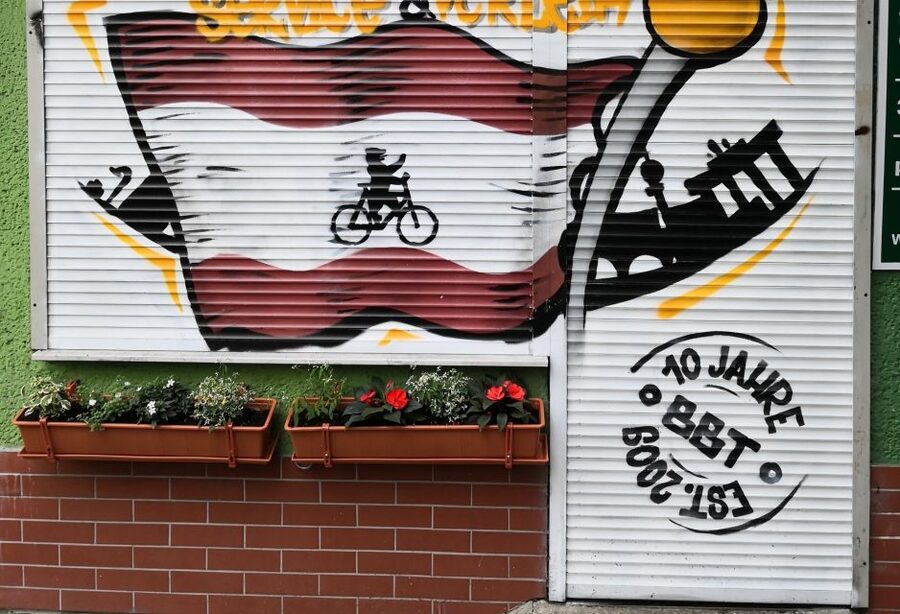
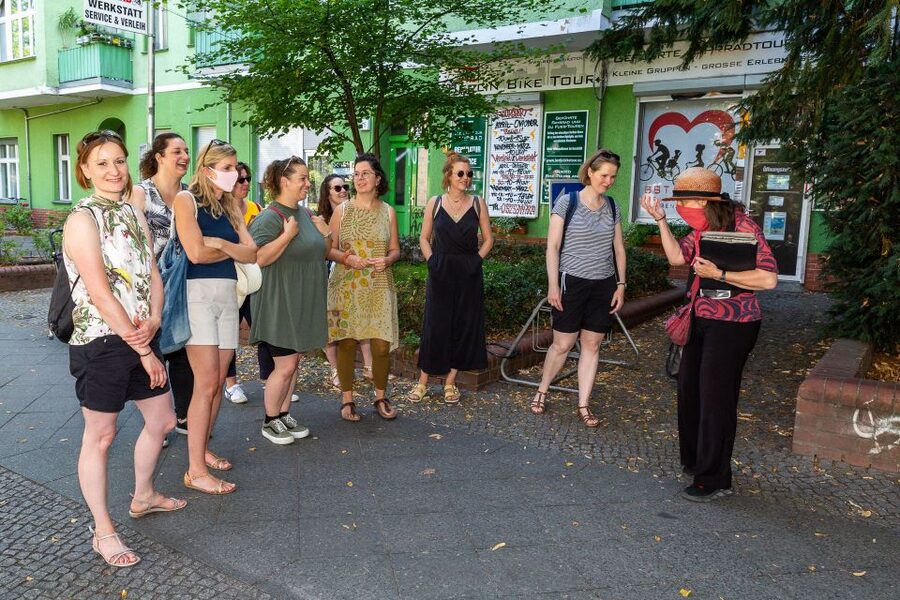
Meet at the Berlin Bike Tours office near Björnsonstraße and Bornholmer Straße. This is a fitting place to begin, not just a convenient meeting point. On the night the Berlin Wall fell, the Bornholmer Straße border crossing became the first place where people from East and West Berlin were allowed through.
That fact gives the opening several layers. You are not starting at a polished monument with the story neatly packaged. You are standing in an ordinary part of the city where a border guard’s decision helped set off scenes of families meeting, strangers embracing, and a divided country moving toward unity.
The meeting point is easy to reach. Björnsonstraße tram stop is about one minute away, served by M1, M13, and M50. Bornholmer Straße S-Bahn station is roughly two minutes on foot, with S1, S2, S8, S25, and S85 service. Schönhauser Allee, served by the S-Bahn, U-Bahn, and several lines, is about a 10-minute walk away.
The practical tip is simple: arrive a few minutes early. You will want to find the office without rushing, especially if you are unfamiliar with Berlin’s public transport system. The tour requires at least two participants. If that minimum is not reached, the operator can cancel at short notice and notify you.
More Wall and Cold War walks:
- Berlin: Third Reich and Cold War 2 Hour Walking Tour
★ 4.9 · 6,830 reviews - Berlin’s Best: 2 Hour Walking Tour Third Reich and the Cold War
★ 5.0 · 5,486 reviews - Berlin: DDR Museum Tickets
★ 4.3 · 3,443 reviews
Reading a border that has mostly disappeared
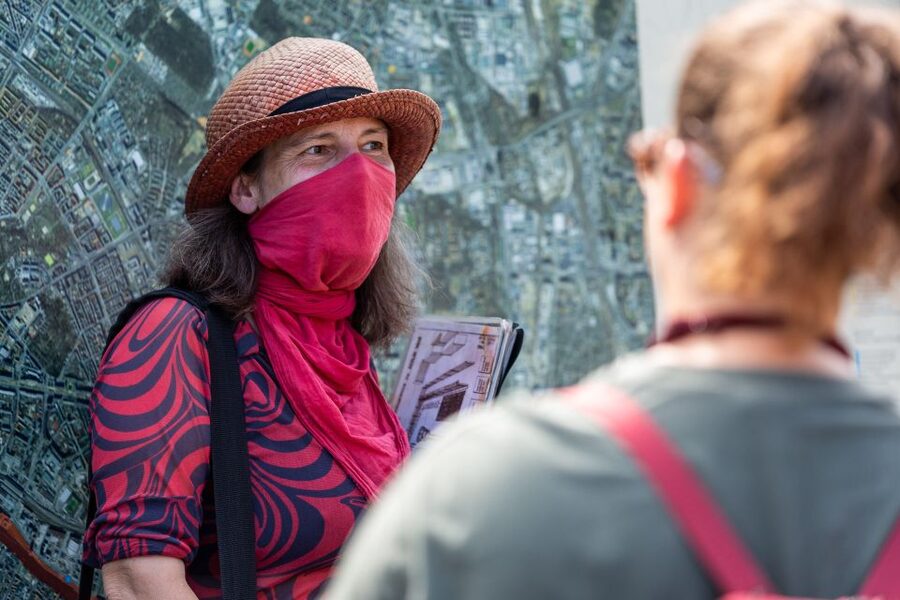
One of the best reasons to take a guided Wall walk is that much of the physical barrier is gone. A museum can show you a section of concrete, but a guide can point to the faint line, empty strip, altered street pattern, or surviving marker that your eye would miss.
The route follows traces of the Wall through areas where the city has changed greatly since reunification. Your guide explains how these remains are documented and why some sections are easier to spot than others. The Wall was not simply one concrete slab. It was a border system with multiple barriers, patrol routes, open areas, and controlled crossings.
That distinction matters. Without context, a patch of pavement or a line of trees can look unremarkable. With a guide, you begin to read the ground as evidence. You learn to ask where the inner wall stood, where the outer wall ran, and where the death-strip once separated the two.
The tour also gives you space to ask questions. Guides named Marcus, Markos, Steffen, and Katrine have led tours for this operator, though your guide will depend on the date. Marcus has shared his own experiences of life during the divided period, while Katrine grew up and socialized in East Berlin before the Wall fell. Those personal accounts can add a human scale to political events, particularly if you want more than dates and official speeches.
The cherry trees and the strange life of the death-strip
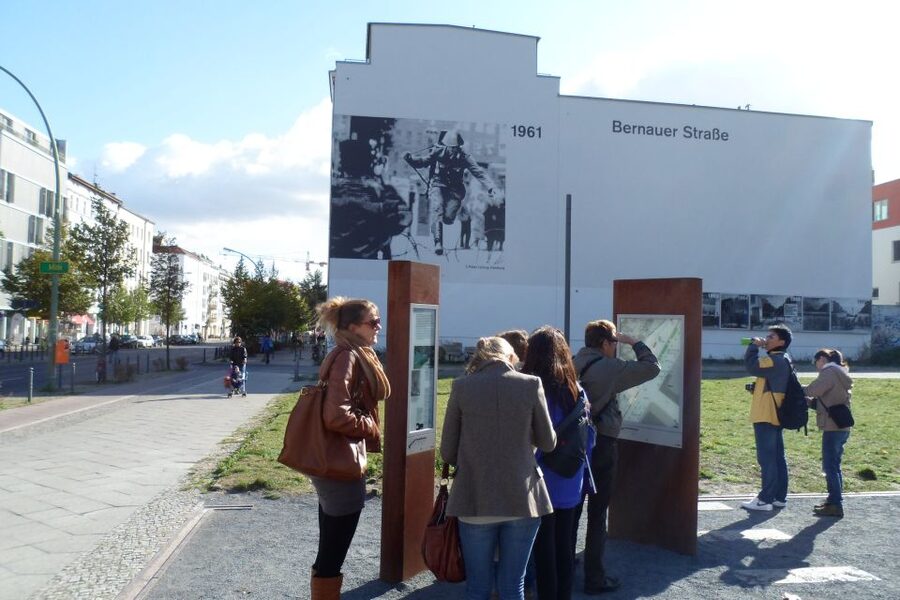
The former death-strip is one of the route’s most memorable subjects. This was the controlled area between sections of the Wall, designed to expose anyone trying to cross. Today, parts of the route are marked by greenery and cherry trees, creating a sharp contrast with the fear attached to the space decades ago.
The trees have their own unusual story, which the guide explains along the way. Their presence is a reminder that the Wall was not just a structure. It shaped what could be planted, seen, reached, and enjoyed on either side of the border.
For you, this section works best if you slow down and let the contrast register. The cherry trees may look peaceful, but the ground beneath them once formed part of a heavily guarded barrier. It is a useful lesson in Berlin: the city often places everyday life directly on top of painful memory.
The route is outdoors and active. You should wear comfortable shoes and come prepared for changing weather. The tour runs in rain, and ponchos are provided when needed. A cold or wet day will not necessarily spoil the experience, but it can make the walk feel longer, so dress for the forecast.
Ulbrichtkurve, one of the route’s less obvious markers
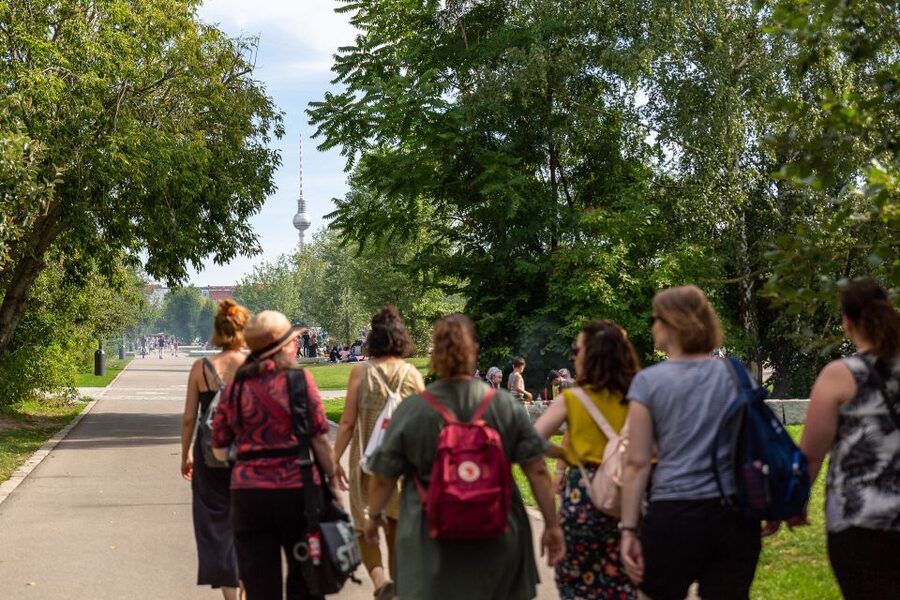
Ulbrichtkurve is not likely to be the first Wall site you hear about in a standard Berlin visit. That is part of its value here. The stop helps you see how the border followed the city’s existing streets, rail lines, curves, and open spaces rather than forming one simple straight line.
A guide can explain why a bend or surviving trace mattered. The name also connects the site to Walter Ulbricht, the East German leader associated with the construction and enforcement of the Berlin Wall. You are not just looking at a curve in the route. You are seeing how political power was built into Berlin’s physical layout.
This kind of stop suits people who enjoy details. If you only want the best-known sections of painted Wall, you may find some of the less obvious traces subtle. If you like reconstructing the past from clues, the stop adds real value.
A few more Berlin half-days to weigh up
- Berlin: Reichstag, Dome and Government District Guided Tour
★ 4.7 · 18,288 reviews - Berlin: 1-Hour City Tour by Boat with Guaranteed Seating
★ 4.3 · 16,993 reviews - Berlin: Boat Tour Along the River Spree
★ 4.4 · 11,252 reviews - Discover Berlin Half-Day Walking Tour
★ 5.0 · 9,624 reviews
Crossing Schwedter Steg near Mauerpark
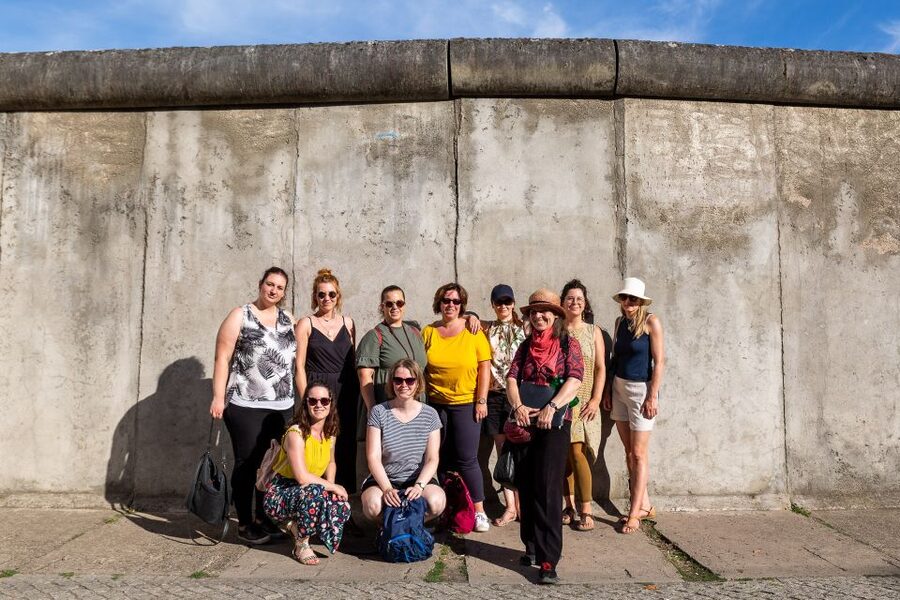
The walk continues toward Schwedter Steg, a bridge near Mauerpark. The bridge gives you a useful view of how the former border cut across neighborhoods and transport routes. It also connects the Wall story to one of Berlin’s most social public spaces.
Mauerpark occupies land that once formed part of the border zone. Today, it is associated with open-air culture and public gatherings. That change is central to understanding modern Berlin. A place designed to control movement has become a place where people gather freely.
The tour does not treat the Wall as an isolated historical exhibit. It shows how the former border runs through present-day streets and parks. You can connect the memorials to the city you are actually walking through, rather than leaving the subject behind once you exit a museum.
The route includes a coffee break along the way. Food and drinks are not included, so bring money for your own refreshment. This pause can be useful on a long outdoor walk, though you should not expect a full meal or a long sit-down stop.
Gleim Tunnel and the Wall’s afterlife
The Gleim Tunnel is another unusual stop. It helps show the relationship between the former border and the railway infrastructure around northern Berlin. The tunnel is also linked with a large annual party, a striking example of how the city has taken spaces once shaped by separation and turned them toward public life.
That contrast is a recurring theme on this tour. The Wall’s former route is not frozen in 1989. It has been built over, planted, crossed, memorialized, and used for ordinary recreation. The guide helps you hold both realities at once: the old danger and the newer freedom.
Some parts of the route may feel less dramatic than the best-preserved Wall sections elsewhere in Berlin. You may not see long stretches of intact concrete. Instead, you get a broader account of how the border worked and how the city changed after it disappeared.
That makes the tour a good partner to a visit to the Berlin Wall Memorial on Bernauer Straße. The walking route gives you movement and local context, while the memorial offers preserved structures and formal exhibits. If you have time for only one Wall experience, consider whether you prefer a guided outdoor route or a more concentrated museum and memorial visit.
Why the small group matters
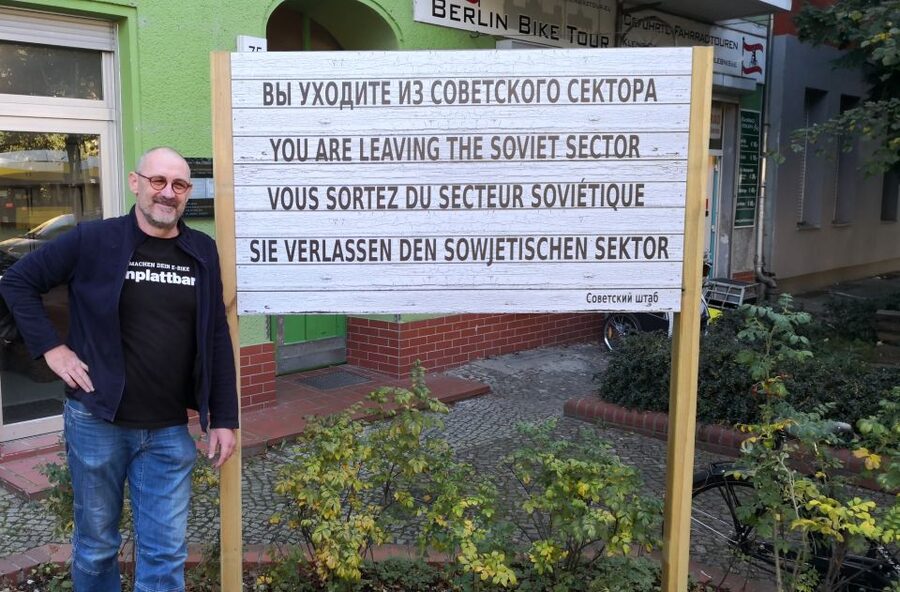
The maximum group size is 12, which is a strong feature for this subject. A large group can make a walking tour feel like a procession. With fewer people, you can usually hear the guide more easily and stop for questions without interrupting the entire experience.
The personal side of the guiding is especially useful here. One guide, Marcus, was praised for answering questions freely and keeping the group engaged from Bornholmer Straße toward Bernauer Straße. Markos was also able to hold the attention of a 13-year-old for the full tour and offered suggestions for other things to do in Berlin.
That last point matters if you are booking for a mixed-age group. The Wall can seem abstract to a teenager, but family separation, escape attempts, and the sudden opening of a border are easier to grasp through clear stories and direct conversation.
Steffen’s tours have run closer to three hours rather than the stated 2.5 hours, with humor and additional stories along the way. That can be a bonus if you want a fuller walk, but it is worth leaving some flexibility in your schedule. Outdoor tours do not always end precisely at the advertised minute.
The language is German. If you understand German well, this is a direct way to hear the subject discussed by a local guide. If you do not, you should choose another tour, since no other language is listed.
Is $24 a fair price for 2.5 hours?
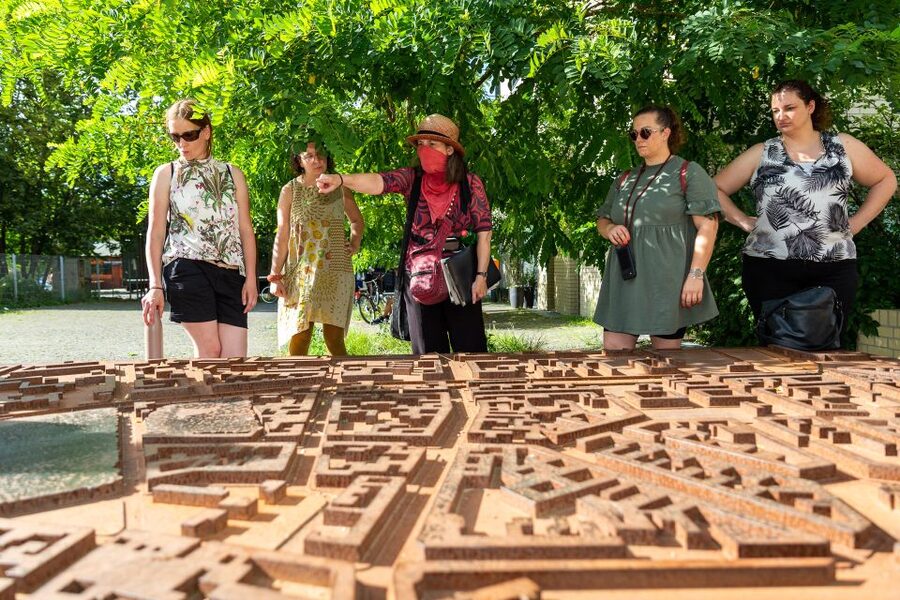
At $24 per person, this tour offers good value if you want a focused introduction to the Berlin Wall without paying for a long museum package. You receive a live guide, a small group, a planned route, and access to stories that are difficult to gather on your own.
The strongest value comes from interpretation, not admission tickets. There is no major entry fee built into the price, and food and drinks are extra. You are paying for someone to connect Bornholmer Straße, the death-strip, the cherry trees, Ulbrichtkurve, Schwedter Steg, Mauerpark, and Gleim Tunnel into one understandable story.
That is useful on your first day in Berlin, when the city’s Wall sites can feel spread out and disconnected. It is also useful if you have already seen the East Side Gallery and want a less familiar section of the former border.
The value drops if you want a private tour, an English-speaking guide, or a mainly indoor experience. It is also less suitable if you dislike walking in poor weather or prefer a fast overview with minimal historical detail.
Timing, route questions, and useful booking details
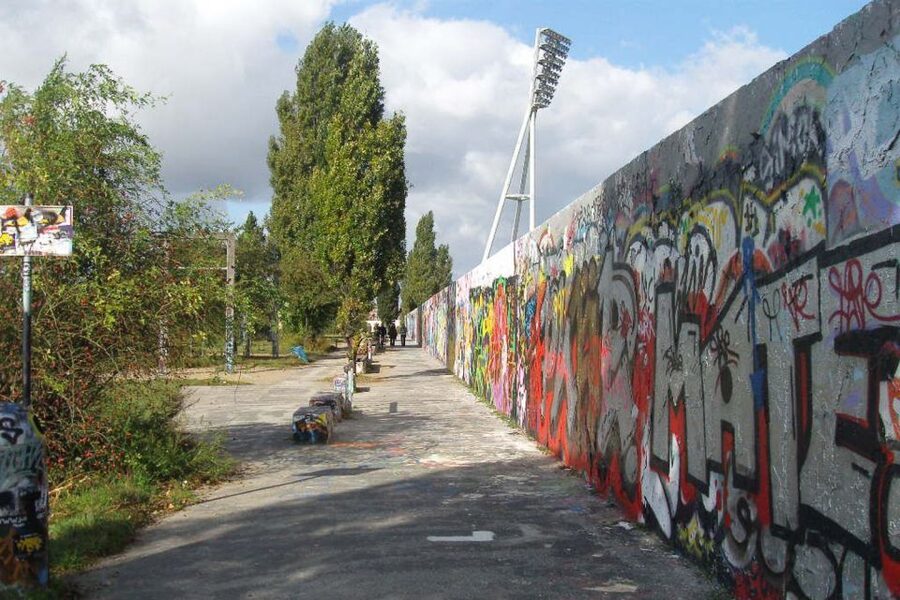
The published duration is 2.5 hours, though one tour described by a participant lasted about three hours. Plan for at least the full stated time, and keep a little extra space afterward if you have a train, meal, or timed attraction.
There is a small inconsistency in the supplied meeting information. The route description says the walk finishes toward Nordbahnhof, a former ghost station, while the meeting-point details say the activity ends back at the starting point. Confirm the exact end point when you book, especially if you plan to continue directly to another part of Berlin.
The tour runs in all weather. Rain ponchos are supplied when necessary, but you still need suitable shoes and clothing. There is no promise of indoor shelter for the walk.
Cancellation terms also need a careful look. The booking information allows cancellation up to 24 hours before departure for a full refund, while the additional conditions say the deadline for groups of three or more is three days before the scheduled tour. If your party has three or more people, confirm which rule applies to your reservation.
You can reserve and pay later, keeping your plans flexible. That is helpful in Berlin, where weather and museum schedules can change quickly.
Who should take this Berlin Wall walk?
I would choose this tour for you if you want the Wall explained as part of the city, not just displayed as a piece of concrete. It suits history-minded visitors, first-time Berlin guests, families with older children, and anyone who wants to ask questions during the walk.
It is also a good choice if you value firsthand memories. A guide who grew up in East Berlin can explain how the divided city felt from inside, while other guides may bring different personal and local perspectives.
You should think twice if German is not comfortable for you. You may also prefer another option if you need a guaranteed English tour, a private group, wheelchair-specific route information, or a fully indoor activity. Those details are not provided here, so do not assume they are available.
Should you book it?
Book this Berlin Wall walk if you want a modestly priced, small-group route through places that are easy to overlook. Bornholmer Straße gives the tour a powerful starting point, and the cherry trees, Ulbrichtkurve, Schwedter Steg, Mauerpark, and Gleim Tunnel add variety beyond the usual Wall photographs.
The best reason to go is the guide. The route becomes much more meaningful when someone can explain the faint traces and connect them with real lives. Just confirm the tour language, check the end point, and prepare for weather. If those conditions suit you, $24 buys a thoughtful and grounded way to meet Berlin’s divided past.
FAQ
Where does the Berlin Wall tour start?
Meet your guide at the Berlin Bike Tours office near Björnsonstraße and Bornholmer Straße in Berlin.
How do I reach the meeting point by public transport?
Björnsonstraße tram stop is about one minute away and is served by M1, M13, and M50. Bornholmer Straße S-Bahn station is about two minutes away, served by S1, S2, S8, S25, and S85. Schönhauser Allee is about a 10-minute walk away and has S-Bahn and U-Bahn service.
How long does the tour last?
The stated duration is 2.5 hours. One reported walk lasted about three hours, so leave some extra time in your schedule.
What language is the tour conducted in?
The live tour guide speaks German. German is the only language listed for this activity.
What sites are included?
The route includes Bornholmer Straße, the former death-strip and its cherry trees, Ulbrichtkurve, Schwedter Steg near Mauerpark, Gleim Tunnel, and Wall memorial sites.
Is food or drink included?
No. Food and drinks are not included, although the walk includes an opportunity to relax over coffee.
Does the tour run in the rain?
Yes. The tour operates in all weather, and rain ponchos are provided when necessary.
How many people can join the group?
The group has a maximum of 12 people. At least two participants are required for the tour to operate.
Can I cancel for a full refund?
The activity information allows cancellation up to 24 hours in advance for a full refund. For groups of three or more, the additional conditions state a cancellation deadline of three days before the scheduled tour, so check the terms attached to your booking.
Just added around Berlin
- From Berlin: Gardens & Palaces of Potsdam Bike Tour★ 5.0 · 61 reviews
- Berlin: Battle for Seelow Heights WW2 tour -Clash of Titans★ 5.0 · 27 reviews
- From Berlin: Historical Gems of Potsdam Private Day Trip★ 4.4 · 4 reviews
- Berlin: Französischer Dom 360° Panorama & Crémant to go★ 3.9 · 5 reviews
- Explore Berlin Tour: History and Highlights★ 4.7 · 5 reviews
- Berlin: Evening Yacht Cruise with Aperitif & Dinner Upgrade★ 4.6 · 178 reviews
- Berlin: Expats in Berlin Comedy Show Ticket★ 4.7 · 182 reviews
- Berlin: The Epic Comedy Club Friday Night Showcase★ 4.8 · 28 reviews
Berlin Tours, compared.
Reichstag, Dome and Government District Guided Tour
Read our review →
1-Hour City Tour by Boat with Guaranteed Seating
Read our review →
Reichstag, Plenary Chamber, Cupola & Government Tour
Read our review →
Browse the lists this tour appears in