
Review · BERLIN TOURS
Berlin Wall: City Tour of Divided Germany
Berlin’s former border is not just a line on a map. It cut through stations, streets, parks, and families. This two-hour walking tour follows that line from the Palace of Tears to Checkpoint Charlie, linking famous sights with lesser-known stories about daily life in a divided city.
I like the route’s clear shape, from Friedrichstraße station through the government district, Brandenburg Gate, Potsdamer Platz, and the remaining Wall. I also like the focus on personal stories, which guides such as Stephan and Stefan have brought into past tours. The main drawback is simple: the tour is in German, and two hours outdoors can feel long in cold or wet weather.
Key points to know before booking
- Friedrichstraße station begins the story: Meet at the Tränenpalast, or Palace of Tears, the former border crossing beside the station.
- The route follows the old border: You’ll connect the Spree, parliament district, Brandenburg Gate, Potsdamer Platz, and Checkpoint Charlie.
- Personal accounts matter here: The guide adds human detail to the political story, including the way the Wall shaped ordinary routines.
- Several famous Berlin sights appear in one walk: The Holocaust Memorial, Brandenburg Gate, Potsdamer Platz, and a long surviving Wall section all fit into the route.
- The tour is German only: You need enough German to follow a live explanation of complicated events and place names.
- Comfortable shoes are essential: This is a walking tour, and the meeting point is outside the one entrance to the Palace of Tears.
Starting at Friedrichstraße’s Palace of Tears
Your meeting point is the entrance to Tränenpalast, the Palace of Tears, in front of Friedrichstraße station on Reichstagufer. The building has only one entrance, which makes the meeting spot fairly clear, but you should still allow time to locate it around the station.
The name itself gives you an early sense of the subject. This was a border station where people said goodbye under the pressure of divided Berlin. The tour does not simply begin with a general lecture about the Cold War. It starts at a place tied to separation, inspection, and difficult departures.
That setting gives the walk a useful human scale. Berlin’s division was shaped by governments and military alliances, but it was also felt by people trying to cross the city, visit relatives, go to work, or return home. Starting here helps you understand the Wall as a daily fact, not only a political symbol.
The exact interior program is not specified, so you should think of this as an outdoor city tour beginning at the Palace of Tears rather than a museum visit. If you want to spend time inside the exhibition, plan that separately.
More Wall and Cold War walks:
- Berlin: Third Reich and Cold War 2 Hour Walking Tour
★ 4.9 · 6,830 reviews - Berlin’s Best: 2 Hour Walking Tour Third Reich and the Cold War
★ 5.0 · 5,486 reviews - Berlin: DDR Museum Tickets
★ 4.3 · 3,443 reviews
Following the Spree beside the government district
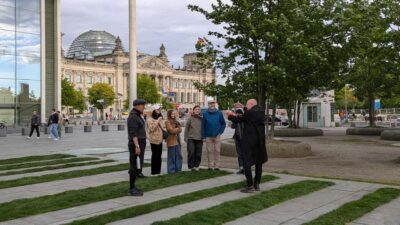
From Friedrichstraße, the route follows the Spree toward Berlin’s parliament and government district. This section is valuable because it shows how the border ran through a part of the city that now feels central and open.
Buildings connected with government stood partly along the former border strip. As you walk, the guide can point out how the division affected the layout and meaning of this area. The contrast is striking: today, you see major civic buildings and broad public spaces, while the tour asks you to picture barriers, guards, and restricted movement along the same ground.
I like this part of the route because it avoids treating the Wall as an isolated memorial. You see how it interfered with the city’s basic structure. Streets and institutions did not stop being useful simply because Berlin was divided, but their position suddenly carried political weight.
The Spree also provides a natural thread between the stops. You are not being moved from one unrelated monument to another. You are tracing the former border and watching the story shift from railway travel to state power, public symbols, and ordinary city life.
Brandenburg Gate, once beside the border
The Brandenburg Gate is one of Berlin’s most familiar sights, but this tour gives it a more unsettling role. The border ran at the gate, making the monument a symbol of both the city’s division and its fate.
From a visitor’s point of view, the gate can seem like a grand ceremonial entrance. During the period of division, it represented something very different: a famous landmark placed beside a sealed frontier. The tour helps you read the monument in its political setting rather than treating it as a quick photo stop.
This is also one of the clearest examples of how the route mixes major attractions with historical explanation. You do not need to choose between seeing central Berlin and learning about the Wall. The two subjects are tied together at this point.
Expect the stop to be more about context than a long visit inside a building. The power comes from knowing where the border ran and understanding why a public monument became part of the drama of divided Berlin.
The Holocaust Memorial and the former death strip
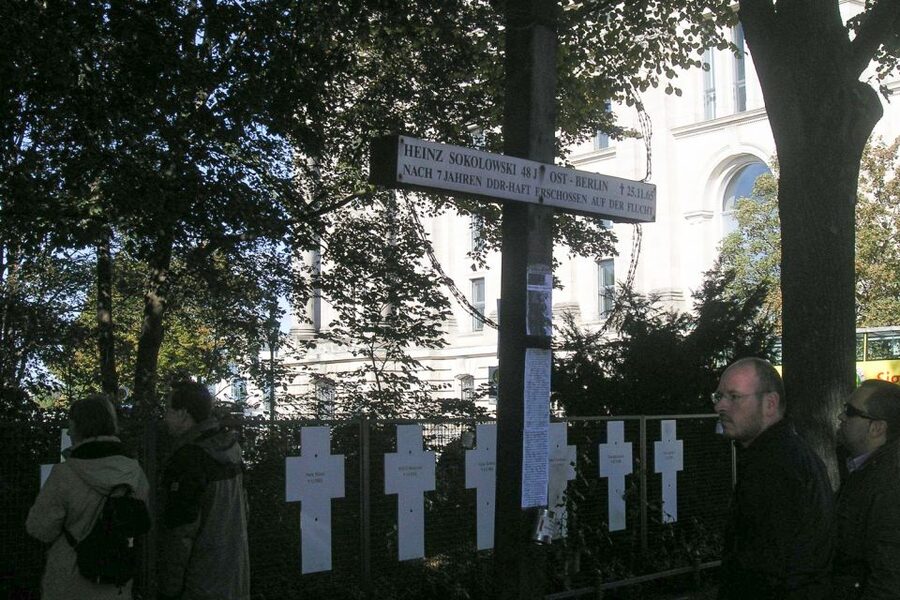
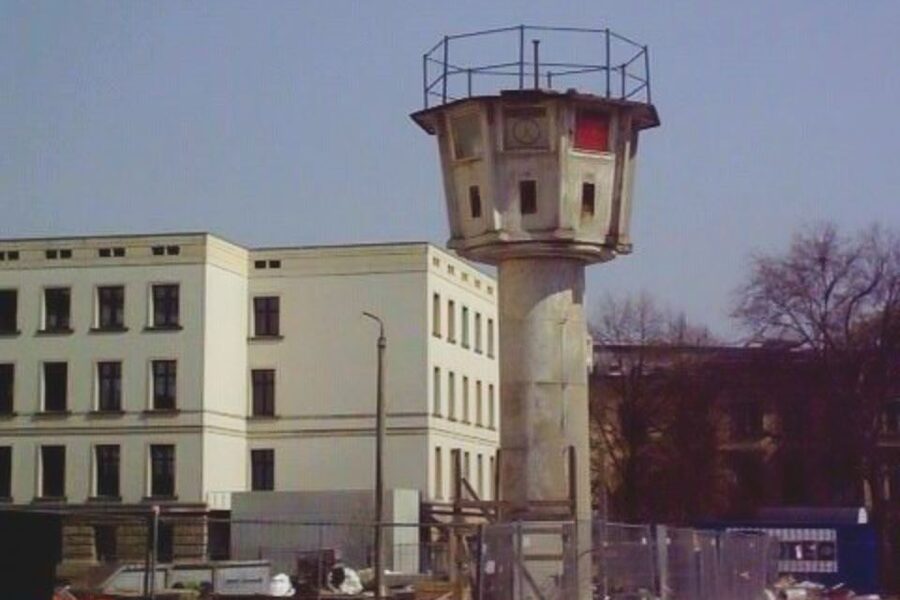
The walk continues from Brandenburg Gate to the Holocaust Memorial, located beside what was once part of the death strip. This is an important but demanding part of the tour because two separate chapters of German history meet in one central area.
The guide’s task here is to keep the subjects distinct while explaining their physical connection. The Holocaust Memorial addresses the murder of Europe’s Jews under Nazi rule. The former death strip recalls the later border system and the dangers faced by people trying to cross from East Berlin to West Berlin.
You should give this section your full attention. The setting is not just a convenient route between sights. It shows how Berlin’s modern center carries layers of memory, with one period of violence and dictatorship located close to another.
The tour description promises lesser-known places and stories, and this is where that approach can be especially useful. A map alone cannot show how the border cut through a city already marked by wartime destruction and state terror.
A few more Berlin half-days to weigh up
- Berlin: Reichstag, Dome and Government District Guided Tour
★ 4.7 · 18,288 reviews - Berlin: 1-Hour City Tour by Boat with Guaranteed Seating
★ 4.3 · 16,993 reviews - Berlin: Boat Tour Along the River Spree
★ 4.4 · 11,252 reviews - Discover Berlin Half-Day Walking Tour
★ 5.0 · 9,624 reviews
Potsdamer Platz and the Tiergarten Triangle
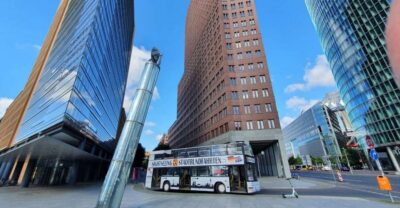
At Potsdamer Platz, the division becomes especially easy to picture in the former Tiergarten Triangle. Before the Wall, Potsdamer Platz had been a major urban crossroads. During the divided years, the border changed the area’s purpose and appearance.
This stop helps explain the odd gaps that once appeared in central Berlin. A location that had been busy and important became part of a controlled frontier. The route gives you a chance to connect the old map with the present city, which is one of the best ways to understand Berlin’s rapid changes.
I find this kind of stop more useful than simply seeing a preserved wall segment. A surviving piece of concrete tells you what the barrier looked like. Potsdamer Platz helps you ask what the barrier did to the city around it.
The tour does not promise a long stop at every location, so you may want to return later if you want photographs or more time at Potsdamer Platz. In two hours, the guide has to keep moving to cover the full route.
A surviving Wall section and Checkpoint Charlie
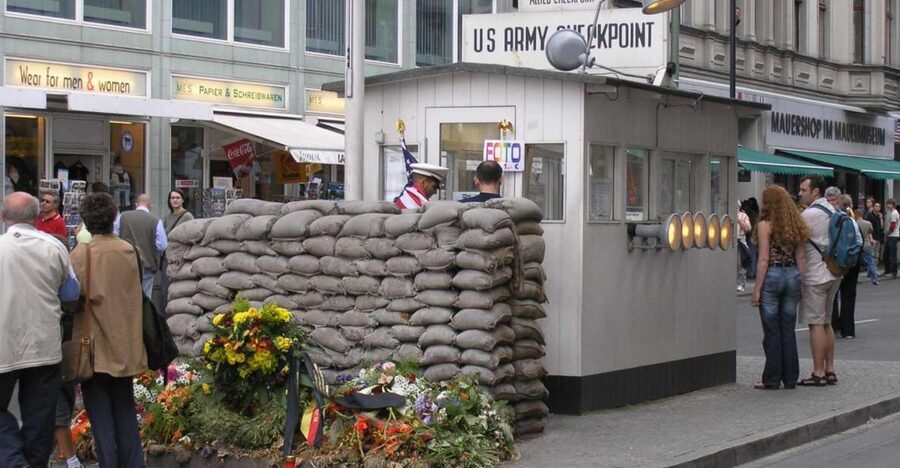
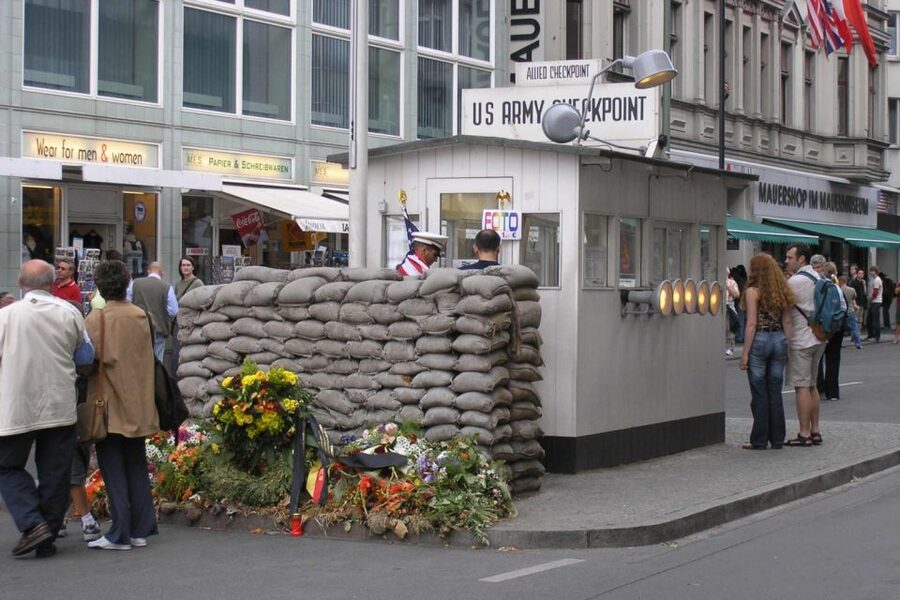
The route includes the longest remaining stretch of the Wall and the famous Checkpoint Charlie. These are the stops most visitors already recognize, but they gain more meaning after you have followed the border from Friedrichstraße.
The longer surviving section gives you a better sense of scale than a small fragment. You can examine the physical barrier and think about how it shaped movement through the city. The tour’s earlier stops also help you understand that the Wall was not one simple slab. It formed part of a wider border system that controlled crossings and separated neighborhoods.
Checkpoint Charlie is the other familiar endpoint. Its fame can make it feel overly polished or tourist-focused, so a guide’s historical framing is useful. The value here is not only the checkpoint sign or the photo opportunity. It is the chance to place this crossing within the wider route and understand why it became such a potent Cold War symbol.
The tour ends at Checkpoint Charlie, giving you an easy point from which to continue exploring central Berlin. The information provided does not specify the exact end time beyond the two-hour duration, so leave a little flexibility if you have a tightly timed reservation afterward.
Personal stories make the political history easier to grasp
The strongest feature of this experience is its attention to personal accounts. The guide does not treat divided Germany as a list of dates, treaties, and leaders. You hear how the border reached into daily routines and affected the fate of individual people.
That approach is especially helpful if you already know the basic Cold War timeline. You may not need another broad explanation of East and West. You may need to understand what division meant at a train station, along a river, beside a government building, or at a family goodbye.
Past tours led by Stephan or Stefan have been singled out for personal and detailed explanations, including information that is not always obvious at the major sights. A small group can make that style work well, since the guide has more room to respond and add detail. However, group size is not guaranteed, so you should not book solely on the expectation of a private-feeling walk.
The tour is led in German. That is an important practical point, not a minor footnote. The subject includes changing borders, German place names, and several periods of history. If you cannot follow German comfortably, the personal detail and connections between stops will be difficult to appreciate.
Is $21 good value for two hours?
At $21 per person, the tour offers solid value if you want a guided overview of Berlin’s former border. You are paying for a live guide, a carefully connected walking route, and interpretation at several locations that can otherwise seem unrelated.
The price is especially reasonable for a first visit. You can see major central sights while learning why they mattered during division. Afterward, you will have a better framework for exploring places such as the Palace of Tears or other Wall memorials on your own.
Value depends on what you want from the experience. If you prefer to spend a long time inside exhibitions, take many photographs, or move at your own pace, a self-guided visit may suit you better. This walk keeps a steady route and covers a lot of ground in two hours.
A strong guide also affects the value. The very high overall rating and repeated praise for informative, personal guiding suggest that the quality of the explanation is a major reason to choose this experience. One past tour even ran an hour longer, but that should be treated as an exception, not a promise. The advertised duration remains two hours.
Weather, walking, and the right kind of visitor
Bring comfortable shoes. The tour moves through central Berlin on foot, and even a route of two hours can feel tiring if your footwear is poor.
You should also dress for the weather. The walk is outdoors, and a past winter group remained satisfied despite cold temperatures, but cold is still a real consideration. On a wet or windy day, the historical value remains, while your comfort may not.
I would choose this tour for:
- First-time visitors who want a clear introduction to divided Berlin
- Visitors who prefer stories about people and daily life over a list of dates
- German speakers seeking a live, guide-led historical walk
- Anyone who wants to connect Brandenburg Gate, Potsdamer Platz, the Wall, and Checkpoint Charlie in one outing
- Visitors with only two hours for a focused introduction
I would hesitate if you need an English-language tour, want to avoid walking, or prefer a slow museum visit. The route covers important ground, but it cannot give every stop the time it deserves.
Booking and meeting-point advice
You can cancel up to 24 hours before the start for a full refund, and the reserve-now, pay-later option keeps your plans flexible. Check the available starting times before booking, since the two-hour duration does not identify one fixed departure time.
Look for the single entrance to the Tränenpalast at Friedrichstraße station on Reichstagufer. Arriving early is sensible because large stations can be confusing, even when the official meeting point is clear.
The experience is provided by Paaßens & Kniestedt Berlin kompakt GmbH. The listed language is German, so confirm that this suits everyone in your party before paying.
Should you book this Berlin Wall tour?
Book it if you want the former border explained as part of the living city rather than as a collection of isolated monuments. The route is efficient, the price is modest, and the focus on personal stories gives the major sights more weight.
Skip it if you need English, dislike outdoor walks, or want a detailed museum visit at each stop. For German speakers who want a focused introduction to divided Berlin, this is a useful two-hour choice, especially if the chance to hear a guide such as Stephan or Stefan is available.
FAQ
Where does the Berlin Wall city tour meet?
The meeting point is at the entrance to the Tränenpalast, or Palace of Tears, in front of Friedrichstraße station on Reichstagufer, 10117 Berlin.
Does the Palace of Tears have more than one entrance?
No. Tränenpalast has only one entrance, which is the designated meeting point.
How long does the tour last?
The advertised duration is two hours.
What language is the tour conducted in?
The live tour guide speaks German. German is the only language listed for this activity.
Which sights are included on the route?
The route includes Friedrichstraße station, the Spree, the parliament and government district, Brandenburg Gate, the Holocaust Memorial, Potsdamer Platz, the former Tiergarten Triangle, the longest remaining Wall section, and Checkpoint Charlie.
What should I bring?
Bring comfortable shoes. The experience is a walking city tour, and much of it takes place outdoors.
Can I cancel or pay later?
You can cancel up to 24 hours in advance for a full refund. The reserve-now, pay-later option lets you book without paying immediately.
Just added around Berlin
- From Berlin: Gardens & Palaces of Potsdam Bike Tour★ 5.0 · 61 reviews
- Berlin: Battle for Seelow Heights WW2 tour -Clash of Titans★ 5.0 · 27 reviews
- From Berlin: Historical Gems of Potsdam Private Day Trip★ 4.4 · 4 reviews
- Berlin: Französischer Dom 360° Panorama & Crémant to go★ 3.9 · 5 reviews
- Explore Berlin Tour: History and Highlights★ 4.7 · 5 reviews
- Berlin: Evening Yacht Cruise with Aperitif & Dinner Upgrade★ 4.6 · 178 reviews
- Berlin: Expats in Berlin Comedy Show Ticket★ 4.7 · 182 reviews
- Berlin: The Epic Comedy Club Friday Night Showcase★ 4.8 · 28 reviews
Berlin Tours, compared.

Reichstag, Dome and Government District Guided Tour
Read our review →
1-Hour City Tour by Boat with Guaranteed Seating
Read our review →
Reichstag, Plenary Chamber, Cupola & Government Tour
Read our review →
Browse the lists this tour appears in