
Review · BERLIN TOURS
Berlin: Muro,Guerra Fría y Museo de la Stasi
Berlin’s Cold War story becomes much clearer when you see the places where it happened. This four-hour Spanish-language tour links the Berlin Wall and Death Strip with Bernauer Strasse, Frankfurter Allee, former ghost stations, and the Stasi Museum.
I like the route because it shows both the physical border and the system behind it. I also like the human scale: escape attempts, divided streets, controlled lives, and the awkward traces left in today’s city. The main consideration is transport. Your AB day ticket is not included, and one past booking misunderstood the plan as a guided museum visit, so it is worth confirming exactly how the Stasi Museum portion works.
Key points
- See the Berlin Wall’s former Death Strip: Understand how a border became a heavily guarded zone rather than a simple wall.
- Visit Bernauer Strasse Wall Memorial: This is one of Berlin’s clearest places for seeing how the Wall cut through homes, streets, and families.
- Explore Cold War transit history: Former ghost stations show how underground lines were altered when Berlin was divided.
- Enter the Stasi Museum: Learn how East Germany’s secret police watched and controlled the population.
- Follow Frankfurter Allee: This major East Berlin avenue helps explain daily life and official city planning under the socialist government.
- Tour in Spanish for four hours: Guides including Constantino and Jordi have been praised for detailed stories, strong historical knowledge, and an easy willingness to answer questions.
Why Berlin’s Cold War story needs more than the Wall
Many people arrive in Berlin expecting one surviving stretch of concrete to explain everything. It cannot. The Wall was a physical border, but the Cold War also shaped transport, housing, policing, architecture, family life, and the movement of millions of people.
This tour gives you a wider view. You see where the Wall and Death Strip once ran, then move through places linked to East Berlin’s streets and underground railway. At the Stasi Museum, the focus shifts from border control to surveillance and political pressure.
That change of subject is useful. You are not left with a simple story of one wall that appeared, then disappeared. You begin to see how a divided city worked from day to day.
The experience is conducted in Spanish, which matters when the subject includes political terms, escape methods, and the complicated reasons behind the Wall’s construction and collapse. Guides such as Constantino and Jordi have been singled out for telling detailed stories with enthusiasm and for making themselves available for questions.
More Wall and Cold War walks:
- Berlin: Third Reich and Cold War 2 Hour Walking Tour
★ 4.9 · 6,830 reviews - Berlin’s Best: 2 Hour Walking Tour Third Reich and the Cold War
★ 5.0 · 5,486 reviews - Berlin: DDR Museum Tickets
★ 4.3 · 3,443 reviews
Starting at Alexanderplatz and getting your bearings
The meeting point is beside the single entrance to the Fernsehturm, Berlin’s television tower, between the tower and Alexanderplatz railway station. Look for a green flag marked tours en español, next to Espresso House.
Alexanderplatz is a practical starting point because it places you in the former East Berlin center. The tower itself was built by the German Democratic Republic and became a major symbol of East Berlin. The tour information does not specify how long the group spends discussing the square, so treat it mainly as an easy place to meet and begin.
Arrive with your transport ticket ready. You need a Berlin AB day ticket for this tour, and it is not part of the $41 price. Since the route includes several parts of the city, the ticket is not a minor extra. It is an essential part of the day’s cost and planning.
The meeting instructions are clear, but Alexanderplatz can feel busy and spread out. Use the television tower as your fixed landmark, then find the green flag rather than waiting near an arbitrary station entrance.
Bernauer Strasse and the human edge of the Wall
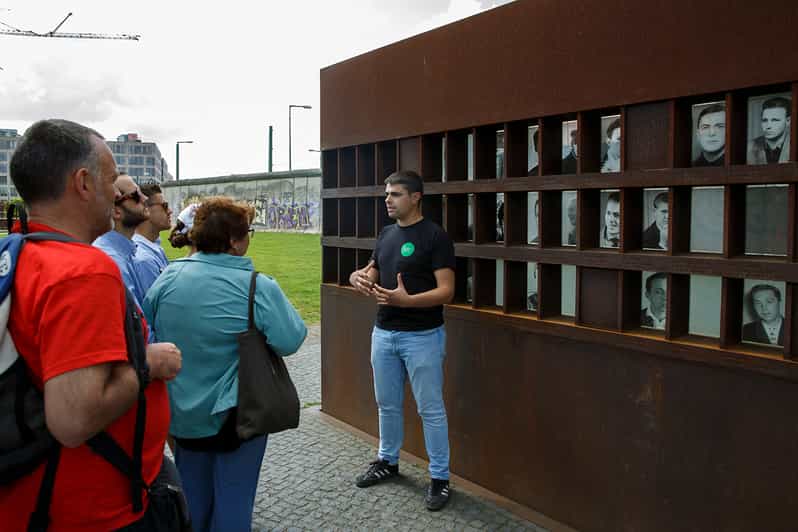
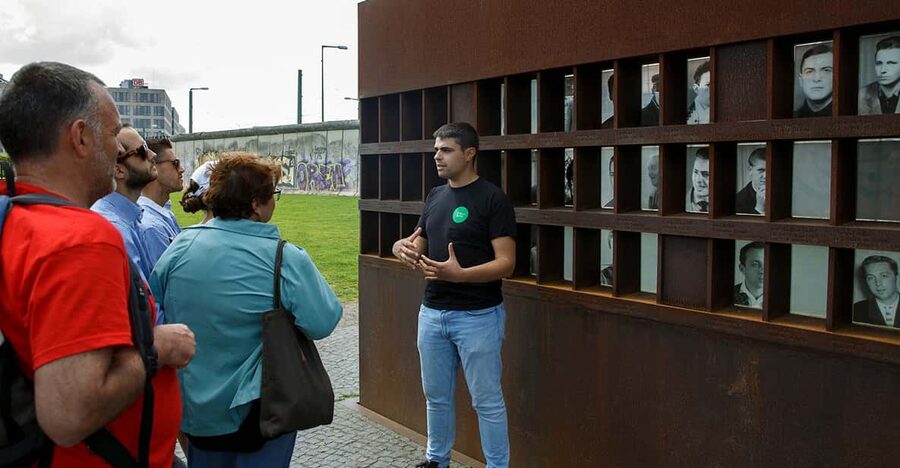
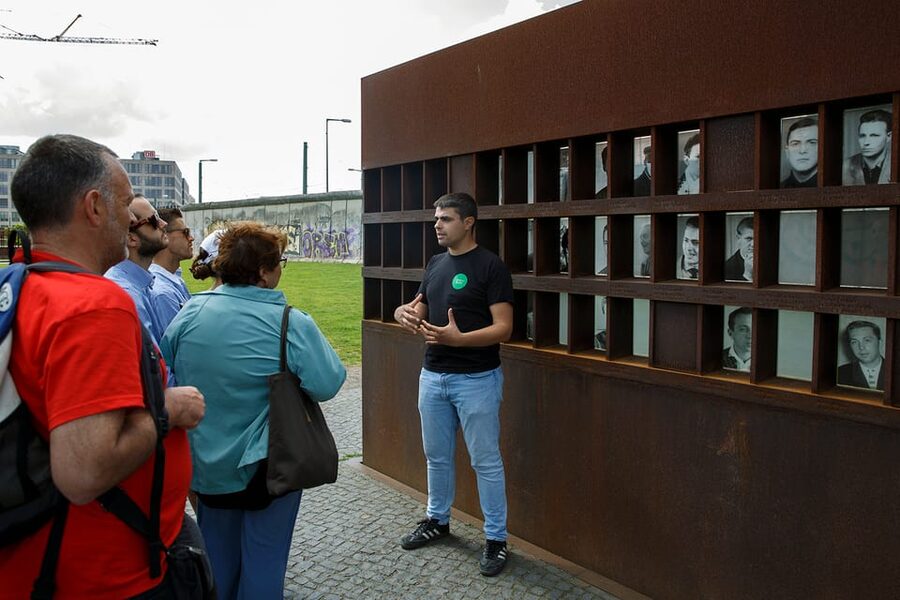
Bernauer Strasse Wall Memorial is one of the most useful places in Berlin for understanding how the border affected ordinary buildings and residents. The Wall did not simply cut across an empty field. Here, it divided a street and created painful scenes around homes, windows, doors, and sidewalks.
The memorial preserves sections of the border area and helps show the relationship between the inner wall, outer wall, guard systems, and the space between them. That space is commonly called the Death Strip, though the exact appearance changed over time and from place to place.
This is where the tour’s explanation of escape attempts becomes especially valuable. You learn why the Wall was built and about the ingenious ways some Berliners tried to get across it. The point is not to turn escape stories into adventure tales. Each attempt happened under serious danger, and the border system was designed to stop people from leaving East Berlin.
I like this stop because it gives the Wall a human scale. Concrete alone can feel abstract. A street split by barriers tells you what division meant for people who lived, worked, or had family on opposite sides.
The memorial also helps you understand why surviving sections can be misleading. A single wall panel does not show the full border system. Your guide can connect the remaining structures with what once surrounded them.
The Death Strip and the machinery of control
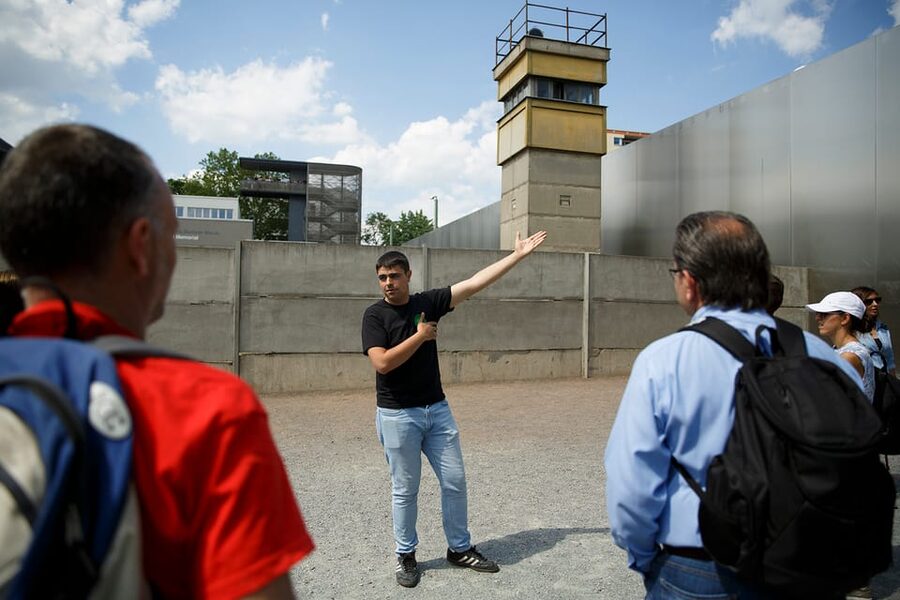
The name Death Strip refers to the guarded zone between sections of the Berlin Wall. It could include fences, open ground, watchtowers, lighting, and other barriers. The exact layout developed over time, but the purpose was consistent: to make crossing extremely difficult and dangerous.
Seeing what remains helps you avoid a common mistake. The Wall was not only the concrete barrier people photographed from the western side. It was a layered security system, and the open space behind it was part of the border.
The guide also explains why the Wall eventually came down. That story has a political side, but it is also about pressure from people in East Germany, changes in government policy, and a rapidly shifting situation in Europe. A good explanation should connect the local streets with those wider events without losing the city itself.
This stop may be emotionally heavy. The subject includes imprisonment, surveillance, deaths at the border, and families separated for years. The tour is a good match if you want history treated seriously rather than reduced to a quick photo stop.
A few more Berlin half-days to weigh up
- Berlin: Reichstag, Dome and Government District Guided Tour
★ 4.7 · 18,288 reviews - Berlin: 1-Hour City Tour by Boat with Guaranteed Seating
★ 4.3 · 16,993 reviews - Berlin: Boat Tour Along the River Spree
★ 4.4 · 11,252 reviews - Discover Berlin Half-Day Walking Tour
★ 5.0 · 9,624 reviews
Frankfurter Allee and everyday East Berlin
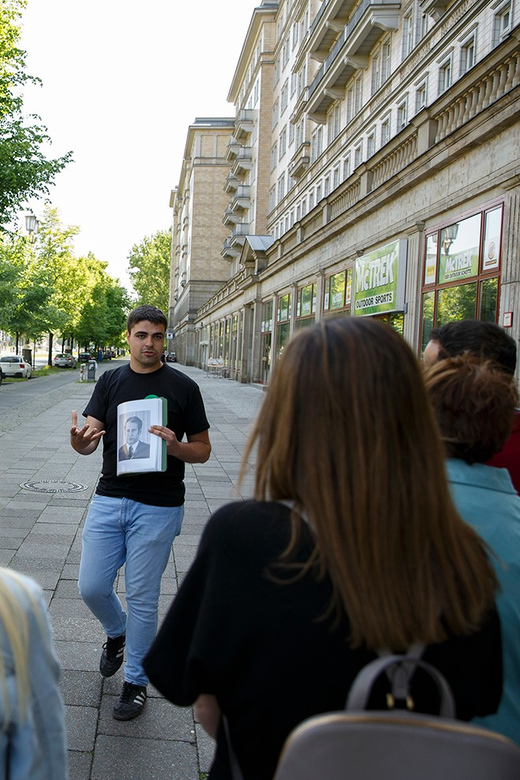
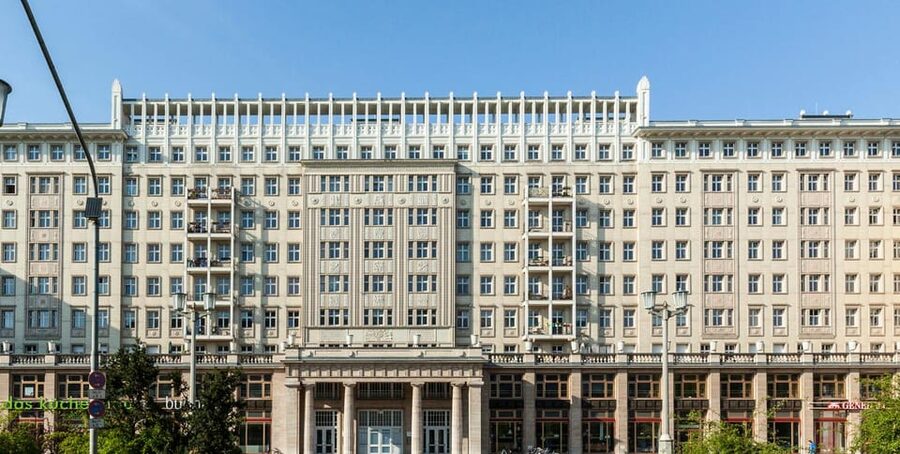
Frankfurter Allee offers a different view of the Cold War. Here, the focus moves away from the border and toward the city that East Germany was trying to build and govern.
Large avenues and planned buildings can reveal political ambitions. They show how a government presented its ideas about work, housing, public life, and the modern socialist city. The tour uses Frankfurter Allee to help you see East Berlin as a functioning capital, not just a place defined by a barrier.
This part is important because daily life continued on both sides of the Wall. People went to work, used public transport, shopped, raised children, and dealt with government offices. Those routines existed alongside strict controls and political pressure.
The supplied details do not give a building-by-building list for Frankfurter Allee, so you should not expect a fixed architectural tour of every landmark along the avenue. Its value is the wider context. Your guide connects the street to East Berlin’s social and political structure.
Berlin’s former ghost stations underground
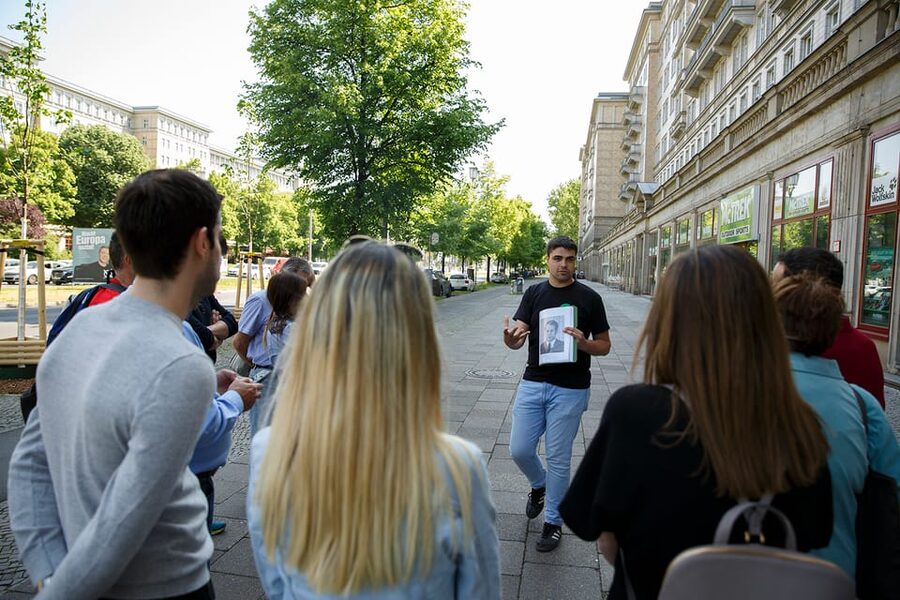
The former ghost stations are among the tour’s most unusual Cold War subjects. When Berlin was divided, some underground routes crossed political boundaries. Certain stations in East Berlin were closed or heavily controlled while trains from West Berlin passed through without stopping.
These stations became known as ghost stations because trains moved through dark or restricted platforms while passengers could not use them in the normal way. The idea is striking, but the real value is practical: it shows how division reached below street level.
A wall could be seen. A closed station could be guarded, sealed, and folded into the city’s daily transport system. The underground lines show how Berliners had to adapt to a political border that affected ordinary journeys.
The route requires public transport, so your AB ticket becomes part of the experience rather than a simple way to reach the meeting point. Ask the guide how much walking and station changing is planned, especially if you have mobility concerns. The activity is listed as wheelchair accessible, but the exact station sequence and conditions are not specified.
The Stasi Museum and East Germany’s secret police
The Stasi Museum focuses on the Ministry for State Security, usually known as the Stasi. This is where the tour examines the methods used to monitor and control East Berlin’s population.
The museum is housed in the former Stasi headquarters complex. The central subject is not just spying in the dramatic sense. It is the wider system of surveillance, files, informants, pressure, and suspicion that could affect a person’s work, friendships, travel, and family life.
This stop adds necessary depth to the Wall story. The border tried to control movement, while the Stasi system worked inside society. Together, the two subjects explain why many East Germans experienced the state as an ever-present force.
Entrance to the Stasi Museum is included. Food and drinks are not included, and the supplied information does not promise a guided tour inside every museum room. One past booking expected a guided museum visit and felt the itinerary had been misunderstood. To avoid that problem, ask before booking if the guide accompanies you through the museum or provides an introduction before you explore it.
Even with a self-guided portion, the museum can be worthwhile after the earlier stops. You will already have the political setting, so documents, offices, and surveillance methods have a clearer meaning.
How the four-hour route fits together
The tour’s strength is its sequence. You start with the city as it is now, then trace the physical border, examine underground division, look at East Berlin’s planned avenues, and finish with the Stasi’s internal control.
The exact order of every stop is not provided, and travel time between locations will use part of the four hours. That is normal for a city tour spread across Berlin. You are paying for a connected explanation, not four hours spent at one site.
A four-hour outing is long enough to build a solid Cold War framework without taking up your entire day. It also leaves room for you to visit another museum or memorial afterward, though the emotional weight of the subject may make a slower afternoon sensible.
The guide is central to the experience. Constantino has been praised for his passion and for adding anecdotes to the history. Jordi has been described as highly competent and committed, with detailed explanations of the Wall. The available guide can vary, so you should not book on the assumption that one named guide is guaranteed.
What the $41 price really covers
At $41 per person, the price is reasonable if you want a Spanish-language explanation across several parts of Berlin. The package includes the Spanish-speaking guide and Stasi Museum entrance, which saves you from arranging that museum visit separately.
The main extra is the Berlin AB day ticket. Since the tour depends on public transport, add that cost before comparing it with a walking tour or a private option. You also need to budget for food and drinks, which are not included.
The value is strongest for people who want connections and context. You could visit Bernauer Strasse and the Stasi Museum on your own, but you would need to plan the route, understand the transport system, and build the historical links yourself.
The value is weaker if you prefer to move slowly through one museum or spend long periods taking photographs. Four hours, several sites, and public transport create a steady pace. This is a history route, not a relaxed neighborhood stroll.
Who will get the most from this Spanish-language tour
I would choose this tour if you want the Cold War explained in Spanish and prefer real locations over a classroom lecture. It suits first-time Berlin visitors who want a clear foundation, as well as people who already know the basic Wall story and want more about the Stasi and ghost stations.
It is also a strong choice for anyone interested in political history, divided cities, public transport, or twentieth-century Germany. The Spanish language makes it especially useful if you can follow historical details more comfortably in Spanish than in English or German.
You may want another type of outing if your main goal is photography, shopping, or a short look at the Wall. The content is serious, and the route covers difficult subjects. It is not designed as light sightseeing.
The activity is listed as wheelchair accessible, but you should ask about the exact public transport route and station access before booking. Accessibility can depend on the stations used, and those details are not provided.
Booking advice and final verdict
Book this tour if you want a focused, Spanish-language explanation of how Berlin was divided, guarded, watched, and eventually reunited. The combination of Bernauer Strasse, the Death Strip, ghost stations, Frankfurter Allee, and the Stasi Museum gives you more than the usual Wall photo stop.
Before you commit, remember two things: buy or plan for the AB day ticket, and clarify how the Stasi Museum visit is handled. If those details suit you, $41 is a fair price for a four-hour route with museum entry and a guide who can turn scattered sites into one readable story.
The high rating of 4.9 from 18 bookings fits the tour’s strongest qualities: detailed guiding, personal anecdotes, and clear enthusiasm for Berlin’s past. I would recommend it most to visitors who want history with places attached to it, not just facts delivered from a coach.
FAQ
What language is the tour conducted in?
The tour is conducted in Spanish with a live Spanish-speaking guide.
How long does the tour last?
The tour lasts four hours.
What sites are included?
The route includes remains of the Berlin Wall and Death Strip, Frankfurter Allee, the Bernauer Strasse Wall Memorial, former ghost stations of Berlin’s underground lines, and the Stasi Museum.
Is Stasi Museum admission included?
Yes. Entrance to the Stasi Museum is included in the activity price.
Is public transport included?
No. You must purchase a Berlin AB transport ticket separately. A one-day AB ticket is necessary for the tour.
Where is the meeting point?
Meet beside the green flag marked tours en español, next to the only entrance to the Fernsehturm at Alexanderplatz. The meeting point is between the television tower and Alexanderplatz railway station, beside Espresso House.
Is the tour wheelchair accessible?
The activity is listed as wheelchair accessible. The exact public transport route and station access details are not provided, so confirm those points before booking if needed.
Can I cancel the booking?
You can cancel up to 24 hours in advance for a full refund. The activity also offers reserve now and pay later booking.
Just added around Berlin
- From Berlin: Gardens & Palaces of Potsdam Bike Tour★ 5.0 · 61 reviews
- Berlin: Battle for Seelow Heights WW2 tour -Clash of Titans★ 5.0 · 27 reviews
- From Berlin: Historical Gems of Potsdam Private Day Trip★ 4.4 · 4 reviews
- Berlin: Französischer Dom 360° Panorama & Crémant to go★ 3.9 · 5 reviews
- Explore Berlin Tour: History and Highlights★ 4.7 · 5 reviews
- Berlin: Evening Yacht Cruise with Aperitif & Dinner Upgrade★ 4.6 · 178 reviews
- Berlin: Expats in Berlin Comedy Show Ticket★ 4.7 · 182 reviews
- Berlin: The Epic Comedy Club Friday Night Showcase★ 4.8 · 28 reviews
Berlin Tours, compared.
Reichstag, Dome and Government District Guided Tour
Read our review →
1-Hour City Tour by Boat with Guaranteed Seating
Read our review →
Reichstag, Plenary Chamber, Cupola & Government Tour
Read our review →
Browse the lists this tour appears in