
Review · BERLIN TOURS
Berlin History Walking Tour with a French-Speaking Guide
Berlin’s most important story is written into its streets. On this three-hour walk, you move from the rebuilt glass towers of Potsdamer Platz to the former site of Hitler’s bunker, then onward through memorials, royal avenues, Cold War landmarks, and the Brandenburg Gate. It is a brisk way to see how one city carries several difficult chapters at once.
I like the French-speaking guides, especially for a subject where small distinctions matter. I also like the route’s range: you get major sights such as Checkpoint Charlie and Brandenburg Gate, but you also pause at Bebelplatz and the Holocaust Memorial, where the guide can explain what you are seeing rather than leave you with a string of photo stops.
The main consideration is that this is a fully walking tour with no audiophones. A few people found the lack of headsets inconvenient, particularly in a larger group, and the maximum group size is 25. Wear good shoes, stay close to the guide, and expect the pace of a real city walk.
Key points to know before you book
- A strong first look at central Berlin: The route covers Nazi, Cold War, imperial, and modern landmarks in one morning.
- French-language guiding: Guides including Anouk, Martin, Arthur, Paul, and Céline are praised for clear explanations, humor, and thoughtful answers.
- About three hours on foot: The tour begins at 10:00 a.m. and finishes near Museum Island, leaving you time for lunch.
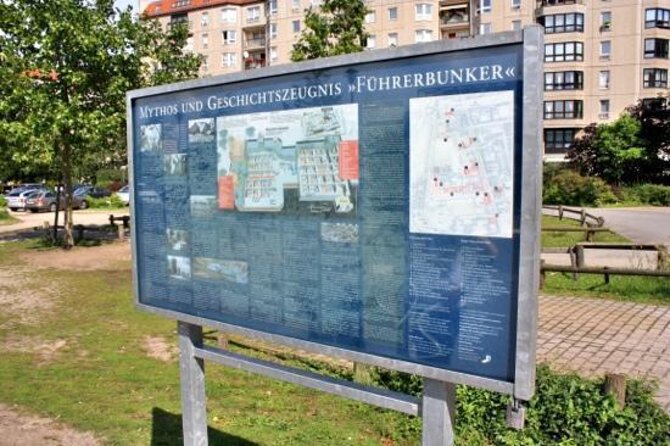
- Serious sites handled with context: The former Führerbunker site and the Holocaust Memorial are explained as places of memory, not treated as attractions.
- Good value at $27.81: You pay for a local French-speaking guide and a well-planned introduction, while food and transport remain your responsibility.
- A few practical limits: The tour runs in all weather, has a moderate fitness requirement, and does not provide audio equipment.
Why this walk works as a Berlin introduction
I would choose this tour early in a Berlin stay because it gives you a mental map before you tackle the city’s museums. The route links places that can seem scattered on a standard city map, and the guide explains how they relate to one another.
Berlin is not a city where one period simply replaces another. Potsdamer Platz shows the modern capital, the Führerbunker site points to the final days of Nazi rule, Checkpoint Charlie recalls the divided city, and the Brandenburg Gate reflects reunification. I like that the walk lets you see these changes in sequence.
The morning start is useful. At 10:00 a.m., you have enough time to reach Potsdamer Platz without making an early predawn effort, and the finish near Museum Island should leave you with the afternoon free. You can stop for lunch, continue toward Alexanderplatz, or use the guide’s suggestions to shape the rest of your day.
The French language is a real advantage if you are more comfortable discussing complex subjects in French. The strongest guide comments describe precise explanations, an easy pace, humor, and a willingness to answer individual questions. Names that appear repeatedly in the guide team include Anouk, Martin, Arthur, Paul, and Céline, though your guide will depend on the date.
More history-led days in Berlin:
- Berlin: Natural History Museum Entrance Ticket
★ 4.6 · 3,382 reviews - Berlin: World Heritage Cruise to Potsdam
★ 4.5 · 1,435 reviews - Berlin Historical Highlights Walking Tour
★ 4.9 · 657 reviews
Potsdamer Platz and Berlin’s modern face
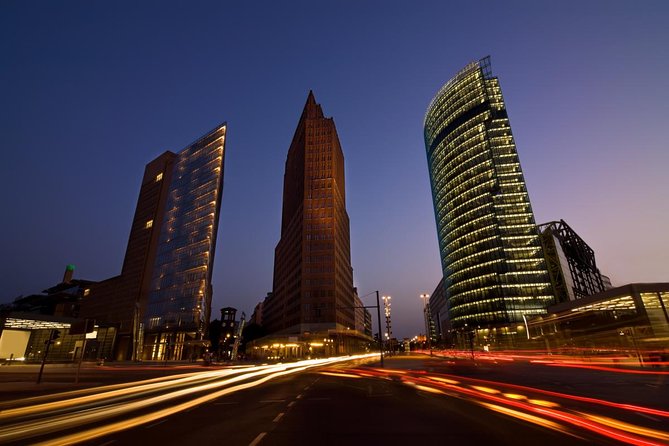
The meeting point is Potsdamer Platz 10, at the corner of Gabriele-Tergit-Promenade. This is a practical starting place because it puts you among some of the most visible symbols of post-reunification Berlin.
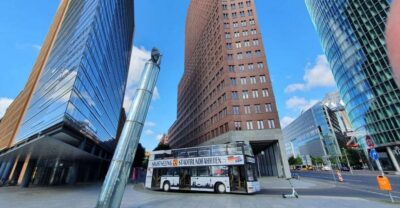
Potsdamer Platz was once associated with the old heart of Berlin, then divided by the Wall, and later rebuilt with large modern structures. The Sony Center is part of this modern cityscape. I find the location useful because it immediately raises a question the guide can answer: how did a place marked by war and division become a center of offices, shops, and public spaces?
You spend about ten minutes here, so do not expect a detailed architectural tour of every building. Think of it as the opening chapter, a quick orientation to Berlin’s rebuilding and the city’s forward-looking side.
Checkpoint Charlie and the Cold War
From Potsdamer Platz, the walk continues to Checkpoint Charlie. The stop lasts around ten minutes, enough to explain why this crossing became such a potent symbol of the divided city.
For four decades, East and West confronted one another here. The name is familiar, but the guide’s value is in explaining what the checkpoint represented within the larger Berlin Wall system and the political conflict around it.
Checkpoint Charlie is now one of Berlin’s busiest photo points, so a guided explanation helps keep the visit from becoming a quick snapshot beside a replica guardhouse. I would listen closely here and save questions for the guide, since the site’s public image can be simpler than the history behind it.
The Führerbunker site and the end of Nazi rule
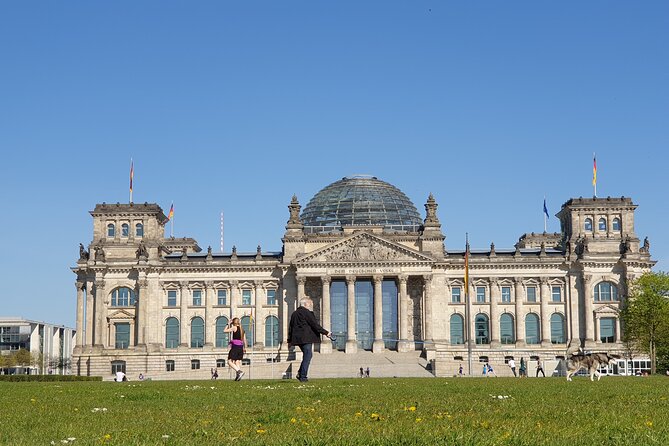
The stop at the Führerbunker takes about ten minutes. You do not enter a preserved underground room filled with original objects. Instead, you visit the place where the bunker was and learn why the site looks the way it does today.
That distinction matters. The location is tied to Hitler’s final days, but Berlin has not turned it into a shrine or a theatrical museum piece. The guide explains the meaning of the site and the reasons for its present form, helping you understand both the event and the decision to mark the place in a restrained way.
This is one of the moments when a good French-speaking guide can make a real difference. The subject is grim and easy to oversimplify. The best approach is factual, careful, and connected to the wider story of the Nazi dictatorship and the war’s end.
More walking tours in Berlin:
- Discover Berlin Half-Day Walking Tour
★ 5.0 · 9,624 reviews - Berlin: Third Reich and Cold War 2 Hour Walking Tour
★ 4.9 · 6,830 reviews - Berlin: Discover Berlin Walking Tour
★ 4.9 · 5,998 reviews - Berlin’s Best: 2 Hour Walking Tour Third Reich and the Cold War
★ 5.0 · 5,486 reviews
The Holocaust Memorial, where the mood changes
The Memorial to the Murdered Jews of Europe is one of the most affecting stops on the route. You spend about fifteen minutes among the concrete stelae while the guide explains the memorial and the crime it commemorates.
The memorial is intentionally open to interpretation, but that does not mean you are left without context. The guide can place it within Berlin’s public effort to face the murder of Europe’s Jews by the German state during the Nazi period.
Expect the tone to become quieter here. I appreciate that the stop is not treated as a colorful landmark or a place for casual commentary. You have time to look, listen, and ask questions, though fifteen minutes is an introduction rather than a full visit to every part of the memorial site.
If you want to spend more time at the memorial afterward, note its central location and plan to return once the tour ends. The walk itself keeps moving, and the guide must maintain the group’s schedule.
Unter den Linden and the layers of old Berlin
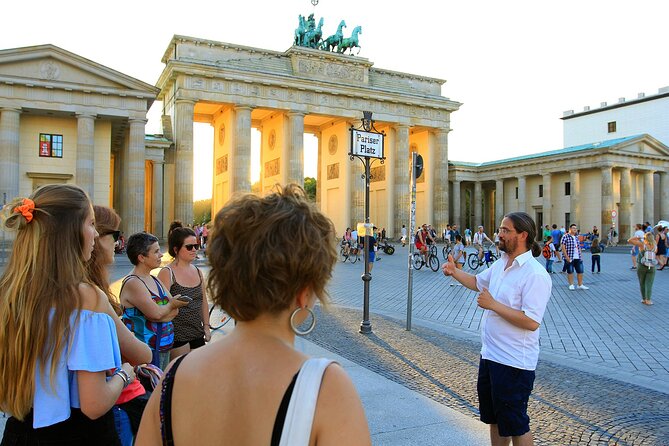
The route then reaches Unter den Linden, Berlin’s grand east-west avenue. The walk along this section lasts about twenty minutes, making it one of the longer stops.
This avenue once led toward the emperor’s palace, and its buildings show several phases of Berlin’s growth. Your guide points out different periods of construction and the marks left by war. I like this part because it moves beyond the headline events and shows how political change appears in ordinary stone, facades, gaps, and rebuilt structures.
This is also a useful place to slow down and look upward. Berlin’s center can feel like a collection of separate monuments, but Unter den Linden connects them. The avenue helps you see the relationship between royal Berlin, Nazi destruction, East German rebuilding, and the present capital.
Bebelplatz and the memory of the book burning
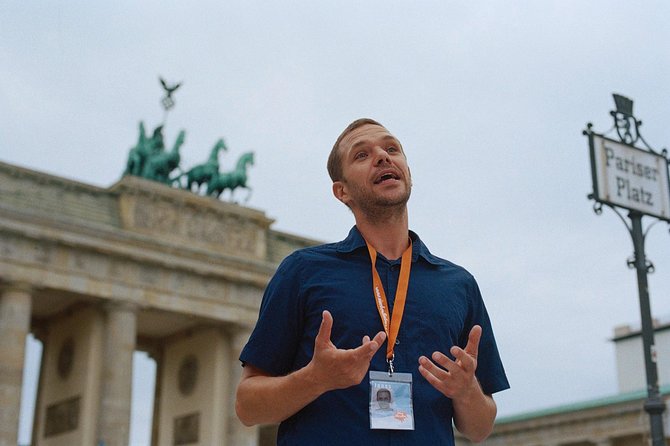
Bebelplatz is a compact but important stop. The square is associated with the Nazi book burning, and it also faces Humboldt University and the Catholic Cathedral.
The guide explains both sides of the setting. It is not only a place linked to censorship and dictatorship, but also a historic civic space surrounded by institutions that shaped Berlin’s intellectual and religious life.
I find this kind of stop especially valuable on a walking tour. You might pass through the square alone, recognize the cathedral, and move on. With a guide, the location becomes part of a larger discussion about power, education, public speech, and the ways a city remembers an assault on its culture.
The planned pause is about ten minutes. That is enough for the central explanation and a look around, but not enough for a museum visit or an extended architectural study.
Brandenburg Gate, from royal symbol to reunification icon
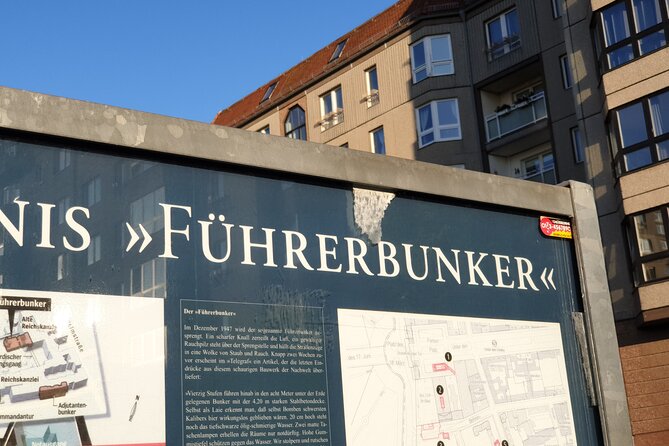
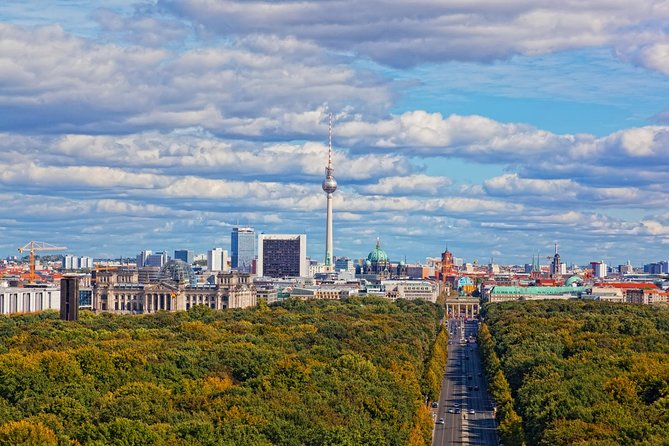
Brandenburg Gate is the route’s best-known landmark and one of Berlin’s essential stops. The guide traces its changing meaning, from a symbol of royal strength to a Cold War marker and finally an emblem of German reunification.
That change in meaning is more interesting than the gate’s familiar appearance. The structure remained physically recognizable while the political world around it changed dramatically. Standing there, you can connect the divided city to the reunified capital in a single view.
The stop lasts about ten minutes. It is enough to hear the main story and take photographs, but you may want to return later when you have more time to examine the gate and the surrounding Pariser Platz area.
Because Brandenburg Gate appears late in the listed route, check the guide’s exact order on the day. The important point is that the walk covers it along with Potsdamer Platz, Checkpoint Charlie, and the memorial sites, rather than requiring separate trips across the center.
Museum Island and the finish near Alexanderplatz
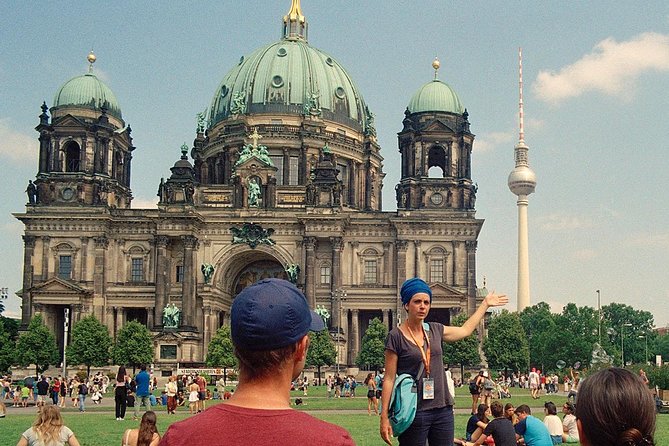
The tour ends next to Museum Island, near the Berliner Dom and the reconstructed Humboldt Forum. This gives the final section a different feel from the memorials and Cold War sites.
Museum Island is a useful place to finish because it brings you back to Berlin’s architectural and cultural heritage. The Protestant cathedral offers an immediately recognizable landmark, while the Humboldt Forum reflects the city’s effort to rebuild and reinterpret an important historic setting.
The final stop lasts around fifteen minutes, and the endpoint is listed as Museumsinsel, 10178 Berlin. This is not simply a place to be dropped off. It is a useful launch point for your afternoon, with major sights nearby and Alexanderplatz within the broader area.
I would not book a separate museum entry immediately after the walking tour unless you are comfortable keeping a flexible schedule. The tour may run closer to three and a half hours, and the walk can finish later than the approximate three-hour estimate.
What the $27.81 price gets you
At $27.81 per person, the tour is priced as an affordable introduction rather than a private sightseeing experience. The fee includes local taxes and a professional French-speaking local guide. It does not include meals, drinks, or transport to and from the route.
I think the value is strongest for a first visit. You see a wide selection of major places in one morning, and the guide supplies the links between them. If you tried to cover the same ground alone, you could save the tour fee, but you would need to research the sites and build your own route.
The group can have up to 25 people. That is not an intimate private walk, and the lack of audiophones means you need to stay close enough to hear. On the other hand, keeping the price below $30 makes the tour accessible for couples, solo visitors, and families who want a guided start without paying for a private guide.
The guide team’s strongest qualities are clear speech, friendly interaction, and strong command of Berlin’s past and present. Some guides also offer practical suggestions about restaurants and less obvious places to see, which can add value after the walk.
Walking comfort, weather, and timing
This is a fully walking experience. Transportation between stops is not included, and you should expect several hours on city streets with repeated standing pauses.
The stated fitness requirement is moderate. You do not need to be an athlete, but this is not the right choice if you need frequent seated breaks or prefer to see Berlin from a vehicle. Comfortable shoes are essential, and a water bottle is sensible even though food and drinks are not supplied.
The tour operates in all weather. Berlin weather can change quickly, so bring a coat or rain protection when needed. The morning departure is helpful because you finish in time for lunch, but weather protection remains your responsibility.
The lack of audio equipment is worth noting. One participant specifically wanted headsets of the type used on larger city tours. The provider has indicated that keeping the tour affordable is part of the reason audiophones are not standard. If you have hearing concerns, arrive early, stand near the guide, and ask where you can hear most clearly.
Who should choose this tour
I would book it if you want a broad, serious introduction to Berlin in French, especially during your first few days. It suits you if you prefer learning from a person who can answer questions rather than reading plaques or following an app.
It is also a good fit for solo visitors. The group format gives you a structured morning, and guides such as Anouk, Arthur, Martin, Paul, and Céline are repeatedly described as approachable and engaging.
Families with older children may find the route useful, though the subject matter includes Nazi persecution, war, and the Holocaust. Parents should decide how much historical detail is suitable for their children.
I would think twice if you want long visits at individual sites, museum admission, or a leisurely pace with frequent café breaks. I would also choose another option if you prefer an audio system, a bus, or a private guide.
Should you book the Berlin history walk?
Yes, if your priority is a well-priced French-language overview that ties Berlin’s central landmarks into one story. The combination of the Holocaust Memorial, Führerbunker site, Checkpoint Charlie, Bebelplatz, Brandenburg Gate, and Museum Island gives you more than a simple postcard tour.
Book it early in your stay so you can use the guide’s advice for later sightseeing. Keep your schedule flexible after 1:00 p.m., since the walk may last closer to three and a half hours, and remember that you will be outside in all weather.
The main tradeoff is straightforward: you get strong coverage and useful context for a modest fee, but you give up the quiet intimacy of a private tour and the convenience of headsets. For most French-speaking first-time visitors who are comfortable walking, that is a fair exchange.
FAQ
How long does the Berlin History Walking Tour last?
The tour is scheduled for approximately three hours, though it may last around three and a half hours depending on the guide and the group.
What language is the tour conducted in?
The tour operates in French with a professional French-speaking guide.
Where does the tour begin?
The meeting point is Potsdamer Platz 10, at the corner of Gabriele-Tergit-Promenade, 10785 Berlin.
Where does the tour end?
The tour ends next to Museum Island at Museumsinsel, 10178 Berlin, near the Berliner Dom and the reconstructed Humboldt Forum.
Is transportation included?
No. Transportation to and from the attractions is not included. The experience is conducted on foot.
What happens if I need to cancel?
You can cancel for a full refund up to 24 hours before the experience start time. Cancellations or changes made less than 24 hours in advance are not accepted for a refund.
Just added around Berlin
- eSIM for Germany and 34 European Countries★ 4.5 · 16 reviews
- Your ticket to The Wall Museum Berlin★ 3.0 · 60 reviews
- Walking on the Wall: 3-Hour Tour in Berlin★ 4.5 · 34 reviews
- Rickshaw Tours Berlin – Groups of up to 16 people with several rickshaws★ 4.0 · 97 reviews
- Warnemuende Shore Excursion: Private Berlin Tour★ 4.5 · 27 reviews
- Love and War in Berlin: Self-Guided Story Puzzle Walk★ 5.0 · 7 reviews
- Warnemuende Shore Excursion: Berlin Private Sightseeing Tour from Rostock★ 5.0 · 4 reviews
- Cold War Berlin – Private Live Virtual Experience★ 5.0 · 4 reviews
Berlin Tours, compared.
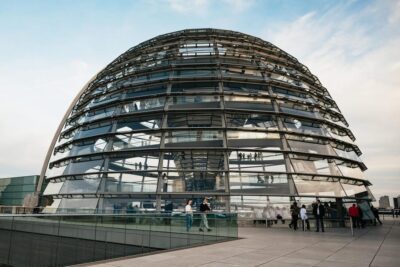
Reichstag, Dome and Government District Guided Tour
Read our review →
1-Hour City Tour by Boat with Guaranteed Seating
Read our review →

Reichstag, Plenary Chamber, Cupola & Government Tour
Read our review →
Browse the lists this tour appears in