
Review · BERLIN TOURS
Berlin: Charité Hospital History Walking Tour
Berlin’s Charité hospital began as a simple plague house in 1710. This walk follows its rise into one of Europe’s major medical centers, with stops tied to bloodletting, animal surgery, groundbreaking laboratory work, women in medicine, Nazi crimes, and East German politics. It is a medical tour, but also a compact lesson in Berlin’s past.
I like the visit to the Veterinary Anatomy Theatre, an atmospheric 18th-century building that gives the tour a physical link to old medical practice. I also like the way the walk connects famous names such as Robert Koch and Rudolf Virchow with harder stories, including the murder of psychiatric patients under the Nazi regime and Charité’s role in divided Berlin.
The main drawback is that most of the two hours takes place outdoors. You will be walking and standing for much of the tour, and the theatre can occasionally close for internal events or public holidays. Bring warm clothing, comfortable shoes, and water.
Key points about the Charité walk
- A plague house became a medical giant: Start with Charité’s origins in 1710, when Berlin feared an approaching epidemic.
- The Veterinary Anatomy Theatre is the star indoor stop: See Berlin’s oldest surviving academic building and learn how livestock and cavalry horses were studied.
- Medical legends get human context: Robert Koch and Rudolf Virchow appear alongside the less familiar story of Rachel Hirsch, the first woman to hold a medical professorship in Prussia.
- The difficult chapters are not skipped: The tour addresses racial hygiene, medical complicity, psychiatric killings, and the political pressure placed on Charité in East Germany.
- The route is useful for first-time Berlin visitors: It begins at Robert-Koch-Platz and finishes near Alexanderufer and Central Station.
- The pace suits older children and adults: The content is recommended for ages 14 and up, and minors must be accompanied by an adult.
Starting at Robert-Koch-Platz with a plague story

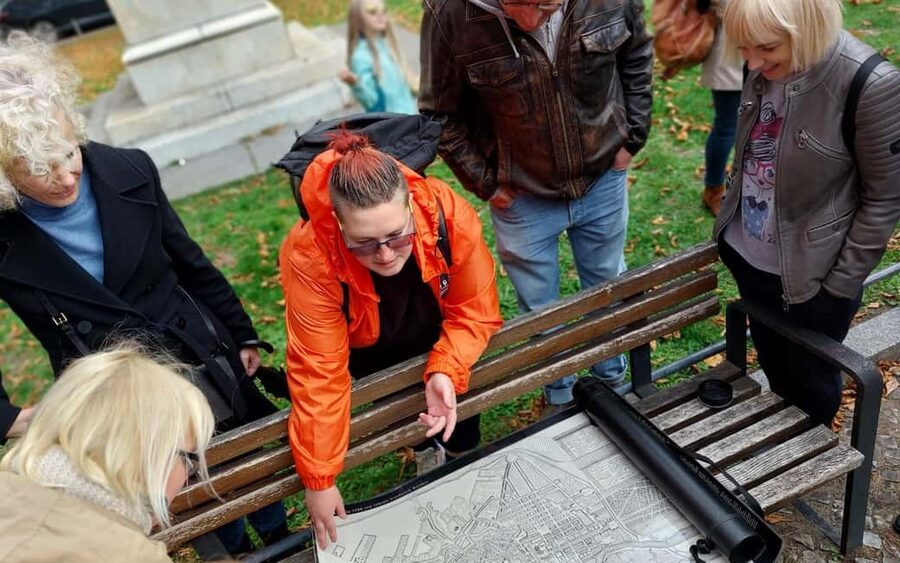
Meet by the Robert Koch statue at Robert-Koch-Platz. Your guide will be holding an orange umbrella, a useful marker on a busy Berlin street. The route begins with the hospital’s foundation in 1710, when Charité was built as a plague house outside the city’s usual medical system.
That opening matters because it removes the polished shine from the word hospital. Early treatment was often harsh and uncertain. Bloodletting, mercury, and amputations were common tools, and doctors had limited ways to understand infection or disease. You are not simply looking at an old institution. You are tracing the slow shift from guesswork toward modern medicine.
The first section also gives you a way to read the Charité campus. The buildings are attractive, with neo-gothic details that can make the place feel like a grand university rather than a working hospital. Yet the tour keeps reminding you that this was a place of pain, experiments, ambition, and social change.
The walk is conducted in English or German. Martina, one of the guides from Beyond and Beneath Tours, has received special praise for making the material entertaining while still giving it serious historical weight. Other guides may lead the tour, but the experience depends on a guide who can keep the medical details clear and connect them to Berlin’s wider story.
More history-led days in Berlin:
- Berlin: Natural History Museum Entrance Ticket
★ 4.6 · 3,382 reviews - Berlin: World Heritage Cruise to Potsdam
★ 4.5 · 1,435 reviews - Berlin Historical Highlights Walking Tour
★ 4.9 · 657 reviews
Inside the Veterinary Anatomy Theatre
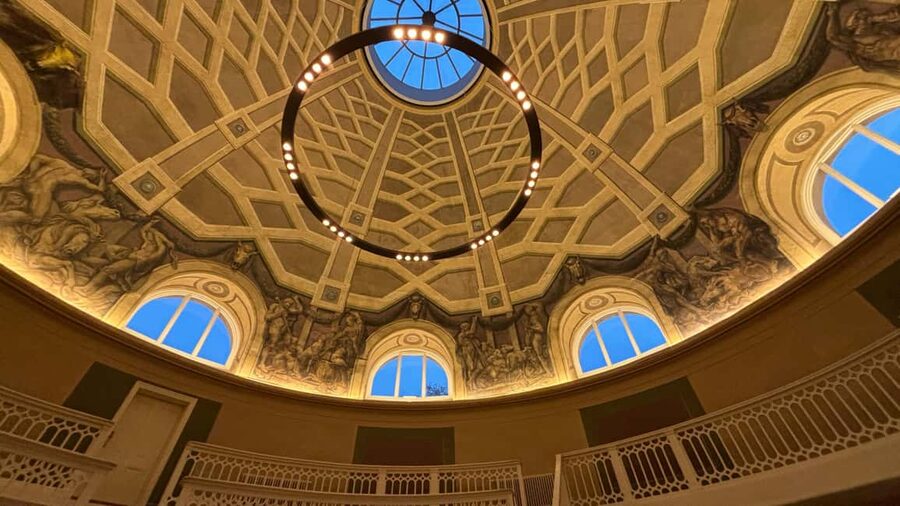
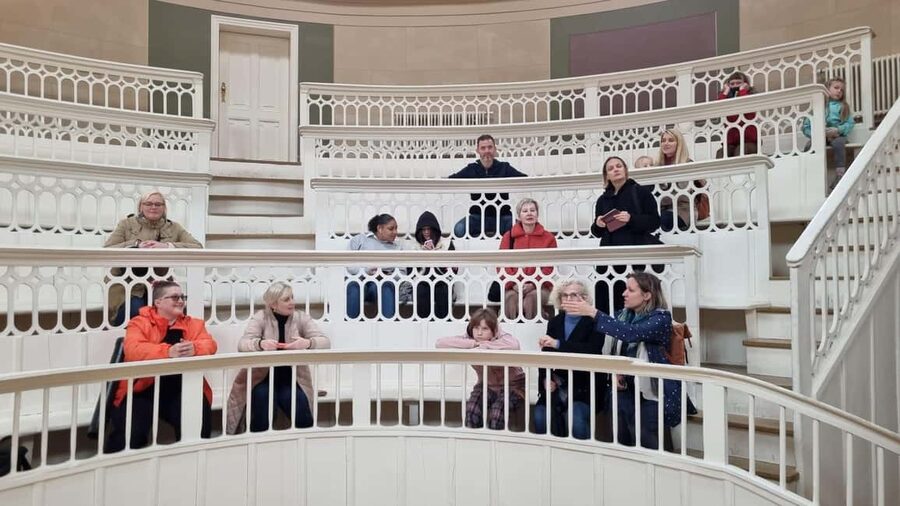
The Veterinary Anatomy Theatre is the tour’s key indoor visit. You get about 15 minutes inside this 18th-century building, described as Berlin’s oldest surviving academic building. Its original purpose was practical: doctors and students studied the illnesses of livestock and cavalry horses.
That subject may sound narrow, but it opens a window onto an important part of old Berlin. Animals supported transport, farming, food supplies, and military power. Understanding disease in horses and livestock was not a side issue. It affected the city’s economy and its army.
The theatre also helps you picture how medical teaching worked before modern imaging and laboratory equipment. Anatomy was learned through direct observation, and public or academic demonstrations were part of the process. The setting gives the history a stronger effect than a lecture alone because you are standing in the place where this work happened.
Allow for a possible change to this part of the route. The theatre can close for internal events or on public holidays. The tour still has its outdoor route, but this is the stop most likely to affect the experience if you have come especially for the building.
The interior visit is short, so do not expect a long museum session. Its value comes from the building, the explanation, and the way it connects veterinary medicine with the wider development of medical science. If old academic spaces and the history of anatomy interest you, this will likely be your favorite stop.
Walking the neo-gothic Charité campus

After the theatre, the group continues around the historical campus. The itinerary includes several guided sections of about 15 minutes each, but the full two-hour experience is best understood as a continuous walk rather than a series of formal indoor tours.
The neo-gothic architecture gives the campus a strong sense of place. You can look closely at the facades and layout while the guide explains how Charité developed. Since hospital and university buildings remain active, the tour does not include entry to every building. Some areas are restricted, and that is an important expectation to set before booking.
You may be able to explore certain parts independently after the guided walk, but the tour itself stays mainly outside. That arrangement protects working hospital spaces while still letting you understand the campus as a historic setting.
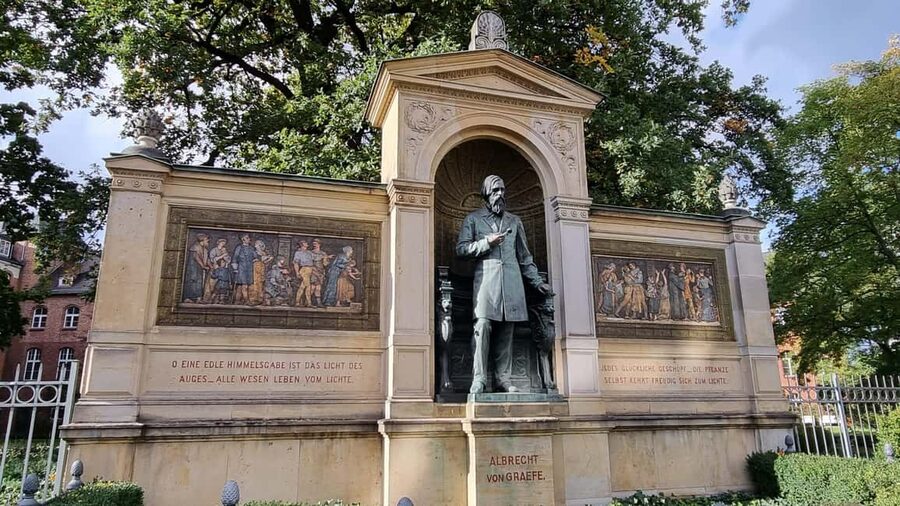
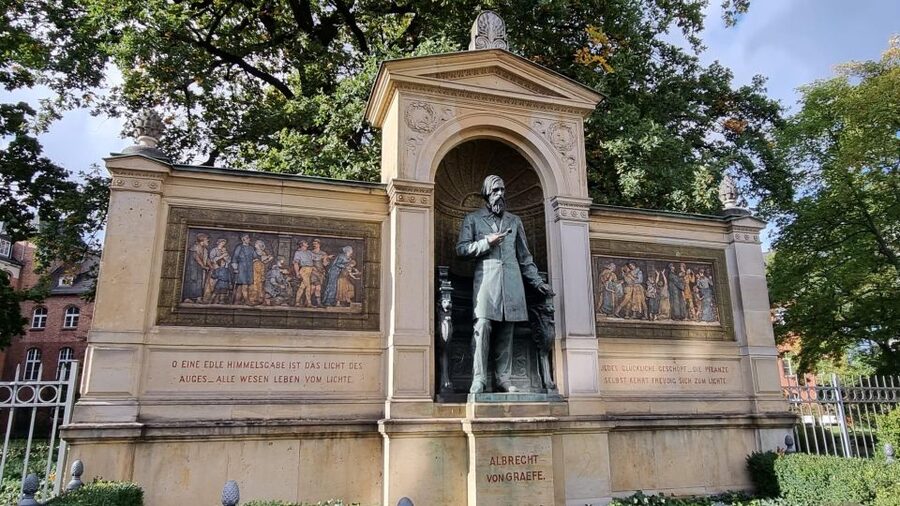
This is also where the tour introduces Robert Koch and Rudolf Virchow. Both names are central to German medical history, and the walk presents their work as part of Charité’s long development rather than as isolated biographies. You get a sense of how discoveries made at the institution helped shape modern ideas about disease and public health.
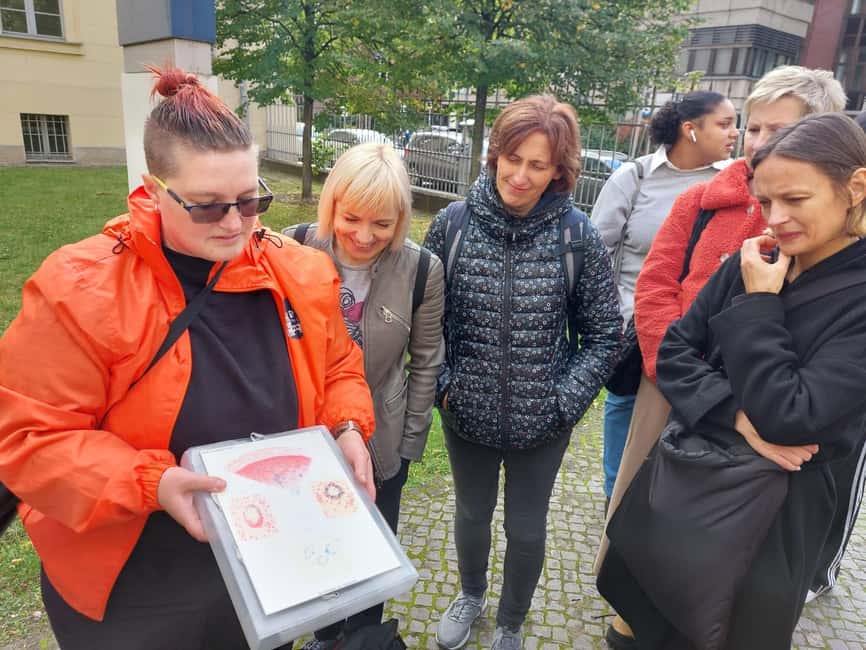
The guide’s supporting material can help with this section. One highly praised guide used extra visual material to make parts of the story easier to follow. That is useful here, since medical subjects can become abstract when you are looking at a building instead of an exhibit.
Rachel Hirsch and the slow change in medical society
A particularly valuable part of the tour is the story of Rachel Hirsch. In 1913, she became the first woman to hold a medical professorship in Prussia. Her appointment marked a major change for women in medicine, but the tour does not present progress as an easy march forward.
Hirsch faced resistance within the institution. That detail is important because it shows the gap between an official appointment and genuine acceptance. Charité could be a place of medical progress while still reflecting the prejudices of its time.
I like this part because it broadens the tour beyond famous male scientists. You hear about discoveries, but you also hear who had access to professional status and who had to fight for it. For visitors interested in women’s history, education, or the social structure of German medicine, Hirsch’s story adds a useful human focus.
It also gives the tour balance. Charité is not presented as simply heroic or simply shameful. It produced major scientific work, helped move women forward in medicine, and also took part in damaging systems of exclusion and abuse.
More walking tours in Berlin:
- Discover Berlin Half-Day Walking Tour
★ 5.0 · 9,624 reviews - Berlin: Third Reich and Cold War 2 Hour Walking Tour
★ 4.9 · 6,830 reviews - Berlin: Discover Berlin Walking Tour
★ 4.9 · 5,998 reviews - Berlin’s Best: 2 Hour Walking Tour Third Reich and the Cold War
★ 5.0 · 5,486 reviews
The Nazi period and the collapse of medical ethics
The most difficult section concerns the Nazi regime. Under National Socialism, medical ethics were pushed aside and racial hygiene was imposed with brutal force. The tour explains how some doctors stayed silent while others actively helped organize the killing of psychiatric patients.
This is not light sightseeing, and the recommended minimum age of 14 makes sense. The subject needs attention and maturity. You should expect a serious discussion rather than sensational storytelling.
The value of covering this period is clear. Medical institutions are often associated with care and scientific progress, but doctors and hospitals can also be used by oppressive governments. At Charité, the Nazi era shows what can happen when professional authority is placed in the service of racial ideology.
The walk also raises questions about responsibility. Silence, cooperation, and active planning are not the same thing, yet each shaped the institution’s history. A good guide can explain these differences without reducing the past to a simple list of villains.
If you prefer tours that stay cheerful, this may not be the right choice. If you want a serious look at how Berlin’s institutions behaved under dictatorship, this is one of the strongest reasons to book.
Charité under East German rule
The tour then moves into the decades of socialist East Germany. The Charité was a source of pride for the German Democratic Republic, which highlighted its medical achievements and used the hospital as proof of the state’s scientific strength.
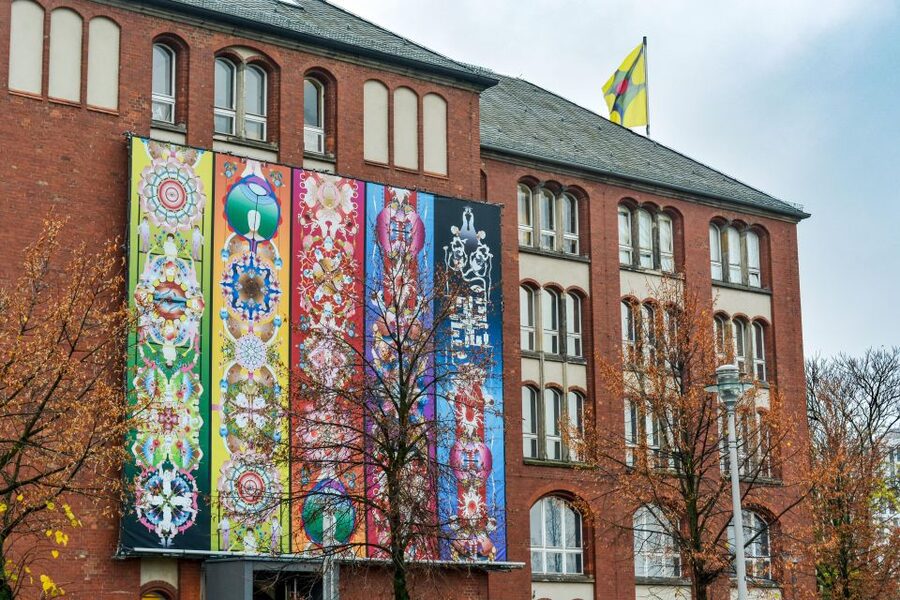
At the same time, the institution sat in a divided city. Windows facing the capitalist West were bricked up, a striking detail that turns architecture into political evidence. This is one of those facts that makes the tour feel distinctly Berlin. The city’s division was not only visible at checkpoints and walls. It also shaped the daily appearance of a hospital campus.
This section works well after the Nazi story because it shows another kind of political pressure. The tour moves from criminal medical policy under the Nazis to state control and official pride under socialism. You are encouraged to see how institutions adapt, compromise, and present themselves under different governments.
The Charité television series also draws on real people and events connected with the hospital. If you have watched the series, the walk can add useful context and help separate historical fact from drama. If you have not seen it, the tour still works on its own because the hospital’s actual history provides more than enough material.
What the two-hour format feels like
Two hours is a sensible length for this experience. It gives the guide enough time to cover several centuries without turning the walk into an all-day commitment. The subject is dense, so the pacing matters. Expect periods of listening, walking between sites, and standing outdoors while the guide explains the buildings and events around you.
You should be comfortable walking and standing for approximately two hours. Wear shoes that can handle city pavement, and carry water. In cold weather, dress more warmly than you think necessary because the outdoor sections make up most of the tour.
The activity is listed as wheelchair accessible. Since access can vary around historic buildings and active hospital areas, it is sensible to mention any mobility concerns when booking, but no separate restriction is given in the tour information.
The route begins at Robert-Koch-Platz and ends near Alexanderufer, 10117 Berlin, close to Central Station. That makes it easy to continue with another part of central Berlin afterward. The supplied meeting information also refers to returning to the meeting point, so check the exact end location and route details when you reserve.
Is $28 a fair price?

At $28 per person, the tour offers good value if you want a guide to connect the buildings, people, and political periods. The price includes the expert local guide and admission to the Veterinary Anatomy Theatre. You are paying for interpretation, not for access to a large collection of hospital interiors.
That distinction matters. You will not enter buildings where hospital or university work is taking place, and some campus areas are restricted. If you want a broad architectural tour with many indoor rooms, this may feel limited.
For me, the value comes from the combination of subjects. In two hours, you get a plague-house origin story, early medical treatment, veterinary science, Koch and Virchow, Rachel Hirsch, Nazi medicine, East German politics, and links to the Charité television series. That is a lot of ground, and a good guide helps prevent it from becoming a pile of disconnected facts.
The rating of 4.8 from 191 reviews supports the idea that the guiding is a major strength. Martina is described as friendly, entertaining, and full of interesting facts. Another account emphasizes the careful structure, strong historical analysis, and enthusiasm of the guide. Those are the qualities to value here, since the experience relies more on storytelling than on access to extensive interiors.
Who should book this walk?
I would recommend it to adults and teenagers aged 14 and up who enjoy medical history, Berlin’s political past, or unusual museums and historic buildings. It also suits anyone who wants to see a side of Berlin beyond monuments, royal buildings, and the Cold War border.
You do not need medical training. The tour covers difficult ideas, but its focus is historical and human. You will learn why bloodletting and mercury were used, how veterinary medicine supported the city, and how scientific institutions could produce both progress and harm.
Fans of the Charité television series have an extra reason to go because the walk explains the real-life stories behind the drama. Still, you do not need to know the show beforehand.
I would hesitate if you dislike outdoor walks, need frequent opportunities to sit, or want a tour centered on entering grand interiors. The theatre visit is short, and most of the route is outside. Cold weather can make a major difference, so plan your clothing carefully.
Free cancellation up to 24 hours before the tour and the option to reserve now and pay later make it easier to fit into a changing Berlin schedule. The tour is offered in English and German.
Should you book the Charité history walk?
Book it if you want a thoughtful, compact tour that treats medicine as part of social and political history. The Veterinary Anatomy Theatre gives the walk a memorable setting, while Robert Koch, Rudolf Virchow, Rachel Hirsch, Nazi doctors, and East German officials give it a wide human reach.
I especially recommend it for visitors who have already seen Berlin’s main landmarks and want a more unusual story. Just bring warm clothes, expect two hours outside, and keep your expectations realistic about restricted hospital buildings. At $28, it is a solid choice for an informative guide-led walk, particularly if you appreciate serious history delivered with clear explanations and some personality.
FAQ
Where does the Charité walking tour begin?
Meet by the Robert Koch statue at Robert-Koch-Platz. Look for the guide holding an orange umbrella.
Where does the tour finish?
The route is listed as finishing at Alexanderufer, 10117 Berlin, near Central Station. The meeting information also refers to ending back at the meeting point, so check the final route details when booking.
How long does the tour last?
The walking tour lasts two hours. Starting times vary, so check availability for the date you want.
What languages are available?
The tour is available in English and German.
Is admission to the Veterinary Anatomy Theatre included?
Yes. Admission to the Veterinary Anatomy Theatre is included in the tour price.
Can I enter the Charité hospital and university buildings?
No. The tour does not include entry to buildings where hospital or university activities take place. Some campus areas are restricted, though you may explore certain areas independently after the tour.
Is the tour suitable for children?
The tour has no strict age restriction, but it is recommended for ages 14 and up because of the historical subject matter. Minors must be accompanied by an adult.
What should I bring?
Bring comfortable walking shoes and water. Dress warmly in cold weather because most of the tour takes place outdoors.
Just added around Berlin
- From Berlin: Gardens & Palaces of Potsdam Bike Tour★ 5.0 · 61 reviews
- Berlin: Battle for Seelow Heights WW2 tour -Clash of Titans★ 5.0 · 27 reviews
- From Berlin: Historical Gems of Potsdam Private Day Trip★ 4.4 · 4 reviews
- Berlin: Französischer Dom 360° Panorama & Crémant to go★ 3.9 · 5 reviews
- Explore Berlin Tour: History and Highlights★ 4.7 · 5 reviews
- Berlin: Evening Yacht Cruise with Aperitif & Dinner Upgrade★ 4.6 · 178 reviews
- Berlin: Expats in Berlin Comedy Show Ticket★ 4.7 · 182 reviews
- Berlin: The Epic Comedy Club Friday Night Showcase★ 4.8 · 28 reviews
Berlin Tours, compared.

Reichstag, Dome and Government District Guided Tour
Read our review →
1-Hour City Tour by Boat with Guaranteed Seating
Read our review →



Reichstag, Plenary Chamber, Cupola & Government Tour
Read our review →
Browse the lists this tour appears in