
Review · BERLIN TOURS
Private Walking Tour Berlin 3 hours: Brandenburg, Historic Center
Berlin’s story is too large for one tidy route, and that is the best reason to consider this private three-hour walking tour. You can focus on the Brandenburg Gate, Cold War Berlin, Jewish heritage, Prussian history, or the darker years of the Third Reich, with a local guide shaping the route around your interests.
I like the personal pace, since you are not tied to a large group or a fixed script. I also like the practical orientation: guides such as Harald Zawuski and Susane Grauchy can meet you at a hotel, airport, train station, or another Berlin location on request. The main drawback is time. Berlin is spread out, so you cannot properly see every listed sight in three hours, especially if you want thoughtful explanations at each stop.
Key points to know before booking
- A truly private format: Only your group participates, with space for up to 15 people.
- Choose your Berlin: Ask for the Berlin Wall, Cold War, Jewish heritage, World War II, Prussian history, architecture, or a broad first-day orientation.
- A useful first-day tour: The route can help you understand Berlin’s central districts and get around during the rest of your stay.
- Strong guide credentials: The guides are local, speak English well, and belong to the Berlin Guides Association.
- A walking tour with flexible pickup: Hotel, airport, train station, and other Berlin pickup points can be requested.
- Plan for the weather: The tour operates in all weather, and no personal headsets are used on the street.
Why a private Berlin route works so well
Berlin rewards a guide who can explain connections between places. The Brandenburg Gate is not just a grand gateway, Checkpoint Charlie is not simply a photo stop, and the Berlin Wall cannot be understood from one surviving section alone.
A private tour lets you ask the questions that matter to you. If your interest is modern German politics, you can spend more time around the Reichstag and the former government quarter. If you want to understand Berlin’s Jewish heritage, the guide can shape the walk around memorials and places connected with Jewish life. If you are visiting for the first time, you can ask for the broadest possible introduction.
I especially like this format for a first day in Berlin. You get a sense of how the center fits together, then can return later to museums, memorials, and neighborhoods that caught your attention. One previous group began at its hotel and used the tour as a practical lesson in getting around for the rest of its visit.
The guide’s flexibility matters because Berlin’s sights are not all close together. Some can be linked on foot in a natural central route. Others, including the East Side Gallery, Kaiser-Wilhelm-Gedächtniskirche, and Kurfürstendamm, are in different parts of the city. A good three-hour plan needs choices, not an impossible checklist.
More history-led days in Berlin:
- Berlin: Natural History Museum Entrance Ticket
★ 4.6 · 3,382 reviews - Berlin: World Heritage Cruise to Potsdam
★ 4.5 · 1,435 reviews - Berlin Historical Highlights Walking Tour
★ 4.9 · 657 reviews
Brandenburg Gate and the heart of the city
Brandenburg Gate is the logical center of a classic Berlin introduction. Once a gateway into the city, it is now Berlin’s best-known symbol, and its location puts several major sights within reach.
From here, you can connect the gate with the Reichstag, the Holocaust Memorial, Unter den Linden, and the former site of Adolf Hitler’s bunker. Each place tells a different part of Berlin’s story, and the short distances between them make this one of the most efficient sections for a walking tour.
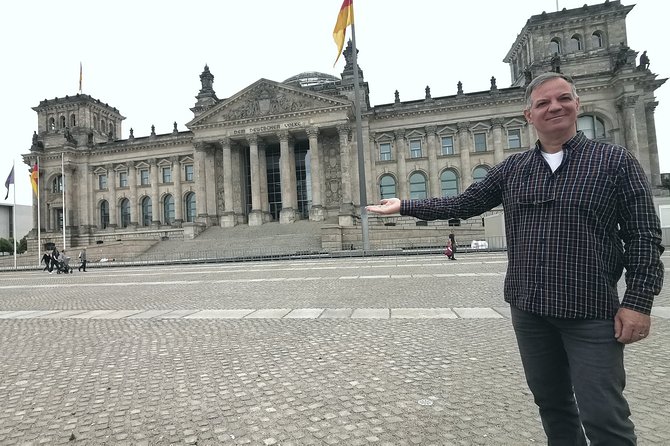
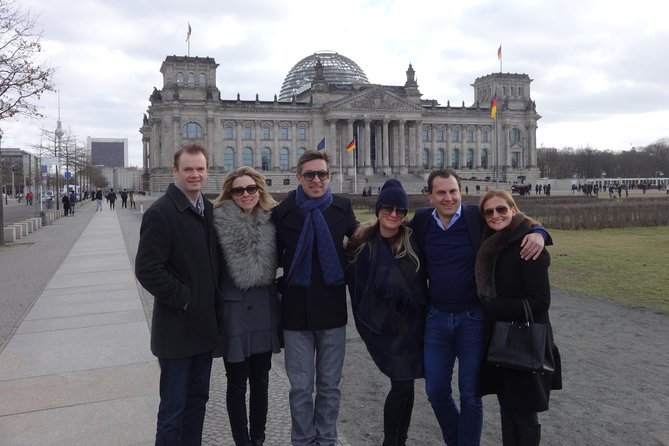
The Reichstag is Germany’s parliament today and was once the parliament of the German Empire. Its role gives the area a useful political focus. You can also ask the guide to explain how Berlin changed after reunification, rather than treating the building as an isolated monument.
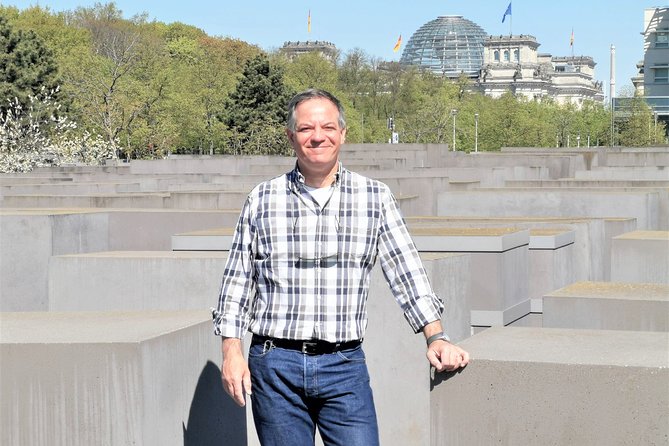
The Holocaust Memorial requires a quieter pace. Its field of concrete blocks is direct and unsettling, and it works best when you have time to think rather than rush through for a photograph. If this subject is important to you, tell the guide at the start so the route does not squeeze this stop between too many other sights.
The former bunker site is more understated. There is no grand preserved structure to enter, which can make the stop feel less dramatic than the nearby monuments. Its value comes from understanding the location and the final days of the Nazi government within the present-day city.
Unter den Linden and Museumsinsel
Unter den Linden, the broad boulevard named for its lime trees, links Brandenburg Gate with the historic center. It is a useful route for seeing how Berlin’s ceremonial and political core developed.
A guide can point out how the boulevard connects major institutions and public spaces. You will get more from it if you ask for the angle you prefer: Prussian royal power, architecture, wartime damage, or the political changes that followed German reunification.
Museumsinsel sits in the middle of Berlin on an island in the River Spree. Its museums are among the city’s major cultural attractions, but this tour focuses on the setting and outside views rather than museum admissions. That distinction matters. If you want to visit the collections, you will need separate time and arrangements.
The island is still valuable on a walking tour because it shows Berlin’s ambition as a capital of art and learning. It also adds variety after the political and memorial sites near Brandenburg Gate. I would not expect to cover every museum in detail in a three-hour route, but the guide can help you decide which ones deserve a later visit.
Gendarmenmarkt, Checkpoint Charlie, and Berlin’s divided past
Gendarmenmarkt provides one of the city’s most polished architectural scenes. The French and German domes frame a formal square and offer a sharp contrast with the rawer memorial sites elsewhere in central Berlin.
Checkpoint Charlie shifts the mood. This famous former border crossing became a Cold War symbol, and it is an obvious choice if you want to understand the division between East and West Berlin. The site is central and easy to recognize, but the modern setting can feel more commercial than historical. A guide is useful here because the meaning of the crossing is larger than the current street scene.
The tour can focus on the Berlin Wall and Cold War years in several ways. You might visit original Wall remnants, discuss how the city was divided, or connect Checkpoint Charlie with the wider political story of East Germany. Ask for a clear distinction between preserved history and later displays, since Berlin has both original traces and reconstructed or interpretive sites.
This is also where a private format earns its keep. You can ask direct questions about daily life, border crossings, the Wall, and reunification. A fixed group tour may need to move on, while your guide can adjust the explanation to your level of interest.
More walking tours in Berlin:
- Discover Berlin Half-Day Walking Tour
★ 5.0 · 9,624 reviews - Berlin: Third Reich and Cold War 2 Hour Walking Tour
★ 4.9 · 6,830 reviews - Berlin: Discover Berlin Walking Tour
★ 4.9 · 5,998 reviews - Berlin’s Best: 2 Hour Walking Tour Third Reich and the Cold War
★ 5.0 · 5,486 reviews
Alexanderplatz and East Berlin
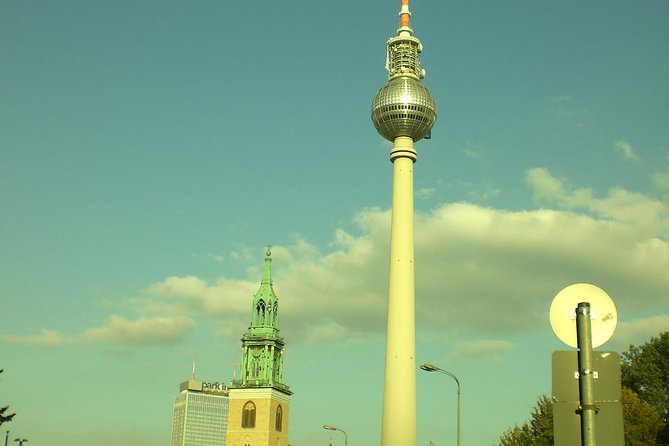
Alexanderplatz remains a key meeting point in Berlin, as it was during East Germany. The TV Tower dominates the area and gives you an easy visual marker for the former East Berlin center.
The square is less about one beautiful building than about urban change. It helps you see the scale and character of East Berlin’s public spaces, then compare them with the imperial boulevard and western commercial districts. A guide can give this contrast a clear shape instead of leaving you with disconnected impressions.
The East Side Gallery offers a different view of the Wall. Its painted sections show how a former barrier became an open-air art site. It is one of the best-known Wall-related stops, but its location means it may not fit comfortably into a walking-only route that also includes Brandenburg Gate and the historic center.
This is a key planning point. The tour description includes many possible sights, but it does not promise that all of them will be visited in three hours. If East Side Gallery is your priority, say so before the tour begins. The same applies to the original Wall remnants, which may be better suited to a focused Wall route than a broad city introduction.
West Berlin: Kurfürstendamm and the Kaiser Wilhelm church
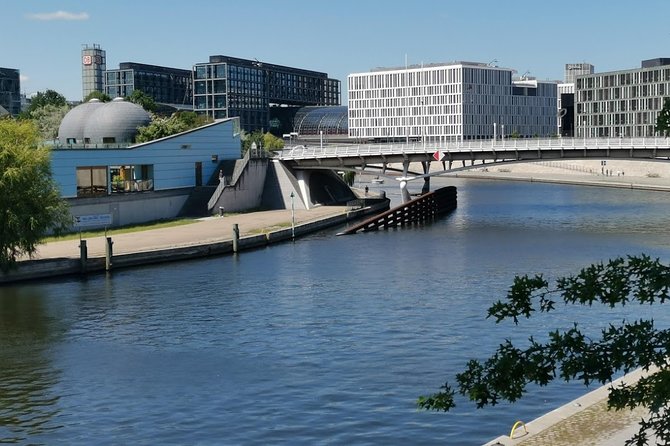
Kurfürstendamm gives you a look at former West Berlin. The long shopping street has a very different feel from Unter den Linden and Alexanderplatz, and it helps explain that Berlin was once two separate urban worlds.
Nearby, the Kaiser-Wilhelm-Gedächtniskirche, or Emperor William Memorial Church, preserves wartime damage as part of its identity. The church is an effective stop because it combines architecture, memory, and the postwar story of West Berlin in one place.
Potsdamer Platz adds yet another chapter. Once divided by the Wall, it became one of Berlin’s new centers, marked by modern architecture and large redevelopment projects. Its buildings do not look like old Berlin, and that is precisely the point. The site shows how quickly a former edge of the divided city changed after reunification.
These western stops are worth including if you want a broad overview of Berlin’s twentieth-century development. They are less practical if your main aim is a concentrated walk through Brandenburg Gate, Museumsinsel, and the old center. You will need to choose.
Jewish heritage and sensitive subjects
One of the strongest uses of this tour is a focused exploration of Berlin’s Jewish heritage. A three-hour Jewish tour can give you more than a quick stop at the Holocaust Memorial, since the guide can connect places, events, and memory across the city.
Harald Zawuski has been specifically praised for a Jewish-focused route that showed sites and meanings a visitor might otherwise miss. That is a useful clue about what to request: do not simply ask to see a memorial. Ask for the Jewish history of Berlin and allow the guide to shape the route around that subject.
The same care applies to the Third Reich and World War II. Berlin contains important sites, but many are plain or marked only by a sign. The guide’s explanation supplies the context, while the physical setting helps you understand how these events fit into the modern city.
This is not light sightseeing. If your group includes children, remember that children must be accompanied by an adult, and consider how much difficult history your group wants to cover. A private guide can adjust the tone and pace, but you should still state your preferences clearly.
What the pace and group size mean
The tour lasts about three hours and is private for your group, with up to 15 people. That is a useful size limit for a family, a group of friends, or a small organized party. It is less intimate than a one-to-one guide, but far more personal than a large public tour.
The tour requires a moderate level of physical fitness. You should expect time on your feet and movement through city streets, with no personal headsets used while walking. In a group of 15, stay close enough to hear the guide, especially near busy roads and open squares.
The lack of headsets is not automatically a problem. For a small group, direct conversation can feel more natural, and you can ask questions without waiting for a formal pause. For a full group of 15, though, hearing may be harder in noisy areas. Keep the group together and mention any hearing concerns before setting off.
The tour runs in all weather. Berlin can be uncomfortable when rain or cold catches you unprepared, so wear proper shoes and dress for the forecast. Since food and drinks are not included, you can ask for a short Berlin snack or lunch stop, but plan to pay for it separately and remember that it uses part of the three-hour window.
Is $392.19 good value for your group?
The listed price is $392.19 per group, not per person, for up to 15 people. At the full group size, that works out to about $26 per person. For two people, the per-person cost is much higher, but you are paying for a dedicated guide and a route shaped around your interests.
I see the best value for families, friend groups, and small parties who want a private introduction rather than a standard shared walk. The price also makes more sense if you use the guide for a clear purpose, such as Jewish Berlin, Cold War history, or a first-day orientation.
You should compare the cost with what you actually want from the three hours. If all you need is a quick look at Brandenburg Gate and Checkpoint Charlie, a private tour may be more than necessary. If you want strong explanations, flexibility, and the chance to change the route as you go, the price is easier to justify.
The tour is non-refundable and cannot be changed for any reason. That makes careful planning important, especially since the experience is often booked in advance. Confirm your group’s schedule before paying.
Practical choices to make before you start
Tell the guide your priorities at the beginning. A short list works well:
- Brandenburg Gate, Reichstag, and the central landmarks
- The Third Reich and World War II
- The Berlin Wall and Cold War
- Prussian history and architecture
- Jewish heritage
- A broad introduction to Berlin’s districts
You can request pickup from an airport, train station, hotel, or another place in Berlin. This can be useful after a long arrival, and one group successfully began at an airport. Still, make the pickup request in advance and recognize that travel between a distant pickup point and the main sights may reduce walking time.
The guides are local experts, speak English well, and belong to the Berlin Guides Association. Harald Zawuski is the named guide most often associated with the experience, while Susane Grauchy is also identified as a guide. Both names are useful to know when you communicate your interests before the tour.
Who should book this Berlin walk?
I would choose this tour for a first visit when you want a clear introduction without surrendering control of the route. It also suits returning visitors who want to examine one subject in greater detail, especially Jewish Berlin, the Berlin Wall, Cold War politics, or Prussian history.
It works well for groups that value conversation. One past party of seven enjoyed a professional tour with humor, and another group used the experience as part of a special weekend beginning at the airport. The tone can be informative and friendly rather than stiff.
I would think twice if your group dislikes walking, wants museum interiors included, or expects to see every sight listed in a single afternoon. You also need to accept the all-weather policy, separate food costs, and strict cancellation terms.
FAQ
How long is the private Berlin walking tour?
The tour lasts approximately three hours. It may be extended on request, with any additional arrangements discussed with the guide.
How many people can join the private tour?
The tour is private and allows up to 15 people in your group.
Can I choose the historical subject?
Yes. You can request a focus on the Third Reich, World War II, the Cold War, the Berlin Wall, Prussian history, or Berlin’s Jewish heritage.
Can the guide pick me up at my hotel or station?
Pickup from an airport, train station, hotel, or another location in Berlin is available on request.
Are food and drinks included?
No. Food, drinks, and lunch are not included. You may request a short stop for a typical Berlin snack or lunch, but you pay for it separately.
Does the tour operate in bad weather?
Yes. It operates in all weather conditions, so you should dress appropriately. A moderate level of physical fitness is required.
Should you book this tour?
Book it if you want Berlin explained by a local guide who can adjust the route to your group. The strongest reasons are the private format, the choice of historical themes, and the practical orientation it gives you early in a stay.
For the best experience, decide on one main subject and two or three essential sights before you meet. That keeps three hours from becoming a rushed race across the city. If you do that, this tour offers a useful, personal way to make sense of Berlin’s monuments, scars, and sharply different districts.
More 3-Hour Experiences in Berlin
- Berlin Highlights 3-Hour Bike Tour
★ 5.0 · 948 reviews - Berlin Highlights: 3-Hour Bike Tour
★ 4.9 · 809 reviews - Berlin: 3-Hour Street Art Tour
★ 4.7 · 778 reviews - Berlin: 3-Hour Secret Food Tour
★ 4.8 · 269 reviews
Just added around Berlin
- eSIM for Germany and 34 European Countries★ 4.5 · 16 reviews
- Your ticket to The Wall Museum Berlin★ 3.0 · 60 reviews
- Walking on the Wall: 3-Hour Tour in Berlin★ 4.5 · 34 reviews
- Rickshaw Tours Berlin – Groups of up to 16 people with several rickshaws★ 4.0 · 97 reviews
- Warnemuende Shore Excursion: Private Berlin Tour★ 4.5 · 27 reviews
- Love and War in Berlin: Self-Guided Story Puzzle Walk★ 5.0 · 7 reviews
- Warnemuende Shore Excursion: Berlin Private Sightseeing Tour from Rostock★ 5.0 · 4 reviews
- Cold War Berlin – Private Live Virtual Experience★ 5.0 · 4 reviews
Berlin Tours, compared.

Reichstag, Dome and Government District Guided Tour
Read our review →
1-Hour City Tour by Boat with Guaranteed Seating
Read our review →




Reichstag, Plenary Chamber, Cupola & Government Tour
Read our review →
Browse the lists this tour appears in