
Review · BERLIN TOURS
Berlin: Historic Jewish walking tour through the city center
Berlin’s former Jewish tailoring district tells a sharp, often overlooked story: a successful industry helped shape the city’s money, style, and public life, then was crushed by political extremism. This one-hour walk follows that story around Hausvogteiplatz, Werderscher Markt, and Jägerstraße.
I like the tight route and the focus on the lost Konfektion industry, rather than a general roll call of Berlin sights. I also like that the tour connects several eras, from the Prussian Empire and the Roaring Twenties to the years before the Wall fell and Berlin today. The main consideration is time: one hour gives you a useful introduction, not a full treatment of Jewish life in Berlin.
Key points to know before you go
- The story centers on Berlin’s Jewish tailoring industry, once a major force in the city’s economy and fashion trade.
- Hausvogteiplatz is both the meeting point and main stop, with about 30 minutes of guided attention.
- Werderscher Markt and Jägerstraße add two shorter stops, about 15 minutes each.
- The tour is conducted in English and ends where it begins, near the U2 station.
- The listed price is $1.70 per person, while donation-based bookings are also available by contacting the provider.
- The route is wheelchair accessible, but children under six should not join.
Why this small district matters
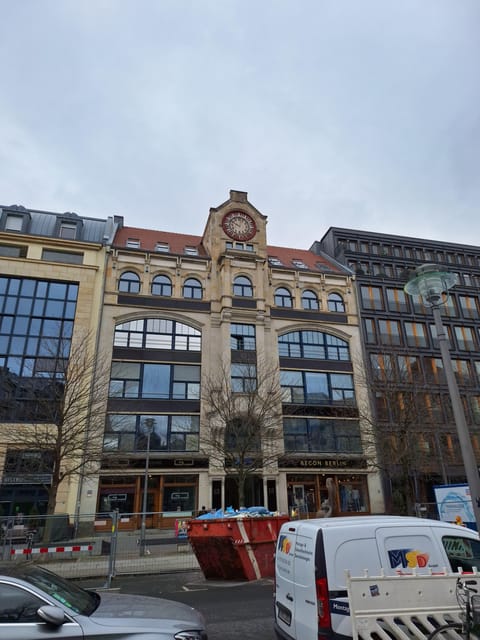
You may pass through central Berlin and see grand squares, offices, churches, and government buildings without realizing how much economic life once gathered here. This walk gives those streets a different purpose. Instead of treating the city center as a collection of impressive façades, it asks you to picture workshops, clothing businesses, trade, fashion, and the people who made the district work.
The focus is the Jewish Konfektion industry. In simple terms, this was the ready-made clothing trade, a sector tied to tailoring, fashion, production, and sales. The tour presents it as a former economic powerhouse that helped run Berlin before the Second World War.
That focus gives you a useful way to understand political extremism. Regimes do not only change flags, laws, and borders. They can destroy businesses, careers, family fortunes, and entire professional networks. Here, the story is about how a thriving industry developed, reached a high point, and then suffered brutal damage.
You will also hear about the Jewish population in Berlin, including how people developed successful lives, prospered, and in some cases survived. The subject is serious, but the route is short enough to remain manageable during a busy day of sightseeing.
I find that this kind of tour works best when you want context rather than a long list of dates. You are not simply looking at where something happened. You are considering how a neighborhood functioned, who shaped it, and what political change did to its economic life.
More history-led days in Berlin:
- Berlin: Natural History Museum Entrance Ticket
★ 4.6 · 3,382 reviews - Berlin: World Heritage Cruise to Potsdam
★ 4.5 · 1,435 reviews - Berlin Historical Highlights Walking Tour
★ 4.9 · 657 reviews
Starting at Hausvogteiplatz near the U2
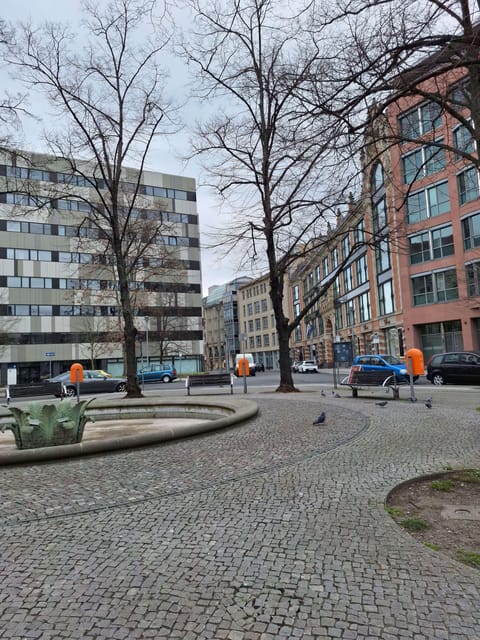
The walk begins at Hausvogteiplatz, near the fountain and close to the U2 train station. Look for the guide with a white side bag. That identifying detail matters in a city center where several streets and squares can look similar, especially if you arrive a few minutes early and find other walking groups nearby.
Hausvogteiplatz is more than a convenient meeting point. It is the central stop of the tour and receives roughly 30 minutes of guided attention. That makes it the place where the main story is likely to take shape: the former economic district, the clothing trade, Berlin’s Jewish community, and the political forces that changed the area.
The square is also a practical place to begin because it puts you directly into central Berlin. You do not spend half the tour getting from a distant neighborhood to the subject at hand. If your day includes museums, historic buildings, or other central sights, this walk can fit neatly into a morning or afternoon plan.
The tour is described as a personal guided walk. No group size is specified, so you should not assume a private tour or a very small party. The guide will speak English, and you should expect the experience to rely on spoken explanation as you move between the sites.
Reading the old commercial center at Hausvogteiplatz
The first main section is where the tour’s economic story receives its strongest treatment. You will explore the former busy center of fashion and commerce and consider how the Konfektion industry helped shape Berlin before the Second World War.
This is the part I would pay closest attention to. The subject is specific, and that is its strength. A standard city tour might mention Jewish Berlin as one chapter among many. This route instead uses tailoring and clothing to explain how people worked, traded, built businesses, and took part in the city’s public life.
The focus on fashion also makes the history easier to picture. A clothing industry involves more than designers or shopfronts. It connects production, sales, finance, labor, and customers. When the tour describes the former economic strength of the district, you can think about the many layers that made that success possible.
The tour also links the area to the Prussian Empire and the Roaring Twenties. These references give you a broad time frame. You are not looking at one frozen historical moment. You are following the district through imperial Berlin, the freedoms and glamour associated with the 1920s, the years before the Wall fell, and the city that developed afterward.
You should expect the guide to point out historic buildings and areas rather than take you inside a museum collection. The supplied details do not promise interior visits, exhibitions, or memorial installations. That makes comfortable shoes and close attention more useful than planning for a formal museum experience.
Werderscher Markt and the 15-minute pause
From Hausvogteiplatz, the route continues to Werderscher Markt. This stop lasts about 15 minutes, so it is a shorter visit rather than a second major lecture.
That shorter format can work well. You get another piece of the district without losing the main thread. The guide can connect the square to the commercial and social story already introduced, while the walk itself gives you a chance to see how the historic areas relate to one another.
I like the way this stop keeps the tour grounded in actual streets. The subject is not presented only as an abstract story about persecution or economic change. You move through the center and see the places associated with the former district. The result is a stronger sense of location, even though the tour does not claim to restore the lost industry.
Still, do not expect a large amount of free time here. Fifteen minutes passes quickly, and this is not designed as a stop for extended photography, shopping, or independent exploration. If you want to study buildings in detail, you may need to return later on your own.
The tour includes access to a map and an ordered list of activities. That should help you follow the route and remember the sequence of sites after the walk. Treat it as a helpful orientation tool rather than a substitute for the guide’s explanation.
More walking tours in Berlin:
- Discover Berlin Half-Day Walking Tour
★ 5.0 · 9,624 reviews - Berlin: Third Reich and Cold War 2 Hour Walking Tour
★ 4.9 · 6,830 reviews - Berlin: Discover Berlin Walking Tour
★ 4.9 · 5,998 reviews - Berlin’s Best: 2 Hour Walking Tour Third Reich and the Cold War
★ 5.0 · 5,486 reviews
Jägerstraße and the final piece of the route
The final listed stop is Jägerstraße, also scheduled for about 15 minutes. Like Werderscher Markt, it adds another location to the story while keeping the overall outing compact.
By this point, the main idea should be clear: Berlin’s Jewish tailoring industry was not a minor side business. It was part of the city’s economic and social development. The walk then turns to what political extremism did to that success and how Berlin changed afterward.
This movement from prosperity to destruction is the tour’s strongest narrative line. You first learn about a district connected with work, fashion, and economic power. Then you consider how a regime could target the population behind that success and damage the industry along with the people who created it.
The route also reaches beyond the Nazi period. Its stated time span includes the years before the Wall fell and the progress of the area since reunification. That later section matters because central Berlin has changed repeatedly. The streets you see today are part of a city shaped by war, division, reunification, and redevelopment.
The available information does not specify exactly which buildings you will enter or which surviving businesses you will visit. Plan for an outdoor walking tour with historic buildings and areas pointed out along the way. If you want a detailed architectural survey or a dedicated Holocaust memorial tour, this experience may not cover enough ground for that purpose.
What the one-hour length means
One hour is a real advantage if you have a packed Berlin schedule. You can fit the walk between other central sights without giving up an entire morning. The route begins and ends at Hausvogteiplatz, so you are not left across town when the explanation ends.
The tradeoff is depth. The history of Jewish Berlin, the tailoring industry, political extremism, the Second World War, the Wall, and reunification could fill several hours. This tour can introduce those subjects and connect them to specific streets, but it cannot examine every period or personal story in detail.
I would choose it when I want a focused first look at the city center, especially early in a Berlin visit. It gives you a framework for later sightseeing. Afterward, other buildings and districts may make more sense because you have already considered how commerce, community, and political power shaped the center.
The walk is also useful for people who find economic history more revealing than a standard list of rulers and battles. Clothing may sound like a narrow subject, but here it opens a door to questions about labor, trade, identity, discrimination, and survival.
Price, reservations, and practical details
The listed price is $1.70 per person, which makes the experience unusually inexpensive for a guided walk. At that price, the tour can offer strong value if you want a clear introduction to the district and its lost tailoring trade.
There is an important wrinkle. The provider also invites people to arrange a donation-based booking by email or phone, including calls, messages, or WhatsApp. If you prefer that arrangement, contact the provider before setting out and verify your arrival.
The tour requires arrival verification by email or phone. Do not treat the online reservation as the only step. Confirming your arrival helps avoid a wasted trip, particularly because the meeting point is a public square rather than a hotel lobby or clearly marked ticket office.
You can reserve now and pay later, which keeps your plans flexible. Cancellation is free up to 24 hours before the activity for a full refund. The activity lasts one hour, but the exact starting times depend on availability, so check the schedule before building the rest of your day around it.
The tour is wheelchair accessible. The route is an outdoor walk through the city center, and no separate accessibility limitations are provided. Children under six are not accepted, so this is better suited to older children and adults who can follow a serious historical discussion.
Who will get the most from this walk
I would recommend this experience to you if you want a short, subject-focused introduction to Berlin’s Jewish economic history. It suits first-time visitors who need orientation, as well as repeat visitors looking for a less familiar angle on the city center.
It is especially useful if you are interested in:
- Berlin’s Jewish population and its place in city life
- Fashion, tailoring, and the history of trade
- How political extremism can destroy an industry
- The contrast between imperial Berlin, the 1920s, divided Berlin, and the modern city
- A compact English-language walk rather than a long museum visit
The tour may be less suitable if you want a full memorial program, a long historical lecture, or extensive time inside historic buildings. The route is concise, and its purpose is to connect places and themes rather than cover every part of Berlin’s Jewish history.
The tone is also worth considering. This is not light sightseeing, even though it takes place in attractive central areas. The story includes persecution, economic destruction, and survival under brutal regimes. You should choose it because you want to think about that past, not merely because the walk is cheap.
Should you book this Berlin Jewish history walk?
Book it if you want a focused hour that reveals the former Jewish tailoring industry behind Berlin’s polished center. The walk’s best feature is its clear idea: follow the rise and destruction of a major economic sector through three central locations.
The 4.4 rating from five reviews reflects a small sample, but the strongest praise focuses on gaining new insights into Berlin and learning about the lost Jewish tailoring industry. That matches the experience’s real value. It is not trying to be the city’s all-purpose tour. It gives you a specific story that you might otherwise miss.
Skip it if you need a long, detailed study of Jewish Berlin or a tour built around indoor collections. For everyone else, the low listed price, short duration, central meeting point, English guide, and wheelchair-accessible format make this an easy addition to a Berlin itinerary. Meet by the fountain with the white side bag in sight, confirm your arrival in advance, and give the subject the attention it deserves.
FAQ
Where does the tour begin?
Meet at Hausvogteiplatz square near the water fountain, close to the U2 train station.
How can I identify the guide?
The guide will carry a white side bag.
Where does the tour end?
The activity ends back at Hausvogteiplatz, the starting point.
How long does the walking tour last?
The tour lasts one hour.
Which language is the tour conducted in?
The live tour guide speaks English.
Which places are included on the route?
The route includes Hausvogteiplatz, Werderscher Markt, and Jägerstraße.
What is the listed price?
The listed price is $1.70 per person.
Is a donation-based booking available?
Yes. You can contact the provider to arrange a booking on a donation basis.
Is the tour wheelchair accessible?
Yes, the activity is listed as wheelchair accessible.
Can children under six join?
No. The tour is not suitable for children under six years old.
Just added around Berlin
- From Berlin: Gardens & Palaces of Potsdam Bike Tour★ 5.0 · 61 reviews
- Berlin: Battle for Seelow Heights WW2 tour -Clash of Titans★ 5.0 · 27 reviews
- From Berlin: Historical Gems of Potsdam Private Day Trip★ 4.4 · 4 reviews
- Berlin: Französischer Dom 360° Panorama & Crémant to go★ 3.9 · 5 reviews
- Explore Berlin Tour: History and Highlights★ 4.7 · 5 reviews
- Berlin: Evening Yacht Cruise with Aperitif & Dinner Upgrade★ 4.6 · 178 reviews
- Berlin: Expats in Berlin Comedy Show Ticket★ 4.7 · 182 reviews
- Berlin: The Epic Comedy Club Friday Night Showcase★ 4.8 · 28 reviews
Berlin Tours, compared.
Reichstag, Dome and Government District Guided Tour
Read our review →
1-Hour City Tour by Boat with Guaranteed Seating
Read our review →
Reichstag, Plenary Chamber, Cupola & Government Tour
Read our review →
Browse the lists this tour appears in