
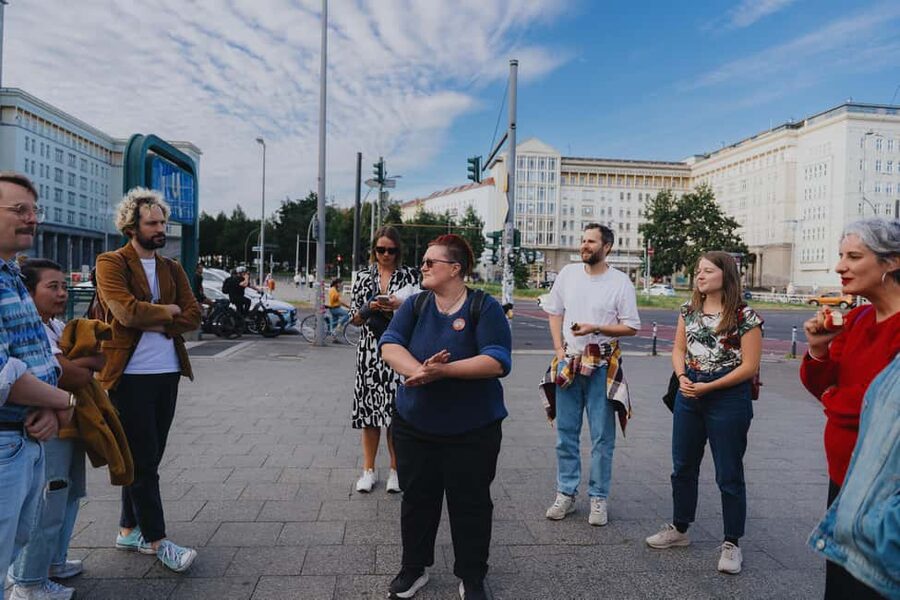
Review · BERLIN TOURS
Karl-Marx-Allee Walking Tour: Berlin’s Socialist History
Karl-Marx-Allee is not just a broad Berlin boulevard lined with oversized apartment blocks. It was East Germany’s great public statement, built to show that socialism could create order, comfort, and grandeur from the rubble of war. On this two-hour walk, you’ll read the street as both architecture and political theater, from its monumental facades to the hidden surveillance behind them.
I like two things especially. First, the tour connects the 1950s socialist-classicist buildings with the less showy modernist structures that came before them. Second, it treats the 1953 workers’ uprising and Stasi repression as part of the street’s daily story, not as distant Cold War trivia. The main consideration is that this is a serious history walk, not a light sightseeing stroll, and children under 10 cannot join.
Key points to know before you book
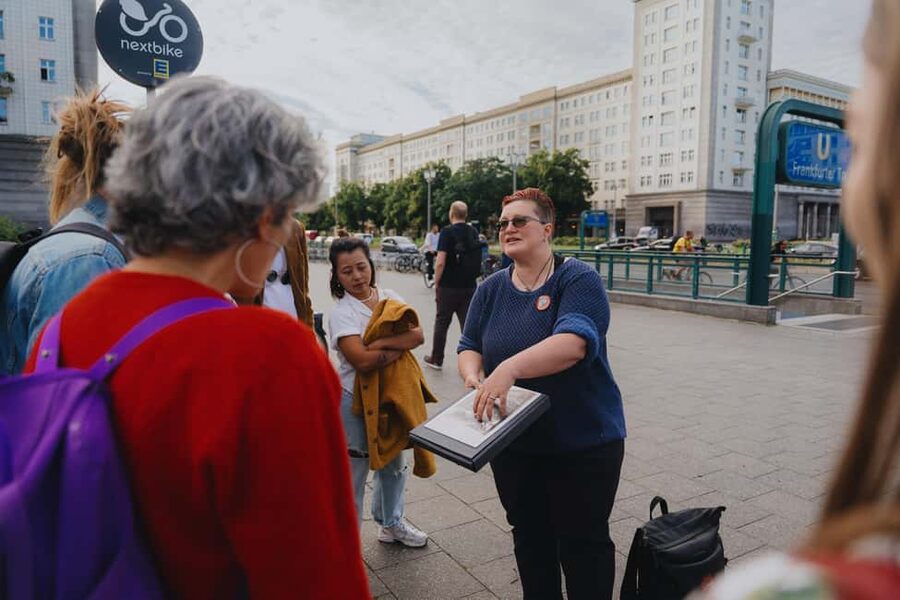
- The walk begins at U Frankfurter Tor: Meet outside the station, at the corner of Warschauer Straße and Karl-Marx-Allee, and look for an orange umbrella.
- The grand buildings had a political purpose: Karl-Marx-Allee was designed to project strength, prosperity, and a model socialist way of life.
- The 1953 uprising began with workers’ anger: The building program helped fuel a revolt that nearly brought down East Germany’s young government.
- The Stasi story is part of the architecture: Wiretaps in apartments and listening posts in attics hid behind the polished public image.
- Film locations add a modern connection: You’ll see places associated with The Lives of Others and The Queen’s Gambit.
- The route links past and present: The former Stalinallee now appears in protests over gentrification and rising housing costs.
Meeting Karl-Marx-Allee at Frankfurter Tor
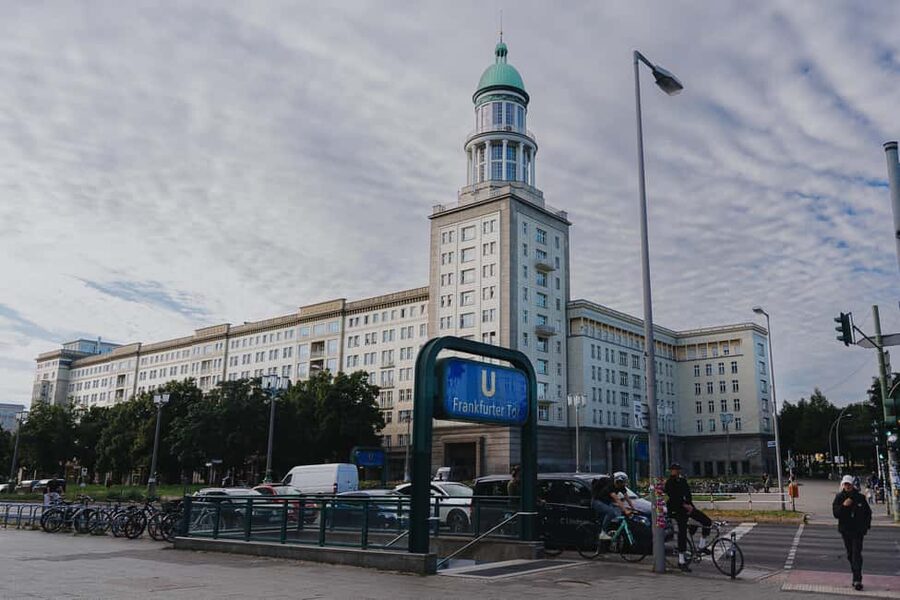
Your guide meets you outside U Frankfurter Tor, on the corner of Warschauer Straße and Karl-Marx-Allee. The orange umbrella is the useful landmark, especially in a busy city where a station entrance can have several corners and exits.
The starting point matters. Frankfurter Tor gives you an immediate sense of scale. The avenue opens wide, and the buildings make ordinary pedestrians look small. That was no accident. This was planned as the first major socialist street in Germany, and its size was part of the message.
The tour is offered in English or German. The walk lasts two hours, with about 90 minutes of guided touring along Karl-Marx-Allee. Wear comfortable shoes. You are not covering a huge distance, but the value comes from stopping often, looking up, and listening to the political meaning behind what you see.
More history-led days in Berlin:
- Berlin: Natural History Museum Entrance Ticket
★ 4.6 · 3,382 reviews - Berlin: World Heritage Cruise to Potsdam
★ 4.5 · 1,435 reviews - Berlin Historical Highlights Walking Tour
★ 4.9 · 657 reviews
Why the architecture feels so grand
The most famous buildings belong to what is often called socialist classicism. Their ordered facades, repeated windows, decorative details, and great scale were meant to communicate permanence. These were not simply apartment blocks built to solve a housing shortage. They were part of East Germany’s national reconstruction program after World War II.
The street rose from a ruined city with help from thousands of volunteers working day and night. That effort gives the boulevard a complicated character. It was a practical rebuilding project, but it was also a carefully staged display of the new state’s ideals.
I find the contrast useful here. The avenue promised a better life through collective effort, yet its grand appearance could hide the hard conditions and political pressure involved in building it. A good guide should help you hold both ideas at once. The buildings can be impressive without treating the system that produced them as admirable.
The street also offered the best public life East Berlin could show: cafes, restaurants, and well-stocked shops. These amenities helped create an image of abundance under socialism. That makes Karl-Marx-Allee more interesting than a row of monumental facades. You are looking at a planned social world, where shopping, eating, housing, and political loyalty were all part of the same public picture.
The earlier modernist buildings and a change in policy
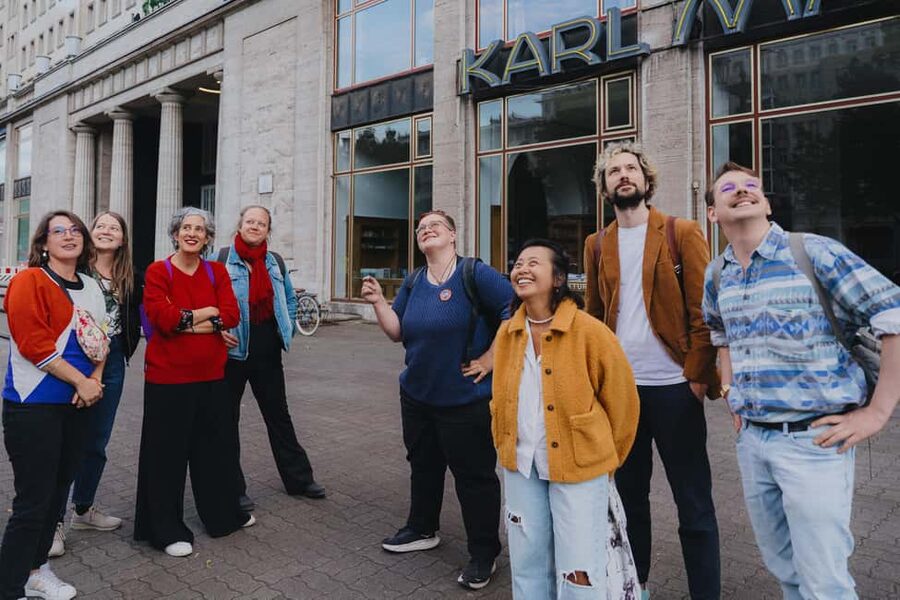
Karl-Marx-Allee’s story begins before the grand 1950s blocks. The modernist architecture from the immediate postwar years reflects a different set of hopes. In the ashes of destroyed Berlin, modern urban planners imagined a cleaner and more rational city.
Those early buildings were later pushed out of public view by fast-growing poplar trees. The new East German leadership rejected that earlier style and promoted a far more monumental idea of socialist living. The change was not merely about taste. Architecture had become a political tool.
Your guide can help you spot this shift along the route. Look beyond the best-known facades and pay attention to how different parts of the avenue relate to one another. The walk is strongest when it shows that Karl-Marx-Allee was not built in one simple burst of design. It changed as East Germany changed its vision of itself.
This is one reason I would choose a guided walk instead of seeing the boulevard alone. Without context, you may notice the size and decoration but miss the argument behind the buildings. The guide turns architectural details into evidence of changing ideology.
The 1953 uprising and the cost of reconstruction

The most dramatic part of Karl-Marx-Allee’s early story came in June 1953. Workers who were unhappy with conditions began a mass uprising. The revolt nearly toppled East Germany’s socialist government.
The connection to the boulevard is important. The street was supposed to prove that the new state could rebuild Berlin and provide a better future. Yet the demands and pressures surrounding reconstruction helped expose the gap between official promises and working people’s reality.
This gives the tour an essential human scale. Instead of seeing the avenue only as a grand government project, you begin to ask who paid for it, who built it, and who had the power to object. The uprising shows that the street was never just a backdrop for parades. It was tied to real conflict.
If you prefer tours that explain cause and effect, this section should be one of the highlights. It links bricks and mortar to wages, working conditions, and political authority. The story also prevents the architecture from becoming a simple Cold War photo stop.
More walking tours in Berlin:
- Discover Berlin Half-Day Walking Tour
★ 5.0 · 9,624 reviews - Berlin: Third Reich and Cold War 2 Hour Walking Tour
★ 4.9 · 6,830 reviews - Berlin: Discover Berlin Walking Tour
★ 4.9 · 5,998 reviews - Berlin’s Best: 2 Hour Walking Tour Third Reich and the Cold War
★ 5.0 · 5,486 reviews
Behind the polished facade, the Stasi state
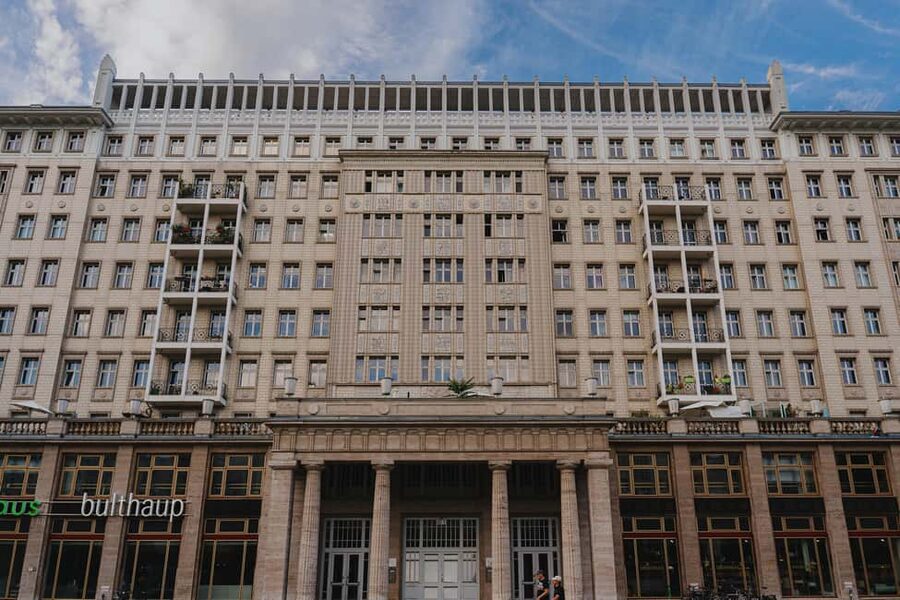
Karl-Marx-Allee was designed to look open and confident. The surveillance system behind that public image worked in the opposite way. Wiretaps in apartments and listening stations in attics were meant to stay out of sight.
The Stasi police monitored and suppressed opposition throughout East Germany. On this walk, that history is tied to the buildings themselves. The same apartments that represented modern socialist living could also become places where private conversations were overheard.
That contrast is powerful, but it is also a reason to set the right expectations. You will not be touring a dedicated Stasi museum or entering every hidden room. The guide uses the street to explain how surveillance fit into ordinary urban life. If you want a fuller look at Stasi files, prison cells, or the mechanics of the secret police, you’ll need a separate museum visit.
Still, this walk gives you something a museum cannot always provide: a sense of how political control sat inside regular housing. The story is not about a remote headquarters. It is about homes, neighbors, attics, and the public spaces people used every day.
From Stalinallee to Karl-Marx-Allee

The boulevard was once called Stalinallee, a name that reflected the early East German state’s political alignment and personality cult. It later became Karl-Marx-Allee, and after the fall of the Berlin Wall it lost much of its official importance.
For a time, the avenue looked like an awkward relic from another age. Its scale and decoration no longer fit the mood of a reunified city that was busy remaking itself. The buildings could seem worn, dated, and disconnected from the fast-changing Berlin around them.
That story did not end there. Berlin’s housing shortage gave the boulevard new importance. Real estate interest returned, and the old apartment blocks became part of arguments over property, rents, and who gets to live in the city.
Today, the avenue is no longer mainly a route for socialist parades. It can also serve as a stage for local protests against gentrification and rising living costs. That modern connection gives the tour a useful final turn. The political language has changed, but housing remains a public issue, and the street still carries debates about the city’s future.
Film locations that connect past and present

The tour includes filming locations linked with The Lives of Others and The Queen’s Gambit. These references offer an easy way into the street for visitors who know the films.
The Lives of Others fits naturally with the tour’s focus on surveillance, suspicion, and private life under East Germany. The connection can help you picture how the boulevard’s buildings and interiors have been used to represent that period on screen.
The Queen’s Gambit adds a different angle. Its location work gives the avenue a place in contemporary visual culture, showing how Berlin’s socialist architecture can play several historical roles on film.
These stops should be treated as additions rather than the main reason to book. The tour’s real subject is the history of Karl-Marx-Allee itself. Film fans will enjoy recognizing locations, but the walk does not promise a dedicated cinema tour.
What the two-hour format gives you

Two hours is a sensible length for this subject. It gives the guide enough time to move from architecture to politics, then to surveillance and current housing issues, without turning the walk into an all-day lecture.
The guided portion lasts about 90 minutes, and the stated route runs from U Frankfurter Tor toward U Strausberger Platz. The meeting information also describes the activity as ending back at the meeting point, so confirm the exact endpoint when you book. Either way, you should plan around a walk along the boulevard rather than a museum visit or an indoor program.
The pace should suit you if you like to stop, listen, and compare buildings. It may feel slow if you want a quick overview or prefer to cover many Berlin neighborhoods in one morning. There is no listed food, museum entry, or transport included, so the $23 price mainly pays for the guide’s interpretation.
That is fair value for a focused history walk. Karl-Marx-Allee is easy to reach on your own, but the meaning of the street is not obvious from a self-guided glance. You are paying for connections: the link between architecture and ideology, construction and revolt, housing and surveillance, and socialist planning and current rent protests.
How the guide affects the experience
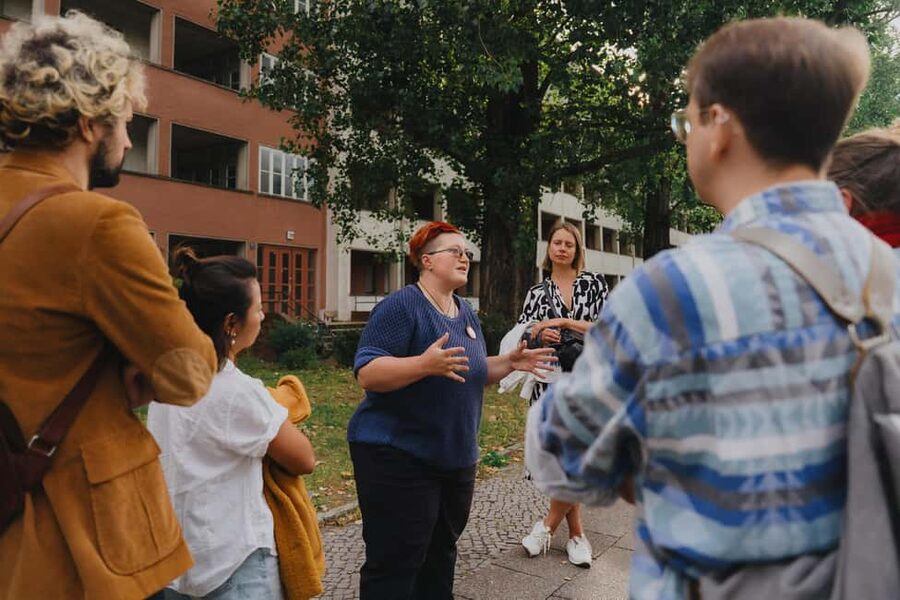
The strongest praise available for this tour focuses on Martina. She is described as attentive to curious questions and willing to respond rather than simply push through a fixed script.
That detail matters. Karl-Marx-Allee can support a rigid lecture full of dates and political labels. It can also become a thoughtful conversation about what people saw, what they were told, and what they were not allowed to say. An attentive guide makes a clear difference, especially when the group brings different levels of knowledge.
No individual guide is guaranteed unless Martina is assigned to your departure. The tour is available in English or German, so check your preferred language when selecting a time. The provider is Beyond and Beneath Tours.
Who should book this Berlin walking tour?
I would recommend it to you if you enjoy architecture with a political story attached. It is also a good choice if you have already seen central Berlin’s famous monuments and want to understand the former East Berlin beyond the Wall and checkpoint narratives.
The tour suits adults and older children, but children under 10 are not allowed. It may appeal to fans of The Lives of Others or The Queen’s Gambit, though film references are part of a wider historical walk, not the whole program.
You should think twice if you want a cheerful introduction to Berlin or a tour packed with interiors. Much of the experience is outdoors, and the subject includes repression, surveillance, political conflict, and housing pressure. Comfortable shoes will help, and you should be ready to spend two hours paying attention to buildings that reveal their meaning slowly.
The tour is wheelchair accessible. You can cancel up to 24 hours before the activity for a full refund, and the reserve-now, pay-later option lets you keep your plans flexible. Those policies are useful in Berlin, where weather and a crowded schedule can change your day.
Should you book it?
Book this Karl-Marx-Allee walking tour if you want Berlin history at street level, especially the uneasy mix of grand promises and ordinary hardship. At $23, it offers solid value when the guide makes the architecture, the 1953 uprising, Stasi surveillance, and today’s housing protests part of one connected story.
Skip it if your priority is a fast photo walk, a museum interior, or a broad survey of all Berlin. For the right audience, this is a focused and thoughtful way to see a part of the city that can look imposing, strange, or dated until someone explains what it was built to say.
FAQ
Where does the Karl-Marx-Allee walking tour start?
It starts outside the Frankfurter Tor U-Bahn station, on the corner of Warschauer Straße and Karl-Marx-Allee. Look for the guide holding an orange umbrella.
Where does the tour finish?
The route information gives U Strausberger Platz as the finish. The meeting information also says the activity ends back at the meeting point, so confirm the exact endpoint when booking.
How long does the tour last?
The activity lasts two hours. The guided tour portion is listed as 1.5 hours.
What is the price?
The price is $23 per person.
Which languages are available?
The tour is offered in English and German.
Is the tour wheelchair accessible?
Yes, the activity is wheelchair accessible.
Are children allowed to join?
Children under 10 are not suitable for this activity.
What should I bring?
Bring comfortable shoes for the walking route.
Can I cancel for a full refund?
Yes. You can cancel up to 24 hours in advance for a full refund.
Do I have to pay when I book?
No. The reserve-now, pay-later option allows you to book your place and pay later.
Just added around Berlin
- eSIM for Germany and 34 European Countries★ 4.5 · 16 reviews
- Your ticket to The Wall Museum Berlin★ 3.0 · 60 reviews
- Walking on the Wall: 3-Hour Tour in Berlin★ 4.5 · 34 reviews
- Rickshaw Tours Berlin – Groups of up to 16 people with several rickshaws★ 4.0 · 97 reviews
- Warnemuende Shore Excursion: Private Berlin Tour★ 4.5 · 27 reviews
- Love and War in Berlin: Self-Guided Story Puzzle Walk★ 5.0 · 7 reviews
- Warnemuende Shore Excursion: Berlin Private Sightseeing Tour from Rostock★ 5.0 · 4 reviews
- Cold War Berlin – Private Live Virtual Experience★ 5.0 · 4 reviews
Berlin Tours, compared.
Reichstag, Dome and Government District Guided Tour
Read our review →
1-Hour City Tour by Boat with Guaranteed Seating
Read our review →
Reichstag, Plenary Chamber, Cupola & Government Tour
Read our review →
Browse the lists this tour appears in