
Review · TRIER TOURS
Trier: Guided Old Town Highlights and History Walking Tour
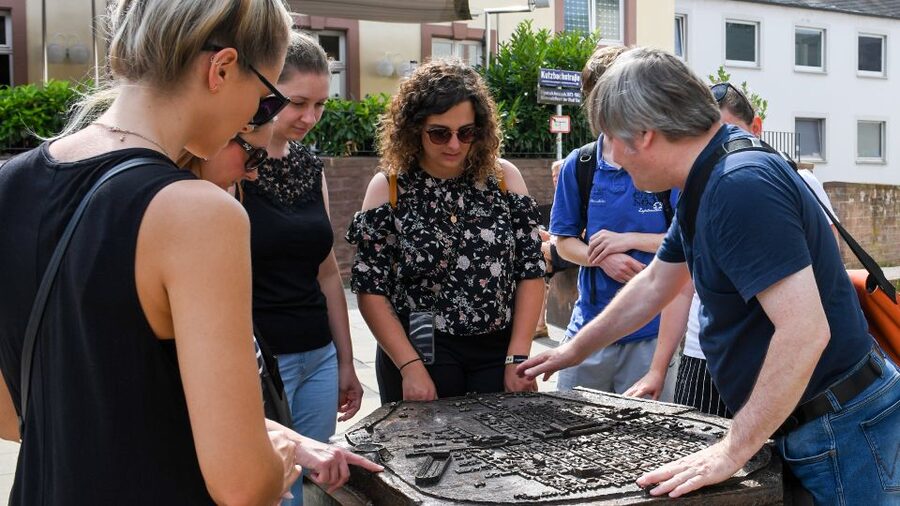
Trier’s story is written in its streets, and this tour starts with the city’s biggest clue: the Porta Nigra, a Roman gate built as early as 170 AD. From there, you follow the city’s long road from imperial outpost to medieval center and modern German city, with the guide explaining what each major building meant in its own time.
I like the compact 1.5-hour format and the clear focus on Trier’s main sights. I also like that guides such as Patrick and Herbert bring humor and a personal touch to the facts, while still handling questions well. The main drawback is that the tour is conducted in German, so you need a strong grasp of the language to get its full value.
Key points at a glance
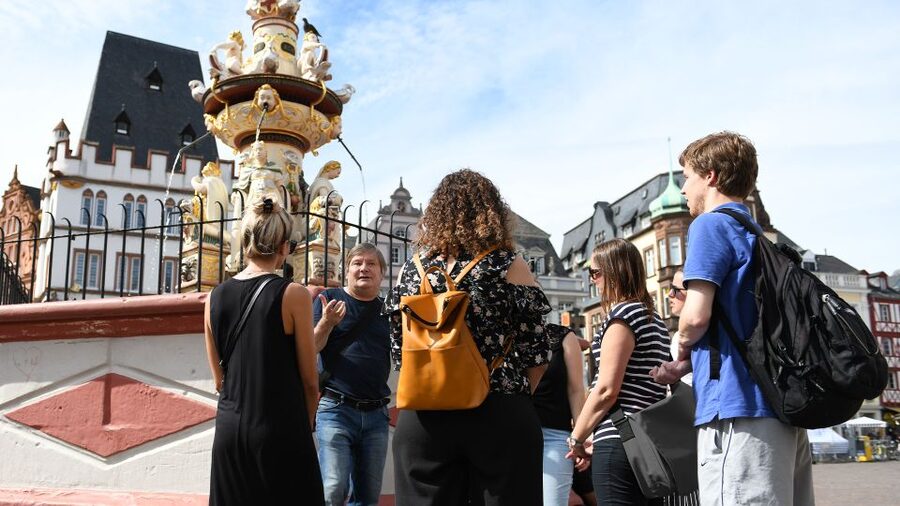
- Roman Trier begins at the Porta Nigra: Learn how the city developed under Roman rule and what daily life was like around this major gate.
- The route links several eras: The walk connects Roman remains, medieval architecture, modern streets, and the story of Karl Marx.
- The cathedral and Main Market add visual variety: You get more than one ancient monument, with civic and religious centers included along the way.
- Patrick and Herbert are named guides: Their style combines solid historical explanation, humor, and room for questions.
- The pace suits a first look: At 1.5 hours, the tour gives you a useful orientation without taking up half a day.
- The price is modest: At $16 per person, it can be a practical way to get context before exploring Trier on your own.
Starting beside the Porta Nigra
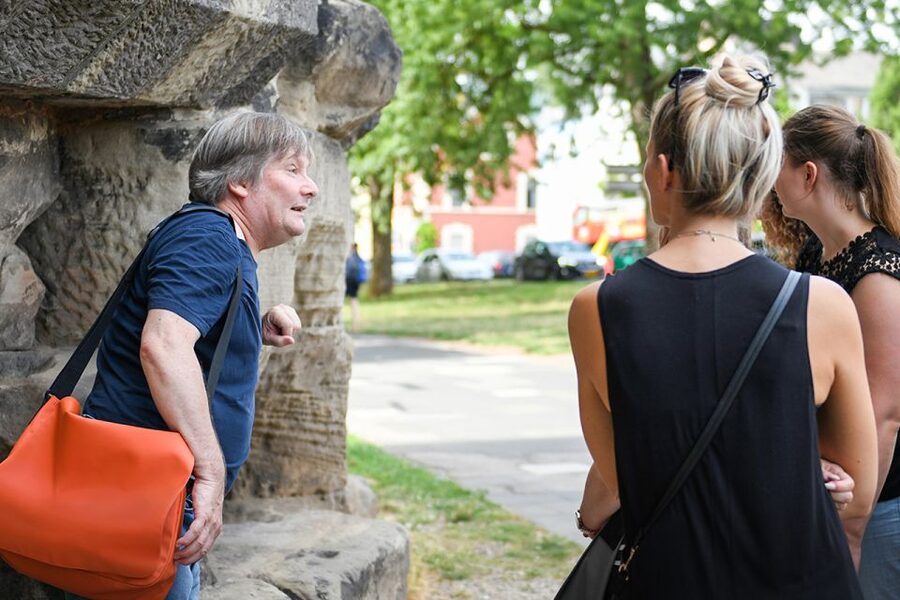
Meet your guide in front of the Mercure Hotel, opposite the Porta Nigra. This is a useful meeting place because the Roman gate is impossible to miss and gives you an immediate sense of Trier’s age.
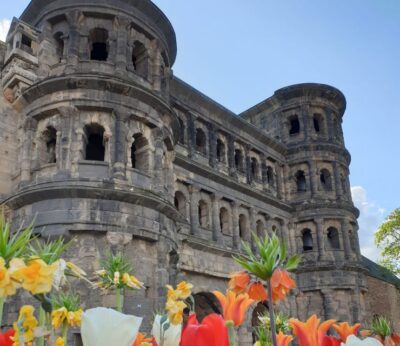
The Porta Nigra was built by the Romans as early as 170 AD. Its heavy stonework and scale make the past feel physical rather than abstract. Before you have seen another sight, you are already looking at a structure that shaped movement into and through the city.
Your guide uses the gate to explain Trier’s Roman origins and the daily life that grew around Roman rule. That focus matters. A Roman monument can easily become just a place for photographs, but the tour connects it to ordinary people, city routines, and the way a major urban center functioned.
The description says you visit the Porta Nigra, but it does not promise a separate interior visit or a long stop inside the monument. You should expect the gate to serve as the opening point and central Roman reference, not assume that an admission ticket to every part of it is included.
More old town walks in Germany:
- Dresden: Semperoper and Old Town Tour
★ 4.8 · 5,735 reviews - Nuremberg: Old Town Guided Walking Tour
★ 4.6 · 2,416 reviews - Munich: Old Town & Viktualienmarkt City Walk in German
★ 4.7 · 2,304 reviews
Following Trier from Rome to the Middle Ages
After the Roman opening, the walk shifts toward Trier’s medieval architecture and later development. The value here is the change in atmosphere and building style. You are not looking at one isolated period, but at a city that kept adding new layers while retaining major pieces of its past.
That makes this a good orientation walk for a first visit. Instead of seeing the Porta Nigra, cathedral, and Main Market as separate stops, you get a basic explanation of how Trier changed from Roman foundation to medieval center and then into the modern city.
The 1.5-hour length helps keep the route focused. You have enough time to hear the main story and identify the sights you may want to revisit, but not enough time for every side street, museum, or detailed architectural stop. I would treat this as a strong introduction, not a replacement for a full day of independent exploring.
The walking format also means the city itself remains the subject. There is no transfer between sights and no window separating you from the streets. You can ask a question when a building catches your eye, then continue on foot with the answer tied to the place in front of you.
Trier Cathedral and the Main Market
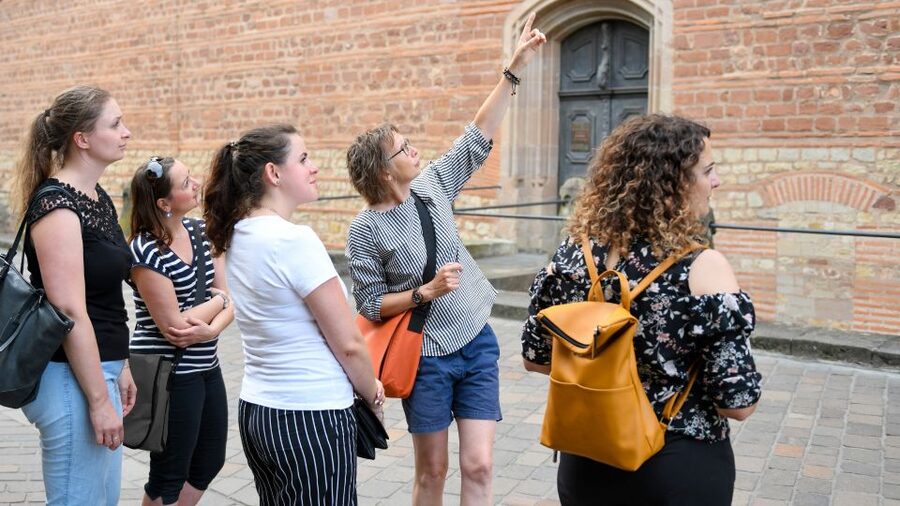
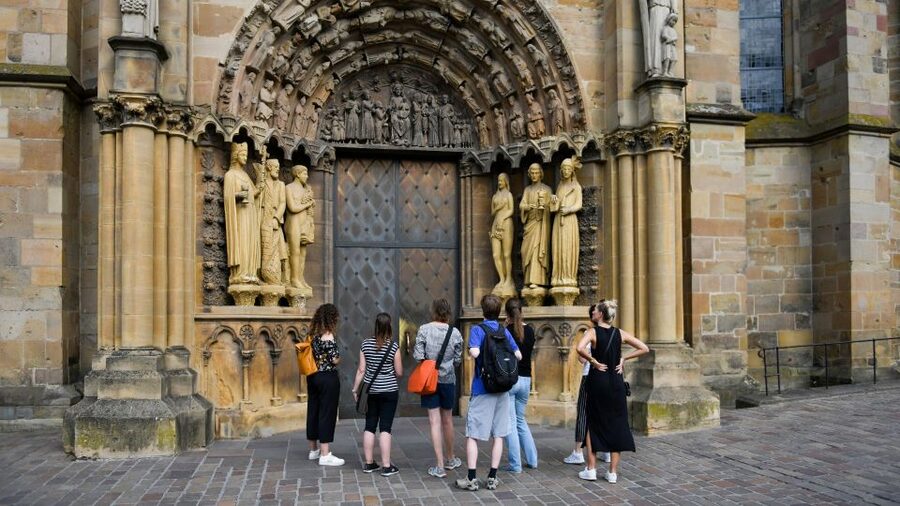
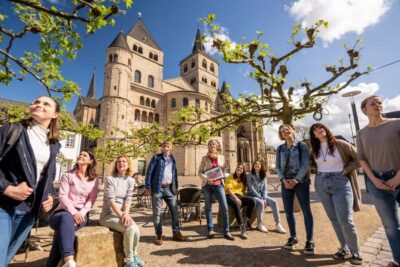
Trier Cathedral gives the tour a different kind of historical focus. The route presents it as one of the city’s major highlights, alongside the Porta Nigra and Main Market. Its presence helps show how the city’s center developed around more than Roman power.
You can expect the guide to place the cathedral within the larger story of Trier’s changing architecture and public life. The supplied details do not promise a cathedral interior visit, a worship service, or a detailed art lecture, so think of this as a guided look at the building and its place in the city rather than a specialist cathedral tour.
The Main Market adds another useful contrast. A market square lets you see Trier as a working public center, not only as a collection of old monuments. It also helps connect the city’s past with the modern day, since the tour is built around the way old and new elements sit side by side.
I like this pairing because it keeps the experience from becoming too narrowly Roman. The Porta Nigra explains the beginning of the story, while the cathedral and Main Market show how the city’s identity changed over time. You get religious, civic, and residential angles within a short walk.
The Karl Marx connection
The tour also brings you to the residential house where Karl Marx lived. Marx was one of the most influential philosophers, and his connection gives Trier a modern political and intellectual thread that differs from the Roman and medieval material.
This stop works best as part of the city’s broader story. You are not simply visiting a famous person’s former home. You are seeing how Trier’s history continued into the nineteenth century, producing figures whose influence reached far beyond Germany.
The information provided does not promise entry into the house or a museum visit. You should expect to see the residence and hear about Marx’s link to Trier. If you want a detailed Marx exhibition, plan to check separately for admission and opening information rather than treating this walking tour as that visit.
For many people, this will be one of the more memorable stops because it changes the subject completely. Roman gates and medieval buildings tell you about institutions and city life. Marx’s home brings the story closer to an individual and the ideas associated with him.
More history-led days in Germany:
- Leipzig: City History Canal Sightseeing Tour on a Motorboat
★ 4.7 · 6,232 reviews - Berlin: Natural History Museum Entrance Ticket
★ 4.6 · 3,382 reviews - Leipzig: 1.5-Hour Historical Walking Tour in German
★ 4.7 · 2,217 reviews - Berlin: World Heritage Cruise to Potsdam
★ 4.5 · 1,435 reviews
Guides Patrick, Herbert, and the value of good storytelling
The guide can make or break a short city walk. In this case, Patrick and Herbert are specifically named as guides who explain the history clearly, use humor, and add a personal note to the tour.
That combination matters in Trier, where the dates and building styles can pile up quickly. A guide who only recites facts may leave you with a blur of Roman, medieval, and modern names. A guide who adds anecdotes and small moments of humor can give those facts a shape you remember.
You should also feel free to ask about restaurants and bars for afterward. That is a small but useful feature. A local guide can help you turn the tour into a broader evening plan, though the activity does not list particular restaurants or promise reservations.
The guides are listed as German-speaking, and the tour information names German as the available language. That is the most important practical issue before booking. Several comments about Patrick and Herbert highlight their ability to answer questions and keep the 90 minutes moving, but those strengths help you only if you can follow German comfortably.
Why the 1.5-hour format works
Ninety minutes is long enough to give you a framework for Trier and short enough to fit around other plans. I would place this tour near the beginning of a stay, especially if you have just arrived and want to understand the center before choosing where to spend more time.
The route covers major highlights rather than every detail. You will learn the broad sequence from Roman origins to the present day, see the Porta Nigra, cathedral, Main Market, and Karl Marx’s former residence, and gain a better sense of how the city’s parts relate to one another.
The short duration also keeps the commitment low. If you are traveling with children, the tour may be easier to manage than a longer historical walk, and children aged 0 to 5 can join free. The information does not give a recommended minimum age for older children, so your decision should depend on how comfortably they handle a 90-minute walk and German-language explanation.
There is one tradeoff: a concise tour cannot linger everywhere. You may leave with more questions about Roman engineering, the cathedral, Marx, or the medieval center. That is not a fault, but it means you should see the walk as a starting point for your own time in Trier.
Is $16 a good value?
At $16 per person, this is a reasonably priced way to put Trier’s main sights in context. You receive a walking tour and a live guide, with no separate transport needed between the listed stops.
The value is strongest if you would otherwise walk past the Porta Nigra, cathedral, or Main Market without knowing how they fit together. A guide turns a collection of old buildings into a sequence of stories, which can make your later independent sightseeing more rewarding.
It is less useful if you already know Trier well or want a highly specialized tour. The experience is designed around broad city history, not a single subject. It also does not list museum admission, food, drinks, or other extras, so the $16 price covers the guided walk itself.
Free cancellation up to 24 hours before the start gives you some room to adjust your plans. You can also reserve and pay later, which is helpful if your schedule in Trier depends on weather or changing day plans.
Who should book this Trier walk?
I would recommend it to first-time visitors who want a clear introduction without giving up a whole morning or afternoon. It also suits anyone who likes architecture and history but prefers a guide to connect the sights instead of reading several panels at each stop.
Families may find the length manageable, especially with free admission for children aged 0 to 5. The language is the key limitation for family groups. If some members do not understand German, the experience will be uneven even if they can enjoy seeing the buildings.
This is also a good choice for people who want practical local advice. Ask the guide about restaurants and bars after the walk, then use the rest of your day to return to the places that interested you most.
You may want something else if you need English, want to enter every major monument, or expect a specialist lecture on Roman Trier, church art, or Karl Marx. Those are different needs from a short city orientation.
Practical planning before you go
Wear shoes suitable for walking through the old town. The tour lasts 1.5 hours, and the exact starting time depends on availability when you book.
Arrive at the meeting point in front of the Mercure Hotel, opposite the Porta Nigra. Since the gate is the defining feature of the area, the location should be easy to identify, but having the hotel name ready will help you avoid confusion.
Remember that the listed language is German. If you want to ask about food, drinks, or historical details, prepare your questions in German or make sure you can communicate comfortably with the guide.
The provider is k3 stadtführungen. Named guides include Patrick and Herbert, and the tour’s strongest qualities are its clear explanations, humor, personal touch, and willingness to answer questions. That human element is particularly useful on a short route, where the guide needs to keep the story moving without making it feel rushed.
Should you book it?
Book this tour if you want a short, affordable introduction to Trier’s Roman gate, medieval center, cathedral, Main Market, and Karl Marx connection. The $16 price is easy to justify when you value context, and the 90-minute format leaves plenty of time for your own exploring.
Skip it if you need an English-language experience or a detailed interior tour of the city’s monuments. For German-speaking visitors, especially first-time visitors and families with young children, this is a practical way to get your bearings and hear Trier explained with facts, humor, and a local guide’s personal touch.
FAQ
How long does the Trier walking tour last?
The tour lasts 1.5 hours.
How much does the tour cost?
The listed price is $16 per person.
Where does the tour meet?
Meet your guide in front of the Mercure Hotel, opposite the Porta Nigra.
What language is the tour offered in?
The live guided tour is offered in German.
Which major sights are included?
The route highlights the Porta Nigra, Trier Cathedral, and the Main Market. It also includes the residential house where Karl Marx lived.
Do children aged 0 to 5 need to pay?
Children aged 0 to 5 can join the tour for free.
Is a live guide included?
Yes. The activity includes a walking tour with a live guide.
Can I cancel for a full refund?
Yes. You can cancel up to 24 hours in advance for a full refund.
More Walking Tours in Germany
- Discover Berlin Half-Day Walking Tour
★ 5.0 · 9,624 reviews - Berlin: Third Reich and Cold War 2 Hour Walking Tour
★ 4.9 · 6,830 reviews - Munich: Third Reich & WWII Walking Tour
★ 4.6 · 6,181 reviews - Berlin: Discover Berlin Walking Tour
★ 4.9 · 5,998 reviews
Just added around Germany
- Berlin: Battle for Seelow Heights WW2 tour -Clash of Titans★ 5.0 · 27 reviews
- From Berlin: Gardens & Palaces of Potsdam Bike Tour★ 5.0 · 61 reviews
- From Amsterdam: Cologne Private Sightseeing Tour★ 5.0 · 4 reviews
- From Berlin: Historical Gems of Potsdam Private Day Trip★ 4.4 · 4 reviews
- Freiburg: Veni, vidi, vino – wine hike and tasting★ 4.5 · 144 reviews
- From Alken: Return Day Trip by Boat to Cochem★ 4.6 · 141 reviews
- Fritz Haarmann – Die Mördertour★ 4.6 · 41 reviews
- Freiburg: Tour of the city with cathedral visit★ 4.7 · 167 reviews
Trier Tours, compared.
Browse the lists this tour appears in