
Review · TRIER TOURS
Trier: City Walking Tour
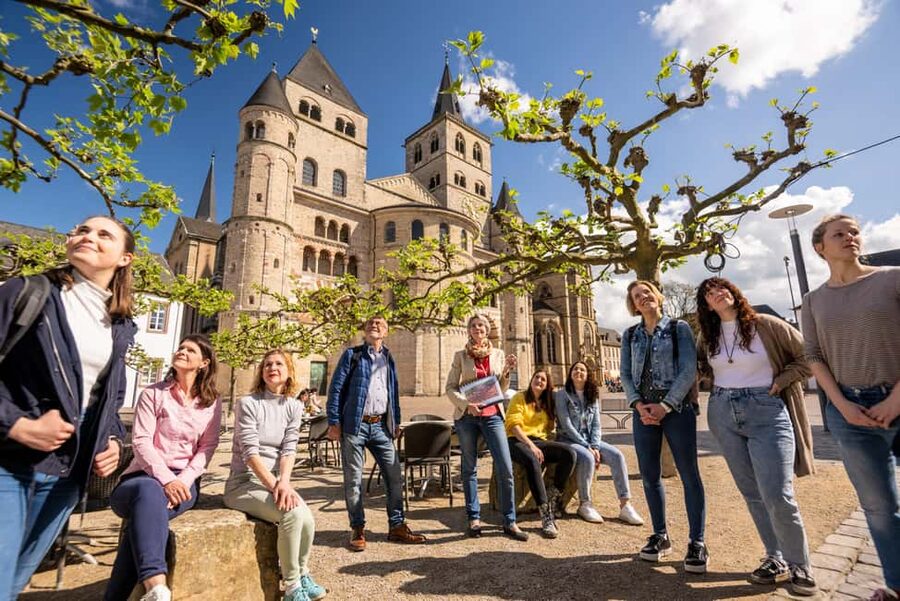
Trier’s story is packed into a short walk: Roman gateways, medieval power struggles, church towers, and a grand Baroque palace all sit within the city center. The tour begins at the Porta Nigra, then threads through Trier’s old streets to four monuments included in the UNESCO World Heritage Site.
I like the clear historical progression and the use of official Trier Guides, who can connect each building to the city’s changing rulers. I also like the low $17 price and the fact that the tour is offered in both English and German. The main consideration is time: 90 minutes gives you a useful introduction, but not a long visit inside every sight.
Key points to know before you book
- Four UNESCO monuments in one compact walk: See the Porta Nigra, Trier Cathedral, Church of Our Lady, and Aula Palatina, also called the basilica.
- A route through three eras: The tour moves from Roman Trier to medieval streets and then into the Baroque world of the Electoral Palace.
- Start beside the Porta Nigra: Meet in front of the Tourist Information office, directly at Trier’s most famous Roman landmark.
- Official local guides: The tour is operated by Trier Tourismus und Marketing GmbH and led by official Trier Guides.
- English or German commentary: Select the language that suits you, and check the available starting times before booking.
- A good-value first look: At $17 per person, this is an inexpensive way to get your bearings before exploring Trier on your own.
Why this Trier walk works so well
Trier is one of those cities where the big sights are close together, but their stories can feel disconnected if you simply walk from one to the next. This tour gives you a useful thread to follow. You begin with the Roman imperial city, move through the medieval center, and finish among the grand religious and princely buildings of later Trier.
That structure matters. The Porta Nigra is not just an impressive old gate. It introduces Trier as a major Roman city. The cathedral and Church of Our Lady show how Christian power reshaped the center. The Electoral Palace then brings you into a later age of court ceremony and Baroque style.
At 1.5 hours, the route is short enough to fit into a busy day. You can schedule it soon after arriving, use it to get your bearings, and then return to the places that deserve a slower look. I would not book this expecting a detailed interior tour of every monument. The value is in the connected overview.
The price is another strong point. At $17 per person, you are paying less than many longer city walks for a route that includes four UNESCO monuments as major waypoints. The tour does not replace museum admission or a full day of independent sightseeing, but it gives you a sensible foundation at a modest cost.
More walking tours in Germany:
- Discover Berlin Half-Day Walking Tour
★ 5.0 · 9,624 reviews - Berlin: Third Reich and Cold War 2 Hour Walking Tour
★ 4.9 · 6,830 reviews - Munich: Third Reich & WWII Walking Tour
★ 4.6 · 6,181 reviews
Meeting the guide at the Porta Nigra
The meeting point is directly in front of the Tourist Information office at the Porta Nigra. This is easy to locate, but allow a few minutes to get there. The starting point is not at the cathedral or a train station, so plan your approach around the Porta Nigra itself.
The Tourist Information office is useful if you have a last-minute question. Since this is an official city tour, staff there can help direct you to the correct meeting place. That is a small but practical advantage, especially if you are unfamiliar with Trier’s center.
Beginning at the Porta Nigra gives the tour an immediate visual punch. You do not start with a general orientation talk in an ordinary square. You begin beside Trier’s most famous surviving Roman structure, then use it as the first chapter in the city’s story.
The route is wheelchair accessible according to the tour information. Still, a city-center walk can include changing surfaces and busy public spaces, so anyone needing detailed access information should confirm the current conditions with the Tourist Information office.
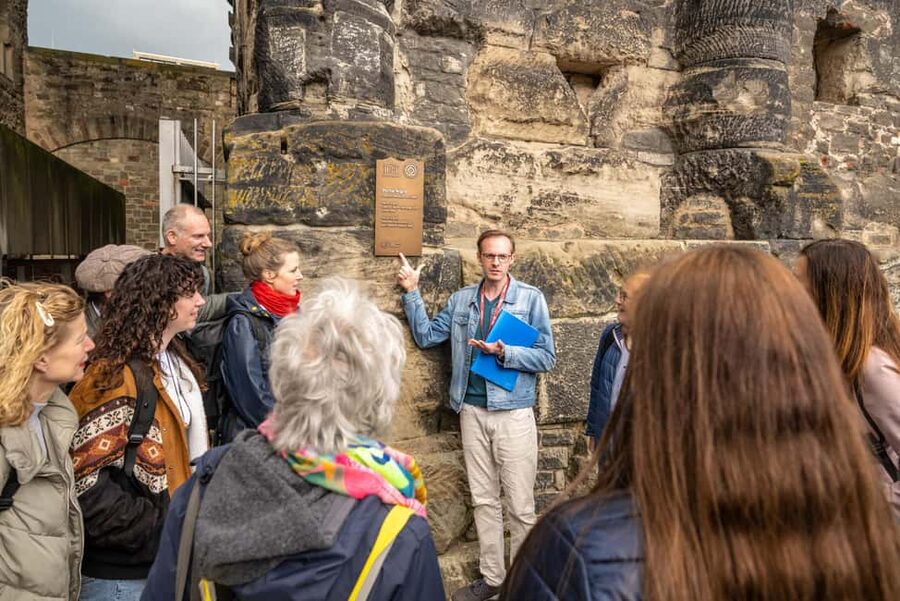
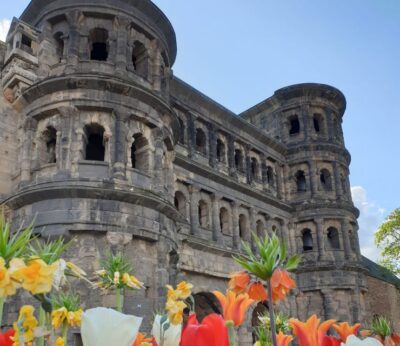
Porta Nigra: Trier’s Roman front door
The Porta Nigra is the natural opening for a Trier tour. Its name means Black Gate, a reference to the darkened stone that developed over time. Here, the guide sets the Roman scene and explains why this gateway matters to the city.
You can expect a guided visit around the monument, with the building serving as more than a photo stop. It gives you a sense of Trier’s scale and Roman importance before the tour turns toward later periods.
This first stop is especially useful if you know little about Trier. The city is often treated as a quick stop on a route through Germany, yet the Roman remains give it a distinct character. Starting at the gate makes that point immediately clear.
The drawback is that a short city walk cannot cover every Roman site in Trier. The focus stays on the central route and its main monuments. If Roman archaeology is your main interest, you will want extra time beyond this tour.
Dreikönigenhaus and the medieval city
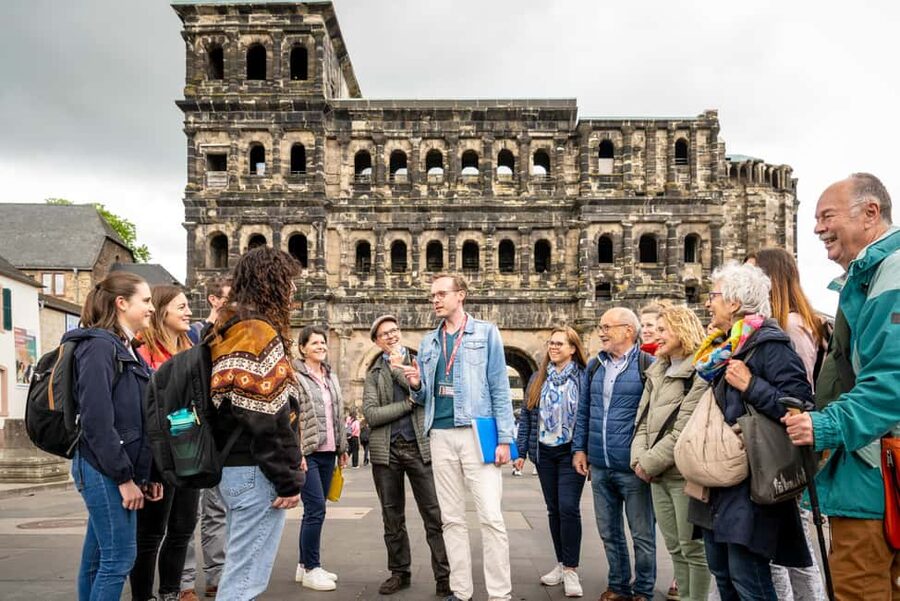
After the Roman opening, the walk turns toward medieval Trier. The Dreikönigenhaus is one of the stops that helps explain how residents protected themselves and their property in a town where security and status were serious concerns.
The building is linked to architectural tricks used by fortified citizens. That detail gives the medieval section a human scale. You are not only hearing about bishops, emperors, and grand institutions. You are also seeing how ordinary wealthy residents shaped their homes around danger and defense.
This is where the tour’s storytelling style should appeal to you if you prefer odd details to a string of dates. The medieval section includes tales of citizens fighting the bishop for imperial immediacy, a conflict that involved knights, monkeys, and church towers. Those unusual details help the period stick in your mind.
The route also includes Judengasse. The name points to Trier’s Jewish quarter and adds another layer to the medieval center. The tour presents this area as part of the city’s wider story rather than treating Trier as only a Roman or Christian destination.
A few more Germany half-days to weigh up
- Trier: Guided City Walk with Wine Tasting
★ 4.8 · 979 reviews - Trier: Guided Old Town Highlights and History Walking Tour
★ 4.7 · 687 reviews - Trier: Discovery Tour – Germany’s Oldest Wine Cellar
★ 4.7 · 218 reviews
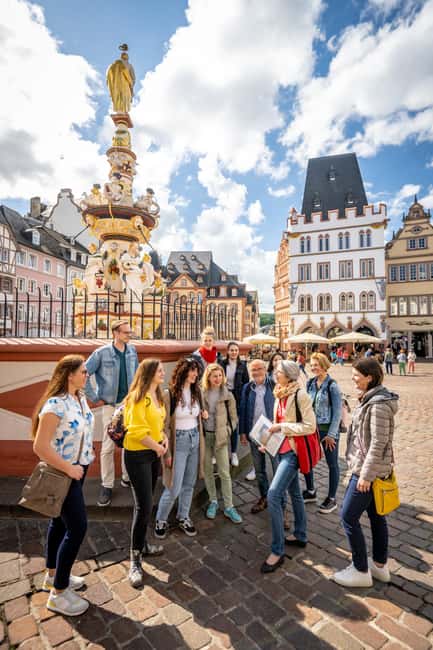
Hauptmarkt: power, trade, and city life
The Hauptmarkt is one of the most important public spaces on the walk. It provides a break from the monumental scale of the Porta Nigra and shows you the city as a place of commerce, civic pride, and political tension.
Expect a guided sightseeing stop here, with the square used to explain medieval Trier and its self-confident citizens. The struggle for imperial immediacy was not just an abstract legal dispute. It reflected a contest over who controlled the city and who could claim authority within it.
The story gives the square more meaning than a quick photograph. Look around for the different architectural signals gathered in one place: religious influence, civic ambition, and the wealth of people who wanted their homes and businesses noticed.
The Hauptmarkt is also a practical orientation point. After seeing it with a guide, you can return later on your own and take more time with its details. On the tour, the pace may not allow a long pause, so keep your eyes moving and listen for how the guide connects the square to the surrounding lanes.
Trier Cathedral and the Church of Our Lady
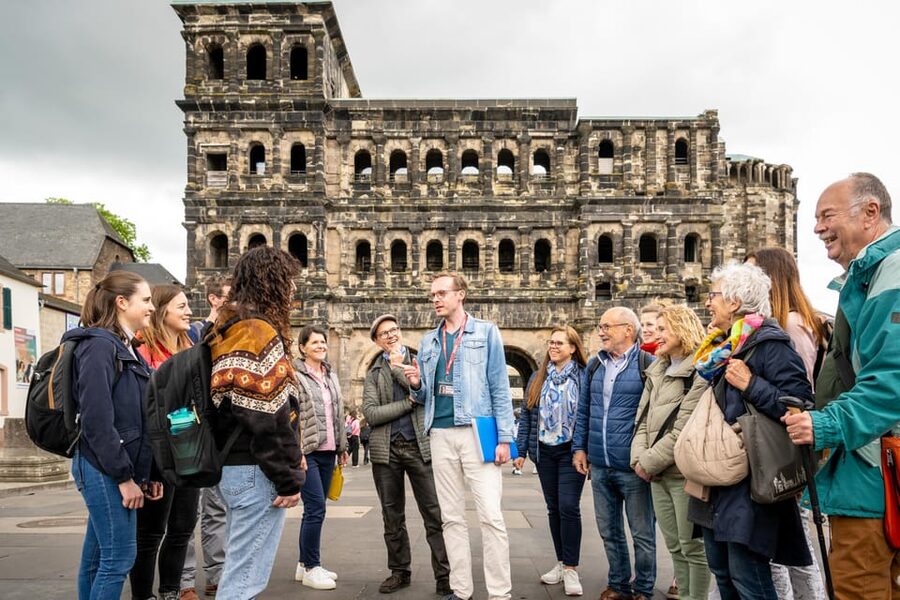
The route continues to two of Trier’s major Christian monuments: the cathedral and the Church of Our Lady. Together, they form part of the four UNESCO-listed buildings highlighted on the walk.
The cathedral brings a long span of Trier’s religious history into view. Its presence also explains why the city center feels so strongly shaped by church authority. The Church of Our Lady adds a different architectural note and sits beside the cathedral as part of a remarkable medieval church complex.
The tour treats these buildings as connected stops, which is helpful. You can compare them rather than seeing each one as an isolated landmark. The guide also places them within the larger story of St Peter becoming the city’s patron saint and of church power competing with civic ambition.
Do not assume that this short tour gives you a full interior examination of both churches. The stated focus is a guided city-center walk with sightseeing stops. If one of the churches is a priority, return later and check its opening arrangements independently.
For photographers, this part of the route offers a change from Roman stonework to religious architecture. For first-time visitors, it explains why Trier remained important long after the Roman period ended.
The cathedral courtyard and the shift to Baroque Trier
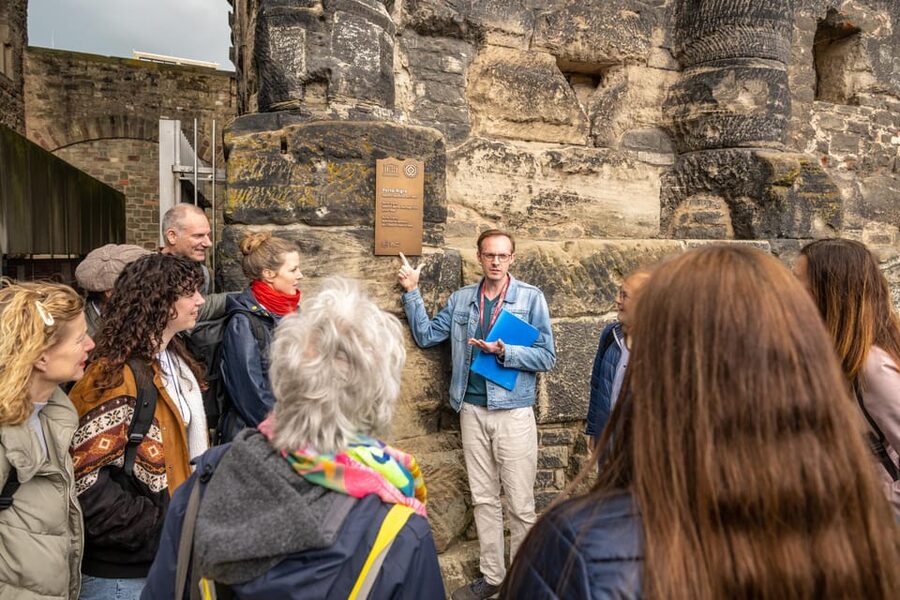
The cathedral courtyard helps bridge the medieval and modern sections of the walk. From here, the tour moves toward the Baroque splendor of Trier’s later rulers and church leaders.
This transition is one of the strongest features of the route. You can see how the city’s public image changed over time. Roman Trier emphasized imperial power. Medieval Trier showed the contest between citizens and bishops. Later Trier expressed authority through formal courts, palaces, gardens, and ceremonial architecture.
A guide is particularly useful at this point because the changes are easy to miss when you walk the route alone. You may notice that the buildings look different, but the explanation helps you understand why the city developed such a mix of styles within a relatively compact center.
The tour does not ask you to travel between distant parts of Trier. That keeps the pace manageable and leaves more time for looking up, listening, and noticing the relationship between the buildings.
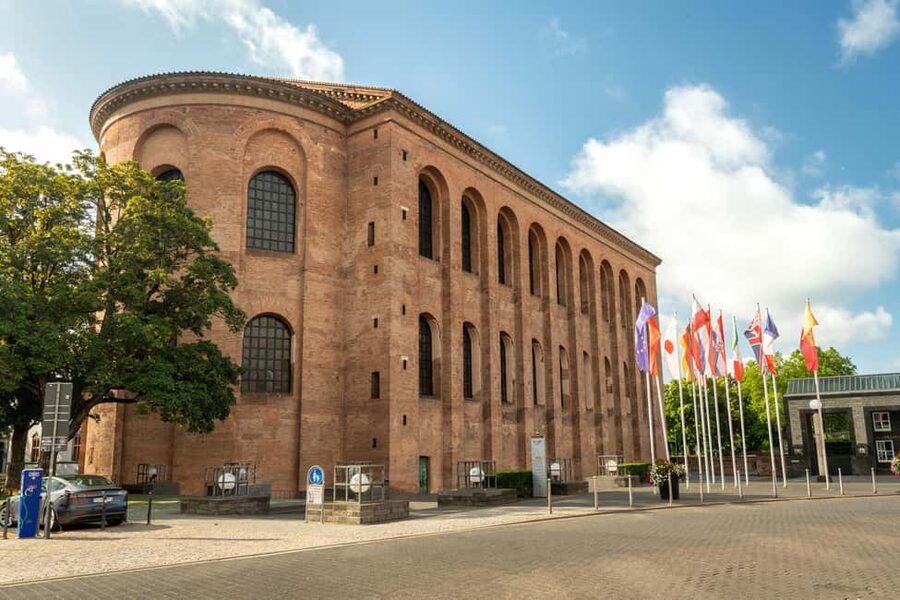
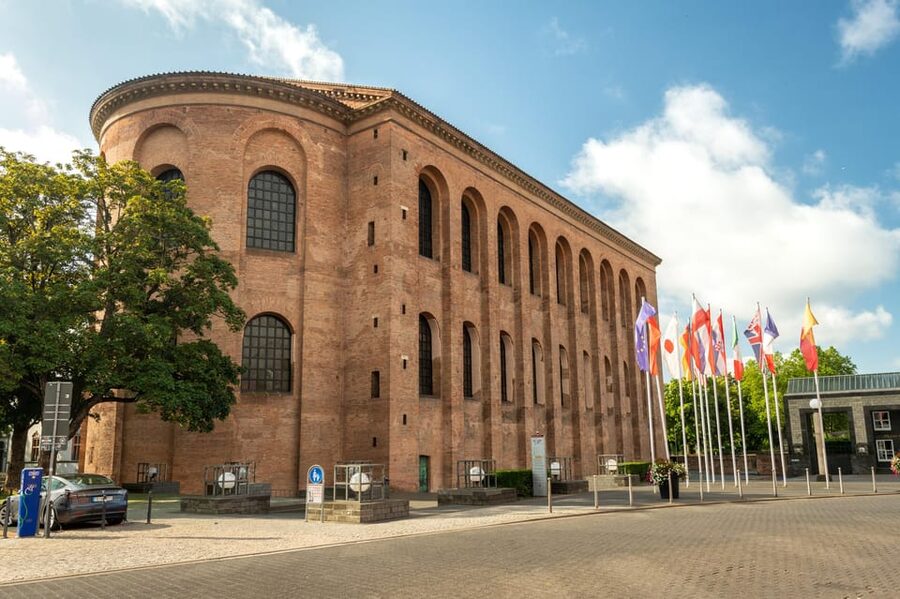
Aula Palatina: the basilica’s stark Roman scale
The Aula Palatina, also known as the basilica, is the fourth UNESCO monument featured on the tour. It brings the route back to Trier’s Roman identity, but in a different form from the Porta Nigra.
The basilica’s size makes an immediate impression. It was built as a major Roman audience hall, and its broad interior space helps you picture the public power once concentrated in Trier. Seen after the medieval and Baroque stops, it also reinforces the city’s long timeline.
This is a strong place to pause and compare periods. The Porta Nigra shows Roman engineering at a city gateway. The Aula Palatina shows Roman authority in a monumental public hall. Together, they frame the tour and remind you that Trier’s Roman past is not a single ruin but a set of buildings with different purposes.
The guide covers the basilica as part of the walk. As with the other monuments, you should treat the stop as an introduction rather than a detailed standalone visit. If the basilica is high on your list, plan extra independent time after the tour.
Electoral Palace and Palace Garden finish
The route finishes at the Kurfürstliches Palais, or Electoral Palace, beside the Palace Garden. This is the clearest expression of the Baroque chapter introduced near the cathedral courtyard.
The palace gives the tour a strong visual ending. After Roman gates and medieval lanes, you arrive at a formal residence designed to project rank and control. The nearby garden adds space and a calmer setting after the tighter streets of the old center.
The listed end points include the Electoral Palace and the Palace Garden. That gives you two useful options after the guide says goodbye. You can remain nearby to examine the palace area, or use the location as a starting point for more independent sightseeing.
The finish also makes practical sense. You do not end back at the Porta Nigra, so keep the final location in mind when planning your next stop. The two drop-off points are close to the palace area, not at the original meeting point.
Guide quality and language choice
The tour uses official Trier Guides and is offered in German or English. That matters in a city where the stories involve Roman institutions, medieval church authority, and political terms that can lose meaning in a rushed translation.
The available feedback points to clear, useful guiding. One verified booking described the guide as eloquent, while another German-language booking called the tour very informative. The overall rating is 4.6 from 118 reviews, which supports the idea that the guiding and content are reliable strengths.
No individual guide names are provided, so you should not book this expecting a particular person. The guide you receive may shape the tone, examples, and amount of detail. Still, the official city-guide format gives the tour a clear advantage over an unstructured walk.
Choose English if you want the historical explanations in English, and German if that is more comfortable for you. The tour’s subject matter rewards careful listening, especially during the medieval section, where several political and religious threads overlap.
Timing, access, and who should book
The 90-minute duration suits a first visit, a short stay, or a day when you want one organized activity without giving up the rest of your schedule. It is also a good opening tour because the route introduces the central sights before you decide where to spend more time.
I would recommend it to first-time visitors, history-minded visitors, and anyone who wants help making sense of Trier’s mixed Roman, medieval, and Baroque center. It also suits people who prefer a city walk with a firm start and finish instead of a long, open-ended tour.
You may want something else if you are looking for extended interior access, specialist Roman archaeology, or a very slow photographic walk. The tour promises a selection of central classics, not an exhaustive examination of every monument.
The activity is wheelchair accessible, and the stated languages are English and German. You can cancel up to 24 hours before the start for a full refund, and the reserve-now, pay-later option keeps your plans flexible. Check the available start times because the 1.5-hour schedule may vary.
Is the $17 price worth it?
For $17, this is a strong introduction to Trier. You get a local guide, an organized route, and four UNESCO monuments woven into one short story. The price is low enough that you do not need to treat the tour as your entire Trier sightseeing budget.
The real value comes from context. You can see the Porta Nigra, Hauptmarkt, cathedral, basilica, and Electoral Palace on your own, but the medieval disputes and shifts in power are harder to grasp without explanation.
I would book it early in your stay and use the rest of the day to revisit the places that catch your interest. That approach makes the tour a practical orientation rather than a rushed substitute for independent sightseeing.
Should you book this Trier city walk?
Book this tour if you want an affordable, clearly structured introduction to Trier’s center, especially if four UNESCO monuments appeal to you. The route gives you Roman remains, medieval streets, church power, and Baroque palace architecture in only 90 minutes.
Skip it if you already know Trier well or want a specialist tour focused on one period. For most first-time visitors, though, the official guides, central meeting point, English and German options, accessible format, and $17 price make this an easy choice.
FAQ
Where does the Trier city walking tour meet?
Meet in front of the Tourist Information office, directly at the Porta Nigra in Trier.
How long does the tour last?
The tour lasts 1.5 hours.
How much does the tour cost?
The listed price is $17 per person.
Which languages are available?
The tour is offered in German and English.
Which UNESCO monuments are included?
The route includes the Porta Nigra, Trier Cathedral, the Church of Our Lady, and the Aula Palatina, also called the basilica.
Is a local guide included?
Yes. A local official Trier Guide is included.
Is the tour wheelchair accessible?
Yes, the activity is listed as wheelchair accessible.
Where does the tour finish?
The tour has two drop-off locations in the area of the Kurfürstliches Palais and Palace Garden.
Can I cancel for a full refund?
Yes. You can cancel up to 24 hours in advance for a full refund.
Do I have to pay when I reserve?
No. The reserve-now, pay-later option lets you book your spot and pay later.
Just added around Germany
- From Berlin: Gardens & Palaces of Potsdam Bike Tour★ 5.0 · 61 reviews
- Berlin: Battle for Seelow Heights WW2 tour -Clash of Titans★ 5.0 · 27 reviews
- From Amsterdam: Cologne Private Sightseeing Tour★ 5.0 · 4 reviews
- From Berlin: Historical Gems of Potsdam Private Day Trip★ 4.4 · 4 reviews
- Freiburg: Veni, vidi, vino – wine hike and tasting★ 4.5 · 144 reviews
- From Alken: Return Day Trip by Boat to Cochem★ 4.6 · 141 reviews
- Fritz Haarmann – Die Mördertour★ 4.6 · 41 reviews
- Freiburg: Tour of the city with cathedral visit★ 4.7 · 167 reviews
Trier Tours, compared.
Guided Old Town Highlights and History Walking Tour
Read our review →
Browse the lists this tour appears in