
Review · TRIER TOURS
Trier: Guided City Walk with Wine Tasting
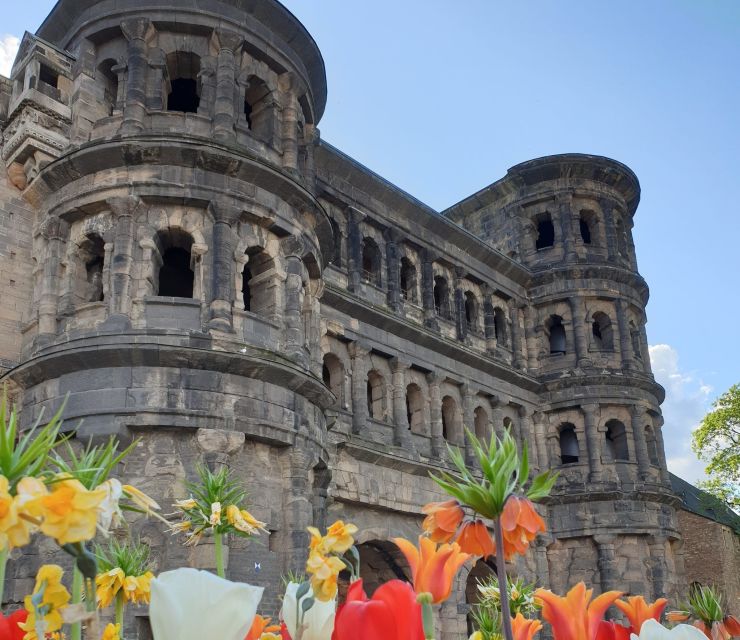
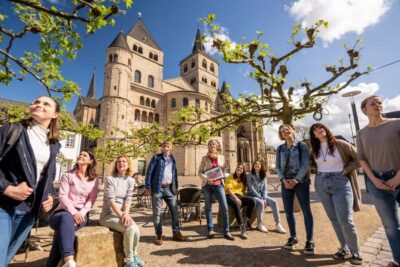
Trier makes a fine case for pairing old stones with young wine. On this two-hour walk, you follow the route from the Roman Porta Nigra to the Forum Baths while tasting wines tied to places and stories in the city center. Simon, a Trier-born guide, is especially good at joining the dots between Roman rule, church power, local vineyards, and modern Trier.
I like two things here: the wine is not treated as a separate tasting bolted onto a sightseeing walk, and the route covers several of Trier’s major sights without asking you to climb steps. The five regional wines in summer are a useful introduction to Moselle wine, while winter brings four local mulled wines when enough people register.
The main consideration is pace. You stop often, but this is still a moving walking tour, not a series of long site visits. The wine is served outdoors or along the route, and the tour runs in rain or shine, so bring sensible shoes and weather protection.
Key points to know before you book
- Roman Trier is the backdrop: Follow the city center from Porta Nigra through the cathedral quarter to the Forum Baths.
- Wine has a story here: Each tasting connects to a building, square, or part of Trier’s wine-growing past.
- Simon brings local knowledge: When he leads the walk, his personal connection to Trier adds color to the broad sweep of city history.
- The tasting changes by season: Expect five wines in summer, or four mulled wines from local wineries from mid-November through January when at least six people register.
- The route is barrier-free: You do not need to climb steps, and the activity is listed as wheelchair accessible.
- The value goes beyond the glass: Water, breadsticks, and a voucher for one glass of wine with a main course at Weinwirtschaft Friedrich-Wilhelm are included.
Why this Trier walk works so well
Trier is unusually rewarding on foot. Its compact center puts Roman monuments, medieval streets, major churches, and grand 18th-century buildings close together. You can see the famous sights on your own, but it takes a good guide to explain why they sit beside one another and how the city changed over time.
This tour uses wine as the thread. Instead of stopping at a winery outside town, you taste local bottles while moving through Trier itself. That matters if you have only a day in the city, or if you want an introduction to Moselle wine without committing half a day to a vineyard visit.
The route is also practical for a first visit. It begins at Porta Nigra and ends at Viehmarkt Square, outside the Forum Baths. Along the way, you pass the Market Cross, Trier Cathedral, Liebfrauenkirche, the Aula Palatina, the Electoral Palace, and the Kaiserthermen.
The guide speaks German or English. Simon is frequently associated with the experience and is described as a Trier native who knows both the city and its wine. His approach combines dates and architecture with local stories, questions, and a sense of humor. That personal touch is important in a city where a list of Roman facts can quickly become a blur.
More Germany wineries worth an afternoon:
- Hamburg: Harbor Cruise with Wine and Cheese
★ 4.7 · 795 reviews - Trier: Discovery Tour – Germany’s Oldest Wine Cellar
★ 4.7 · 218 reviews - Freiburg: Veni, vidi, vino – wine hike and tasting
★ 4.5 · 144 reviews
Meeting at Porta Nigra, Trier’s Roman front door
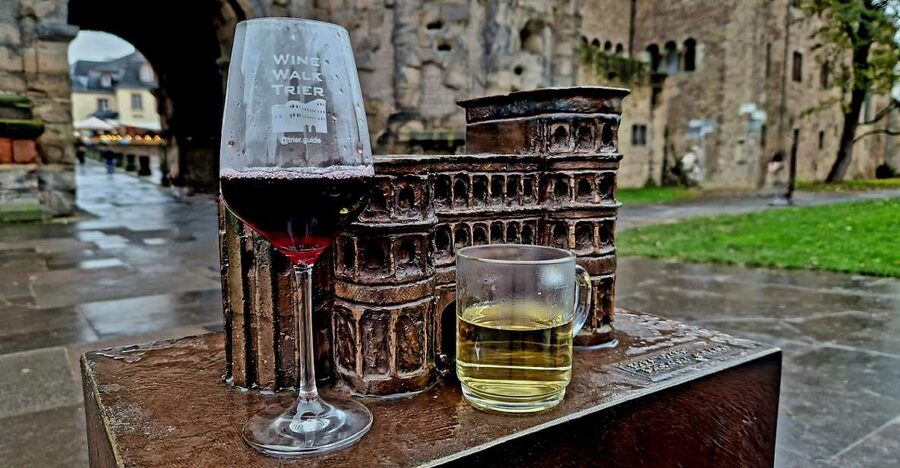
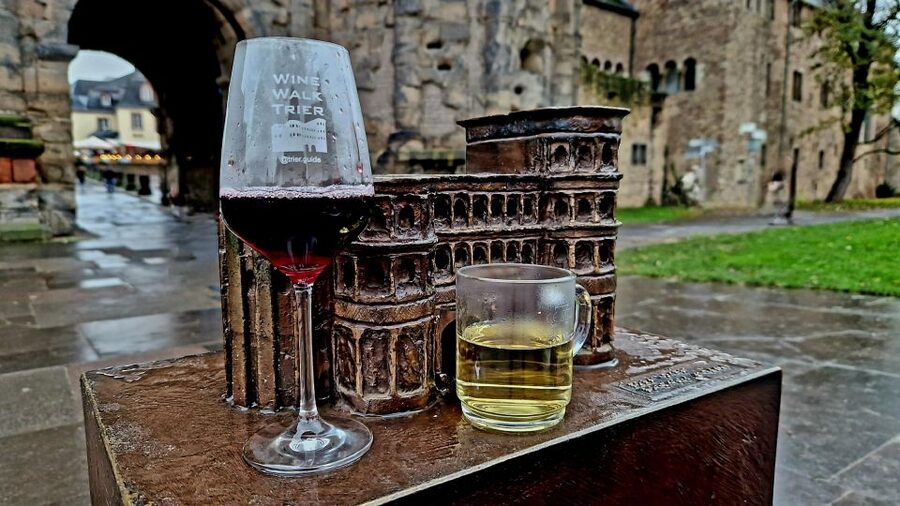
The meeting point is on the left side of the Tourist Information, in front of the city model near the flags. This is not a tour operated by the Tourist Information, so look for the separate guide rather than assuming the information office staff will organize the group.
Porta Nigra is an excellent starting point. The dark Roman gate once formed part of Trier’s defensive system, and its massive stonework gives you an immediate sense of the city’s age. It is also easy to find, including if you arrive by train. One useful tip is to allow extra time to reach the flags, since the tour begins promptly and the square can be busy.
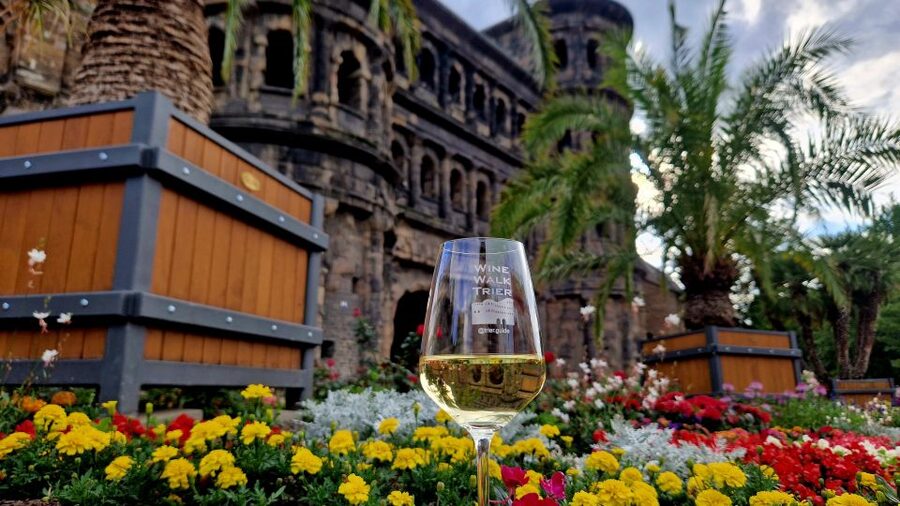
The first wine tasting may take place near this opening sight. The connection is the point: you begin with Roman Trier, then hear how the city’s long urban life developed in a region shaped by vineyards and river trade. Breadsticks and water are provided, which helps keep the tasting comfortable during the walk.
Market Cross and the main square
From Porta Nigra, the walk continues toward the Market Cross on the main market. This is one of the city’s most attractive public spaces, with a central cross and historic buildings around it. The stop gives the guide a chance to explain how Trier functioned as a civic and commercial center after the Roman period.
This is also a good place to listen for the difference between sightseeing and interpretation. A quick photo tells you what the square looks like. A guide can explain how its role changed, how religious and civic authority appeared in the built environment, and how the old center still organizes the city today.
Because the route remains outdoors, you can take photos without needing to enter every building. The tradeoff is that interior visits are limited. Some stops are brief viewing points, and you may want to return later to explore the cathedral, churches, or Roman monuments at greater length.
Trier Cathedral and Liebfrauenkirche
The cathedral quarter brings together two of Trier’s most important churches. Trier Cathedral has Roman roots and a long Christian history, while the neighboring Liebfrauenkirche is known for its unusual central plan and Gothic design.
The tour helps you read the pair as part of one story rather than as unrelated monuments. Trier was a major Roman city, then an important Christian center, and later a place where church power shaped the skyline. This is one of the strongest parts of the walk for anyone who wants more than Roman ruins.
Wine is included at selected points, including near Liebfrauenkirche. The tasting gives the guide a natural pause to discuss local grapes, the Moselle region, and the relationship between wine production and Trier’s urban life. You are not expected to be a wine expert. The point is to try several styles and learn enough to understand what makes the local bottles distinctive.
If you want to examine the church interiors carefully, plan to come back after the tour. Two hours is enough to introduce the sites, but not enough for a detailed visit to every monument.
More food tours in Germany:
- Cologne: Brewery Tour with 3 Kölsch Beer Tastings
★ 4.7 · 3,108 reviews - Hamburg: St. Pauli Highlights Guided Tour with Beer for 18+
★ 4.7 · 2,353 reviews - Hamburg: Elbphilharmonie Plaza and HafenCity Food Tour
★ 4.7 · 1,711 reviews - Bavarian Beer and Food Evening Tour in Munich
★ 4.5 · 1,575 reviews
The Aula Palatina and the Electoral Palace
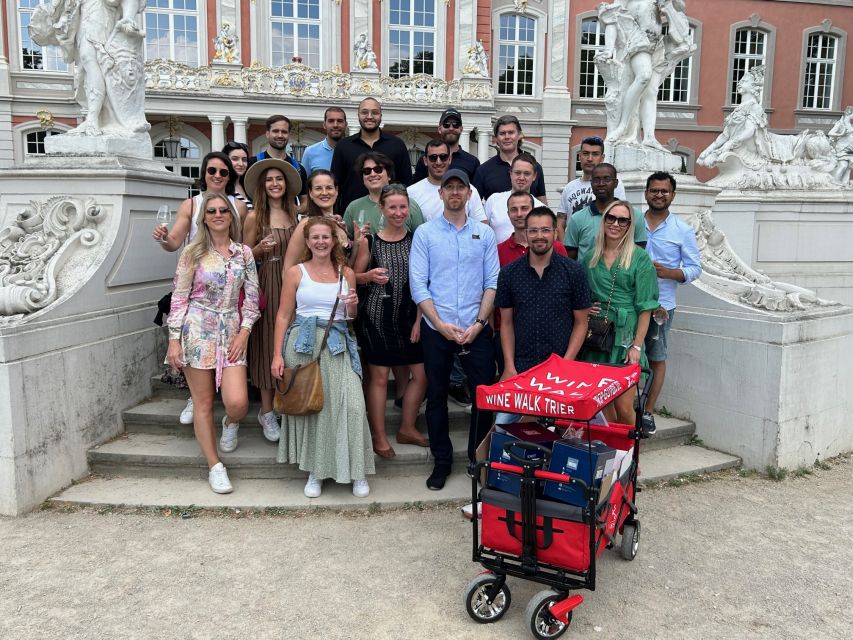
The Aula Palatina, also called the Basilica of Constantine, is one of Trier’s great Roman survivors. Its scale is striking, but the building’s later use is just as interesting. Beside it, the Electoral Palace introduces a very different period, with an ornate 18th-century facade and grounds.
This pairing gives the tour a useful change of rhythm. You move from imperial Roman architecture to the world of the prince-electors, seeing how different rulers used the same city over many centuries. The walk does not treat Trier as a single-period Roman museum. It shows you a city rebuilt, reused, and reshaped.
The Electoral Palace is also one of the places associated with a wine tasting. That makes the drink more than refreshment. The guide uses the setting to connect local wine with the people and institutions that influenced the region.
Reviews of the experience repeatedly praise the guide’s ability to answer questions. That is especially useful here, since the transition from the Roman basilica to the later palace can raise plenty of them. If you are curious, ask. The format allows time for conversation.
Kaiserthermen and the Forum Baths
The Kaiserthermen, or Imperial Baths, are among Trier’s most impressive Roman ruins. Even from outside, the surviving walls and underground service passages suggest the size and complexity of the original bath complex. The tour offers a guided look and a photo stop rather than a long archaeological visit.
The final destination is the Forum Baths on Viehmarkt Square. These ruins sit below the modern square and preserve another part of Trier’s Roman bathing culture. Ending here makes sense: the walk closes with a Roman site, but in a setting that also shows how modern Trier lives above and around its ancient remains.
A final wine tasting may be served near the Forum Baths. By this point, the city’s layers have had time to build: Roman defenses, the medieval market, Christian landmarks, princely architecture, and bath ruins. The last glass works best as a recap of the route and the Moselle wine region.
The tour ends outside the Forum Baths, not back at Porta Nigra. That is useful if you plan to continue sightseeing in the southern part of the center. It also means you should not leave your plans tied to returning to the starting point.
What you actually drink along the way
In the warmer months, the standard tasting includes five different regional wines. The selection is presented with links to buildings or places in central Trier, so you get a small lesson in both local wine and city history.
The supplied information does not promise particular grape varieties or vintages, and the exact bottles can change. You should expect a regional selection rather than a formal sommelier tasting with printed tasting notes. That is a strength for casual drinkers, but serious wine collectors may want a dedicated winery visit as well.
From the middle of November through the end of January, the experience may feature four different mulled wines from local wineries instead. This winter format applies when at least six people register. If fewer than six people sign up, the activity information says five different wines may be served instead, as in summer.
The seasonal change is worth considering when you book. The mulled wine version suits cold weather and gives the walk a festive feel, but it is not the same experience as tasting chilled Moselle wines. If you prefer grape juice, four different grape juices can be arranged by email. That option is helpful for children, nondrinkers, and anyone who wants the historical walk without alcohol.
A glass can be purchased after the tour for 6 euros. A wine glass holder is also available for 3 euros. These extras are not included, so bring them into your budget only if you want a souvenir-style tasting glass or an easier way to carry it.
Is $43 a fair price?
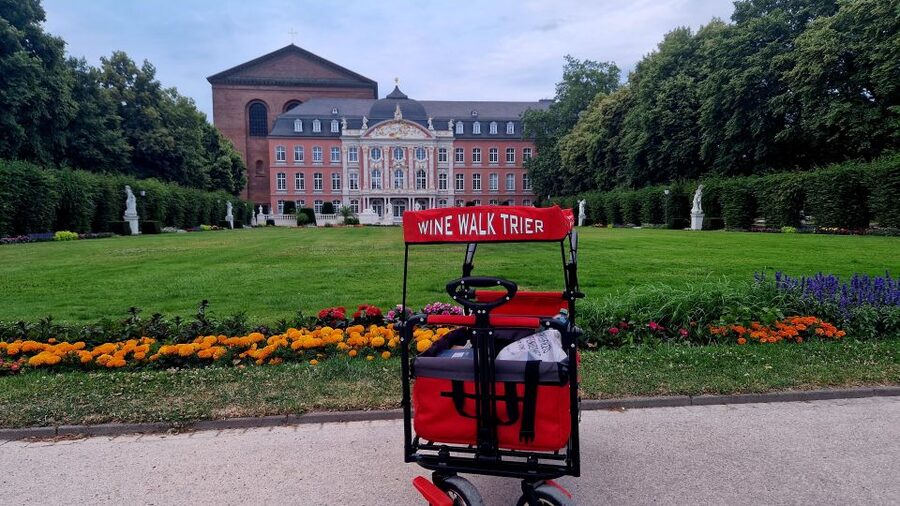
At $43 per person, the tour is priced above a basic free walking tour, but the comparison is not quite fair. You are paying for a two-hour guided route, five wine tastings in summer or four mulled wines in the winter format, water, breadsticks, and a wine voucher for a main course at Weinwirtschaft Friedrich-Wilhelm near the Basilica.
The included restaurant voucher adds useful value if you already plan to eat there. It provides one glass of wine with a main course, rather than a full meal, so do not count it as lunch or dinner on its own.
I see the strongest value for first-time visitors and day-trippers. You cover a lot of ground, receive context at each major stop, and sample local wine without arranging transport to vineyards. The tour is also a good way to decide which sights deserve a longer return visit.
The value is weaker if you have already spent several days in Trier, know the major monuments well, or want an in-depth wine education. In that case, the short stops may feel brisk. You are buying a social city walk with tastings, not a private archaeology lecture or a winery tour.
Practical details that affect your day
The activity lasts two hours and runs in all weather. Wear shoes that are comfortable on city streets, and carry a rain jacket even if the forecast looks friendly. Summer heat can also matter, since the tastings take place during a walk rather than inside one fixed tasting room.
The route is completely barrier-free and does not require climbing steps. That makes it a practical choice for wheelchair users, though you may still want to confirm current conditions when booking if you have specific mobility needs.
The meeting point is close to the train station, making the tour workable as a day trip from Luxembourg or another nearby base. Hotel pickup and drop-off are not included, so you make your own way to Porta Nigra and away from the Forum Baths afterward.
You can cancel up to 24 hours in advance for a full refund, and the reserve-now, pay-later option keeps the booking flexible. Starting times vary, so check the available time before building the rest of your day around it.
Who will enjoy this wine walk most?
I would choose this tour if you want a friendly introduction to Trier that mixes landmarks with local flavor. It suits couples, small groups, solo visitors who like meeting people, and anyone with only a short time in town.
It is also a good fit for people who find traditional wine tastings too formal. The breadsticks, walking route, and historical stories keep the atmosphere relaxed. The guide can explain the wines without assuming you already know the terminology.
Families and nondrinkers can still consider it, since grape juice is available by email arrangement. The experience remains focused on wine, though, so it may not be the best choice for someone who has no interest in tasting or discussing it.
History fans should know that the route offers breadth rather than long entry visits. You see the main Roman, religious, and princely sights, then can return independently to the ones that catch your attention.
Should you book the Trier wine walk?
Book it if you want to understand Trier quickly, enjoy five local wines, and prefer your sightseeing with a human voice and a little conversation. The best feature is the way the guide links each pour to a place in the city, so the wine becomes part of the story rather than a side activity.
Skip it if you want a slow museum-style tour, a full winery visit, or detailed interior access at every monument. For most first visits, though, the route, price, and included tastings make this a smart two-hour introduction. If Simon is leading, you can expect a guide with strong local ties, broad historical knowledge, and a generous approach to questions and wine.
FAQ
Where does the Trier wine walk begin?
Meet on the left side of the Tourist Information, in front of the city model near the flags. The meeting point is close to Porta Nigra.
Where does the tour end?
The walk ends at the Forum Baths on Viehmarkt Square. It does not return to the starting point.
How long does the experience last?
The guided walking tour lasts two hours.
How many wines are included?
The summer version includes five regional wines. From mid-November through the end of January, four local mulled wines may be served when at least six people register.
Can I choose a nonalcoholic option?
Yes. Four different grape juices can be arranged by email.
Is the tour offered in English?
Yes. Live guiding is available in German and English.
Is the route wheelchair accessible?
Yes. The tour is completely barrier-free and does not require climbing steps.
What is included besides the wine?
The price includes the walking tour, guide, water, breadsticks, and a voucher for one glass of wine with a main course at Weinwirtschaft Friedrich-Wilhelm near the Basilica.
Does the tour run in bad weather?
Yes. The tour takes place rain or shine, so dress for the conditions.
More Walking Tours in Germany
- Discover Berlin Half-Day Walking Tour
★ 5.0 · 9,624 reviews - Berlin: Third Reich and Cold War 2 Hour Walking Tour
★ 4.9 · 6,830 reviews - Munich: Third Reich & WWII Walking Tour
★ 4.6 · 6,181 reviews - Berlin: Discover Berlin Walking Tour
★ 4.9 · 5,998 reviews
Just added around Germany
- From Berlin: Gardens & Palaces of Potsdam Bike Tour★ 5.0 · 61 reviews
- Berlin: Battle for Seelow Heights WW2 tour -Clash of Titans★ 5.0 · 27 reviews
- From Amsterdam: Cologne Private Sightseeing Tour★ 5.0 · 4 reviews
- From Berlin: Historical Gems of Potsdam Private Day Trip★ 4.4 · 4 reviews
- Freiburg: Veni, vidi, vino – wine hike and tasting★ 4.5 · 144 reviews
- From Alken: Return Day Trip by Boat to Cochem★ 4.6 · 141 reviews
- Fritz Haarmann – Die Mördertour★ 4.6 · 41 reviews
- Freiburg: Tour of the city with cathedral visit★ 4.7 · 167 reviews
Trier Tours, compared.
Guided Old Town Highlights and History Walking Tour
Read our review →
Browse the lists this tour appears in