Review · WALKING TOURS
Schwerin: Private Guided Walking Tour
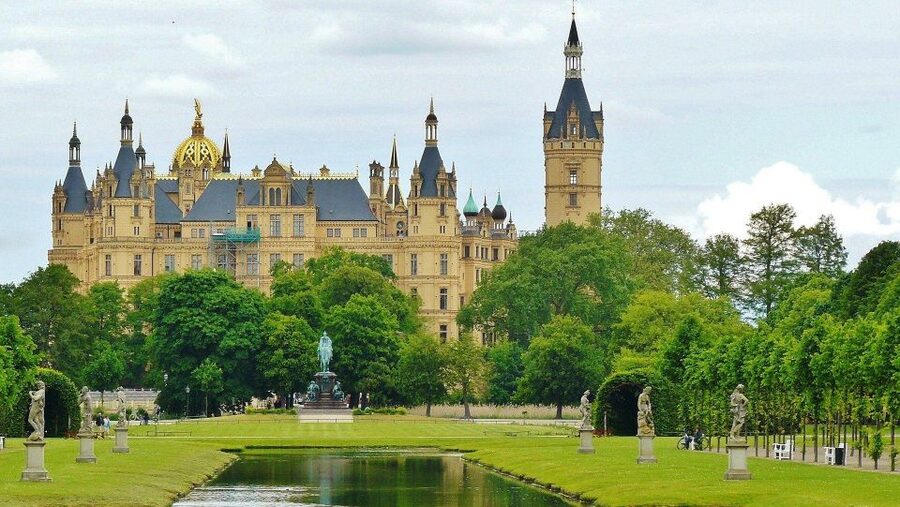
Schwerin Palace is the star here, a romantic castle set on an island in Lake Schwerin and often called the Neuschwanstein of the North. The tour then uses the palace and old town as a doorway into Schwerin’s medieval beginnings, religious upheaval, wars, and role in modern Germany.
I like the private format, which gives your group room to ask questions and shape the walk. I also like the 90-minute focus: enough time for the city’s major stories without turning a short stay into a full-day history lesson. The main drawback is the meeting point, which can be unclear because the castle has more than one relevant entrance.
Key points to know
- Schwerin Palace begins the story: Meet in front of the castle and learn why its island setting and romantic design earned it a famous northern nickname.
- A private guide for up to 15 people: Your group receives a guide of its own, with English and German tours available.
- A walk through several eras: The route covers medieval Schwerin, pilgrimage traditions, the Protestant Reformation, the Thirty Years’ War, Napoleon, and German unification.
- Custom interests are welcome: Guides such as Jürgen have adjusted the route for people who already knew parts of the city or had another evening tour planned.
- Castle entry costs extra: Entrance fees are not included, so clarify whether the 90-minute visit is mainly exterior sightseeing or if you want time inside the palace.
Schwerin Palace, the natural opening chapter
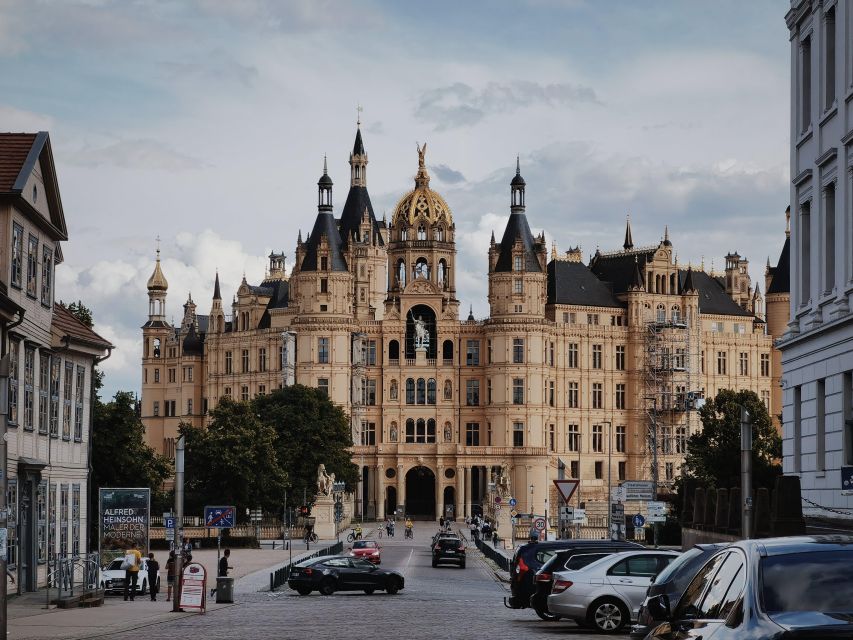
I would begin this experience with the castle itself. Schwerin Palace sits on an island in Lake Schwerin, surrounded by water and reached from the city through the palace area. Its romantic appearance gives Schwerin an immediate storybook quality, but the guide’s job is to show that this is not just a pretty backdrop.
The palace is known as the Neuschwanstein of the North. That nickname helps you place its style, but it can also create the wrong expectation. This tour is not simply a castle photo stop. The palace provides the setting for understanding Schwerin as a seat of power and as the center of a city that grew around political, religious, and royal changes.
Your meeting point is in front of Schwerin Castle at Lennéstraße 1. From there, expect the guide to orient you around the palace and the surrounding area before leading you into the city. Since entrance fees are not included, you should ask at the start how the visit will handle the palace interior if that matters to you.
I would not assume that a guided walk automatically includes a full museum visit. The supplied details describe a walking tour with a castle visit, but they also clearly list admission fees as extra. If you want rooms, exhibits, or a longer look inside, budget separately and confirm the plan with the guide.
More walking tours in Germany:
- Discover Berlin Half-Day Walking Tour
★ 5.0 · 9,624 reviews - Berlin: Third Reich and Cold War 2 Hour Walking Tour
★ 4.9 · 6,830 reviews - Munich: Third Reich & WWII Walking Tour
★ 4.6 · 6,181 reviews
Medieval Schwerin and the city of seven lakes
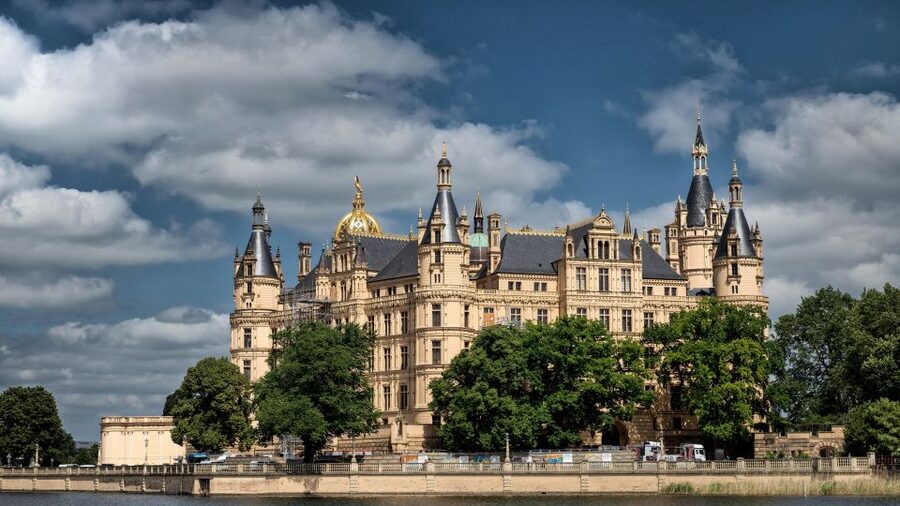
Schwerin is the smallest land capital in Germany and is surrounded by seven lakes. That setting matters because the city does not feel like a capital built around traffic and office blocks. Water, palace views, and a largely intact old town shape the experience.
The city’s roots reach back to at least 1018, and Schwerin was recognized as a city in 1160. Those dates give your walk a useful framework. You are not just crossing an attractive square or following a castle path. You are tracing a town that grew from an early medieval settlement into a regional center.
I like the way a guide can connect the old streets to the palace rather than treating them as separate attractions. Schwerin’s old town suffered only minor damage during World War II, so the walk can retain a strong sense of historical continuity. You might find the greatest pleasure here in the transitions: palace views giving way to older streets, then civic buildings and religious landmarks.
The 90-minute length is well suited to this kind of introduction. You can get your bearings and hear the main stories, but you will not have time for every street, museum, or building. If you want a slow architectural study, plan extra time before or after the tour.
Schwerin Cathedral and the medieval pilgrimage story
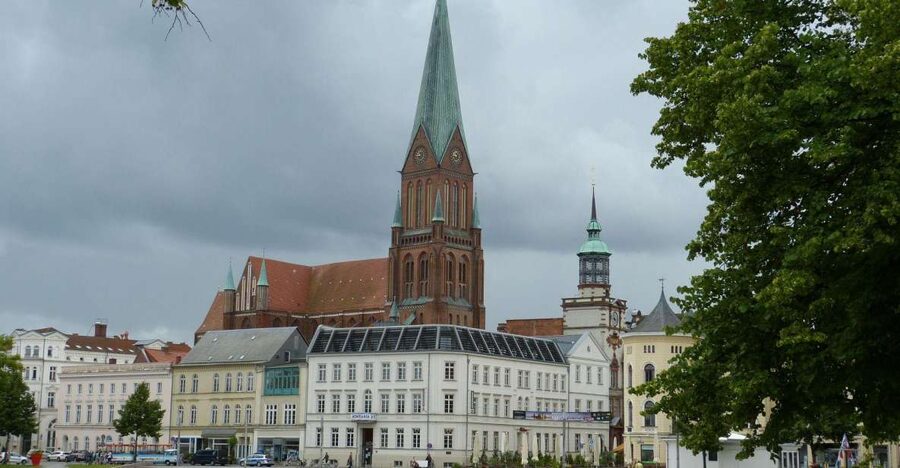
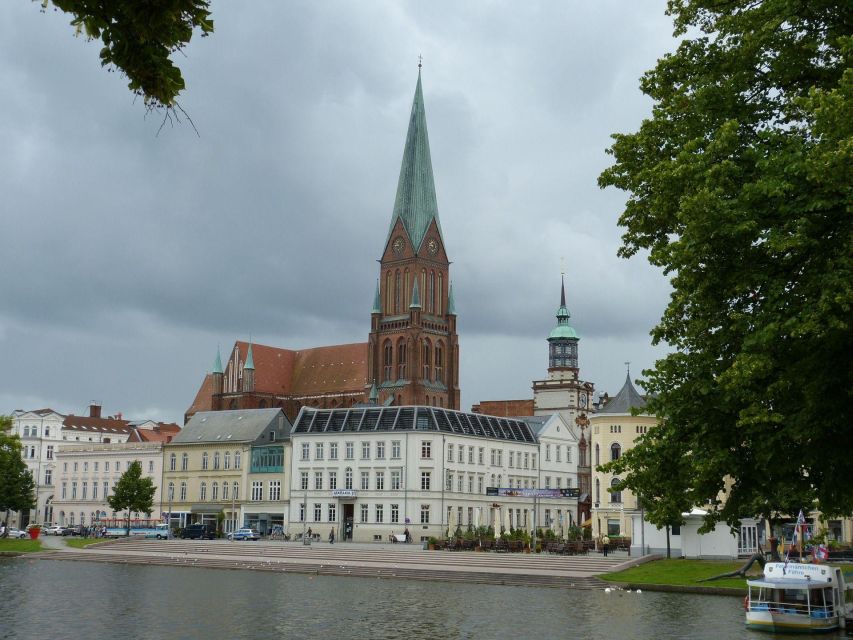
Schwerin Cathedral was the medieval center of town and was known across Europe for reportedly holding a drop of Christ’s blood. That belief made the cathedral an important pilgrimage destination and helps explain why Schwerin mattered beyond its size.
A good guide can make this story more useful than a simple list of dates. Pilgrims, relics, churches, and trade all helped shape medieval towns. At the cathedral, you can consider how religious importance brought people and attention to Schwerin, long before the palace became the city’s most famous image.
The cathedral also gives the walking tour a change of mood. The palace presents political power and romantic architecture. The cathedral points to faith, pilgrimage, and the daily life of medieval communities. I like this contrast because it keeps the tour from becoming a single-theme castle talk.
The available information does not promise a dedicated cathedral interior visit or a specific amount of time inside. Treat the cathedral as an important stop or subject in the walk, and ask the guide what the route includes on your date. The private format gives you a better chance to make that request than a large scheduled group tour.
From the Protestant Reformation to the Thirty Years’ War
Schwerin’s story changes sharply with the Protestant Reformation. A tour that reaches this period should help you see how religious change affected government, worship, and the identity of towns across northern Germany.
The Thirty Years’ War adds another layer. The conflict reshaped much of Central Europe, and Schwerin’s history cannot be separated from the political and religious struggles of the period. In 90 minutes, you will not receive a full military study, but you can learn how these broad events affected the city.
This is one reason I prefer a private guide for a compact city tour. If the guide simply recites dates, the period can become a blur. If you ask how the Reformation or the war changed Schwerin’s cathedral, rulers, and streets, you may get a clearer connection between national events and local life.
The private setup also helps if your group has different levels of interest. One person can ask about church history, while another can bring the conversation back to architecture or the city’s political rulers. Guides Jürgen and Theresa are specifically associated with this experience, and the supplied feedback describes both as clear, engaging, and easy to follow.
A few more Germany half-days to weigh up
- Berlin: Private Reichstag and Glass Dome Tour
★ 4.8 · 2,226 reviews - Berlin Private Complete History All Day Walking Tour
★ 5.0 · 474 reviews - Munich Private Tour with a Local – Highlights & Hidden Gems
★ 5.0 · 469 reviews - Private Walking Tour Berlin Third Reich Hitler and World War II
★ 5.0 · 360 reviews
Napoleon, German unification, and the modern city
The final historical stretch reaches the Napoleonic era and German unification. These subjects show that Schwerin was not frozen in its medieval past. The city continued to respond to larger political shifts that changed the map and government of Germany.
Napoleon’s era is useful in a walking tour because it links Schwerin to forces beyond Mecklenburg. German unification then provides another turning point, helping you understand how a regional capital fit into the creation of a broader German nation.
I would listen for the guide’s local explanation here. A general textbook can tell you when Napoleon and unification mattered. A local walk can show how those changes relate to Schwerin’s rulers, civic buildings, and public identity. The tour description does not list every building used to explain these periods, so the exact route may vary.
That flexibility is a strength, especially for repeat visitors. One person who had already seen some of Schwerin asked the guide to focus on less familiar subjects, since an evening night-watchman tour was planned later. The guide adjusted the content and even included places such as the oldest house and a butcher’s shop. That is a good example of what a private tour can do when you explain your plans at the beginning.
A private walk that can follow your interests
The price is $280 per group of up to 15 people. That is not a bargain for one or two people, but the calculation changes with a larger party. At the full group limit, the cost works out to less than $19 per person before any palace admission. For four people, it is about $70 each, and for two, about $140 each.
I would book this for a family, group of friends, or small organization that values a private conversation. A solo visitor or couple should compare the cost with a regular group tour if one is available. The private guide is the main value, not a long list of included admissions.
The guides appear to be the strongest part of the experience. Jürgen is described as bringing the important and interesting material across in a relaxed, understandable way. Theresa is also named as a guide, and the feedback about her is brief but very positive. Another guide adapted closely to the group’s interests and made room for less expected stops.
That flexibility is not guaranteed to mean a completely new route. The activity allows possible customization on the spot, so tell your guide what you have already seen, what you care about, and what you plan to do later. If you have a night-watchman tour, museum visit, or palace interior visit scheduled, say so. The guide can then avoid repeating the same ground, at least where the route allows.
Meeting at the castle without confusion
The listed meeting point is in front of Schwerin Castle. That sounds simple until you arrive and see signs pointing toward the castle, the museum, the entrance, and the courtyard.
One group had trouble because they waited at the entrance that also leads to the museum. The intended meeting location was the entrance to the castle courtyard, which was not open on a weekday. The problem was eventually sorted out, but it cost time and caused needless uncertainty.
My practical advice is simple: arrive early, keep the guide’s contact information handy, and confirm the exact entrance before the day of the tour. Do not rely only on a sign saying to the castle. If you are meeting near a specific gate or courtyard, make sure everyone in your group knows that detail.
Once you meet, the walk lasts 90 minutes. The guide speaks English or German, and the group is private. Starting times vary, so check availability when booking rather than planning around an assumed departure.
What the 90 minutes can and cannot do
Ninety minutes is enough for a well-shaped introduction to Schwerin. You can expect the palace, old town, cathedral, and the city’s major historical periods to form the backbone of the walk.
It is not enough for a detailed museum visit, every important street, or a slow stop at each landmark. The route needs to keep moving. If you want photographs, allow time before or after the tour, particularly around the palace and lake.
The strongest use of the time is historical connection. The guide can explain why Schwerin existed by 1018, why it became a city in 1160, why the cathedral drew pilgrims, and how later religious and political upheavals changed the town. You get a usable map of the city’s past rather than a pile of disconnected facts.
I would also treat the tour as a first look, not the entire Schwerin experience. Afterward, you can return to the palace, cathedral, or old town area that caught your attention. The private walk helps you decide where to spend more time.
Who will get the best value
This tour suits you if you want a local guide rather than an audio guide or a self-guided route. It is especially useful if Schwerin is a short stop and you want the major sights placed in context quickly.
It also fits groups with mixed interests. History fans can ask about the Reformation, the Thirty Years’ War, Napoleon, and unification. Architecture fans can focus on the palace and old town. People who already know the main sights can request less familiar material, as one group did.
Families may also like the private setup because the guide can adjust the pace and explanation. The information does not specify a family program or accessibility details, so ask directly if either is important to your group.
I would think twice if you mainly want to spend 90 minutes inside Schwerin Palace. Admission is extra, and the walk also covers the city’s medieval and modern history. In that case, confirm the interior portion before booking or plan a separate palace visit.
Should you book the Schwerin walking tour?
I would book it if you want a focused introduction to Schwerin with a guide who can talk with your group, not at it. The strongest reasons are the private format, the well-chosen 90-minute length, and the chance to connect the palace, cathedral, old town, and major political changes in one walk.
The price makes the most sense for a group of several people. For two, it is a premium purchase, so you should value personal attention and the ability to shape the conversation. Palace admission is not included, and the meeting point deserves a quick confirmation.
This is a good choice for first-time visitors, history-minded groups, and repeat visitors who want a less predictable route. If you mainly need castle admission or a long palace tour, choose a different plan or clarify the itinerary first. Cancellation is free up to 24 hours ahead, and you can reserve now and pay later, which makes the decision easier when your schedule is still shifting.
FAQ
How long is the Schwerin private walking tour?
The tour lasts 90 minutes.
How much does the tour cost?
The price is $280 per private group of up to 15 people.
Where does the tour meet?
The meeting point is in front of Schwerin Castle at Lennéstraße 1, 19053 Schwerin.
What languages are available?
The live guide speaks English or German.
Is this a private group tour?
Yes. Your group has a local professional guide who is with your group only.
Are palace entrance fees included?
No. Entrance fees are not included in the tour price.
Can the tour be customized?
Possible customization with the local guide is available on the spot. It is useful to explain your interests and any other Schwerin tours or visits you have planned.
Can I cancel for a full refund?
Yes. You can cancel up to 24 hours in advance for a full refund.
Just added around Germany
- Konstanz Scavenger Hunt and Sights Self-Guided Tour★ 4.5 · 14 reviews
- e-Scavenger hunt Koblenz: Explore the city at your own pace★ 4.0 · 20 reviews
- Private city tour in Constance★ 4.0 · 5 reviews
- Koblenz Guided tour of the Ehrenbreitstein Fortress★ 4.5 · 7 reviews
- Koblenz – Old Town with the Ehrenbreitstein Fortress★ 4.0 · 7 reviews
- Koblenz – Old Town including the Deutsches Eck★ 4.5 · 16 reviews
- Kiel – Private Historic Walking Tour★ 5.0 · 4 reviews
- Lubeck Private Walking Tour With A Professional Guide★ 4.5 · 10 reviews
Walking Tours, compared.


Berlin’s Best: 2 Hour Walking Tour Third Reich and the Cold War
Read our review →