
Review · MUNICH TOURS
Third Reich Walking Tour Munich
Munich’s Nazi past is not tucked away in a distant museum. It is written into the city center, from grand squares used for Nazi ceremonies to beer halls where politics took a darker turn. This 2.5-hour walking tour connects those places and explains how Munich became a key setting for Hitler’s rise.
I like the route for two reasons: it links major landmarks you might otherwise visit only as ordinary city sights, and it puts memorials to Nazi victims into the same story. Guides such as Jake, Michael, Paul, and Aileen have been praised for clear explanations, useful photographs, and open answers to difficult questions.
The main drawback is the pace. You cover a lot in 150 minutes, and the tour is almost entirely outdoors. On a cold or wet day, you need warm clothing, and if you already know the subject well, you may wish for a longer version.
Key points to know before you book
- Munich’s Nazi story begins in the city center: The route visits Königsplatz, Odeonsplatz, Hofbräuhaus, the Old Town Hall, and Marienplatz.
- The tour is entirely on foot: Expect roughly two and a half hours outside, with walking between stops and no included transport.
- The English-speaking guides shape the experience: Guides including Jake, Michael, Scott, Nicola, and Paul are praised for clear delivery, strong subject knowledge, and thoughtful discussion.
- Photos help connect past and present: Some guides bring historical images to show how places looked during the Nazi era.
- The subject is serious but the tone is human: Guides use humor carefully and leave room for questions without making light of the crimes discussed.
- The group can include up to 25 people: That is small enough for a guided walk, though a full group may feel less personal than a private tour.
Why this Munich walking tour matters
I find this kind of tour useful because it gives you a framework for seeing Munich. Without one, Königsplatz is simply an impressive open square, Odeonsplatz is a handsome urban space, and Hofbräuhaus is a famous beer hall. The guide shows how each place took on a political role during the Nazi period.
The tour covers the Nazi party’s beginnings, the propaganda machine, the rise of Adolf Hitler, the spread of Nazi ideology, and the destruction that followed in World War II. It also includes memorials to people who opposed the regime and those who died under it.
That balance matters. The walk is not only about Hitler and Nazi power. It also points toward resistance, persecution, and the way modern Germany remembers this period. You are asked to look at what happened, where it happened, and how the city deals with that past today.
The strongest guides do more than recite dates. They explain political and social conditions, answer uncomfortable questions, and connect the past to modern Germany. Guides named in feedback include Michael, Jake, Scott, Steve, Alex, Michelle, Sarah, and Nicola, though your guide will depend on the date you book.
More WWII History Tours in Munich
- Munich: Third Reich & WWII Walking Tour
★ 4.6 · 6,181 reviews - Dachau Concentration Camp Memorial Site Tour from Munich by Train
★ 4.5 · 5,637 reviews - From Munich: Dachau Memorial Site Day Tour
★ 4.8 · 2,723 reviews
Starting at Radius Tours on Dachauer Strasse
The meeting point is Radius Tours at Dachauer Str. 4, near central Munich. You check in there before setting off, and the tour ends at Marienplatz, so the route works well as a first serious sightseeing activity in the city.
The start is practical rather than scenic. That is a good thing. You do not waste time trying to find a remote meeting point, and the location is near public transportation. Confirmation arrives when you book, and the mobile ticket keeps the process simple.
The group size can reach 25 people. That is worth considering if you prefer quiet, private walks. A group of this size can make questions and photographs slightly harder, but the format also keeps the $45.95 price below what you would expect for a private guide.
The tour is offered in English. Several guides have been praised for speaking loudly and clearly, which matters on busy city streets. Still, you should expect to listen outdoors, sometimes while standing, rather than sitting in a classroom.
Königsplatz and the Nazi use of grand spaces
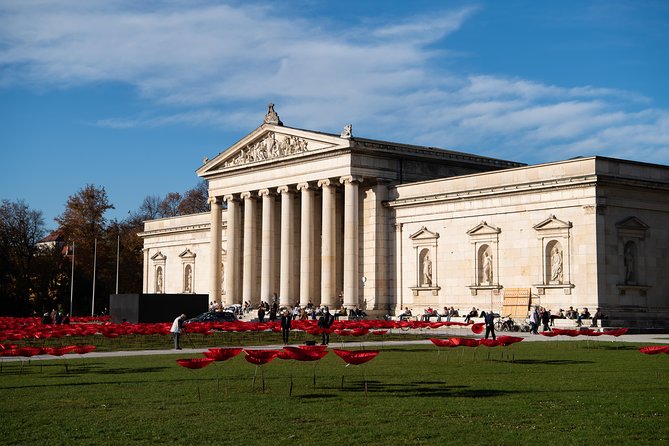
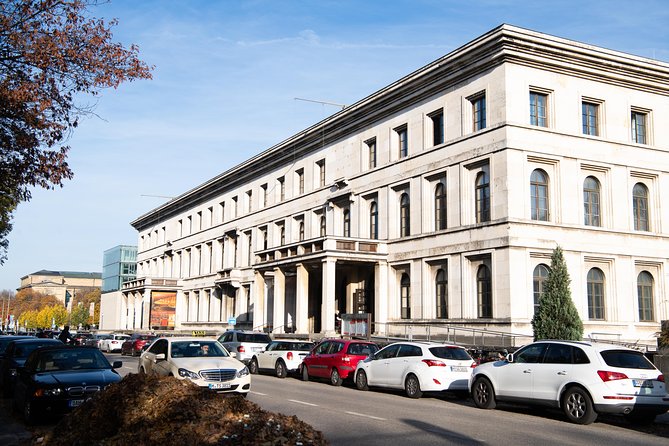
Your first major stop is Königsplatz, where you spend about 15 minutes. This square is one of the clearest examples of how the Nazi party used architecture and public space for political effect.
The guide explains why Königsplatz became an important Nazi landmark and how its grand scale suited marches, ceremonies, and public display. The value here is not just the square itself. It is learning to read the setting as part of the propaganda machine.
Fifteen minutes is enough for an introduction, but not enough for every detail. If you are a serious student of the era, take notes or photographs of the places discussed so you can revisit the subject later. One guide, Aileen, reportedly used photographs to show how the locations looked in the past. That sort of visual aid can make the stop easier to follow.
Königsplatz also sets the tone for the walk. The tour asks you to consider how ordinary civic spaces can be turned into stages for power. That is a useful lesson for the rest of the route.
Odeonsplatz and the march toward power
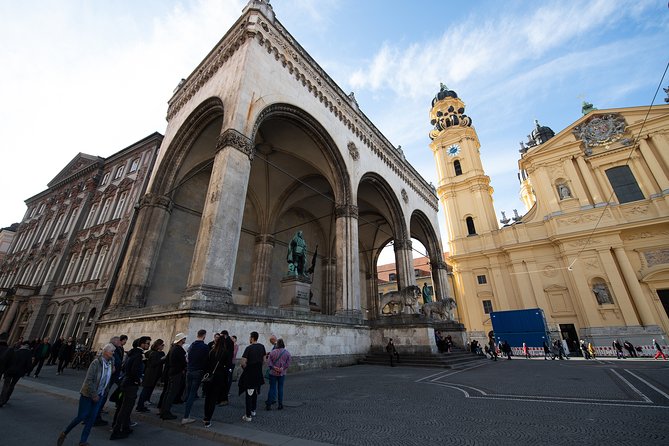
At Odeonsplatz, the tour spends about 30 minutes, making this the longest listed stop. The square was used by the Nazi party for marches and memorial ceremonies, so it gives the guide room to discuss the movement’s growth and public image.
This is where the tour can move beyond a simple list of buildings. You learn how Nazi politics entered public life and how rallies, symbols, speeches, and ceremonies helped create a sense of authority. The guide also places Hitler’s rise within Munich rather than treating it as a story that began somewhere far away.
The longer stop should help you follow the cause and effect. You are not merely told that the Nazis gained power. You get a sense of how political messaging and public gatherings helped them build support and control.
This part may feel dense. One criticism of the tour is that there is a great deal to absorb in a short time, especially for anyone hoping to remember every name and date. I recommend writing down the key places or asking the guide for the main points at the end of the stop.
More wartime history tours in Munich:
- From Munich: Dachau Memorial Site Half-Day Trip
★ 4.7 · 2,526 reviews - From Munich: Dachau Memorial Site Full-Day Tour
★ 4.9 · 1,406 reviews - Dachau Concentration Camp Memorial Tour with Train from Munich
★ 4.5 · 955 reviews - Early-Start Dachau Memorial Half-Day Tour from Munich
★ 5.0 · 942 reviews
Hofbräuhaus and beer halls as political stages
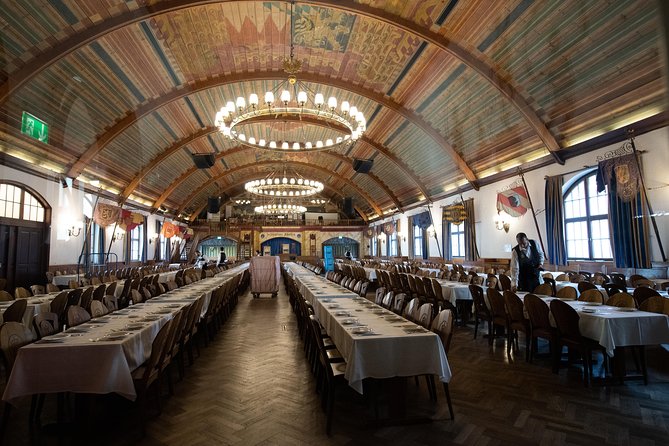
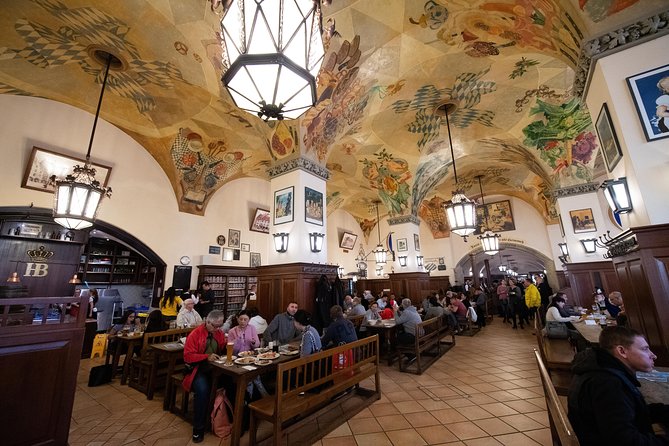
The stop at Staatliches Hofbräuhaus lasts about 20 minutes. Most people know Hofbräuhaus as a beer hall, but the tour explains its importance as a political gathering place for the Nazi party.
This is one of the route’s more striking contrasts. You see a place associated with food, drink, and Munich tradition, then learn how such spaces could also be used to spread political ideas. The point is not that every beer hall visitor supported the Nazis. The point is that familiar social settings could become useful platforms for speeches, recruitment, and propaganda.
The guide’s storytelling matters here. Dates and slogans alone can feel remote. A clear explanation of how politics moved through popular gathering places makes the subject easier to grasp.
You should not expect a meal or a dedicated beer-hall visit as part of the tour. Hofbräuhaus is a stop on a walking route, not a dining experience. If you want to eat there, plan it separately after the tour.
The Old Town Hall and the weight of memory
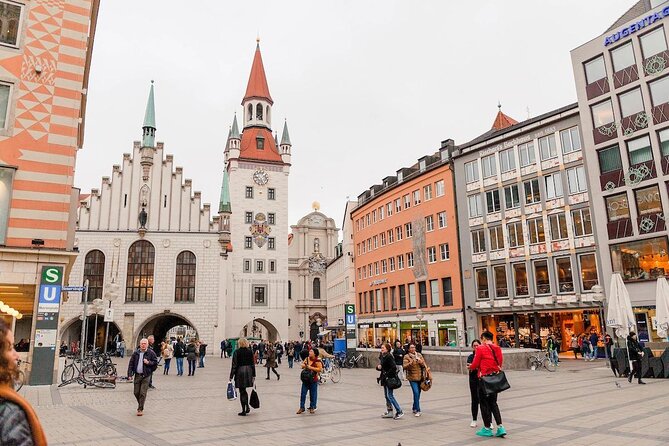
The group then reaches Munich’s Old Town Hall, with about 15 minutes devoted to the stop. This adds another layer to the route by showing how Nazi-era events intersected with established civic spaces.
The Old Town Hall is also useful as a pause in the story. The tour moves between political gatherings, public ceremonies, and the wider city center, showing that the Nazi period was not confined to one headquarters or one square.
This is a place where your guide may answer questions about how Munich remembers the period. Guides have been praised for responding openly even when questions are uncomfortable. That is important on a subject where a polished, overly simple explanation can hide as much as it reveals.
The stop itself is fairly brief. You will get context rather than a long architectural or museum visit. If your main interest is the building’s general history rather than the Third Reich, you will need a separate visit.
Marienplatz, the final stop in central Munich
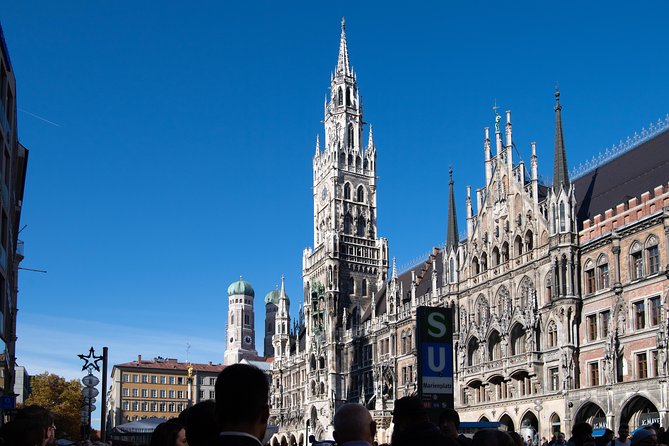
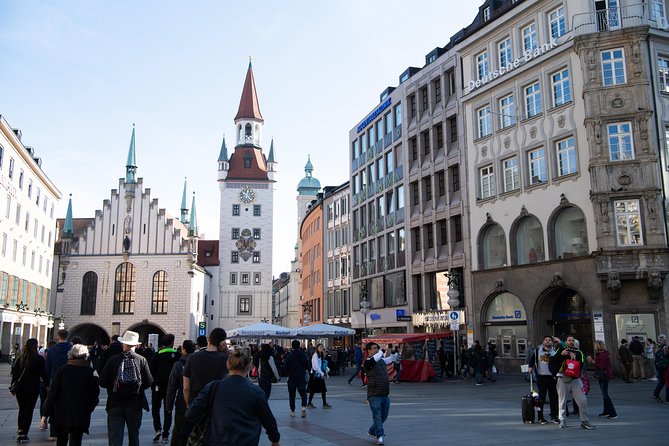
The tour ends at Marienplatz, where about 20 minutes are scheduled. This is Munich’s central square and a useful place to finish because you can continue sightseeing immediately afterward.
Ending here keeps the route practical. You are not left in an out-of-the-way neighborhood, and you can move on to other parts of the city once the guide finishes. It also gives the walk a clear closing point in the heart of Munich.
The end of the tour is not simply a photo opportunity. It brings the historical discussion back to the modern city. After seeing places connected to Nazi power, marches, and political gatherings, you finish in a square used every day by residents and visitors.
You may find that the final stop leaves you wanting more. That is one of the tour’s strengths and limits. It gives you a strong outline of Munich’s Nazi past, but it cannot cover every person, institution, act of resistance, or site in a single afternoon.
What the guides do especially well
The guide can make or break a history walk, and this experience appears to depend heavily on who leads your group. The most praised guides are described as clear, enthusiastic, sensitive, and willing to discuss difficult material without avoiding the hard parts.
Jake is noted for combining information with humor and for being attentive to the group’s comfort. On a very cold day, he moved the group into the sun when possible. That small detail tells you something practical about the tour: the guide is not simply following a script and ignoring the people standing in front of them.
Michael is praised for answering questions openly and presenting a large amount of information in an engaging way. Paul is described as speaking loudly and clearly, while Scott is credited with explaining not just politics but also the social and cultural conditions that helped the Third Reich rise.
Several guides have used historical photographs. These can be especially helpful at Königsplatz and Odeonsplatz, where the current streets and buildings may not immediately reveal their wartime role.
You should also expect some variation. A guide may be German, Irish, American, or from another background, and each person will tell the story in a different voice. The consistent requirement is an English-language presentation, but the exact mix of detail, humor, and discussion will depend on your guide.
Pace, weather, and what to wear
This is an outdoor walking tour, so the weather matters. One person described a cold, gray day, and another specifically advised dressing warmly. That is not a minor detail. You may spend much of the two and a half hours standing in public squares while listening.
Wear comfortable shoes and bring clothing suited to the forecast. The tour requires good weather, and if poor weather causes cancellation, you are offered another date or a full refund.
The walk is described as suitable for most people, and service animals are allowed. It is near public transportation. No special fitness standard is given, but you should be comfortable walking through central Munich for about 150 minutes.
A short break may be possible. Aileen took a group poll and allowed time for a bathroom and coffee stop. I would not treat that as a guaranteed part of every departure, but you can ask your guide if the group needs a pause.
The route includes stops of varying length, plus the walking time between them. The listed stop times total less than the full tour duration, leaving room for those transfers and explanations along the way.
Is $45.95 a fair price?
At $45.95 per person, this is not the cheapest way to walk around Munich, but you are paying for structure and interpretation rather than transport or admission tickets. The included features are a 2.5-hour walking tour and a local guide. The landmarks themselves are viewed from public spaces, so there are no major entrance fees built into the price.
The value is strongest if you have limited time or do not want to build your own historical route. You could find the squares and buildings yourself, but you would have to research their roles, place them in order, and understand how they connect.
The price also compares favorably with a private guide if the group reaches its maximum of 25 people. It is less attractive if you already have advanced knowledge and want an extended, specialist-level study. One person felt the tour needed at least two more hours for anyone beyond a surface-level interest.
The tour is booked, on average, 29 days ahead, so popular dates may fill early. Free cancellation is available until 24 hours before the start time. Within 24 hours, you receive no refund, and changes are not accepted. If the minimum group size is not met, the operator offers another date or experience, or a full refund.
Who should take this tour?
I would choose this walk if you are interested in modern European history, want context for Munich’s major squares, or are visiting the city for the first time. It works especially well early in your stay because it finishes at Marienplatz, leaving you in a useful place to continue exploring.
It also suits people who prefer a guide to a museum label. You can ask questions, hear stories, and see photographs that connect the present-day city with the past.
History students, teachers, librarians, and serious readers should find the route worthwhile, but they may want more time. This is an overview with substance, not a full research seminar. You will learn a lot, but you will not cover every site connected with the Third Reich.
I would think twice if you dislike outdoor walks, struggle to stand for long periods, or want an emotionally light activity. The subject includes hate-filled ideology, persecution, war, and death. Guides aim to keep the discussion accessible, but the material remains heavy.
Should you book the Third Reich Walking Tour?
Book it if you want a clear, place-based introduction to Munich’s Nazi past and you value a guide who can connect public squares, beer halls, civic buildings, and memorials into one story. The strong points are the central route, the English presentation, the useful photographs some guides bring, and the chance to ask questions as you go.
Skip it if you want a long specialist tour or a fully indoor experience. For most visitors with two and a half hours to spare, though, the $45.95 cost is reasonable for the historical context you gain. Dress for the weather, leave room in your schedule afterward, and expect to finish with a better understanding of how Munich became central to the Nazi rise and how the city remembers that past today.
FAQ
How long is the Third Reich Walking Tour in Munich?
The walking tour lasts approximately 2 hours and 30 minutes.
What language is the tour offered in?
The tour is offered in English.
Where does the tour begin?
The meeting point is Radius Tours at Dachauer Str. 4, 80335 München, Germany.
Where does the tour end?
The tour ends at Marienplatz in central Munich.
Which places are visited?
The route includes Königsplatz, Odeonsplatz, Staatliches Hofbräuhaus, the Old Town Hall, and Marienplatz.
Is transportation included?
No transportation is included. This is a walking tour, with time spent walking between the stops.
How many people can join the tour?
The maximum group size is 25 people.
Can I cancel for a full refund?
Yes. You can cancel at least 24 hours before the start time for a full refund. Cancellations within 24 hours are not refunded. If poor weather or an insufficient minimum group causes cancellation, you are offered another date or experience, or a full refund.
More Walking Tours in Munich
- Munich: Old Town & Viktualienmarkt City Walk in German
★ 4.7 · 2,304 reviews - Munich: Night Watchman Walking Tour
★ 4.7 · 2,092 reviews - Munich Ghosts and Spirits Evening Walking Tour
★ 5.0 · 1,900 reviews - Munich Old Town Walking Tour
★ 4.5 · 1,287 reviews
Just added around Munich
- Munich: Express Walk with a Local in 90 minutes★ 5.0 · 7 reviews
- Exploring Munich in a Rikscha★ 4.9 · 33 reviews
- Exploring Munich by Pedicab: Premium Two Hour Tour★ 5.0 · 10 reviews
- Erding: 1-Day Spa Ticket at Therme Erding★ 4.5 · 50 reviews
- Munich: KUNSTLABOR 2 Entry Ticket★ 4.2 · 89 reviews
- Private Van Tour to the Royal Palace of Herrenchiemsee★ 5.0 · 6 reviews
- From Munich: Königssee Day Trip with Boat Ride and Salt Mine★ 4.5 · 93 reviews
- Culinary Haidhausen – The Food Tour★ 4.3 · 4 reviews
Munich Tours, compared.
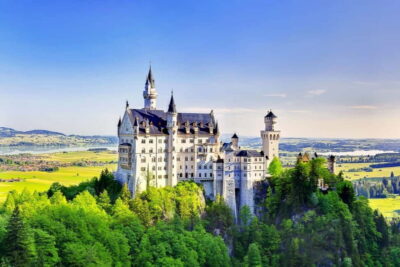

Neuschwanstein & Linderhof Castle-Fairytale Day Tour from Munich
Read our review →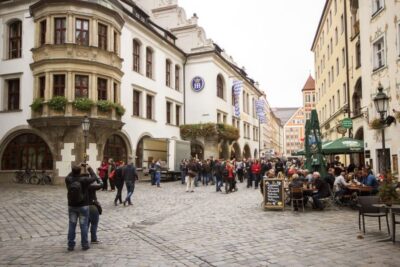
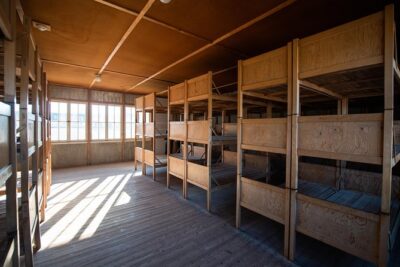
Dachau Concentration Camp Memorial Site Tour from Munich by Train
Read our review →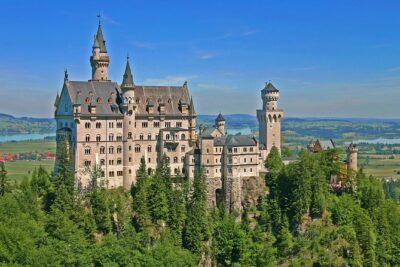
Munich Hop-On Hop-Off Tour: 1-Day or 2-Day Ticket
Read our review →
Browse the lists this tour appears in