
Review · BERLIN TOURS
Charlottenburg: 2-Hour City Walking Tour
Charlottenburg gives you a different Berlin: less postcard chase, more careful looking. This two-hour walk links a grand city hall, a medieval village center, old workers’ districts, cafés, museums, and the former Prussian power center at Charlottenburg Palace. The route shows how a once-independent community became part of modern Berlin.
I like the focus on urban history and planning, not just famous buildings. I also like the chance to see Klausener Kiez, where cafés, thrift shops, and corner stores give the tour a lived-in feel. The main consideration is language: the live guide speaks German, and the route takes place outdoors in all weather.
Key points
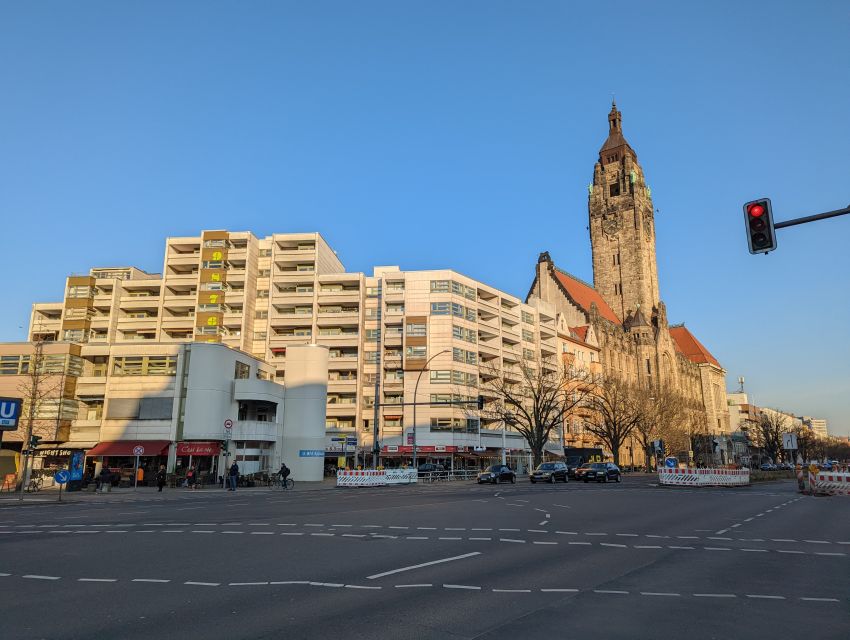
- Start at Rathaus Charlottenburg: Meet at the main entrance to the imposing city hall, built as a symbol of a prosperous community.
- Follow 800 years of change: The walk connects Charlottenburg’s medieval village roots with Prussian planning and modern Berlin.
- See the city through Heinrich Zille’s eyes: Learn about the working-class scenes near the historic Stadtbad that inspired the Berlin artist.
- Explore Klausener Kiez: Browse the atmosphere of a local neighborhood with cafés, thrift stores, and corner shops.
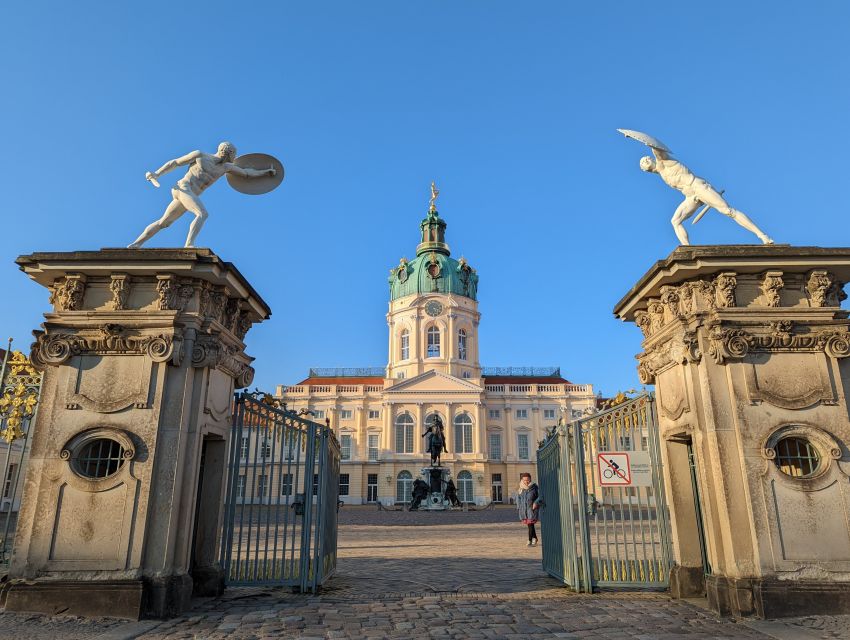
- Finish at Charlottenburg Palace: End beside the grand palace and its dome-topped Stüler buildings.
- Pay $23 for a focused history walk: The price includes a professional museum expert, but not museum entry, food, or drinks.
Why Charlottenburg makes a fine Berlin walking district
Many first visits to Berlin focus on the Brandenburg Gate, Museum Island, and the Berlin Wall. Those places matter, but Charlottenburg gives you a slower and more local lesson in how the city grew.
This district combines several layers that do not always appear together elsewhere. You get a medieval village square, 18th century church planning, 19th century housing, pre-war city development, working-class history, elegant villas, and a royal palace. The route is useful because it links these pieces instead of treating them as isolated sights.
The tour describes Charlottenburg as a little-known city within Berlin. That idea helps explain the district’s character. You are not simply walking through a pretty neighborhood. You are following the remains of a place with its own civic identity, institutions, streets, and social history.
I would choose this walk if you have already seen central Berlin’s major monuments or if you want a neighborhood tour with more substance than a quick photo stop. It is also a good choice for a repeat visit, when you may be ready to spend time on the details of city life.
More walking tours in Berlin:
- Discover Berlin Half-Day Walking Tour
★ 5.0 · 9,624 reviews - Berlin: Third Reich and Cold War 2 Hour Walking Tour
★ 4.9 · 6,830 reviews - Berlin: Discover Berlin Walking Tour
★ 4.9 · 5,998 reviews
Starting at Rathaus Charlottenburg
The meeting point is directly in front of the main entrance to Rathaus Charlottenburg. This is a fitting beginning, since the building represents the importance and prosperity of the local community.
Your guide uses the city hall as a way into Charlottenburg’s civic story. Rather than opening with a royal palace, the tour starts with the place where local government and public life took shape. That choice gives the walk a useful balance. Charlottenburg is not presented only as a district of grand residences and Prussian power.
From here, the route moves toward the old village square, the medieval nucleus of the area. You begin to see the contrast between the large administrative buildings of a modern city and the much older settlement pattern beneath them.
The guide is a professional museum expert, and the strongest praise in the available feedback centers on clear explanations, broad historical knowledge, and friendly answers to questions. The guide’s name is not provided, so you should not expect a named specialist when booking. What is clear is the intended approach: history is explained in an engaging and compact way rather than delivered as a dry list of dates.
The medieval core and 800 years of Charlottenburg
The old village square is one of the most important stops for understanding the route. It gives you a physical reference point for Charlottenburg before later building programs transformed the area.
The tour follows roughly 800 years of history, from the early settlement through Prussian rule and into present-day Berlin. That long span can sound broad for a two-hour walk, but the route makes the timeline easier to grasp by placing it in the streets themselves.
You learn how neighborhoods developed around churches, public buildings, housing, and royal institutions. You also see why Berlin’s appearance is not the result of one grand plan. It is a series of additions, repairs, expansions, and changing ideas about how people should live in a city.
I find this kind of history more useful than a simple list of famous residents. It helps you read the streets after the tour ends. A plain apartment block, a schoolhouse, or a church square can reveal when a neighborhood expanded and which social group it was meant to serve.
Heinrich Zille and the working-class city
Near the historic Stadtbad, the guide introduces the world depicted by Heinrich Zille. Zille was famous for affectionate, often ironic images of Berlin’s working class, and this part of Charlottenburg shows where those subjects came from.
This is one of the more human stops on the route. Instead of focusing only on Prussian officials, grand patrons, and polished façades, the tour turns toward ordinary city life. You get a sense of the streets, public facilities, and housing connected with working people.
The Stadtbad also adds a public-health and social dimension to the story. The supplied details do not promise a visit inside, and museum or interior visits are not included, so expect to view and discuss the setting from the walking route.
For me, this stop is valuable because it puts the district’s elegance in perspective. Charlottenburg can look wealthy and formal, but its history also includes crowded housing, labor, public services, and the daily routines of people who had no palace nearby.
A few more Berlin half-days to weigh up
- Berlin’s Best: 2 Hour Walking Tour Third Reich and the Cold War
★ 5.0 · 5,486 reviews - Berlin: 2-Hour Lake Oberhavel Cruise from Tegel
★ 4.4 · 577 reviews - Berlin 2-Hour Segway Tour
★ 4.6 · 238 reviews - Berlin: Backyards of Berlin 2-Hour Tour
★ 4.7 · 163 reviews
Luisenkirche and the logic of 18th century planning
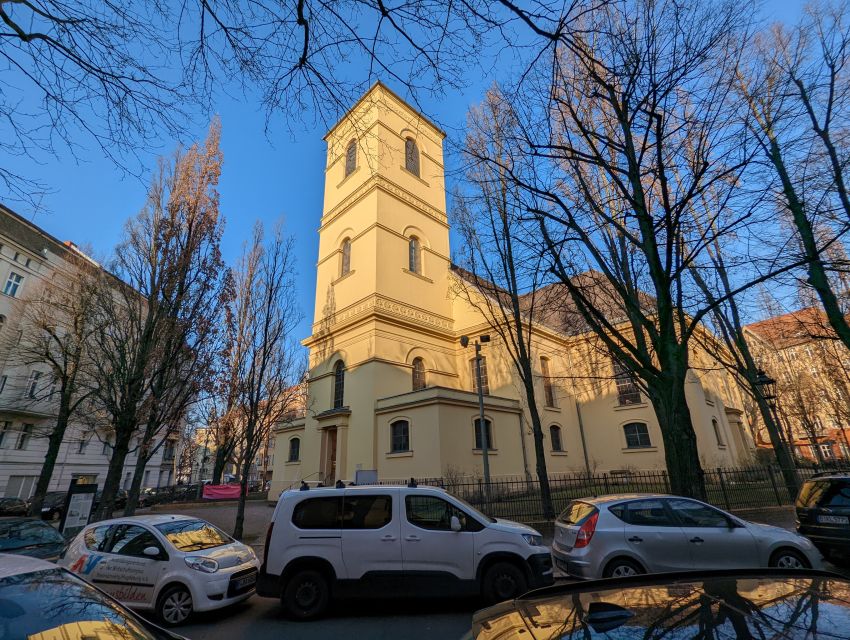
At Luisenkirche, the subject shifts to architectural history and 18th century urban planning. The church is not just another handsome stop. It helps explain how civic and religious buildings shaped the surrounding streets.
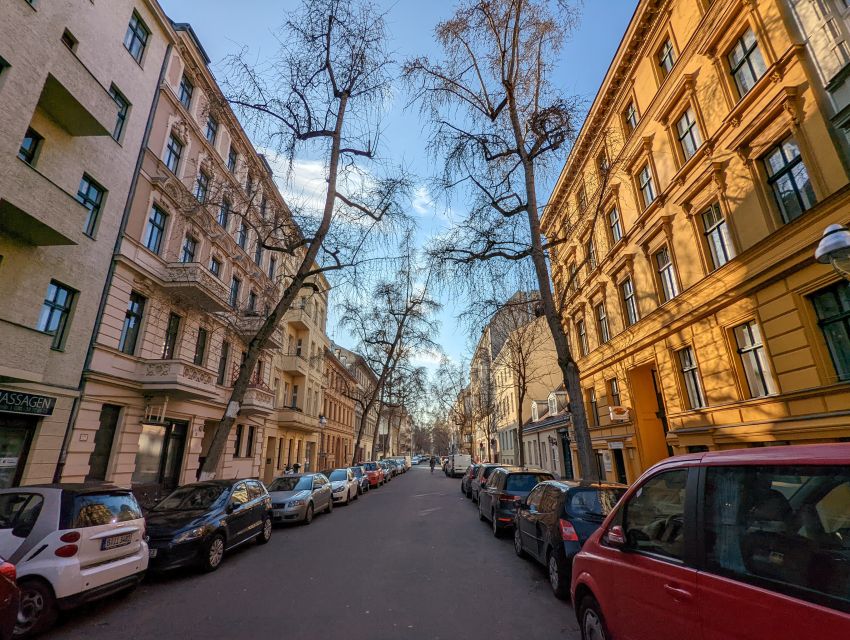
The walk also points out housing styles that still define Berlin’s cityscape. This is the sort of detail you may miss when sightseeing alone. A guide can show you how the scale of a block, the arrangement of façades, and the presence of courtyards reflect earlier ideas about city growth.
You will see examples of pre-war urban development, along with preserved schoolhouses dating from 1786. The school buildings offer a clear reminder that Charlottenburg was a functioning community, not merely a royal suburb.
The schoolhouses are especially useful for families and anyone interested in everyday history. They connect big political changes with a simple question: where did local children learn, and what did the community think a public building should look like?
The route does not promise entry into every building. Its value is in the explanation of what you see from the street. If you want interiors, plan separate museum visits, since those are not part of the $23 price.
Klausener Kiez, where Charlottenburg feels local
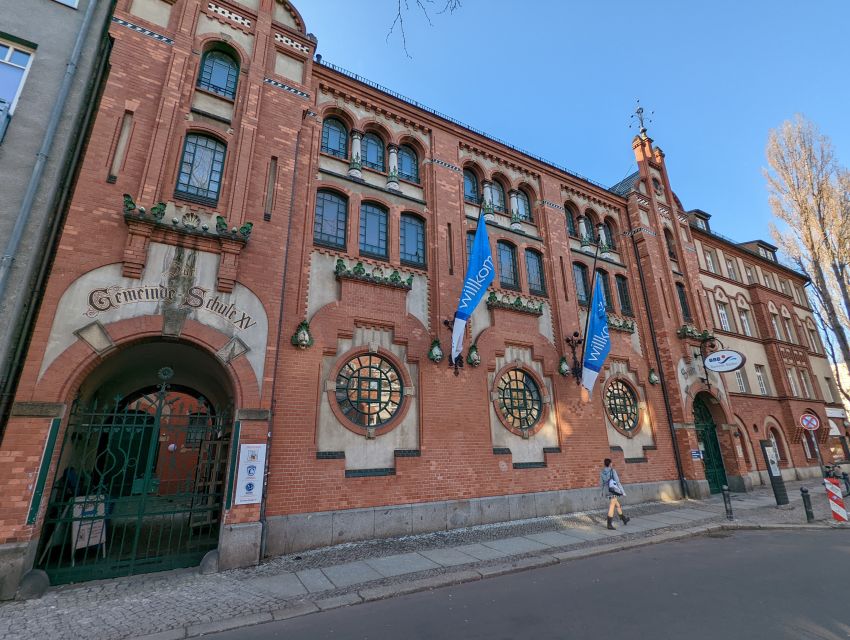
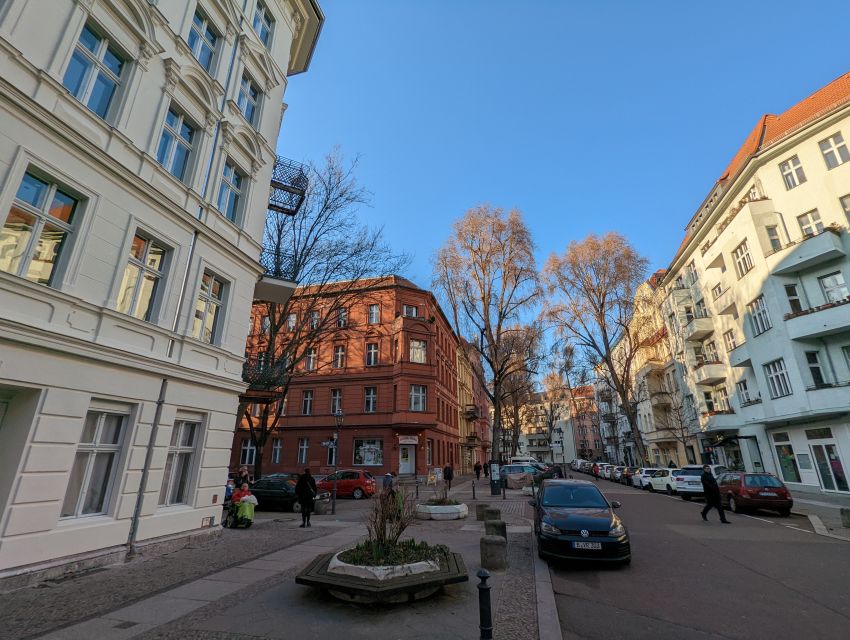
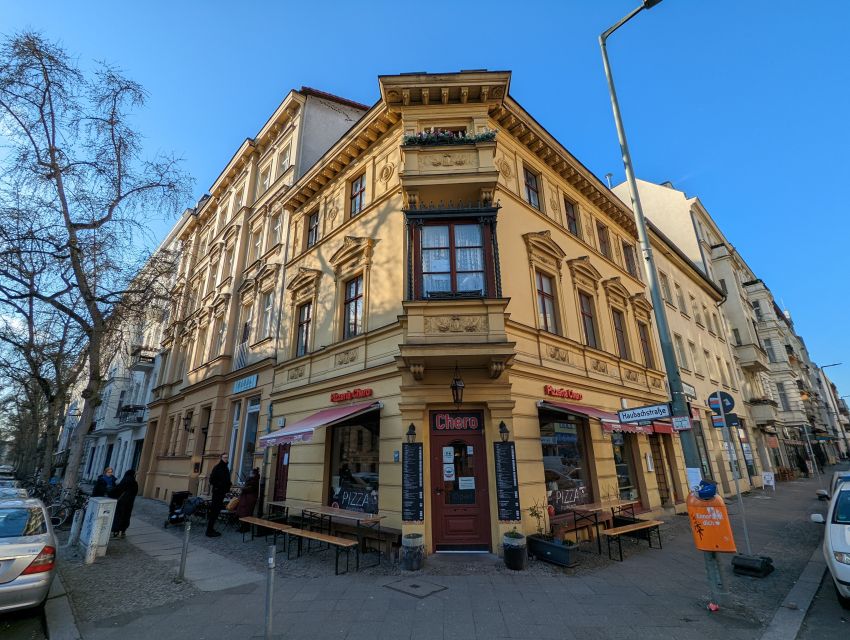
One of the most appealing stretches comes around the corner of Nehringstraße and Christstraße, in the area known as Klausener Kiez. Here the grand historical frame gives way to ordinary neighborhood life.
You can expect cafés, thrift stores, and corner shops rather than a line of major monuments. Locals mingle in this setting, and the area offers a more relaxed view of Charlottenburg than the palace district alone.
This is where the tour earns its walking-tour format. You are not being driven between attractions. You are moving through the transitions between grand avenues, residential streets, and small commercial corners. Those transitions tell you as much about Berlin as any single building.
I would pay close attention here to the rhythm of the streets. Notice how the neighborhood’s older housing and local businesses create a different mood from the formal civic buildings seen earlier. The guide’s anecdotes help connect architecture to the people who use it.
The route is also a practical introduction to places you might return to later. The tour does not include food or drinks, but Klausener Kiez gives you options for your own stop after the walk. Since the tour lasts only two hours, you can easily pair it with a café visit or a museum afterward, depending on your schedule.
Villa Oppenheim and Schlossstraße
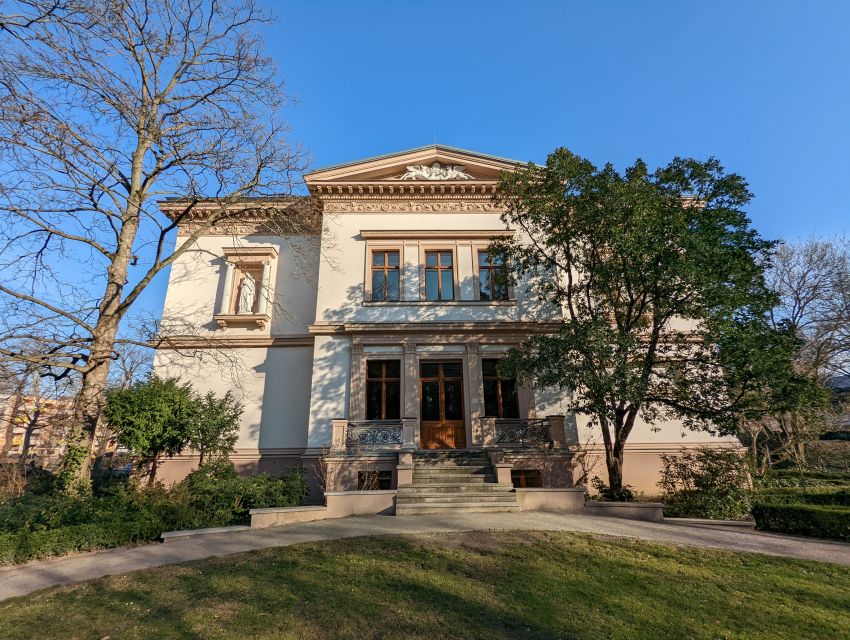
The walk continues to Villa Oppenheim, one of the district’s more refined landmarks. The villa adds another layer to Charlottenburg’s social story, showing the world of prominent residents and elegant private architecture.
From there, Schlossstraße brings the grander side of the district back into view. The street now houses world-class museums, but museum admission is not included. This is an important distinction when planning your day. You can use the tour to understand the setting, then decide if one of the museums deserves a separate visit.
I like this arrangement because it avoids forcing a museum visit into a short walking route. Two hours is enough time for a focused neighborhood walk, but not enough for a serious museum visit and a full district tour. Keeping those activities separate lets you choose where to spend your time and money.
The route’s balance also becomes clear here. You move from local cafés and thrift shops to villas, museums, and royal architecture without treating one side as more important than the other. Charlottenburg’s character comes from the combination.
Ending at Charlottenburg Palace
The final destination is Charlottenburg Palace, the most recognizable sight on the route. Its opulent design reflects the district’s connection to Prussian power and court life.
The palace was a former Prussian power center, so it gives the earlier parts of the walk a dramatic ending. After seeing village streets, public buildings, workers’ districts, and bourgeois housing, you arrive at the place that helped shape Charlottenburg’s importance.
The approach is lined with magnificent dome-topped Stüler buildings. These structures create a formal setting around the palace and show how later city planning reinforced the area’s prestige.
The tour ends here rather than promising an interior palace visit. Museum visits are not included, so you will need a separate ticket if you want to go inside. Still, ending at the palace works well. You finish with a major landmark, but you reach it with a better understanding of the district around it.
If you have time after the walk, this is the natural point to continue exploring on your own. If your schedule is tight, you can also treat the palace as a final exterior sight and move on.
How the two hours are used
Two hours is a sensible length for this route. It is long enough to cover several distinct parts of Charlottenburg without turning into a half-day commitment.
The walk appears designed for steady movement with regular pauses for explanation. A previous resident of Charlottenburg described the route as well organized and structured, while another praised the guide for maintaining a suitable pace and avoiding the best-known tourist area. That matters if you want detail without feeling rushed.
You should wear comfortable shoes. The experience takes place rain or shine, so bring weather-appropriate clothing rather than relying on a last-minute forecast. The route is listed as wheelchair accessible, though the information provided does not describe the condition of every pavement or entrance.
The live tour language is German. If you do not understand German well, this is the main reason to choose another experience, since the historical explanations and anecdotes are central to the value.
What the $23 price includes
At $23 per person, this is a modest price for a guided two-hour walk led by a professional museum expert. You are paying for interpretation, not transport or admission tickets.
That distinction is important. The tour can help you understand Charlottenburg’s buildings and streets, but you still need to budget separately for food, drinks, and any museums or palace interiors you choose to visit.
The value is strongest if you enjoy asking questions and looking closely at architecture. Several highly positive assessments focus on the guide’s broad knowledge, friendly manner, clear explanations, and ability to make the facts entertaining. One person who had lived in Charlottenburg for many years still found unfamiliar corners on the route, which suggests the walk is not limited to the obvious palace area.
The booking terms also reduce some risk. You can cancel up to 24 hours in advance for a full refund, and you can reserve now and pay later. Starting times vary, so check availability for your date.
Who should take this Charlottenburg walk
I would recommend this tour to anyone who wants Berlin history outside the central sightseeing circuit. It suits repeat visitors, architecture fans, people interested in local government and housing, and anyone who prefers neighborhood streets to crowded landmark routes.
It is also a strong fit for German-speaking visitors who want a serious but friendly explanation of Charlottenburg. The guide’s style is described as informative, easy to follow, and occasionally entertaining, with enough room for questions.
You may want to skip it if your priority is entering Charlottenburg Palace, visiting museums, or seeing only Berlin’s most famous monuments. Those activities are not included, and the tour is conducted in German.
Families may appreciate the variety of stops, especially the old schoolhouses, village center, cafés, and palace finish. Still, the experience is built around historical explanation, so children should be comfortable with a two-hour walking pace and outdoor discussion.
Should you book it?
Book this walk if you want to understand how Charlottenburg became part of Berlin, not just photograph its palace. For $23, you get a carefully structured route through civic buildings, a medieval core, working-class history, local shops, historic housing, museums, villas, and Prussian grandeur.
The biggest strengths are the guide’s historical skill, the route’s variety, and its choice to avoid a narrow focus on the famous tourist sights. The main limits are the German-only format, outdoor conditions, and the fact that museum and palace entry are not included.
For a first visit centered on Berlin’s headline monuments, this may be a secondary choice. For a repeat visit or a day devoted to seeing Berlin as a lived-in city, it is a smart booking, especially if you enjoy architecture, local history, and the stories behind ordinary streets.
FAQ
Where does the tour meet?
Meet your guide directly in front of the main entrance to Rathaus Charlottenburg.
How long is the Charlottenburg walking tour?
The tour lasts two hours. Starting times vary, so check availability for your chosen date.
What language is the tour conducted in?
The live tour guide speaks German.
Is Charlottenburg Palace admission included?
No. Museum visits are not included, so palace or museum entry requires separate planning and payment.
What does the $23 price include?
The price includes a guided tour led by a professional museum expert. Food, drinks, hotel pickup, hotel drop-off, and museum visits are not included.
Is the tour wheelchair accessible?
Yes, the activity is listed as wheelchair accessible.
What should I bring, and does the tour operate in bad weather?
Bring comfortable shoes and clothing suited to the weather. The tour takes place rain or shine.
Just added around Berlin
- Berlin: Battle for Seelow Heights WW2 tour -Clash of Titans★ 5.0 · 27 reviews
- From Berlin: Gardens & Palaces of Potsdam Bike Tour★ 5.0 · 61 reviews
- From Berlin: Historical Gems of Potsdam Private Day Trip★ 4.4 · 4 reviews
- Berlin: Französischer Dom 360° Panorama & Crémant to go★ 3.9 · 5 reviews
- Explore Berlin Tour: History and Highlights★ 4.7 · 5 reviews
- Berlin: Evening Yacht Cruise with Aperitif & Dinner Upgrade★ 4.6 · 178 reviews
- Berlin: Expats in Berlin Comedy Show Ticket★ 4.7 · 182 reviews
- Berlin: The Epic Comedy Club Friday Night Showcase★ 4.8 · 28 reviews
Berlin Tours, compared.

Reichstag, Dome and Government District Guided Tour
Read our review →
1-Hour City Tour by Boat with Guaranteed Seating
Read our review →

Reichstag, Plenary Chamber, Cupola & Government Tour
Read our review →
Browse the lists this tour appears in